
In late July, after 13 straight nights of bombing Iran, the Pentagon drew up a multistage assault to hit the country’s coastal defenses, missile launchers, power plants and ports. President Donald Trump’s own advisers talked him out of launching it.
The big campaign stayed on the shelf. The war, now in its sixth month, did not stop. On July 29 the U.S. resumed bombing — but with a smaller punishment round, not the multistage assault its commanders had drawn up. That gap is the measure of Washington’s position: it can still level homes and provincial towns, but it cannot even mount the campaign meant to break Iran’s resistance.
It has run short of missiles it can fire without leaving its bases exposed, and cannot replace them fast enough for the next round.
Gen. Dan Caine, chairman of the Joint Chiefs of Staff, warned that the military’s shrinking munitions stockpile could limit operations against Iran, the Associated Press reported, citing a U.S. official. Firing the heavier assault, commanders said, would draw down the Patriot and other interceptor missiles that shield U.S. bases across West Asia and leave those bases exposed to Iranian retaliation. The most heavily armed military on earth was made to hold back its biggest blow because five months of resistance had run its stockpiles low.
But the shortage is only one side of Washington’s trap. Joe Kent, who resigned as director of the National Counterterrorism Center in protest of the war — the highest-ranking official to quit over it — warned openly that there is no military solution, that more bombing will not force Iran to open the Strait of Hormuz or accept a deal, and will only harden its stand. He called it “a bombing campaign in search of a strategy.”
That trap holds regardless of who occupies the White House. It is the material condition of an imperialist power that cannot arm the long war its own aims demand.
Launched in weeks, replaced in years
Every interceptor the Pentagon has burned through was fired to stop Iranian missiles and drones. By late April — in the first phase of the war alone — it had launched more than 1,200 Patriot interceptors, each costing over $4 million, against Iranian fire. Thirteen more nights of bombing and Iranian counterstrikes drove the remaining supply lower still. The Congressional Research Service reported in May that Iran had damaged or destroyed 42 U.S. aircraft, among them F-15E Strike Eagles, an F-35 and KC-135 refueling tankers. By July the Pentagon had lost around 30 Reaper drones, at roughly $30 million apiece — close to $1 billion in drones alone. Round-the-clock U.S. air cover over the Gulf runs an estimated $1 million an hour.
This did not happen to the Pentagon accidentally. Iran did it, and it did it on purpose. Its commanders announced early in the war that they would strike harder and more often — heavier warheads, more missiles, wider targets — to overwhelm U.S. defenses and burn through their interceptors. They named the opening phase — degrading U.S. radar and draining U.S. interceptor stockpiles — a deliberate objective, and called it largely complete. Behind Iran stand Yemen’s Ansar Allah and the resistance across Iraq, widening the war against U.S. bases, shipping and Saudi oil infrastructure. Iran also has China and Russia at its back, with land and trade routes that no naval blockade can close. The empire’s missile stocks are running dry because an oppressed nation and its allies have forced them dry.
The Pentagon can expend in weeks what U.S. arms factories need years to build. Its Patriot stockpile stood at some 2,330 interceptors before the war; by late July the U.S. had fired away roughly two-thirds of it, leaving fewer than 830. In June, Trump invoked the Defense Production Act to force the pace of missile manufacturing — an open admission of the shortage, even as the Pentagon tried to deny one existed.
Guaranteed profits, no capacity
Why can’t the wealthiest military on earth keep itself supplied? Part of it is real: the chase for higher profits sent the base of the supply chain — castings, microelectronics, the processing of rare earths — abroad. But that is only the surface. The same drive for profit runs deeper, into the arms monopolies themselves.
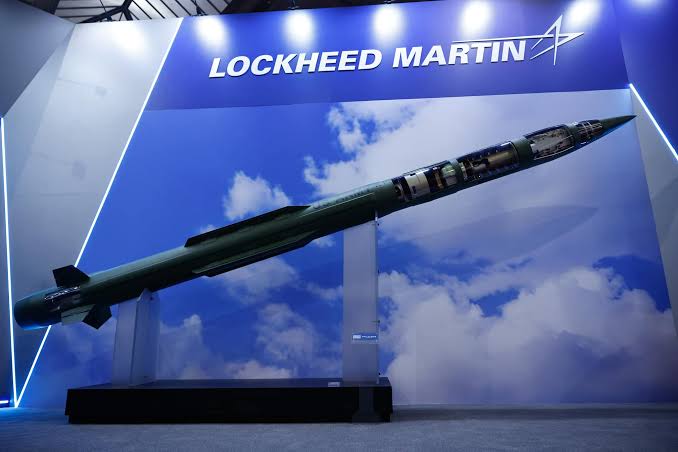
Lockheed, Raytheon, Boeing, General Atomics and the rest have feasted on the military budget for decades on terms that guarantee their profits no matter what they deliver. They charge $4 million for a single interceptor and $30 million for a drone — monopoly prices, set by a handful of firms protected from effective competition. What those guaranteed profits have never required them to build is the productive capacity a prolonged war demands. Idle capacity earns nothing. A thin production line turning out a few high-priced missiles a month earns a great deal.
This runs against the usual pattern. Left to compete, capital tends to build too much — firms race for market share, flood the market and choke on the glut that breeds capitalist crisis. Arms capital is spared that race. It answers to a single buyer at guaranteed prices, and no rival can seize the market by building first. Shielded from the pressure that drives other capital to overbuild, the monopolies do the opposite and under-build by design — thin lines, high prices, no plant left to sit idle between wars. The same drive for profit that gluts other industries starves this one of capacity.
So the monopolies kept production thin, pocketed the guaranteed profits and left the Pentagon without the plant, workforce or supplier base needed for a long war. Now the same monopolies demand billions more to supply what decades of military spending never produced. On July 29, the Army awarded Lockheed Martin a Patriot missile contract worth up to $58.6 billion over seven years. Even under that contract, production capacity is not expected to catch up before 2032.
The result is an arsenal that empties faster than it fills. And it is worth being plain about what that means for workers: the working class has no stake whatever in the war machine being resupplied. The “jobs” it provides are labor robbed from housing, transit and health care to arm a war on Iran’s people. An empire that cannot rearm to bomb Iran’s water plants and bridges is no loss to the people of the United States. The arms monopolies’ failure to build for war is a failure only for them and for the war machine they feed.
Reloading, not victory
The shortage has already shaped the war. It helped force Washington’s retreats in April and June, and War Secretary Pete Hegseth called the pause that followed a time for “reloading.”
Washington has run this play before. Against Iraq it kept up a siege of sanctions and periodic bombing for 12 years between the wars of 1991 and 2003, grinding the country down before the final invasion. A losing empire keeps fighting; it besieges what it cannot yet invade. But the siege that broke Iraq depended on isolating it, and Iran cannot be isolated the same way. It has answered every escalation with heavier fire, holds the Strait of Hormuz shut, and has land routes to China, Russia and Central Asia that no naval blockade can close. Iraq faced the siege largely alone; Iran faces it with allies across the region and powers at its back. The next assault is already in preparation — and Iran is preparing too, stronger and angrier than when the war began.
The empire must be beaten, not waited out
The imperialist press explains all this through Trump — that he flails, that he lacks the stomach for a long war. That misses the point. The next president will inherit the same empty weapons stocks and the same arms monopolies that emptied them. The problem is not the man; it is a ruling class that lets its war contractors collect guaranteed profits while the capacity for its wars goes unbuilt.
But no one should imagine the empire will run down on its own. Imperialism does not collapse under its own weight; it has to be defeated. A wounded empire is more dangerous, not less — Trump, cornered, reaches for wider bombing and threatens a ground invasion precisely because he cannot win the war he started. The force draining Washington’s arsenal is struggle: the resistance of an oppressed nation that shares an enemy with the workers of the United States. Iran’s people are already defeating this war. The task on this side of the guns is to finish it: stop the bombing, break the blockade and oppose the rearmament already underway.
Join the Struggle-La Lucha Telegram channel