
MEMORANDUM FROM: ILWU International
SUBJECT: Update re: ILWU Local 6 Strike and Bargaining with C&H
DATE: July 27, 2026
Please find attached a Press Release regarding ILWU Local 6’s strike at C&H Sugar, Inc. and the status of continued bargaining…..
The International and Local 6 thank all locals and affiliates for their support thus far. However, this fight is not over so please continue to support Local 6 during this period of bargaining.
‘An injury to one is an injury to all.’
ILWU Local 6 / C&H Sugar Company, Inc. – Joint Press Release
CROCKETT, CA, July 27 – The International Longshore and Warehouse Union Local 6 and C&H Sugar Company, Inc. today jointly announce that they have agreed to a sixty-day period of continued contract negotiations. …
ILWU Local 6 represents approximately 100 warehouse workers at C&H in Crockett, California, who have been on strike since June 15, 2026. The parties have been far apart on a number of Issues. The parties met with a federal mediator several times in July but were unable to reach Agreement. …
In a showing of good faith, ILWU Local 6 has agreed to return to work during this period, and C&H will withdraw its declaration of impasse. The parties have committed … to bargain in good faith and reach agreement on a fair contract.
After a hard-fought 42-day strike launched on June 15, the ILWU forced C&H back to the bargaining table on July 27. They won this position by standing firm against brutal government repression, carried out in collaboration with American Sugar Refining, the sugar monopoly that owns C&H.
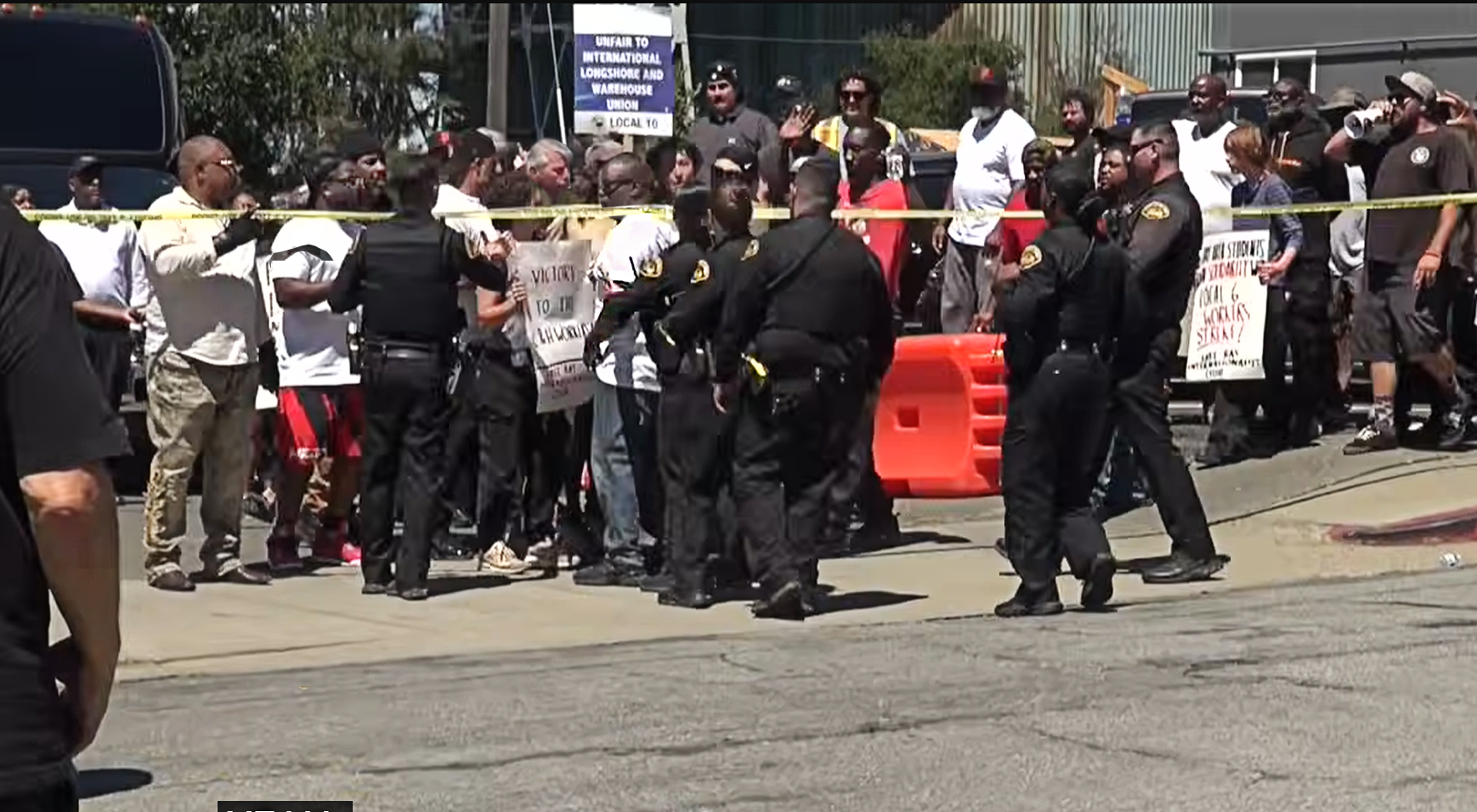
On July 21, shortly after 4 p.m., Contra Costa County Sgt. Daniel Marzilli, accompanied by more than a dozen sheriff’s office vehicles, ordered the ILWU Local 6 and Local 10 picket line at the intersection of Loring Avenue and West Street to disperse.
“I hereby declare this is an unlawful assembly,” said Marzilli into a megaphone. Surrounding him were the sheriff’s deputies armed with batons and tear gas. “If you do not do so, you may be arrested or subject to other police action,” including “less lethal munitions, chemical agents or police dogs.”
Earlier in the day, ILWU members were injured, and one was hospitalized, when two scab trucks plowed into the union picket line. According to Trent Willis, vice president of ILWU Local 10, scabs have been brought into the refinery since July 18. Willis said the workers were not attempting to block the scab driver when they were run down.
Clarence Thomas, an ILWU Local 10 retiree who is on the executive board of the Pacific Coast Pensioners Association, told Steve Zeltzer live on Labor Radio Podcast Network, “You can see from the turnout of the police, there’s two things that are bothering the cops: Number one, we’re working people and number two, we’re Black and people of color. They have a problem with both of those things. It has taken longshore workers exhorting the police to do their job, which is to arrest someone who has hit a pedestrian with a vehicle intentionally. So, it’s taken all this time. I understand now they’re in handcuffs. They are towing his vehicle away, and they’re being forced to respond to the power of the ILWU rank and file.”
Striking members of ILWU Local 6 and solidarity strikers from Local 10 were picketing the entrances to the C&H Sugar factory to confront scabs that the company hired to unload sugar from a cargo ship.
“We’re letting the truckers know what’s going on — you’re crossing a picket line, taking money and our jobs away from us,” said worker Frank Gaskin.
Adrian Wells, a truck driver who called himself “a local scab,” reportedly said of driving through strike lines, “We all have a choice. We could stop what we’re doing. But I want to make some money.” According to him, the company is paying $1,700 a week for scab work.
Following the attack by the scabs who drove their trucks into the picket line on July 21, the police attacked the union members. They handcuffed 10 people on the picket line while threatening others with arrest. Then they cordoned off the picket area with yellow police tape.
Supporters had come from all over the Bay Area to converge at C&H’s main entrance on Loring Avenue and the truck entrance on Dowrelio Drive under the Carquinez Bridge. They gathered at the sides of the gates with cars and motorcycles. The community in Crockett, a company town, has been deeply engaged in supporting the strike, often joining the picket line since the beginning.
ILWU Local 6 members are fighting to retain their union contract covering health care benefits for current and future retirees; overtime pay, which most C&H workers rely on to earn a living; an established seniority system for promotions and scheduling; and sick leave. They are also fighting unfair weekend scheduling.
In addition, they are demanding that all charges be dropped against the strikers, union members, and supporters arrested on July 21. They are also calling for the immediate reinstatement of three workers illegally fired on June 24.
Looking at the contract the company wanted to impose, Mario Rivas, a crane operator at C&H for 10 years, said, “The contract is so bad, you can’t afford to take it.”
Rivas grew up in Crockett, and his grandfather and brother both worked for C&H. Staffing shortages and the rising costs of living don’t help, said Rivas. “They’re going to raise the bridge tolls again, gas prices are going up. This is pretty egregious,” he said of the contract.
“Every three years, we have a contract,” Rivas added. “There’s always a give and take.” This year was different. “This year is the first year there was no negotiation — it was basically, ‘We want to take everything you guys have.’”
To lead negotiations, Crockett C&H management brought in Rene Ruiz, chief labor counsel for parent company American Sugar Refining — a lawyer whose official bio boasts that he “trains employers on union avoidance and strike preparation.”
Clarence Thomas, Local 10 retiree, said: “The other shoe has yet to fall — for this union-busting outfit American Sugar Refining. They want to break the union. What it’s going to take is for the employers of the Pacific Maritime Association to weigh in when they can’t get their ships loaded and unloaded. That’s what it’s going to take. The only thing that the capitalists respond to is when you cut off their profits. This ain’t business as usual. They’re unloading this ship from the Philippines with scabs. So, they broke the contract.
The union says that C&H is trying to avoid dealing with the just demands of the strikers by diverting the sugar to the Levin-Richmond Terminal, where it is in danger of toxic contamination, an area declared a Superfund site due to rampant DDT contamination. City leaders and union officials say the product is being dumped on a wharf where coal, petroleum and metal scrap are handled. Richmond City Councilmember Claudia Jimenez said, “Sugar, which is a food product, is being dumped here next to petroleum and coal products.” The coal isn’t covered, and the wind will contaminate the sugar.
C&H has not denied that the sugar is being contaminated. They claim it will be edible after they refine it! Union leaders dispute their assurances.
ILWU Local 10 refused to unload the sugar at the Crockett refinery pier in solidarity with the Local 6 strike. Michael Villeggiante, president of Local 10, said, “We didn’t work the ship. It was anchored for 10 days, and then they brought it here to Levin.”
C&H Sugar was acquired in 2005 by American Sugar Refining (ASR), a monopoly and one of the world’s largest sugar refiners. ASR demanded union-busting concessions from members of ILWU Local 6, refusing to negotiate and issuing a rigid “take-it-or-leave-it” ultimatum.
ASR is controlled by the Fanjul brothers — Alfonso, José “Pepe,” Alexander, and Andrés — whose family owned sugar plantations, mills, and port concessions in pre-revolutionary Cuba. After the 1959 revolution expropriated their holdings, the family relocated to Florida and built a multibillion-dollar empire shielded by U.S. tariffs, import quotas, and federal subsidies. Today, the Fanjuls are key allies of Donald Trump, bankrolling the right-wing Cuban-exile political machine, lobbying for high domestic sugar prices, and pouring millions into political campaigns aimed at attacking socialist Cuba.
Regarding ASR’s attack on the union, Thomas says, “Our employers are paying particular attention to our resolve and solidarity in fighting against concessionary bargaining with our Local 6 sisters and brothers at the bargaining table with C&H Sugar.
“We are trying to let our members know, particularly in Local 10, that this is a test run. If we don’t support the Local 6 strike, this will set the stage for what the employers will try to do to the Longshore Division contract negotiations in 2028.”
Local 6 has the support of ILWU on the West Coast, especially ILWU Local 10 in San Francisco. There have been reports of several actions of ILWU Locals in support of the Local 6 strike.
Members of Hawaii’s ILWU 142 traveled to Crockett to join the picket line. Chris West, a native Hawaiian, has worked as a longshoreman for 25 years and is president of the Hawaiian Local. “It made sense for us to be here considering the long history of our fight with these guys.”
West said: C&H executives are “deciding between if they’re going to buy their new yacht this year or save it for next year,” he said. “Whereas our guys are trying to figure out if they’re going to be able to pay the water bill or the electric bill, which one they’re going to float.”
The Filipino community is supporting Local 6 as well. It has been on the picket line because C&H gets sugar from the Philippine island of Negros, where there is a labor struggle. In April, the Philippine Army’s 79th Infantry Battalion killed 19 people in Toboso, on Negros Island. The killings came as Washington and Manila launched Balikatan 2026, their largest joint war games yet.
Lyle Prijoles, a leader of the International Coalition for Human Rights in the Philippines (ICHRP) from Hayward, California, was one of those killed. He was documenting conditions of sugar workers and linking their struggles to international networks.
“Because we wouldn’t cross Local 6 picket line, the company decided to go get some strike breakers to work the Local 10 jobs also,” said Trent Willis, vice president of ILWU Local 10, standing alongside strikers outside the C&H truck entrance under the Carquinez Bridge on Tuesday.
“The ILWU fights for good working conditions,” said Willis. “That raises the standards for other workers outside the ILWU — a standard they can compare to when they’re fighting for their own contracts.”
Speaking to Zeltzer on the labor podcast, Willis said, “This is a basic issue for the unions, for the ILWU and the labor movement. The ILWU is one of the last remaining strong diversified unions, where you have all races of people that are standing up together, which is what’s needed in the labor movement today.
“All of the gains that working people — when you talk about African Americans, Black people in this country — all of those gains that were made during the Civil Rights movement, it benefited everyone. It didn’t just benefit Black people. So when you see these attacks on labor rights, attacks on social justice and all of that, it is affecting everyone.
“The trick bag that they have a lot of non-Black people thinking is that those rules don’t apply to them. They have to find out that corporate greed and white supremacy attacks us all — that racism is a distraction from working people gathering together and demanding respect, decent pay and safe working conditions. If you win at one place, it benefits working people everywhere.”
Join the Struggle-La Lucha Telegram channel