
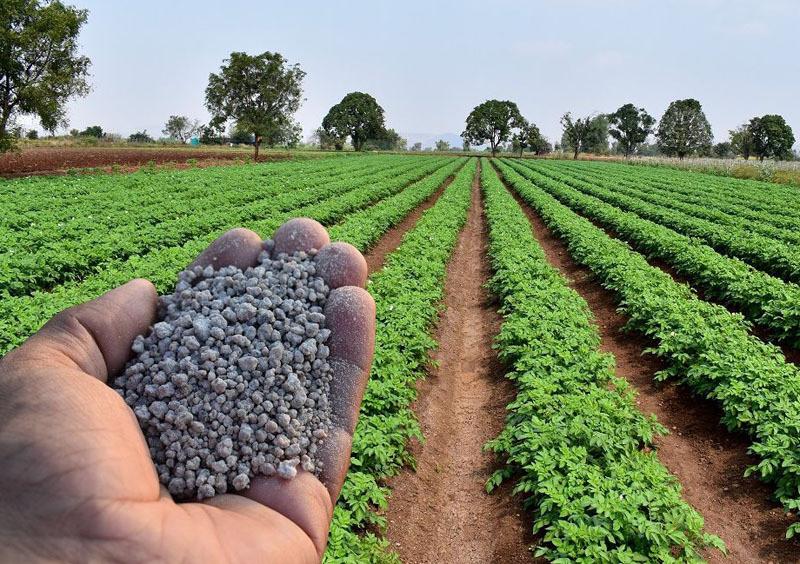
The White House says the war on Iran is winding down. On June 29, it declared a national emergency over the U.S. food supply.
The proclamation, published in the Federal Register on July 2, temporarily suspends duties on Moroccan phosphate fertilizer — duties imposed in 2021 to generate profits for Mosaic Co., the Florida-based phosphate monopoly, by keeping lower-cost imports out of the U.S. market.
Industrial agriculture depends on phosphate fertilizer. Corn, soybeans and wheat do not grow at commercial scale without it, and U.S. farmers apply more than half of the year’s phosphate between fall and early spring.
The proclamation blames “conflicts in fertilizer-producing regions” and says the largest foreign source of U.S. phosphate fertilizer “has experienced supply chain disruption.” The White House does not name the source or the conflict. Both have names.
The source points to Saudi Arabia. In the first five months of 2025, Saudi Arabia supplied nearly 55% of U.S. ammonium phosphate imports. That fertilizer is produced by Ma’aden, the Saudi state mining company, and shipped from Ras al-Khair — a port on the Persian Gulf, behind the Strait of Hormuz.
When Iran shut the strait after the U.S. attack of Feb. 28, Ma’aden’s phosphate exports through Ras al-Khair were trapped with everything else. The company was forced onto a costly truck route across the peninsula to the Red Sea port of Yanbu.
Washington launched its war of aggression against Iran on Feb. 28 to overthrow Iran’s government, break its sovereignty and retake control of Iranian oil — control Washington lost when the 1979 Iranian Revolution overthrew the U.S.-installed puppet shah and broke the grip of U.S. and other Western oil monopolies over Iran’s oil. Iran answered by choking traffic through the Strait of Hormuz, the artery through which Gulf oil, gas, petrochemicals and fertilizer reach the world. Washington’s war produced the choke, and the choke has now reached the U.S. food supply. The fertilizer emergency is the war’s invoice, arriving at the U.S. farm gate.
Five years of duties, reversed in a day
The duties now suspended were imposed in 2021 at the request of Mosaic Co., the Florida-based phosphate monopoly, to shut Moroccan and Russian fertilizer out of the U.S. market. A Texas A&M study found the duties raised the price of the main phosphate fertilizer nearly 29% and cost U.S. crop producers an estimated $6.9 billion between 2021 and 2025. For five years the capitalist state held that line: farmers paid, Mosaic profited, and successive administrations defended the arrangement.
It took one war to reverse it. With Saudi supply trapped behind a blockaded strait and fertilizer prices climbing into planting decisions for the 2027 crop year, the duties protecting Mosaic’s margins became a threat to the system’s food supply — and the state dropped them overnight.
The tariff wall stood as long as it served monopoly profit and fell the moment it endangered the system. Crop producers paid the $6.9 billion. Workers and small farmers will not be reimbursed for the higher prices passed down the line.
The oil price says the war is over. The storage tanks say otherwise.
The oil market is telling a story of peace. Brent crude fell to about $72 a barrel by July 3 — down roughly 24% in a month, back to where it stood before the first U.S. bombs fell on Feb. 28. The business press credits recovering tanker traffic and “progress” in the Doha talks, where Qatari and Pakistani mediators are shuttling between U.S. and Iranian officials.
The government’s own energy forecast tells a different story. The Energy Information Administration’s June 9 outlook, built on the assumption that the Strait of Hormuz stays closed to most shipping in the near term, forecast Brent averaging $105 a barrel through June and July. The EIA reported that West Asian producers cut output by more than 11 million barrels a day in May compared with pre-war levels. Even the most optimistic market estimates in early July put flows through the strait at just above 10 million barrels a day — roughly half the prewar volume.
Half the oil is moving, but the price has fully recovered. Those numbers do not add up. Stored oil is filling part of the gap.
The government’s emergency oil reserve fell for the 14th week in a row in the week ending June 26, dropping to about 326 million barrels — down from roughly 402 million a year earlier. When commercial oil stocks are added, total U.S. crude supplies stand near 734 million barrels, around the lowest level since 1984.
Commercial inventories fell six straight weeks through late June, in a season when they normally build. The government’s emergency reserve is being drained at the same time. Trump warned on June 17 that, with the strait closed, U.S. reserves would run out “in about four weeks.” The oil price looks stable because stockpiles and backed-up cargo are covering part of the shortage. But the shortage has not been solved. It has only been covered, week by week, by drawing down reserves.
Several temporary factors are holding down the price.
Tankers trapped inside the Gulf since February cleared out after the June 17 memorandum, sending a one-time wave of oil into the market. China has also cut crude imports sharply, easing pressure on world prices for now. But these are stopgaps, not recovery. Kpler warned that the first post-deal surge was not normal trade returning, but backed-up cargo finally moving. Energy Aspects made the same point: individual tanker crossings can make the strait look open while the real flow of oil remains far below normal.
These stopgaps cannot last. Stored oil runs down. Backed-up tankers can clear only once. China cannot keep cutting imports forever. Trump himself said at the Group of Seven summit on June 17 that U.S. reserves would run out “at about four weeks” with the strait closed. The strait is still only partly open. The weeks are passing.
Where the scarcity shows
The shortage hidden by the oil price appears where workers buy fuel. U.S. retail diesel hit $5.40 a gallon on March 30, the highest level in over two years, and diesel refining margins in March ran to $1.42 a gallon at New York Harbor — more than double the five-year average. Refineries are running at 96% of capacity while U.S. net exports of refined products have hit record levels, as Europe and Asia bid for fuel to replace what no longer arrives from the Gulf. Diesel moves the trucks, trains and ships that move everything else. Its price is already inside every grocery bill.
That is the class content of the “recovery.” The oil price on the news — the number that reassures the stock market and flatters the White House — is being held down by emptying the stockpiles.
The prices workers actually pay, for diesel and food and everything diesel and fertilizer touch, carry the war’s real cost. The calm is genuine only on the screen, and it is purchased weekly, in barrels, from reserves that are running out.
Playing for time, out of time
The June 17 memorandum bought Washington a pause. U.S. imperialism is playing for time — hoping for a stronger economic and political position from which to resume the assault on Iran.
Washington is racing its own inventories. The Energy Department reports the drawdown every week: emergency stocks are being used, commercial inventories are falling, and the one-time backlog of trapped tankers is being spent. The shortage has not been solved. It has been pushed forward by burning through reserves.
Now the emergency declarations have begun, and the first one is about food.
The empire that set out on Feb. 28 to break Iran’s government and seize back its oil ended up losing the Strait of Hormuz instead — a waterway that was open to all before Washington attacked. Now it is burning its own stores to disguise the defeat. It cannot reopen the strait by force. It cannot admit the loss. So it drains the tanks, waives the tariffs, declares the emergencies and calls the result stability. Declining imperialism does not correct course; it consumes its reserves — of oil, of credibility, of time — and grows more dangerous as they run down. The fertilizer emergency is the first line of the bill. The rest is still arriving.
Join the Struggle-La Lucha Telegram channel