
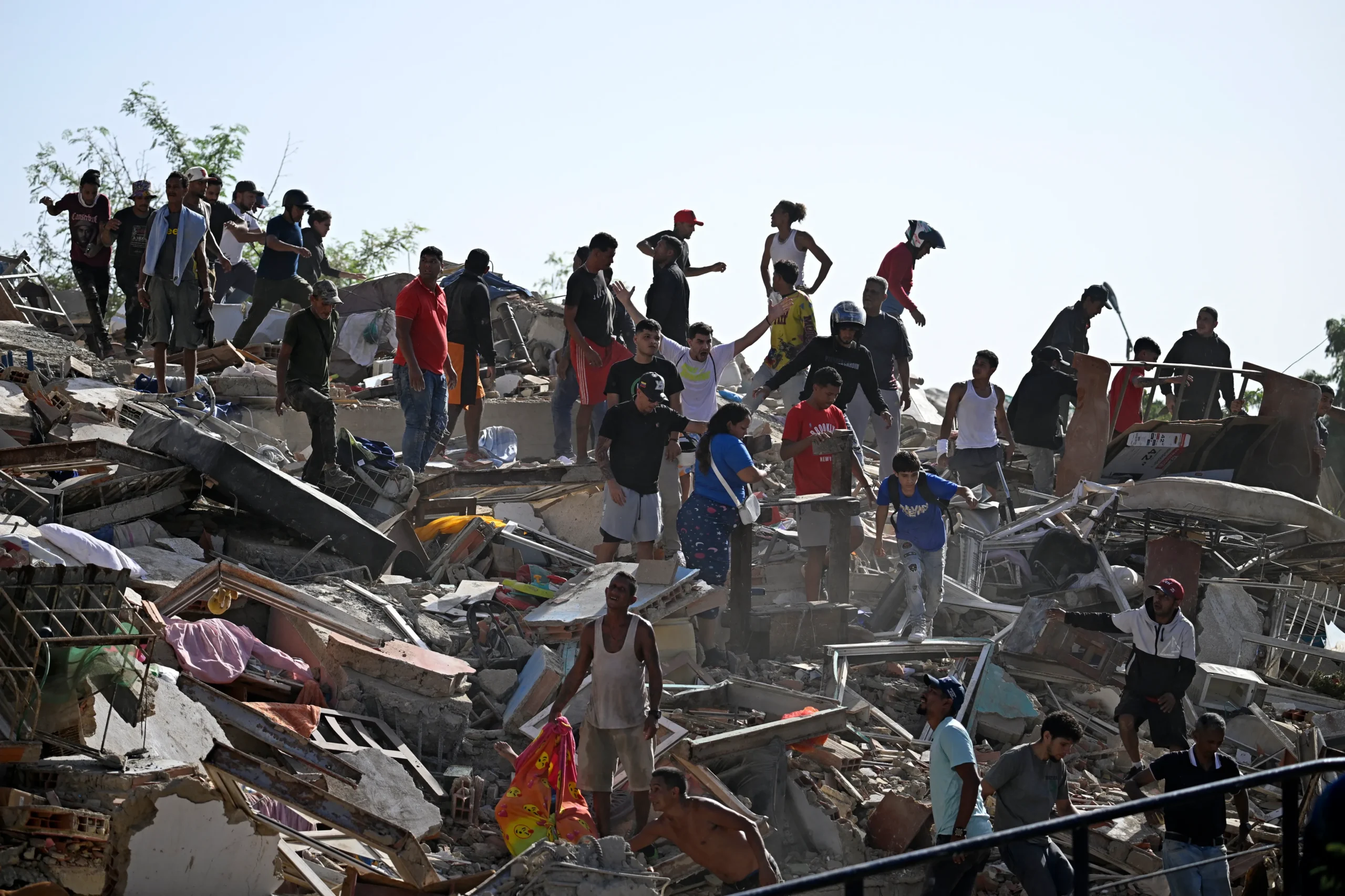
Twin earthquakes tore through Venezuela’s northern coast the night of June 24, 2026, killing at least 920 people and injuring at least 3,360, according to figures released by Venezuelan officials June 26. More than 50,000 people were reported missing, though the number was expected to fall as duplicate filings were removed and families reconnected. In La Guaira, the hardest-hit state, residents dug through collapsed apartment towers with shovels, hammers and bare hands while waiting for heavy equipment that did not come.
The U.S. Southern Command dispatched the amphibious transport ship USS Fort Lauderdale and the littoral combat ship USS Billings to Venezuelan waters, along with C-17 Globemaster and C-130 Hercules transport aircraft.
Marine Corps Maj. Gen. Kevin J. Jarrard, who previously commanded the 4th Marine Division, landed in Caracas the night of June 25 to direct Department of War operations on Venezuelan soil. A Marine general is not sent to run rescue work. He is trained to command troops — for war, invasion and occupation.
Both warships are already assigned to Operation Southern Spear, the same Pentagon buildup in the Caribbean that backed the January 2026 raid in which U.S. special forces kidnapped Venezuela’s president, Nicolás Maduro, and Cilia Flores. Maduro remains president of Venezuela. He is held in a U.S. prison in New York.
There is no honest way to read a Marine general’s arrival in Caracas without starting from that fact: Venezuela is a country under U.S. occupation.
This is occupation by Treasury license, frozen account, oil permit, blocked payment, kidnapped president and seized revenue.
Acting President Delcy Rodríguez governs under conditions Washington imposed before the ground ever moved. The U.S. Treasury’s Office of Foreign Assets Control already functions as a shadow finance ministry over Venezuela, deciding which oil contracts move, which companies operate and where the money goes. The earthquake did not create that arrangement. It gave the occupation a humanitarian script to operate in plain sight.
Workers in La Guaira and Caracas are saving lives with what they have. Neighbors pulled a man from the rubble with their hands. Residents in Catia La Mar stopped trucks to demand they unload bread and water in their streets. Volunteers from Valencia drove through the night with supplies the state could not deliver, while grassroots organizations collected food, clothing and medicine across the country for displaced families and set up makeshift shelters.
The Venezuelan armed forces moved mobile surgical units into the coastal disaster zone, and emergency teams from Mexico, the Dominican Republic and El Salvador arrived within 24 hours, with brigades from Colombia and Brazil following. Acting President Rodríguez has named Maj. Gen. Juan Ernesto Sulbarán Quintero, commander of the Bolivarian National Guard, sole authority over the emergency and placed La Guaira under military administration. This is the organized base of the Bolivarian Revolution: communes, communal councils, workers’ organizations, the armed forces and the state apparatus itself. It is doing what it can with what the U.S. occupation has left.
What the blockade has left Venezuela is a country forced to meet catastrophe with its hands tied. U.S. sanctions escalated under Trump in 2017. Biden kept and deepened them. Over a decade, Venezuela’s economy was driven down by roughly 80%. More than 8 million people were pushed out of the country. Hospitals were stripped of supplies. Construction and maintenance budgets collapsed.
The government’s capacity to enforce building codes or stockpile heavy rescue equipment had already been hollowed out by the blockade.
The occupation did not pause for the earthquake.
On June 25, the Treasury Department issued General License 60, allowing transactions tied to relief. But Venezuela’s assets abroad remain frozen. Aid can move only by Washington’s permission.
Caracas still cannot touch its gold in the Bank of England. It still cannot freely use nearly $5 billion in IMF Special Drawing Rights. Its oil revenue still moves through channels controlled by the U.S. government.
This is occupation in banking language.
Solidarity with Venezuela starts from that fact. It means demanding the gold, the frozen accounts and the seized export revenue be returned to Caracas without conditions. It means refusing to let a Marine general’s arrival in a disaster zone be read as anything other than what it is: occupation deepening its hold under cover of rescue.
Join the Struggle-La Lucha Telegram channel