
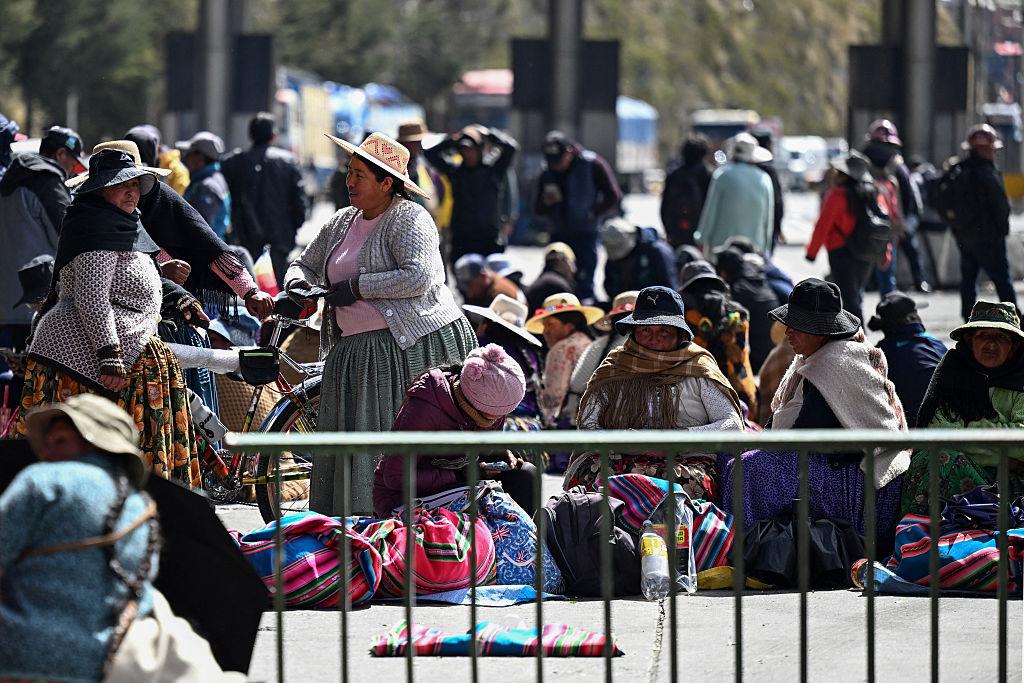
On June 20, Bolivian President Rodrigo Paz ordered the army into the streets.
A 90-day state of emergency, signed that day, authorizes soldiers to clear the road blockades that workers, campesino organizations and Indigenous communities have held for nearly seven weeks. The decree claims to “restore order” in a country shut down by a revolt against austerity. That day, military and police units began tearing barricades off the highways around El Alto and La Paz.
A deal at the top, troops on the roads
The order came less than a day after Paz signed a “pacification” agreement with the leadership of the Central Obrera Boliviana, the country’s main labor confederation. Its executive secretary, Mario Argollo, had already been charged with terrorism, and arrest warrants on terrorism charges had been issued against 25 union leaders. Under threat of arrest and imprisonment, the COB leadership called for the mobilizations to be ended after the government promised non-criminalization of protest, review of detained protesters’ cases and no political or judicial persecution of mobilized leaders.
But the agreement did not include all the forces holding the blockades. Campesino federations in La Paz and the cocalero unions of the Cochabamba tropics, historically aligned with Evo Morales, were not part of the deal. They rejected the call to lift the blockades and kept them in place.
By the morning of June 20, about 42 blockade points remained active across five departments, concentrated in La Paz and Cochabamba. The same day Paz sent military and police units to begin clearing them.
Shock therapy from Washington
The emergency decree did not come out of nowhere. It is tied to the austerity program Paz has imposed since taking office: fuel subsidy cuts, IMF negotiations, new foreign borrowing and a push to open Bolivia’s resources to Western capital.
Paz took office in November 2025 promising stability. Within weeks he delivered shock therapy. A December decree, Supreme Decree 5503, ended decades-old fuel subsidies and roughly doubled the price of gasoline overnight. Food and transport costs climbed behind it.
In May, Law 1720 opened small landholdings to use as loan collateral. Campesino and Indigenous organizations saw it as a first step toward stripping them of communal land. Paz annulled the law on May 13, but by then the mobilization had widened. It was no longer only about fuel and land. It was about wages, the imported “junk gasoline” wrecking people’s vehicles, and Paz’s resignation.
What the streets are resisting is an austerity package demanded by lenders and embraced by Paz.
Bolivia is being pushed toward a new IMF loan worth roughly $2.6 billion to $3.3 billion. The price is floating the currency and ending the dollar peg that has held for more than 15 years — a move that would raise prices and cut real wages.
That deal follows a $4.5 billion support package from the Inter-American Development Bank announced in January and a $1 billion bond sale in May, Bolivia’s first international borrowing in years.
Bolivia’s lithium is part of the same fight over who controls the country’s wealth. The country holds close to a quarter of the world’s lithium outside the United States. About $2 billion in development contracts with Russian and Chinese state companies are stalled by court action and political disputes. Paz questioned those contracts before taking office and has pledged to review them. That review comes as his government seeks IMF money, borrows abroad and promises to open the “new Bolivia” to Western capital.
Washington has backed Paz directly. Secretary of State Marco Rubio told the president the United States was “ramping up emergency assistance and logistics operations support.” Defense Secretary Pete Hegseth called the protests “attempts to overthrow the legitimate government” and warned those “profiting on death and destruction in our hemisphere” that “the United States is watching.”
The blockades hold
Paz is not facing a handful of isolated roadblocks. He is facing forces rooted deep in Bolivian society: miners, rural teachers, transport workers, campesino federations, cocalero unions and Indigenous communities of the Altiplano — organizations with their own structures and long histories of confronting the government.
On June 19, the COB leadership signed the pacification agreement and called for the blockades to come down. The deal put on paper a pledge that public firms would not be privatized and that natural resources would not be handed to private interests. The movement had forced that promise from the government even as Paz sat at the table with the Fund. But campesino federations and cocalero unions, which were not part of the deal, kept roughly 42 blockade points standing across five departments the next day and called for the blockades to be intensified.
That is the fact that defines the moment. Paz secured an agreement with the COB leadership, then moved to isolate the campesino and cocalero organizations that refused to stand down. The agreement did not end the revolt. It gave the government political cover to send the army against the blockades.
The government blames Evo Morales and says forces tied to him are trying to destabilize the country. Morales denies directing the uprising. He calls it an Indigenous rebellion driven by economic hardship and has called for early elections. Whatever Morales’ role, the shortages, wage pressure, land threats, arrests and anger in the rural communities are real.
No state of emergency resolves this
Bolivia’s gas income has fallen. Dollars are scarce. Paz is using that crisis to bring in the IMF. But IMF money does not come as relief for workers. It comes with orders: cut subsidies, float the currency, squeeze wages and open more of the country to foreign capital.
The army was sent to open the roads for the bankers, the IMF and the foreign corporations. But the roads were blocked because workers and rural communities are being made to pay for Paz’s program: higher fuel prices, higher food prices, wages squeezed by inflation and a new grab for Bolivia’s lithium. No state of emergency can hide that.
Join the Struggle-La Lucha Telegram channel