
The U.S. launched a war on Iran to tighten its grip on oil, the dollar and West Asia. It retreated when the war began to choke oil, shipping and industry — and to shake the dollar system that carries profits to Wall Street.
That is the meaning of the memorandum of understanding Trump agreed to on June 17. It would lift the U.S. naval blockade, waive oil sanctions, begin releasing Iran’s frozen funds and pull U.S. forces back from the vicinity of Iran.
Washington demanded surrender. It got a 60-day pause. It failed to seize control of the Strait of Hormuz. It failed to break Iran’s government. It failed to impose the permanent terms it went to war to win.
Washington’s plan was a fast regime-change war: assassinate Iran’s leadership, break its missile forces, and force a political collapse. Instead, Iran named a new supreme leader, kept firing missiles, struck U.S. bases across West Asia, closed the Strait of Hormuz in its own territorial waters, and turned the opening attack into a prolonged war Washington could not control.
By early March, the first plan had already failed. Washington had not broken Iran. It had not won the open backing of the other imperialist powers. Britain, Germany, France and NATO would condemn Iran, but they would not join Trump’s war or put their fleets under a U.S. command to force the strait open.
Trump’s own advisers were looking for an exit. They wanted him to declare victory before the oil shock and political cost grew worse. But Iran was not offering Washington a free doorway out. Washington offered talks with one hand and readied the bombers with the other. Iran had no reason to trust that maneuver, and no reason to give Trump an exit, while the blockade, bombing and sanctions went on.
That was the catch: Washington needed an exit, and Iran controlled the door.
Trump retreated because the oil system was beginning to seize up. At the Group of Seven summit in France on June 17, he warned that with the Strait of Hormuz closed, oil supplies would run short in about four weeks.
“We run out of reserves at about four weeks,” he said. He warned of “bedlam” if the oil stopped.
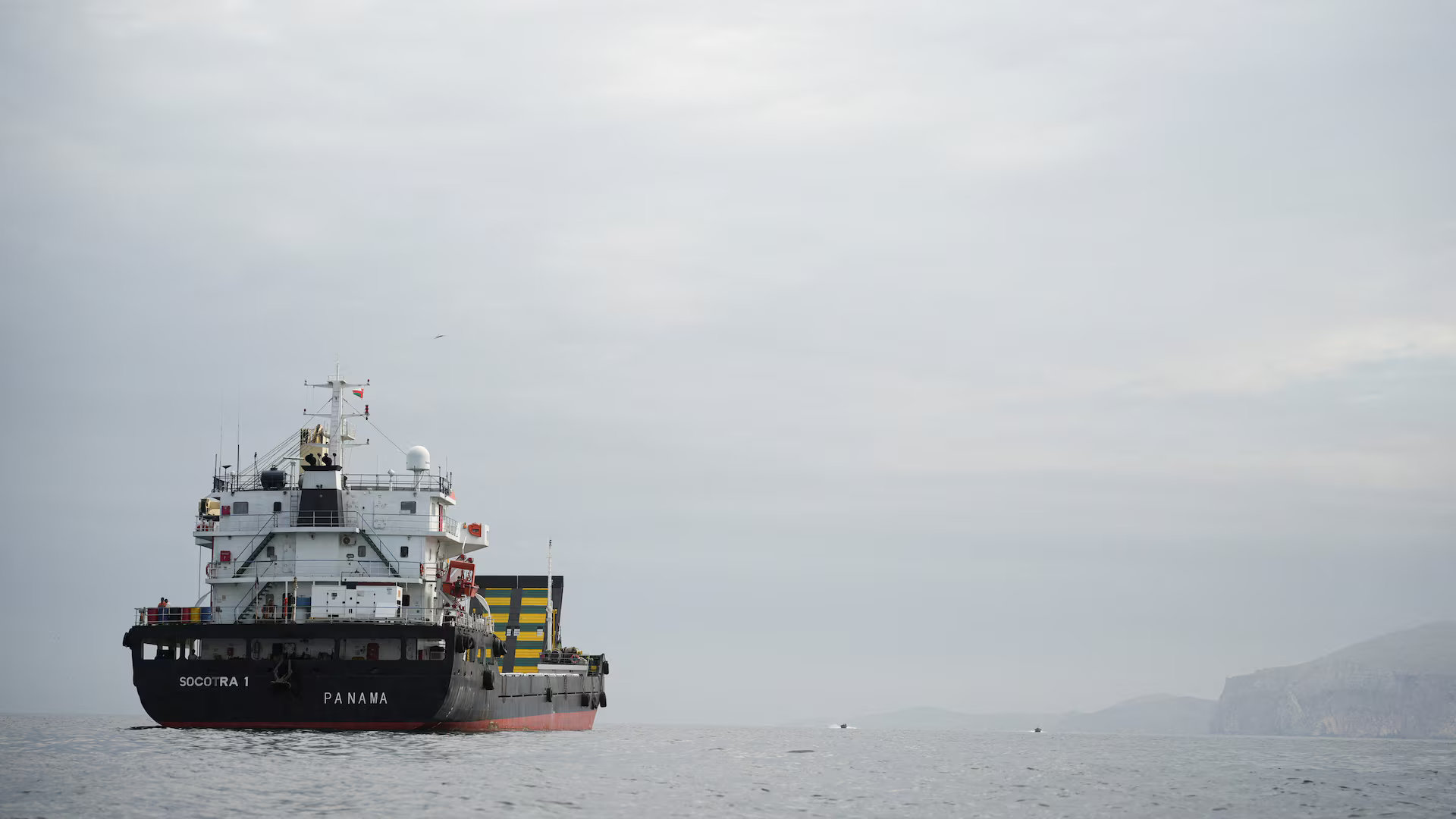
The Strait of Hormuz runs through Iranian and Omani territorial waters. It is too narrow for an open-sea lane. At its tightest it runs about 21 nautical miles across, and the 12-mile territorial limits of Iran and Oman cover the whole width. No international channel runs between them. Every ship that passes moves through waters one of the two governments controls. Iran shut the strait on its own side and held it shut against the U.S. blockade.
This narrow waterway is one of the great choke points of world capitalism. Through it move crude oil, refined fuel, liquefied natural gas, petrochemicals and the raw materials for fertilizer, plastics and industrial chemicals. That flow runs production, transport, shipping, food distribution, heating, aviation, finance and war — the circulation U.S. banks, oil monopolies, shipping firms, insurers, refiners, chemical giants and war planners depend on.
Traffic through Hormuz had fallen to a fraction of normal. Before the war, more than 100 ships a day passed through the strait. By late May and early June, only about 10 a day were moving, and crude tankers were only a small part of that traffic.
The oil was piling up behind the strait. Kpler estimated 93 million barrels of non-Iranian crude were stranded in the Gulf. Vortexa counted 54 supertankers carrying about 87 million barrels stuck inside.
The oil that U.S. banks, oil monopolies and shippers fight to control sat bottled up. It could not move to refineries, ships, factories or markets. Oil that cannot move cannot be sold. It cannot become profit.
That is why the crisis spread so quickly from tankers to freight rates, insurance, futures markets and stock prices. The blockade and the war began to interrupt the circulation of capital itself.
Washington launched the war to overthrow Iran’s government and reimpose imperialist control over Iranian oil — control the 1979 revolution had ended. In 1953, the CIA and British intelligence overthrew Mohammad Mossadegh after Iran nationalized its oil, restored the U.S.-backed shah’s dictatorship, and opened Iran’s oil wealth to the oil monopolies. In 1979, a mass uprising drove that shah from power and ended U.S. domination of Iran. Strikes by oil workers helped overthrow the regime. The revolution took Iran’s oil out of the hands of the imperialist oil monopolies.
That is what U.S. imperialism has never accepted: that the 1979 revolution put Iran’s oil beyond Washington’s control. This war tried to seize again by bombs, blockade and sanctions what the Iranian people had won back.
Trump’s war to seize oil control began choking the oil flow. Trump’s war to strengthen U.S. financial domination began shaking the economic base of that domination.
The dollar was the other red line.
Washington is holding billions of dollars that belong to Iran. It seized the money under sanctions and locked it in overseas accounts. The memorandum opens the way for Iran to regain access to those funds.
Trump explained why.
“It’s not our money, it’s their money,” he told reporters. “If we didn’t give it back, nobody would ever invest in the dollar again.”
That is the whole dollar system in one sentence.
The dollar is the currency in which most of the world’s oil is priced and paid. It is the currency held by central banks. It is the currency U.S. banks, oil companies and industrial monopolies use to pull tribute from the labor and resources of the world.
That power rests on force, debt, banking networks, oil pricing and confidence in the dollar as world money. A country that holds dollars must believe those dollars will remain usable. It must believe Washington will not simply seize them when it wants to punish a government.
Trump’s war weakened the dollar while leaving its world role intact. The seizure of Iran’s funds sent a warning to every central bank and oil-producing country: every frozen account, every blocked oil payment and every threat to keep a country’s money teaches the same lesson — the farther they can move from U.S. banks and the dollar, the safer they are.
The balance sheet turned against the war. Oil prices were rising, tankers were trapped behind Hormuz, and the danger of a supply shock was growing. Trump said he did not want to be Herbert Hoover, the president in office during the 1929 crash and the Great Depression. He watched the stock market climb as the deal came together.
The argument inside Washington was never between war and peace. It was between those who wanted to pause before the oil shock spread and those who wanted to widen the war after the first plan failed.
Iran forced the pause.
That is a real defeat for U.S. imperialism. Workers and oppressed people everywhere are better for it.
But this is only a 60-day pause. The war was priced out, not abandoned. The oil keeps moving. The dollar keeps its place. The same oil oligarchs, bankers, generals, war contractors and Department of War remain in command. They were forced to retreat from Iran.
The wars on Gaza and Lebanon have not stopped. The press calls them Israel’s wars. But the U.S. builds Israel’s warplanes and pays for them as military aid. The U.S. supplies the bombs, the artillery shells and the missiles that fall on Gaza and Lebanon. Even the jet fuel comes from Texas. Valero refines it in Corpus Christi under U.S. war contracts. Military-chartered tankers carry it to the Ashkelon terminal in Israel. Israel is the U.S. forward base in West Asia. It strikes where Washington arms it to strike, when Washington fuels it to strike.
Join the Struggle-La Lucha Telegram channel