
There is no honest way to discuss Venezuela today without starting from U.S. occupation.
This occupation wears modern clothes. It uses Treasury licenses, frozen accounts, oil permits, blocked payments, prison cells, military threats and control over state revenue. Washington has seized decisive functions of the Venezuelan government while pretending that Venezuela acts freely.
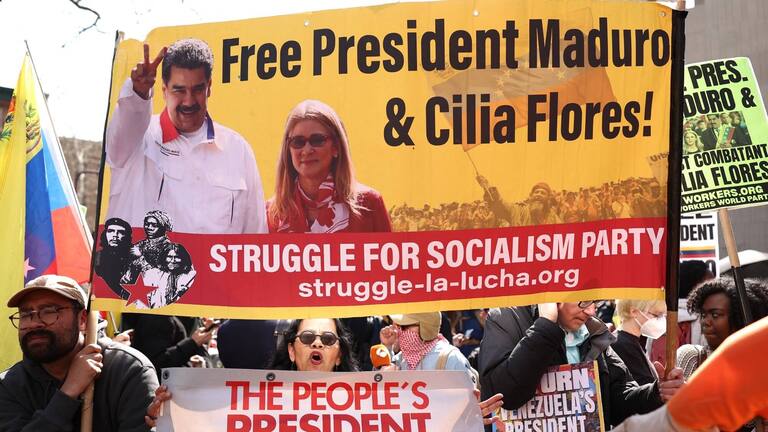
The U.S. military kidnapped Nicolás Maduro and Cilia Flores on Jan. 3, 2026. Maduro remains Venezuela’s president, held in U.S. custody in New York. Delcy Rodríguez governs as acting president under conditions Washington imposed. Venezuela’s oil policy, financial channels and access to revenue now operate under the supervision of the U.S. Treasury’s Office of Foreign Assets Control.
OFAC functions as a shadow finance ministry over Venezuela. Its licenses decide which oil contracts move, which companies operate, who can buy oil, who can ship it and where the money goes.
That is occupation in modern imperialist form.
The gunboat remains. So does the threat of U.S. military force. But the Treasury license, the frozen bank account, the blocked payment channel, the secondary sanction and the U.S.-controlled oil account have become weapons of rule.
Caracas chooses from what Washington permits.
Marco Rubio and the State Department want the world to see something else. Their story says Venezuela’s present course comes from deals at the top, betrayals, private negotiations, oil contracts and political maneuvering. It places Delcy Rodríguez at the center and pushes U.S. imperialism into the background.
That frame serves Washington. It turns coercion into consent. It makes concessions forced by pressure look like free choices by Caracas. It hides occupation behind diplomatic language.
Trump made the operation plain. Venezuelan oil money is to be held under U.S. Treasury control. Companies may pay routine local fees inside Venezuela, while royalties and key federal payments are directed into U.S.-run accounts.
Washington is controlling the money flow of Venezuela. This is colonial control dressed up in banking language.
Venezuela must ask Washington for its own money. Secretary of State Marco Rubio said Caracas has to submit a “budget request” before it can touch the oil revenue the U.S. Treasury holds.
This is how imperialism rules where it has not fully conquered. It freezes assets. It blocks banks. It threatens ships. It licenses oil. It kidnaps leaders. It seizes revenue. Then it points to the narrow path left open and calls that “Venezuelan policy.”
Alex Saab’s deportation has become a point of dispute in parts of the solidarity movement. It should be treated in proportion. Many defended Saab because he was associated with efforts to bypass the sanctions blockade and secure food, fuel and financial channels. Washington targeted that effort because Venezuela was trying to survive outside U.S. control.
The questions raised around Saab, state contracts, private capital and concessions made under siege should not be dismissed. Workers have every right to ask what was done, who benefited and who paid the price. But those questions cannot displace the central fact: Washington created the siege, controls the revenue and now uses every contradiction it helped sharpen to divide the solidarity movement and recast coercion as consent.
The danger is to turn uncertainty into a simple betrayal story. That road feeds the very fragmentation U.S. pressure was designed to create.
Every contradiction inside the Bolivarian process has sharpened under occupation. Every weakness has been exploited. Every concession to private capital carries a heavier cost. Every retreat in wages, collective bargaining, popular participation or social protection weighs more heavily on the workers and oppressed.
The contradictions must be examined. But any serious analysis begins with the real balance of forces. Washington is the occupier. Venezuela is the country under occupation.
The Bolivarian Revolution has suffered a military defeat and now operates under U.S. occupation. But it has not been politically defeated.
The revolution still lives in the organized people: the communes, communal councils, CLAP committees, workers’ organizations, women’s and youth movements, social missions, popular militias and neighborhood networks built over decades of struggle.
These structures have been battered by sanctions, migration, wage collapse and the pressure of occupation. They have lost resources. Many have lost cadres. Some have been weakened by bureaucracy and survival deals made under siege. Yet they remain real forces in Venezuelan society.
They organize food distribution, local production, public services, neighborhood defense, political mobilization and demands on the state. They are the living base that U.S. imperialism has not been able to erase.
That is why solidarity must reject the Rubio line. Washington wants the world to see only officials, oil contracts, debt talks and accusations of betrayal. The deeper reality is that the Bolivarian Revolution still exists as an organized popular force, even after a military setback and under occupation.
The question is whether that popular force can defend sovereignty, regain the initiative and make the country’s resources serve the workers and oppressed — or whether Washington and capital can use occupation to push the people aside.
Join the Struggle-La Lucha Telegram channel