
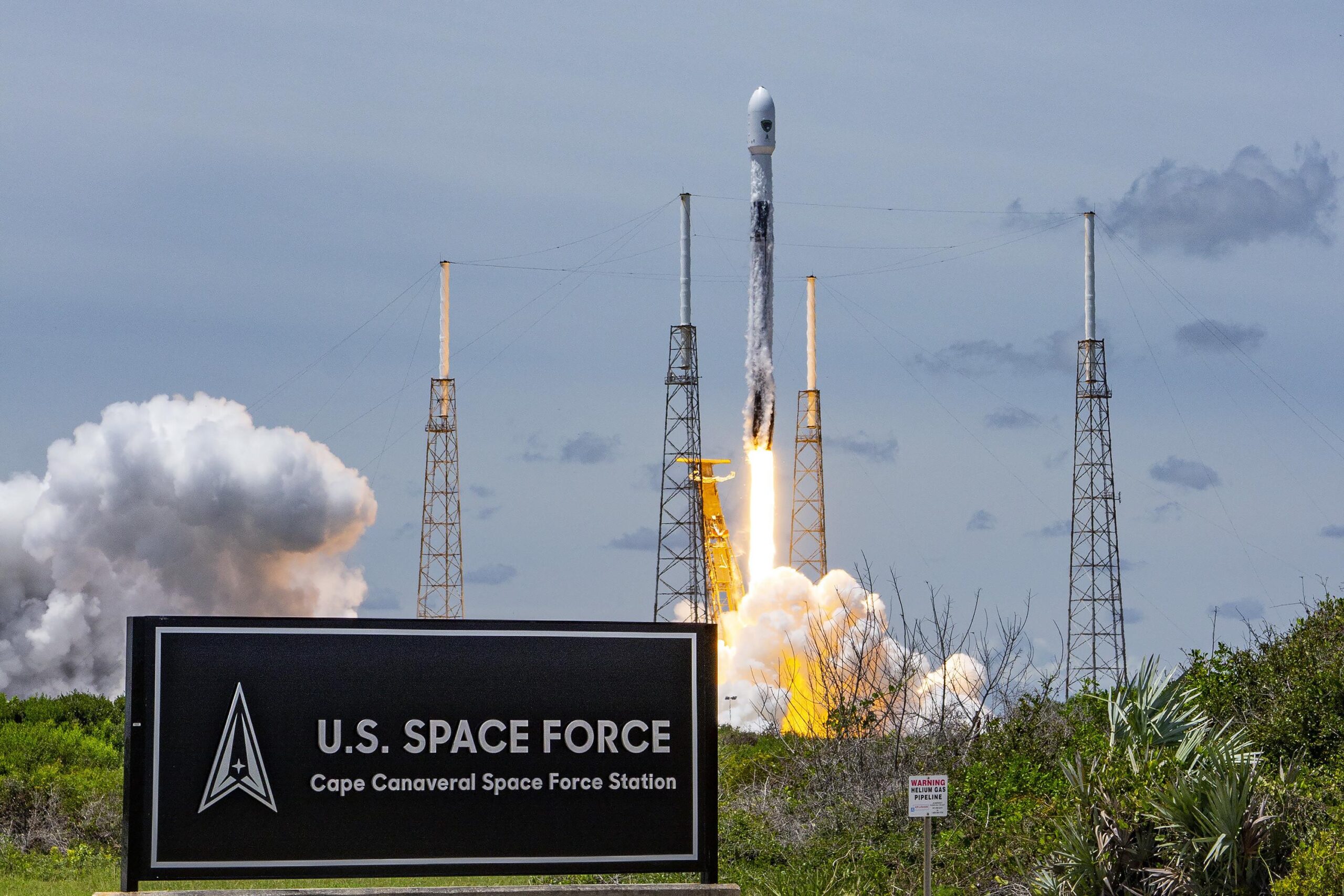
On June 12, Wall Street did not discover that Elon Musk had created a trillion dollars in wealth. It marked up a paper claim on rockets, satellites, military contracts, public research and the future labor of thousands of workers — and assigned that claim to one man.
That is how the first trillionaire was made.
The financial press called it genius. The record shows something else. The military-industrial complex took a company that private capital would not carry on its own, rescued it with government money, fed it with guaranteed contracts and protected it as a monopoly because the Pentagon needed it.
SpaceX lost $4.94 billion in 2025 and another $4.3 billion in the first three months of 2026. By the standard capitalism applies to workers and small businesses — pay your way or perish — SpaceX should have been punished. Instead, Wall Street priced it above JPMorgan Chase because investors know what the prospectus only hints at: SpaceX revenue is underwritten by the U.S. war machine, and the war machine does not let its chosen contractors die.
The capitalist market did not make Musk the first trillionaire. The capitalist state did.
Rescued by the state
SpaceX should have gone under in 2008. Three rockets had failed. The company was running out of money. The banks would not lend. Then NASA signed a $1.6 billion contract for cargo flights to the International Space Station. NASA money and NASA’s guaranteed market helped build the Falcon 9. Industry analysts have said plainly what the official mythology avoids: the contract saved the company from bankruptcy.
There was nothing exceptional about this rescue. This is how monopoly capitalism works in the U.S.: private capital takes the profit, and the capitalist state carries the risk.
The U.S. government bailed out Lockheed in 1971. It rescued the banks in 2008 and the automakers in 2009. It keeps Boeing alive today through military orders no matter how badly its commercial business performs. When a company judged strategically necessary by the capitalist state fails in the market, the state absorbs the loss and guarantees the profit.
When the company was failing, the government stepped in. When the company became valuable, Musk kept the property.
This is not a contradiction in capitalism. It is how U.S. capitalism developed. Railroads, steel, aviation, electronics, nuclear power, computers, the internet and spaceflight were all built through land grants, military orders, government research, subsidies drawn from the wealth workers created and guaranteed markets. Only afterward did the capitalists arrive to announce that private enterprise had performed a miracle.
NASA itself had been starved since the 1980s, when Washington began turning six decades of government-built rocketry, satellite and spaceflight technology over to private contractors. Musk’s company inherited that work: the research, the engineers, the trained workforce, the launch systems and the contracts. Workers paid for it through the wealth they created. Musk got the property rights. Outbidding Boeing and Lockheed was a low bar.
The pattern runs through Musk’s whole career. As historian Quinn Slobodian and writer Ben Tarnoff documented in Foreign Policy on June 12, Zip2, Musk’s first company, ran on free data from the GPS constellation the U.S. military had just completed. PayPal worked because federal deposit insurance stood behind the accounts. Tesla survived in 2010 on a $465 million U.S. Department of Energy loan when private banks refused him.
Musk repaid that loan nine years early for a reason: to cancel the stock warrants that would have given the public a share of Tesla’s upside. Those warrants were worth about $270 million the week he wired the money. The public took the risk. Musk took the gain.
Tariff walls now help protect Tesla from China’s BYD, which sells an electric car in China for around $10,000. It rivals Tesla on performance and, by some measures, surpasses it. The same politicians who preach “free markets” use the state to protect U.S. monopoly capital whenever competition threatens it.
A Pentagon asset with a stock ticker
SpaceX today holds about $22 billion in federal contracts. Across the Musk empire, government contracts, loans, subsidies and tax breaks run closer to $38 billion. SpaceX launches the Pentagon’s military and spy satellites. Starlink, the only consistently profitable part of the business, doubles as military infrastructure. The U.S. armed forces depend on it.
SpaceX is a weapons contractor in everything but reputation.
That is the foundation under the $2 trillion valuation. Wall Street did not price an ordinary company. It priced a contractor lodged inside the machinery of the U.S. war state.
This is why losses did not matter. This is why private investors rushed in anyway. This is why the company could be valued above banks, manufacturers and whole industries with decades of profits behind them. SpaceX has what every capitalist wants most: protection from competition, guaranteed government contracts and a revenue stream backed by the Department of War.
The rockets are real. The satellites are real. The workers are real. But the market value is a claim on the future — future launches, future contracts, future military budgets, future exploitation.
What a trillion-dollar IPO really is
An IPO does not create the labor, technology or social wealth it prices. It creates a market price for shares. Once that price exists, the whole mass of shares can be revalued at once, including the shares the controlling owner never sells.
SpaceX put only a small slice of the company into public trading. Scarcity helped drive the price up. That price was then applied to the rest of the company. A sliver changed hands. A whole paper fortune expanded.
Marxist economics has a name for this: fictitious capital.
Fictitious does not mean imaginary. SpaceX has launch pads, factories, satellites, software, ground stations, workers and contracts. But the stock price is something different. It is a present price placed on profits that have not yet been earned — a claim on surplus value that has not yet been produced.
General Motors made $185 billion in 2025 — ten times SpaceX’s revenue — and Wall Street values it at $73 billion. SpaceX lost $4.9 billion on $18.7 billion in revenue and Wall Street values it at more than $2 trillion. Apply SpaceX’s price to GM and GM would be worth $17 trillion — more than half of everything the U.S. economy produces in a year. The difference is not productivity. It is a Pentagon contract and a monopoly position, capitalized into a number Wall Street can sell.
The rockets and launch pads, for all their physical reality, are constant capital. They produce no surplus value by themselves. The profit stream that justifies the price comes from living labor — the workers who design, build, launch and operate the systems — combined with monopoly position and state-guaranteed revenue.
Every rocket launch appears in the capitalist press as Musk’s vision. In reality, it is the labor of the world concentrated in one launch. Miners, factory workers, chip workers, engineers, welders, machinists, software workers, technicians, launch crews, drivers, cleaners, guards and office workers all enter into it. So do the workers who build the computers, cables, sensors, engines, terminals, satellites, data centers and power systems. The launch is sold as one man’s genius. It rests on the collective labor of millions.
The IPO did not reward their labor. It turned their future labor into Musk’s collateral.
Musk’s trillion capitalizes their future work and the Pentagon’s future budgets together, then assigns the result to one man.
Paper wealth is real power
Paper wealth of this kind is not harmless. Musk does not need a trillion dollars in cash. He needs Wall Street to treat his shares as power. Those shares can be pledged as collateral, borrowed against, and used to fund acquisitions, political machines and new speculative ventures. Musk’s purchase of Twitter ran on exactly this mechanism.
A paper valuation becomes borrowing power. Borrowing power becomes control over media, technology, politics and labor. The stock market turns a claim on future exploitation into command in the present.
But the danger is built in. A valuation resting on markets that do not yet exist and military contracts that can shift can collapse as fast as it inflated. When it falls, the collateral, the debt and the index funds holding workers’ retirement savings can fall with it.
The capitalist gets the paper fortune. Workers get the risk.
What the trillion measures
The first trillionaire will bring demands for reforms to make the system look fairer. Tax him. Regulate him. Let the government take a small equity stake. But none of that breaks the power underneath: the Pentagon contracts, the monopoly position, Wall Street’s valuation machine and private ownership of the industries built by workers.
The question is not whether the state is involved. The state was involved from the beginning. The question is which class controls the state, which class controls the technology and which class receives the wealth.
The IPO proves nothing about one individual creating a trillion dollars in value. It proves that under capitalism, control over labor, technology, military contracts and financial markets can be converted into private paper wealth on a staggering scale.
The wealth appears as the property of one man. Its source is labor, wealth routed through the capitalist state and the power to turn future profits into something Wall Street can buy and sell today.
The answer to the first trillionaire is not to tax the fortune after the fact. It is to expropriate the war profiteers, take space and communications out of private hands, and reorganize production for human need — not monopoly profit and war.
Join the Struggle-La Lucha Telegram channel