
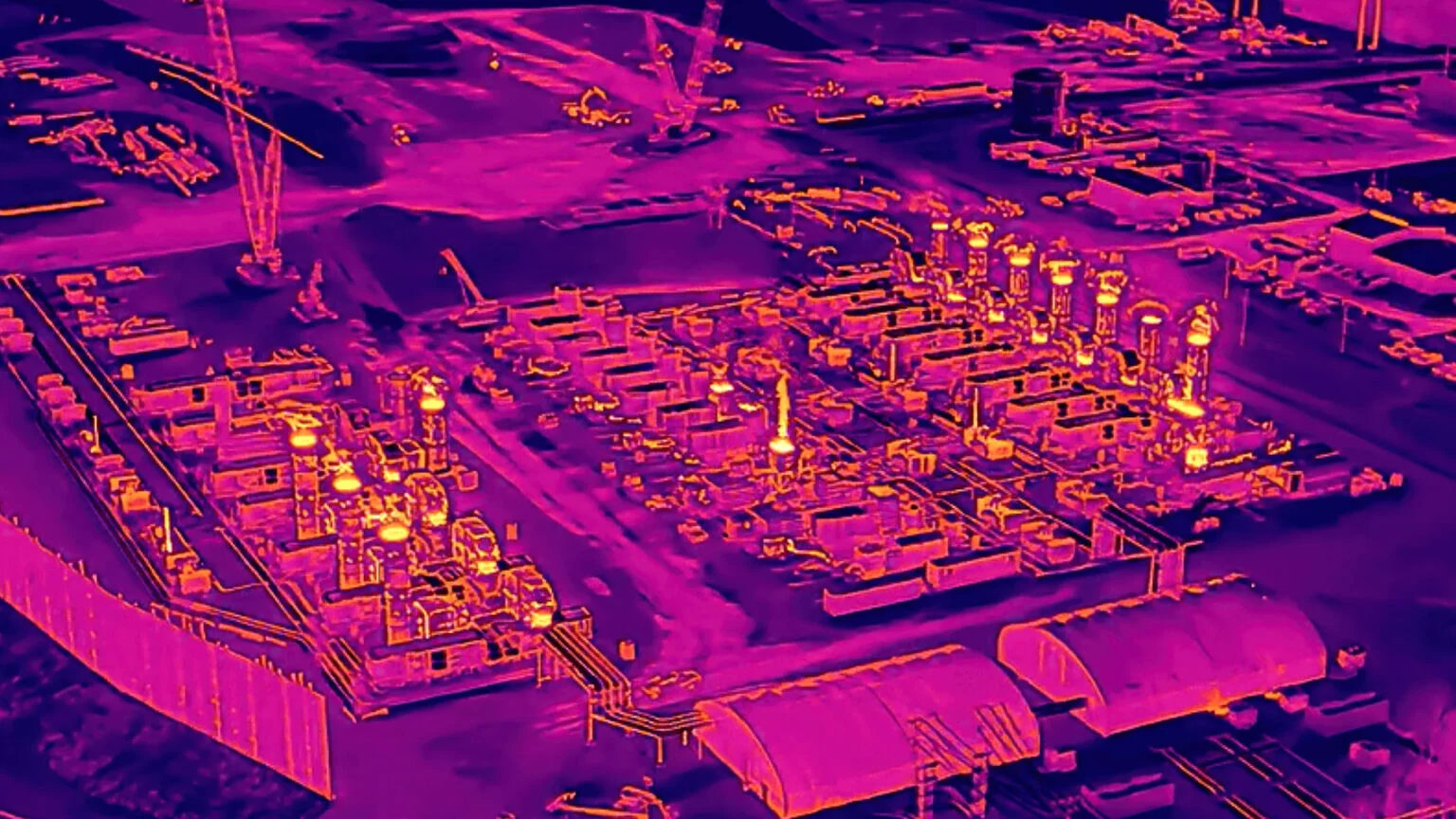
Elon Musk’s xAI did not wait for permission. It built a massive gas-burning power plant outside Memphis without permits, without public hearings and with the community shut out until after the turbines were already running.
The turbines sit in Southaven, Mississippi, just across the state line from Black working-class neighborhoods in South Memphis. Homes, schools and churches sit close enough to bear the exhaust, noise and risk.
The NAACP sued xAI on April 14 over the plant, which was built to power Colossus 2, its data center in South Memphis. An independent study projects that pollution from the facility will sicken children, women and men in surrounding communities, imposing between $30 million and $44 million in health costs every year and releasing 19 tons of cancer-causing formaldehyde into the air.
When the NAACP asked a federal court for an injunction on May 6, the number of turbines on site had grown from 27 to at least 33. Internal emails from the Mississippi Department of Environmental Quality later showed the number had reached 46.
The Trump Justice Department, citing an executive order promoting AI development, has signaled support for xAI in the lawsuit. Tennessee state Rep. Justin J. Pearson, whose district covers part of the affected area, called it “a clean, clear-cut case of environmental racism.” Pearson is also under attack from Tennessee’s racist redistricting drive. In May, the state’s legislative majority pushed through a Trump-backed map that breaks up Memphis, eliminates Tennessee’s only majority-Black congressional district and threatens to erase Black voters’ only real voice in the state’s congressional delegation. The map carves majority-Black Memphis into three pieces and wipes out the district where Pearson had been running for Congress — another attack on the same Black working-class communities xAI is poisoning.
How monopoly capital works
The issue is not one billionaire breaking the rules. The case of Musk’s plant shows how monopoly capital works: AI companies demand enormous amounts of electricity, and the system meets that demand by burning more fuel, raising rates and overriding communities. AI is built not around human need, but around profit — wherever monopolies can take control of power, land, water and subsidies, while the government protects them from the communities forced to live with the damage.
Big Tech needs massive power. Fossil fuel companies need new markets. Utilities want guaranteed returns. Banks and investors want the boom financed, subsidized and shielded from risk — while households are forced to absorb the cost.
The “cloud” is not weightless. It rests on land, water, fuel, turbines and tax breaks — and on the backs of overburdened working-class communities.
Capitalism turns all of it into profit for the monopolies and the billionaires who own them — and into waste for everyone else: emissions, heat, wastewater, noise and disease.
These AI complexes are not ordinary data centers. Most existing data centers use less than 50 megawatts of power. The new AI facilities are being built at a much larger scale, demanding whole power plants, new transmission lines and enormous water supplies. Even ordinary data centers can use between 1 million and 5 million gallons of water a day for cooling, create heat islands that warm nearby land by up to 16 degrees Fahrenheit and send noise for miles.
Poisoned air
The drive to power these facilities is reversing years of progress on air quality. Mercury emissions from coal plants rose roughly 9% in 2025 — the first increase in years — according to a New York Times analysis of Environmental Protection Agency data published May 11.
In Indiana, where AI data centers have expanded rapidly, one coal plant increased its mercury emissions by 160% in 2025. It generated 90% more power to meet rising demand.
The Trump administration compounded the damage by scrapping stronger mercury limits adopted in 2024 and going back to weaker 2012 standards. The rollback saved the industry $120 million a year in compliance costs. Harvard researchers calculated the public health cost at $200 million in the first year alone.
Big Tech gets the power. Coal and gas companies get the market. Workers and children get the poison. The profit is private. The damage is universal.
That is the ecological logic of capitalism: take from nature, sell the product, dump the damage.
The damage falls hardest on communities already overrun with pollution. A federal screening tool found that roughly 20% of U.S. data centers — about 1,260 facilities — are located in communities already identified as disadvantaged by under-investment and overburdened by pollution.
Oglala Lakota and Northern Cheyenne activist Krystal Two Bulls, executive director of the Indigenous-led eco-justice organization Honor the Earth, describes data center development as a “modern-day iteration” of settler colonialism. She points to noise pollution, cancer and respiratory illness, water depletion and ecological collapse.
Higher bills, drained water, fewer jobs
The same workers are hit again when the electric bill arrives.
Residential electricity prices rose more than 36% between 2020 and February 2026. Utilities requested a record $31 billion in rate increases in 2025. In regions packed with data centers, wholesale electricity costs jumped 267% over five years, according to a Bloomberg analysis published in September 2025.
In New Jersey, average electric bills surged more than 20% in 2025 alone. Goldman Sachs analysts projected in February 2026 that consumer electricity inflation will jump another 6% from 2026 to 2027. They also warned that rising business electricity costs will drive up the prices of food, transportation and clothing.
AI is not only raising electric bills. It is reorganizing the utility industry itself. NextEra’s proposed takeover of Dominion Energy would create the largest utility and power company in the U.S., serving about 10 million customers and controlling power plants, transmission lines and pipelines across much of the country. Dominion is prized because it serves Northern Virginia’s “Data Center Alley,” the world’s largest concentration of data centers. The $120-billion-plus deal shows how AI demand is being used to build bigger utility monopolies.
The boom is draining water supplies, too.
Data centers in Texas consumed more than 50 billion gallons in 2024. A study by the Houston Advanced Research Center and the University of Houston projects that figure will reach 399 billion gallons by 2030 — enough to draw down Lake Mead, the nation’s largest reservoir, by more than 16 feet in a single year.
In Northern Virginia, already the global hub of data center development, data centers consumed nearly 2 billion gallons in 2023. That was a 63% increase from 2019.
Developers promise employment. Most of the jobs are temporary construction work. Once a facility opens, it needs few permanent workers.
A lifeline for fossil fuels
AI data centers are handing the fossil fuel industry a vast new market.
Developers in Homer City, Pennsylvania, hope to build a 4.5-gigawatt methane gas plant to serve data centers. It would be the largest in the country. Meta’s Louisiana data center, first proposed with three gas plants producing 2 gigawatts, has been expanded to 10 plants. Methane is a powerful greenhouse gas and a major driver of climate change.
This is not accidental. The fossil fuel industry is organizing politically to turn AI demand into a coal-and-gas revival.
The Heartland Institute — a climate denial group with long-standing ties to ExxonMobil, Koch family foundations and the coal industry — used the American Legislative Exchange Council’s (ALEC) annual meeting in July 2025 to urge tech companies to power their data centers with coal. Heartland explicitly urged tech companies to help bring coal back.
At least 15 “grid reliability” bills based on ALEC model legislation were introduced in statehouses in 2025. Bills based on that model became law in Arkansas, Missouri, Indiana, Louisiana and Ohio. Louisiana’s law went further. It redefined “green” energy to include natural gas. Heartland took credit for it.
ALEC brings Big Tech and coal together
The fossil fuel and AI industries sit at the same table. ALEC’s governing board includes Koch Companies Public Sector and the Information Technology Industry Council, which represents Amazon, Apple, Google, Meta, Microsoft, NVIDIA and OpenAI.
The coal industry and the AI industry are not on opposite sides. They are in the same room, funding the same organization, pushing the same laws.
The Trump administration is using federal power to serve that coalition. The Justice Department, Energy Department, state legislatures, regulators and utility commissions are all being pulled into the same project: make power available to the AI monopolies.
The Department of Energy has repeatedly intervened to force utilities to keep aging coal plants operating beyond their planned retirements. Utilities themselves have warned that the move is costing ratepayers hundreds of millions of dollars. They have described the plants as “inefficient and increasingly unreliable.”
Coal is coming back under the banner of AI. U.S. coal use rose 10% in 2025, reversing years of decline. Global energy-related carbon dioxide emissions hit a new record high that year. In Alaska, developers have proposed a 1.25-gigawatt coal plant — the first new U.S. coal plant since 2013 — as data centers create new demand for power.
Build first, pollute first
Musk’s playbook in Memphis is simple: build first, seek permits later, expand anyway. But Musk is not the exception. He is showing the rule: get the turbines running, secure government backing and force the community to fight from behind.
AI companies use non-disclosure agreements and confidential contracts to hide rate and contract information from the public. In West Virginia, the state legislature passed a law stripping local governments of oversight authority over data centers. The communities that bear the costs have no seat at the table where decisions are made.
Communities are fighting back
These fights are not just local zoning disputes. They are battles over who controls land, water, energy and public health: the communities that live there or the monopolies that profit from them.
The industry is running into resistance. Data Center Watch estimates that community opposition blocked or delayed about $64 billion in data center projects between May 2024 and March 2025. In the next quarter alone, the figure reached $98 billion. Twenty-five projects were canceled in 2025 because local communities fought back.
On Dec. 8, 2025, more than 230 state and local environmental groups sent a letter to Congress demanding a national moratorium on new data center construction. At least 12 states filed moratorium bills in early 2026.
In Indianapolis, sustained opposition forced Google to withdraw a $1 billion data center rezoning proposal at a city-county council meeting in September 2025.
In Box Elder County, Utah, commissioners voted May 4 to approve the 40,000-acre “Stratos Project,” a data center complex projected to consume 9 gigawatts — double the state’s entire current electricity use. Community members packed the meeting, shouting “Shame!” and “People over profit!” Voters immediately filed to put a referendum on the ballot to overturn the decision.
A new Gallup survey released in May 2026 found that 70% of the U.S. population opposes data centers near their homes, up sharply from 47% in late 2025.
In Southaven, xAI is already planning a third data center for the Memphis area. The turbines are still running.
Join the Struggle-La Lucha Telegram channel