
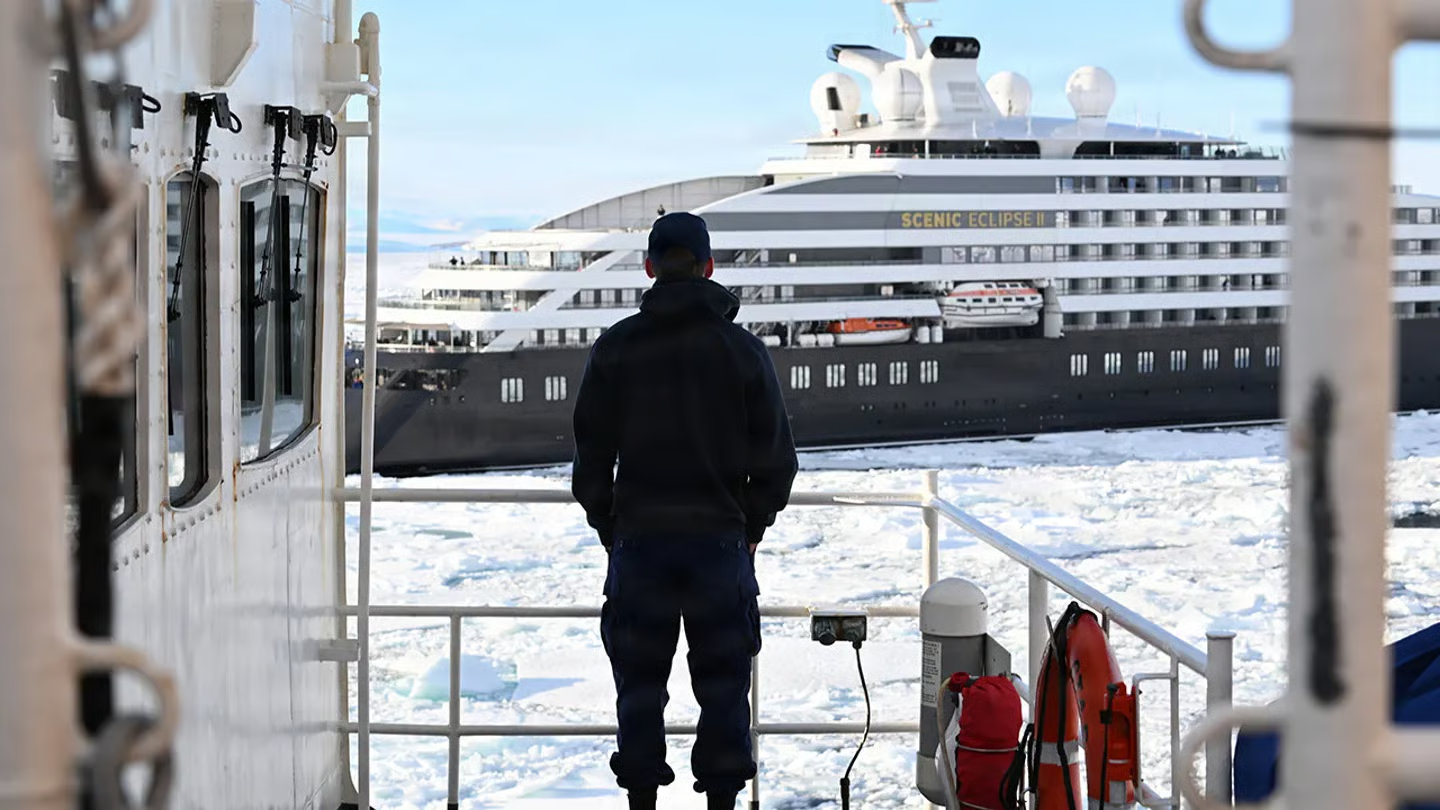
Before anyone boarded the MV Hondius, the conditions for an outbreak were already forming across the landscapes where climate disruption, rodents and human activity increasingly collide.
Argentina’s health ministry has recorded 101 hantavirus infections since June 2025 — roughly twice as many as the same period the year before. Officials have not yet identified the cause of the surge. Climate science offers a strong candidate.
Argentina and neighboring countries endured years of severe drought from 2021 to 2024, including Argentina’s worst dry spell in more than 60 years in 2023, followed by extreme rainfall in 2024. Those back-to-back extremes are precisely the conditions that push rodents into closer contact with humans and cause their populations to boom.
Kirk Douglas, a scientist at the University of the West Indies who studies hantavirus and climate change, explains the chain. Drought drives rats and mice toward people in search of food. Then heavy rain brings new vegetation and seeds, allowing rodent populations to boom. Flooding can drive them out of their habitats and toward homes, workplaces and settlements.
That danger can last. A 2024 study in JAMA Network Open found that severe flooding in China’s Yangtze River basin left hantavirus risk elevated for up to three years.
“Hantavirus is sensitive to the changes climate change will bring,” Douglas has said. “It’s all dependent on what the prevailing climate impact is.”
The climate connection runs deeper than rainfall. Heat, drought and crop failure are making farming harder across Latin America and the Global South. That pushes more people into crowded cities and informal settlements, where rats and mice thrive.
Climate change also strips ecosystems of biodiversity. When other species disappear, hardy survivors like rats and mice often gain ground. So do the diseases they carry. A 2022 study in Nature Climate Change found that climate hazards have already worsened more than half of known infectious diseases in some way.
Investigators are examining whether the first patient was exposed to infected rodents before boarding the ship, possibly during birdwatching or other land activity in the Southern Cone. The exact source has not been confirmed. The first known patient became ill on April 6 and died on April 11. The ship kept sailing.
That decision protected the normal operation of the travel industry while pushing the danger outward — onto crews, port workers, airport workers, health care workers and the public.
A second passenger — the first man’s wife — disembarked at Saint Helena on April 24, flew to Johannesburg the next day, and died there on April 26. She was confirmed on May 4 to have had the Andes strain of hantavirus.
The World Health Organization (WHO) was not notified of the cluster until May 2 — three weeks after the first death.
As of May 14, health authorities had reported 11 cases linked to the ship, with three deaths: a Dutch couple and a German woman. At least 41 people in the United States are under monitoring. Sixteen of them were not even passengers — they were on a Johannesburg flight with the Dutch woman who later died and have since returned to the U.S. on commercial flights. Their whereabouts have not been made public.
There is no vaccine for hantavirus. There is no specific treatment. Survival depends on reaching intensive care in time.
‘Health freedom’ and a 40% fatality rate
The Andes strain is the only known hantavirus that spreads between people. Yet the Centers for Disease Control and Prevention (CDC) has issued no quarantine order for exposed passengers or contacts. Agency incident manager David Fitter told reporters on May 14 that adherence to isolation “would be hard to guarantee” and confirmed that no state or federal quarantine orders had been drawn. The CDC is “encouraging” people to stay home for a 42-day monitoring period. It is testing only those who develop symptoms.
This is not administrative caution. It is class policy — the doctrine that individuals bear the risk so business, travel, trade and employers can keep moving. During a public health emergency, that means neighbors, coworkers, airport workers, health care workers and whole communities are exposed while the state avoids imposing controls that interfere with profit and commerce.
The framework has a name in current policy circles: “health freedom.” This is the same “medical freedom” politics now being used to weaken vaccine requirements and public-health mandates. Its practical effect is to transfer risk from those who can afford to ignore it onto those who cannot. The 18 passengers brought back on U.S. government medical aircraft to the National Quarantine Unit in Omaha — the only federally funded quarantine facility in the country — are under monitored care. The passengers who disembarked at Saint Helena in late April, flew commercial routes across multiple countries and attended international conferences have been asked politely to consider staying in.
The system that wasn’t there
The same ruling class that depends on fossil fuel corporations also requires the destruction of institutions those corporations find inconvenient. Climate science is one. Pandemic preparedness is another. They are connected.
In June 2025, the Trump administration defunded the Centers for Research in Emerging Infectious Diseases (CREID), a network of 10 research centers studying zoonotic pathogens. One of those centers, the West African Centre for Emerging Infectious Diseases, had secured funding to study the Andes virus in Argentina — the exact strain now circulating across Europe and North America — when the stop-work order arrived. The order stated that the research “has been deemed unsafe for Americans and not a good use of taxpayer funding.”
Eleven months later, that virus has killed three people and put a French woman in Paris on an artificial lung.
The CDC’s Vessel Sanitation Program had already been hit by the DOGE cuts. In 2025, all of its full-time civilian employees were laid off, including the epidemiologist who led cruise-ship outbreak response. Only a smaller group of U.S. Public Health Service officers remained. The Hondius was not under U.S. jurisdiction, but the cuts showed the broader wrecking of public-health capacity.
The scientists who built these systems understood exactly what defunding them would mean. “If we can detect and stop a virus where it starts, that directly makes America and American citizens safer,” said David Wang of Washington University in St. Louis, whose CREID center was shut down. He was ignored.
The question of why this infrastructure was dismantled has a straightforward answer. Pandemic preparedness requires international cooperation, functioning state institutions, and the subordination of profit and mobility to public health — the same things that serious climate policy requires. The ruling class that has blocked climate action for decades is the same class that defunded CREID, gutted the CDC, and replaced its leadership with opponents of public health measures. The logic is identical: the cost of prevention falls on corporations; the cost of catastrophe falls on workers.
The drought cycle, the suspected rodent exposure, the birdwatching tour, the ship that kept sailing and the gutted public-health response are not random events. They are links in a chain that runs from fossil fuel corporations’ emissions to the ecological conditions that concentrate disease, and from the political power of those same corporations to the institutional wreckage that could not interrupt the outbreak’s spread.
“Hantavirus is sensitive to the changes climate change will bring,” Douglas said. So is every pathogen that depends on ecological disruption for its opportunity.
The ruling class has been warned. It chose profits, austerity and deregulation anyway. That is why the fight against climate disaster and the fight for public health are not separate struggles. Both are struggles against a system that treats prevention as a cost and catastrophe as somebody else’s problem.
Join the Struggle-La Lucha Telegram channel