
Robert Kagan does not write pieces like this.
Kagan helped found the Project for the New American Century, the think tank that laid the ideological groundwork for the 2003 invasion of Iraq. He is married to Victoria Nuland, the State Department official who helped orchestrate the 2014 coup in Ukraine. He has spent his career arguing that U.S. military dominance is the basis of world order — and that Washington should use it.
He is not an antiwar critic. He is a ruling-class war strategist.
On May 10, Kagan published a piece in The Atlantic titled “Checkmate in Iran.” His message was blunt: Washington lost. The defeat, he wrote, “can neither be repaired nor ignored.”
When that man writes that sentence in that magazine, it means something.
What Kagan admits
Kagan does not dress it up. He claims the U.S. and Israel pounded Iran for 37 days, killed much of its leadership and destroyed the bulk of its military. Iran still did not concede a single point. The turning point came March 18, when Israeli strikes on Iran’s South Pars gas field triggered Iranian retaliation against Qatar’s Ras Laffan Industrial City, the world’s largest natural gas export facility, causing damage that will take years to repair. The Trump administration then declared a ceasefire — not because Iran yielded, but because Iran was hitting back at the region’s oil and gas infrastructure.
Since then, Washington has been forced to hold fire. Kagan is blunt about why: resuming strikes risks Iranian retaliation that could “cripple the region’s oil and gas infrastructure for years if not decades, throwing the world, and the United States, into a prolonged economic crisis.” Even bombing as a face-saving exit strategy is off the table.
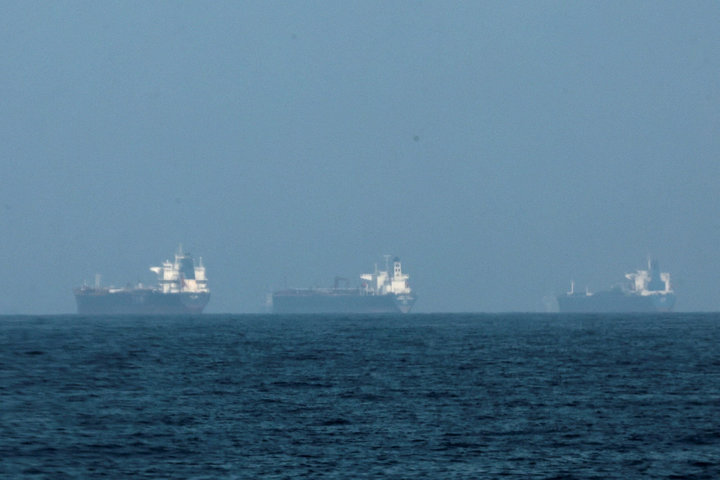
In Kagan’s own account, the Strait of Hormuz is now effectively under Iranian control. Kagan says it plainly: “The common assumption that, one way or another, the strait will reopen when the crisis ends is unfounded.” Iran has no incentive to restore the old arrangement. It can now demand transit fees, restrict passage to friendly nations, and use control of the strait as leverage to force sanctions relief and diplomatic normalization.
What Kagan calls holding the global energy market hostage is really something else. Iran has gained the power to deny U.S. imperialism automatic control of an energy chokepoint it long treated as its own.
The Gulf states that built their economies under U.S. military protection have no choice but to accommodate Iran. Kagan quotes fellow analysts Marc Gerecht and Ray Takeyh: “Take away American hegemony — and the freedom of navigation that goes with it — and the Gulf states will ineluctably go begging to Tehran.”
He acknowledges what this means globally. U.S. weapons stocks are “perilously low” after a few weeks of fighting a regional power. Allies in East Asia and Europe are drawing conclusions about U.S. staying power in any future conflict. The entire post-1945 architecture of U.S. military dominance is visibly cracking.
That is why Kagan’s admission matters.
The neocons are often associated with the Republican Party and the Bush years, but that picture is incomplete. By the 2000s this network had become effectively bipartisan, attaching itself to whoever was running an interventionist foreign policy. Nuland served in senior State Department roles under Bush, Obama, and Biden. Kagan publicly backed Hillary Clinton in 2016 and has been a prominent “Never Trump” voice.
The liberal interventionist wing of the Democratic Party and the neoconservative movement share enough vocabulary — democracy promotion, humanitarian intervention, regime change — that the overlap became structural. They represent a faction of the U.S. ruling class — Wall Street, the foreign-policy establishment, the oil interests and the permanent-war apparatus — that has used both parties as vehicles. Pinning them exclusively to one party lets the other off the hook and obscures how thoroughly bipartisan the project of permanent war has always been.
What Kagan leaves out
The piece runs nearly 2,000 words. The human cost of 37 days of bombing appears nowhere in it.
Not the civilians killed. Not the Iranian hospitals, power stations, and water systems reduced to rubble. Not the economic shock already grinding down working people across West Asia, Europe, and the Global South as oil hovers around $120 a barrel, with JPMorgan analysts warning of possible spikes toward $150 if the disruption holds and food prices surge. All of this appears in the article only as a political headache for Trump, not as a catastrophe for human beings.
This is not an oversight. It is the worldview. For Kagan, the Iran war is a chess problem. Iranians are pieces on the board. The lives of oppressed peoples enter his calculation only when their resistance threatens U.S. power.
Nor does Kagan reflect for a moment on his own role in producing this outcome. He and his collaborators at PNAC, along with the network of neoconservative policy architects who served Wall Street, the Pentagon, the oil monopolies and the arms industry, spent a generation pushing for military confrontation with Iran, isolation of Tehran, and the kind of regional domination strategy that made this war possible and probable. The arsonist is surprised by the smoke.
Kagan may also be maneuvering. Some analysts think the “defeat” argument is meant to prod Iran hawks into escalating. Others think Kagan, a consistent Trump opponent, is ready to declare the West Asia adventure lost so U.S. power can be redirected toward Russia and China. The disagreement between war hawks and imperialist managers is a dispute over how to preserve U.S. domination, not a critique of it.
The deeper stakes
What Kagan is actually describing is the structural exhaustion of U.S. imperialism. Not simply a failed policy. Not simply a lost war. A whole system of domination is running into limits: Wall Street’s dollar rule, the oil monopolies’ grip on energy, the Pentagon’s command of sea lanes, the sanctions machine, and the client regimes that have served as U.S. outposts across West Asia.
The drive to control West Asian energy was never separable from dollar hegemony. Pricing oil in dollars, keeping the Gulf under U.S. military protection, and maintaining a network of client states and forward bases — including Israel — were all part of the same project: underwriting the dollar’s global reserve status and the U.S. ruling class’s ability to run structural trade deficits, export inflation, and finance military spending without the constraints that bind other economies.
Iran’s control of the Strait of Hormuz disrupts that project at its material foundation. Every nation that depends on Gulf energy — which is to say, most of the world — must now reckon with a regional power that Washington could not subdue. That calculation reshapes alliances, currency arrangements, and the willingness to absorb the costs of U.S.-led sanctions regimes.
This is not a policy failure. It is what imperialist overextension looks like when it runs into a wall.
Former U.S. Ambassador Chas Freeman gives the defeat a wider historical frame. He argues that the old Anglo-American command of the seas — first British, then U.S. — is being broken by land-based missile and drone power. In Hormuz, he says, Iran has shown that a country without a blue-water navy can still impose a land-based sea blockade from prepared shore positions. Freeman mourns the end of that maritime order. We don’t. That order was built on imperialist domination of the Global South’s resources, enforced by naval power.
Kagan’s solution, absurdly, is more war — a “full-scale ground and naval war to remove the current Iranian regime” followed by occupation. He presents this as the alternative he wishes Trump would take, while acknowledging Trump won’t. It is the neocon intellectual’s version of a post-game press conference: insisting the right play was the one nobody ran. But this is not Kagan’s eccentric minority view. Regime change in Iran has been the bipartisan consensus of the U.S. foreign policy establishment for decades. These were not dissidents or outside agitators — they were the Biden administration. Antony Blinken at State, Jake Sullivan at the National Security Council, Samantha Power at USAID, Victoria Nuland as Undersecretary of State for Political Affairs. They share the same endpoint as Kagan, differing only on tactics and timing. When the war started, that establishment largely supported it or declined to oppose it. The regime-change fantasy has belonged to both parties.
Kagan is right that U.S. dominance in the Gulf is over. He is wrong that this is the tragedy. The tragedy is the tens of thousands killed and wounded and the infrastructure destroyed to postpone that conclusion by a few years.
Join the Struggle-La Lucha Telegram channel