
For 55 years, Washington had a power no other government had. It could buy from the world, borrow from the world and wage war around the world with dollars it controlled.
Other countries needed dollars to buy oil, pay foreign debts and settle much of their trade. They had to get those dollars by selling goods, taking loans or imposing austerity.
The United States issued the dollars that other countries had to earn.
This was imperialist tribute organized through money.
When Washington borrowed money, other countries bought the debt. They bought U.S. Treasury bonds — loans to the U.S. government that pay interest.
For central banks, oil monarchies and export economies, those bonds became reserves — a place to store wealth in dollars.
Wall Street gained a world market for dollar investments. The Pentagon could spend through a world economy already tied to the dollar.
Most countries live under the opposite rule. If they owe too many dollars, they cannot issue more dollars to pay. They have to get them through exports, new loans or austerity at home. If they cannot, their currency falls. Imported food, fuel and medicine become more expensive. Dollar debts become harder to pay. Then the International Monetary Fund arrives with demands to cut wages, subsidies and public services.
The United States stood on the other side of that relation. It borrowed in dollars — the currency it controlled. U.S. Treasury bonds became the place where governments, banks and oil monarchies parked their money. What was debt for Washington became savings for them.
Vietnam broke the gold-dollar promise
From 1944 to 1971, the dollar’s world role was tied to gold. Under the Bretton Woods system, foreign governments could trade dollars for gold at $35 an ounce.
That promise could hold only if the U.S. had enough gold behind the dollars it sent into the world. But Washington was spending far beyond that limit — on military bases, corporate expansion abroad and the war on Vietnam. More dollars flowed overseas, more governments demanded gold, and U.S. gold reserves fell. By 1971, Washington could no longer keep the promise.
President Richard Nixon ended dollar convertibility into gold. The U.S. kept making the world pay for its wars. The form of payment changed.
Oil replaced gold
After Nixon cut the dollar loose from gold, Washington still needed a way to keep the dollar at the center of world trade. Oil helped do that.
Oil was priced in dollars. Countries that needed oil needed dollars. Gulf monarchies took in huge dollar revenues and sent much of that money back into U.S. banks, bonds and markets.
That gave Wall Street a stream of capital. It gave the Treasury steady buyers for U.S. debt. The Pentagon armed those monarchies, kept bases in the region and protected the governments that kept oil tied to the dollar.
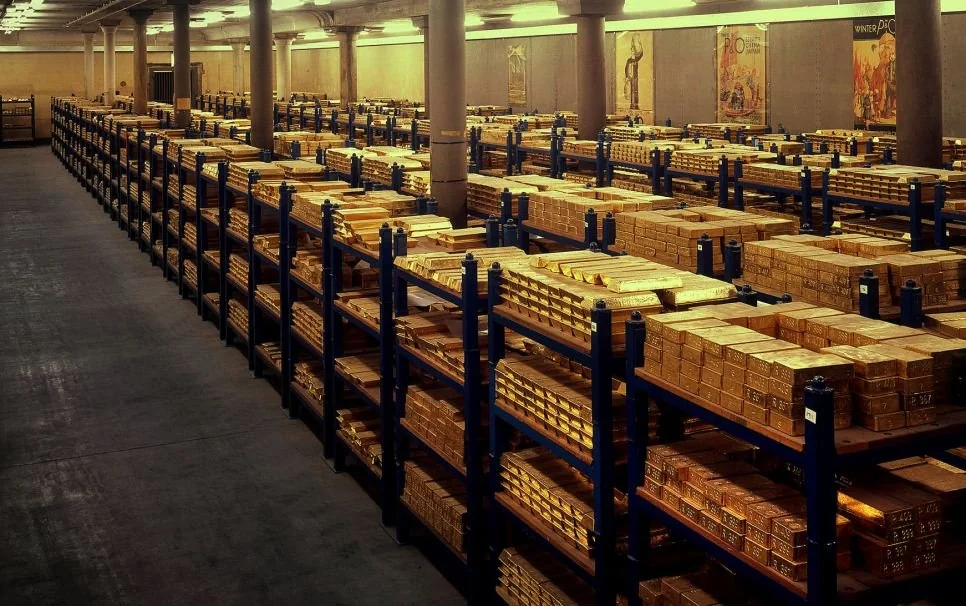
Gold was pushed out of daily trade, but it was not abolished as world money. Gold is a commodity produced by labor. It has value of its own. Dollars are claims on value — paper and digital promises backed by Washington, Wall Street and U.S. military power.
When dollar credit looks unsafe, central banks and funds still hoard gold.
Washington can issue debt, print dollars and expand credit. But it cannot print value.
Labor stood behind the dollar
The dollar system rested on labor that produced value.
This was the process the ruling class later called globalization. It was imperialist globalization under dollar rule.
Different parts of the world economy were tied into different roles under dollar rule: export production, assembly work, garment subcontracting, oil supply and the storage of dollar earnings in U.S. markets.
The countries drawn into those roles were not all the same. They did not have the same class character, state structure or political independence. But workers across this world market still produced value inside a system dominated by the dollar.
The channels differed. Multinational corporations extracted profits from factories and subcontractors, then shifted those profits across borders through transfer pricing. Dollar debt pulled more money outward through interest payments. Exporters and oil-producing states built up large dollar earnings, then recycled much of that money into U.S. Treasury bonds and dollar assets.
Different routes led back to the same center: Wall Street, the Treasury market and the U.S. war machine.
When dollars earned in export factories or Gulf oil fields end up in U.S. Treasury bonds, those dollars do not come from nowhere. Behind them is labor — workers assembling electronics, sewing garments, loading ships, drilling oil and moving goods across the world.
The dollar system captures value produced by workers across the world and channels much of it to the big U.S. banks, corporations and war industries. Wall Street’s expansion rests on that extraction. The Pentagon’s wars are paid for with it.
The beneficiaries inside the United States are a specific class: U.S.-based monopoly finance capital — the largest banks, asset managers and military-industrial corporations. They capture the bulk of dollar tribute.
U.S. workers do not receive that tribute. The gains go to banks, corporations and war industries. Workers get stagnant wages, shuttered factories and public services cut back to protect the bond market. The same imperialist system that squeezes workers abroad holds down workers at home.
Washington made other countries pay
When monopoly capital cannot find profitable outlets in production, it turns more heavily to speculation, government contracts and war. The dollar system lets that happen on a world scale. Wall Street takes in excess capital. Pentagon contracts turn it into orders for missiles, warplanes, drones, ships and ammunition.
Each round keeps the system going while piling up new claims on future labor.
As Bretton Woods broke down, critics said Washington was forcing other countries to carry the burden of U.S. inflation. But higher prices were only part of the process. Washington made other countries pay for its own instability through the dollar system.
Other countries held dollars that lost purchasing power. They held U.S. bonds whose value depended on U.S. policy. They paid for oil and many imports in dollars. When the Federal Reserve raised interest rates to defend the dollar, their currencies came under pressure. Their debts became harder to pay. Their governments were told to impose austerity.
Washington spent beyond its means. Other countries held the dollars, bought the bonds and took the losses.
Force holds the system together
Dollar rule did not rest on markets alone. Governments that tried to break from U.S. control faced sanctions, coups, blockades, asset seizures and war. Iraq and Libya showed what could happen to countries with strategic oil reserves that challenged Washington. Venezuela and Iran have endured years of sanctions because they tried to keep control of their own resources, banks and trade.
The system also kept U.S. allies and clients in line. Washington armed and shielded the Gulf monarchies — brutal regimes imposed and preserved by imperialist power. Their role was to keep oil tied to the dollar, host U.S. bases and recycle oil wealth into Wall Street.
The Iran war exposed the weakness in that arrangement. It was supposed to reinforce U.S. control over the Gulf. Instead, it disrupted the shipping routes, oil prices and political relationships that keep the dollar-oil system working.
The issue is control — who controls the oil, the shipping lanes, the payments and the reserves built from them. Iran restricted oil transport through its territorial waters in the Strait of Hormuz, and shipping through the waterway fell sharply. Insurance costs and war risk surged.
Some ships and oil buyers turned to payments in China’s currency, renminbi. Lloyd’s List Intelligence has reported that at least two ships paid Iran in renminbi to secure passage through the strait. Atlantic Council data shows that average daily payments through China’s Cross-Border Interbank Payment System rose to more than $131 billion in March from $86 billion in February, as countries bought Iranian oil.
Swap lines become a leash
Now Treasury Secretary Scott Bessent is arguing for expanded, possibly permanent, dollar swap lines for Gulf and Asian governments.
A swap line is a way for another country’s central bank to get dollars from Washington. It hands over its own currency and receives dollars in return. Those dollars can then be lent to banks and companies at home that need them to pay debts, settle trade or avoid selling dollar assets in a panic.
Washington once treated these tools as emergency measures. Now it wants to build them into the permanent machinery of dollar rule.
What is presented as normal capitalist market functioning now requires more open intervention by the Treasury, the Federal Reserve and the Pentagon.
The United Arab Emirates shows the contradiction. Its currency is tied to the dollar. Its oil is sold in dollars. Its state investment funds hold huge stakes in U.S. markets. Yet Emirati officials have warned that without more access to dollars, the UAE may have to use renminbi or other currencies for oil and other transactions.
A core U.S. client state is asking Washington for dollar support while raising the possibility of oil trade outside the dollar.
Washington wants to provide those dollars so the UAE does not have to sell U.S. bonds and other dollar investments to raise cash. That protects Wall Street and the Treasury market as much as it helps the Emirates. It keeps the oil monarchy tied to the dollar.
The swap line is a lifeline, but also a leash.
Washington holds the dollar system together by force
When pressure mounts, Washington decides who gets dollars and who is cut off. Allies get emergency lending. Enemies get sanctions. Client states get support only on terms that keep them tied to U.S. power.
The same pressure runs through the wider dollar system: UAE threats to use renminbi for oil settlement, central banks from China to Poland moving more reserves into gold, and the scramble for swap lines. China has spent years building a parallel financial network for countries trying to trade outside Washington’s reach. Since the 2000s, it has signed currency swap agreements with dozens of central banks, totaling roughly $600 billion. In 2015, China launched the Cross-Border Interbank Payment System, or CIPS, giving banks a way to settle payments in renminbi, outside the dollar-centered system. Since Russian banks were removed from SWIFT, the Western-dominated financial messaging network, in 2022, direct participants in CIPS have nearly tripled, from 75 to nearly 200.
The renminbi does not have to replace the dollar to weaken Washington’s grip. It only has to give sanctioned countries and oil buyers another route.
Confidence in dollar credit is weakening, and Washington is using more direct instruments of power to hold the system together.
For decades, the dollar system let Washington make the world finance U.S. deficits, imports and wars. Other countries bought U.S. Treasury bonds and treated them as safe reserves. Wall Street paper became the foundation of world trade. The Pentagon spent beyond the limits that would crush any other state.
War now accelerates the contradiction. The machinery still functions, but only with more direct intervention by the Treasury, the Federal Reserve, sanctions and military pressure.
The force was always there. Now it is harder to disguise as normal capitalist market rule.
The U.S. exported the costs of its instability for half a century. The bill is coming due in the very places Washington counted on to keep paying it.
Join the Struggle-La Lucha Telegram channel