
U Vasuki, a Politburo member of the Communist Party of India (Marxist), put the question plainly in Havana in October 2025: Who holds the tool? Who controls it? Whose class does it serve?
More than 200 delegates from 30 countries had gathered at Nico López University for the 3rd International Conference of Theoretical Publications of Left-Wing Parties and Movements. Cuban President Miguel Díaz-Canel raised the same question at the Patria Colloquium in March 2025. AI, he warned, is not neutral. Behind every algorithm, system and training process, there is a struggle over power.
Díaz-Canel called AI “the threshold of a new paradigm” with real influence over human, political, economic and social life. The question, he said, is whether AI will become “a weapon of the powerful” or “a bridge to a world where technology liberates, not enslaves.”
That cuts through the noise around artificial intelligence. AI is not a force floating above society. It is built, financed and deployed by classes.
Under U.S. capitalism, AI is being driven in three directions: speculation, propaganda and workplace control.
The first is speculation. Stock prices for Nvidia, Microsoft, Google and Meta have climbed on the promise that AI will transform every industry. Capital is pouring into data centers, chip fabrication and large language models. Every promised breakthrough also demands more land, water, electricity, copper, transformers and public subsidy. The Trump administration announced more than $2 trillion in investment frameworks with Gulf sovereign wealth funds in May 2025, much of it tied to AI infrastructure.
Wall Street treats those numbers as proof of U.S. economic strength. They are proof of a bubble — bets on data center profits that the power grid, the parts shortage and the money cannot deliver.
The second is propaganda. Google’s AI summary now appears at the top of most search results. Studies cited by Díaz-Canel show that 90% of users stop reading after the summary. When users search for Cuba — including Cubans themselves — the AI summary describes the country as a dictatorship without freedom of speech or press.
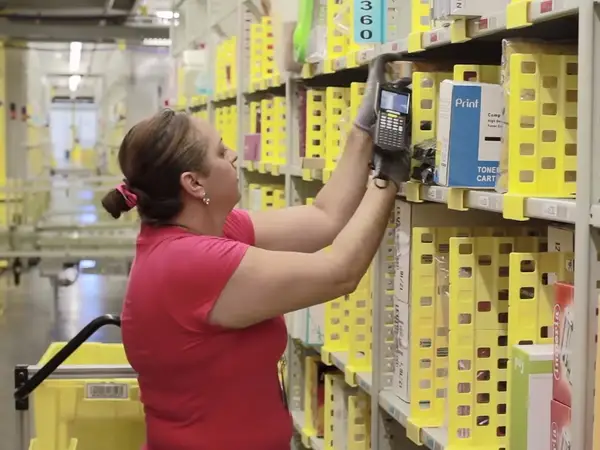
The third is control over labor. AI gives bosses a new weapon to monitor every keystroke, cut payrolls, speed up work and threaten whole layers of labor with replacement. Oracle co-founder Larry Ellison put the goal in the open: Once AI surveillance is rolled out across workplaces and public spaces, “citizens will be on their best behavior.”
The lies appear neutral because the platform appears neutral. But Google’s AI is not neutral. It draws its answers from corporate media, and corporate media reproduces the politics of the U.S. ruling class. Google’s platform makes the blockade narrative appear to be common sense.
Cuba is answering that weapon directly. It is developing its own AI-assisted search engine that summarizes progressive sources. Cuban programmers are also feeding counter-information into Google’s system to weaken the blockade narrative at the source.
That is what Díaz-Canel meant when he called AI an ideological battlefield for justice and urged the Global South to build common frameworks, alliances and tools against cultural colonization.
For a blockaded country, information is not secondary. The blockade is enforced not only through ships, banks and sanctions, but through the stories used to justify them.
The Luddite question
Workers are losing jobs to AI. Layoffs in tech, journalism, customer service and paralegal work are accelerating. Wages in affected sectors are flat or falling.
The numbers are no longer theoretical. Challenger, Gray & Christmas counted nearly 55,000 U.S. job cuts explicitly attributed to AI in 2025. Other studies show the sharper blow falling on young workers entering exposed fields: employment for 22- to 25-year-olds in high-AI-exposure jobs fell between late 2022 and mid-2025, while older workers in the same occupations continued to gain. The first jobs being hit are not futuristic abstractions. They are software, customer support, clerical, legal, finance, data-processing, writing and design jobs — the routine digital labor that capitalism can most easily deskill and cheapen.
There is nothing imaginary about that suffering. Marx understood this in “Capital,” where he analyzed how machinery displaced English handloom weavers and depressed wages across the textile trade.
He understood why workers attacked the machines that were throwing them out of work and driving down wages. But the machine did not own itself. The capitalist owned it and used it against them — to deskill labor, speed up production and extract more surplus value from fewer hands.
That was machinery’s dual character. Under capitalism, it appeared as a weapon against workers. Under different class relations, the same productive force could shorten the working day and free human labor for human ends.
Smashing data centers would not bring back the jobs already destroyed. Regulating individual billionaires more strictly would not change what the technology is for. The issue is not whether the machine is clever, dangerous or impressive. The issue is who owns it, who plans its use and whose class interests it serves.
How a workers’ state uses AI
Ignacio Ramonet, author of “Fidel Castro: My Life” and former editor of Le Monde Diplomatique, told the same Havana conference that imperialism insists its control over technology not be challenged — and that China broke that control with DeepSeek.
China is not simply buying access to U.S.-controlled systems. It is building its own model layer, chip pathway and industrial AI stack. DeepSeek’s V4 release, adapted for Huawei chips, confirmed that direction. Moonshot AI’s Kimi, Alibaba’s Qwen family and Zhipu’s GLM models point the same way: Chinese developers are building models for Chinese chips, Chinese factories and Chinese infrastructure — not waiting for access to U.S. platforms.
These companies are not charities. They compete in a market and they seek profit. But they operate inside a state framework shaped by the 1949 revolution — state banks, state-owned enterprises and planning power in finance, energy, heavy industry, transport and telecommunications. That framework pushes AI toward the productive base: domestic chips, manufacturing, logistics, steel, ports, rail, energy grids and urban systems.
The U.S. path is different. OpenAI and Anthropic guard their models as private property. Their value depends on monopoly access, subscriptions, licensing deals, IPO expectations and contracts with the Pentagon and intelligence agencies. The most powerful U.S. models remain closed because the closed model serves the war machine.
Stargate, the half-trillion-dollar AI infrastructure project announced by Trump in January 2025, brings OpenAI together with Oracle, SoftBank and MGX, the Abu Dhabi sovereign wealth fund. The Gulf investment frameworks behind the buildout were negotiated through the U.S. Departments of War and State, with the Commerce Department as a junior partner.
The issue is not only who writes the code. It is who owns the banks, factories, grids and transport systems that decide how the code is used. In the United States, AI is enclosed as private property and sold into the military, surveillance and sanctions apparatus of imperialism — the same state machine that bombs countries, starves populations through blockades, backs coups and arms wars against governments that resist U.S. domination. In China, the levers created by the revolution push it the other way: into factories, ports, transport systems, energy grids and planning.
Open source is not enough
Liberal politics treats AI as a neutral technology that can be fixed by better rules. But AI is not just code. It takes data centers, chips, electricity, engineers, finance and state backing. Those things belong to someone. They are planned by someone. That ownership decides what AI is for.
Open source has limits under capitalism. Meta released Llama for outside developers to use, but Meta is not building working-class power. It is giving away one layer of the technology in order to capture value elsewhere — through platforms, cloud services, data and corporate integration.
Making an AI model free to use or publicly available is not the same as collective control. If it still runs on Amazon’s cloud servers, Amazon controls the equipment, the power supply, the data centers and the bill. If the model was trained on books, articles, artwork and computer code taken without payment or permission, releasing the model does not undo that theft.
The data centers, chips, electricity and labor remain in ruling-class hands. So do the profits.
That is why the ownership question cannot be replaced by a software license. Open code is not workers’ power.
The class question
Under U.S. capitalism, AI inflates Wall Street, suppresses progressive content and strengthens the propaganda apparatus of an empire in decline. Under socialist construction, AI can be directed toward material production. Under Cuba’s blockade conditions, it can be repurposed as a tool of resistance.
The tool is not neutral because society is not neutral. A machine in the hands of capital becomes capital’s weapon. A machine in the hands of the working class can become part of the struggle to reduce toil, expand knowledge and plan production for human need.
The same fight is opening in the imperialist center. Screenwriters and actors struck against studios replacing them with generative models. Nurses are fighting AI-dictated patient loads. Warehouse workers are organizing against algorithmic surveillance. Journalists are unionizing in newsrooms gutted by chatbots. The class character of the system that deploys the tool will be decided through these fights — and through solidarity with Cuba and the workers’ states already building the alternative under siege.
The lesson of the Luddites was not that workers were wrong to fight back. It was that the enemy was not the machine, but the class that owned it.
The question Vasuki raised in Havana — who holds the tool, who controls it, whose class it serves — is the same question, sharpened by another two centuries of capitalist development.
Díaz-Canel put the choice plainly: Will AI be “a weapon of the powerful” or “a bridge to a world where technology liberates, not enslaves”? The task is not to destroy the tool. The task is to take it.
Join the Struggle-La Lucha Telegram channel