
The Islamabad talks between the United States and Iran broke up after 21 hours with no deal. Washington came to the table trying to win through negotiation what it had failed to impose through war.
The talks took place under a fragile two-week ceasefire announced on April 7 and set to expire on April 21. Vance’s departure without a deal immediately deepened doubts that the ceasefire would hold.
Washington presented the talks as a step toward de-escalation. In practice, Washington was pressing war aims by other means: reopening Hormuz on U.S. terms, weakening Iran’s strategic position, and preserving the broader system of pressure built through sanctions, asset seizures and military force.
Iran came to Islamabad with a broad delegation, showing it was prepared for a detailed negotiation. The U.S. team was led by Vice President JD Vance, joined by special envoy Steve Witkoff and presidential adviser Jared Kushner.
Vance named the nuclear question as the central sticking point. But that framing obscured what Washington was actually demanding. Washington is demanding terms that would gut Iran’s nuclear enrichment capacity, enrichment for civilian and medical purposes. Iran has rejected that position across multiple rounds of negotiation.
Iran laid out its own conditions: sovereign control over the Strait of Hormuz, an end to Israeli attacks on Lebanon, the return of frozen assets and the right to retain its stockpile of enriched uranium. None were met. Iran’s Foreign Ministry placed responsibility for the failure squarely on Washington.
While Vance sat across the table from Iranian officials in Islamabad, Trump posted on Truth Social that the U.S. was clearing out the strait “as a favor to countries all over the world” and that Iran was “losing big.” Iranian sources said the posts further poisoned the talks.
Hormuz at the center
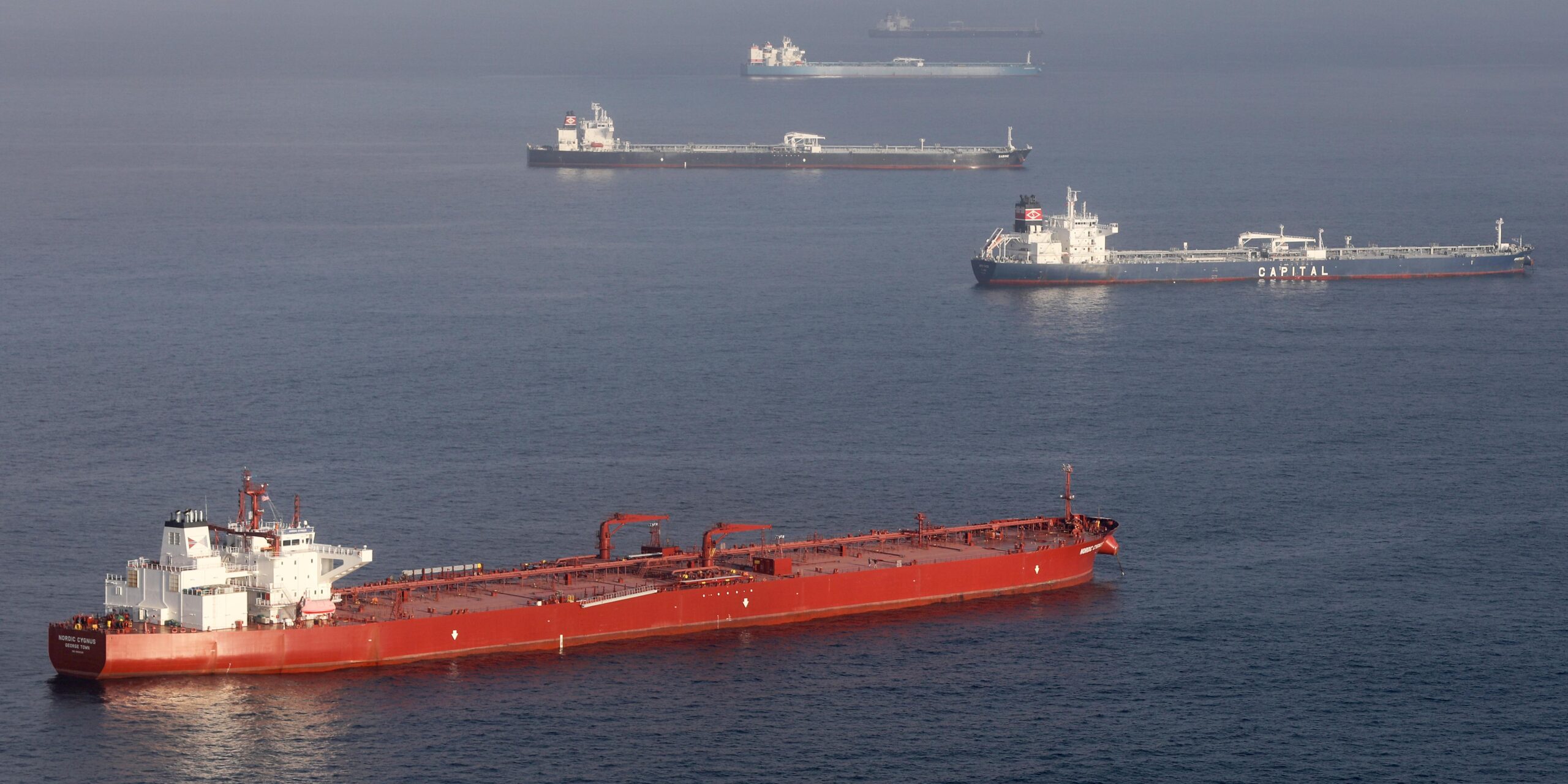
Traffic through the waterway remains far below normal, even with a few tankers beginning to move again. The disruption has shaken energy markets and sent pressure far beyond the Gulf.
On April 11, in the middle of the talks, Washington escalated militarily. U.S. officials said two Navy destroyers had entered the strait and that the mission was tied to preparations for clearing mines Washington said Iran had laid there. Iran’s Foreign Ministry said it warned the vessels to withdraw or face attack. Bloomberg, citing a regional intelligence official, reported that the destroyers turned back before reaching the Arabian Gulf.
The mine-clearing rationale has been questioned on its own terms. The vessels sent were guided-missile destroyers, not the littoral combat ships the Navy uses for mine-clearing operations. A New York Times report, sourced entirely to unnamed U.S. officials, claimed Iran mined the strait and then lost track of the mines. Politically, the story served as a ready-made pretext for the mission.
Iran has insisted that any lasting ceasefire must include sovereign control over the waterway. Tehran has proposed charging vessels transit fees — a concrete measure of what that control would mean in practice. Washington has called continued Iranian control over the strait a non-starter.
The fight over frozen assets is another front in the same conflict.
About $6 billion in Iranian funds sit frozen in Qatari banks. The money began as oil revenues held in South Korea, then blocked when Washington reimposed sanctions in 2018. In 2023, the funds were transferred to Qatar under a prisoner exchange, then locked down again after October 7 of that year. Iran has made their return a condition of any deal.
That $6 billion is a fraction of a much larger system of seizures. More than $100 billion in Iranian assets are frozen in banks worldwide, immobilized through U.S. secondary sanctions and direct asset seizures.
With the ceasefire set to expire April 21 and no agreement in place, Iran has made its position clear: it entered the talks as a sovereign power, not a defeated one, and it is not leaving that position behind.
Join the Struggle-La Lucha Telegram channel