
Military spending is good for the economy. That argument surfaces every time the Pentagon budget expands or a new war begins. Contracts are awarded, factories ramp up, unemployment ticks down and GDP climbs. Officials point to those numbers as proof of prosperity.
GDP adds up how much is spent. It says nothing about what that spending produces or who benefits. A billion dollars on artillery shells counts the same as a billion dollars on a hospital. When the Pentagon budget exceeds $886 billion, as it does now, GDP reflects that. What it does not reflect is what workers actually get.
During World War II, U.S. GDP surged. Wartime rationing covered meat, shoes, gasoline and virtually every consumer durable — new housing, kitchen appliances and vacuum cleaners were banned from production for the duration of the war. The National WWII Museum documents that the rationing system affected virtually every family in the country. The GDP figures said the economy was booming. Living standards told a different story.
The same dynamic operates today. The U.S. war on Iran, now in its fifth week, is generating supplemental Pentagon spending on top of an already record-breaking base budget. Industrial output in the defense sector is rising. That will show up in GDP. It will not show up as better conditions for working people.
The Marxist explanation goes deeper than accounting. Military production does not expand the productive capacity of the economy. A factory retooled to produce missiles stops producing goods that can be sold, reinvested or used to raise living standards. War turns the means of production into means of destruction. Capitalist production grows through reinvestment — profits turned back into production. Military spending breaks that cycle. It absorbs wealth without putting it back into useful production. Weapons do not enter any market. They are bought by the state, used in war and destroyed. The labor, materials and machinery are used up in war, not returned to production. The same is true of microchips or drones produced for military use: They divert labor, materials and investment away from goods and services people need.
During the Vietnam War, prices rose while the economy weakened. Military spending drove inflation and squeezed out productive investment. The same pressures are building again now.
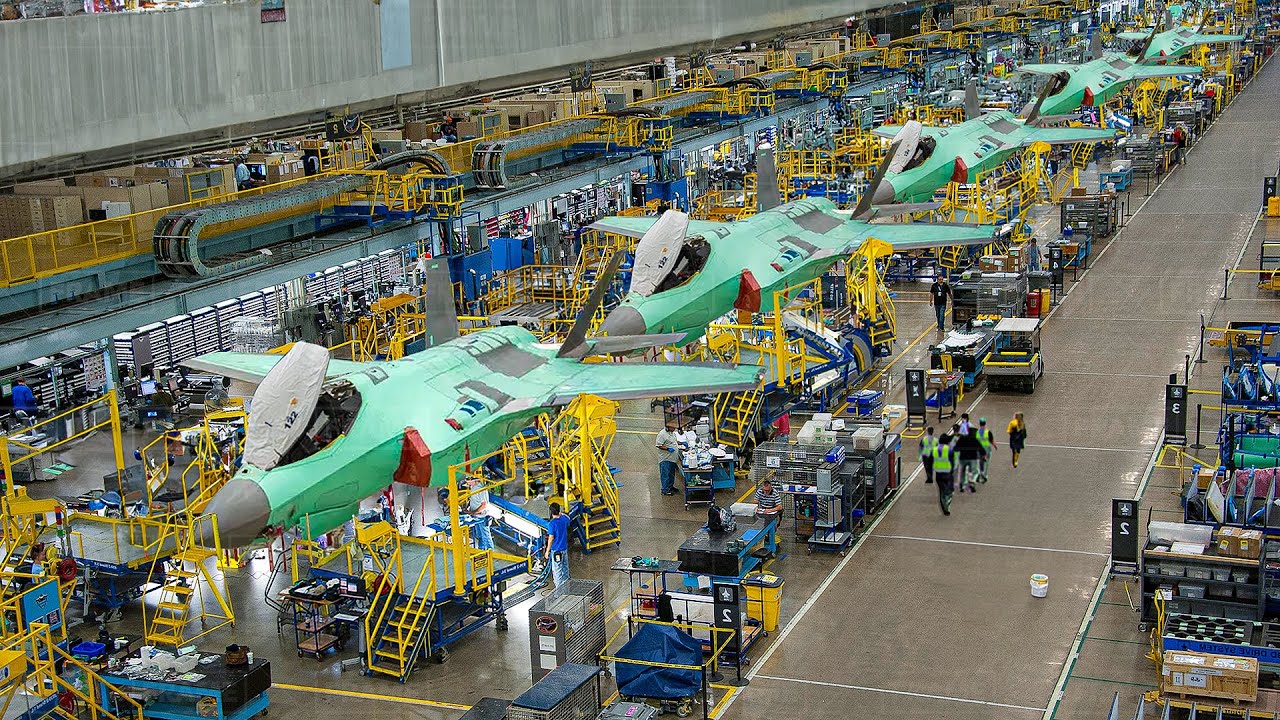
The debt financing behind U.S. military expansion makes this worse. In 2000, the national debt stood at $3.5 trillion, equal to 35% of GDP. By 2022, it had reached $24 trillion, equal to 95% of GDP. U.S. wars since 2001 account for roughly $8 trillion of that total, according to the Watson Institute at Brown University. The war on Iran will push it higher. That burden does not fall on the ruling class. It becomes the justification for cuts to Social Security, Medicaid and public services — shifting the cost of war onto workers. Programs are cut while weapons spending continues. The F-35 alone carries a lifetime cost the Government Accountability Office puts at $2.1 trillion.
The workers employed in defense industries are not the beneficiaries of this system. They sell their labor under conditions set by the contractors and the Pentagon. The profits flow to Lockheed Martin, Raytheon, General Dynamics and their shareholders. Resources are pulled into military production, raising costs and squeezing out spending on housing, health care, schools and transit. Workers do not set those priorities. The ruling class does.
War spending raises profits at the top while draining resources from the rest of society. Workers pay the cost.
General Smedley Butler called it a racket in 1935. Nothing about it has changed except the scale.
Join the Struggle-La Lucha Telegram channel