
Iran is transforming a wartime tactic into a permanent institution.
As the U.S.-Israeli war on Iran enters its fifth week, Iran’s parliament is drafting legislation to formalize Tehran’s control over the Strait of Hormuz — while Secretary of State Marco Rubio has effectively acknowledged that Washington cannot reverse it.
The bill, reported by Iran’s Fars and Tasnim news agencies, would legally recognize Iran’s sovereignty and supervisory authority over the Strait while establishing a system of transit fees for commercial shipping. Lawmaker Mohammad Kouchi told Fars the draft would be finalized next week. “The Strait of Hormuz is also a corridor,” he said. “We ensure its security, and it is natural for ships and tankers to pay us duties.”
The legislation would codify a system Iran is already enforcing on the water.
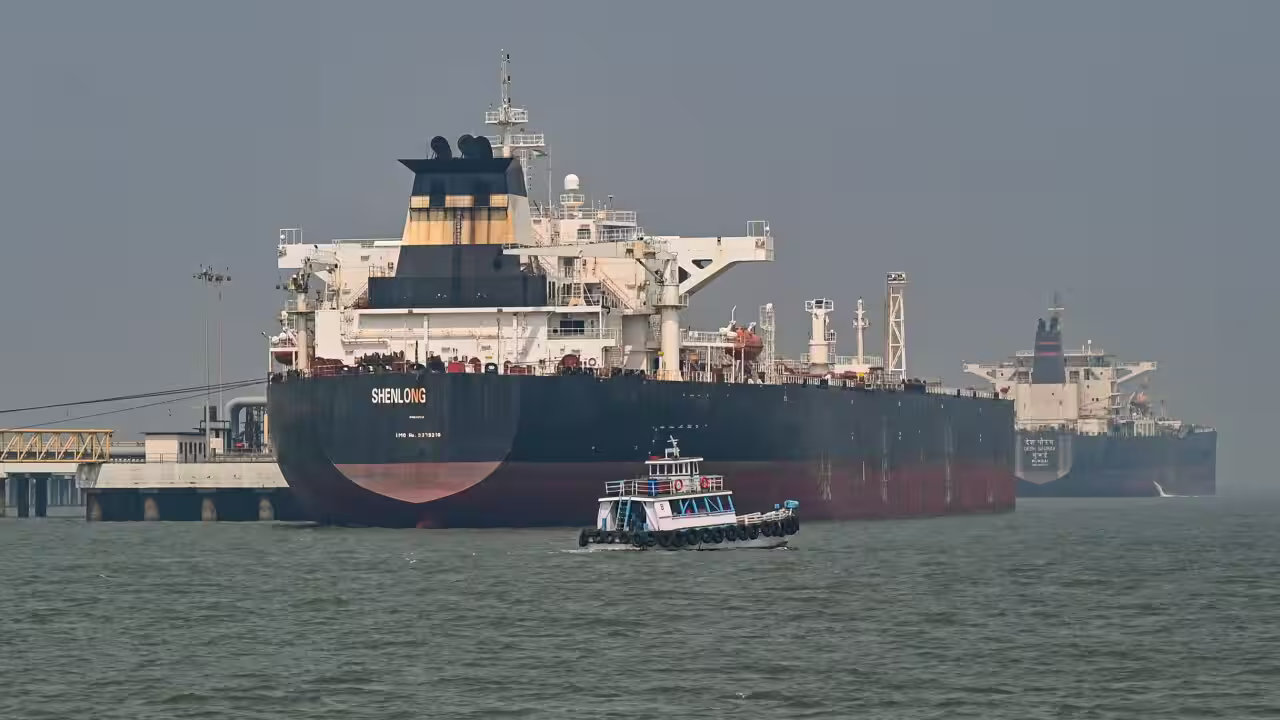
Since mid-March, the Islamic Revolutionary Guard Corps has reportedly enforced a de facto toll-and-inspection system through a controlled corridor near Iran’s coast, between Qeshm and Larak islands. Ships seeking passage have reportedly been required to go through approved IRGC intermediaries and submit ownership, cargo and crew information. At least two vessels are reported to have paid transit fees, with payment settled in Chinese yuan.
Traffic through the Strait has sharply fallen. Only 16 crossings by ships broadcasting their location were reportedly recorded between March 15 and March 22, while nearly 2,000 vessels were said to be stranded in the Persian Gulf. Iran has also announced that ships traveling to or from U.S., Israeli and allied ports will not be allowed through.
Rubio admits Washington faces a new reality
At a G7 foreign ministers’ meeting in Cernay-la-Ville, France, on March 27, Secretary of State Marco Rubio warned allies to prepare for a post-war Iran that controls the Strait. “Immediately after this thing ends and we’re done with our objectives,” he said, “one of the immediate challenges we’re going to face is an Iran that may decide that they want to set up a tolling system in the Strait of Hormuz. Not only is this illegal; it’s unacceptable. It’s dangerous to the world, and it’s important that the world have a plan to confront it.”
The toll system Rubio described as a future threat is already taking shape. He was warning allies about something Washington is already watching happen — and has so far failed to stop.
Rubio added that the U.S. was “prepared to be a part of” any coalition response to the tolling system, but framed the issue as one for other countries to take on. The G7 statement called for the “absolute necessity to permanently restore safe and toll-free freedom of navigation” in the Strait. No member country pledged resources or troops to enforce that demand.
The numbers
The revenue potential of permanent Strait control is substantial. Roughly 20 million barrels of crude oil and oil products pass through the Strait each day in peacetime, along with significant volumes of liquefied natural gas. At a reported fee of $2 million per tanker, the potential revenue would be enormous. Even a limited tolling regime could generate hundreds of millions of dollars a month. That is comparable to what Egypt earns monthly from the Suez Canal.
For Iran, after four decades of U.S. sanctions designed to strangle its economy, that would give Tehran a new stream of hard-currency income. The same wartime leverage that pushed Brent crude above $113 a barrel and helped trigger fuel rationing across Asia could, under the proposed legislation, become a continuing source of state revenue.
The yuan and the dollar system
The choice of Chinese yuan matters. Payments routed through China’s Cross-Border Interbank Payment System, or CIPS, do not pass through U.S. correspondent banks. That limits Washington’s ability to intercept or block them.
Ships linked to China, Russia, India, Iraq and Pakistan have been allowed to transit. Ships linked to the U.S., Israel and their allies are blocked. Access to the Strait is now being sorted along geopolitical lines. In practice, passage depends less on maritime law than on where a country stands in relation to the U.S.-led sanctions system.
This is not the end of dollar dominance. The dollar still rests on financial scale and infrastructure no rival has matched. But every payment system built outside U.S. control weakens Washington’s sanctions reach. Every Hormuz toll paid in yuan through CIPS is one more transaction the U.S. Treasury cannot touch.
In his first public address, Iran’s new supreme leader, Mojtaba Khamenei, said the leverage created by control over the Strait “must continue to be used.” An adviser to the supreme leader has spoken of a “new regime for the Strait of Hormuz” after the war ends.
The war produced what it was meant to prevent
The U.S. ruling class launched this war to break what four decades of sanctions had failed to break: the Iranian state. Military force was meant to finish the job — to shatter Iran’s military capacity, decapitate its leadership and reassert U.S. dominance over the energy routes of the Persian Gulf. Instead, it produced the opposite.
Instead, the war gave Iran reason to use the leverage it had long possessed but never exercised. The result is a country that entered the war under sanctions and economic siege and is now moving to collect tolls from one of the world’s most important shipping lanes.
The Strait of Hormuz has always been a geographic fact. Washington’s war turned it into a class weapon — and Iran is moving to make that permanent.
Join the Struggle-La Lucha Telegram channel