
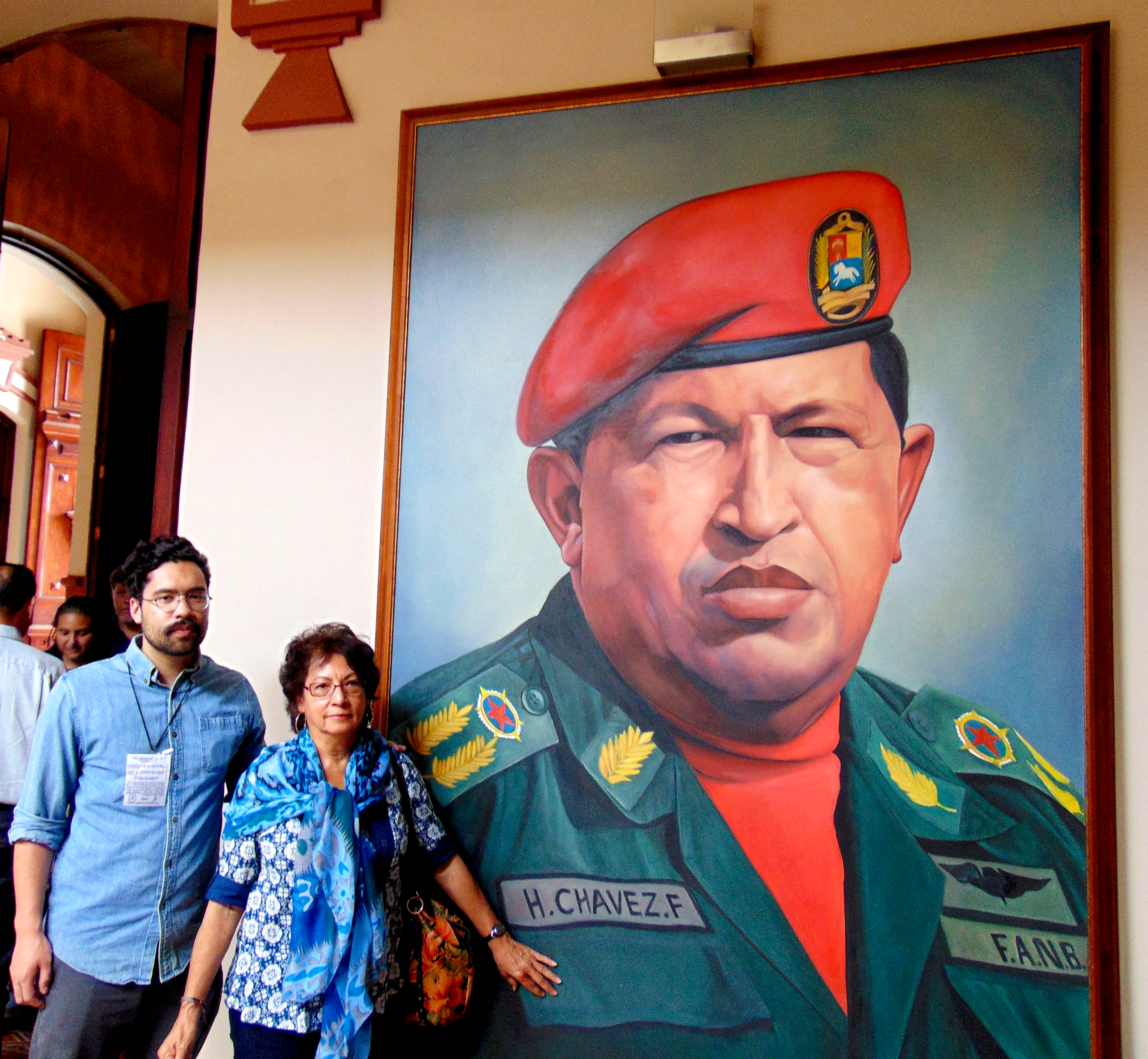
In 2018, my comrade and fellow Struggle – La Lucha contributor Berta Joubert-Ceci and I were invited by the Consejo Nacional Electoral (CNE), or the National Electoral Council, to Venezuela as official international election observers.
The majority of countries in the world practice election observation in some way, or at least recognize it as a legitimate political process. The United Nations recognizes it as an established political procedure for providing electoral assistance to member states. International delegates are often invited.
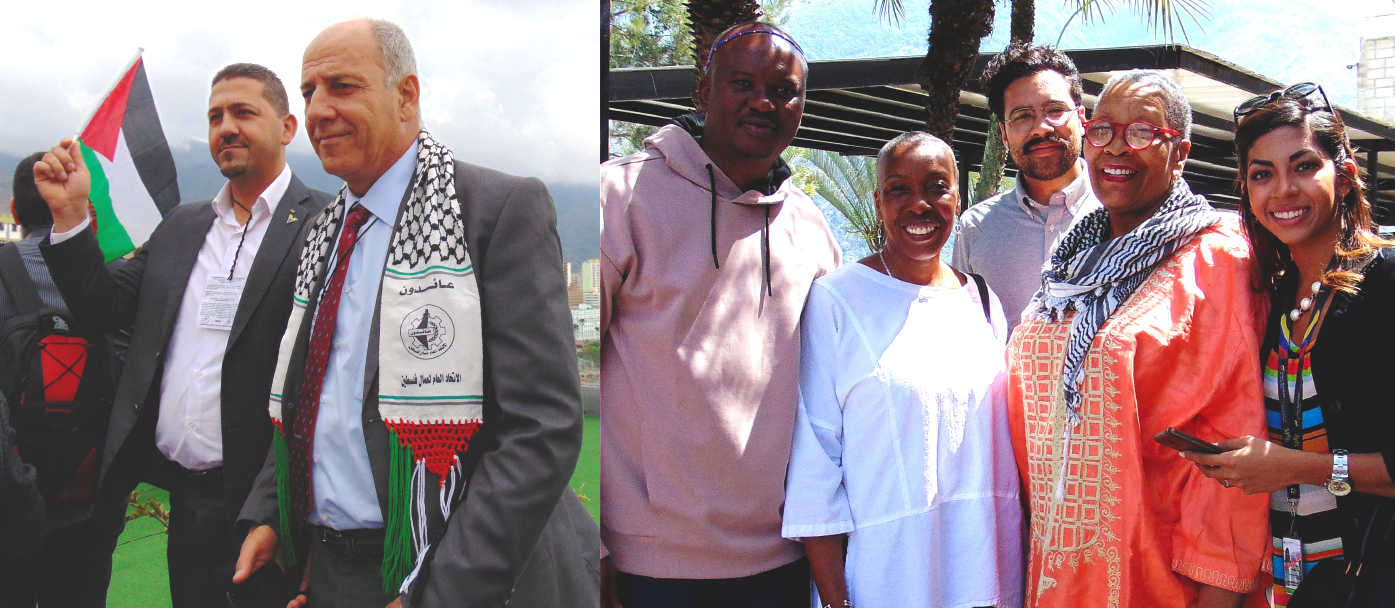
Our delegation was made up of people from around the world — from Palestine, several African countries, Europe, Asia, and even more South and Central American and Caribbean countries. Delegates from the United States were overwhelmingly from Black, Brown, and working-class communities.
Beginning with the electoral victory of Hugo Chávez, the Venezuelan government made it a regular practice to invite observers and monitors from all over the world for its elections. This is specifically because the U.S. placed its election victory under scrutiny, having lost control over Venezuela’s oil industry.
Election authorities with Venezuela’s Consejo Nacional Electoral (CNE), or National Electoral Council, walked us through every step of the election process from start to finish.
The Venezuelan electoral process: from the beginning
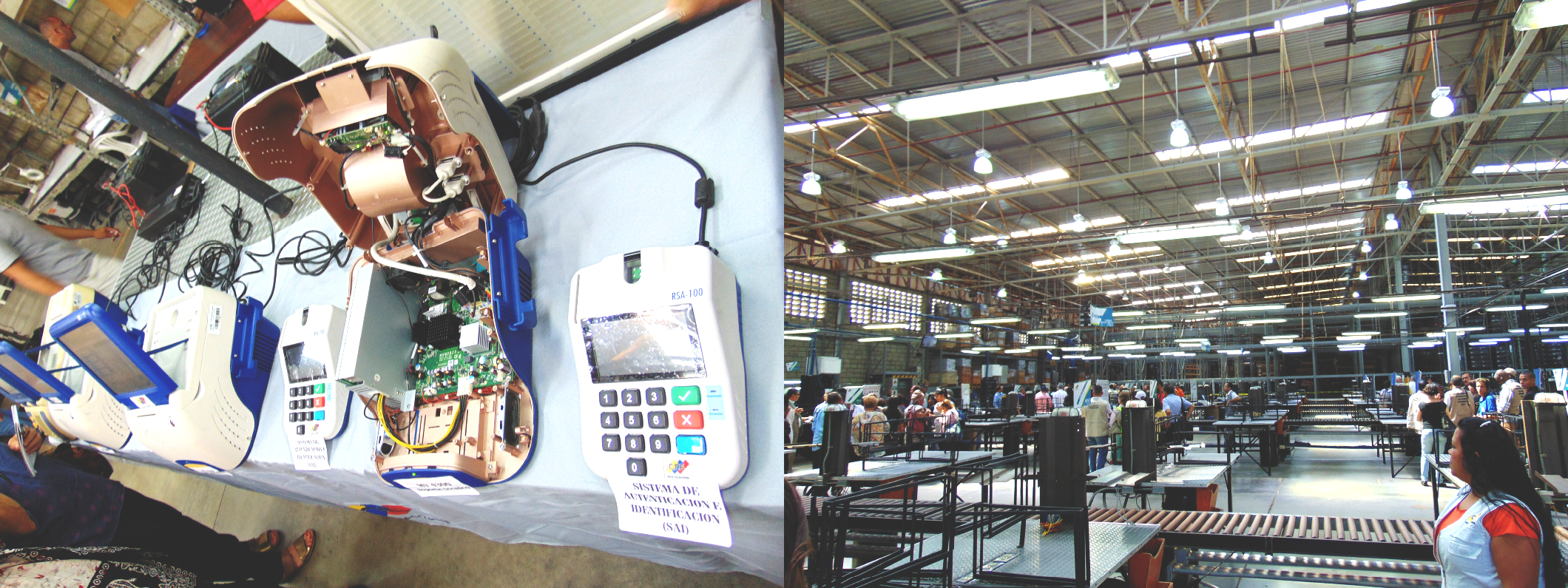
They showed us a factory where the voting machines are built. They explained that the voting machines are built air-gapped, meaning they have never touched the internet. This is so the voting system cannot be hacked, and results cannot be altered. They showed us how the voting machines are packaged, locked, loaded into trucks, which then transport them to polling places.
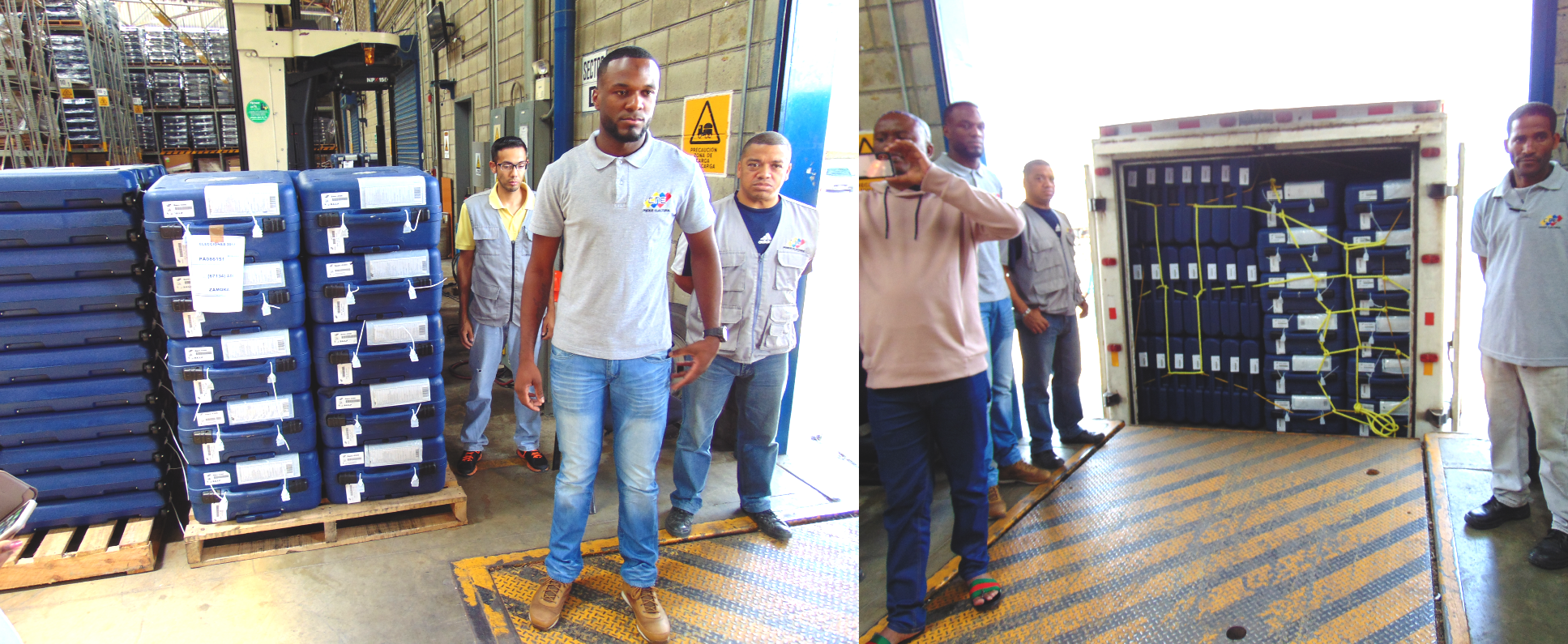
These trucks are accompanied by police escorts to ensure safe transport and delivery of the machines. This is because, in previous elections, the U.S.-backed opposition attacked these trucks — all kinds of vehicular sabotage, assaulting the driver, even setting trucks on fire — in an attempt to manipulate the elections.
CNE officials gave a presentation about the electoral process, including its constitutional basis, a comparison with the pre-1998 process, and how the results are audited.
Election Day
May 20 was Election Day. We were brought to four total polling sites all over Venezuela — from the bustling urban centers in and around Caracas, to quiet rural towns near the coast of the Caribbean Sea.
My honest takeaway? Just how ordinary it all was. It is an unremarkable process in a remarkable situation. It is the unsexy work required of a living revolution.
For the Venezuelan people, it is simple. You show up, you wait in line, you cast your vote. And that is exactly what we observed: a structured, orderly process. But for such a mundane task, Venezuelans were excited to be a part of building their own futures.
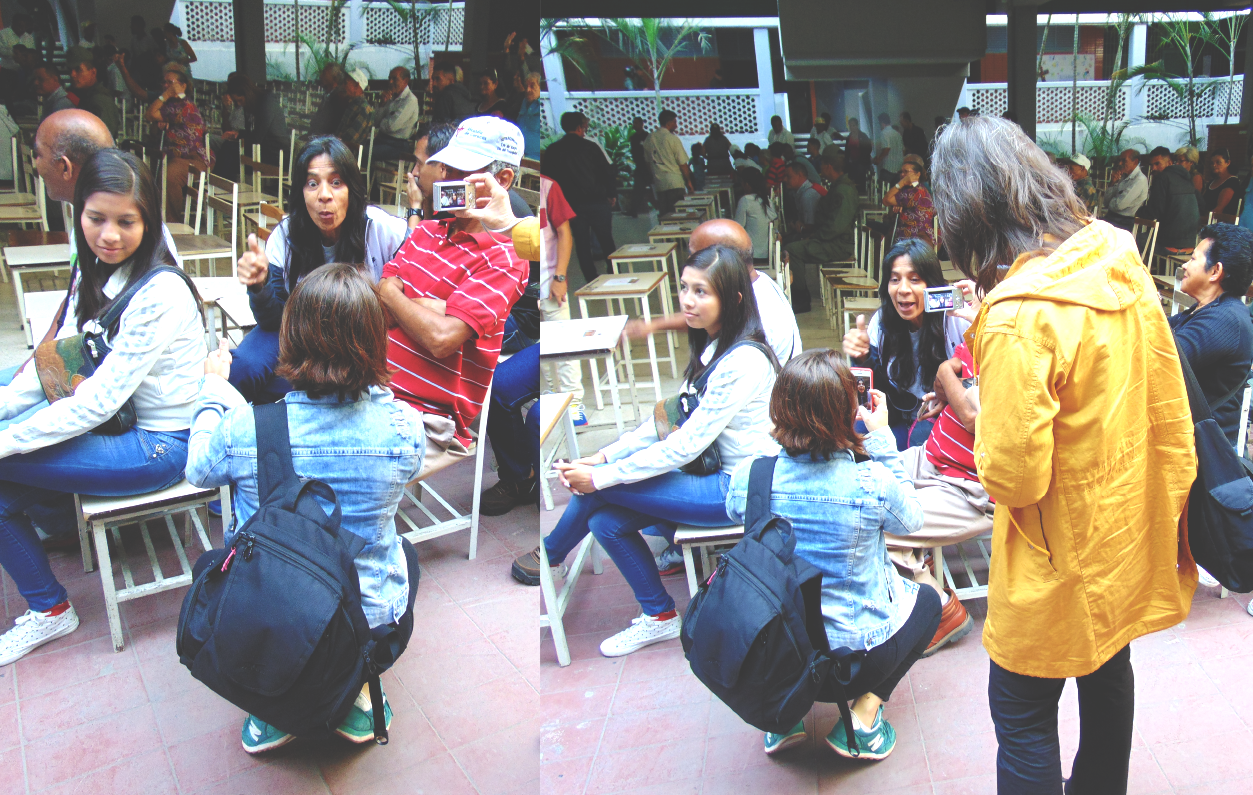
Since Election Day is always on a Sunday, many Venezuelans had the day off to vote. Others were able to make the short trip in the 12-hour window, as there is always a polling place close by.
There is already a very thorough publication on how the voting process works, step by step. The short version is that you show up, you present your identification, you submit your vote via the voting machine, collect the receipt of your vote, and put your receipt in the ballot box.
This does not seem so different from the U.S. voting process on the surface. But what is overlooked is how easy it is to obtain official identification in Venezuela. This is a result of a program called Mission Identidad instituted by the Bolivarian government in 2000. It offers an easy and completely free path to obtaining a government-issued identity.
The ballot box is placed in the center of the room and is under constant observation by representatives of every political party involved in the election.
International delegates were welcome to ask questions of anyone we came across — workers in the voting machine factory, people waiting in line to vote, passersby in the streets. People were eager to talk to us, happy for the opportunity to meet people from around the world and to share about life in Venezuela.
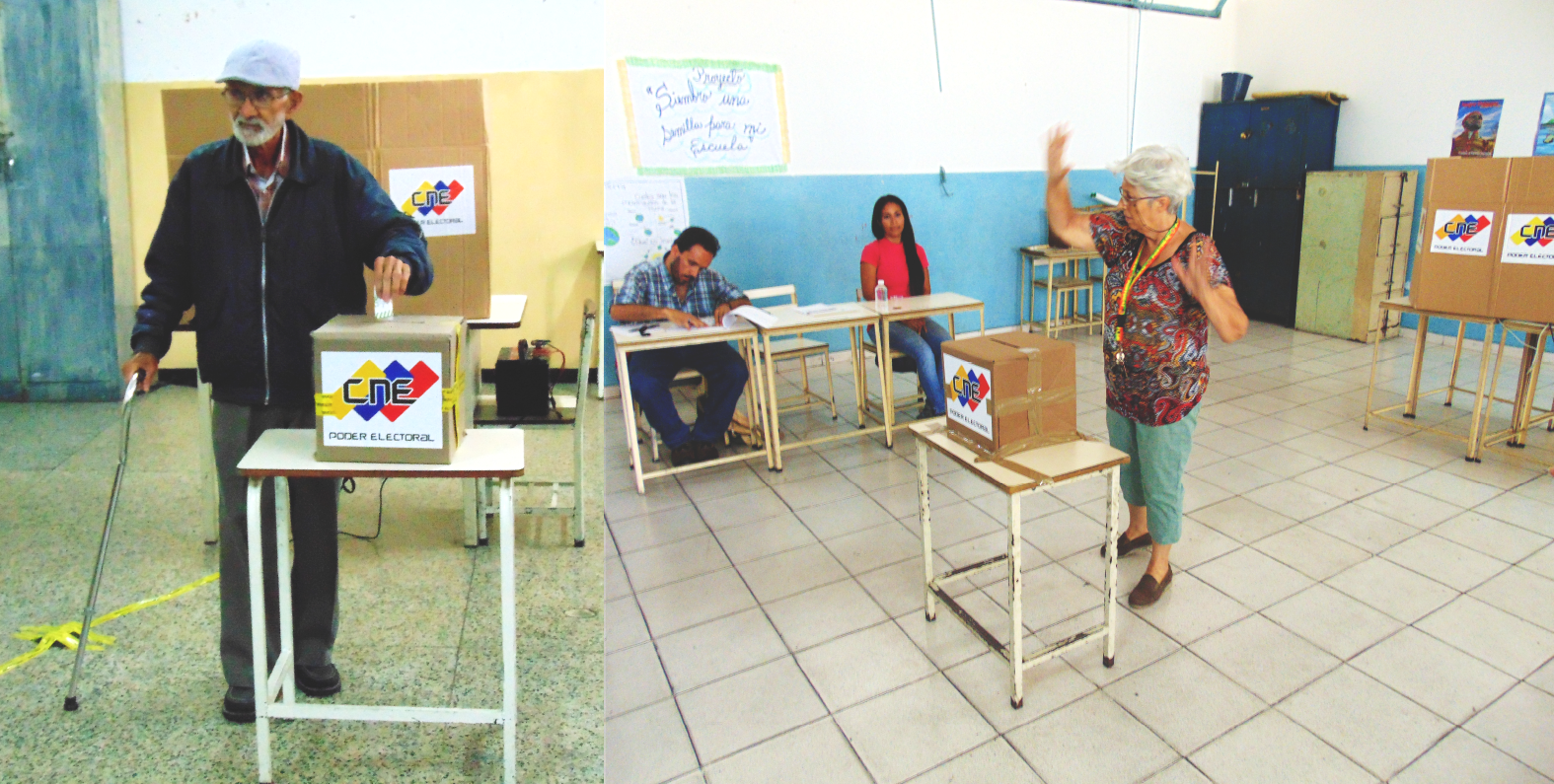
We especially had many conversations with voters, both in line to vote and leaving after. Most notable were some older voters who were voting for their very first time. Because of any number of obstacles in the pre-1998 system, they were never able to vote. They were voting for their first time in 2018 because they wanted to defend the gains of the Bolivarian government.
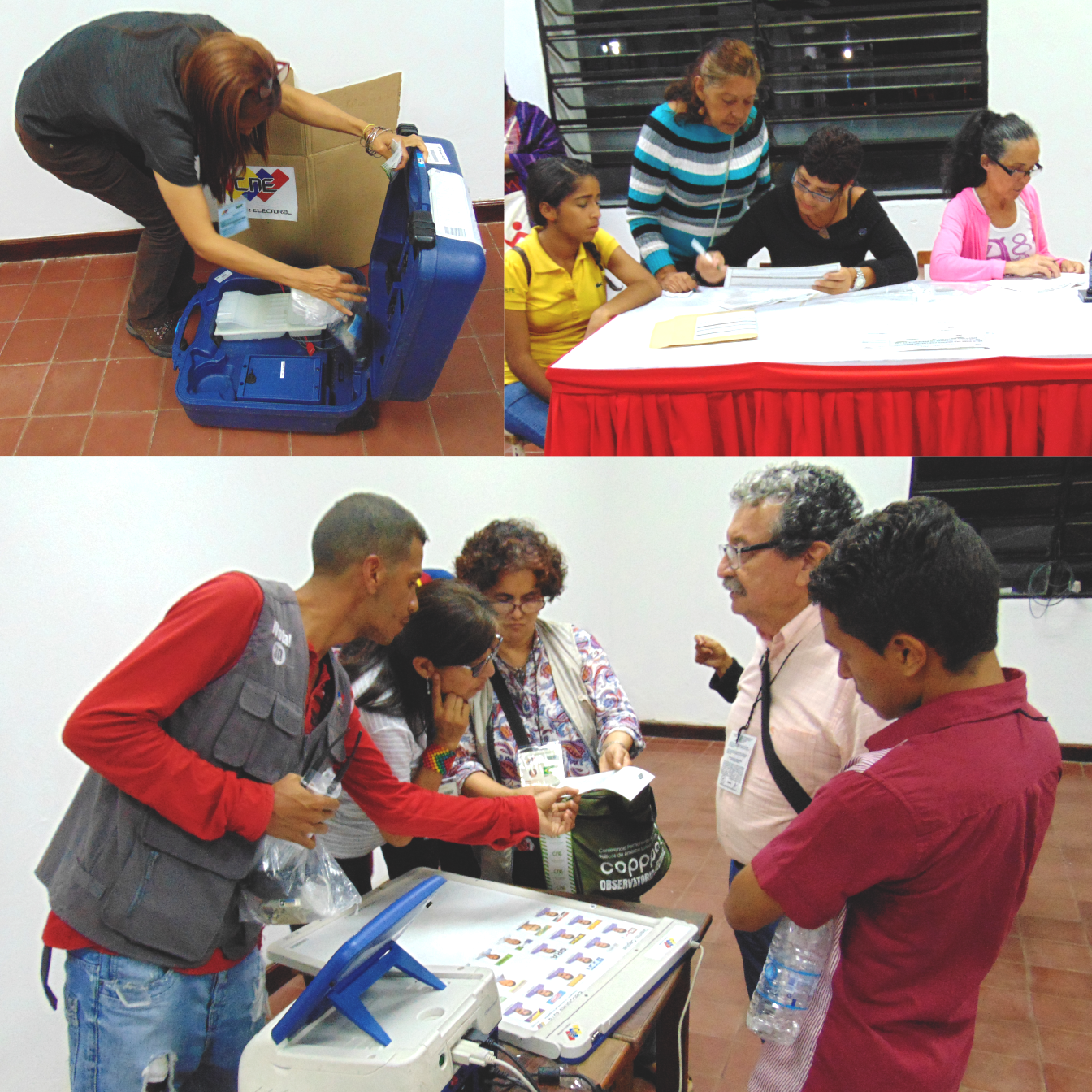
Every vote counted
There are 16 total audits built into the Venezuelan electoral process. These include audits of both electronic and physical vote counts, voting machine hardware and software, and more. International observers and political parties are invited to every audit. As pictured, cameras swarm every part of the process.
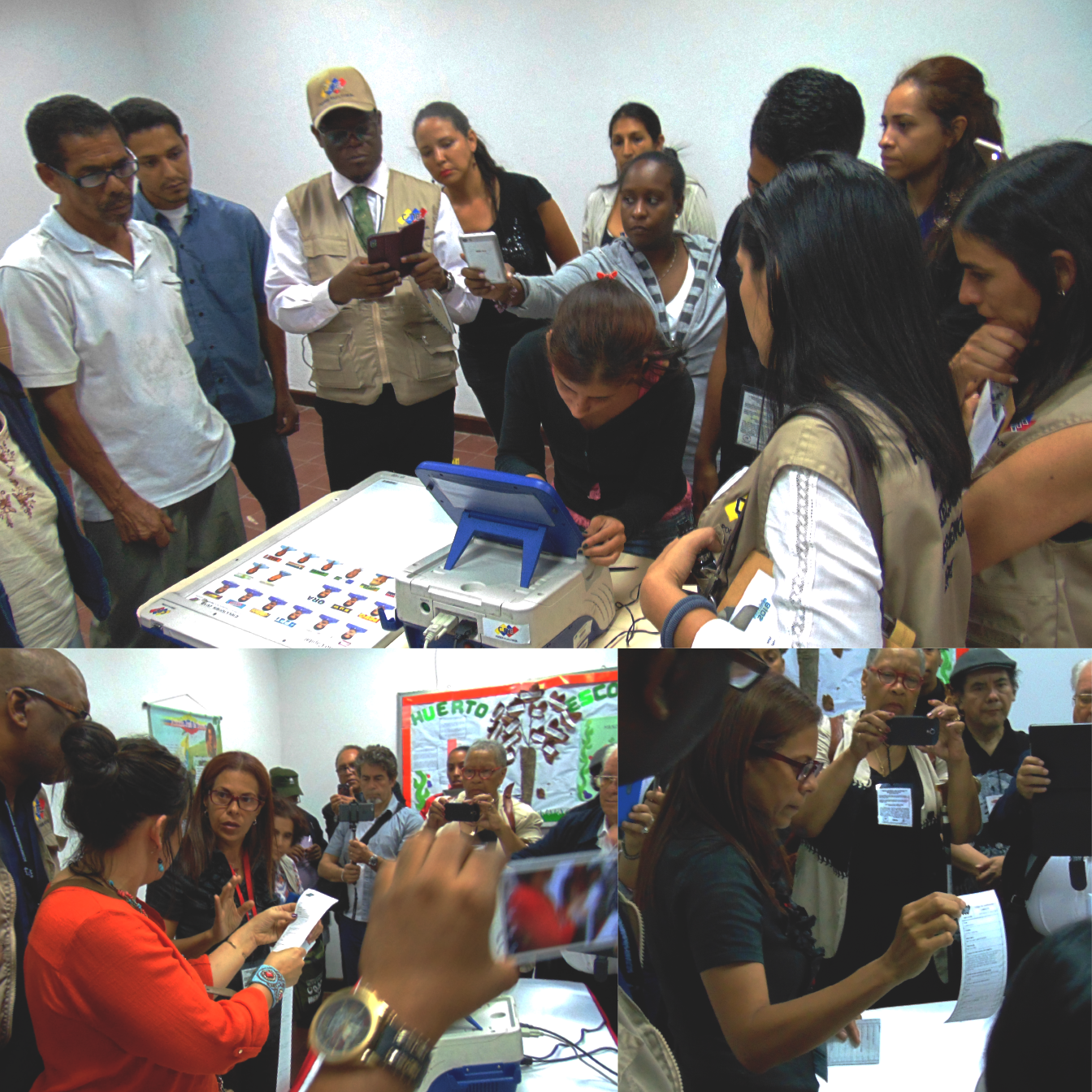
Paper receipts are counted, tallied and compared to the electronic counts, which have been transferred via a closed network that cannot be hacked or manipulated.
Once all the audits were completed, international observers were invited to CNE headquarters for the announcement of the results. Contrary to the accusations of the CNE being a pro-Maduro institution, the announcements were met with polite applause, and only when the program was over.
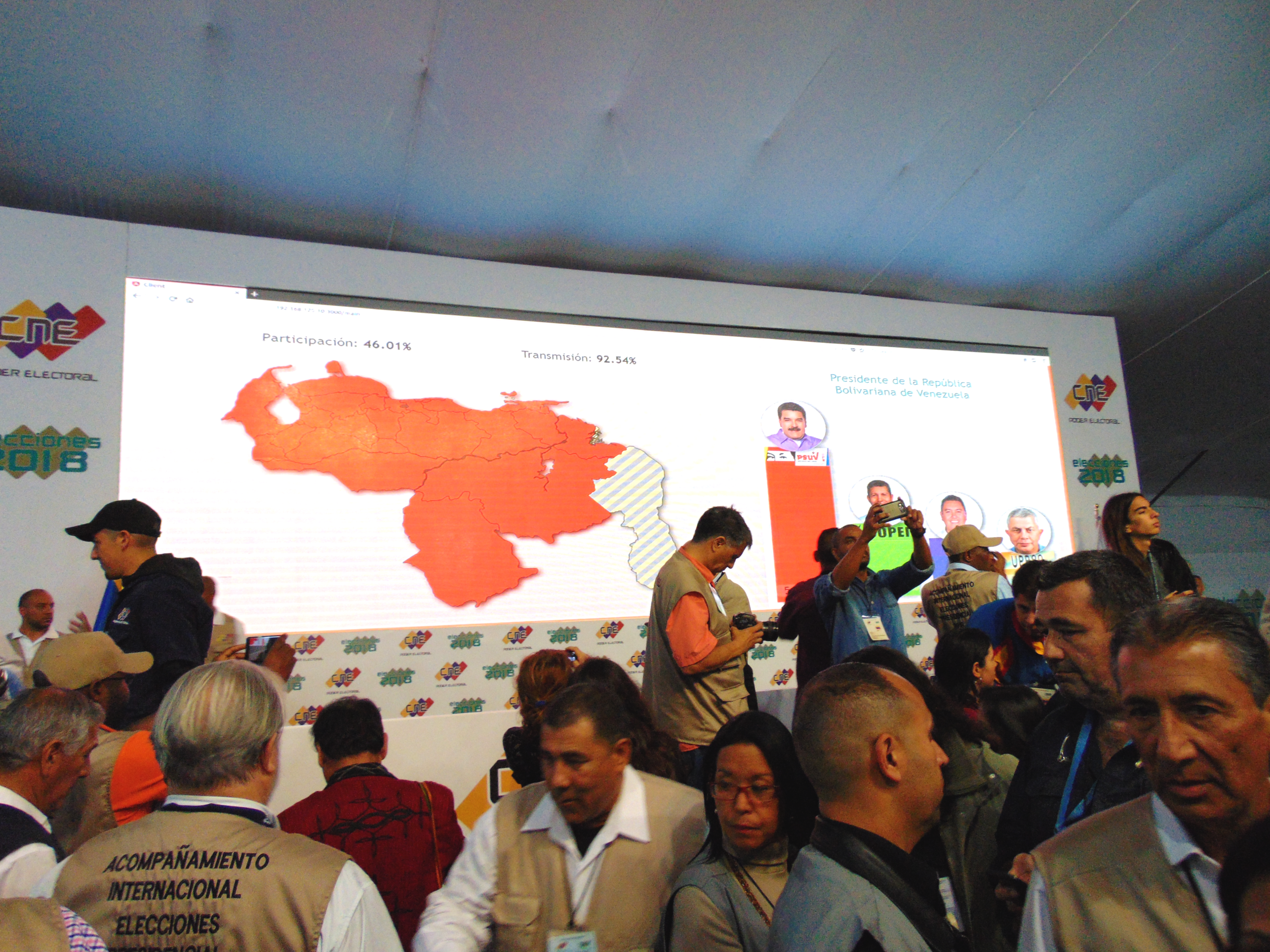
Democracy in practice
The average voter in the U.S. may be surprised to find out that Venezuela’s presidential elections are a direct referendum. Contrast this with the U.S. presidential elections, which are fundamentally filtered through the Electoral College.
Since the very beginning of Hugo Chávez’s administration, the Bolivarian government has made concrete steps to not only meet the needs of the country’s majority — jobs, housing, food — but also to expand participation in legislative and electoral politics.
How does this contrast with the U.S. media’s portrayal of Venezuela? Corporate media would have us believe that the administrations of Hugo Chávez and Nicolas Maduro are dictatorships — but is this the electoral system of a dictatorship? Does a government that aims to increase the standards of living for the majority of its people qualify as a dictatorship?
I was an election observer in Venezuela’s 2018 elections, and my answer, without reservation, is no. What I saw was genuine democracy in practice. The corporate media is lying to you.
Join the Struggle-La Lucha Telegram channel