
On Jan. 30, the U.S. Senate voted 71-29 to pass an $839 billion fiscal 2026 defense appropriations bill. The measure sailed through with bipartisan backing, including 23 Democrats. Among those voting yes were Senate Minority Leader Chuck Schumer, Minority Whip Dick Durbin and Vice Chair of the Democratic Conference Mark Warner.
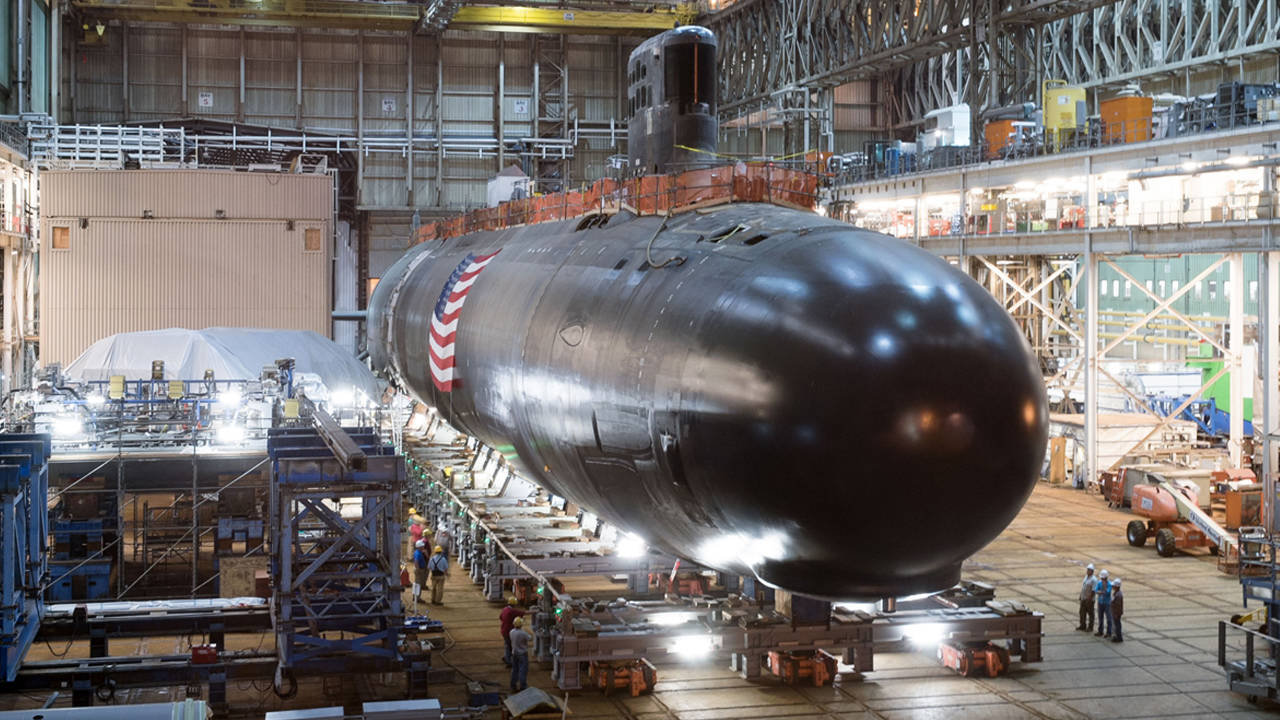
The bill funds $27.2 billion for 17 warships, including a Columbia-class nuclear ballistic missile submarine and two Virginia-class fast attack submarines; $7.6 billion for 47 F-35 stealth fighters; $3 billion for a sixth-generation F-47 fighter; $1.9 billion for the B-21 Raider stealth bomber; and $4.5 billion for hypersonic weapons systems. It appropriates $839 billion in discretionary defense funding — $8.4 billion above the Pentagon’s own request.
Combined with the $156 billion in additional military funding contained in Trump’s so-called “One Big Beautiful Bill Act,” total Pentagon spending for 2026 approaches $1 trillion — the largest military budget in U.S. history.
The business model runs on schedule. Military production underwrites shipyards, aerospace giants, weapons labs and whole regional labor markets. War appropriations lock in contracts and protect profits. When Congress funds the Pentagon, it is sustaining one of the core pillars of the U.S. economy.
The vote came within weeks after federal agents killed two U.S. citizens in Minneapolis: Renée Good on Jan. 7 and Alex Pretti on Jan. 24. Their deaths ignited protests, fueled the Jan. 23 general strike, and forced Senate Democrats to temporarily strip DHS funding from the package.
In other words, Congress voted to fully fund the war machine at the very moment the domestic consequences of militarized policy were unfolding in real time.
As the USS Abraham Lincoln heads toward the Persian Gulf and threats against Iran intensify, Congress is fully funding ICE, Customs and Border Protection and the Department of War — the same federal forces that recently killed Renée Good and Alex Pretti in Minneapolis.
The message from Congress was unmistakable: Whatever domestic turbulence erupts, the military apparatus will be fully funded.
Managed dissent inside Congress
The tussle over Department of Homeland Security funding in January was widely framed as a response to the federal killings of Renée Good and Alex Pretti. Senate Democrats released a set of reform demands — body cameras, judicial warrants for home entries, limits on masked agents and roving patrols — and refused to support a full-year DHS appropriations bill without them.
In practice, however, the fight was procedural and largely symbolic. ICE and Customs and Border Protection continue to operate through multiyear appropriations and reconciliation funding, making them effectively shutdown-proof in the short term. Agencies such as the Transportation Security Administration, the Coast Guard, FEMA and the Secret Service were more directly affected by funding lapses than the enforcement arms responsible for the killings.
Put plainly: The appropriations maneuver absorbed political pressure without materially restraining ICE operations. Meanwhile, the $839 billion Pentagon budget moved forward with bipartisan support and no open resistance.
That hierarchy is the point.
The population does not want this war.
Across national surveys this winter, large majorities of people in the United States oppose military action against Iran. A January 2026 Quinnipiac poll found that 70% oppose any military action against Iran.
Yet the machinery moves anyway.
Aircraft carriers deploy. Appropriations pass. Threats escalate.
The gap between public sentiment and institutional action is not subtle. It is structural.
War powers theater
Another contradiction is playing out around the new war powers resolution introduced by Tim Kaine and Rand Paul to block unauthorized military action against Iran.
A similar resolution failed last June, 47-53, after the administration’s nuclear site strikes. Paul was the lone Republican to vote with most Democrats; John Fetterman, a Democrat, broke the other way.
But look at the sequence.
Kaine voted for the $839 billion appropriations bill that funds the Department of War — now deploying carriers, bombers and new weapons systems toward confrontation — and then introduced a measure to limit how that force can be used.
First Congress finances the war machine.
Then it debates whether the president should be allowed to turn the key.
They approve the money. Then they argue about permission.
Labor steps into the breach
While congressional Democrats maneuver between funding votes and war powers resolutions, a different form of opposition is emerging.
In San Francisco, educators won contract language barring ICE from schools. In New York City, nurses have demanded ICE exclusion from hospitals during their strike. In Minneapolis, a general strike erupted after federal agents gunned down a resident and militarily occupied Somali, Hmong and Latine neighborhoods.
These struggles are not simply “domestic” disputes. They represent the labor movement claiming terrain that links war spending, immigrant repression and austerity.
The same Congress that can find nearly $1 trillion for war cannot guarantee safe staffing ratios, fully funded schools or secure housing. Workers are drawing the connection.
Both parties speak for the Pentagon. The emerging labor opposition speaks for the majority — and is beginning to challenge the economic model that puts endless war at the center of the economy.
Join the Struggle-La Lucha Telegram channel