
Jan. 29 — For decades, the United States has tried to starve the Iranian people into submission. From banking bans to the assassination of scientists, Washington has used sanctions, sabotage, and covert force to break Iran’s hard-won sovereignty.
Now, the warships have arrived to try to do what the banks could not.
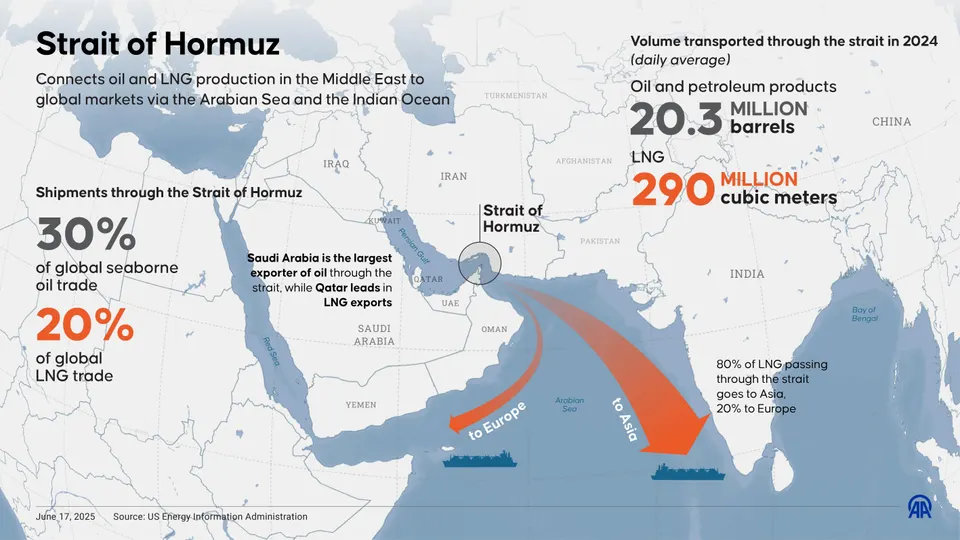
As of this week, the USS Abraham Lincoln aircraft carrier and its fleet of destroyers have taken up strike positions in the waters off Iran, from the Strait of Hormuz into the Arabian Sea. This move is the military muscle behind the failed “Snapback” sanctions of late 2025 and President Trump’s recent Jan. 12 ultimatum — a threat to impose a 25% tariff on any nation on Earth that dares to trade with Tehran.
When the U.S. can no longer control the world through the dollar, it sends the carriers. The presence of this “massive armada” is a physical blockade — a desperate attempt by a declining empire to choke off Iran’s oil routes and reassert dominance over a region that is increasingly looking toward independent trade with China, Russia, and India for a future without Washington’s permission.
Carrier strike groups appear when economic pressure fails
For more than 40 years, the U.S. military and financial centers have surrounded Iran. Since the 1979 Revolution, every U.S. administration — Republican and Democrat alike — has tightened the noose.
Iran’s real “crime” was the revolution itself.
In 1979, the Iranian people overthrew a U.S.-installed dictator, the Shah, who had been placed on the throne by a CIA-led coup in 1953 to ensure that Iranian oil enriched foreign corporations rather than the Iranian people. By reclaiming control over their own resources, Iran crossed a red line the imperialist system cannot tolerate.
It existed outside Washington’s control.
That is why Iran has faced decades of sanctions, sabotage, assassinations, and military encirclement. What is unfolding now is not a new conflict. It is the continuation of a siege that began the moment Iran broke free from U.S. domination.
For years, Washington tried to break Iran by cutting it off from global banking and trade. Sanctions crushed wages, drove up food and fuel prices, and gutted public services. They were meant to break the population and force political surrender.
It didn’t work.
Iran rerouted its trade, strengthened direct ties with Beijing and Moscow, and integrated its economy into the Eurasian Economic Union. By using national currencies and independent banking networks, Iran learned how to operate outside the dollar system.
Today, nearly 90% of Iran’s oil exports go to China, settled in non-dollar currencies. New transport corridors now link Russian industry and Indian markets directly through Iranian territory, bypassing the traditional shipping lanes that the U.S. Navy has controlled since 1945.
Washington’s Jan. 12 tariff threat was a desperate attempt to break these chains. But when the world refused to stop trading, the U.S. responded with the only tool it has left: The Carrier Strike Group. The USS Abraham Lincoln isn’t there to protect “freedom of navigation” — it is there to try and physically dominate the energy routes that the U.S. Treasury can no longer control with a keyboard.
Iran is not Iraq — and Washington knows it
When the U.S. invaded Iraq in 2003, it attacked a country that had been systematically disarmed and weakened by a decade of genocidal sanctions. Washington expected a “cakewalk.” Iran in 2026 is a different reality.
Iran is a nation of over 90 million people with a unified state and a military doctrine built for one purpose: to survive and repel an imperialist assault.
The most telling sign of U.S. weakness is the refusal of Washington’s traditional “partners” to join the fight. Just days ago, on Jan. 26 and 27, 2026, both the United Arab Emirates and Saudi Arabia issued official, high-level statements explicitly forbidding the use of their territory, airspace, or waters for any hostile military action against Iran.
When the U.S. invaded Iraq, it used the Gulf monarchies as an uncontested staging ground. In 2026, that launchpad has been pulled out from under them.
This is a seismic shift. It shows that even the Gulf monarchies now view a U.S.-led war as a threat to their own survival. After the June 2025 conflict, they realized that a U.S. war would turn their own cities and oil fields into front-line targets for Iranian missiles and drones. They see that Washington’s “Maximum Pressure” has failed to isolate Tehran, forcing a realignment where even former enemies prefer diplomatic survival over a regional fire that would consume their own cities.
Resistance is social — not proxy chess
Washington creates the misery in Iran through sanctions, then cites the resulting social unrest as a reason to intervene — all while ruthlessly crushing dissent within its own borders. In January 2026, the same paramilitary federal forces being celebrated by the White House as “patriots” have turned U.S. streets into combat zones. Under “Operation Metro Surge,” thousands of masked agents have descended on the Twin Cities, leading to the killings of Renee Good and Alex Pretti.
Washington points a finger at Tehran, but it is overseeing conditions at home where working-class dissent is met with lethal force.
The currency collapse and price shocks that have contributed to unrest inside Iran are the direct, intended results of the U.S. financial siege. When working-class Iranians protest the skyrocketing cost of bread and fuel, they are protesting conditions created by the U.S. “Maximum Pressure” campaign — the very same campaign now being used to justify military escalation in the Persian Gulf.
The “proxy” myth
U.S. officials also continue to describe movements in Lebanon, Yemen, and Iraq as mere “Iranian proxies.” This language is designed to strip these groups of their local roots. These forces did not emerge from a Tehran boardroom; they grew out of decades of war, occupation, and economic destruction imposed by the West. Communities shattered by imperialist intervention organized to defend themselves.
The coordinated warnings from these groups in late January — stating they will respond to any attack on Iran — are not “orders” from a foreign power. They are the calculated response of a regional front that understands that a strike on Iran is a strike on the entire region’s sovereignty.
A system in decline reaches for war
The confrontation in the Persian Gulf is driven by imperialist decline. Washington faces a world where sanctions no longer guarantee obedience, where energy trade increasingly bypasses the dollar, and where regional powers like Saudi Arabia and the UAE are publicly refusing to play their assigned roles.
When financial pressure fails, military force takes its place. The USS Abraham Lincoln is not in the Gulf to “protect human rights.” It is there to try and enforce energy dominance for a failing financial order. A weakening imperialist system is deploying these warships because its economic dictates are being ignored — leaving it with no tool but warships and armed force.
Join the Struggle-La Lucha Telegram channel