Remembering Fred Goldstein

The following talk was given by John Parker of the Socialist Unity Party at a memorial gathering for Fred Goldstein on the anniversary of his death. Goldstein was a prominent Marxist thinker, revolutionary socialist, and author who contributed significantly to the international communist movement.

That dedication to our class is something so wonderful. It reminds you about Fred’s inspiring life, his love for our class, our working class, his love for humanity, and the love for his family.

Fred would not back down from a struggle. Especially today when we see genocide in Gaza or the U.S. government pushing World War III. It is his life that inspires to do what needs to be done.

Fred fought the struggle with principles that shielded him from opportunism and bourgeois ideology. And he’d pay any price to remain on track. And his love for his family was expressed when he told us that seeing Lila as an adult must be achieved. He got to see not only an adult but a fighter of capitalism, a union organizer, and a health worker in a most stressful situation with the pandemic. Despite that, Lila maintained a life-saving dedication to our class. Fred died with that knowledge.

Fred was so dedicated to the truth that he would not allow his articles to go without his several re-edits, even after they were turned in. “Wait, I forgot to add this …”

You can tell Fred would not sit idly by if a point had to be made.

I remember Fred pointing his finger upwards when making his points.

I had a stroke last year, and if I saw him making that gesture today, my new frame of mind would be asking — “what’s he pointing to up there in the sky?” I probably would have thought he was just trying to get me to see reality from a higher plane — to see the whole picture.

He did make me see the bigger and more comprehensive picture of the global capitalist economy, not only enlightening me but the whole world in understanding the effects of technology and the changing nature of our working class (more women and people of color) that has always been subject to a more acute attack from imperialism, and a greater hunger for the struggle. 

His updated version of Sam Marcy’s “High Tech – Low Pay,” called “Capitalism at a Dead End,” showed the effects of the “just in time” and outsourcing production with the 1980s internet communications speeding up at the fiber-optic speed of light across oceans, increasing exploitation, and unemployment but also helped our international working class see a common enemy.

After many edits by Fred, the book showed how much he cared about sharing knowledge and empowerment with our class. One of our comrades spoke about how Fred made sure the contributions of wisdom and knowledge of members would be heard regardless of unfriendly environments.

Fred was an empowering force that kept the fire of struggle strong, even with a broken heart. Our continuation of struggle when we were told that our political struggle was over — that we had no right to continue the struggle — we understood that we had to continue. Still, depression and self-doubt are a challenge. 

Fred’s confidence and respect for our determination to continue fighting for our principles and not shy from the difficult allowed us to make necessary contributions to our movement. Our comrades saw the opportunity to reach in and bring forth the discouraged skills and passion for the struggle — hell, we now have a paper called Struggle-La Lucha.

And as the other Fred said:

That’s Fred Douglass and Fred Goldstein’s physical actions and steadfast moral commitment to raising working class consciousness never die in our aspirations.

That is a warrior, that is a thinker, that is our class. Thank you, Fred Goldstein, Presente!

Strugglelalucha256


Statement from Google workers with the No Tech for Apartheid campaign on Google’s mass, retaliatory firings of workers

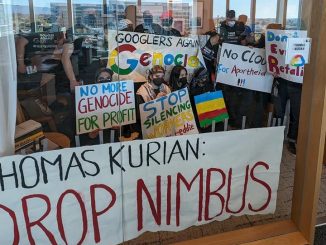
This evening, Google indiscriminately fired over two dozen workers, including those among us who did not directly participate in yesterday’s historic, bicoastal 10-hour sit-in protests. This flagrant act of retaliation is a clear indication that Google values its $1.2 billion contract with the genocidal Israeli government and military more than its own workers. In the three years that we have been organizing against Project Nimbus, we have yet to hear from a single executive about our concerns. Google workers have the right to peacefully protest about terms and conditions of our labor. These firings were clearly retaliatory.

On the contrary, our bosses called the police on its own workers, the Nimbus Nine, who were arrested and taken into custody last night. Today, they punished all of the workers they could associate with this action in wholesale firings, through a dragnet of in-office surveillance. Google cited “bullying” and “harassment” as the reasons for workers’ firing. If there has been any bullying or harassment at the company, our Palestinian, Arab, and Muslim colleagues have been the recipients.

Google claims that protesters “defaced property” and “physically impeded the work of other Googlers.” This excuse to avoid confronting us and our concerns directly, and attempt to justify its illegal, retaliatory firings, is a lie. Even the workers who were participating in a peaceful sit-in and refusing to leave did not damage property or threaten other workers. Instead they received an overwhelmingly positive response and shows of support.

Google continues to lie to its workers, the media, and the public. Google continues to claim, as of today, that Project Nimbus is “not directed at highly sensitive, classified, or military workloads relevant to weapons or intelligence services.” Yet, reporting from TIME Magazine proves otherwise: Google has built custom tools for Israel’s Ministry of “Defense,” and has doubled down on contracting with the Israeli Occupation Forces, since the start of its genocide against Palestinians in Gaza. By continuing its lies, Google is blatantly disrespecting and disregarding consumers, the media, as well as, most importantly, its workers.

Google claims that the protest involved people who “largely” do not work at the company. This is not just untrue, it’s insulting. Thousands of our colleagues have joined our call for the company to drop Project Nimbus, supporting the dozens of brave workers who have spoken out publicly about how the contract is impacting their health and safety on the job. Most of all, it is insulting to those of us you just threw out of the company for voicing our concerns about Project Nimbus, as well as for the well-being of our Palestinian, Arab, and Muslim colleagues facing Google-enabled racism, discrimination, harassment, and censorship.

Sundar Pichai and Thomas Kurian are genocide profiteers. We cannot comprehend how these men are able to sleep at night while their tech has enabled 100,000 Palestinians killed, reported missing, or wounded in the last six months of Israel’s genocide — and counting.

The truth is clear: Google is terrified of us. They are terrified of workers coming together and calling for accountability and transparency from our bosses. They are choosing to reveal the falsity of Google’s “open culture” in order to get rid of a threat. The corporation is trying to downplay and discredit our power.

These mass, illegal firings will not stop us. On the contrary, they only serve as further fuel for the growth of this movement.

Make no mistake, we will continue organizing until the company drops Project Nimbus and stops powering this genocide.

Source: No Tech For Apartheid Campaign

Strugglelalucha256


Germany buries the evidence of complicity in genocide: Nicaragua exposes it

On April 11, Dr. Ghassan Abu-Sittah, the British-Palestinian war surgeon, gave his first address as the newly-appointed rector of Glasgow University, chosen in recognition of his work at al-Shifa Hospital in Gaza. The following day, he flew to Berlin, where he had been invited to address a major conference about Palestine. On arrival, he was taken away by police, interrogated for several hours, and eventually told he had to leave Germany and wouldn’t be allowed to return until at least the end of April. Any attempt to speak to the conference via Zoom could result in a fine or even a year’s prison sentence. By the time he was released, he couldn’t have taken part in the conference anyway since it had already been invaded by at least 900 police and closed down. Berlin’s mayor said that it was ‘intolerable’ that the conference was taking place at all.

Speaking about his experience afterward, Dr. Abu-Sittah referred to the fact that Germany had – also last week – been defending itself at the International Court of Justice against charges by Nicaragua that it is an accomplice to genocidal war. ‘This is exactly what accomplices to a crime do,’ he said. ‘They bury the evidence, and they silence or harass or intimidate the witnesses.’

Watching the live feed of Germany’s lawyers at the Hague a few days earlier had been an odd experience. They gave the impression of being affronted that Germany had been accused of such crimes, especially by a small country which, they argued, had no stake in the case. Also, Israel could not yet be said to be committing genocide because the ICJ has not yet determined the case brought against it by South Africa, which Germany had supported Israel in contesting. Because Israel was not party to the new case, it should simply be thrown out.

Some research might have given them a better appreciation of Nicaragua’s credentials to bring the case. Its mutual solidarity with Palestine goes back a long way. It also has more experience at the Hague than Germany, including its pioneer action against the US in 1984, when it won compensation of £17 billion (that was never paid) for the damage done to Nicaragua by the US-funded Contra war and the mining of its ports. Carlos Argüello, who led the case last week and many of its previous cases, said that Nicaragua offered its expertise to Palestine and it had already joined in with South Africa’s action. It had decided to target Germany, the second biggest supplier of arms to Israel, because the US, the biggest supplier, is outside the court’s jurisdiction on this issue.

Argüello explains that the object is to create a precedent with wider application – that countries must take responsibility for the consequences of their arms sales to avoid them being used in breach of international law. Germany’s argument that legal action cannot proceed before South Africa’s earlier case is resolved is nonsense since countries have an obligation to prevent genocide, not merely wait until it is proven to be happening. In any case, Germany must have been aware of the numerous warnings from senior UN officials of the imminence of genocide in Gaza, which began as early as October 9.

Germany claimed that it has a “robust legal framework” in place to ensure its arms exports are not misused and that sales to Israel are now restricted to non-lethal equipment. But any supplies being sent to a genocidal army are helping to sustain its criminal actions, Nicaragua replied.

Much was made of Germany’s historic obligations due to its Nazi history, but Argüello argues that these should relate to the Jewish people, not the Israeli state. He adds that Germany’s past might also oblige it to help prevent genocide wherever it might occur. Its government spokesman on the South Africa case had claimed that Germany is ‘particularly committed to the Genocide Convention’.

The economist Yanis Varoufakis was also banned from speaking in Berlin. He planned to conclude his speech by telling German politicians that ‘they have covered themselves in shame’ through their unflinching support for Israel’s atrocities. Carlos Argüello echoes this point when asked whether a decision by the ICJ can actually be enforced: we have to mobilize shame; he says, “…that’s the hope with this. Perhaps being too idealistic, but it’s the only weapon we have.”

Source: Resumen

Strugglelalucha256


San Diego: Mumia Abu-Jamal’s 70th Birthday Celebration – April 23

Strugglelalucha256


Iran attack puts Israeli Rafah invasion on ice: Report

Israel was on the verge of launching a ground offensive on the Gazan city of Rafah but delayed the campaign after Iran launched a massive retaliatory attack on Israel over the weekend, CNN reported on 15 April.

Citing Israeli sources, CNN reported that the Israeli Air Force was set to begin dropping leaflets on parts of Rafah on Monday in preparation for a ground offensive into Rafah – Gaza’s southernmost city where more than 1 million displaced Palestinians are sheltering from Israel’s six-month bombing campaign.

Those plans were allegedly halted after Iran launched an attack of some 300 missiles and drones toward Israel late Saturday. Most were intercepted by Israeli anti-missile systems, but several missiles successfully penetrated Israel’s vaunted defenses and hit a key military base and intelligence collection center.

Israel’s war cabinet spent Sunday and Monday debating a possible response to the Iranian attack, which was in retaliation to Israel’s bombing of the Iranian consulate in Damascus two weeks ago, which killed a top Islamic Revolutionary Guard Corps (IRGC) general.

CNN wrote that according to one Israeli official, “Israel remains determined to carry out a ground offensive in Rafah, although the timing of civilian evacuations and the coming ground offensive remains unclear at the moment.”

The Israeli military declined to comment.

Netanyahu has publicly threatened to invade Rafah for months, claiming it is necessary to dismantle Hamas’s remaining battalions. UN officials and aid workers have warned an invasion of the border city would result in a “bloodbath” due to the roughly 1.4 million civilians concentrated there, including many living in tents and with no safe place to flee.

Israel’s ongoing war on Gaza, which has killed over 33,000 Palestinians and is widely viewed as genocide, is influencing the war cabinet’s discussions about a potential response to Iran’s attack.

Opening another war front with Iran would require moving attention and resources away from Gaza, where Israel seeks to defeat Hamas, ethnically cleanse the 2.3 million-strong indigenous Palestinian population, and establish Jewish colonies.

Source: The Cradle

Strugglelalucha256


U.S. moves previously banned missiles closer to China and Russia

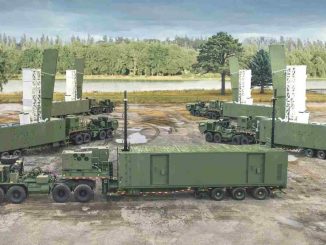
Back in November last year, the U.S. military was in the process of deploying new medium-range missile systems to the increasingly contested Asia-Pacific region. At the time, General Charles A. Flynn, a four-star commanding officer of the U.S. Army Pacific (USARPAC), stated that the deployment was officially slated for 2024 and that their purpose was to “deter China from invading Taiwan.” More importantly, Flynn revealed that the U.S. Army would deploy a missile launcher that would be able to fire the land-based version of the medium-range “Tomahawk” missile. Still, he refused to disclose where exactly the systems would be deployed, leaving many analysts to speculate about the possible location. There was even speculation that such missiles would be stationed directly in Taiwan. However, it seems that the United States chose not to go that far (at least not yet), although the latest deployment isn’t much better in terms of strategic impact on China’s security.

Namely, the system in question, officially named “Typhon,” has been sent to the Philippines. The U.S. Army deployed the elements of its latest land-based medium-range missile system overseas for the first time to take part in a military exercise in the island country. Apart from the aforementioned subsonic “Tomahawk” cruise missiles, “Typhon” also carries the supersonic SM-6 multi-purpose missiles. The latter is used by the U.S. Navy as part of its shipborne “Aegis,” a combined SAM (surface-to-air missile) and ABM (anti-ballistic missile) system that can also be used in a secondary anti-ship role. Precisely, the SM-6 gives it such a capability, meaning that it can hit both airborne and surface targets. Because of such multirole capabilities, “Typhon” can use the missile for land attack missions. Various American military sources suggest that such systems will be “permanently based in China’s backyard,” a clear indicator that the U.S. plans to escalate its aggression.

On April 15, the U.S. Army Pacific (U.S.ARPAC) announced the arrival of one battery (or at least a part of it) to the Philippines, where it participated in the Salaknib 24 military exercise. This specific “Typhon” system was sent on April 7, and it belongs to Battery C, 5th Battalion, 3rd Field Artillery Regiment, which is part of the Long Range Fires Battalion assigned to the 1st Multi-Domain Task Force (MDTF) at Joint Base Lewis-McChord in Washington State. Footage shows a single trailer-based containerized launcher towed by a HEMTT (Heavy Expanded Mobility Tactical Truck) being loaded on a USAF C-17A Globemaster III transport aircraft from the 62nd Airlift Wing at Joint Base Lewis-McChord and then being unloaded in the Philippines. A “Typhon” battery consists of up to four launchers, a mobile command post, and other auxiliary vehicles and equipment. The system also uses the Mk 70 Mod 1 launchers derived from the highly controversial Mk 41 VLS.

Namely, the Mk 41 vertical launch system (VLS) was one of the reasons why the INF Treaty fell apart, which recently led Russia to respond to the U.S. escalation by testing its own previously banned intermediate-range missile. The Mk 41 can fire a plethora of weapons, be it for SAM, ABM, or any other system. It’s also part of the “Aegis” air and missile defenses, including its land-based “Aegis Ashore” variant. It can be argued that its most disturbing feature is that it can also fire purely offensive missiles such as the infamous “Tomahawk.” The problem is that there’s no viable way to know what sort of missile is in the VLS, and the U.S. has repeatedly refused to allow on-site inspections of its alleged “missile shield” in Eastern Europe. This effectively forced Russia to create countermeasures, particularly in the form of its unrivaled hypersonic missiles. China has a similar problem with such VLS, particularly now that the missiles have been deployed on land.

The U.S. military openly describes the “Typhon” as a “strategic weapon system that would be used against higher-value targets like air defense assets and command and control nodes.” If based on Luzon, the largest and most important island in the Philippines, the system would have more than enough range to reach southern and southeastern China, including the island of Hainan, which is crucial for extending control over the strategically important South China Sea. However, U.S. military sources are complaining that too many countries have outright refused to allow the deployment of the “Typhon” on their territory. Still, this doesn’t seem to serve as a clear deterrent to the aggressive Pentagon planners, as they’re also deploying similar weapons with other service branches, including the U.S. Marine Corps (USMC), which also has land-based “Tomahawk” launchers, albeit on a completely different platform, the 4×4 Joint Light Tactical Vehicle (JLTV).

Worse yet, back in 2021, meaning before the SMO (special military operation), the U.S. Army reactivated its 56th Artillery Command in Germany to oversee forward-deployed units equipped with “Typhon” and similar strike platforms such as the “Dark Eagle” hypersonic missile, which is yet to be delivered, as it’s still going through a rather rocky development. Interestingly, the 56th Artillery Command had battalions equipped with “Pershing” and “Pershing II” nuclear-armed ballistic missiles during the (First) Cold War. In other words, the U.S.-led political West is antagonizing both multipolar superpowers, openly taking pride in the fact that it can get into their “geopolitical backyards.” However, both Russia and China have superior missile technologies, particularly in terms of the development and deployment of hypersonic weapons. Worse yet for the Pentagon, even North Korea managed to overtake the U.S. in this regard and continues to strengthen its forces.

Source: InfoBrics
Strugglelalucha256


Immigration in the U.S. is big business

The foreign-born immigrant population in the United States grew by more than 15 percent in the last 12 years, and it is the labor force of these 32.5 million workers, generally overworked Latin Americans, that is one of the main causes behind strong U.S. economic growth.

In the United States, a country whose history was largely forged by immigrants, the discourse against foreigners arriving in search of better opportunities is one of the battle horses in pre-election speeches. But beyond the talk about the threat posed by immigrants are studies that clearly show that these communities benefit the country’s economy as a whole and the pockets of natives in particular.

“Relatively large immigrant populations show better outcomes than those with smaller percentages of immigrant populations,” says the George Bush Institute report, which shows their positive impact in areas ranging from income to cultural development and debunks myths that they take jobs away from locals or drive wages down. Cities with high percentages of immigrants are more innovative than others, and the contribution of non-U.S.-born people is high.

Studies reveal that immigrants invent new products and receive patents at higher rates than natives. Twenty-seven percent of master’s and doctoral students in Science, Technology, Engineering, and Mathematics are foreign nationals on temporary visas. Immigrants represent 14% of the population of metropolises but hold 23% of science and technology positions.

The least skilled immigrants fill millions of essential jobs that would remain vacant if they were not in areas such as healthcare, manufacturing, and construction. Their importance in healthcare was providential in the pandemic: one out of every three jobs was filled by immigrants. They have also helped “stabilize” industries in the Midwest, filling a shortage of skilled labor that would have forced factories to close.

And while the growing number of immigrants in the U.S. has caused division among politicians across the country and has become one of the big topics of debate in the run-up to the presidential election, it has stoked angst among a sector of voters, but there is one place where almost everyone seems to be optimistic: Wall Street.

Businessmen, investment funds are happy, especially after the Congressional Budget Office estimated that immigration will generate a seven billion dollar increase in gross domestic product over the next decade. Translated: immigration is big business, except for those who migrate, of course.

It is investment bank economists who account for the boost that migrants are giving not only to the labor force but also to consumer spending. Investment bank Goldman Sachs Group Inc. revised upward its short-term economic growth forecasts. JPMorgan Chase & Co. and BNP Paribas SA were among the banks that acknowledged the economic impact of increased immigration in recent weeks.

“Immigration is not only a very socially and politically charged issue, but also an important macroeconomic issue,” said Janet Henry, global chief economist at HSBC Holdings. She noted that no advanced economy is benefiting as much from immigration as the U.S. and “the impact of migration has been an important part of U.S. growth over the past two years.”

Immigrant workers account for roughly one in five U.S. workers, a record in government data going back nearly two decades. Economists and policymakers highlight the connection between the increased influx of foreign workers and the rapid post-pandemic recovery. Federal Reserve Chairman Jerome Powell has claimed that immigration is one of the reasons behind the strong economic growth.

According to official figures, the foreign-born population has grown considerably over the past 50 years both in size and as a percentage of the U.S. population. In 1970, it was 9.6 million (4.7 percent) of the total population, and in 2022, it was estimated at 46.2 million (13.9 percent) of the total U.S. population.

More than half of the immigrants in the United States come from South and Central America, with numbers increasing by more than two million in the last 12 years.

Despite declining by one million, the Mexican-born remain the largest sector of immigrants living in the United States today, totaling 10.68 million in 2022, representing one-quarter of the total immigrant population. The Mexican-born are only a portion of the total 36 million people of Mexican origin living in the country. They are also the largest group of undocumented immigrants entering the U.S., according to the Department of Homeland Security.

Some 80 percent of those born in Mexico have lived in the U.S. since before 2010, although some 2 million have arrived after that year. Over the past 12 years, the percentage of Mexicans who have obtained U.S. citizenship increased to the point that today, nearly one-third of Mexican-born immigrants, half of them without much education, are U.S. citizens.

The business of people smuggling

In December 2013, U.S. authorities began to warn that drug cartels were already involved in the huge business of people smuggling, but no one did anything to stop it. Today, the business is so big that it represents at least $10 billion annually.

In those days, migrants had to hire “coyotes” to help them cross into the United States and guide them along their route, but that has changed. Today, migrants have to hire the cartels because, obviously, it is those same cartels who have had, for several years now, control of the Mexican routes to the United States, according to the Mexican newspaper El Economista.

On their way before being stopped by the border patrol, today migrants are stopped by the cartels: at each stop they have to show the blue, red, green or yellow bracelets, which will tell the smugglers that the migrant is already paying the cartel’s people, a fee that is not for crossing into the United States, but just for letting them pass through Mexican territory to the border.

But the illegal immigration business in Texas generates thriving jails and employs loan sharks, loan sharks, and shady lawyers. In 2018, Texas was at the center of the scandal produced by President Donald Trump’s “zero tolerance” policy, which led to the separation of more than 2,300 children from their families upon entering the country illegally or seeking asylum.

Texas also has the largest number of prisons for immigrants. Built in 1983, the detention center in Houston was the first private prison in modern U.S. history. Its owners, Corrections Corporation of America (CCA), and GEO Group are the two largest prison corporations in the US. Both are publicly traded.

According to the research center In The Public Interest (INPI), this scheme causes mass incarceration for minor offenses to be promoted in the private sphere. Together both corporations, with profits of $4 billion in 2017, “invested” more than $10 million in political candidates and nearly $25 million in lobbying between 1989 and 2017.

According to a study by Mexico’s National Population Council migrants can pay between $5,000 and $9,600 for their crossing in that country and another $2,200 for crossing the border accompanied by a guide. Organized crime groups, in turn, rely on their relationship with corrupt state agents. Very few migrants make the journey without the involvement of organized crime.

In Mexico, the Sinaloa, Jalisco, and Zetas cartels are the ones behind migrant smuggling. In the Mexican city of Juarez, there are frequent clashes between the Mexicles (armed wing of the Sinaloa cartel) and La Linea (of the Juarez cartel) to capture the management of the migrant caravans.

In Colombia, the picture is not much different. According to Jeremy McDermott, Colombia director for InSight Crime, there are two organizations behind migrant smuggling in the country: the Aragua Train, a mega-gang that deals primarily with Venezuelan migrants, and the Gaitanista Self-Defense Forces, or Clan del Golfo.

Lucrative Darien Gap

The jungle-like Darien Gap has quickly become one of the political and humanitarian crises. What was a trickle a few years ago has now become a torrent: more than 360,000 people already crossed the jungle in 2023, according to the Panamanian government, surpassing the record of 250,000 in 2022.

In response, the United States, Colombia and Panama signed an agreement to “put an end to the illicit movement of people,” a practice that “leads to the death and exploitation of vulnerable people for significant profits”.

Today, those profits are larger than ever: in 2023 alone, local leaders have collected tens of millions of dollars from migrants in a huge and sophisticated human movement operation. “There is a nice economy,” said Fredy Marín, a former councilman in the neighboring municipality of Necoclí who runs a boat company that transports migrants on their way to the US. It transports thousands of people every month and charges US$40 per person.

Source: Cuba en Resumen

Strugglelalucha256


U.S. to carry out naval drills near six Latin American nations

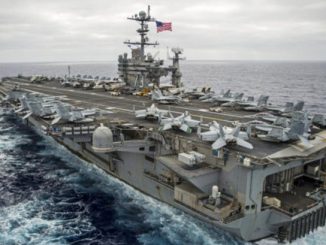
The U.S. Southern Command (SouthCom) has announced that the U.S. Navy aircraft carrier USS George Washington (CVN 73) will deploy to its area of operations.

Over the next several months, this nuclear aircraft carrier will participate in “Operation South Seas 2024”, which will deploy maneuvers near Argentina, Brazil, Chile, Colombia, Ecuador, Peru, and Uruguay.

“This will be the 10th mission of the U.S. Navy in the region since 2007,” the Brazilian outlet AvioPrime reported, adding that the George Washington’s crew is made up of some 6,000 soldiers, 2,400 of whom are from the air wing.

“The last visit of the aircraft carrier to Brazil was in 2015 during Operation UNITAS, which involved joint training between Brazilian and U.S. armies,” it recalled.

In a tweet, former Bolivian president Evo Morales had words of warning to the U.S. military:  “We remind head of U.S. SOUTHCOM, Laura Richardson, that Latin America is not your backyard nor your estate to exploit its natural resources.  Faced with the new Yankee interventionist threat, we reiterate that the free peoples of the Patria Grande will defend their sovereignty.” pic.twitter.com/kyu7tb0itD

During its voyage through the Atlantic and Pacific oceans, the George Washington will be accompanied by the Arleigh Burke-class guided-missile destroyer, USS Porter (DDG 78), and Henry J. Kaiser-class replenishment oiler USNS John Lenthall (T-AO -189).

Among other military drills, these U.S. warships will carry out PASSEX exercises, which are related to different forms of communications and cooperation with foreign vessels.

Aside from officially declared training objectives, PASSEX drills are usually a way to show the power of a country’s navy for geopolitical reasons.

Source: Resumen

Strugglelalucha256


NATO’s reign of terror: Yugoslavia to Russia

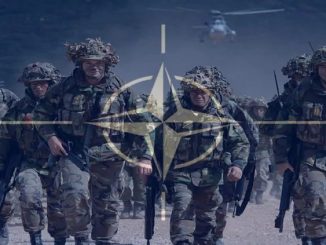
I write this just after returning from Belgrade and the important international conference held there commemorating the 1999 War of Terror conducted by NATO forces against the people of the remaining republics of Yugoslavia, primarily Serbia, a conference organized by the Beograd Forum for A World of Equals and related organizations.

In the West, the NATO attack is referred to as the “Kosovo” war since they want the memory of Yugoslavia and what it represented to the world to disappear forever. But it will not. We all know what happened there. I choose the phrase War of Terror for the NATO aggression against Yugoslavia because, in fact, that is what it became after the NATO forces failed to defeat the Yugoslav armed forces and, as a consequence, resorted to the use of a strategy of mass terrorism to force the people of Yugoslavia to submit to NATO’s will. The crimes committed by the NATO countries are well documented and include attacks on civilian infrastructure, on civilian trains, hospitals, media centers, energy infrastructure, industry, water supplies, bridges, administration centers and, finally, to force a surrender, the threat to carpet bomb Belgrade with B-52s and to kill 500,000 Serbs in the process.

Of course, these tactics are not new to war. We only need to look back at the Second World War to remember the terror attacks on civilian cities by the U.S. and British forces against German cities, like Dresden, or the American fire bombings of Tokyo and the nuclear attacks on Hiroshima and Nagasaki, to know what they are capable of. We remember their total destruction of Korea, in which terrorizing the civilian population was a key strategy used by the Americans and its allies. We remember the atrocities committed against civilians in Vietnam, the shock and awe of their attack on Iraq in 2003, their brutal invasion and occupation of Afghanistan of Libya, the use of U.S.-controlled terror groups like Al-Qaeda*, then ISIS* in Syria and Iraq, the use of terror against the populations of El Salvador and Nicaragua in the 80s, the same methods employed against the Rwandan government in the 1990-1994 in Rwanda, and in Congo ever since. Likewise, we see it in Gaza as Israel, with the direct participation of the USA, UK, Canada, France, Germany, and other NATO countries, inflict mass collective punishment on the Palestinian people, amounting to genocide against them.

We saw terror used to overthrow the legitimate government of Ukraine in 2014 and the following attacks on civilians in eastern Ukraine who refused to accept the NATO-backed coup d’etat, attacks which continue to this day. And now we see them using terror in the attacks against Russia in Belgorod and Moscow. Can we be surprised that the Russian investigation of the Crocus massacre of young people on March 22 strongly indicates that it was committed by the same actors responsible for all the previous terror attacks?

Commentators in the West have referred to these terror attacks as hybrid or asymmetrical warfare as if these phrases justify or legitimize them. They do not. They are war crimes for which those responsible must be held accountable and will be held accountable. Serge Lavrov’s visit to China to meet with his counterpart Wang Yi, the Foreign Minister of China, this week to discuss terrorism, among other issues of cooperation, indicates serious consequences will follow.

International law states these attacks are not only war crimes but can be considered genocide. The Rome Statute, for example, states

Article 6: Genocide

For the purpose of this Statute, “genocide” means any of the following acts committed with intent to destroy, in whole or in part, a national, ethnical, racial or religious group, as such:

  1. (a) Killing members of the group;
  2. (b) Causing serious bodily or mental harm to members of the group;
  3. (c) Deliberately inflicting on the group conditions of life calculated to bring about its physical destruction in whole or in part;

The key phrase is “in whole or in part.”  On that definition, the Belgorod and Crocus attacks are acts of genocide.

They are also crimes against humanity, as set out in Article 7 of the Statute,

Article 7: Crimes against humanity

  1. For the purpose of this Statute, “crime against humanity” means any of the following acts when committed as part of a widespread or systematic attack directed against any civilian population, with knowledge of the attack:
  2. Murder;
  3. Extermination;
  4. Other inhumane acts of a similar character intentionally causing great suffering, or serious injury to the body or to mental or physical health.

And they also constitute war crimes under Article 8,

Article 8: War crimes

For the purpose of this Statute, “war crimes” means (in part):

  1. a) (i) Wilful killing;

(ii) Torture or inhuman treatment, including biological experiments;

(iii) Wilfully causing great suffering, or serious injury to body or health;

(iv) Extensive destruction and appropriation of property, not justified by military necessity and carried out unlawfully and wantonly;

(vi)Taking of hostages.

  1. b) Other serious violations of the laws and customs applicable in international armed conflict, within the established framework of international law, namely, any of the following acts,

(i) Intentionally directing attacks against the civilian population as such or against individual civilians not taking direct part in hostilities;

(ii) Intentionally directing attacks against civilian objects, that is, objects which are not military objectives;

(v) Attacking or bombarding, by whatever means, towns, villages, dwellings or buildings which are undefended and which are not military objectives; and,

  1. e) Other serious violations of the laws and customs applicable in armed conflicts not of an international character within the established framework of international law, namely, any of the following acts:

(i) Intentionally directing attacks against the civilian population as such or against individual civilians not taking direct part in hostilities;

Those responsible under international law for these crimes are not just the perpetrators but also those in command of them, all the way up the chain of command to the head of state of the forces or services involved.  This principle of accountability for the highest levels of leadership was established by the Nuremberg Trials and has been accepted as a fundamental principle of international law since 1946. This principle was used by NATO in the show trials at the ICTY and ICTR, in the fabricated charges against President Milosevic, for instance.  It is time it was used against the leaders of NATO, who were granted immunity from prosecution by the prosecutors of the Yugoslav and Rwanda tribunals and who are granted de facto immunity from prosecution by the International Criminal Court, which refuses to prosecute any of the Western nations for their crimes and so encourages them and becomes itself a party to those crimes by its inaction.

So, what to do? Russia has several options. It can choose a military response and a legal response. It will likely combine the two. But insofar as a legal response, we can refer to the statement of the Russian Investigative Committee on April 9 concerning the Crocus attack that,

“Investigators have established that the funds that were received through commercial organizations, such as the oil and gas company Burisma Holdings operating in Ukraine, have been used in recent years to carry out terrorist acts in Russia and abroad with the aim of taking out prominent political and public figures and causing economic damage.”

“The investigation, in cooperation with other special services and financial intelligence, is checking the sources and further movement of funds in the amount of several million U.S. dollars, and the involvement of specific persons employed by government agencies, nongovernmental and for-profit organizations in Western countries. In addition, through investigative and operational methods, links are being established between perpetrators of terrorist attacks and their foreign handlers, organizers and sponsors.”

Tass reported that “Earlier, the Investigative Committee started assessing an appeal from lawmakers relating to the organization of terrorist attacks in Russia by the U.S. and other Western countries. The agency said the investigation will thoroughly examine the submitted data. The Prosecutor General’s Office also noted that the agency will study the materials that were received from State Duma lawmakers that pertain to the organization and financing of some terrorist attacks in Russia, as well as the explosions at the Nord Stream-1 and Nord Stream-2 underwater gas pipelines by persons and organizations located in the U.S., Germany, France and Cyprus. The agency said the materials will be carefully studied, which will be followed by considerations about whether mechanisms of international legal cooperation should be engaged.”

It is unclear which mechanisms of legal cooperation they are referring to. It cannot be the International Criminal Court, which is not a legitimate world court in any case and which Russia does not recognise as legitimate and which refuses to act. It cannot be the creation of another UN ad hoc tribunal since the U.S. and its allies will veto any such move in the Security Council, and, in any case, the UN Charter does not allow for the legitimate creation of such tribunals under Chapter VII of the Charter.

Can we look back at the historical example of the Nuremberg and Tokyo Tribunals as examples of international cooperation in holding leaders of nations responsible for their crimes? In those cases, the Tribunals were created after the defeat of Nazi Germany and Japan, and the criminals were in the hands of the people they had committed crimes against, a situation unlikely to exist vis-à-vis the U.S.A and its allies in any foreseeable future unless a direct war breaks out, and they are somehow defeated, a war which will threaten us all. This is, of course, a possibility. But let us hope that another way can be found to bring those responsible before the people of the world and expose them for what they are.

Criminal prosecutions are being prepared in Russia under its Criminal Code. But to “engage mechanisms of international legal cooperation” must have a meaning, and it logically follows that the creation of an international tribunal is one way to achieve this objective. Perhaps the Russians have something else in mind. We know not.

However, the first task is to identify those responsible, to name them, to expose them, to produce the evidence of their crimes before the world. We can be sure that will be done, and very soon. The question then becomes how to punish those criminally responsible and to prevent them from committing further crimes.

Former President of Russia and Deputy Head of the Security Council, Dmitry Medvedev, stated on April 6th that,

“It is obvious that Macron and some other Western leaders are the sponsors of this terrible terrorist attack. There is no forgiveness for this. There can be no immunity from this. And from now on, they are not just enemies of Russia.”

He is correct. Those responsible are not just the enemies of Russia. They are the enemies of mankind and are continuing to threaten to humanity.  Just what exactly the Russians are going to do we shall have to wait and see. But we can be sure of one thing; the consequences will be dramatic and inexorable.

Christopher Black is an international criminal lawyer based in Toronto. He is known for a number of high-profile war crimes cases and recently published his novel Beneath the Clouds. He writes essays on international law, politics and world events, especially for the online magazine “New Eastern Outlook”.

Source: New Eastern Outlook

Strugglelalucha256


Is the U.S. trying to bait Iran into a ‘limited’ nuclear war?

Accusing countries of alleged intentions or ongoing programs to acquire weapons of mass destruction (WMDs) has long been the mainstay of U.S. foreign policy. Regardless of whether it was a completely unfounded claim or one based on solid intelligence, the openly imperialist foreign policy of the United States is such that it’s virtually impossible to survive it without resorting to WMDs. North Korea is probably the most prominent example of this, as the small country (relative to its neighbors) was being directly threatened by the U.S. only half a decade ago, while it now fields an arsenal worthy of a “pocket superpower.” Worse yet for the Pentagon, Pyongyang now also has a robust tactical arsenal, in addition to its strategic one that can reach virtually any target in the continental U.S. Interestingly, this now includes hypersonic weapons, a field in which Washington is now lagging behind Pyongyang, Beijing, and Moscow.

Ironically, if the U.S. stops complaining about a country having nuclear weapons (or any other type of WMDs), then that country is safe, as Washington will know it can’t act with impunity. However, when a country most likely doesn’t have WMDs, the U.S. keeps accusing and threatening it before launching an illegal full-scale invasion. The example of Iraq serves as a painful lesson of that strategy. The whole world remembers the decades of U.S./NATO aggression in that unfortunate country, as well as millions of dead, wounded, displaced, etc. However, that’s obviously not enough, as Washington has been eyeing other countries in the region, particularly Iraq’s neighbor Iran. And yet, the window of opportunity for a successful conventional conflict with Tehran is effectively gone, as Americans are increasingly uninterested in joining the U.S. military and its endless wars in the Middle East and elsewhere.

For decades, the U.S. has been trying to keep Iran as one of its priority targets, with constant accusations that Tehran is supposedly in possession of either a working WMD, particularly a (thermo)nuclear weapon, or it’s allegedly close to fielding one. Virtually the same narrative is being recycled to this very day, which further suggests that Washington wants to keep the “bomb Tehran” option relevant for as long as possible. Just last week, the mainstream propaganda machine insisted that “Iran edges close to weapons capability.” Namely, according to Western media, the Middle Eastern superpower has been “edging close” and “it’s about to build [nuclear] weapons” for well over 20 years now. The U.S. has been using this narrative to build capabilities that are part of the Pentagon’s new doctrine that essentially boils down to a rather liberal usage of low-yield thermonuclear weapons.

Such a possibility is quite concerning, particularly against the backdrop of the latest clashes between Iran and Israel. Iranian strikes over the weekend, a response to the previous Israeli airstrike on its consulate building in Damascus that killed several high-ranking officers, showed that Tehran has the capability to strike targets anywhere in the Middle East. And while Israel and its allies insist that the strike was unsuccessful as they’ve managed to intercept 99% of the missiles and drones, the available footage shows that such claims are overoptimistic, to say the least. Either way, Iran demonstrated a very robust long-range strike capability. This further undermines Washington’s conventional capabilities against Tehran, as the Pentagon is simply unable to field enough forces for any sort of action against it. However, it should be noted that the U.S. has been threatening Iran well before its latest clashes with Israel.

Namely, on February 4, U.S. National Security Advisor Jake Sullivan refused to rule out the possibility of strikes inside Iran. U.S./NATO attacks on the Islamic Revolutionary Guard Corps (IRGC) and its allied militias in Iraq and Syria were already underway at the time. However, once again, the viability of strikes inside Iran is not the best, as there are close to 90 million people in the country, which also has a very robust domestic military industry, as well as a sizeable stockpile of ballistic missiles and drones, as demonstrated during the latest events over the weekend. In addition, as previously mentioned, the U.S. itself is also a far cry from 2003 when it could muster hundreds of thousands of soldiers, as well as those of its vassals and satellite states. In other words, the Pentagon simply doesn’t have the conventional forces to pull off pretty much anything meaningful against Iran or even its proxies in the area.

So, what option does that leave the U.S. with? Well, WMDs, of course. And indeed, Washington has an undisclosed number of W76-2 warheads with an extremely low yield of 2-7 kt (kilotons of TNT). This is upwards of only 10% of the destructive power of the “Fat Man” atomic bomb dropped on Nagasaki on August 9, 1945. Basic military logic implies that using such weapons against near-peer adversaries is pointless. For instance, a country like Russia that has multi-megaton monstrosities such as the unrivaled RS-28 “Sarmat” and whose retaliation would devastate the entire NATO, would certainly not tolerate it. Thus, the only viable explanation is that the U.S. wants to use such warheads in a conflict with a non-nuclear power. Faced with dwindling conventional capabilities, the U.S. is left with only one way to try to blackmail the rest of the world into accepting its vaunted “rules-based world order” – nuclear war.

This is also completely in line with the overall U.S. military strategy – attack only those who can’t shoot back. For the time being, Iran is the only major rival without thermonuclear weapons (officially at least), making it the “perfect target”. However, this still leaves the obvious question – what if Tehran has thermonuclear weapons? Nobody could blame Iran for wanting to protect itself from any hostile forces seeking to enslave or destroy it, but the prospect of an uncontrollable escalation still remains strong, meaning that restraint should be exercised by all sides and backdoor channels should be kept open at all times. The main issue lies in the fact that the U.S. is desperate to prevent the enlargement of BRICS+, a truly historically unprecedented effort to create a better world in which there’s an actual functioning international law and where (neo)colonialism will be suppressed (if not eradicated once and for all).

Source: InfoBrics
Strugglelalucha256
https://www.struggle-la-lucha.org/2024/04/page/3/