Who killed JFK and why? Sixty years since the coup in Dallas

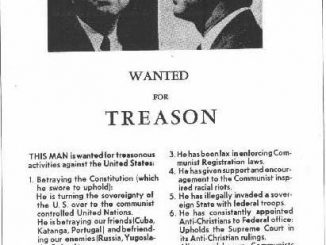
Kennedy was lured to Dallas, which was then a center of the ultraright. JFK’s picture was featured on “wanted for treason” posters that were distributed there.

Most people still don’t think that Lee Harvey Oswald was the “lone nut” assassin of President John F. Kennedy.

In an October 2023 Gallup poll, 65% of adults in the United States don’t believe it. Six years before in a poll commissioned by the FiveThirtyEight website, 76% of Black adults didn’t buy it either. 

Why should they? Even the commission chaired by U.S. Supreme Court Chief Justice Earl Warren couldn’t find a motive for Oswald killing JFK on Nov. 22, 1963, in Dallas.

Two days later, Dallas police allowed Oswald to be killed in the basement of their own headquarters. The most important witness in U.S. history was silenced forever by the sleazy strip club operator Jack Ruby.

As soon as Oswald was murdered on live TV, it confirmed for many that Kennedy was killed by a conspiracy.

The Warren Commission set up by the new president — Lyndon B. Johnson, aka LBJ — didn’t erase their doubts. Its job wasn’t to find the truth but to conduct a cover-up.

None of the seven commission members were women and/or persons of color. Nor was the labor movement represented. 

The segregationist Georgia Senator Richard Russell — LBJ’s pal, who fought civil rights bills and killed anti-lynching legislation — was appointed instead. 

Other members, beside Warren, were future President Gerald Ford and John McCloy, former Chair of the Chase Manhattan Bank (now JP Morgan Chase with $3.9 trillion in assets). Also chosen were Kentucky Senator John Cooper and Louisiana Representative Hale Boggs. 

The member who attended the most commission meetings was former CIA Director Allen Dulles. The war criminal oversaw bloody coups that overthrew democratically elected governments in both Guatemala and Iran.

Why was Dulles, who hated Kennedy, even appointed to investigate his death? JFK fired the spymaster following the failed attempted invasion of Cuba at the Bay of Pigs (Playa Girón).

Kennedy also dismissed Dulles’ No. 2, CIA Deputy Director Charles Cabell, whose brother Earle Cabell was ever-so-conveniently mayor of Dallas.

Kennedy was lured to Dallas, which was then a center of the ultra right. JFK’s picture was featured on “wanted for treason” posters that were distributed there.

More than one shooter   

The latest assault on the Warren Commission’s credibility is the newly released film, “JFK: What The Doctors Saw.” It features the physicians who treated the dying president at Parkland Hospital in Dallas.

These doctors said there was an entrance wound in Kennedy’s neck. That means there had to be a shooter to the front of JFK’s limousine in addition to an assassin firing from behind.

Two shooters means a conspiracy.  Even defenders of the Warren Report can’t claim there were two “lone nuts” operating independently of each other.

Dr. Robert McClelland, one of the physicians in the film, said the back of Kennedy’s head was blown out by the exiting bullet. This fact was covered up in the autopsy overseen by top military brass at the Bethesda Naval Hospital (now the Walter Reed National Medical Center).

Dr. David Mantik and Dr. Michael Chesser, who studied the x-rays from the autopsy, called them fraudulent.

The Warren Report claimed Oswald fired from the sixth floor of the Texas School Book Depository, where he worked. Yet many eyewitnesses reported shots fired from the “grassy knoll” instead. Bystanders and police ran up this knoll, west of the book depository, immediately after Kennedy was shot.

The famous home movie taken by Abraham Zapruder clearly shows Kennedy being propelled back and to the left. This is consistent with a shot fired from the front, not from the book depository. So does the testimony of witnesses who saw a bullet hole in the windshield of Kennedy’s limousine.

The Zapruder film gives six seconds for three shots to have been fired. Using the bolt action rifle that was supposedly used, it has been virtually impossible for skilled sharpshooters to repeat the alleged feat.

Television reporter Robert MacNeil and other witnesses heard two shots fired very close together, probably too close to have been fired from the same rifle. 

The late Milton Neidenberg described the skepticism of his co-workers immediately after the assassination. Neidenberg, a communist union activist who died in 2018, was employed at Bethlehem Steel’s Lackawanna works just outside Buffalo, New York.

None of the steelworkers who were hunters believed that Oswald could have killed Kennedy with the Mannlicher-Carcano rifle that was alleged to be the murder weapon.

The patsy

And what about President Kennedy’s supposed killer, Lee Harvey Oswald? He said, “I didn’t kill anybody,” and proclaimed himself a “patsy.” That’s strange behavior for a political assassin.

Police claim that no notes or a tape recording were made from their interrogations of Oswald.  

Was it even possible for Oswald to have fired the three shots that the Warren Report claimed he did? A paraffin test applied to Oswald’s face after he was arrested came back negative, which ruled him out from firing a rifle.

One of the shots missed Kennedy completely and hit a curb, causing a small cut on James Tague’s cheek from concrete fragments. Another shot supposedly struck Kennedy’s head.

That left a single bullet that allegedly hit President Kennedy and then zigzaggedly struck Texas Gov. John Connally’s chest, wrist and thigh.

Connally, who survived, always denied he was hit by the same bullet. Former Allegheny County, Pennsylvania, coroner Cyril Wecht calls it the “magic bullet” that couldn’t have done the damage to both Kennedy and Connally.  

Oswald was also accused of killing Dallas police officer J.D. Tippit. Two witnesses, Acquilla Clemons and Frank Wright, saw two shooters.

Oswald was very likely an informant for either the FBI, CIA or both. “Everywhere you look with him, there are fingerprints of intelligence,” said former U.S. Sen. Richard Schweiker

Oswald’s earlier “defection” to the Soviet Union was phony. His attempt to set up a “Fair Play for Cuba Committee” in New Orleans was like that of a provocateur. These actions were meant to “sheep dip” Oswald, in order to make him look like a leftist and possible Soviet agent.

Instead of trying to escape, Oswald was arrested at a movie theater, a common daytime rendezvous for agents. In his wallet — one of several wallets that allegedly belonged to Oswald — was a dollar bill cut in half. That’s commonly used in spy craft to find a contact, who will produce the other half.

Oswald was the fall guy — or as he put it, “the patsy”— that had to be eliminated.

Who’s coup?

The key to assassinating President Kennedy was stripping away his protection. French President Charles de Gaulle knew that.

He himself had been the target of attempted assassInations. One of the first books to allege a conspiracy — “Farewell America” by “James Hepburn,” a pseudonym — was published by French intelligence.

Half of the Dallas cops belonged to the Ku Klux Klan. Retired detective James Leavelle told Joseph McBride that he regarded JFK’s assassination as “no different than a south Dallas [n-word] killing.” (“Into the Nightmare: My Search for the Killers of President John F. Kennedy and Officer J. D. Tippit” by Joseph McBride.) Leavelle had been handcuffed to the about-to-be-shot Oswald.

There wasn’t even a Secret Service agent riding on the back of Kennedy’s limousine when the president was shot. Half of Kennedy’s cabinet were halfway across the Pacific Ocean. JFK’s autopsy was a cover-up.

Only the U.S. military’s Joint Chiefs of Staff had the power to do this, with the assistance of the Dallas power structure. The clean-up work of eliminating witnesses, like Oswald, could be contracted out to organized crime and counter-revolutionary Cuban exiles.

Thirteen months before Kennedy was shot down, the Cuban missile crisis terrified the world. The Joint Chiefs wanted to invade Cuba.

A nuclear war with the Soviet Union could have been the result. Kennedy didn’t want to take a gamble and agreed to end the crisis instead. 

Dallas gave generals like Air Force Chief of Staff Curtis LeMay another chance. LeMay despised Kennedy. He later ran as the fascist George Wallace’s running mate in the 1968 presidential election.

The Soviet Union was then facing a U.S. arsenal of 3,400 nuclear bombs and 185 nuclear missiles. The Pentagon wanted to use them to “wipe out communism” forever. 

But this second half of the coup didn’t gel. Much of the ruling class didn’t trust their fallout shelters. Oswald’s survival for 48 hours also dampened things.

LBJ’s consolation prize for the Pentagon was a big escalation of the U.S. war against Vietnam, which had already been going on under both Eisenhower and Kennedy. Within two years after JFK’s murder, U.S. forces in Vietnam increased 11 times to reach 184,000 GIs.

Johnson also invaded the Dominican Republic in April 1965. This bloody crime was considered by the military-industrial complex a “successful” Bay of Pigs.

Only the people can force the truth to be told about JFK’s assassination.


Strugglelalucha256


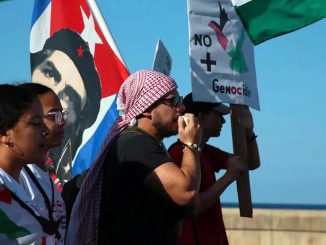
Cuba: March for Palestine floods Havana’s Malecon

Today, thousands of Havana residents marched along the Malecon of the Cuban capital to denounce the war crimes of the Zionist state of Israel against the people of Palestine in the Gaza Strip.

“It is heard, it is felt, the Palestinian people in Cuba is present”;

“Alert, alert, alert that walks, the voice of Palestine in Latin America”;

“The people united will never be defeated. Long live the Palestinian cause. “

These were the chants that were repeated in the crowded march called by the Union of Young Communists (UJC), which in a determined way moved from G and Malecón, passing by the U.S. Embassy and concluded in La Piragua with a Tribune in solidarity with the victims of the Israeli genocide in Palestine. The UJC entitled the event as the March for Life and Peace in Palestine.

Presiding the front of the militant crowd were Miguel Díaz-Canel Bermúdez, first secretary of the Central Committee of the Communist Party of Cuba and President of the Republic, and Manuel Marrero Cruz, prime minister of the island.

“ We have come this far because in the face of fascism, murder and genocide against the Palestinian people because we cannot stay on the sidelines,” said the first secretary of the Provincial Committee of the UJC in Havana, Raul Alejandro Palmero.

“This massacre did not begin last month, as the Western media have tried to sell. It has cost more than 120 thousand lives and the appropriation of more than 78 percent of the Palestinian territory in the last 75 years.

“This is not an armed conflict. It is the largest and longest continuous genocide in history, -continued the young communist.

“Habaneros and habaneras, the Union of Young Communists has called for this popular march because the images of shattered children bombed women, and destroyed hospitals have immensely permeated the Cuban sensibility.

“Once again, the city is hosting a demonstration for truth and justice, demanding peace. Here are the students, the workers, the scientists, sportsmen, all the people raising their voices together and accusing the fascists.

“The time has come to overflow these streets of solidarity and humanism. As Fidel Castro taught us for so many years: “Let’s march with our hearts in our hands,” “Long live Free Palestine.”

The march was carried out with the participation of various sectors of Cuban society and movements of solidarity with just causes that together raised their voices and accused Israel as responsible for the atrocities suffered by the Palestinians, who have lost more than 7000 children since last October 7.

Atef Abdelhafez Sharif al Safadi, a Palestinian oncology resident at Brother Ameijeiras Hospital, denounced on behalf of his people:

“They have dropped more tons of bombs than in Hiroshima and Nagasaki on us. They have used prohibited weapons such as white phosphorus, which causes atrocious burns.

“More than 25 hospitals have been bombed and taken out of service with their patients, cut off the supply of water, electricity, food, medicine and fuel.

“More than 200 doctors and health professionals were murdered in cold blood for not accepting to abandon their patients in Intensive Care and Neonatology.

“The only cancer hospital was bombed, leaving patients to face their terrible fate. In addition, churches, schools, and UN centers that had refugees and national and international media were bombed to bury their war crimes.

“We can say: what is happening in Gaza is not a war. It is an imperialist and fascist Zionist genocide. Moreover, they are trying to silence the truth and impose their “false democracy” on us at cannon point.

“We are Palestinian doctors, fidelistas, guevaristas and chavistas, we are anti-colonialists and anti-imperialists.  We are part of the heroic united resistance that is defending Gaza and all of Palestine.

“We are not terrorists, nor animals as the Zionist defense minister has said, we are fighters for freedom, justice and peace, this is why we come here today to demand the permanent Cease Fire Now, the ending  the massacre and the crimes against our people.”

Meyvis Estevez, second secretary of the Young Communist Youth Union, emphasized in her speech the impossibility of remaining silent in the face of the barbarism and crime committed in Palestine.

“Every wound in that land is a wound in the heart of Cuba, and every act of violence dismays us and drives us to continue fighting alongside the noble Palestinian cause,” she said.

Meyvis Estevez closed the march with these words:

“It is impossible to be children of this land, to carry in our blood the sage of Marti and the legacy of Fidel and remain silent in the face of injustice. Palestine hurts us, we are shaken and outraged by crime and barbarism.

“Every wound in that homeland is a wound in the heart of Cuba; every woman, old man or child martyred there shakes us to the core, every destroyed home dismays us and drives us to continue alongside the noble Palestinian cause.  Nothing justifies such a punishment against a people who have been deprived of their lands and their rights.

“We young Cubans, children of a tradition that makes us sworn enemies of evil and hatred, have marched today here and in many parts all over Cuba, because no one should remain silent or remain oblivious to the war crimes committed by “Israel”, in alliance with imperialism.

“We demand a just and immediate solution to stop the genocide. We demand that the historic UN resolutions that seek coexistence and tolerance be respected. We demand that weapons be silenced and that life speaks.

“Every human loss there represents a future cut short and a potential that cannot be realized. Our hearts go out to the families who suffer so much. We, too, are affected by the loss of young people in conflict.

“As Cubans, we refuse to be passive bystanders to the suffering of others. It is our duty to convey messages of peace and equality.

“We can promote a world in which we will all win in harmony. Let us continue to work together for a better future for all.

“Let us keep alive the memory of those who have gone too soon. We will work tirelessly so that many more around the world will join this call of love and hope.

“Dear Palestinian people, Cuba is with you. Your dreams cannot be destroyed.

Long live Palestine forever.

Prior to the march for life and peace in Palestine, Cuban President Miguel Díaz-Canel Bermúdez conveyed heartfelt condolences to the Lebanese media Al Mayadeen for the murder of their two young journalists, Farah Omar and cameraman Rabih Maamari.

“We send strong embrace to the brothers of Al Mayadeen, who are suffering today for the murder of young journalist Farah Omar and cameraman Rabih Maamari. Another crime perpetrated by Israel. That’s 48 press professionals murdered for denouncing genocide.” #FreePalestine

Source: Resumen Latinoamericano Cuba.


Strugglelalucha256


We need your help

Five years ago, on Dec. 7, 2018, we began publishing Struggle-La Lucha. It’s news and analysis for socialist revolution. That’s why you are here reading this.

Throughout, we have given frontline coverage of the many struggles taking place across the U.S. and around the world. From Black Lives Matter to the National March to Protect Trans Youth, from the U.S./NATO proxy war on Russia to the Pentagon’s menacing buildup in Asia, including a surge of armaments to Taiwan. Most significantly, right now, is the courageous Palestinian resistance in Gaza.

We have two journalists — John Parker and Lev Koufax — in Cairo, Egypt, working with the Egyptian Journalists’ Syndicate for the Global Conscience Convoy to deliver aid to Gaza. 

We need your help, and there are a few ways you can do that.  

Donate. Your donations are what have made it possible to send journalists to the frontlines. 

Share. Post our reports on social media. That’s the primary way our reports are spread. As you know, Google (and Facebook and X – formerly Twitter – etc., etc.) have made it harder to reach anyone. All have been optimized for advertising and systematically censor search results that don’t fit the business plan.

Print. We’ve changed the format of our PDF printed edition from a tabloid to a news magazine. This makes it easy to print anywhere, from a home office to a local copy shop. You can print all of it or select one page/one article. Print it and share it.

The staff at Struggle-La Lucha

DONATE


Strugglelalucha256


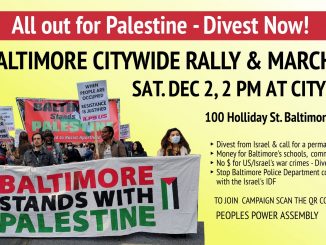
Baltimore: All Out for Palestine march and rally, Dec. 2

Citywide Rally & March
SAT. DEC 2, 2 PM AT CITY HALL
100 Holliday St, 21202

  • Divest from Israel & call for a permanent ceasefire
  • Money for Baltimore’s schools, communities & jobs
  • No $ for US/Israel’s war crimes
  • Stop Baltimore Police Department relations with the IDF
Strugglelalucha256


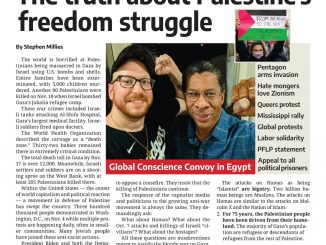
Struggle ★ La Lucha PDF – November 27, 2023

Get PDF here

  • The truth about Palestine’s freedom struggle
  • Queers for Palestine march in New York
  • Protest actions around the globe
  • Trip to Egypt for Global Conscience Convoy: Day one
  • Mississippi rallies for Gaza
  • Palestine: International labor solidarity
  • Pentagon secretly poured in arms for invasion of Gaza
  • Keep chanting, ‘From the River to the Sea, Palestine will be free!’
  • PFLP: Hold U.S., international community responsible for assault on Al-Shifa hospital
  • Mississippi Delta drought puts New Orleans in fire & water crisis
  • Nace alianza electoral progresista en PR
  • Appeal to all political prisoners in the world: Hunger strike in defense of Palestinian prisoners
Strugglelalucha256


Houthi resistance takes on Zionist regime in the Red Sea

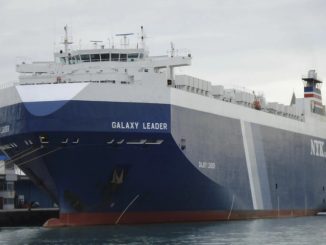
On Nov. 19, an Israeli-linked ship, the Galaxy Leader, was seized in the Red Sea and redirected to the Port of Hodeidah in Yemen by the Houthi-led Yemeni Armed Forces. 

The cargo ship was targeted because the vessel is owned, in part, by shipping magnate Abraham “Rami” Ungar, who is in the Haaretz list of 30 richest people in Israel. 

Israeli Prime Minister Benjamin Netanyahu has tried to downplay the ship’s ties to the Zionist regime. The ship is owned by Ray Car Carriers, a motor vehicle import company that is one of the largest of its type in Israel. 

Ungar, the owner of Ray Car Carriers, is also known for financing far-right politicians in Israel. He has been implicated in numerous high-profile scandals, including a bribery case involving arrangements to bribe a political aide of then-Prime Minister Ehud Olmert. The Prime Minister and Ungar attempted to pay the aide, Shula Zaken, to not testify against Olmert and take the fall in the corruption case that was being mounted against him and his administration. 

Ungar is also a close friend of the current Israeli Minister of Defense, Yoav Gallant, of the far-right Likud party. 

The takeover of the Galaxy Leader ship was a well-targeted, righteous act of solidarity with the people of Palestine. Yahya Sare’e, the spokesperson for the Yemeni Armed Forces, made a statement in which he proclaimed, “The Yemeni Armed Forces will continue to carry out their military operations until the Israeli aggression against the Palestinian people in Gaza and the West Bank stops.” 

Statements from the YAF have also confirmed that they have fired a salvo of winged missiles targeting Zionist occupying forces in the Eilat region (occupied Umm Al-Rashrash, Palestine) and will continue to strategically target the Zionist regime until they end their aggression towards the people of Palestine.

Iran unveils new hypersonic missile

The Supreme Leader of Iran, Ayatollah Ali Khamenei, made a visit on Nov. 19 to the Ashura University of Aerospace Science and Technology for the unveiling of a new hypersonic missile that can be used in self-defense against U.S.-Israeli aggression. 

The missile goes by the name Fattah-II, an upgraded version of the Islamic Revolutionary Guard Corps’ first domestically produced hypersonic missile bearing the same name unveiled earlier this year in June. 

Iranian state media have described Fattah-II as a hypersonic glide vehicle, a projectile that can maneuver and glide at hypersonic speed to its target and is capable of posing a serious challenge to low, medium, and high altitude defense systems. 

The exhibition also showcased missile defense systems, including their Mehran and 9-Dey defense systems, as well as an Iranian-made drone named “Gaza” in solidarity with the people of Palestine’s resistance. Also, during this visit, Khamenei condemned the evils of racism that take root in Zionism and in the imperialist ideologues that support the settler-colonial state of Israel. 

Khamenei noted: “The Zionists consider themselves as a superior race, and they consider the rest of the human race to be inferior. That is why they have killed several thousand children without any remorse.” 

He went on to condemn Western imperialist leaders for their support of Zionism and racial discrimination by adding, “When the President of the United States, the Chancellor of Germany, the President of France and the Prime Minister of England support and help such a racist regime with all the things that they claim, it means that these men support racism, which is one of the most despised issues in the world.” 

Khamenei continued: “If they were against it, their opposition would have shown itself in them taking action regarding the issue of Gaza and Palestine.” 

He talked about how Israel’s bombardment of hospitals, women, and children in Gaza is also evidence of the Zionist regime’s frustration at their inability to defeat Hamas and suppress the resistance of the people of Palestine. Also, during the address, Khamenei called on Islamic and Arab nations to stand in solidarity with the people of Palestine and cut political ties with Israel.

From Iraq to Lebanon, Pan-Arab solidarity

This week, the U.S. military violated the sovereignty of Iraq by mounting an attack on the Islamic Resistance of Iraq-aligned group Kataeb Hezbollah (Hezbollah Brigades). 

In response, the armed forces of the Islamic Resistance of Iraq retaliated on Nov. 23 by hitting two bases of the U.S. occupation forces in western and northern Iraq with four drones. Also, on Nov. 23, a day after an Israeli airstrike killed five Hezbollah fighters, there are reports that more than 50 missiles were fired at Zionist military targets in northern occupied Palestine from Hezbollah forces located in southern Lebanon. 

This makes it one of the largest bombardments targeting the Zionist regime since the start of the Al-Aqsa Flood Operation in October. 

From the river to the sea, Palestine will be free!


Strugglelalucha256


In Egypt for Global Conscience Convoy: Day two

On Wednesday, Nov. 23, two journalists from Struggle-La Lucha had the privilege and honor of spending an afternoon at the Egyptian Journalists’ Syndicate in downtown Cairo. The EJS is the central labor union for journalists across Egypt. We received a tour from EJS members who have also played a role in organizing the Global Conscience Convoy to the Rafah border crossing.

The first thing that stands out about the Egyptian Journalists Syndicate headquarters is the massive 50-foot-long Palestinian flag hanging from the building’s entrance. Upon approach, one can immediately feel the solidarity emanating from the building and its occupants. The struggle for union journalists in Egypt is a personal one, as the Israeli apartheid government has murdered at least 57 journalists since Oct. 7, many of whom were Egyptian

Historically, the EJS has not always been this anti-imperialist. While a relatively progressive trade union in the past, the EJS experienced a seachange in March of this year when a socialist bloc won the elections for the union’s leadership. This is the first time explicitly left-wing forces have ascended to EJS leadership. 

Under the new leadership, the EJS has taken steps to build coalitions with progressive organizations like the Popular Committee in Solidarity with Palestine, the Socialist Popular Alliance Party, the Bread and Freedom Party, and many others. Because of these coalitions, the EJS led the only truly popular demonstrations in support of Palestine in the entire country of Egypt. This has included the first major marches on Tahrir Square in a decade

At first, the Egyptian government was not only supportive of these demonstrations but even went as far as to participate to some extent. Unfortunately, the Egyptian government changed its tune regarding pro-Palestine protests and even humanitarian convoys in the days and weeks since the Palestinian resistance commenced Operation Al-Aqsa Flood. 

Due to pressure from the U.S. government and corporate media, as well as an insidious EU anti-migration aid package, the Egyptian government has significantly cooled its support for Palestine and the corresponding solidarity movement. The over $9 billion aid package comes with the express purpose of preventing Arab migration into Europe. To that effect, the package contains millions for border security and naval patrol equipment.

One of the consequences of this Western coercion has been an indefinite delay in multiple aid convoys headed to Gaza, including the Global Conscience Convoy organized by the EJS and many other organizations. However, that has not stopped the progressive organizers on the ground from struggling for humanitarian and political intervention to stop the genocide in Gaza. 

Directly after our tour and several productive conversations with Egyptian socialists and unionists, individuals from across the globe participated in a picket line in solidarity with the Palestinian people. Our main demands: End the genocide in Gaza and allow the Global Conscience Convoy to proceed!

Strugglelalucha256


Egypt: Let the Global Conscience Convoy enter – NYC, Nov. 28

Strugglelalucha256


Venezuela and Exxon Mobil’s Land Grab

Attacks on Venezuela by the U.S. and its allies include 930 illegal sanctions that shut the country out from international finance, blocking it from buying medicines, food, or producing or selling its oil. Also, there have been direct and indirect support for coup d’etat attempts, street violence leading to murders and injuries, cyberattacks on its electricity grid, sabotage of oil and infrastructure, financing criminal bands, corruption of officials, assassination attempt against the President and his cabinet, setting up a false presidency, appropriating CITGO oil company and billions of Venezuelan assets in banks, blocking the country from obtaining Covid-19 vaccines during a pandemic, and a brutal attack on the currency. It is estimated that at least 100,000 Venezuelans have lost their lives due to the illegal sanctions.

It seems it has not been enough.

Now, wrapping itself in old-fashioned colonialism, the U.S., through its creature Exxon Mobil, and hand in hand with its imperial ally Great Britain, is poised to pull the biggest land grab since the U.S. took a quarter of México by means of sleight-of-hand judicial theft.

Long Standing Issues – Land and gold

All the ancient maps of Venezuela, from the time it was first mapped under Spanish rule, show that its eastern border was the Esequibo River.

On the other side of the river was a territory later claimed by England that became British Guiana. It was a place where explorers thirsty for gold invaded seeking the myth of El Dorado, which they did not find but did find gold and the sweet gold of sugar cane. Using a deliberate misinformation campaign, involving the bogus cartography by R. Schomburgk, as far back as 1835, the British Empire made inroads into Venezuelan territory. After Britain gave independence to British Guiana and it became Guyana, these inroads did not cease. The territory to the west of the river thus claimed by Guyana and which is in dispute, measures 159.542 Km, a territory bigger than Portugal and the Netherlands together.

The long-standing controversy reached a point when in 1899, an Arbitral Tribunal in Paris was convened to settle the matter – with not a single Venezuelan present! The judges were from Britain, the United States and one Russian. The U.S.A, claiming some sort of reason to be there because of their own Monroe Doctrine, presumed to represent Venezuela. The sentence, to no one’s surprise, benefited Great Britain.

Venezuela continued to fight this astonishing judicial theft of the land that had always been part of Venezuela, and after long diplomatic struggles, the Accord of Geneva of 1966 was agreed upon by both parts. It emphatically declared null and void the actions of the Paris Tribunal of 1899, and stipulated that both parts – Venezuela and Guyana- are obligated to negotiate amicably together in good faith to resolve all matters concerning the Esequibo. Furthermore, considering this Accord, in 1980 both parties agreed to the United Nations mechanism of Good Offices, whereby a jointly appointed person would help implement negotiations.

Today’s Issue: – Black Gold

In 2014/15, the most sinister and predatory oil corporation in the world, Exxon Mobil -an avowed enemy of Venezuela- discovered oil in land and sea of the disputed territory. That ended all the ongoing amicable negotiations between Venezuela and Guyana, as the wealth of Exxon Mobil obtained the upper hand of the government of Guyana. The present prime minister, for example, has been handed $18 million in exchange for refusing to negotiate further, denouncing the Geneva Accord of 1966 and demanding that the decision of the 1899 Paris Tribunal be enforced through yet another biased team of judges at the International Court of Justice, that actually has no jurisdiction except its own self-enlarged mandate.

But most dangerous of all, the oil corporation urges Guyana to aggressively provoke Venezuela into attacking so that it can present itself to the world as a “victim” of Venezuela. The aim is to provoke a frontier war so that the naval fleet of the U.S. Southern Command – now conveniently posted in the adjacent seas- can then intervene militarily and invade Venezuela. Since 2015 Guyana has been carrying out military manoeuvres with the Southern Command with Venezuela as a target.

There is nothing the U.S. would want more than “a cause”, real or not, to invade Venezuela and get its hands on the rich oil, gas and precious minerals that are abundant there. It can no longer count on stooge right-wing governments in Colombia and Brazil, so now it is manipulating Guyana to be its surrogate war monger. The fleet of the U.S. Southern Command is already poised in waters off the Esequibo and, in fact, the U.S.A has army presence in Guyana itself.

However, Venezuela clearly understands this ruse. It has repeatedly stated that Venezuela has never gone to war – except when its armies marched to Colombia, Peru, Bolivia, and Ecuador to liberate them from the Spanish Empire. Venezuela seeks a peaceful outcome.

The people of the Esequibo

Guyana is one of the most unequal and poor countries in the region. Its resource extraction enterprises are in the hands of foreign corporations, and the income they grant the country has not had the corresponding impact on the health and welfare indicators of the population. The first attempt to measure poverty was in 1992-93, later repeated in 2006. An academic scholar has concluded: “The economic history of Guyana is one of slavery, indenture, colonialism and a social stratification based on skin colour.” The first free elections occurred just as recently as June 1953, but were followed in October of the same year by a British invasion with troops and ships, abetted by the U.S.A, which overthrew the elected populist government of Cheddi Jagan y Forbes Burnham.

Its society suffers with accusations of corruption, inefficiency, and police brutality It has about 78,500 indigenous peoples, 10% of the population, that have been sadly, and historically neglected by the Guyanese government but are now defending their rights through their own movements as since 1990 multinational resource exploitation has increased and highlighted the failure of the government to recognize and guarantee indigenous rights. Many indigenous people of the Esequibo consider themselves Venezuelans, or at least of dual nationality. Since the Chávez government, Venezuela has been proposing joint ventures that would benefit both countries, especially the population in the Esequibo, just as it has effective and amicable gas exploitation with Trinidad and Tobago on shared seas.

The Referendum

Venezuela’s position on the Esequibo is based on the borders it has always had since it was a General Captaincy of the Spanish Empire as clearly stated in Article 10 of the Venezuelan Constitution. It also emphatically declares that the nation’s sovereignty resides in the people, and that the Republic is democratic, participatory and protagonist, multiethnic and pluricultural. In Article 70, referenda are indicated as one of the ways in which the people can participate in the exercise of their sovereignty. Furthermore, Article 71 states that matters of special national transcendence can be submitted to a consultative referendum.

Therefore, on December 6, 2023 the Venezuelan people will be asked to answer “yes” or “no” to 5 questions: if they reject the 1899 Paris arbitration, approve of the 1966 Geneva Accord agreement as the only binding mechanism to resolve the issue, agree with not recognizing the International Court of Justice’s jurisdiction, oppose Guyana’s unilateral appropriation of the Esequibo’s territorial waters. The 5th key question asks voters if they agree with establishing a new state, called Guayana Esequiba, in the disputed land, granting Venezuelan citizenship to its inhabitants and implementing accelerated social programs.

This last question is of critical political relevance because it, in effect, offers the Esequibo people all the advantages, rights, equality, services and prosperity that today the Venezuelan government and institutions can provide to its citizens. It is so crucial that immediately Guyana and Exxon Mobil demanded of the International Court of Justice be brought into the dispute to do something impossible: to forbid the nation of Venezuela to carry out a referendum for its own citizens! That is, to directly intervene in the domestic affairs of a sovereign country and violate its Constitution. Thus is the fear that they have towards the voice of the people.

However, the ICJ does not actually have jurisdiction over this issue not only because for years it has creepingly and unilaterally expanded its own mandate, but also because any demands of this nature must be made by both parties, and Venezuela has not accepted that court’s involvement or jurisdiction. Yet Exxon Mobil has paid for Guyana’s substantial legal fees before this court.

Venezuela’s electoral process -considered by former U.S. President Jimmy Carter as the best in the world- always carries out a trial vote just to make sure everything is in working order. This trial vote on November 19th had a surprising result: the turnout was three times larger than in any other election trial, more than 3 million voters turned up! This is a clear indication of the great interest that Venezuelans have in the Esequibo. In fact, the Esequibo is the most important unifying issue in Venezuela today. Government, artists, oppositions, NGOs, unions, private sector, educators, etc; it seems the entire country is standing up in defense of the Esequibo.

But there is one factor, apart from maps, judicial lawfare and referendum, that will impact on this issue: it is Exxon Mobil and the millions it is distributing among politicians, lawyers, and media to get this land grab.

Exxon Mobil is perhaps the most criminal oil company in the world. For decades its engineers knew well what fossil fuels were doing to the climate, but not only did they supress this information, they paid writers, scientists, and media to deny climate change was happening. It has violated human rights of countless rural and indigenous people; and in Indonesia its collaboration with a brutal government led to it being accused of genocide.

It seems wherever it operates it commits ecocide, crimes against nature. One of its worst crimes was the environmental disaster caused by its oil tanker the Exxon Valdez. In 1989 it spilled 10.8 million gallons of crude oil in Alaska, causing the death of between 100,000 and 250,000 marine birds, hundreds of otters, seals, eagles, orcas and innumerable fish. Exxon Mobil spent years fighting in courts, denying its culpability, and trying to squirm out of paying for damages caused. In the end, after 20 years of litigations, it paid the state of Alaska the pittance of $507 million, that is one tenth of the cost of the damages caused by its oil spill. If it can do this to Alaska in its own home country, imagine what little environmental protection the people, and pristine flora and fauna of the Esequibo would get from this irresponsible corporation.

This is the monster that has bought Guyana and that is attacking the sovereignty of Venezuela.

What is at stake

This is not merely a territorial dispute between two countries, but more than that, what is at stake is the validity of international law, the integrity of the Geneva Accord of 1966, the integrity of the Good Offices of the United Nations, and the honesty of the International Court of Justice (if it has any).

In the end it is the struggle between democracy and the rapacious interests of a powerful oil corporation in the service of the United States empire.

However, Venezuela has defeated an empire before.

María Páez Victor, Ph.D. is a Venezuelan born sociologist living in Canada.

Source: Resumen Latinoamericano – English

Strugglelalucha256


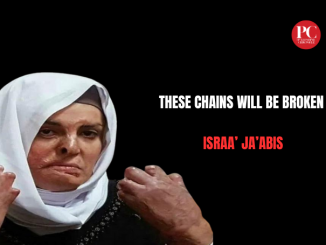
‘No pain like mine’: The story of Palestinian prisoner Israa’ Ja’abis

Starting on Friday, November 24, a prisoner swap between the Palestinian resistance and Israel began in stages.

On Friday, 39 Palestinian prisoners were released. More prisoners are expected to be released on Saturday.

To understand the context of the Palestinian prisoners’ stories, the Palestine Chronicle provides excerpts from Ramzy Baroud’s volume These Chains Will Be Broken: Palestinian Stories of Struggle and Defiance in Israeli Prisons.

The text below appeared in a chapter entitled “Israa’ Riyad Ja’abis – Narrated by her sister, Mona Ja’abis”.

Israa’ Ja’abis was born on July 22, 1984, in Al-Quds (Jerusalem), the fourth of nine sisters and brothers. She was arrested following an electrical system failure in her car which caught fire while she was still trapped inside. It resulted in first, second and third-degree burns on her face and all over her body, including the loss of eight fingers.

On the day of the accident, October 11, 2015, Israa’ drove from Jericho to Al-Quds in a small car that was overflowing with household items. She was moving to Jerusalem with her son, Mu’tasim, and, by transporting some of the small furniture, she had hoped to save on moving expenses.

Israa’ was moving to Jerusalem without her husband. Her only son, Mu’tasim, was born in Jerusalem and that qualified him for residence in the occupied city. She was allowed to stay with him as she, too, was a Jerusalem resident. His father, however, was barred from the city due to his West Bank ID card. The family agreed to separate for a number of years so that Mu’tasim would have the opportunity for better schooling and health care. Neither parent was thrilled by the decision, but they felt that they had no other option.

One of the items that Israa’ carried with her was a propane tank for the kitchen. It would have been too expensive to buy a brand new one in Jerusalem. As she was leaving Jericho, the engine of her car died twice. Young people in the town warned her to turn around and find another form of transportation, but she did not heed their advice. She needed to get to Jerusalem to her new job at a nursing home. Each time her car died, the engine emitted a burning smell.

After travelling a couple of kilometers outside the Israeli Al-Za’ayem military checkpoint, near the illegal Jewish settlement of Ma’ale Adumim and a short distance east of Al-Quds, Israa’s car died again. No soldiers or army vehicles were in sight. A while later, a retired Israeli police officer passed by her stalled car. He parked his car in front of hers and asked for her ID as she desperately tried to restart the car. “There is a strong smell in the car,” she told him, trying to exit the car, but he insisted that she stay inside while he examined her papers.

She tried to open the windows, but they, too, were affected by the electrical failure. Again, she tried to exit the car, opening the door, but the officer rushed over and slammed it shut, crushing her hand. She yelled “Allahu Akbar ’alaiku” (God is greater than you are), chastising him several times for not allowing her to escape. She urged him to let her out as fire ignited in the front part of the car. He refused. He stood there, watching her burn inside. The airbag deployed, completely trapping her inside the blazing car.

The police officer who stopped her claimed that she was trying to use the propane tank to blow up the car. His testimony was the only one considered in the Israeli court, and Israa’ was branded a ‘terrorist’. She was sentenced to 11 years in prison. She is now serving her term at HaSharon prison inside Israel, and is denied much needed medical attention. After her debilitating injuries and imprisonment, her husband also suffered a car accident, leaving him permanently disabled and confined to a wheelchair. Their son, Mu’tasim, is now living with his grandmother in Jerusalem.

Mona is Israa’s older sister and ‘best friend’.

‘No Pain Like Mine’

It is too difficult to describe the first time we saw Israa’. We learned bits of information here and there about the nature of her wounds, and of the fact that some of her fingers were amputated. I thought that I was mentally prepared to see my sister in that condition, but I was wrong.

I visited her for the first time one week after the accident. I wore the attire of a religious Jewish woman to disguise myself in the hospital. I speak fluent Hebrew, and my dress and language skills allowed me access into the hospital. I made my way to the emergency ward and watched Israa’ through a large glass window. There was a police officer sitting beside her, as if she could possibly move, let alone escape in that condition. I did not recognize her right away. Her face and body were bandaged and bloated. But I then recognized her through her height and her hair. The officer noticed my presence. I told him that I had lost my way, but he ordered me to leave.

I told my parents, who were waiting outside, that I saw her and that she was okay. I could not bring myself to tell them the truth.

Two months later, I returned with my parents. We were only permitted to see her from behind the glass window and were not allowed to talk to her. I will never forget the look on my parents’ faces. Tears gushed from my father’s eyes. He struggled to find words, but could not speak. My mother kept mumbling to herself, as if a mantra: “She is fine; she is fine; medicine will fix everything; she is fine …” Israa’ was not aware of our presence. A group of Israeli officers were surrounding and interrogating her.

I was trying to prepare my nephew, Mu’tasim, for the transformation that had taken place. I told him that his mom had had an accident and that he would be allowed to meet her soon. But he is a smart kid. Although only eight years old at the time, he searched the news and found out what had happened. But he still could not find pictures of her after the accident. I sat with him again and told him: “I love my mother no matter what she looks like, white, black or red; whether her face is blemished or not.” He said: “I love my mom, too, no matter what.” Then I showed him a photo of her that was intentionally distorted. I did not want him to actually see right away how horrific her disfigurement was. He sat in silence for a long time. He seemed emotionally disconnected, as if the story was about someone else.

Israa’ stayed in the hospital for three months. We were not even informed of her medical condition or progress. We would sneak into the hospital like thieves and, when the police discovered us, they would immediately throw us out.

The first time we were officially allowed to meet with her was in HaSharon prison. We were separated by a thick wall of glass. My mother only recognized her from her height, as Israa’ is particularly tall. My mother rested her head in her hands and said nothing; she only wept.

I kept myself from crying, though. I told Israa’: “We love you and we will stand by your side, no matter what the obstacles.” My father seemed to have lost his mind. He hobbled around the room, crying: “Israa’, sweetheart. Israa’, I am your father.” Israa’ kept telling him: “I am Israa’, Daddy. Please look, just look at me. My face is burned, but my heart, my mind and my whole being is still the same.” I kept assuring him that this was Israa’ but he was too confused and kept walking in circles, screaming her name. She was always a source of strength for him. When he finally realized that she was his daughter, he broke down, weeping like a child.

Israa’ was the backbone of our family. When I visited her the second time, I told her: “You don’t always have to be the strong one. It’s okay to be vulnerable sometimes.” As soon as I said that, she began crying, and she cried for a long time.

When Mu’tasim came with us to visit her for the first time, the prison administration did not allow him to enter. So I sat with him in the parking lot, waiting for my parents to come out. When they did, they were holding hands, wailing like little children. I went running towards them. They told me that they had amputated all of her fingers except two. Then we praised Allah for allowing her to keep the two fingers.

A year and two months later, Mu’tasim was finally allowed to see her. He was nine years old then. I took him, as my mother could no longer cope with the pain of seeing her daughter in that condition. But the prison guards did not allow me access to her room. They only allowed Mu’tasim to talk to her from behind the glass barrier. He begged them to let him hug his mother and, finally, they relented, agreeing to allow him to spend ten minutes with her. I watched from behind the glass as Israa’ walked in wearing a Tigger costume. She had sewn it inside the prison, as she knows how much Mu’tasim loves the Winnie the Pooh cartoon. She even designed and wore a Tigger mask. When Israa’ was younger, she loved to dress up in costumes and perform as a clown for various community events for children. Mu’tasim told her: “I know you are my mother. I don’t want Tigger. I want to see your face.” So she removed the mask. Mu’tasim was shocked. His eyes filled quickly with tears. He told her: “I love you, no matter what.” He told her that the “acne on your face will soon go away”. When it was time to leave, he clung to her, refusing to let go. The guards asked me to intervene. Mu’tasim kept repeating: “You either let me stay, or let her come home with me.”

On the way home, Mu’tasim told me, after a long silence: “My mom will always be beautiful, even if the acne never goes away.”

My heart breaks for Israa’, my tall, slender, sister with a beautiful face, the lovely one whose hands were always adorned with henna. In her we saw hope, strength and beauty. The harshness of the occupier scarred her face and body, amputated her fingers and is relentlessly trying to break her spirit. I will never forget when a journalist asked her across the court room, as she sat surrounded by armed Israeli officers: “Are you in pain?” She raised whatever remained of her hands and answered: “No pain is like mine.”

If I could only take even some of my sister’s pain away …

Source: Palestine Chronicle

Strugglelalucha256
https://www.struggle-la-lucha.org/2023/page/7/