Mergers, monopolies and inflation: Unemployment and wage cuts won’t lower prices

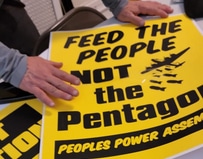
Photo: Peoples Power Assembly

How many people have to lose their jobs before Federal Reserve Bank system chair Jerome Powell is satisfied? High-tech firms including Alphabet (Google), Amazon and Meta (Facebook) have shed 118,000 jobs so far this year. They fired 140,000 in 2022. 

Speaking at the Economic Club in Washington, D.C., on Feb. 7, Powell claimed that January’s 3.4% unemployment rate may be beyond “maximum employment.” He hinted the jobless rate needed to rise before the rate of inflation would fall.

Powell and the Federal Reserve Bank governors actually want a “small” recession to weaken the multinational working class and wipe out any wage gains and union victories. They’re glad that February’s unemployment rate rose to 3.6%.

Pro-capitalist economists consider that to be “low” unemployment. It still represents 5.9 million people desperately looking for a job.

The official unemployment rate hides misery. It always undercounts millions of jobless people

Not mentioned are the armies of street merchants who would rather have a steady job than stand for 10 or 12 hours a day in rain or snow. Nor does it include those not considered to be actively searching for work because of child care responsibilities. Also ignored are many disabled people.

According to the Bureau of Labor Statistics, there are 5.1 million “persons not in the labor force who currently want a job.” Another 1.4 million persons are “marginally attached to the labor force.”

So in February there were at least 12.4 million people in the United States without a job. That’s nearly as many people who live in Illinois.

Yet that’s still not enough unemployment for the Federal Reserve banks and the capitalist class it serves.

Never counted are 2.2 million prisoners who are members of the working class, too. Their slave labor annually produces $11 billion in goods and services.

Black workers are still “last hired, first fired.” Their 5.7% unemployment rate is 78% higher than the 3.2% jobless rate for whites. 

Profits up, food stamps cut

Neither a rise in wages or lower rates of joblessness cause inflation. It’s monopolies that are jacking up prices. Even the White House admitted this in a Jan. 3, 2022, statement:

“Four large meat-packing companies control 85% of the beef market. In poultry, the top four processing firms control 54% of the market. And in pork, the top four processing firms control about 70% of the market.” 

These dead animal capitalists were able to raise chicken prices by 16.4%, beef prices by 14.5% and pork prices by 13.7% between 2021 and 2022. Tyson Foods more than doubled its profits.

Meanwhile, egg prices have gone through the roof and the price of white bread rose by 21% over the last two years. The average price of all food rose by 11.4% last year, the sharpest increase since 1974.

The response of the U.S. government to these skyrocketing food prices was to slash SNAP (food stamp) benefits on March 1. Millions of families are seeing an average $95 monthly cut in their food stamps.

The 81 million people who cast a ballot for Joe Biden didn’t vote for this forced hunger program. The president and Congress can spend over $100 billion on a war against the Russian Federation but they can’t feed the people.

Antitrust laws have become a dead letter. The Surface Transportation Board approved the Canadian Pacific Railway taking over the Kansas City Southern in a $31 billion deal. That leaves only six companies owning 90% of the railroad tracks in the United States.

Housing in the United States is one of the worst monopolies. Landlords have been raising rents at will. In New York City, 54% of low income tenants saw their rents rise in 2021. The average increase was 15%.

Behind the greedy landlords are the banks and insurance companies that own their mortgages.

A massive program to build more affordable public housing would force the landlords and the banksters to lower the rents. So would taking over the apartments that are deliberately kept empty.

Roll back prices! A job is a right!

None of the judges on the U.S. Supreme Court or governors of the Federal Reserve banking system are elected.

Supreme Court judges stole the right to abortion. They routinely give the green light to executions. The Federal Reserve destroys jobs and deepens poverty.

The Fed and the central banks in other capitalist countries have been furiously raising interest rates. The result has been a series of bank failures, including Silicon Valley Bank and the second biggest Swiss bank, Credit Suisse.

Ever since the first worldwide capitalist economic crisis in 1825, there has been a business collapse every decade or so. Because capitalist competition prevents an overall economic plan, production outstrips consumption.

That doesn’t mean people don’t need the items that are left unsold. Eighteen million people in the U.S. can’t afford needed medical prescriptions.

Fed chairperson Jerome Powell’s role model is the late Paul Volcker, who as Fed chair in the 1980s presided over double-digit unemployment rates. Decades of stagnant wages and the loss of millions of union jobs followed.

The proposed merger of the Kroger and Albertsons supermarket chains guarantees more price increases. We need to fight for rolling back prices.

People forced President Reagan―an earlier version of Trump―to distribute free cheese. Over a billion pounds had been kept in warehouses to keep prices high.

The Federal Reserve banksters need to be told that a job is a right. Only the people can stop the billionaires from destroying jobs and making more millions poor.

Strugglelalucha256


Court denies a fair trial: The fight for Mumia’s freedom continues

On March 31, news of Judge Lucretia Clemons’ decision to deny Mumia Abu-Jamal his right to a fair trial spread instantly around the world, even though in the U.S., the major media remained silent. Those who were expecting this outcome and those who had remained hopeful — all suffered grim disappointment.

The media headlines focused solely on the indictment of Donald Trump. Does the media coverage and headlines mean that democracy prevails because of the indictment of an actual criminal whose major crime, they say, is the loathsomeness in which the former president likes to wallow?

In real-time, did the Pennsylvania judge, with corrupt brutality underscoring her decision, say it was too late for justice and democracy to prevail in Mumia’s case? Did the court decision from the USA, a country with a history of racist bondage, resonate worldwide? Yes!

Despite the timing of the court decision in Mumia’s case, this was suspiciously released when the media was flooded with news of Trump’s indictment, interviews with his supporters, and many florid photos. Moreover, it was released on a Friday, just before the court closed for the weekend.

Did those who petitioned the judge, including major international unions and civil rights organizations, call for anything more than a new trial? Their letters were based on newly disclosed evidence that clearly delineated the machinations behind the police frameup and his racist mistrial. Wasn’t it within the most conservative bounds of democracy to allow the court to hear the long-buried evidence of Mumia’s innocence for the first time?

Prisoner Mumia, with unyielding integrity and courage, never ceases to demand the freedom of all political prisoners. His writings and books analyzing racist conditions of mass incarceration present undeniable truth. He speaks for a myriad of political prisoners like Leonard Peltier and Jamil Abdullah Al-Amin.

If Mumia Abu-Jamal was not innocent — if he had not been wrongfully imprisoned for 41 years, spending the first 28.5 years on Pennsylvania’s death row until his death sentence was confirmed unconstitutional by the U.S. Supreme Court in 2011 — if this innocent man was not now serving a sentence of life in prison without parole would there be any reason for Judge Clemons to attempt to crush his chance for a new trial?

Help build and plan protests for Mumia’s freedom on Sunday, April 23. Monday, April 24, is his birthday. The struggle continues. We will fight to free Mumia. 

Write to Mumia Abu-Jamal at:

Smart Communications/PADOC
Mumia Abu-Jamal, AM 8335
SCI Mahanoy
c/o PO Box 33028
St Petersburg, FL 33733

Strugglelalucha256


Los Angeles-area strikes show: Labor’s sleeping giant is awakening

A series of strikes in the Los Angeles area provide an example of what has been happening across the U.S. 

Having been in a defensive mode for decades, union workers are chipping away at the widest income gap since the 1970s. Successful strikes are giving confidence to other workers, who then go on strike. That was the case after a successful academic workers’ strike at the University of California reportedly inspired nearby University of Southern California academic workers to walk out and win. 

Soon after the USC workers won their strike, shuttle bus drivers for the USC campus held a rally, petitioned for a union, and in late March, won their election.

There is also an uptick in efforts to unionize workers in the service, tech, and retail sectors of the economy – most notably, but not exclusively, Starbucks, Amazon, and Apple. 

It isn’t that the billionaire owners and investors in giant corporations, nor the officialdom of various government entities and private universities, are suddenly softer. On the contrary, a Feb. 26 Guardian article reported on “Old-school union busting tactics” being carried out by companies such as Starbucks and Amazon, that simply thumb their billionaire noses at any labor law that doesn’t work in their favor. 

But workers across the U.S. economy have been pushed to the brink and are more willing to strike or unionize. They are finding solidarity and support. A Gallup poll conducted in August 2022 found the highest support for unions since 1965, at 71%. 

On Jan. 3, pro-business website Marketplace.org reported,“In the past decade, people in their teens and 20s have been on the front lines of strikes and organizing drives across the country…”

It all lends credence to the notion that the “sleeping giant” is stirring.

Teachers in solidarity

In what has to be considered a labor struggle milestone, some 30,000 workers, who are vital to keeping Los Angeles public schools running, called a three-day strike. Service Employees International Union Local 99 represents cafeteria workers, janitors, building maintenance experts and teachers’ assistants who struck. 

Their absence from the job would’ve already been a major disruption. The fact that 30,000 educators from United Teachers Los Angeles (UTLA) refused to cross the picket lines made the strike even more potent. 

Polls showed support by parents, and there was vibrant, active support from a group called “Students Deserve,” a group of high school students from Dorsey High School who fight for student’s rights, including opposition to armed police being placed in public schools. 

The community-based organizations Unión del Barrio and Association of Raza Educators called a news conference in support of the strike that was swamped by local media and attended by 40 or more participants.

The workers that struck are a microcosm of Los Angeles’ multinational population. Their wages and work conditions are lopsided and unfair when compared to their white counterparts. Their average pay was a poverty wage of $25,000 a year. Staffing shortages and lack of health insurance for part-timers were also issues. 

Up until the strike, negotiators from the Los Angeles Unified School District (LAUSD) were using a familiar refrain – no money. But a proposed settlement was announced on the third day of the strike, and there were no longer any claims by LAUSD that the money wasn’t available.

Voting on the settlement by the full membership will take place between April 3-7. If agreed on, it won’t solve every problem. The average wages will be bumped to $32,500 – a 30% increase. Health care will now be provided for part-time workers and for their dependents. So much of the tentative settlement appears favorable for the workers. 

In Los Angeles, the proposed wages still fall far short of what can be considered good pay, especially given the high cost of housing. But anecdotal reports of union members’ satisfaction, the significance of a quick settlement, the lack of major concessions and the provision of health care for part-time workers seem to be important steps forward. 

Like previous strikes in recent years in Southern California, the results of the strike seem like a welcome change for anyone organizing for economic justice.

Unfair labor practices

Another labor battle in nearby Santa Clarita is ongoing. Seven hundred workers at Henry Mayo Woodhall Hospital struck for one day and are still negotiating. In addition to many similarities between the two workforces, these battles share another important feature in common. 

In each of them, there were claims by the bosses before the workers walked out that any strike should be prevented in the courtroom because an economic strike is barred by labor law when negotiations are ongoing. In both cases, the bosses failed because the strikes were, in fact, over unfair labor practices and it is legal to call such a strike at any time. 

In spite of all the rosy post-strike statements about “working together” and finding “solutions that benefit everyone,” LAUSD is still disputing the legality of the Local 99 strike in an effort to keep a weapon in its arsenal for the future.

Bosses across the economy feel confident that they can break labor laws, prevent workers from talking to each other about their issues and grievances, and ignore union power. But the strikes by Henry Mayo Hospital workers, LAUSD workers, and others across the country have shown how workers’ confidence is growing everywhere.

From the hallways of higher education institutions like Temple University, UCLA, and USC, to the factory floors of John Deere, to Starbucks coffee counters and Amazon warehouses, the ugly days of wage cuts, mandatory overtime, and the general bombardment against workers’ rights are coming to an end!

Strugglelalucha256


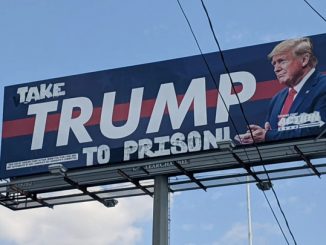
Lock him up!

Should Donald Trump be prosecuted on charges filed by the Manhattan DA? When two million poor people are in prison, how can Trump not be put on trial?

Trump should have been jailed decades ago. He conspired with his daddy―Ku Klux Klan supporter Fred Trump―to keep Black people out of his family-owned apartment complexes. 

In 1980, Donald Trump hired Polish immigrants to demolish the building on Manhattan’s posh Fifth Avenue that became the site of his flagship skyscraper, Trump Tower. They were given almost no safety equipment to remove deadly asbestos and paid just $5 per hour while working 12-hour shifts. Some must have died later of mesothelioma, a deadly lung cancer.

In 1989, Trump ran full-page newspaper ads demanding the return of the death penalty in New York state. This was in response to the arrest of Antron McCray, Kevin Richardson, Yusef Salaam, Raymond Santana and Korey Wise on charges of raping and beating a woman jogging in New York City’s Central Park.

False confessions were coerced by police from these five Black and Latinx youth. They spent years in prison for crimes they did not commit before being exonerated. Trump’s racist campaign helped frame them.

When he announced his presidential campaign on June 16, 2015, Trump denounced Mexican people as “rapists.” One day later a white fascist murdered nine Black people in a Charleston, South Carolina, church.

Trump’s racist rhetoric promotes fascist violence. White anti-racist Heather Heyer was murdered by a Trump supporter during the 2017 neo-Nazi mobilization in Charlottesville, Virginia. Trump’s response to Heather’s death was to claim there were “fine people on both sides,” meaning both the Nazis and their opponents.

Trump bombed and killed thousands in Afghanistan, Iraq and Syria. As president he helped starve children in Yemen while keeping immigrant children in cages in the United States.

By refusing to take absolutely necessary public health measures―as was done in the socialist People’s Republic of China, socialist Cuba and the Socialist Republic of Vietnam―Trump condemned hundreds of thousands to die of COVID-19. At the same time, he promoted anti-Asian hate that led to the 2021 Atlanta spa murders. 

Trump wanted to declare martial law to suppress the Black Lives Matter movement in 2020. Every killer cop knows Trump is on their side. 

The Jan. 6, 2021, fascist insurrection in the U.S. Capitol that attempted to overturn the presidential election was instigated by Trump.

None of these crimes will be covered in the New York indictment. They should be. It should be remembered, however, that the gangster Al Capone wasn’t convicted of murder but of not paying his income tax.

Manhattan District Attorney Alvin Bragg, a Black man, has been the target of racist attacks from Trump supporters. The only reason Trump was charged with anything was because of the deep, justified hostility of millions of poor and working people.

This is particularly so in the Asian, Black, Indigenous and Latinx communities. Trump supporters are now targeting transgender people.

Some may question whether indicting Trump will drive more Republican voters to the polls. Trial or no trial, only by mobilizing the power of the people can all the Trumps be defeated.

Never forget that Kalief Browder, a Black youth, spent over two years in New York City’s notorious Rikers Island prison simply because he couldn’t make bail. After being released, without being convicted, he was driven by the cruelty in Rikers to hang himself.

If Kalief Browder can be jailed, so can the super-rich racist pig Donald Trump.

Jail Trump!

Strugglelalucha256


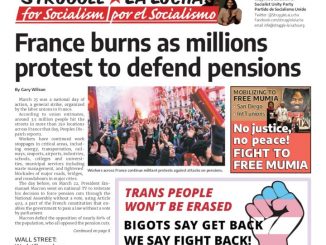
Struggle ★ La Lucha PDF – April 3, 2023

Get PDF here

  • France burns as millions protest to defend pensions
  • National March to Protect Trans Youth
  • Activist speaks on worst California snowstorm in four decades
  • Int’l Transport Workers Union calls for Mumia’s release
  • Mobilizing to free Mumia Abu-Jamal
  • Court denies Mumia a fair trial: The fight for his freedom continues
  • Wall Street wants to steal your retirement
  • March for Black Womxn 2023 was live!
  • D19: LIBRE salutes Honduran President Xiomara Castro
  • People say NO to war with Russia and China
  • Los Angeles protests U.S. proxy war, media censorship
  • Bipartisan slander of China: Lab leak theory dead, U.S. war drive alive and well
  • ¡No al Foro de Madrid en Lima!
  • No to the Madrid Forum in Lima!
Strugglelalucha256


The state of Cuba-U.S. relations: An interview with Dr. José Ramón Cabañas

In January 2023, Dr. José Ramón Cabañas traveled to Britain to talk about his book, U.S.-Cuba Relations: The Inside Story of the 2014 Breakthrough. Dr. Cabañas was head of Cuba’s U.S. Interests Section on 17 December 2014, when Presidents Raúl Castro and Barack Obama announced rapprochement and the restoration of diplomatic relations. His new book explains the background and significance of this historic moment in international relations. Helen Yaffe caught up with Cabañas in London.

Helen Yaffe: What is your view of the current state of Cuba-U.S. relations? Can you put this in a historical perspective?

José Ramón Cabañas: Between 2015 and 2017, we created the foundations for any future negotiations between Cuba and the United States. There are accomplishments that go beyond the MOUs [Memorandums of Understanding], for instance. One clear message is that Cuba was, and is, ready to talk on several subjects any time you come to the table with respect and reciprocity.  That has been a consistent position of Cuba. What happened under Trump goes beyond Cuba-U.S. relations, with very conservative political forces trying to erase any legacy from the previous administration, increasing political polarization in the United States.

The Trump administration didn’t press so hard in the first two years. But from 2019 and 2020, Cuba was not treated as an independent subject, it was linked to U.S. strategy against Venezuela. Late 2019 and 2020, they had the perfect scenario; the effects of an enhanced blockade and the Covid-19 pandemic combined. It was about waiting and seeing; a little more pressure, and then that’s it.

HY: Meaning the collapse of Cuba’s revolutionary government?

JRC: What they didn’t get in 1962, what they didn’t get in 1992; it goes in 30-year cycles. It should have happened around 2020, but it didn’t. Biden was elected, and his national security team inherited the vision of the region. The United States’ Cuba policy has been a bipartisan policy for many years. Over the years, they have elaborated a state policy towards Cuba, which is basically to change the status quo, and the only debate is about how to do that; putting pressure and the military option or by being friendly. Obama was the second option in general terms.

Most of Biden’s team and his bureaucrats had participated in many decisions and actions taken under Obama. But they inherited that approach; to wait for another six months or a year. They confirmed Trump’s last-minute decision to put Cuba back onto the U.S. list of countries that allegedly sponsor terrorism. They waited for the implosion in Cuba. They believed ‘something will happen, we don’t have to do anything.’ It didn’t happen when they planned it [July 2021]; they reprogrammed for the end of 2021. It didn’t happen again. Then there were consequences. If you don’t comply with the migratory agreements and you put enormous economic and political pressure on Cuba, what do you expect? If you impose a war on Libya or Iraq, you have immigrants as collateral damage. The same thing happened in Cuba. It’s not a war where you hear guns, but the consequences are basically the same; migratory flow, as has happened in the past. There were a large number of immigrants from the island, but total numbers include Cubans from third places going to the United States as well. Cubans here in the UK, or in Spain, or Europe in general, Central America, they said: ‘opened doors…that’s it.’ So the figure is large, but not all migrants were going directly from Cuba.

Migration is always an important subject for them in terms of national security, but there were other issues. In U.S. Federal agencies, officials involved in technical subjects, not political declarations, for instance, law enforcement, started to ask: what did we accomplish by doing this? For instance, last year, we provided information to U.S. authorities about 57 Cuban Americans involved in drug trafficking in the Caribbean, from Central America into the United States. Seven of them were included on Interpol’s ‘red alert.’ We received no answer from U.S. authorities. This does not impact Cuba, but we traced information that is relevant to prosecute them in the United States, which is where the narcotics are going.

Finally, some clever guys said, ‘we didn’t accomplish anything. We have no control over the migratory flow, and we are missing opportunities to fight criminals, to enforce legislation.’ That is not to mention cooperation in the fields of medicine, health, or the sciences in general, and more pragmatic fields like civil aviation. There are flights to Cuba and over Cuba to other destinations, and they need to check information with us. Not to mention climate change, oil spills in the Caribbean, hurricanes. That is a pragmatic list, most of the subjects related to the MOUs we signed, and you have a lot of experts involved. In addition, polls in the United States show that most people want a different approach to Cuba. I am not referring to the semantic debate about ‘normalisation’ – no one knows what that is. But at least communication, at least specific cooperation.

There are small signs that they recognize the need to talk on these issues. There were talks on migratory issues (in April and November 2022), U.S. law enforcement experts recently went to Cuba (in January 2023). They are not enforcing limits on scientific and cultural exchanges; more people are traveling from universities and research centers. These are signals of a very partial reversal of Trump’s maximum pressure strategy. But the window is 12 months.

HY: That’s related to the U.S. election, right? How do you assess the recent small steps taken by the Biden administration on the issue of migration in January 2023 and to what extent is it linked to the U.S. electoral cycle?

JRC: These decisions are positive but limited. We have to wait and see. In the United States, you have a statement, then you have legal norms – how they are written – then you have interpretation of the norms, and finally, you may have a legal judgment. You have to go through four different steps.

The statement itself is not that meaningful, but it is something a little different from what we got before. There are more official talks. The important factor in the midst of this is the Latin American and Caribbean context and how Cuba fits there. The Summit of the Americas in Los Angeles was basically a fiasco. Despite having Latin America experts in the State Department, in National Security, or whatever, Biden felt he had to nominate a former Senator (Chris Dodd) as his liaison with regional leaders. The U.S. needs to realign its Latin America policy to face the new scenario; a consistent position from Mexico, changes in Brazil, changes in Colombia.

Former Colombian President Iván Duque criticized Cuba’s relationship with Colombia’s ELN (National Liberation Army) and its role in the Colombian peace process. That was a key pretext for the United States putting Cuba back on its list of state sponsors of terrorism. Now the new Colombian government criticizes this and demands Cuba is removed from the list, so there are no arguments to support Cuba’s inclusion. The scenario has changed dramatically. The new president of Colombia didn’t wait two weeks to state this, he said it on his very first day. It has been said by Colombia’s Minister for Foreign affairs, by Ambassadors, everyone. It’s a message that comes from the grassroots in Colombia, people in communities, people who lost relatives, trade unionists, whoever. It’s a huge message. If you want to have peace and stability, Cuba has been a factor because it’s a place to meet and negotiate. Cuba has accompanied the peace process. Now, what do they want to accomplish in terms of Venezuela? It has a more comprehensive policy, maybe more constructive. The scenario in Latin America has changed. Let’s remember what happened immediately after the Summit of the Americas in Cartagena (2012).

HY: After that, Obama authorized the secret talks with Cuba…

JRC: Obama decided that he was ill-advised on Latin America, and he changed the bureaucracy. Biden didn’t decide that, but to nominate Senator Chris Dodd as responsible for Latin America says many things.

HY: It is a positive sign?

JRC. He is a person with a brain, with a huge responsibility. The team that you select to conduct a process is a factor. We were productive and efficient in negotiations between 2015 and January 2017 because they were able to structure a team that found background information and learned how to negotiate with Cuba. From the beginning, they said, ‘we know that only through respect and reciprocity will we accomplish something’. And we said, ‘Yes, that’s it.’

HY: The United States is alone in the world in sanctioning Cuba, but it uses its leverage over the international financial system to make the blockade of Cuba extraterritorial. Can you explain how it does that? For example, Cuba is excluded from multilateral development banks, so in a scenario like Covid-19 or an economic crisis, it doesn’t have a lender of last resort.

JRC: Beyond being excluded from those mechanisms, the issue is the clearing system based in New York. 90% of international transactions with U.S. dollars go through that system. It is connected with the Federal Reserve, major banks, and so on. Under that system, any transaction with the letters C, U, B, and A is automatically frozen, whether payments from the Cuban National Bank or a Cuban living in Spain. Beyond that, you have bilateral actions against foreign banks; direct pressure put on people; a phone call to a bank in Japan to tell the CEO, ‘30% of your business is with us, 0.20% of your business is with Cuba. You must decide.’ Cuba has spent many years without being involved in the IMF or the World Bank. We are not a large economy, we can have some space. But putting pressure on creditors, having this automatic response in the clearing system makes it difficult for us to operate. We went to euros and other currencies, but it is still difficult for us. We are 90 miles away from the United States. We are very close, and we need to use U.S. dollars in many transactions.

HY:  You said that this even affects Cubans outside of Cuba, but as you know, it affects us all. I am affected as a UK citizen sending money to a Belgian bank account. Last summer, a new international campaign was set up with groups in Britain, Europe, and Canada, to challenge the illegal imposition of unilateral U.S. sanctions by non-U.S. banks in violation of those countries’ laws – the 1 cent for Cuba campaign (www.1c4cuba.eu/).  

JCR: I know about this campaign. It is very important, not only in terms of the outcome, but more so in terms of informing people about this situation. During the tough period of 2021, I wrote that ‘what the United States is doing to Cuba is described in the Genocide Convention.’ Some people felt it was too strong a statement. But they reacted without reading it. Please read what the Genocide Convention says. The U.S. imposes these limits and pressures on a country with few resources; there are documents from the U.S. government stating that the aim is to put Cuba on its knees. They know many of these transactions are related to health services. People are literally dying, for example, when we could not obtain oxygen. For many families, these measures, the blockade, is not abstract. It has a direct impact, and people are dying or not recovering from diseases. People who cannot receive a prosthesis, many things. Not to mention the impact on importing food or products that affect food production in Cuba.

In the midst of that, our authorities have made a tremendous effort to confront Covid-19, which has been a second blockade. We are used to the regular blockade. Trump enhanced the blockade, and then we had the pandemic. We are a country with limited resources, we don’t have oil, we don’t have gold. We have human capacity, but we don’t have natural resources. How do you face this situation?

Our critics claim that these are the consequences of the failure of the Cuban government. I say this: impose the same limits on any other country, neighboring countries, the United States, countries in Europe. What will the outcome be? How will people react? In many places, people would be killing each other to survive. In our case, we have had demonstrations, of course. We have had some people with funding from the United States to go to public places, to attack banks and stores, to destroy property. But in the midst of that situation, we discussed and passed a new Constitution (2019) and a new Families Code (2022), which went through 24 drafts. A huge exercise in democracy! We know democracy is not related to how many parties you have in parliament.

HY: In November 2022, Cuba’s President Miguel Díaz Canel visited Algeria, Turkey, Russia, and China. How important was that trip for Cuba in the current context you described and for strengthening counter-hegemonic forces internationally?

JRC: They were important visits. We have historic links with those countries, and we had the chance to update them. There are new issues and even new wars in the world. The geopolitical map is changing dramatically, and that’s well before what is happening in Ukraine. There are new leaderships. People talk about multipolar world, we prefer to talk about multilateralism because it is not about poles, it is about equality between people and in international relationships and how we face the future. Countries are interested not just in what they can offer Cuba but what they can receive from Cuba. Many countries are getting ready for the next pandemic. We have gathered knowledge and experience on that, and we feel ready for the next one; most countries are not. They would like access to our knowledge and, in some cases, the discoveries, vaccines, and similar things. There are many other fields in which those countries have an interest in developing links with Cuba, from culture to sports, to science to education, many areas. They have been meaningful visits with concrete outcomes. After the presidential visit, you have experts, ministers, diplomats going, negotiating, and signing documents.

HY: China has donated $100 million dollars to help Cuba cope with basic goods shortages and energy crisis.

JCR: It’s meaningful and important, but beyond donations, there are specific programs, investment, results that will multiply the effects of the visit.

This interview was originally published in Fight Racism! Fight Imperialism! 293, April/May 2023.

Helen Yaffe is a lecturer in Economic and Social History at the University of Glasgow, specializing in Cuban and Latin American development. Her new book We Are Cuba! How a Revolutionary People have survived in a Post-Soviet World has just been published by Yale University Press. She is also the author of Che Guevara: The Economics of Revolution and co-author with Gavin Brown of Youth Activism and Solidarity: the Non-Stop Picket against Apartheid, Routledge, 2017.

Source: Resumen

Strugglelalucha256


The high price of the Guatemala-Taiwan relationship

The leader of Taiwan, Tsai Ing-wen, traveled on Wednesday, March 29, to visit the United States, with stops in Guatemala and Belize, two of the 13 countries in the world that still maintain diplomatic relations with the Chinese island. On Sunday, March 26, Honduras announced that it would sever diplomatic ties with Taiwan, and immediately established relations with the People’s Republic of China. It was a hard blow for Tsai, days before a trip that may increase the tension between Washington and Beijing.

Tsai’s trip to the United States is yet another chapter in the US’s recent provocations, questioning Taiwan’s status as a part of China. Tsai is expected to meet with US Congress Speaker Kevin McCarthy, who had promised to visit Tsai in Taiwan repeating Nancy Pelosi’s provocative 2022 visit, but in the face of Chinese warnings, McCarthy and Tsai rescheduled the meeting for Los Angeles. Beijing continues to oppose this meeting.

On this trip, Tsai is struggling to maintain what little diplomatic support she still has in the region. Recently, Nicaragua (December 2021) and El Salvador (December 2022) also broke off relations with Taiwan. Guatemalan President Alejandro Giammattei enjoys the support of Trumpism, the evangelical churches, and Israel. In 2022, he announced that he would organize a summit of countries that held relations with Taiwan, but backed out. His insistence on maintaining such relations may be causing economic damage to his country. The Chinese island has only invested $22.87 million in Guatemala between 1952 and 2019.

In contrast, countries in the region that have resumed diplomatic ties with China have received significant investments. These are the cases of El Salvador—which received $500 million in 2021 for tourism-related infrastructure projects—and Panama, which since 2017, has received billions of dollars in investments linked to its canal. Guatemala’s accession to the Belt and Road Initiative could bring significant investment to the country.

Meanwhile, the most important Taiwanese “investment” in recent times in Guatemala has brought controversy. In an unusual arrangement, the island’s government agreed to pay $900,000 for the law firm Ballard Partners to lobby in the United States on behalf of the Guatemalan government. Ballard gained notoriety for its closeness to Donald Trump and its successful lobbying in Washington during his presidency. However, there are doubts about the effectiveness of Ballard’s actions in the Biden administration.

Presidential elections in Guatemala will be held between June and September 2023. By continuing with his policy of supporting the tensions generated by Tsai Ing-wen, and encouraged by Washington, Giammattei is taking risks. Tsai’s Democratic Progressive Party (DPP) suffered a major defeat against the nationalist party, Kuomintang (KMT), in the 2022 Taiwanese municipal elections, and has been weakened in view of the next general elections in 2024. The fate of the Giammattei government could be the same.

Marco Fernandes is a researcher at Tricontinental: Institute for Social Research. He is the co-editor of Dongsheng. He is a member of the No Cold War collective. He lives in Beijing.

This article was produced by Globetrotter.

Strugglelalucha256


El alto precio de la relación entre Guatemala y Taiwan

La líder de Taiwán, Tsai Ing-wen, viajó el miércoles 29 de marzo para visitar los Estados Unidos, con escalas en Guatemala y Belice, dos de los trece países del mundo que aún mantienen relaciones diplomáticas con la isla china. El domingo 26 de marzo, Honduras anunció la ruptura de las relaciones diplomáticas con Taiwán, y en seguida estableció relaciones con la República Popular China. Fue un duro golpe para Tsai, días antes de un viaje que puede aumentar la tensión entre Washington y Pekín.

El viaje de Tsai a los Estados Unidos es un capítulo más de la reciente política estadounidense de cuestionar el reconocimiento a Taiwán como parte de China. Se espera que Tsai se reúna con el presidente del Congreso estadounidense, Kevin McCarthy, quien había prometido visitar a Tsai en Taiwán repitiendo la provocación de Nancy Pelosi el año pasado, pero ante las advertencias chinas, McCarthy y Tsai reprogramaron la reunión para Los Ángeles. Pekín sigue protestando contra la reunión.

Tsai lucha por mantener el escaso apoyo diplomático con el que aún cuenta en la región. Recientemente, Nicaragua (diciembre de 2021) y El Salvador (diciembre de 2022) también rompieron relaciones con Taiwán. El presidente guatemalteco, Alejandro Giammattei, goza del apoyo del trumpismo, las iglesias evangélicas e Israel. El año pasado hizo un guiño a la organización de una cumbre de países amigos de Taiwán, pero se echó para atrás. Su insistencia en mantener tal relación puede estar causando daños económicos a su país. La isla china solo ha invertido 22,87 millones de dólares en Guatemala entre 1952 y 2019.

En cambio, los países de la región que han reanudado los lazos diplomáticos con China han recibido importantes inversiones. Son los casos de El Salvador – que recibió 500 millones de dólares en 2021 para proyectos de infraestructura relacionados con el turismo – y Panamá, que desde 2017 ha recibido miles de millones de dólares en inversiones vinculadas a su canal. La adhesión de Guatemala a la Iniciativa de la Franja y la Ruta podría traer muchas inversiones al país.

Mientras tanto, la “inversión” taiwanesa más importante de los últimos tiempos en Guatemala ha traído polémica. El Gobierno de la isla china acordó pagar 900.000 dólares para que el estudio jurídico Ballard Partners hiciera lobby en los Estados Unidos en nombre del Gobierno guatemalteco, en un acuerdo inusual. Ballard adquirió notoriedad por su cercanía a Donald Trump y su exitoso lobby en Washington durante la presidencia del republicano. Sin embargo, hay dudas sobre la efectividad de sus acciones en la administración de Biden.

Las elecciones presidenciales en Guatemala se celebrarán entre junio y septiembre de este año. Al continuar con su política de apoyo a las tensiones generadas por Tsai Ing-wen y alentadas por Washington, Giammattei se arriesga. El DPP, partido al que pertenece Tsai, sufrió una importante derrota frente al KMT en las últimas elecciones municipales de Taiwán, y se ha debilitado de cara a las próximas elecciones generales en 2024. El destino del Gobierno de Giammattei podría ser el mismo.

Marco Fernandes es investigador en el Instituto Tricontinental de Investigación Social. Es el co-editor de Dongsheng y miembro del colectivo No Cold War. Vive en Beijing.

Este artículo fue producido para Globetrotter.

Strugglelalucha256


Cómo el gobierno cubano y su pueblo colaboraron en el Código de Familia

El 25 de septiembre de 2022, Cuba aprobó uno de los códigos de familia más progresistas del mundo. De una sola vez, la pequeña nación insular legalizó el matrimonio entre personas del mismo sexo, definió y defendió los derechos de las niñas y los niños, las personas discapacitadas, las personas cuidadoras y los ancianos y ancianas, además de redefinir el concepto de “familia” en función de lazos de afinidad y no de sangre. Esto abre el concepto de “familia” para incluir formas no tradicionales de relaciones familiares, que existen fuera del modelo de la familia nuclear heterosexual.

Aclamado como “revolucionario” por muchas personas en Cuba, el código ayudará a proporcionar protección a quienes de otro modo se habrían enfrentado a la discriminación social, garantizando al mismo tiempo que, en la isla, las personas homosexuales que deseen casarse tengan ahora el derecho legal de hacerlo.

Según jóvenes cubanos y líderes de movimientos sociales – con quienes hablé sobre el Código de Familia durante la conferencia “Construyendo nuestro futuro” realizada en La Habana en noviembre de 2022 – el código es el reflejo de un diálogo entre el pueblo cubano y su Gobierno.

En el tiempo transcurrido desde la aprobación del código, el Gobierno cubano sigue dialogando con el pueblo. El Ministerio de Justicia sigue celebrando seminarios en provincias de toda Cuba para personas que buscan respuestas a las preguntas que han surgido durante el proceso de aplicación. El Código de Familia ha incidido en todos los ámbitos, desde el deporte hasta las relaciones de propiedad. En particular, sólo en los dos primeros meses tras la aprobación de la ley, se registraron 112 matrimonios entre personas del mismo sexo.

Un código revolucionario

“Es un código revolucionario que cambiará el pensamiento y la visión que tienen los cubanos sobre… las discriminaciones que pueden darse en la sociedad”, afirma José Luiz, estudiante de tercer curso de Relaciones Internacionales en el Instituto Superior de Relaciones Internacionales Raúl Roa García. El Código de Familia legaliza y amplía la definición de “familia” mucho más allá de la definición tradicional. El código “traerá nuevas protecciones a las personas que, de una manera u otra, han sido discriminadas”, me dijo Luiz.

Cuba ratificó una nueva Constitución en 2019. La constitución fue escrita a través de “consultas populares” con el pueblo cubano. A través de este proceso, los cubanos participaron en discusiones comunitarias con funcionarios del Gobierno, tanto para discutir como para enmendar la constitución. El artículo 68 (que pedía definir el matrimonio como una unión entre dos personas, legalizando así el matrimonio entre personas del mismo sexo) se mencionó en el 66% de las reuniones de consulta popular. La mayoría de los y las cubanas que participaron en estos procesos apoyaron el mantenimiento de la definición del matrimonio como la unión entre un hombre y una mujer. Esto se debe en parte a los prejuicios históricos contra las personas LGBTQ+ que prevalecen en todo el continente americano, y en parte, al creciente movimiento evangélico conservador de Cuba, que se opone a reformas sociales progresistas como el matrimonio entre personas del mismo sexo.

Tras un intenso debate sobre el artículo 68 entre el pueblo cubano, la comisión constitucional decidió no incluir el lenguaje propuesto a favor del matrimonio entre personas del mismo sexo y, en su lugar, impulsó la decisión de abordar el asunto a través de una futura legislación del “código de familia”. Esta legislación se convirtió en el Código de Familia de 2022.

“Consulta popular”: Un Gobierno en diálogo con su pueblo

Para superar el conservadurismo social y aprobar uno de los Códigos de Familia más progresistas del mundo, Cuba se sometió a un meticuloso proceso de consulta popular, desde el 1 de febrero de 2022 hasta el 30 de abril de 2022. La Asamblea Nacional del Poder Popular subrayó la importancia de que los cubanos se familiarizaran con el código, para evitar sentimientos de incertidumbre. A través de este proceso, el pueblo cubano hizo más de 400.000 propuestas, muchas de las cuales fueron incluidas en el código finalizado. El Ministro de Justicia, Oscar Manuel Silvera Martínez, dijo que la 25ª versión del código, presentada a la Asamblea Nacional y aprobada por ésta, “era más sólida porque estaba impregnada de la sabiduría del pueblo”.

Los jóvenes desempeñaron un papel central en el proceso que condujo a la aprobación del Código de la Familia. “La juventud cubana… participa en todas las tareas que despliega la revolución cubana”, dijo Luiz. “También participamos en el referéndum por nuestra Constitución en 2019. Estuvimos en comités populares, discutiendo la constitución y contribuimos a eso”.

En 2019, Cuba celebró un referéndum sobre una nueva constitución. El referéndum fue aprobado con una mayoría de votos del 86,85 %, lo que equivale a alrededor del 73,3% del electorado total. El referéndum fue precedido por un proceso de consulta popular, en el que se debatió un proyecto de constitución en 133.000 reuniones públicas en todo el país, donde el pueblo de Cuba presentó 783.000 propuestas de cambio. Las autoridades cubanas declararon que casi el 60% del proyecto de Constitución se modificó sobre la base de las propuestas presentadas por el público durante el proceso de consulta popular.

“Recuerdo que en mi universidad tuvimos reuniones para explicar el Código de Familia y para que nosotros, como estudiantes, diéramos nuestra perspectiva del Código y propusiéramos algo para el mismo”, me dijo Neisser Liban Calderón García, también estudiante cubana de Relaciones Internacionales. “Pero después de hacer eso en la universidad, hicimos lo mismo en nuestra comunidad, con una perspectiva diferente porque en la universidad estamos con nuestros amigos, con [otros] estudiantes; pero en la comunidad, estamos con personas de todas las edades y de diferentes familias”. García, que tiene novio, me dijo que se alegra de tener ahora la oportunidad de casarse en el futuro.

Los resultados de este proceso popular hablan por sí solos: Con la participación del 74,01% de los votantes con derecho a voto, el Código de Familia se aprobó en una aplastante victoria con el 66,87% de los votos a favor.

“El día que… [el pueblo cubano] votó por el Código de Familia en el referéndum popular, yo también participé directamente en el colegio electoral”, dijo Luiz. “Pude ver la alta participación del pueblo en el proceso, y la alta aceptación y afán por la aprobación del código”.

Como mencionó Luiz, algunos jóvenes tuvieron la oportunidad de participar de forma aún más directa. “A través de la Federación Estudiantil Universitaria [FEU], tenemos reuniones con los dirigentes del país. Por ejemplo, mi instituto tuvo una reunión con el presidente. Y en esa reunión, describimos la visión que tenemos como jóvenes revolucionarios y comunistas, la visión que tenemos del cambio que debe producirse con respecto a la base y los dirigentes del país”, dijo Luiz. “Tenemos voz [como jóvenes] en todos los espacios que tenemos, incluso la presidenta de la FEU [que en aquel momento era la estudiante de Derecho Karla Santana] forma parte de la Asamblea Nacional del Poder Popular en Cuba. Y ella comparte su perspectiva con el Gobierno cubano sobre el pensamiento de la juventud y su tradición en la revolución cubana”.

Gretel Marante Roset, responsable de relaciones internacionales de la Federación de Mujeres Cubanas, me dijo que las mujeres de Cuba desempeñaron un papel especial en el proceso de creación del Código de Familia. “Nuestro comandante en jefe [Fidel Castro] dijo que la Federación de Mujeres Cubanas es una revolución dentro de otra revolución. Las mujeres en Cuba somos beneficiarias y protagonistas de nuestro propio desarrollo”. Las mujeres ocupan la mitad de los escaños parlamentarios nacionales en Cuba.

“La Federación de Mujeres Cubanas formó parte de la comisión que redactó el borrador del Código de Familia para proponer el texto y la interpretación de la igualdad de género”, me dijo Marante Roset.

“Sobre el Código de Familia, creo que el documento es para el futuro. Está basado en el amor… reconociendo otros tipos de familias, derechos humanos conjuntos… Creo que este es el futuro para Cuba”, dijo Marante Roset.

Natalia Marques es redactora en Peoples Dispatch, organizadora y diseñadora gráfica residente en Nueva York.

Este artículo se produjo como colaboración entre Peoples Dispatch y Globetrotter.

Strugglelalucha256


Black Alliance for Peace Calls for a Zone of Peace in Our Americas

MEDIA ADVISORY

On the Anniversary of the Assassination of the Rev. Dr. Martin Luther King Jr., the Black Alliance for Peace Calls for a Zone of Peace in Our Americas

Building a People(s)-Centered Zone of Peace in Our Americas

Media Contact

communications@blackallianceforpeace.com
(202) 643-1136

The Black Alliance for Peace (BAP), along with key partner organizations, is coordinating a collective campaign for a Zone of Peace in Our Americas. The campaign launch is scheduled for April 4, 2023, the 55th anniversary of the assassination of the anti-war champion, the Rev. Dr. Martin Luther King, Jr. Joint press events will take place in Washington, D.C., in the United States, in Havana, Cuba, and in Caracas, Venezuela.

The concept of a “Zone of Peace” emerged from the January 29, 2014, meeting of the heads of state and governments of the Community of Latin American and Caribbean States (CELAC), which declared Latin America and the Caribbean should be seen and respected as a “Zone of Peace.” BAP is leading an effort to activate the popular movement element of this state-centered declaration by centering it in a popular call for its implementation and building support across the region.

The term, “Our Americas,” is derived from the original Spanish term, “Nuestra América,” which revolutionary forces use to refer to a contiguous land mass stretching from Canada to Chile.

The press event in Washington will take place at:

10:30 a.m. EST on April 4, 2023

Institute for Policy Studies
1301 Connecticut Ave., NW, Unit 600
Washington, DC 20036

A virtual option will be available by registering here.


ANUNCIO DE PRENSA

En el Aniversario del Asesinato del Dr. Martin Luther King, la Alianza Negra por la Paz Llama a una Zona de Paz en las Américas
Construyendo una Zona de Paz Centrada en el Pueblo en las Américas

Contacto con los medios
communications@blackallianceforpeace.com

(202) 643-1136

La Alianza Negra por la Paz (BAP), junto con organizaciones asociadas clave, está coordinando una campaña colectiva para una Zona de Paz en Nuestra América (el territorio desde Canada a Chile). El lanzamiento de la campaña está programado para en 4 de abril—el 55 aniversario del asesinato del campeón antibélico Rev. Dr. Martin Luther King, Jr.—con eventos de prensa conjuntos en Washington, D.C., EE. UU., en La Habana, Cuba y en Caracas, Venezuela.

El concepto de “Zona de Paz” surgió de la reunión del 29 de enero de 2014 entre Jefes de Estado y de Gobierno de la Comunidad de Estados Latinoamericanas y Caribeñas (CELAC), quienes declararon que América Latina y el Caribe deben ser vistas y respetadas como una “Zona de Paz”. BAP está liderando un esfuerzo para activar el elemento de movimiento popular de esta declaración centrada en el estado al centrar la declaración en un llamado popular para su implementación y generar apoyo a través toda la región de las Américas.

El evento de prensa en Washington tendrá lugar a

Las 10:30 am/EST en 4 de abril, 2023 

Las oficinas del Instituto de Estudios Políticos (Institute for Policy Studies)
1301 Connecticut Ave NW, Unidad 600
Washington, D.C. 20036

También habrá transmisión virtual aquí: bit.ly/zoneofpeacepressconf

Strugglelalucha256
https://www.struggle-la-lucha.org/2023/page/58/