Struggle ★ La Lucha PDF – November 27, 2023

Get PDF here

  • The truth about Palestine’s freedom struggle
  • Queers for Palestine march in New York
  • Protest actions around the globe
  • Trip to Egypt for Global Conscience Convoy: Day one
  • Mississippi rallies for Gaza
  • Palestine: International labor solidarity
  • Pentagon secretly poured in arms for invasion of Gaza
  • Keep chanting, ‘From the River to the Sea, Palestine will be free!’
  • PFLP: Hold U.S., international community responsible for assault on Al-Shifa hospital
  • Mississippi Delta drought puts New Orleans in fire & water crisis
  • Nace alianza electoral progresista en PR
  • Appeal to all political prisoners in the world: Hunger strike in defense of Palestinian prisoners
Strugglelalucha256


Houthi resistance takes on Zionist regime in the Red Sea

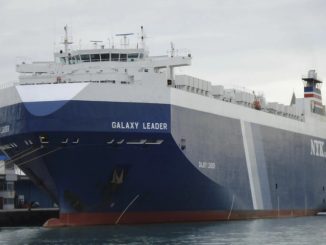
On Nov. 19, an Israeli-linked ship, the Galaxy Leader, was seized in the Red Sea and redirected to the Port of Hodeidah in Yemen by the Houthi-led Yemeni Armed Forces. 

The cargo ship was targeted because the vessel is owned, in part, by shipping magnate Abraham “Rami” Ungar, who is in the Haaretz list of 30 richest people in Israel. 

Israeli Prime Minister Benjamin Netanyahu has tried to downplay the ship’s ties to the Zionist regime. The ship is owned by Ray Car Carriers, a motor vehicle import company that is one of the largest of its type in Israel. 

Ungar, the owner of Ray Car Carriers, is also known for financing far-right politicians in Israel. He has been implicated in numerous high-profile scandals, including a bribery case involving arrangements to bribe a political aide of then-Prime Minister Ehud Olmert. The Prime Minister and Ungar attempted to pay the aide, Shula Zaken, to not testify against Olmert and take the fall in the corruption case that was being mounted against him and his administration. 

Ungar is also a close friend of the current Israeli Minister of Defense, Yoav Gallant, of the far-right Likud party. 

The takeover of the Galaxy Leader ship was a well-targeted, righteous act of solidarity with the people of Palestine. Yahya Sare’e, the spokesperson for the Yemeni Armed Forces, made a statement in which he proclaimed, “The Yemeni Armed Forces will continue to carry out their military operations until the Israeli aggression against the Palestinian people in Gaza and the West Bank stops.” 

Statements from the YAF have also confirmed that they have fired a salvo of winged missiles targeting Zionist occupying forces in the Eilat region (occupied Umm Al-Rashrash, Palestine) and will continue to strategically target the Zionist regime until they end their aggression towards the people of Palestine.

Iran unveils new hypersonic missile

The Supreme Leader of Iran, Ayatollah Ali Khamenei, made a visit on Nov. 19 to the Ashura University of Aerospace Science and Technology for the unveiling of a new hypersonic missile that can be used in self-defense against U.S.-Israeli aggression. 

The missile goes by the name Fattah-II, an upgraded version of the Islamic Revolutionary Guard Corps’ first domestically produced hypersonic missile bearing the same name unveiled earlier this year in June. 

Iranian state media have described Fattah-II as a hypersonic glide vehicle, a projectile that can maneuver and glide at hypersonic speed to its target and is capable of posing a serious challenge to low, medium, and high altitude defense systems. 

The exhibition also showcased missile defense systems, including their Mehran and 9-Dey defense systems, as well as an Iranian-made drone named “Gaza” in solidarity with the people of Palestine’s resistance. Also, during this visit, Khamenei condemned the evils of racism that take root in Zionism and in the imperialist ideologues that support the settler-colonial state of Israel. 

Khamenei noted: “The Zionists consider themselves as a superior race, and they consider the rest of the human race to be inferior. That is why they have killed several thousand children without any remorse.” 

He went on to condemn Western imperialist leaders for their support of Zionism and racial discrimination by adding, “When the President of the United States, the Chancellor of Germany, the President of France and the Prime Minister of England support and help such a racist regime with all the things that they claim, it means that these men support racism, which is one of the most despised issues in the world.” 

Khamenei continued: “If they were against it, their opposition would have shown itself in them taking action regarding the issue of Gaza and Palestine.” 

He talked about how Israel’s bombardment of hospitals, women, and children in Gaza is also evidence of the Zionist regime’s frustration at their inability to defeat Hamas and suppress the resistance of the people of Palestine. Also, during the address, Khamenei called on Islamic and Arab nations to stand in solidarity with the people of Palestine and cut political ties with Israel.

From Iraq to Lebanon, Pan-Arab solidarity

This week, the U.S. military violated the sovereignty of Iraq by mounting an attack on the Islamic Resistance of Iraq-aligned group Kataeb Hezbollah (Hezbollah Brigades). 

In response, the armed forces of the Islamic Resistance of Iraq retaliated on Nov. 23 by hitting two bases of the U.S. occupation forces in western and northern Iraq with four drones. Also, on Nov. 23, a day after an Israeli airstrike killed five Hezbollah fighters, there are reports that more than 50 missiles were fired at Zionist military targets in northern occupied Palestine from Hezbollah forces located in southern Lebanon. 

This makes it one of the largest bombardments targeting the Zionist regime since the start of the Al-Aqsa Flood Operation in October. 

From the river to the sea, Palestine will be free!


Strugglelalucha256


In Egypt for Global Conscience Convoy: Day two

On Wednesday, Nov. 23, two journalists from Struggle-La Lucha had the privilege and honor of spending an afternoon at the Egyptian Journalists’ Syndicate in downtown Cairo. The EJS is the central labor union for journalists across Egypt. We received a tour from EJS members who have also played a role in organizing the Global Conscience Convoy to the Rafah border crossing.

The first thing that stands out about the Egyptian Journalists Syndicate headquarters is the massive 50-foot-long Palestinian flag hanging from the building’s entrance. Upon approach, one can immediately feel the solidarity emanating from the building and its occupants. The struggle for union journalists in Egypt is a personal one, as the Israeli apartheid government has murdered at least 57 journalists since Oct. 7, many of whom were Egyptian

Historically, the EJS has not always been this anti-imperialist. While a relatively progressive trade union in the past, the EJS experienced a seachange in March of this year when a socialist bloc won the elections for the union’s leadership. This is the first time explicitly left-wing forces have ascended to EJS leadership. 

Under the new leadership, the EJS has taken steps to build coalitions with progressive organizations like the Popular Committee in Solidarity with Palestine, the Socialist Popular Alliance Party, the Bread and Freedom Party, and many others. Because of these coalitions, the EJS led the only truly popular demonstrations in support of Palestine in the entire country of Egypt. This has included the first major marches on Tahrir Square in a decade

At first, the Egyptian government was not only supportive of these demonstrations but even went as far as to participate to some extent. Unfortunately, the Egyptian government changed its tune regarding pro-Palestine protests and even humanitarian convoys in the days and weeks since the Palestinian resistance commenced Operation Al-Aqsa Flood. 

Due to pressure from the U.S. government and corporate media, as well as an insidious EU anti-migration aid package, the Egyptian government has significantly cooled its support for Palestine and the corresponding solidarity movement. The over $9 billion aid package comes with the express purpose of preventing Arab migration into Europe. To that effect, the package contains millions for border security and naval patrol equipment.

One of the consequences of this Western coercion has been an indefinite delay in multiple aid convoys headed to Gaza, including the Global Conscience Convoy organized by the EJS and many other organizations. However, that has not stopped the progressive organizers on the ground from struggling for humanitarian and political intervention to stop the genocide in Gaza. 

Directly after our tour and several productive conversations with Egyptian socialists and unionists, individuals from across the globe participated in a picket line in solidarity with the Palestinian people. Our main demands: End the genocide in Gaza and allow the Global Conscience Convoy to proceed!

Strugglelalucha256


Egypt: Let the Global Conscience Convoy enter – NYC, Nov. 28

Strugglelalucha256


Venezuela and Exxon Mobil’s Land Grab

Attacks on Venezuela by the U.S. and its allies include 930 illegal sanctions that shut the country out from international finance, blocking it from buying medicines, food, or producing or selling its oil. Also, there have been direct and indirect support for coup d’etat attempts, street violence leading to murders and injuries, cyberattacks on its electricity grid, sabotage of oil and infrastructure, financing criminal bands, corruption of officials, assassination attempt against the President and his cabinet, setting up a false presidency, appropriating CITGO oil company and billions of Venezuelan assets in banks, blocking the country from obtaining Covid-19 vaccines during a pandemic, and a brutal attack on the currency. It is estimated that at least 100,000 Venezuelans have lost their lives due to the illegal sanctions.

It seems it has not been enough.

Now, wrapping itself in old-fashioned colonialism, the U.S., through its creature Exxon Mobil, and hand in hand with its imperial ally Great Britain, is poised to pull the biggest land grab since the U.S. took a quarter of México by means of sleight-of-hand judicial theft.

Long Standing Issues – Land and gold

All the ancient maps of Venezuela, from the time it was first mapped under Spanish rule, show that its eastern border was the Esequibo River.

On the other side of the river was a territory later claimed by England that became British Guiana. It was a place where explorers thirsty for gold invaded seeking the myth of El Dorado, which they did not find but did find gold and the sweet gold of sugar cane. Using a deliberate misinformation campaign, involving the bogus cartography by R. Schomburgk, as far back as 1835, the British Empire made inroads into Venezuelan territory. After Britain gave independence to British Guiana and it became Guyana, these inroads did not cease. The territory to the west of the river thus claimed by Guyana and which is in dispute, measures 159.542 Km, a territory bigger than Portugal and the Netherlands together.

The long-standing controversy reached a point when in 1899, an Arbitral Tribunal in Paris was convened to settle the matter – with not a single Venezuelan present! The judges were from Britain, the United States and one Russian. The U.S.A, claiming some sort of reason to be there because of their own Monroe Doctrine, presumed to represent Venezuela. The sentence, to no one’s surprise, benefited Great Britain.

Venezuela continued to fight this astonishing judicial theft of the land that had always been part of Venezuela, and after long diplomatic struggles, the Accord of Geneva of 1966 was agreed upon by both parts. It emphatically declared null and void the actions of the Paris Tribunal of 1899, and stipulated that both parts – Venezuela and Guyana- are obligated to negotiate amicably together in good faith to resolve all matters concerning the Esequibo. Furthermore, considering this Accord, in 1980 both parties agreed to the United Nations mechanism of Good Offices, whereby a jointly appointed person would help implement negotiations.

Today’s Issue: – Black Gold

In 2014/15, the most sinister and predatory oil corporation in the world, Exxon Mobil -an avowed enemy of Venezuela- discovered oil in land and sea of the disputed territory. That ended all the ongoing amicable negotiations between Venezuela and Guyana, as the wealth of Exxon Mobil obtained the upper hand of the government of Guyana. The present prime minister, for example, has been handed $18 million in exchange for refusing to negotiate further, denouncing the Geneva Accord of 1966 and demanding that the decision of the 1899 Paris Tribunal be enforced through yet another biased team of judges at the International Court of Justice, that actually has no jurisdiction except its own self-enlarged mandate.

But most dangerous of all, the oil corporation urges Guyana to aggressively provoke Venezuela into attacking so that it can present itself to the world as a “victim” of Venezuela. The aim is to provoke a frontier war so that the naval fleet of the U.S. Southern Command – now conveniently posted in the adjacent seas- can then intervene militarily and invade Venezuela. Since 2015 Guyana has been carrying out military manoeuvres with the Southern Command with Venezuela as a target.

There is nothing the U.S. would want more than “a cause”, real or not, to invade Venezuela and get its hands on the rich oil, gas and precious minerals that are abundant there. It can no longer count on stooge right-wing governments in Colombia and Brazil, so now it is manipulating Guyana to be its surrogate war monger. The fleet of the U.S. Southern Command is already poised in waters off the Esequibo and, in fact, the U.S.A has army presence in Guyana itself.

However, Venezuela clearly understands this ruse. It has repeatedly stated that Venezuela has never gone to war – except when its armies marched to Colombia, Peru, Bolivia, and Ecuador to liberate them from the Spanish Empire. Venezuela seeks a peaceful outcome.

The people of the Esequibo

Guyana is one of the most unequal and poor countries in the region. Its resource extraction enterprises are in the hands of foreign corporations, and the income they grant the country has not had the corresponding impact on the health and welfare indicators of the population. The first attempt to measure poverty was in 1992-93, later repeated in 2006. An academic scholar has concluded: “The economic history of Guyana is one of slavery, indenture, colonialism and a social stratification based on skin colour.” The first free elections occurred just as recently as June 1953, but were followed in October of the same year by a British invasion with troops and ships, abetted by the U.S.A, which overthrew the elected populist government of Cheddi Jagan y Forbes Burnham.

Its society suffers with accusations of corruption, inefficiency, and police brutality It has about 78,500 indigenous peoples, 10% of the population, that have been sadly, and historically neglected by the Guyanese government but are now defending their rights through their own movements as since 1990 multinational resource exploitation has increased and highlighted the failure of the government to recognize and guarantee indigenous rights. Many indigenous people of the Esequibo consider themselves Venezuelans, or at least of dual nationality. Since the Chávez government, Venezuela has been proposing joint ventures that would benefit both countries, especially the population in the Esequibo, just as it has effective and amicable gas exploitation with Trinidad and Tobago on shared seas.

The Referendum

Venezuela’s position on the Esequibo is based on the borders it has always had since it was a General Captaincy of the Spanish Empire as clearly stated in Article 10 of the Venezuelan Constitution. It also emphatically declares that the nation’s sovereignty resides in the people, and that the Republic is democratic, participatory and protagonist, multiethnic and pluricultural. In Article 70, referenda are indicated as one of the ways in which the people can participate in the exercise of their sovereignty. Furthermore, Article 71 states that matters of special national transcendence can be submitted to a consultative referendum.

Therefore, on December 6, 2023 the Venezuelan people will be asked to answer “yes” or “no” to 5 questions: if they reject the 1899 Paris arbitration, approve of the 1966 Geneva Accord agreement as the only binding mechanism to resolve the issue, agree with not recognizing the International Court of Justice’s jurisdiction, oppose Guyana’s unilateral appropriation of the Esequibo’s territorial waters. The 5th key question asks voters if they agree with establishing a new state, called Guayana Esequiba, in the disputed land, granting Venezuelan citizenship to its inhabitants and implementing accelerated social programs.

This last question is of critical political relevance because it, in effect, offers the Esequibo people all the advantages, rights, equality, services and prosperity that today the Venezuelan government and institutions can provide to its citizens. It is so crucial that immediately Guyana and Exxon Mobil demanded of the International Court of Justice be brought into the dispute to do something impossible: to forbid the nation of Venezuela to carry out a referendum for its own citizens! That is, to directly intervene in the domestic affairs of a sovereign country and violate its Constitution. Thus is the fear that they have towards the voice of the people.

However, the ICJ does not actually have jurisdiction over this issue not only because for years it has creepingly and unilaterally expanded its own mandate, but also because any demands of this nature must be made by both parties, and Venezuela has not accepted that court’s involvement or jurisdiction. Yet Exxon Mobil has paid for Guyana’s substantial legal fees before this court.

Venezuela’s electoral process -considered by former U.S. President Jimmy Carter as the best in the world- always carries out a trial vote just to make sure everything is in working order. This trial vote on November 19th had a surprising result: the turnout was three times larger than in any other election trial, more than 3 million voters turned up! This is a clear indication of the great interest that Venezuelans have in the Esequibo. In fact, the Esequibo is the most important unifying issue in Venezuela today. Government, artists, oppositions, NGOs, unions, private sector, educators, etc; it seems the entire country is standing up in defense of the Esequibo.

But there is one factor, apart from maps, judicial lawfare and referendum, that will impact on this issue: it is Exxon Mobil and the millions it is distributing among politicians, lawyers, and media to get this land grab.

Exxon Mobil is perhaps the most criminal oil company in the world. For decades its engineers knew well what fossil fuels were doing to the climate, but not only did they supress this information, they paid writers, scientists, and media to deny climate change was happening. It has violated human rights of countless rural and indigenous people; and in Indonesia its collaboration with a brutal government led to it being accused of genocide.

It seems wherever it operates it commits ecocide, crimes against nature. One of its worst crimes was the environmental disaster caused by its oil tanker the Exxon Valdez. In 1989 it spilled 10.8 million gallons of crude oil in Alaska, causing the death of between 100,000 and 250,000 marine birds, hundreds of otters, seals, eagles, orcas and innumerable fish. Exxon Mobil spent years fighting in courts, denying its culpability, and trying to squirm out of paying for damages caused. In the end, after 20 years of litigations, it paid the state of Alaska the pittance of $507 million, that is one tenth of the cost of the damages caused by its oil spill. If it can do this to Alaska in its own home country, imagine what little environmental protection the people, and pristine flora and fauna of the Esequibo would get from this irresponsible corporation.

This is the monster that has bought Guyana and that is attacking the sovereignty of Venezuela.

What is at stake

This is not merely a territorial dispute between two countries, but more than that, what is at stake is the validity of international law, the integrity of the Geneva Accord of 1966, the integrity of the Good Offices of the United Nations, and the honesty of the International Court of Justice (if it has any).

In the end it is the struggle between democracy and the rapacious interests of a powerful oil corporation in the service of the United States empire.

However, Venezuela has defeated an empire before.

María Páez Victor, Ph.D. is a Venezuelan born sociologist living in Canada.

Source: Resumen Latinoamericano – English

Strugglelalucha256


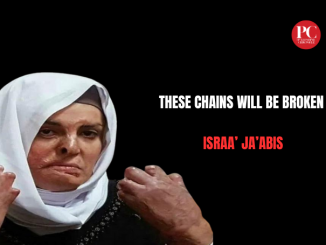
‘No pain like mine’: The story of Palestinian prisoner Israa’ Ja’abis

Starting on Friday, November 24, a prisoner swap between the Palestinian resistance and Israel began in stages.

On Friday, 39 Palestinian prisoners were released. More prisoners are expected to be released on Saturday.

To understand the context of the Palestinian prisoners’ stories, the Palestine Chronicle provides excerpts from Ramzy Baroud’s volume These Chains Will Be Broken: Palestinian Stories of Struggle and Defiance in Israeli Prisons.

The text below appeared in a chapter entitled “Israa’ Riyad Ja’abis – Narrated by her sister, Mona Ja’abis”.

Israa’ Ja’abis was born on July 22, 1984, in Al-Quds (Jerusalem), the fourth of nine sisters and brothers. She was arrested following an electrical system failure in her car which caught fire while she was still trapped inside. It resulted in first, second and third-degree burns on her face and all over her body, including the loss of eight fingers.

On the day of the accident, October 11, 2015, Israa’ drove from Jericho to Al-Quds in a small car that was overflowing with household items. She was moving to Jerusalem with her son, Mu’tasim, and, by transporting some of the small furniture, she had hoped to save on moving expenses.

Israa’ was moving to Jerusalem without her husband. Her only son, Mu’tasim, was born in Jerusalem and that qualified him for residence in the occupied city. She was allowed to stay with him as she, too, was a Jerusalem resident. His father, however, was barred from the city due to his West Bank ID card. The family agreed to separate for a number of years so that Mu’tasim would have the opportunity for better schooling and health care. Neither parent was thrilled by the decision, but they felt that they had no other option.

One of the items that Israa’ carried with her was a propane tank for the kitchen. It would have been too expensive to buy a brand new one in Jerusalem. As she was leaving Jericho, the engine of her car died twice. Young people in the town warned her to turn around and find another form of transportation, but she did not heed their advice. She needed to get to Jerusalem to her new job at a nursing home. Each time her car died, the engine emitted a burning smell.

After travelling a couple of kilometers outside the Israeli Al-Za’ayem military checkpoint, near the illegal Jewish settlement of Ma’ale Adumim and a short distance east of Al-Quds, Israa’s car died again. No soldiers or army vehicles were in sight. A while later, a retired Israeli police officer passed by her stalled car. He parked his car in front of hers and asked for her ID as she desperately tried to restart the car. “There is a strong smell in the car,” she told him, trying to exit the car, but he insisted that she stay inside while he examined her papers.

She tried to open the windows, but they, too, were affected by the electrical failure. Again, she tried to exit the car, opening the door, but the officer rushed over and slammed it shut, crushing her hand. She yelled “Allahu Akbar ’alaiku” (God is greater than you are), chastising him several times for not allowing her to escape. She urged him to let her out as fire ignited in the front part of the car. He refused. He stood there, watching her burn inside. The airbag deployed, completely trapping her inside the blazing car.

The police officer who stopped her claimed that she was trying to use the propane tank to blow up the car. His testimony was the only one considered in the Israeli court, and Israa’ was branded a ‘terrorist’. She was sentenced to 11 years in prison. She is now serving her term at HaSharon prison inside Israel, and is denied much needed medical attention. After her debilitating injuries and imprisonment, her husband also suffered a car accident, leaving him permanently disabled and confined to a wheelchair. Their son, Mu’tasim, is now living with his grandmother in Jerusalem.

Mona is Israa’s older sister and ‘best friend’.

‘No Pain Like Mine’

It is too difficult to describe the first time we saw Israa’. We learned bits of information here and there about the nature of her wounds, and of the fact that some of her fingers were amputated. I thought that I was mentally prepared to see my sister in that condition, but I was wrong.

I visited her for the first time one week after the accident. I wore the attire of a religious Jewish woman to disguise myself in the hospital. I speak fluent Hebrew, and my dress and language skills allowed me access into the hospital. I made my way to the emergency ward and watched Israa’ through a large glass window. There was a police officer sitting beside her, as if she could possibly move, let alone escape in that condition. I did not recognize her right away. Her face and body were bandaged and bloated. But I then recognized her through her height and her hair. The officer noticed my presence. I told him that I had lost my way, but he ordered me to leave.

I told my parents, who were waiting outside, that I saw her and that she was okay. I could not bring myself to tell them the truth.

Two months later, I returned with my parents. We were only permitted to see her from behind the glass window and were not allowed to talk to her. I will never forget the look on my parents’ faces. Tears gushed from my father’s eyes. He struggled to find words, but could not speak. My mother kept mumbling to herself, as if a mantra: “She is fine; she is fine; medicine will fix everything; she is fine …” Israa’ was not aware of our presence. A group of Israeli officers were surrounding and interrogating her.

I was trying to prepare my nephew, Mu’tasim, for the transformation that had taken place. I told him that his mom had had an accident and that he would be allowed to meet her soon. But he is a smart kid. Although only eight years old at the time, he searched the news and found out what had happened. But he still could not find pictures of her after the accident. I sat with him again and told him: “I love my mother no matter what she looks like, white, black or red; whether her face is blemished or not.” He said: “I love my mom, too, no matter what.” Then I showed him a photo of her that was intentionally distorted. I did not want him to actually see right away how horrific her disfigurement was. He sat in silence for a long time. He seemed emotionally disconnected, as if the story was about someone else.

Israa’ stayed in the hospital for three months. We were not even informed of her medical condition or progress. We would sneak into the hospital like thieves and, when the police discovered us, they would immediately throw us out.

The first time we were officially allowed to meet with her was in HaSharon prison. We were separated by a thick wall of glass. My mother only recognized her from her height, as Israa’ is particularly tall. My mother rested her head in her hands and said nothing; she only wept.

I kept myself from crying, though. I told Israa’: “We love you and we will stand by your side, no matter what the obstacles.” My father seemed to have lost his mind. He hobbled around the room, crying: “Israa’, sweetheart. Israa’, I am your father.” Israa’ kept telling him: “I am Israa’, Daddy. Please look, just look at me. My face is burned, but my heart, my mind and my whole being is still the same.” I kept assuring him that this was Israa’ but he was too confused and kept walking in circles, screaming her name. She was always a source of strength for him. When he finally realized that she was his daughter, he broke down, weeping like a child.

Israa’ was the backbone of our family. When I visited her the second time, I told her: “You don’t always have to be the strong one. It’s okay to be vulnerable sometimes.” As soon as I said that, she began crying, and she cried for a long time.

When Mu’tasim came with us to visit her for the first time, the prison administration did not allow him to enter. So I sat with him in the parking lot, waiting for my parents to come out. When they did, they were holding hands, wailing like little children. I went running towards them. They told me that they had amputated all of her fingers except two. Then we praised Allah for allowing her to keep the two fingers.

A year and two months later, Mu’tasim was finally allowed to see her. He was nine years old then. I took him, as my mother could no longer cope with the pain of seeing her daughter in that condition. But the prison guards did not allow me access to her room. They only allowed Mu’tasim to talk to her from behind the glass barrier. He begged them to let him hug his mother and, finally, they relented, agreeing to allow him to spend ten minutes with her. I watched from behind the glass as Israa’ walked in wearing a Tigger costume. She had sewn it inside the prison, as she knows how much Mu’tasim loves the Winnie the Pooh cartoon. She even designed and wore a Tigger mask. When Israa’ was younger, she loved to dress up in costumes and perform as a clown for various community events for children. Mu’tasim told her: “I know you are my mother. I don’t want Tigger. I want to see your face.” So she removed the mask. Mu’tasim was shocked. His eyes filled quickly with tears. He told her: “I love you, no matter what.” He told her that the “acne on your face will soon go away”. When it was time to leave, he clung to her, refusing to let go. The guards asked me to intervene. Mu’tasim kept repeating: “You either let me stay, or let her come home with me.”

On the way home, Mu’tasim told me, after a long silence: “My mom will always be beautiful, even if the acne never goes away.”

My heart breaks for Israa’, my tall, slender, sister with a beautiful face, the lovely one whose hands were always adorned with henna. In her we saw hope, strength and beauty. The harshness of the occupier scarred her face and body, amputated her fingers and is relentlessly trying to break her spirit. I will never forget when a journalist asked her across the court room, as she sat surrounded by armed Israeli officers: “Are you in pain?” She raised whatever remained of her hands and answered: “No pain is like mine.”

If I could only take even some of my sister’s pain away …

Source: Palestine Chronicle

Strugglelalucha256


Palestine: History will not forgive the indifferent, and we will not be among them

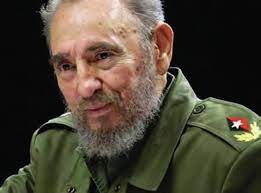
Nov. 25 is the anniversary of the death of Cuban revolutionary leader Fidel Castro Ruz in 2016. 

By Miguel Díaz-Canel, president of Cuba on October 28, 2023

Sixty-three years ago, in a historic speech before the United Nations General Assembly, the historic leader of the Cuban Revolution, Fidel Castro Ruz, said and I quote:

“Wars, since the beginning of humanity, have arisen, fundamentally, for one reason: the desire of some to dispossess others of their wealth. Disappear the philosophy of dispossession, and the philosophy of war will have disappeared! Disappear the colonies, disappear the exploitation of countries by monopolies, and then humanity will have reached a true stage of progress!”. End of quote.

In this broad and profound idea is summed up the reason for the horror that the Palestinian people live today, confined by a new Apartheid to a minimal strip of land.

It is the philosophy of dispossession that today is causing a humanitarian catastrophe of Dantesque proportions.

But it is not just a strip of land that suffers the impact of Israeli missiles. It is the Palestinian people who are the target of the bombs. More than 3,000 children and 1,700 women have been killed in recent weeks, while thousands of people remain trapped under the rubble, waiting for rescuers to come and save or bury them.

More than 40% of Gaza’s homes have been destroyed, and hospitals have been turned into morgues.

Cuba condemns in the strongest terms the bombardments against the population in Gaza and the destruction of their homes, hospitals, and civilian infrastructure.

We repudiate the murders of innocent people as a result of the current escalation, which attacks with viciousness, without distinction of ethnicity, origin, nationality, or religious faith.

We also share the pain for the suffering of the Israeli civilian victims of the conflict, but we do not accept a certain selective indignation that pretends to ignore the seriousness of the genocide that is being perpetrated today against the Palestinians, presenting the Israeli side as the victim and ignoring 75 years of attacks, occupation, abuses, and exclusion.

Nothing can justify what your army is doing against Gaza. Nothing can justify the grave violations of International Humanitarian Law they are committing.

Israel is violating each and every UN resolution and each and every one of its obligations as an Occupying Power under the Fourth Geneva Convention, fully confident that the paralysis of the Security Council on this issue will ensure its continued evasion of responsibility.

Even at the present grave juncture, the Security Council has not been able to call on Israel to stop the ongoing massacre.

The United States vetoed in that body a proposal that simply called for humanitarian pauses in the fighting to allow aid access to Gaza and ensure the protection of civilians.

Those who today oppose the cessation of violence in Gaza as a matter of the highest priority will have to take responsibility for the grave consequences this entails.

But the position of the U.S. government, which has historically acted as an accomplice of Zionist barbarism by repeatedly obstructing Security Council action on Palestine, undermining peace and stability in the Middle East with its offensive exercise of the veto, is not surprising.

A comprehensive, just, and lasting solution to the conflict requires, inexorably, the real exercise of the inalienable right of the Palestinian people to self-determination and to build their own independent and sovereign state within the pre-1967 borders and with its capital in East Jerusalem.

There is no other effective way to stop this spiral of violence once and for all, save human lives and chart a viable course for peace.

Will the international community allow this untenable situation to continue, or will it remain hostage to an arbitrary exercise such as the right of veto that prevents it from acting as it should to stop the crime?

A group of countries, including Cuba, proposed to the United Nations General Assembly a draft resolution, which was finally approved, demanding an immediate ceasefire, the urgent establishment of a mechanism to protect the Palestinian civilian population, rejecting the forced displacement of civilians and advocating the sending of emergency humanitarian aid.

Every moment of inaction and passivity will cost more innocent lives. We must act immediately. We will continue to contribute as much as possible to legitimate international efforts aimed at putting an end to this barbarism.

History will not forgive the indifferent. And we will not be among them. It is time to put an end to the philosophy of dispossession so that the philosophy of war may die for lack of incentives.

Source: Granma

Strugglelalucha256


Trip to Egypt for Global Conscience Convoy: Day one

When I told my parents I was traveling to Cairo, they immediately assumed that I would somehow find myself on the wrong side of a Hamas rocket the second I stepped off the plane because I am a Jew. This is really less a condemnation of my parents than an example of the craziness among many whipped up by the U.S. war propaganda machine. 

The fact that Cairo is hundreds of miles from the Palestinian border and that Egypt isn’t actively at war with Israel didn’t seem to matter. Reason doesn’t seem to matter when it comes to the cascade of U.S.-pushed lies. Either way, I am thrilled to report that neither myself — from the Baltimore Peoples Power Assembly — nor John Parker — a national organizer for the Socialist Unity Party and the Harriet Tubman Center for Social Justice in Los Angeles and current congressional candidate — were struck by any missile of any kind upon our arrival in Cairo.

I guess I should count myself lucky that I was spared from the supposed great epidemic of Hamas missiles hurtling through the Middle East. 

Piff aside, John and I landed here yesterday in Egypt’s capital city and one of the urban centers of the Arab world. While Cairo is an amazing city, the nature of our trip is not leisure. We came to Cairo to join the Global Conscience Convoy, a massive humanitarian and journalist convoy to Gaza organized by the national Egyptian Journalists’ Union and a coalition of socialist organizations here in Egypt. The goal of the convoy is not only to deliver material aid. On the convoy will be truth-telling war correspondents intent on showing the horrors of Israeli genocide to the world and relieving the severely embattled journalist core inside Gaza. 

At least sixty journalists have been killed since Oct. 7 throughout the Gaza Strip as the IDF continues to target reporters of all stripes intentionally. For that reason, nearly 170 journalists from all over the world converged on Egypt to organize and partake in this humanitarian convoy to the Rafah border crossing. They hope to provide much-needed supplies and coverage of Israel’s atrocities against the Palestinian people. The world deserves to know the truth

The Convoy was initially supposed to launch on Nov. 24. However, the Egyptian government held up security clearances with the hope of sabotaging such a show of strength and solidarity by unions and socialist organizations here in Egypt. Since the announcement that the Convoy would be postponed, organizers on the ground and around the globe have ramped up the pressure on Prime Minister El Sisi’s military junta to allow the nearly 60,000 pounds of material aid through to the Rafah border crossing. The general message has been: how dare one of the largest governments in the Arab world deny material and political relief to the Palestinian people as Gaza burns? 

As it almost always does, the pressure is working. Turns out, when we fight, we win. There isn’t confirmation yet, but the hard-working organizers in the Egyptian Journalists’ Union and the local Popular Committee in Solidarity with the Palestinian People have expressed cautious hope that the convoy could go forward in the coming days or weeks due to the increasing pressure and the recently announced 4-day truce between occupation forces and the Palestinian resistance. 

If the convoy is able to leave soon, you can bet that John and I will be on it. In the meantime, solidarity demonstrations are planned over the next several days in Cairo. We will also meet with the protest organizers and the Convoy itself. We hope to not only contribute to the struggle in Egypt any way we can during our brief stay but also to bring back this message of truth: Israel’s genocide of the Palestinian people is not only very real, but it is worsening and must be stopped. 

We hope to provide regular updates on Struggle-La Lucha as the trip progresses. Palestinian solidarity will never die! Down with Israel! Long live Palestine!

Please follow @globalconscienceconvoy on Instagram for further updates and calls to action. 

Strugglelalucha256


International labor solidarity with Palestine

An appeal from the Palestinian General Federation of Trade Unions (PGFTU) for solidarity 

On Oct. 16, the Palestinian General Federation of Trade Unions  (PGFTU) issued an urgent call for international trade unions to take action against governments, like the U.S., that are arming Israel with weapons for the impending carnage of 2.3 million people in Gaza and the ethnic cleansing of Palestine. 

The statement by the Palestinian trade unions called on all workers:

  • To refuse to build weapons destined for Israel.
  • To refuse to transport weapons to Israel.
  • To pass motions in their trade union to this effect.
  • To take action against companies who have contracts with your institution.
  • Pressure governments to stop military trade with Israel and, as in the case of the U.S., funding it.

PGFTU urged: “The genocidal situation can only be prevented by a mass increase of global solidarity with the people of Palestine to restrain the Israeli war machine. We take inspiration from previous mobilizations by trade unions … where global solidarity limited the extent of colonial brutality.”

Around the world, unions have been responding in solidarity with the people of Gaza and the West Bank, most often in opposition to the policies of their own governments.

Unions leading the labor movement in the U.S. advocating a ceasefire are the APU postal workers, the UAW auto workers Regions 6 and 9A, and the National Writers Union. A Starbucks Workers United leaflet read: “We Stand with Palestine.”  

Other key unions are the United Food and Commercial Workers (UFCW); Electrical Workers (UE); and UFCW Locals 3000 and 520, which have initiated a labor call for a ceasefire. They are being joined by a growing list of labor organizations across the country, including SEIU-United Service Workers West (USWW.) The Western Mass Area Labor Federation AFL-CIO (WMALF) voted unanimously at its delegate body on Nov. 13 to call for a ceasefire in Gaza.

Teachers’ unions, like those in Chicago, Massachusetts, Minneapolis, and San Antonio, have made passionate appeals for cessation of Israel’s violent assault on children and families in Gaza. The Student Workers of Columbia have been organizing support for a “free Palestine.” 

On Oct. 20, a march co-sponsored by the Movement of Rank-and-File Educators (MORE), a caucus in the NY UFT, shut down Third Avenue, a major artery in New York City.

‘Action at the point of production’

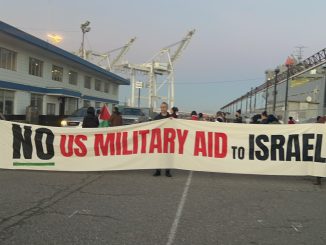
Ports are vital in the supply chain for arms and weapons to Israel. ‍Coordination between communities and their local longshore unions is essential in operations carried out to block military shipping. It is generally understood that union members are not permitted to cross community picket lines. Organized workers know that an action at the “point of production” is the most successful.

On Nov. 3-4, in the Port of Oakland, California, and the Port of Tacoma, Washington, the U.S. military vessel MV Cape Orlando was delayed by protests after merchant marine workers told the Arab Resource and Organizing Center (AROC) about the ship’s departure. It is a part of the U.S. fleet that is replenishing military stockpiles in Israel with tanks, armored personnel carriers, and mobile rocket launchers, as well as troop trucks, cargo trucks, and Humvees.

On Nov. 17, the San Francisco longshore union ILWU Local 10 unanimously passed a solidarity resolution: “A message to the PGFTU expressing our solidarity and determination to take action in their defense consistent with our actions in the past and the ILWU’s principled position of defending Palestinian rights. The UN calls Gaza an ‘open air prison’ of 2.2 million Palestinians. … It is no surprise that there would inevitably be a rebellion.”

“We additionally call on trade unions both nationally and internationally to support PGFTU, a ceasefire and an end to Israeli apartheid oppression,” the resolution says. A Local 10 official will read the resolution to the Oakland and San Francisco city councils, and the union will encourage the ILWU international and district councils to pass similar resolutions.

Trent Willis, a current member and former president of Local 10, said: “Our members are very concerned with the news we’re hearing about innocent civilians being killed in the Gaza Strip right now. And it’s not only our membership, but there are protests going on all around this country for a ceasefire.”

In San Francisco, on Nov. 17, the Inland Boatmen’s Union (IBU) issued another resolution calling for an immediate ceasefire and the delivery of life-saving aid to meet the needs of millions of people in Gaza.  

ZIM shipping

‍ZIM is the main commercial corporation shipping military supplies to Israel. It is one of the top ten largest shipping lines in the world. Workers in Palestine see ZIM as a strategic target, particularly in ports with direct routes to Israel.

Many military components enter and exit the U.S. via its East Coast ports – primarily New York/Newark, Savannah, Charleston, and the Port of Virginia. This is because military supply chains operate with components produced in Europe and assembled in the U.S. Also, these ports are typically unionized by the International Longshoremen’s Association (ILA), which has not actively blocked ZIM ships. 

On Nov. 17 in Norfolk, Virgina, a demonstration at the ZIM headquarters organized by the  Southern Workers Assembly was highly successful, reportedly with a great turnout. With the demonstration beginning at 3 p.m., ZIM shut down and sent everyone home at 2 p.m. 

The Port of New Orleans in Louisiana has economic ties with the Port of Ashdod in Tel Aviv, Israel. On Nov. 3, protesters gathered outside the annual State of the Port event at the Sheraton Hotel. Activists demanded that the Port administrators, along with local government officials, cut all ties with the Zionist apartheid state. Following Nov. 3, the activists launched an organization, New Orleans Stop Helping Israel’s Ports (NOSHIP), which led a Nov. 16 march on the Port administration. 

Around the world

The international union movement has been responding in solidarity actions.

Belgian trade unions were among the first to take action. In a joint press release, the Belgian transport workers’ unions called on their members to refuse to load or unload arms shipments being shipped or flown to Israel. The Italian, Spanish, and French longshore unions were on board, along with the Belgian dockworkers.

Workers at the Port of Barcelona are refusing to load military equipment designated for Israel.

In the Port of Melbourne, Australia, Trade Unionists for Palestine are also blocking ZIM. The red, gold, and black flags of the Indigenous peoples of Australia are seen on the picket line. On Nov. 14, more than 50,000 people protested at the parliament in Sidney.

The Liverpool dock workers held a meeting with the community to talk about the war in Gaza and the West Bank. They passed a resolution defending the Palestinians and called for the end of the shipment of war materiel from Liverpool. They are reaching out to other ports in Britain. Thousands of people have marched in Liverpool and Manchester, calling for an end to Israel’s attacks in Gaza.

United Tech & Allied Workers of Britain (UTAW-CWU) answered the appeal from the Palestinian (PGFTU) for union solidarity by calling for the “international labor movement to end all complicity and take concrete action against arms supplies to Israel.”

In Kent, England, more than 400 activists disrupted operations at a factory belonging to BAE Systems, a key weapons supplier to Israel. The largest weapons firm in Britain, BAE manufactures “active interceptor systems” for Israel’s F-35 stealth combat aircraft. 

United under the banner “Workers for a Free Palestine,” British health workers, teachers, hospitality workers, academics, artists, and more — members of unions such as Unite, Unison, GMB, the NEU, the BMA, the UCU, Bectu and the BFAWU — halted BAE operations and called for an immediate end to Israel’s bombardment of Gaza. They set up a picket line to prevent deliveries to the site.

The Japanese union, Dora Chiba (the National Railway Motive Power Union), supports the PGFTU call for solidarity. The union says, “We wholeheartedly support the fierce struggle of the Palestinian people.” They pledged to fight their government’s imperialist policies: the cause of oppression of the people and war. The Japanese government is one of those sending weapons and financial aid to Israel.

Similar actions are occurring all over the world. In Brazil, CUT, the largest trade union federation representing more than 7.4 million workers, passed a resolution pledging unwavering support for the Palestinians. The Canadian Union of Public Employees (CUPE) adopted a resolution calling for the government to “end its sale of arms to Israel.” In Colombia, the miners’ union wants a suspension of the supply of all minerals and fuels to Israel. The Central Trade Union Council of India (AICCTU), representing more than 600,000 workers, is calling to unions for a  boycott of arms shipments to Israel. In Poland, the largest confederation of trade unions (OPZZ) is calling for an end to military cooperation with Israel.

Strugglelalucha256


China in crosshairs as U.S. deploys land-based medium-range missiles in Asia-Pacific

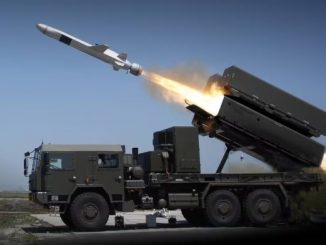
As the mainstream propaganda machine was trying to present the supposed “new era of detente” between the United States and China (at least until President Joe Biden shot down their efforts with a single remark), the Pentagon was preparing for something completely different. Namely, the U.S. military is in the process of deploying new medium-range missile systems to the increasingly contested Asia-Pacific region. According to General Charles A. Flynn, a four-star commanding officer of the U.S. Army Pacific (USARPAC), the deployment is officially slated for next year, and its purpose is to “deter China from invading Taiwan.” More importantly, Flynn revealed that the U.S. Army will deploy a missile launcher that will be able to fire the land-based version of the medium-range “Tomahawk” missile.

“We have tested them and we have a battery or two of them today,” General Flynn said, adding: “In 2024 we intend to deploy that system in your region. I’m not going to say where and when. But I will just say that we will deploy them.”

Although this isn’t exactly a new capability, as the U.S. Army had ground-based medium-range cruise missiles back in the early 1980s, the weapon in question was banned under the now-defunct Intermediate-Range Nuclear Forces (INF) Treaty signed by Washington, D.C., and Moscow in 1987 (came into effect on June 1, 1988). This arms control agreement banned land-based missiles and weapons (bar coastal defense ones) with ranges of 500-5500 km. This included ballistic and cruise missiles, both conventional and nuclear-tipped, but excluded air and sea-based weapons.

Among the most prominent types eliminated by the INF Treaty were the American MGM-31A “Pershing” and “Pershing II” solid-fueled ballistic missiles (ranges of 740 and 1770 km, and single warheads with yields of up to 400 and 80 kt, respectively) and the Russian RSD-10 “Pioneer” solid-fueled ballistic missiles (range of up to 5500 km) capable of using three MIRV (multiple independently targetable reentry vehicles) warheads with a yield of 550 kt each roughly 37 (111 altogether) times more powerful than the Hiroshima bomb). However, among the affected weapons was one that the U.S. effectively never stopped using.

The missile in question was the GLCM (Ground Launched Cruise Missile), officially designated as the BGM-109G “Gryphon,” a subsonic cruise missile with a range of 2780 km and a single W84 thermonuclear warhead (yield of up to 150 kt, or approximately ten times more powerful than the Hiroshima bomb). The “Gryphon” was a land-based version of the infamous “Tomahawk” cruise missile that the U.S. Navy continues to use and upgrades regularly (the latest variant being the Block 5). As the U.S. unilaterally withdrew from the INF in 2019, it’s currently in the process of reinducting these types of missiles.

Back then, several colleagues of mine and I argued that Washington DC did so because of their rivalry with China, despite the official stance of the U.S. government that the alleged Russian violations of the INF Treaty were the reason for their withdrawal. The belligerent thalassocracy never provided any solid evidence for these allegations, but it did expose its own hypocrisy by testing a land-based version of the “Tomahawk” cruise missile just three weeks after it announced the termination of its compliance with the INF Treaty. The conclusion that this was prepared months or even years in advance is the only logical one.

Namely, it takes years to develop such weapons or months (at best) to convert them from sea to land-based missiles. Even then, it took nearly half a decade of testing for the U.S. Army to officially induct the weapon and its “Typhon” launch platform. The newly deployed U.S. Army units that use the land-based “Tomahawk” missiles can hit targets at ranges of approximately 1600 km. Their ability to carry the W80 thermonuclear warheads means that the old “Gryphon” is effectively resurrected, with the only difference being that its target is not European Russia but China and, very likely, North Korea as well.

The very usage of the name “Typhon” indicates that the missile is a successor to the “Gryphon,” while the wordplay itself (similarity with the word typhoon) reveals its purpose as the weapon that’s supposed to devastate targets along China’s Asia-Pacific shore. The future location of the U.S. Army units and their missile batteries is yet to be revealed, as General Flynn refused to give any comments in that regard, but various sources indicate that it could be Japan, further reinforcing the aforementioned hypothesis and “Typhon/typhoon” etymological connection.

The U.S. is also expanding its military presence in the Philippines, Guam, and elsewhere in the region. This includes the deployment of similar “Tomahawk” launchers by the U.S. Marine Corps (U.S.MC), while the U.S. Navy already has numerous sea-based “Tomahawk” launch platforms. All this clearly indicates a concerted effort to surround China with hostile military bases and infrastructure that would force it to respond accordingly. And while Beijing might prioritize peace talks and detente, it will not do so at all costs. The Asia-Pacific and its busy sea lanes are vital to the Asian giant’s heavily export-oriented economy, and any dangerous deployments that could jeopardize them will not be tolerated or left unanswered, particularly as Chinese hypersonic capabilities far eclipse that of the U.S.

Drago Bosnic is an independent geopolitical and military analyst.

Source: InfoBrics
Strugglelalucha256
https://www.struggle-la-lucha.org/2023/11/page/2/