Cases reopened: Maryland’s former chief medical examiner covered up police killings

A little over two years ago, David Fowler stepped onto the witness stand during the prosecution of George Floyd’s murderers, including Derek Chauvin. The defense called Fowler as an expert witness. His purpose at this trial was simple: to undermine the prosecution’s expert testimony and forensic evidence. As part of his testimony, Fowler asserted that Chauvin’s knee on the neck of George Floyd was not a significant factor in Floyd’s death. 

The prosecution of Floyd’s murderers was the most closely followed and widely broadcast since O.J. Simpson’s trial in 1997. The spotlight certainly shone brightly on Fowler as he attempted to discredit mountains of evidence pointing toward an obvious conclusion, that Derek Chauvin was and is a racist murderer. 

Not only did the trial result in the conviction of Chauvin, but it also sparked a new interest in Fowler’s 19-year tenure as Maryland’s Chief Medical Examiner. For this reason, Struggle – La Lucha and Peoples Power Assembly demanded that the Maryland government reopen the cases where David Fowler, or his subordinates, conducted the autopsy. 

PPA and Struggle-La Lucha were and are concerned with the Black men who died in police custody in Maryland. Fowler’s time as the Maryland Chief Medical Examiner did not go without controversy, even before he rose to national prominence in 2020. 

Fowler’s administration received heavy public criticism for the conclusions rendered in the autopsies of Anton Black, Marlyn Barnes, and Tyrone West, all young Black men who died under suspicious circumstances while in the custody of Maryland law enforcement. Fowler and his fellow medical examiners entirely absolved police and correctional officers of any responsibility for the deaths of West, Black, and Barnes, regardless of the plentiful evidence suggesting otherwise. Both families accused Fowler’s office of rubber-stamping police theories and covering up racist policing practices. 

Fowler’s cases reopened 

In December of 2021, it was widely reported that the Maryland attorney general’s office was reexamining the findings of David Fowler in the cases of over 1,300 individuals who died while in the custody of Maryland police or corrections. 

Since that time, the investigation has escalated. Just over a week ago, the Maryland AG announced that 100 autopsies conducted by Fowler’s administration would be thoroughly audited to determine their veracity and thoroughness. 

It is important to understand that Fowler is not the only person implicated in this saga. The recent spotlight on his tenure as Maryland’s Chief Medical Examiner demonstrates a deeper racism at the core of the U.S. court system. Dozens of medical examiners, all physicians, served under Fowler while he ran the department. Fowler was one official. To make his racist collaboration with law enforcement sustainable, he would have needed subordinates who agreed with his vision. Otherwise, the Maryland AG’s office would not have raised eyebrows on over 100 autopsies, an incredibly huge number of cases to reopen, and still probably not enough. 

The depth of corruption and racism within the U.S. “criminal justice” system cannot be understated. This system must be dismantled and replaced with true community control of the police and courts. 

Justice for Tyrone West, Anton Black, and Marlyn Barnes! Reopen all the cases! No more racist medical examiners! 

Strugglelalucha256


Peru: Nationwide Strike Against Boluarte Reaches Third Day

  • The strongest protests are taking place in the southern part of the country.
  • Journalists report traffic blockades on the Interoceanic Highway and the Pan-American Highway.

On Friday, Peruvians stage the third consecutive day of protests to demand the resignation of President Dina Boluarte, the closure of Congress, the call for a constituent process, and the release of former President Pedro Castillo.

The land Transport Superintendence confirmed the blockade of roads in 46 sites scattered in eight regions of the country. Among them is the blockade of traffic between Puno and Arequipa, two important commercial cities.

Currently, the strongest protests are taking place in the southern part of the country. Local media report traffic blockades on the Interoceanic Highway and the Pan-American Highway, as well as protests in Andahuaylas, Aymaraes, and Abancay.

In this last region, 70 percent of the population has complied with the national strike, leaving a large number of vehicles stranded on the roads. In the city of Chalhuanca, the police tried to unblock a highway, which led to clashes with the indigenous communities.

The tweet reads, “Attention: Police beat and immobilize photojournalists. They also hinder other journalists from capturing images of the attacks.”

On Thursday, protests were reported in the departments of Apurimac, Arequipa, Ayacucho, Puno, Cuzco, and Tacna. Motorcycle taxi drivers and food market workers then announced that they were joining the national strike.

Despite persistent rain, the citizens held a sit-in in front of the Ayacucho Cathedral, from where they demanded justice for the almost 30 deaths caused by the repression in December.

In Arequipa, a mobilization of thousands of people demanded the departure of Dina Boluarte and the closure of Congress.

Source: teleSUR

Strugglelalucha256


Capitalism’s war on railroad workers continues under president whose support for unions rings hollow

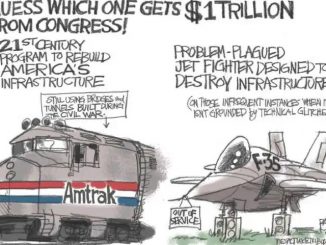
The U.S. Congress imposed a labor agreement on 115,000 railroad workers on December 1, disregarding the vote from four unions to reject it. That is how little real democracy there is in the United States.

The millionaires’ club on Capitol Hill could not even support giving sick days to railroaders chained to round-the-clock work schedules.

Why should a capitalist government running a world empire with hundreds of military bases and a dozen spy agencies intervene in this labor dispute? It involved less than one-thousandth of the workforce.

Aren’t railroads part of the “old economy,” like the factory workers labeled “metal bashers” by The Economist magazine? Haven’t railroaders become obsolete in the so-called information age?

People cannot eat algorithms. The Internet cannot move chemicals, cars or containers off-loaded from ships.

While computerization has destroyed the jobs of thousands of railroad clerks, it has not replaced the need for rail transport. It is the visibility of railroads that has declined.

Outside Amtrak’s Northeast Corridor and a few other places in the United States, passenger trains have virtually disappeared. The loss of millions of manufacturing jobs has also meant the loss of railroad jobs.

Yet deindustrialization, by increasing imports, also demands moving millions of shipping containers from the ports. The delays in the supply chain occurred not only on the docks but also in the railroad yards.

The seven “Class 1” railroads account for 94% of the industry’s revenues.

They are making more profits than ever, helped along by decades of deregulatory policies that began 40 years ago. The Union Pacific and Berkshire Hathaway’s BNSF ― which monopolize rail traffic west of Chicago ― raked in more than $12 billion in combined profits last year.

It is the number of rail workers that has fallen like a rock. There were two million workers on the railroads in 1920, accounting for more than 6% of the non-farm workforce.

The Great Depression helped reduce railroad employment to 1.5 million workers in 1947. Over the last 75 years, employment plunged 90% to just 147,800 railroaders on the job in November 2022.

That is a smaller number of railroad workers than there were in 1870, one year after the first transcontinental railroad was opened. This shrunken number of railroaders moves a million freight carloads a month and nearly a million containers.

Racism hurts all poor and working people

The elimination of more than 1.3 million railroad jobs since World War II ravaged communities coast-to-coast. This mass elimination was all the more painful because Black workers and women were finally being hired in many railroad crafts.

Charles Hamilton Houston, Dean of the Howard University Law School and mentor to future Supreme Court Justice Thurgood Marshall, fought against the industry’s Jim Crow hiring practices.

According to historian William H. Harris, “from 1928 to 1949, not a single Black person found employment on a class 1 railroad as fireman, brakeman, trainman, or yardman.” (The Harder We Run: Black Workers since the Civil War)

The loss of railroad jobs was deeply felt in Hamlet, North Carolina. The city was an important junction on the old Seaboard railroad, now part of the CSX system. CSX has a yard in Hamlet, while two Amtrak trains a day stop there.

Because of railroad job cuts, many workers had to seek employment at the non-union, low-wage Imperial Foods plant instead. Twenty-five workers were killed there on September 3, 1991, when a fire broke out.

The plant’s owner, Emmett J. Roe, locked the doors because he thought workers—many of whom were Black—would steal chickens.

White and Black workers died together because of Roe’s racism. Forty-nine children were orphaned.

Getting rich while workers die

Railroads were the largest U.S. industry of the 19th century and dominated the stock exchanges.

The Vanderbilts, who controlled the New York Central system, became, for a time, the country’s richest family. The Western Hemisphere’s greatest slumlords―the Astors―had millions invested in the Central.

Wall Street’s biggest banker, J.P. Morgan, manipulated railroad systems before and after launching U.S. Steel with a stock swindle.

Andrew Carnegie had been a division superintendent for the Pennsylvania Railroad before he became a steel boss. Carnegie’s first plant―now the last remaining steel mill in Pittsburgh―was named for Pennsylvania Railroad President Edgar Thompson. Most of Carnegie’s customers were railroads buying steel rails or steel bridges.

The Bush family also climbed capitalism’s bloody ladder via railroads. Samuel Prescott Bush was superintendent of motive power for Milwaukee Road.

He became manager of Buckeye Steel Castings, which made railroad wheels in Columbus, Ohio. The outfit was run by Frank Rockefeller, a brother of the world’s first billionaire, John D. Rockefeller.

Samuel Prescott Bush’s son Prescott Bush became a U.S. senator from Connecticut. More importantly, he was a partner in the Brown Brothers Harriman private bank that manages some of the biggest fortunes. The Harriman family controlled the Union Pacific, Southern Pacific, and Illinois Central railroads with more than 30,000 miles of track.

Besides laundering money for Nazi cartels, Prescott Bush was the father and grandfather of war criminals: President George Herbert Walker Bush and President George Walker Bush.

While these families were accumulating their riches, one in nine trainmen was injured in 1909. One in 205 was killed.

The response of the old Interstate Commerce Commission—abolished in 1996 in the name of deregulation—was to stop collecting these embarrassing statistics. (Economic History of the United States by Ernest Bogart)

Putting workers on a ‘rifle diet’

Workers revolted against these conditions in 1877. Railroad companies cut wages while doubling train size. Today’s Precision Scheduled Railroading has lengthened many trains to two miles or more while getting rid of 62,000 railroaders in seven years.

Pennsylvania Railroad President Thomas Scott declared the strikers should be put on a “rifle diet.” Dozens of workers were killed in Baltimore, Pittsburgh, Philadelphia and Reading, Pennsylvania.

Black educator Peter Clark, who had been an associate of Frederick Douglass, addressed strikers in Cincinnati.  (1877: Year of Violence by Robert V. Bruce)

In that same year, railroad boss Scott helped forge the rotten deal that betrayed Black people by overthrowing the Reconstruction governments in the South.

Eugene Debs led the biggest railroad strike in 1894. The former locomotive fireman and future socialist presidential candidate led the American Railway Union.

In solidarity with striking workers at the Pullman Company, ARU members cut Pullman sleeping cars off from trains. The boycott tied up trains across the country.

President Grover Cleveland sent in U.S. troops to break the strike. General Nelson Miles shot down workers in Blue Island, Illinois, a suburb of Chicago.

The military officer’s hat had earlier helped capture Geronimo and would later invade Puerto Rico in 1898.

The ARU was an industrial union that united workers in different crafts. But it did not represent all railroad workers.

By a vote of 112 to 100, ARU delegates refused to allow Black workers to join. To his credit, Debs urged accepting Black workers.

Debs should have resigned instead of leading a Jim Crow outfit. The worst scabbing comes from racism within the labor movement.

Black workers were kept out of railroad unions. They had to form their own labor organizations, as described in Brotherhoods of Color by Eric Arnesen.

The ARU did not even consider organizing Pullman porters. But in 1937, the Pullman Company signed a union contract with the Brotherhood of Sleeping Car Porters, led by A. Philip Randolph.

The BSCP, with its 18,000 members, helped lead the Black freedom struggle. Randolph organized the March on Washington Movement that forced President Franklin Roosevelt to set up the Fair Employment Practice Committee in 1941.

It was Pullman porter E.D. Nixon who, while going between Montgomery, Alabama, and Chicago three times a week, helped to organize the Montgomery bus boycott. Dr. King praised his work in Stride Toward Freedom.

A. Philip Randolph helped initiate the 1963 March on Washington for Jobs and Freedom, where Dr. King gave his “I Have a Dream” speech.

One of the ten demands of the march was a $2 per hour minimum wage. That is worth $19.39 in November 2022. The labor movement needs to demand a minimum wage of at least $20 per hour.

Jilting railroads

So why did the U.S. capitalist class turn its back on railroads? In 1955 only four corporations―AT&T, General Motors, U.S. Steel and Standard Oil of New Jersey―had more assets than the Pennsylvania Railroad.

Richard King Mellon―whose family controlled Alcoa Aluminum, Gulf Oil (and, hence, Kuwait), as well as what became the Bank of New York Mellon―was the most influential PRR director.

Right behind the Pennsy was the New York Central, which collected rent from Park Avenue skyscrapers. Texas oilmen Clint Murchison, Jr., and Sid Richardson backed Robert Young’s takeover of the Central in the 1950s.

The Pennsylvania and New York Central railroads merged on February 1, 1968, to form the world’s largest transportation company. When Penn Central declared insolvency on June 21, 1970, it was the largest bankruptcy until Enron and almost took Goldman Sachs with it.

Railroads lost their monopoly of land transportation to trucks. But that is not the entire story.

The collapse of anthracite coal mining doomed New England railroads. A railroad can’t lose money carrying coal.

Railroads had been such a bonanza that competing capitalists built lines that duplicated each other. Seven railroad companies connected Chicago and Council Bluffs, Iowa. All of them sought to bring freight cars off the Union Pacific to the Windy City.

The old Nickel Plate (now part of Norfolk Southern) was built between Chicago and Buffalo to exhort the Vanderbilts into buying it.

Railroads’ Achilles heel was what Karl Marx called the tendency of the rate of profit to decline. Surplus value―from which profit is derived―can only be made from exploiting living labor.

The tremendous amount of dead labor invested in railroad tracks, bridges, yards, signal systems, and locomotives became an albatross for capitalism. The capitalist state took over railroads throughout Western Europe.

The profitable railroads in the U.S. west and south needed Penn Central in order to exchange freight with it. The Sunday New York Times Magazine revealed that legislation creating Conrail ― which took over Penn Central ― was drafted by the Union Pacific’s general counsel’s office.

The U.S. government injected billions into Conrail, which was sold in a fire sale to CSX and Norfolk Southern. Conrail’s “modernization” included abandoning thousands of miles of track and getting rid of 4,000 block operators in the signal towers.

Deregulation, which includes the 1980 Staggers Act, served as a welcome mat for super-billionaire Warren Buffett to take over the BNSF railroad.

A brutal rationalization reduced Class 1 railroad mileage to fewer than 92,000 miles by 2020.

Thousands of miles are operated by “short lines,” which are often non-union.

Take over the railroads!

No one should have expected “Amtrak Joe” in the White House to help railroad workers. Biden was a loyal servant of the DuPont dynasty for 36 years as a U.S. senator from Delaware.

He collaborated with the super-racist Strom Thurmond to fight school integration. Biden pushed through legislation that helped increase the prison population to more than two million poor people.

Railroad management continues to push for one-person crews. The runaway train that exploded in Lac-Mégantic, Quebec, in 2013, killing 47 people, had just one crew member.

Yet the mere threat of a strike forced both the Union Pacific and CSX railroads to slightly modify their severe attendance policies.

As Frederick Douglass declared, “If there is no struggle there is no progress.”

One sign of a new spirit among railroad workers is the election of Eddie Hall as president of the Brotherhood of Locomotive Engineers and Trainmen, part of the Teamsters. Hall opposed the agreement that was forced on railroaders.

Any action by railroad workers will be welcomed by the multinational working class. It will inspire millions as the Black Lives Matter movement has.

The railroad monopolies do not only owe sick days and respect. They owe reparations.

Nine thousand miles of track in the South were laid by enslaved Africans before the Civil War. Thousands of additional miles were built by Black prisoners afterward. The steel-driving man, John Henry, was worked to death by the Chesapeake and Ohio, now part of CSX.

General George Custer had it coming, and he died for the Northern Pacific ― now owned by Warren Buffett’s BNSF ― that was invading Lakota Sioux land.

Railroads are a vital public utility like electricity, gas, and water. All these utilities need to be taken over by the people.

Source: CovertAction Magazine


Strugglelalucha256


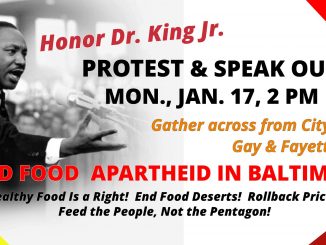
Honor Dr. King: Protest to End Food Apartheid in Baltimore, Jan. 16

MONDAY, JANUARY 16, 2023 AT 2 PM – 3 PM
Honor Dr. King Protest to End Food Apartheid in Baltimore
Gay and Fayette Streets, Baltimore

WE ARE COMING TOGETHER TO FIGHT FOOD DESERTS

Residents in four major communities in Baltimore have been actively countering food deserts. Each community has suffered major supermarket closings and or curtailing community efforts to feed people directly through gardens or other means. Of course, the problem of affordable, healthy food is not confined to these four areas — and we welcome every community.

These include: Pigtown/Washington Village; Sandtown-Matthew Henson – West Harlem Park – Bridgeview GreenLawn – Midtown Edmondson; Cherry Hill; and Oliver – Broadway/East – Johnson Square

The following demands are for discussion and are evolving based on community input. Let us know — Sign up and attend the Dr. King Jr. Rally on Monday, January 16, gathering 2 pm across from City Hall at Gay & Fayette Sts.

  • Create Opportunity Zones for these 4 areas — if Under Armour can receive “opportunity zone” status and downtown businesses can receive financial benefits, why not Baltimore’s neighborhoods.
  • Federal, State and City subsidized Markets.
  • Community control of vacant lots for people’s gardens.
  • Rollback food prices — lower requirements to extend food stamp programs especially for seniors & low wage workers.
  • Provide special transportation for seniors, youth, disabled & poor residents or arrange delivery of food.
  • Train and hire residents from each affected area for union jobs.
  • Protect and guarantee union rights for all workers in subsidized supermarkets.
  • Form Community Action Committees in each area.
  • Create a Citywide Commission made up of representatives from affected communities to determine action.
  • Mayor & City Council call for national aid – Feed the people, not the Pentagon.

Initiated by: Peoples Power Assembly; Matthew Henson Neighborhood Association; Unemployed Workers Union

Strugglelalucha256


Buffalo’s real bomb cyclone: Racism, capitalism and poverty

Capitalist government failure requires working-class organization and action

As of Jan. 5, at least 60 people nationally and 39 people in Erie County, New York, have been reported dead from Winter Storm Elliott. 

The majority of deaths – 31 – are from Buffalo, the third poorest city in the United States. Most of those who died were people of color. 

Forecasts of a “bomb cyclone” were made far in advance of the storm, as early as Dec. 19.  By Dec. 21, meteorologists reported “a once-in-a-generation storm” would arrive.  

Despite these warnings, there was no plan to save lives, either on the local, regional or national level. 

Individuals and families were left to fend for themselves. There were not adequate provisions for emergency shelter, delivery of food and supplies to people living in food deserts, or support for those freezing from lack of electricity and fuel. 

Lack of travel ban forced workers to report to jobs

A travel ban was not issued until 9:30 a.m. on Friday, Dec. 23, after most workers had already left for their shifts. Many workers, especially low-wage workers, live paycheck to paycheck. Without the needed travel ban, they faced firing or write-ups if they didn’t report to work.  

Meager wages also meant that there was little possibility of stocking up on food or preparing.

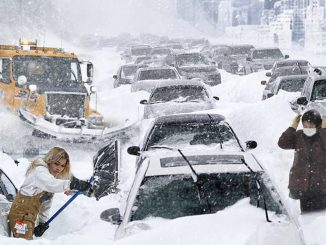
People quickly became stranded in their vehicles, leading to at least four deaths. Seventeen people were found dead in snow drifts, succumbing to hurricane-force winds and brutal cold.  

Nine people died in homes without heat after electricity and power had failed. Snow drifts of up to 12 feet trapped residents inside drafty and aging homes.

Buffalo’s aging infrastructure could not bear the stress. 

Topping the miserable deaths, residents of Buffalo’s primarily Black Eastside neighborhood complained bitterly of the lack of snow removal and resources in their neighborhood compared to Kenmore, a wealthy, predominantly white area. 

White supremacy and war 

Last year, on a speaking tour after his fact-finding trip in Donbass, John Parker of the Socialist Unity Party visited the site of the racist massacre at Tops Supermarket in Buffalo. 

In the aftermath of Winter Storm Elliott, Parker told Struggle-La Lucha: “The racist and anti-working class disaster in Buffalo could have been prevented. Over $100 billion to date has been poured into the U.S. proxy war against Russia and Donbass.

“In a matter of hours, Washington can ship arms to Ukraine, but not equipment and resources to deliver food, provide shelter and emergency health care to the people of Buffalo, especially to the Black community, to workers and the poor.”

Parker added: “Buffalo Mayor Byron Brown’s victim-blaming remarks calling ‘looters the lowest of low’ are not surprising. In the midst of the crisis, he diverted police from emergency assistance to protect businesses.” 

In the most recent mayoral race, Brown ran as a write-in candidate, with the full support of the Democratic and Republican party machines and the Police Benevolent Association after India Walton, a young Black woman from Buffalo’s Eastside, a supporter of the Black Lives Matter movement and self-proclaimed “democratic socialist,” won the Democratic Party primary.  

Cuba’s ‘Tarea Vida’ an example of what’s needed

Cuba, a small island which has suffered deeply from a criminal, six-decade-long U.S. blockade, is also disproportionately affected by climate change. Up to 10% of Cuba could be submerged by the end of this century, wiping out coastal towns, polluting water supplies and forcing 1 million people to relocate. 

The major object of Cuba’s Tarea Vida (Life Task) initiative is to protect lives and the resources people depend on.

Tarea Vida is divided into two parts: one to address the immediate climate crisis, and another longer-term plan. Dr. Helen Yaffe’s recent documentary, “Cuba’s Life Task: Combating Climate Change,” outlines this. 

Much can be learned from Cuba’s planning.

Workers and oppressed communities urgently need to organize and act. Our lives depend on it.  

This includes demanding that warehouses, schools and workplaces be fortified in tornado zones, and that adequate evacuation, food, housing and health care be organized in the Gulf of Mexico and coastal areas from Florida to Maine.

Unions and workers’ organizations must take up these demands now and deepen mutual aid work to save lives. During Winter Storm Elliott, the Buffalo Mutual Aid Group was one of the organizations that did its best to get out information, distribute food and provide a forum to communicate.  

What happened in Buffalo is not an isolated incident, nor is it an “act of god or nature.” Disasters like this will continue and become more frequent, affecting millions across the U.S. Nor is it confined to this country.

In fact, the climate crisis, directly rooted in the profits-before-people system of capitalism, is being felt globally – from devastating floods in Pakistan to deadly heat waves and droughts worldwide. 

To save the planet and the people, we must destroy capitalism!

Strugglelalucha256


Reflections on the passing of Wadiya Jamal

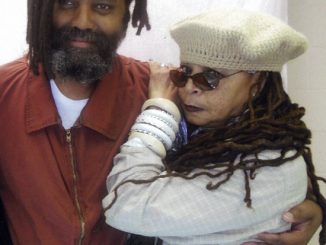
When I read the email message from Black Alliance for Peace on Dec. 27 stating Mumia Abu-Jamal’s wife, Wadiya Jamal, had transitioned, I was deeply saddened. 

I recovered from my state of shock, reading the many replies expressing love, light, and well-wishes to the family and friends of Wadiya and Mumia. I realized that I had to be strong, stay focused and continue the fight to bring Mumia home.

I grappled with how I was going to spread this news, and just talk to people about this tragedy without breaking the spirit of our fight to release Mumia and all political prisoners. It was a couple of days later when I checked Prison Radio, thinking that Mumia may have written something about Wadiya that I could share. I listened to the commentary below:

“Wadiya Jamal, my beloved.

“She was a spring baby, born in the first week of April 1953. A West Philly girl whose beauty made her shine in a crowd. She loved fiercely like a lion. This love blessed the lives of five beautiful children, and it blessed me.

“As mother and grandmother, she really shone like a sun over her planet, and when anyone was lost, her mighty love was cracked by such loss—her mother and father, her brother Jimmy, and perhaps deepest, the loss of the family’s baby, Samiya, was the deepest crack, the deepest past.

“After that, every December was a trial through darkness. We were all waiting for the first light of spring, for this dark fog to break. But it was not to be. Just after the holidays, her heart, her mighty heart, gave up. She loved like no one else ever.

“I love you, I will always love you. All the children and grandchildren love you and will always love you. Your smile was the only sunshine we ever needed, and we need it now. We love you, Wa-Wa. We miss you.

“With love, not fear, this is Mumia Abu-Jamal.”

How inspiring, how thoughtful. Hearing Mumia’s words turned on a light inside of me. How fortunate it is for me to be a part of this fight to release Mumia. I truly believe this fight is for his release, because Mumia is free. He is the freest person I know, and I know him only through his writings.

I have learned so much from this brother and there is always more to learn. I remembered reading and listening to his commentaries in “Father Hunger” and “Mother Loss” from “All Things Censored.” I recall the initial sadness, and as I continued reading, I felt some comfort when I thought of my own mother and father in a different way. His commentaries were filled with compassion and love.  

Mumia’s commentaries on his sister Lydia Barashango in 2011, and his daughter Samiya Abullah in 2015 (“Samiya makes her Transition” and “The Visit”) had a similar effect on me. Now his wife of over 40 years has made her transition and Mumia is writing words of wisdom, teaching us in his words how we should live our lives and be remembered and loved. 

We should live, love and be the best that we can be.

Mumia will be released. We the people will release him.

With love, not fear!

Send Mumia bereavement or condolence cards for the loss of his beloved wife, Wadiya Jamal, to:

Mumia Abu-Jamal
AM 8335
Smart Communications/PADOC
SCI Mahanoy
PO Box 33028
St Petersburg, FL 33733

Strugglelalucha256


‘Retemos las justificaciones para esta guerra de Estados Unidos’

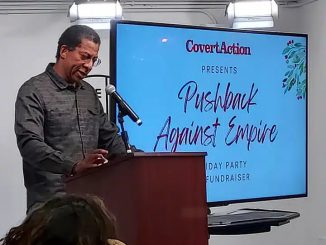
Charla pronunciada en “Pushback Against Empire”, una fiesta navideña y recaudación de fondos para la revista CovertAction en la ciudad de Nueva York el 1 de diciembre.

Si le gustan las historias de terror,  aquí tiene una. Es el documento de la Estrategia de Defensa Nacional 2022 del Secretario de Defensa de los Estados Unidos. Este  fue bendecido por el presidente Biden, a quien se cita en la introducción.

Desde el principio, cataloga a China, Rusia, Irán y la República Popular Democrática de Corea como amenazas a la seguridad nacional de los EUA. Y esta amenaza dice, debe enfrentarse haciendo que la OTAN sea aún más poderosa y tenga capacidad nuclear, especialmente en lo que respecta a Rusia.

Pero en términos de prioridades, establece que China es el objetivo número uno. Esto se hará, declara el documento, provocando altercados en la región del Indo-Pacífico utilizando a Japón, Corea del Sur, Australia y cualquier país del sudeste asiático que Washington pueda reclutar para lanzar una guerra desde el Mar de China Meridional hasta el Mar de China Oriental. Esta semana hubo un altercado muy serio en el Mar de China Meridional entre EUA y China debido a los ejercicios de guerra estadounidenses allí.

Como si eso no fuera suficiente, el documento dice que EUA debería comenzar a entrenar y armar a Taiwán en una guerra asimétrica (o guerra de guerrillas) contra China. Así que prepárese para que sus impuestos financien otra guerra que cueste esta vez, cientos de miles de millones de dólares. Y desafortunadamente, es posible que tengamos  que contrarrestar a un movimiento contra la guerra en los EUA que probablemente culpará a China cuando ese país se vea obligado a responder a las provocaciones y amenazas a su seguridad y soberanía. Eso es lo que pasó con Rusia.

¿Qué debemos aprender de este documento y la estrategia de Rand Corporation publicada hace tres años que planea las provocaciones contra Rusia? No importaba lo que hiciera Rusia; los imperialistas tenían un plan de acción que estaba decidido a causar la guerra por cualquier medio, independientemente de las acciones de Rusia.

El problema nazi de Ucrania

Mientras investigaba la guerra en Ucrania en la región de Donbass en mayo pasado, visité un hospital para pacientes con tuberculosis en Krymskoye que había sido acondicionado para la guerra por el ejército ucraniano. Fueron obligados a irse una semana antes por la Milicia Popular de Lugansk y los soldados rusos.

Observé proyectiles de 122 mm utilizadas por Kiev para destruir las casas a solo una milla de distancia en Solkinyki. Estos proyectiles también se utilizaron para atacar a las familias que entrevisté en el norte de Rubizhne, en un refugio que había albergado a 350 personas que huían del asalto militar ucraniano a sus edificios de apartamentos.

Aunque el ruido fuerte que escuchaba a menudo por los continuos bombardeos de las fuerzas ucranianas era perturbador, las personas en ese refugio me dijeron que se sentían mucho más seguras que antes ahora que las tropas rusas los protegían y les proporcionaban agua, alimentos y otros elementos esenciales para sobrevivir.

Debo mencionar que en ese hospital de tuberculosis, había una esvástica gigante pintada en la pared, y junto a ella, el sonnenrad,  un símbolo apropiado por los nazis en la Segunda Guerra Mundial y utilizado hoy por el Batallón Azov de Ucrania.

Cuando algunas personas dicen que el problema nazi de Ucrania es “menor”, ignoran cruelmente a las 10 personas negras asesinados en el supermercado Tops en Buffalo, Nueva York, por un supremacista blanco de 18 años, llevaba el emblema del Batallón Azov, el mismo sonnenrad que vi en la pared de Krymskoye.

Este joven dijo que se inspiró en el neozelandés Brenton Tarrant, quien mató a 51 musulmanes en una mezquita. En su manifiesto, Tarrant escribió que estaba en contacto directo con el Batallón Azov y planeaba ir a Ucrania para recibir entrenamiento militar.

En 2019, la revista Time entrevistó a un ex-agente del FBI que admitió que 17.000 supremacistas blancos habían ido a Ucrania para recibir entrenamiento militar. Azov y sus socios han utilizado parte de los miles de millones de dólares que Ucrania ha recibido en financiamiento y capacitación de los EUA desde 2014, para construir una presencia muy exitosa en las redes sociales dirigida a los jóvenes marginados.

Borrando a la gente del Donbass

La narrativa de Rusia como invasor, solo la pueden mantener mediante la desaparición de las más de 6 millones de personas en la región de Donbass que han sido objetivo durante más de ocho años por un ejército dirigido abiertamente por neonazis. Para el 22 de febrero del 2022, el bombardeo de la región se había multiplicado por 20 en siete días, a 1.400 bombardeos por día. Kiev acumuló 150.000 soldados en la frontera, preparándose para una masacre genocida.

Por eso, el 23 de febrero, las Repúblicas Populares de Lugansk y Donetsk solicitaron formalmente la protección de Rusia.

Si quiere saber cómo es realmente el imperialismo, considere esto: según el Programa de las Naciones Unidas para el Desarrollo, la congelación de los activos de Afganistán por parte de Estados Unidos está provocando la hambruna de 1 millón de niñas y niños. Con solo un gesto, Biden podría detener eso hoy, pero no lo hará. Ahí se ve el verdadero poder imperialista, la verdadera maldad.

Sin cuestionar las principales justificaciones de esta guerra, simplemente estamos permitiendo que se arraiguen mentiras que, en el peor de los casos, obtendrán apoyo popular para las estrategias imperialistas de EUA y en el mejor de los casos, alentarán la resignación y la apatía.

Es toda la verdad lo que finalmente inspirará a nuestra clase trabajadora a actuar. Y cualquier movimiento por la paz efectivo debe estar conformado abrumadoramente por nuestra clase obrera multinacional y los movimientos populares que luchan contra el racismo, por los derechos sindicales y los derechos de los inquilinos, por los derechos de las mujeres y LGBTQ2S, por el derecho a la autodeterminación de haitianos, palestinos, indígenas, y pueblos negros, latinos y oprimidos.

Todos estos componentes son necesarios para que un movimiento por la paz tenga algún poder real porque estas son las fuerzas más atacadas por el imperialismo estadounidense a nivel nacional e internacional. Son estas fuerzas las que más tienen que ganar al detener las guerras imperialistas que roban los recursos necesarios para la supervivencia de sus hijos. Y estas son las fuerzas de cuya explotación depende esta bestia económica para sobrevivir.

Por lo tanto, contienen poder potencial real.

Strugglelalucha256


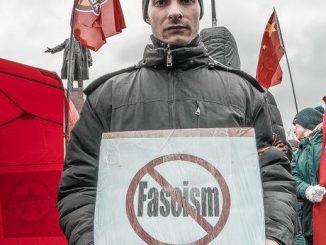
Honor the legacy of Dr. Martin Luther King: Unite to fight racism, fascism and war


As 2023 begins, it’s undeniable that a dangerous, virulent fascist movement is spreading through U.S. society.

Dr. Martin Luther King Jr. famously said in 1967, “The bombs dropped on Vietnam explode at home.” Malcolm X expressed something similar when he said, “Chickens come home to roost.”

Feeding the U.S. war machine boomerangs by increasing repression, decreasing rights, and robbing people of desperately needed resources here at home. Promoting fascism abroad facilitates its growth here.

It’s seen in the spread of hate-ridden protests against drag story hours, sometimes attended by armed neo-Nazis, who threaten children, parents, and LGBTQ+ communities, and in the bomb threats targeting medical facilities that provide gender-affirming care to trans children and abortion services to people who can become pregnant. 

It takes the form of mass shootings, like the massacre of 10 Black people at Tops grocery in Buffalo, New York, five queer people at Club Q in Colorado Springs, and 19 students and two teachers at an elementary school in Uvalde, Texas. We recognize it in the targeting of electrical grids from North Carolina to Washington state to sow fear.  

At the local level, the fascist influence is evident in the rash of attempts by astroturfed “parents’ groups” to ban books that expose the racist history of the U.S. or validate the lives and experiences of LGBTQ+ people.

At the state level, we see it in the efforts by officials in Texas, Ohio, Florida, and elsewhere to eradicate trans health care, criminalize parents who support trans children, and create a lynch-mob atmosphere against women and others who choose to get an abortion.

At the national level, there is the far-right-controlled U.S. Supreme Court, which gutted voting rights, struck down the constitutional right to abortion, and seems poised to do the same to same-sex marriage. 

Looming over it all is the shadow of Jan. 6, 2021, when an organized fascist mob attempted a coup d’etat at the Capitol in Washington, D.C., to keep Donald Trump in power – aided and abetted by a faction of the Pentagon.

Fascist tendencies have existed in the U.S. since it began its rise as an imperialist power in the late 19th century – from the Ku Klux Klan to the John Birch Society to today’s Proud Boys and Oath Keepers. Sometimes the ruling class of bosses, bankers, and landlords keep them on a tight leash.

But when times are tough, when they fear the masses of poor and working people could unite and fight back against their unjust capitalist system, the fascists are let off their leash to spread division and, if necessary, physically exterminate those the rich and powerful fear most.

U.S. spread fascism in Ukraine

As top dog of the world imperialist powers – including Britain, Japan, and the European Union – the U.S. has long upheld fascists in its efforts to wring the maximum profits out of the world’s people.

Washington has abetted fascist dictatorships or those with strong fascist aspects, from the Shah of Iran to Suharto in Indonesia, from Pinochet in Chile to Áñez in Bolivia.

During the Cold War against the USSR, the U.S. encouraged the growth of violent fascist movements like the Organization of Ukrainian Nationalists and its post-World War II successors. The U.S. and Canada harbored its leaders, gave them money and weapons, and encouraged their hate propaganda against multinational Soviet socialism.

The many neo-Nazi movements in Ukraine today, like Right Sector and Azov Brigade, are descendants of this lineage.

But that’s not all. The destruction of the USSR and European socialist camp 30 years ago brought economic devastation and plummeting life expectancies. Washington stepped into the ideological vacuum to spread division and prevent a revolutionary response to the cataclysm. 

One way it did this was by spreading U.S.-style white supremacy through the capitalist media. Another was to encourage far-right U.S. evangelical movements to spread anti-LGBTQ+ and anti-woman hate. 

This happened under both Democratic and Republican administrations and prepared the ground for the growth of fascist movements and reactionary government policies in Eastern Europe that plague the region today.

Donbass resists fascism

I’ve been writing about Ukraine since the U.S.-backed Maidan coup toppled the elected government in early 2014. Fascist groups were at the heart of this “revolution of dignity.” They hobnobbed with the likes of the late Republican Senator John McCain and Democrat Victoria Nuland, who today is Joe Biden’s Under Secretary of State for Political Affairs.

I’ve interviewed, spoken to, and visited courageous Ukrainian anti-fascists who resisted. Many were forced to flee east to avoid death. Others were imprisoned and later traded in exchanges for captured Ukrainian soldiers. Today many of them are fighting on the side of the Donbass and Russia.

The neo-Nazis who provided the backbone of Maidan went on to massacre 48 unarmed activists at the Odessa House of Trade Unions on May 2, 2014. None of the perpetrators have been punished. Many survivors, however, were jailed or driven into exile.

Washington preferred its new puppet regime in Kiev to be fronted by more media-friendly faces like oligarch Petro Poroshenko or TV comedian Volodymyr Zelensky. But it made sure the fascists became integral to the repressive bodies of the state, including the Armed Forces of Ukraine, providing them extensive training in the use of Western-supplied weapons.

These neo-Nazis, under various names, also set the tone for the new regime’s virulently anti-Russia and anti-communist ideology. One of the government’s first acts was to ban the use of the Russian language – the daily language of those living in eastern Ukraine. They spoke of working-class residents of the east – especially in the Donbass mining region – as “insects” and “subhumans” to be cleansed.

The writing was on the wall. People in the east – and antifascists throughout the whole of Ukraine – rose up. In most places, they were violently suppressed. But in the Donbass regions of Donetsk and Lugansk, the people seized power and declared themselves independent anti-fascist republics.

Ukraine – with the backing of the U.S. and the NATO military alliance – then waged war on the people of Donbass for eight years, killing more than 14,000 people and setting the stage for the escalation of the conflict between Ukraine and Russia in early 2022.

Fascism must be fought

For a few years in the late 2010s, articles sometimes appeared in the U.S. corporate media highlighting Ukraine’s “Nazi problem.” Some even exposed links between the Ukrainian far right and white supremacist groups in the U.S., like the Rise Against Movement, which participated in the white supremacist riot in Charlottesville, Virginia, where anti-racist protester Heather Heyer was murdered in 2017.

This is not surprising. It’s common practice for U.S. media to be used to keep dependent regimes in line, to remind them that “we made you, and we can break you.”

But when Washington, Wall Street, and Big Oil decided in 2021 that it was time to go full-speed ahead with a proxy war against Russia, those kinds of exposés vanished. Once Russia was backed into a corner and forced to intervene militarily to prevent a genocidal slaughter in Donbass, any discussion of Ukraine’s “Nazi problem” became an unspeakable heresy for the media and liberal mouthpieces on social media.

Today it is common to see Ukrainian soldiers in the media sporting fascist symbols. But the media ignore the symbols, and anyone who dares to point them out is labeled an agent of Vladimir Putin.

The people of Donbass don’t have that luxury. They had to fight, arms in hand, to protect themselves from the fascist threat, and today they must continue to do so as Ukraine rains bombs, mines, and artillery on civilian targets in Donetsk and other cities.

Unite against fascism and imperialism

It’s a tragedy of history that those fighting the rise of fascism in the U.S. and Ukraine are mostly unable to recognize one another. 

Just as imperialism spread hate propaganda in the former Soviet countries to sow division, so has it co-opted the language of protest movements, the tactics of anarchism and social democracy, and used nonprofits to confuse people in the West and turn natural allies against each other.

A growing grassroots movement in the U.S. is resisting fascist threats on the lives of the most marginalized communities. This is a great reason for hope. 

However, if this movement cannot recognize other genuine anti-fascist struggles and learn from them, if it does not learn about the class nature of imperialist war, it will remain isolated and unable to respond to the underlying causes of fascism.

What’s lacking is not only a basic, class-conscious understanding of what fascism is and how to fight it. The fundamental Marxist understanding of imperialism and war, as explained by Lenin, has been lost to many movements that have emerged in the 21st century. 

Opposition to imperialist war and support for its military defeat is not based on political agreement with the non-imperialist countries under attack but an understanding that imperialism’s defeat is a fundamental prerequisite to liberation. 

Those who claim to want liberation for LGBTQ+ people in Russia and women in Iran, freedom for Palestine, or a socialist future for Ukraine and Venezuela but who do not do everything in their power to facilitate the defeat of U.S. imperialism internally and externally are misguided at best.

There’s a fundamental commonality between the anti-fascists who fight arms in hand in Donetsk and Lugansk and the armed anti-fascists who defend queer spaces in Texas. 

Those who held mass protests in Ukraine against the Maidan coup and those who came out in the streets to defend drag story hour in Queens, New York, are part of the same fight – even if those on both sides cannot see it at the moment.

It’s the job of communist revolutionaries to build bridges of understanding and mutual struggle.

Marxists have revolutionary optimism because we know history never presents people with a task without the means to carry it out. The knowledge, tactics, and forces to defeat imperialism and fascism exist. The numbers who understand them are small for now. 

But circumstances demand that knowledge be shared, studied, and put into practice. We must prepare to do so, even if we have to fight to get a hearing.

Strugglelalucha256


Puerto Rican prisoner of conscience, Ana Belén Montes, to be released

Puerto Rican political prisoner Ana Belén Montes is set to be released from a federal prison in Texas on January 8, 2023. This upcoming release marks a victory for the movement to free Puerto Rican prisoners of conscience. Belén Montes is a former U.S. intelligence analyst who was sentenced to 25 years in prison on October 16, 2002, for espionage on behalf of the Cuban state. She pleaded guilty to the charges levied against her, testifying before the court, “I obeyed my conscience rather than the law. I believe our government’s policy toward Cuba is cruel and unfair, profoundly unneighborly, and I felt morally obligated to help the island defend itself from our efforts to impose our values and our political system on it.”

Ana Belén Montes was one of the top Cuba analysts working for the Defense Intelligence Agency (DIA) before she was arrested on September 21, 2001, ten days after the September 11 attacks on the World Trade Center. According to the U.S. government, her arrest was motivated by a fear that she could leak information about the U.S.’s planned invasion of Afghanistan the following month.

Belén Montes used her influential position within the U.S. government to influence policy toward Cuba. One example was in 1998 when she wrote policy that softened the Pentagon’s assessment of the threat posed by Fidel Castro, at a time when Cuba was on the U.S. list of State Sponsors of Terrorism (the U.S. removed Cuba from this list in 2015, only to re-add the nation in 2021).

“An Italian proverb perhaps best describes the fundamental truth I believe in: ‘All the world is one country,’” Belén Montes testified at her sentencing. “This principle urges tolerance and understanding for the different ways of others. It asks that we treat other nations the way we wish to be treated—with respect and compassion. It is a principle that, tragically, I believe we have never applied to Cuba.”

According to ProLibertad, an organization fighting for the release of Puerto Rican political prisoners in the U.S., Belén Montes has had to endure near-complete isolation for the two decades of her incarceration. When she was initially incarcerated, she was restricted to a degree in which she did not have access to television or newspapers and could not interact with any other inmates. As of the past few years, her visits and correspondence are limited to a list of only 20 people who she knew before incarceration.

“[Belén Montes] understood that the Cuban people have been and continue to be victims of constant attacks by an atrocious, inhuman, unjust imperialism that should not be,” Puerto Rican journalist Luis De Jesús told Peoples Dispatch.

“And she took the side that she understood was the most correct. And this, no matter what you think of Ana Belén Montes, is to be admired.”

“It is a gratifying moment to know that she is finally going to be out of prison, but not quite an achievement, because we know that the causes that led Ana Belén to do what she did and to defend the Cuban people as she defended them, still exist, because the Cuban people are still victims of those attacks,” De Jesús continued. “I wish that we didn’t have to have more figures like Ana Belén Montes in the future. That the relationship between Cuba and the United States could be one of brotherhood and solidarity, based on internationalism, as all bilateral relations should be.”

Strugglelalucha256


‘They shot them down like animals’: massacre in Peru’s Ayacucho

On December 15, 2022, while helicopters flew overhead, members of Peru’s national army shot down civilians with live bullets in the outskirts of the city of Ayacucho. This action was in response to a national strike and mobilization to protest the coup d’état that deposed President Pedro Castillo on December 7.

On December 15, hundreds of university students, shopkeepers, street vendors, agricultural workers, and activists gathered at the center of Ayacucho to express their discontent over the removal of Castillo and continued their mobilization toward the airport. Similar action was witnessed in several other cities across the southern Andean region of the country.

As protesters approached the airport, members of the armed forces opened fire and shot tear gas canisters directly at them. The firing by the army from the helicopters proved to be the most lethal. As the hundreds of unarmed people ran for their lives, the shooting continued.

Ten people were killed as a result of this violence inflicted by the army, and dozens more were injured, according to official numbers provided by the ombudsman’s office. At least six people are still fighting for their lives in hospitals in Peru’s capital Lima and in Ayacucho. Autopsies of 10 of those who died in Ayacucho show that six of the victims died from gunshot wounds to the chest. The youngest was just 15 years old.

On December 27, Reuters reported how one of these fatal victims in Ayacucho, 51-year-old Edgar Prado, was shot and killed while attempting to help someone else who had been shot down during the protests.

The exceedingly violent response of the security forces to the anti-coup protests across Peru was widely condemned. A delegation of the Inter-American Commission on Human Rights (IACHR) visited the country from December 20 to 22 to receive testimonies from local human rights organizations and victims about the violent repression suffered by protesters and also spoke to families of the 28 fatal victims. The delegation traveled to Ayacucho on December 22.

More than a dozen other family members, Ayacucho inhabitants, organizers, and a couple of independent journalists, including myself, waited on the sidewalk of one of the city’s narrow and colorful streets as the meeting was underway. As people came and went, much of the events and tragedies of December 15 were recounted.

The massacre

“They won’t show you this on the news here,” Carmen (name changed) told me as she showed me a video on her phone of a young boy with blood all over his shirt being dragged to safety by fellow protesters. “That’s her nephew,” she said, pointing to a woman sitting on the ground.

Pedro Huamani, a 70-year-old man who is a member of the Front in Defense of the People of Ayacucho (FREDEPA), was accompanying the victims waiting outside the IACHR meeting. “We have suffered a terrible loss,” he told me, “I was present that day in a peaceful march toward the airport.”

“When they began to shoot tear gas grenades and bullets at us, I started to choke, I almost died there,” Huamani said. “I escaped and went down to the cemetery, but it was the same, we were trying to enter and they started to shoot at us from behind. Helicopters were flying overhead and from there they shot tear gas grenades at us, trying to kill us.”

Carmen brought over some of her friends and one of them, who was wearing a gray sweatsuit, told me, “We all live near the airport, and saw everything happen. You should’ve seen how they shot them down like animals. We tried to help some of the injured, but it was hard.”

The massacre in Ayacucho, as well as the violent repression across the country, has only intensified people’s demand that Dina Boluarte step down. Boluarte was sworn in on December 7 immediately following the coup against Castillo. In interviews and public addresses, she has justified the use of force by police against protesters calling their actions as acts of “terrorism” and “vandalism.”

Huamani, while shaking and holding back tears, said: “She is a murderous president and in Huamanga, we do not want her, nor do we recognize her as president because this woman ordered the police and the army to shoot at us Peruvians. And these bullets, these weapons, are really bought by us, not by the army, nor the soldiers, but by the people. And for them to kill us is really horrible.”

The anger felt by Ayacucho residents is also linked to the historical undermining of Peruvian democracy and the economic exclusion suffered by the regions outside of Lima. Huamani explained: “They took out our president [Castillo] so this is not a democracy. We are not a democracy, we are in [state of] war, but not just in Ayacucho and Huamanga, but also in Arequipa, Apurímac, Cusco. In these regions, we are suffering from poverty, we can no longer survive, we are dying of hunger… and these right wingers want to make us their slaves, but we won’t permit this because we are responding and resisting.”

Old wounds ripped open

December 15 was not the first time civilians in Ayacucho were massacred by the Peruvian armed forces. Many who were present on December 15 said that the warlike treatment received by the peaceful protesters was reminiscent of the days of the two-decades-long internal armed conflict that Peruvians suffered through more than 20 years ago.

“They still treat us as if we were all terrorists,” a family member of one of the victims of the protests pointed out.

As part of the state’s campaign against the guerrilla insurgency, it tortured, detained, disappeared, and murdered tens of thousands of innocent peasants and Indigenous people, accusing them of supporting or being part of the insurgency.

The population of Ayacucho was one of the hardest hit. According to reports by the Truth and Reconciliation Commission, which was set up to look into the human rights violations, of the estimated 69,280 fatal victims of the internal armed conflict in Peru from 1980-2000, 26,000 were killed or disappeared by state actors or insurgent groups in Ayacucho. Thousands of people that fled their towns for the city of Ayacucho during the conflict continue to search for their loved ones and demand justice.

One of them is Paula Aguilar Yucra, who I met outside the IACHR meeting. Like more than 60 percent of people in Ayacucho, Indigenous Quechua is her first language. The 63-year-old is a member of the Ayacucho-based National Association of Relatives of Kidnapped, Detained and Disappeared of Peru (ANFASEP). She fled her rural community in Usmay for Ayacucho in 1984 after her mother was killed and her brother was taken by soldiers and never seen again.

Nearly 40 years later, she mourns again. Her grandson, 20-year-old José Luis Aguilar Yucra, father of a two-year-old boy, was killed on December 15 by a bullet to the head as he attempted to make his way home from work.

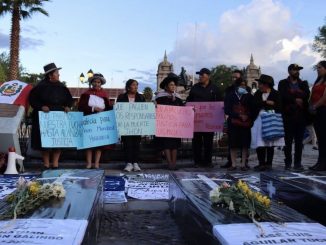
In a vigil held on the afternoon of December 22, Paula stood tall with the other members of ANFASEP and held a sign reading: “Fighting today does not mean dying tomorrow.

This article was produced by Globetrotter. Zoe Alexandra is a journalist and co-editor of Peoples Dispatch.

Strugglelalucha256
https://www.struggle-la-lucha.org/2023/01/page/8/