
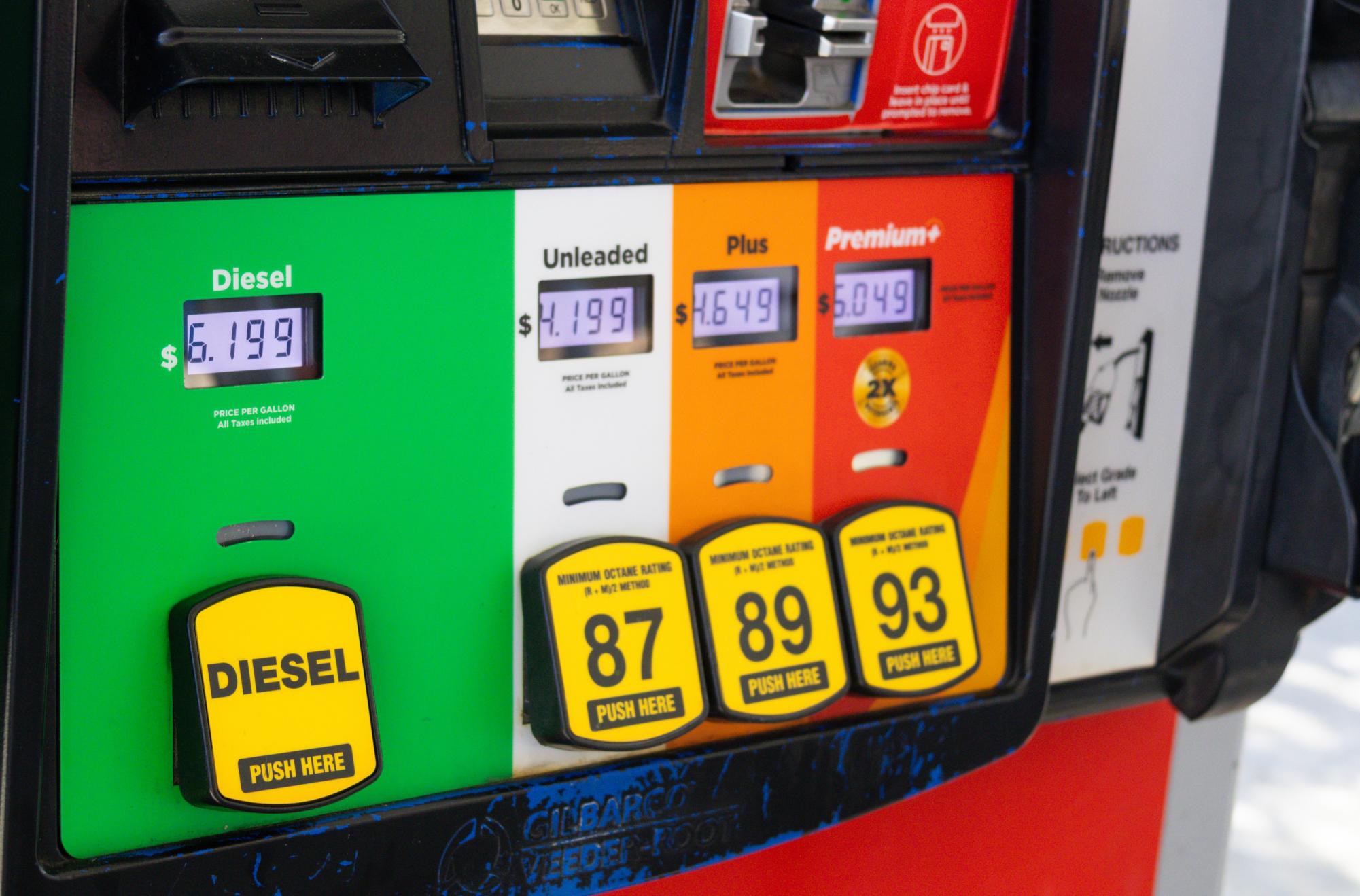
Donald Trump, war criminal in chief, announced an immediate “energy ceasefire” between Russia and Ukraine on Oct. 11, 2026. According to Trump, the truce will help lower global energy prices. Since the imperialist adventure into Iran, the prices of crude oil, natural gas, gasoline, and diesel have all spiked.
There is no doubt that various energy barons like BP, Chevron, and ExxonMobil have raked in the profits since the war began due to the surge in costs. One of the main factors driving the surge is the restriction on shipping through the Strait of Hormuz.
However, other sectors of the global economy, including air travel, metallurgy, and housing, have suffered due to the energy price surge. Delta’s fuel bill has doubled this year. Rocket Mortgage reports that the energy-driven inflation from the war on Iran has kept mortgage rates high and slowed home buying.
Whenever capitalists face pressure, so do the politicians whom they back. There is no reason to believe this is different for the Trump administration. Compounding this pressure are looming midterm elections, which could see Trump’s political rivals retake Congress. All of this to say, the Trump administration has motivation for trying to convince certain sectors of the economy and the public generally that they are committed to decreasing energy costs.
But as with all U.S.“ceasefires” brokered by the U.S. in the last several years, the premise of the truce should be questioned. Two come to mind. First, when a core purpose of the proxy war via Ukraine with Russia was to disrupt Russian energy distribution, why has the Trump administration suddenly turned to Russian diesel? Second, does the Trump administration even want energy prices lowered?
Regarding the first question, there is little reason to believe that the United States actually wants energy intervention into the market from Russia. Everything the U.S. government, and particularly the Trump administration, has done over the past decades or so points towards wanting to absorb or destroy other energy producers. This policy can be seen in Venezuela, Iraq, and Iran. If U.S. interests cannot profit from the extraction and sale of whatever energy resource, intervention is required. In Iraq and Venezuela, this intervention resulted in military incursions and the deposing of a head of state. In Iran, the result is not yet clear as the war continues.
If the U.S. was so interested in “help” from Russian energy markets, it would not have advocated so strongly against the Nord Stream pipeline … a pipeline that was destroyed early in the Russo-Ukrainian war under suspicious circumstances.
There is also another elephant in the room regarding the first question. That is the status of the United States as a neutral third party in the war between Russia and Ukraine. This idea is a complete farce, put forward to neutralize war weariness and absolve the U.S. of responsibility. Without the United States and its arm, NATO, there would be no war. Ukraine on its own was not remotely militarily or economically equipped to wage a protracted struggle against a country of the literal and economic size of Russia. Yet, as the war has worn on, Ukraine has not only held along a large point of contact, but it has expanded strikes against infrastructure, data centers, and energy targets deep inside Russian territory. Make no mistake, these are U.S. strikes on Russia.
Since the start of the war, the U.S. has not only materially made the war possible, but has woven itself into the entire Ukrainian military structure. Even the New York Times admitted as much last year. All of this information points to a truth long understood by many: the war is not actually between Russia and Ukraine. This war is between Russia and the United States/NATO. Historically, the United States is not in the habit of assisting those on the other side of the battlefield. This energy ceasefire needs to be examined for what it is: just another tactic meant to mislead the public and the global community while it plans further war.
Regarding the second question, the short answer is … unlikely. It is extremely unlikely that the Trump administration is legitimately interested in decreasing energy prices. If there is any interest, it is only to do so short term as to relieve political pressure ahead of midterm elections.
While any U.S. politician represents the interest of capital broadly, there is no doubt certain parts of the U.S. government or certain U.S. political figures are backed by certain parts of the ruling class. And for as long as Trump and his MAGA movement has been a player on the global political stage, Big Oil has played a crucial role in placing them there.
In the 2024 election cycle alone, oil and gas interests gave nearly $250 million in political contributions to Trump’s campaign or pro-Trump super-PACs. Trump himself is heavily personally invested in major oil and gas. When their profits go up, so do his.
Two years since the election, Big Oil is richer than ever, with roughly $125 billion in profits in the first half of 2026 alone. Never has there been a capitalist interested in surrendering huge profit margins once they have begun. Due to the numerous imperialist wars, whether against Russia or Iran or Yemen, all have significantly contributed to soaring energy prices and soaring profits for oil and gas barons.
Don’t believe Trump’s energy ceasefire hype, or any of his ceasefire hype. His job, and the job of the entire capitalist government, is to keep the money flowing. That is exactly what they will do.
Join the Struggle-La Lucha Telegram channel