
Washington, D.C., October 3, 2026
Secretary of State Rubio got the jump on ‘Sanctions Thursday’ unveiling his new sanctions and revisions to the OFAC Frequently Asked Question website on Tuesday, September 29. Thursdays have been the usual day for the new installment of unilateral coercive economic measures tightening the hardship noose on the Cuban people. Please watch this @Aguajefilms animation. OFAC, the Office of Foreign Asset Control, is part of the US Treasury Department that partners with Rubio to enforce the US economic war on the Cuban people and polices Cuba travel for US residents.
These new measures once again demonstrate Rubio’s declaration that the US will act to block any effort by the Cuban government to meet its Constitutional obligations to the Cuban people for health, education, housing and equal rights to a dignified life.
Cubans call it a war, and it is a cruel one, first outlined in the now infamous once-secret Mallory-Rubottom State Dept. memo April 6, 1960 that prescribed US adroit and inconspicuous measures to create hardships to provoke the overthrow of the Cuban people’s revolution. The six-decade-long economic, financial and commercial blockade hasn’t worked. Even after Cuba’s major Cold War-era trading partners were destroyed, their economy grew.
US-Cuba diplomatic relations uplifted the ‘interests section’ to the Embassy of the Republic of Cuba and unilateral coercive economic measures relaxed, a little. Direct commercial flights from US airports to cities across Cuba and cruise ships boosted visits, even though ‘tourism’ was still expressly forbidden by US laws. Millions of US residents saw Cuba for themselves, not through the official US distortions. Then COVID-19 profoundly changed the world, slashing Cuba’s important tourism economy to zero while increasing the expense of and stress on Cuba’s universal free health care system. Then a new US administration saw an opportunity to “take Cuba” for capitalism through a “maximum pressure” campaign.
But is there another US strategy in motion at the same time?
A September 25 Bloomberg article suggests that Rubio’s strategy is more than creating unendurable hardships for the Cuban people. And also gives context to the 7,000+ undelivered containers stranded at ports throughout the Caribbean.
The immediate shipping disruption began in May 2026, triggered by May 1 US Executive Order 14404. CMA CGM and Hapag-Lloyd, which combined represent 60 percent of global shipping with Cuba, publicly confirmed sanctions-compliance risk caused them to suspend new bookings to and from Cuba.
At the same time, Bloomberg reports a dramatic surge in shipping to Cuba from US ports. “As of late August, the US flotilla had delivered nearly 720 million pounds of goods to Cuba from Miami, Houston, New Orleans, Jacksonville, Wilmington and other ports. Exports to Cuba are up 60% through July compared with the same period last year and more than all of 2024, US Census data show.”
A UPI headline confirms that the US becomes Cuba’s top 2026 supplier through July and reports that: “Just three years ago, the United States ranked 10th among Cuba’s trading partners.”
Bloomberg seems to conclude: “The US is now trying to use exports to make Cuba financially dependent on Washington — essentially taking the place of the Soviet Union during the Cold War and Venezuela more recently.”
“The Trump administration is allowing increased trade with the island’s nascent private sector to head off a humanitarian and immigration crisis, as well as to displace the Cuban government as the country’s primary supplier of goods and services, according to a person familiar with the strategy who requested anonymity to discuss sensitive matters.”
But the new sanctions choke the Cuban private sector that blossomed after renewed diplomatic relations in favor of US-based businesses. US bank accounts and u-turn accounts among non-US initiators and recipients are now not only blocked but frozen.
A Reuters interview with Deputy Prime Minister and Minister of Foreign Trade and Foreign Investment Óscar Pérez-Oliva Fraga reported by Radio Rebelde agrees with Bloomberg: “Pérez-Oliva noted that Cuba has previously stated that, through these actions, the US administration also seeks to increase the island’s economic dependence on the United States — ‘but based on coercion, threats, and blackmail against foreign companies.’ That relationship, he pointed out, ‘should develop naturally if the blockade were lifted.’”
Creative planned solutions
At the same time friends in Cuba report that although everything is available in Cuba, the high prices and inflation make necessities uncertain and often out of reach for Cuban families. The US is quietly attempting to impose capitalist relations by making the US the exclusive controlled source for Cuba’s economic relations as a means to erode underpinnings of Cuba’s sovereignty.
However, the creativity and planning of Cuba’s socialist economy demonstrates human-based priorities to solving the challenges presented. The water delivery crisis caused by the US fuel siege affects 90 percent of the system.
The Cuban government announced an initiative reported by the Granma Newspaper to build 200 MW of solar power capacity dedicated specifically to the capital’s hydraulic infrastructure by 2027. Before the solar parks are completed, authorities are deploying distributed generators to support 29 critical water supply sources and drivers as an interim fix.
Time to end the US war on Cuba
The movement to end the blockade of Cuba once and for all is growing throughout the United States, North America, the Caribbean and around the world. The NoWarOnCuba.com (NWOC) Campaign is calling for a Global Day of Action October 28, the date of the 34th UN General Assembly vote against the blockade of Cuba, part of a week of action from October 24 to October 31.
An immediate focus on elected officials running for office or campaigning in the run-up to the midterm elections November 3 encourages contact by phone, email and especially in person calling on statements opposing the energy siege and blockade. Representatives and Senators must co-sponsor HR 7521 or its companion in the Senate, S 136, the US-Cuba Trade Act. Although this legislation will be reintroduced with new numbers when the next Congress convenes in January 2027, let’s make it clear the people will not accept less than Congress act to finally free Cuba from the blockade and let Cuba live.
The NWOC Campaign encourages outreach through report-backs from recent brigades and other Cuba travel, coordinated banner drops, petitions and tabling to bring the demand to unblock Cuba at the next No Kings demonstrations and electoral campaigns. Post your action on the website. Let’s build together. Let’s go to Cuba. Let’s end the fuel siege and blockade.
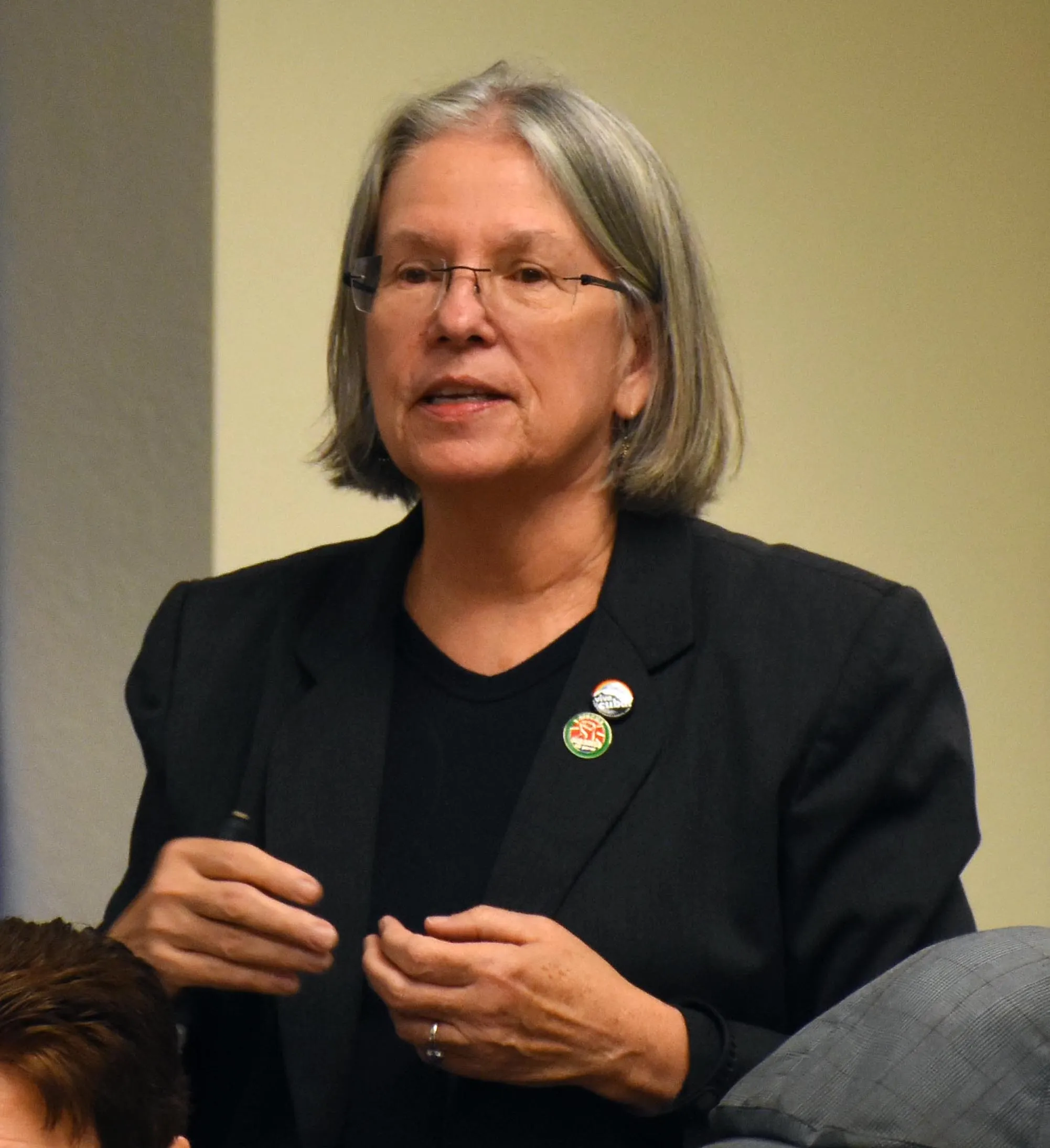
Cheryl LaBash is a co-chair of the National Network on Cuba and a recipient of the Cuban Medal of Friendship.
Source: Resumen Latinoamericano – US
Join the Struggle-La Lucha Telegram channel