
Washington, D.C., Sept. 4, 2026
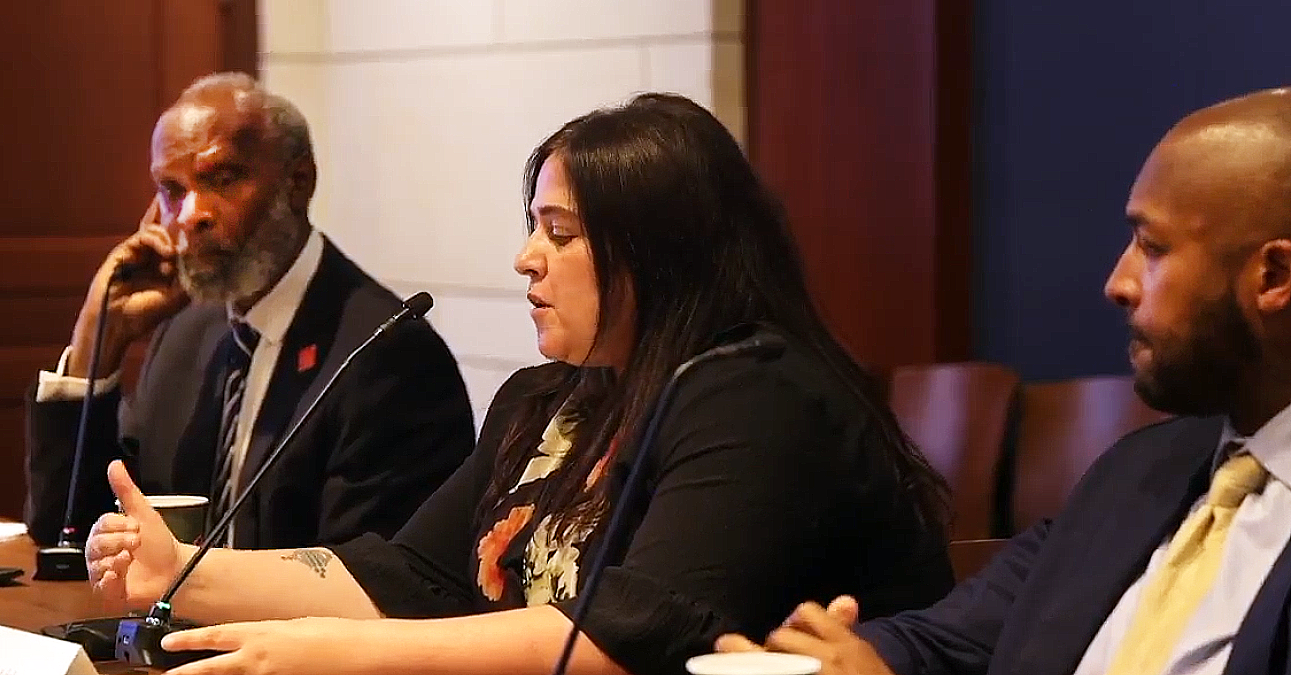
On Sept. 2, 2026, Congresswomen Delia Ramírez and Ilhan Omar hosted a shadow hearing in Congress on “Breaking the Blockade: Reassessing the Moral and Legal Failures of U.S.-Cuba Policy.” A shadow hearing, called by the minority party, has all the formalities of an official hearing of Congress. Four witnesses gave testimony about the current state of life in Cuba under the oil blockade imposed by the Trump administration in January 2026, and the additional coercive measures that have been steadily imposed since then.
Dr. Tania Zakrison of the University of Chicago Medical Center described a “humanitarian catastrophe” caused by cumbersome licensing and state over compliance with sanctions, which mean that supplies are not available to prevent loss of limbs in diabetes patients, for example, and that children and cancer patients are dying for lack of medicines. The lack of oil to fuel the electrical grid and pump water has caused a severe water shortage. “One-third of the population now has no water at all and are digging into the ground to drink muddy, untreated water,” said Zakrison. This, coupled with a lack of supplies such as IV fluid bags, is contributing to the recent doubling of infant mortality; research clearly attributes the causality of thousands of excess child deaths to the blockade. Food production is down 60% since January 2026. Doctors “are bearing witness to the preventable deaths that we in the U.S. are causing.”
Rev. Dr. Robert Turner of Empowerment Temple in Baltimore visited Cuba in July 2026. “What I found was not a hostile, defeated, nor broken people. I found peaceful, loving, resilient, ingenious people surviving decades of a U.S. embargo and now a blockade that has turned survival itself into a daily act of will.” Our government “has decided that disagreement over the political and economic system justifies collective punishment. That is more than reprehensible,” said Turner. “It is sinfully wicked and an abuse of the power God has allowed America to possess. … What I saw was a constructed crisis, suffering manufactured by policy — our policy.”
Attorney Suzanne Adely, president of the National Lawyers Guild, listed several ways in which the U.S. blockade of Cuba violates international law and is repeatedly condemned by the international community. Yet it escalates, and is now accompanied by threats of illegal U.S. military aggression. She stated: “The U.S. justification — that Cuba poses an ‘extraordinary threat’ to national security — is legally untenable. A small island subjected to six decades of economic warfare cannot credibly threaten the United States. Likewise, Cuba’s designation as a ‘State Sponsor of Terrorism’ is arbitrary and politically motivated. It contradicts objective counter-terrorism criteria and ignores documented violations by other states, undermining the credibility of the list itself.”
Adely indicated that while Cuba is under siege and being denied the right to sovereignty, the U.S. is arguably committing crimes against humanity and possibly even genocide.
Félix Sharpe Caballero, a Cuban American living in Detroit who frequently visits family on the island, said: “I testify at great peril. There is a lot of patent hostility in the Cuban American community. But to be silent would be a betrayal.”
“The injustices perpetrated on the Cuban people today have reached the point, quite frankly, of genocide. We are using hunger, lack of medicine, electricity to cook and draw water, food, and basic hygiene products … on the Cuban people to achieve the economic overthrow of the Cuban government. There are 7,000 containers sitting across the world that are not being delivered to Cuba because of State Department activity. The United States of America has been fighting a proxy war on behalf of the Cuban American aristocracy in South Florida.”
Caballero has learned from his physician cousin in Havana what happens to babies in the neonatal intensive care unit when the power goes out. As his voice cracked, he said that “some of those babies are not going to recover when the power comes back on.”
With other members of her Progressive Caucus in attendance, including Reps. Pramila Jayapal, Maxine Dexter, Jonathan Jackson, Chuy García and Rashida Tlaib, Ramírez concluded the session by saying that “this shadow hearing is just the beginning.” She urged people in the United States to raise the profile of the issue. “We have to talk about Cuba every single day until it becomes part of our algorithm.”
She vowed to keep pressuring her colleagues to pass three key pieces of legislation:
- R.7521 and its companion S. 136, the United States-Cuba Trade Act, to lift the blockade.
- Resolution 1056 to Annul the Monroe Doctrine, which calls for “terminating all unilateral economic sanctions imposed through Executive orders, and working with Congress to terminate all unilateral sanctions, such as the Cuba embargo, mandated by law.”
- Con.Res. 106 to stop unauthorized military action in Cuba.
Ramírez’s concluding words were: “May we not remain silent at a time of injustice and what feels like a quiet genocide on the Cuban people. We will end this blockade. It’s the responsibility of Congress to do its darn job to end it.”
It is also the responsibility of all people of conscience to make sure that happens.
A video recording of the shadow hearing is at facebook.com/repdeliaramirez/videos/1562548254766621
Source: Resumen Latinoamericano – U.S.
Join the Struggle-La Lucha Telegram channel