
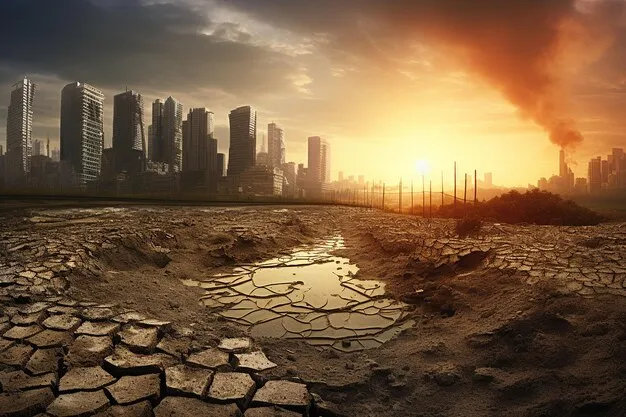
The news, although scientists and political leaders have been predicting it for years, is alarming: Losses from natural disasters reached $100 billion in the first half of 2026, according to a study by the Swiss Re Institute.
Among the major disasters analyzed are the earthquakes in Venezuela, Colombia and Indonesia, which the study calls “a stark reminder that earthquakes remain a constant risk for much of Latin America and the world, with the potential to devastate lives, communities, and local economies in an instant.”
In Europe, heat waves and drought have hit people hard and driven up mortality in several countries. In Germany, heat-related deaths in the summer of 2026 have reached 14,000.
About 9,600 of those deaths were recorded in a single week in late June, when temperatures in Germany topped 104 degrees Fahrenheit (40 Celsius), according to the Robert Koch Institute.
In Spain, the National Institute of Public Health has recorded nearly 4,500 heat-related deaths since June 1. French health authorities reported more than 7,300 deaths over the same period.
In late August, wind-driven fires burning across large areas of the western U.S. were wiping out whole communities in a matter of hours.
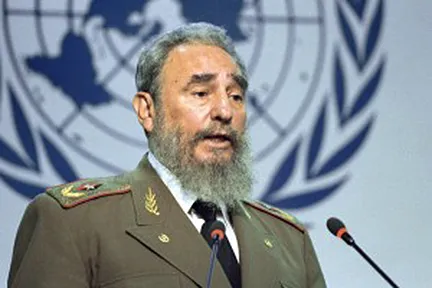
The visionary words of Fidel
That is why the words of the leader of the Cuban Revolution at the Earth Summit held in Rio de Janeiro, Brazil, in June 1992 resonate more powerfully around the world with each passing day, when he predicted:
“An important biological species is at risk of disappearing due to the rapid and progressive destruction of its natural living conditions: humankind. We are only now becoming aware of this problem when it is almost too late to prevent it. It is necessary to point out that developed societies are primarily responsible for the atrocious destruction of the environment.”
A study led by the University of Oxford and published in the journal Nature Sustainability found that if global warming reaches 2 degrees Celsius (3.6 degrees Fahrenheit), some 3.79 billion people will be living under severe heat conditions by midcentury.
That is nearly double the number affected in 2010, and it shows that the climate crisis is advancing far faster than earlier projections suggested.
Latin America stands out among the most critical regions, even if the 1.5-degree Celsius (2.7-degree Fahrenheit) limit is not exceeded.
The researchers stress that extreme heat is a direct threat to public health, warning of rising deaths from heatstroke and cardiovascular disease.
Successive heat waves and the intense drought gripping Europe have also driven agriculture into an unprecedented crisis, with losses concentrated in vegetable and cereal crops, where “catastrophic” harvests are expected, according to a recent report in the British newspaper The Guardian.
In France, broccoli production has fallen 60%, peas 40% and artichokes between 50% and 100%. The corn harvest could drop 35% from 2025, to around 9 million tons — a level not seen since 1980.
Livestock farming has been hit as well, The Guardian reported. French producers report declines of 10% to 15% in milk production, while hay for winter feed is running about 30% below the historical average. Egg production has fallen by nearly 1 million eggs a day because of high bird mortality during the heat waves.
The same is happening in other countries. More than 60% of Italy’s farmland is suffering some degree of drought, with losses topping $3.4 billion. In Spain, cereal harvests have dropped sharply in several regions, and the wine sector expects a 20% decline in production in 2026.
Another study, by DTU Space and published in the Journal of Geophysical Research: Solid Earth, reports that climate change is hitting the Arctic at an accelerating pace, with major ice loss in Greenland. For 28 consecutive years, the Greenland ice sheet has lost more ice than it gains, posing a serious threat to human and natural environments worldwide.
The Greenland ice sheet is one of the planet’s largest freshwater reserves, holding the equivalent of 24 feet (7.4 meters) of global sea level rise. Every 0.4 inches (1 centimeter) of that rise exposes about 6 million people to coastal flooding.
Flooding on that scale in densely populated areas would set off a mass displacement of people — climate refugees — from low-lying areas.
As ocean temperatures rise, hurricanes will grow more violent and more dangerous, leaving behind wrecked cities, ruined crops, shattered infrastructure, hunger and disease.
That is why, time and again, we must reread Fidel Castro’s prophetic speech in Rio de Janeiro, when he declared with force and conviction: “Forests are disappearing, deserts are expanding, billions of tons of fertile soil are being washed into the sea every year. Numerous species are becoming extinct. Population pressure and poverty are leading to desperate efforts to survive, even at the expense of nature. It is not possible to blame the Third World countries for this — colonies yesterday, nations exploited and plundered today by an unjust world economic order.”
And we are left only to ask: Will the developed countries, the ones most responsible for this danger, finally face the situation, or will they wait until it is too late for everyone?
Hedelberto López Blanch is a Cuban journalist. He writes for the newspaper Juventud Rebelde and the weekly Opciones. He is the author of “Cuban Emigration to the United States,” “Secret Stories of Cuban Doctors in Africa” and “Miami, Dirty Money,” among others.
Source: Radio Havana Cuba. Translation by Ed Newman.
Join the Struggle-La Lucha Telegram channel