
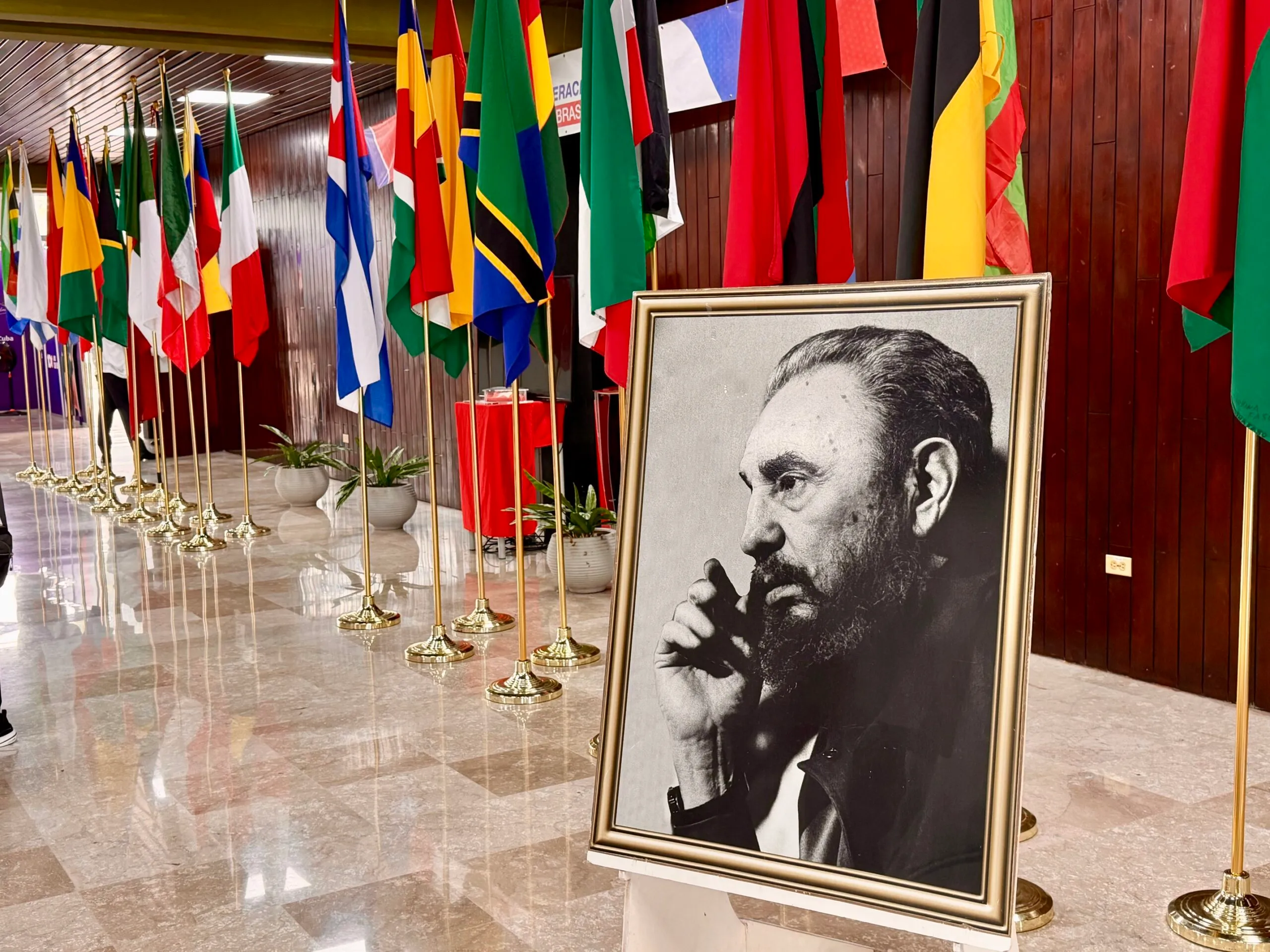
Being a revolutionary is an identity built through the decisions a person makes, the positions they take, and the paths they choose to follow. In Fidel Castro’s case, that identity began to take shape from his earliest years.
He could have followed the traditional channels of politics. Even under a dictatorship in the 1950s, he could have become one of the many leaders of the Orthodox Party who advocated negotiated solutions, electoral participation, and the pursuit of political power within the established limits. But he chose a different path. It was the most difficult one: the revolutionary path.
On July 26, 1953, leading a group of largely unknown young men, Fidel Castro spearheaded the assault on the Moncada Barracks, one of Cuba’s main military strongholds outside Havana. The action caught a country by surprise and ended in military defeat and harsh repression against its participants. Yet Moncada marked a turning point. From that moment on, Fidel’s political trajectory became closely associated with an idea that would recur throughout his life: the possibility of turning what seemed impossible to many into reality.
That became a constant in his political history. Fidel repeatedly made decisions that challenged conventional calculations about what was possible and what was not. His revolutionary politics rested, to a significant extent, on the belief that the limits imposed by circumstances could be transformed through political will and social mobilization.
In 20th-century Latin America, the fall of a dictatorship did not necessarily mean a break with the structures that had sustained the previous order. In many cases, political changes simply gave way to new forms of economic-elite dominance and the continued influence of major powers.
The overthrow of Fulgencio Batista on January 1, 1959, could have resulted in a limited transition: the end of the dictatorship, the reorganization of institutions, and the restoration, under new forms, of many of the economic and political structures that had existed before the 1952 coup.
Instead, the Cuban Revolution moved toward a profound transformation of the country’s economic and social structures. Agrarian reform, nationalizations, the literacy campaign, and the expansion of education and healthcare were accompanied by a gradual rupture with the United States and the construction of a new political and economic model.
Cuba found itself confronting the world’s leading power. The Bay of Pigs invasion in 1961 and the subsequent confrontation with Washington placed the island at the center of the Cold War. The U.S. economic blockade became one of the main factors shaping Cuba’s economic life in the decades that followed. Fidel had taken on a challenge that far exceeded the dimensions of his country.
From a small Caribbean nation, with limited material resources and shaped by a colonial and neocolonial past, the revolutionary project sought to build an alternative to the dominant capitalist model and to project its ideas beyond the island’s borders.
Cuba’s influence began to be felt across different international arenas. Education, healthcare, international cooperation, and solidarity became some of the main instruments of that projection. Cuban professionals traveled to different countries, and the island acquired an international presence far greater than its geographic size or economic weight might have suggested.
In this way, Fidel Castro’s figure acquired a dimension that transcended Cuba. The island became a symbol of sovereignty, resistance, and emancipation in the face of the great powers. Even those who disagree over Fidel’s legacy can hardly deny the historical magnitude of his impact. He did not emerge from a major economic power or from the center of the world system, but from a small island located on the periphery of the headquarters of global capitalism.
Source: Resumen Latinoamericano – US
Join the Struggle-La Lucha Telegram channel