
July 6, 2026
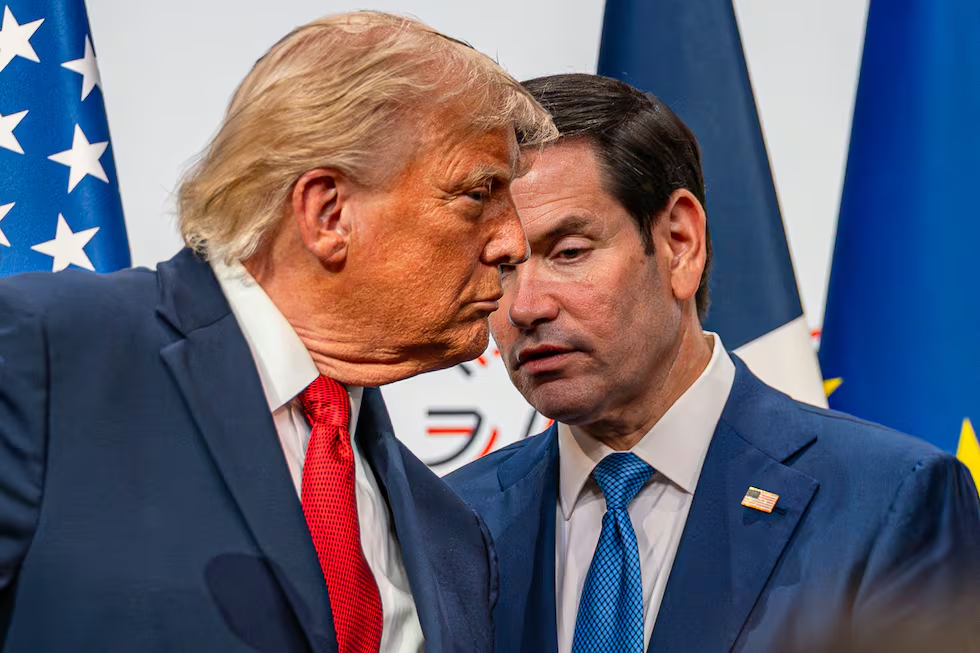
A diplomatic cable leaked to The Nation, a U.S. news outlet, indicates that the State Department instructed its embassies to pressure both allied and non-allied governments to withdraw their support for Cuba at the upcoming United Nations assembly, which will address the intensification of the blockade. Marco Rubio acts as if he were a viceroy of the empire, waiting for a humanitarian crisis to erupt on the island.
The United States has taken its aggressive policy toward Cuba several steps further, escalating its criminal blockade and implementing all manner of measures designed to bring the island’s economy to a collapse. Faced with the likelihood of another negative vote on July 7 at the United Nations against its strategy of economic suffocation, the State Department decided to pressure each country individually through its embassies. The revelation of this plan, conceived by Marco Rubio, the head of U.S. diplomacy, was published in The Nation by journalists Peter Kornbluh and Ken Klippenstein, who based their report on a leaked cable dated July 1 that details, over three pages, the news that Cuban Foreign Minister Bruno Rodríguez Parrilla had anticipated during the week of June 29. He called Washington’s coercive threats “unprecedented pressure” aimed at preventing another setback at the UN.
This time, it is not about the General Assembly session scheduled for October 27, where Havana traditionally calls for an end to the blockade. Rather, it is a request for a new session that Cuba is making in light of “the urgent situation” caused by the increasing number of attacks on its economy.
The Nation obtained access to a diplomatic cable classified as SBU (Sensitive but Unclassified), titled “Engaging UN Member States in the July 7 Open Debate of the General Assembly on Cuba.” It contains instructions from Rubio for U.S. embassies around the world to pressure the countries where they are stationed with the aim of sabotaging the debate that the island requested for July 7.
The U.S. wants to prevent the assembly from taking place at all costs, according to the SBU cable. But if it fails in this attempt, the publication maintains that the White House encourages “closely aligned member states to issue statements rebuking Cuba for its devotion to a completely discredited economic theory, its gross incompetence, and its massive corruption.”
This is the “unprecedented” nature to which Rodríguez Parrilla referred in his statement, as it constitutes “an urgent situation because the United States’ multidimensional aggression is already underway and exists.” The strategy of the far-right regime led by Donald Trump distinguishes between countries that align with its policies — such as those that fell in line under Washington’s tutelage in March 2026 under the so-called “Shield of the Americas” — and the rest.
These include Argentina, Bolivia, Chile, Costa Rica, the Dominican Republic, Ecuador, El Salvador, Guyana, Honduras, Panama, Paraguay, and Trinidad and Tobago. This list of Latin American nations governed by right-wing or far-right presidents will vote in favor of any U.S. initiative. With Abelardo de la Espriella’s arrival in the Colombian government, it is expected that his country will also join the group in the future.
For the non-aligned nations, the order issued by Rubio is categorical. They must “refrain from making any statements.” A direct, undisguised diplomatic threat, as stated in the cable published by The Nation. These countries must be “extremely careful in the wording of any statement” and are warned that the United States “will pay close attention to their comments … and advises against raising issues that could create friction in our bilateral relations.”
The information published by Kornbluh and Klippenstein describes how an attempt is being made to impose a global gag order on the United Nations community. The strategy of the Washington hawks delves deeper into the realm of diplomacy, reminiscent of the “Big Stick” policy or Operation Condor — in this case, in its 21st-century 2.0 version.
The leaked cable also exposes the U.S. narrative, based on ambiguous rhetoric that applies a historic double standard. The State Department claims that it is “deeply concerned about the Cuban people” and that it “has offered $100 million in aid,” but the humanitarian argument is so hypocritical that successive statements against the blockade at the United Nations contradict it. The 33 consecutive votes since 1992 — all of which ended in defeat for the U.S. and its few allies, including Israel as a privileged partner — demonstrate the failure of diplomacy in its most aggressive, imperialist form.
The article published on July 2 in the U.S. media outlet notes: “Blaming Cuba for the growing humanitarian crisis, while the Trump administration wages an open economic war against the island — an oil embargo, sanctions against foreign companies operating there, threats against nations seeking to provide humanitarian aid to Cuba — has become a favorite pastime in Washington.”
Persistently and against the will of the majority of the international community, the United States disregards or reduces the role of the UN to a caricature. The organization’s High Commissioner for Human Rights, Volker Türk, denounced on June 8 that “sanctions packages so severe that they target entire sectors of an economy and produce broad, indiscriminate, and severe effects on populations are incompatible with the basic principles of international human rights law.”
Türk was unequivocal in his statements: “Children are dying because doctors lack access to essential supplies and medications. This is unacceptable,” and he asserted that the United States is unleashing “the perfect storm” against Cuba.
The debate to be held at the United Nations General Assembly on July 7 could set a precedent with far-reaching consequences in the near future — whether the assembly engages in self-censorship and assumes the role of a docile follower of Washington, or reaffirms the spirit of the successive votes against the blockade that have dealt the U.S. one defeat after another.
Source: Derribando Muros (Breaking Down Walls). Translated from Spanish.
Join the Struggle-La Lucha Telegram channel