
June 25, 2026
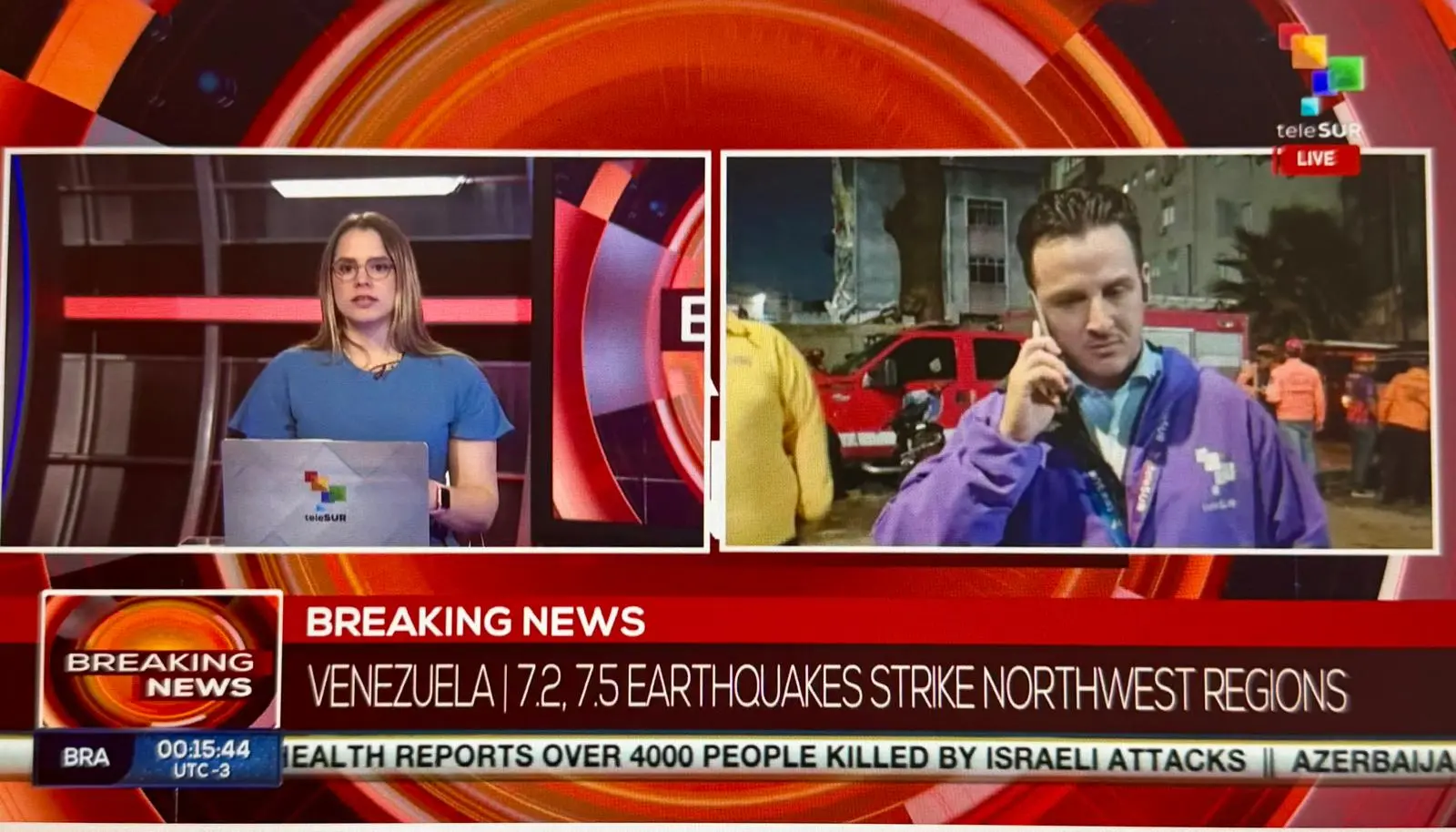
The teleSUR building in Caracas withstood the impact of the two earthquakes, magnitudes 7.2 and 7.5, that shook Venezuela on Wednesday, June 24. But the scars remained. There were walls scratched by the fury of the telluric movement, fallen ceiling tiles and traces of shattered glass from several computers that crashed to the floor.
What happened at 6:05 p.m. on June 24 was terrifying. First, an alarm went off on the phones of everyone at the station, warning of the earthquake. In the confusion, we understood what was happening only when the floor began to vibrate — first gently, then brutally.
We rushed down narrow staircases, swaying from side to side like a ship in turbulent waters. The walls cracked behind us. I feared a stampede. No one was prepared for an event so sudden and violent in a country that, though it lies between the Caribbean and South American tectonic plates, has not experienced a disaster of this magnitude since last century.
Minutes later, we were on the air. We reported live from the studio, feeling every aftershock. There have been more than 140 since Wednesday night. What we experienced was the preamble to the true disaster, which took on a face and proportions as teleSUR’s uninterrupted broadcast progressed, sustaining itself for 24 hours since that Wednesday afternoon.
For several hours, the image remained the same. Calm amidst the chaos. The people have maintained an admirable discipline. But the shock does not ease; although we are out of danger, we are not indifferent to the pain.
In Chacao, one of the Caracas municipalities hardest hit by building collapses, we saw rescuers raise their fists, demanding absolute silence over the ruins of Residencias Rita. There, a young woman wept, clinging to the debris of her home. Beneath the concrete slabs, three members of her family remained trapped. After several minutes of absolute silence, we learned the worst certainty: there were no longer any signs of life. With time running out, the rescue team had to pack up its tools and move to another site where there was a greater chance of a miracle. She was left weeping over the dust.
The tragedy struck a country in the middle of a national holiday, as St. John the Baptist was being commemorated. Amidst the collapse of a residential building in the San Bernardino community, a man who managed to run out in time saw the walls confine three of his family members, including a 21-year-old youth. Before the national television cameras, his face broken by tears, the man wasn’t speaking to the reporter; he was imploring the Baptist directly, on his own feast day, for the miracle of seeing them again.
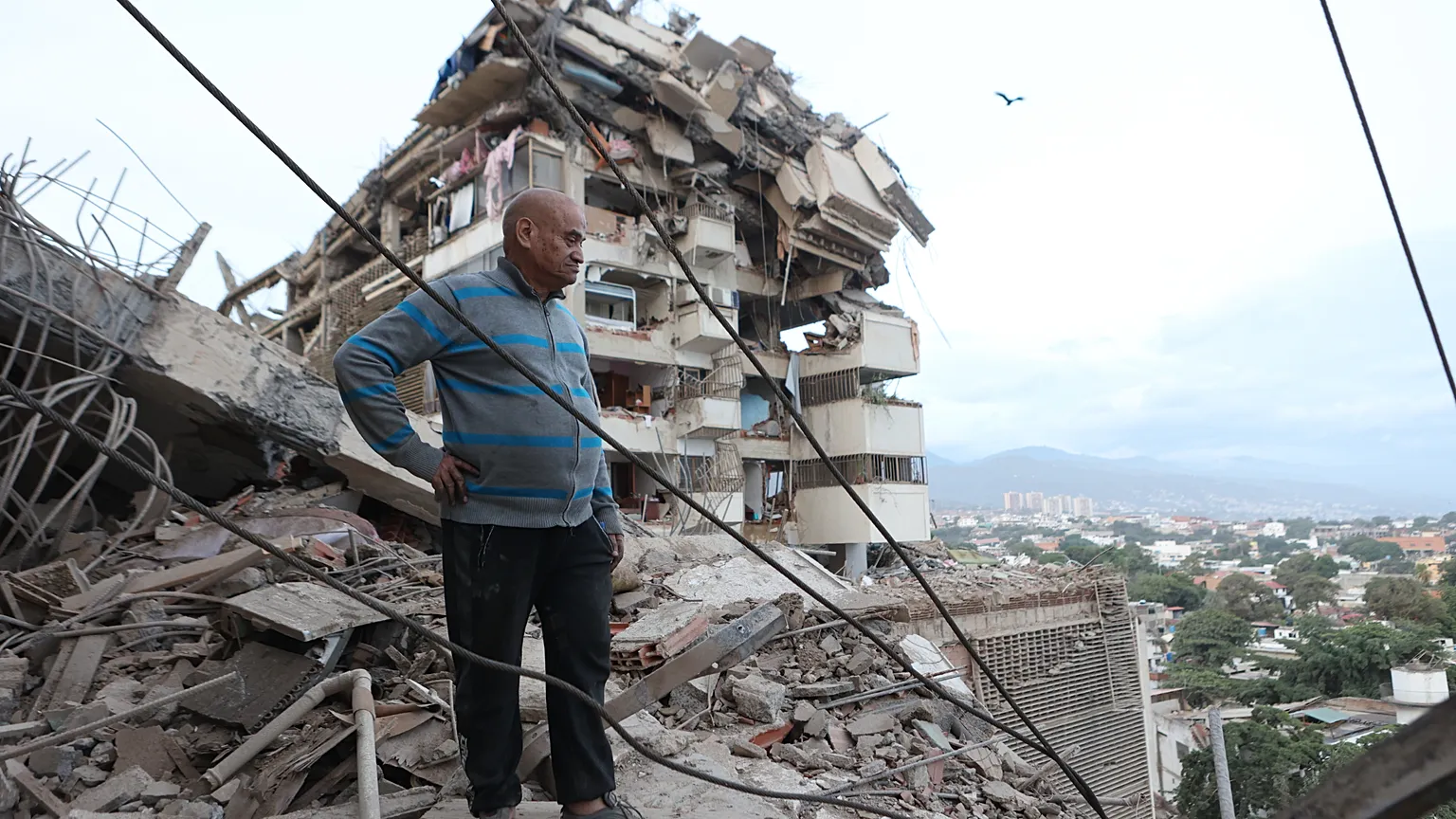
In La Guaira, the landscape is one of absolute desolation, with hundreds of structures turned to dust and some 70,000 lives fractured by grief and material loss. The cruelest face of the catastrophe is reduced to a single corner: a mother, holding a baby just two days old in her arms, wanders among the ruins of what was her home, trying to shield her son from the cold and the elements after losing everything.
That is the most painful crack of this tragedy; a fracture that, nevertheless, has exposed the most deeply human and supportive essence of the Venezuelan people. Images of pain blend with those of tenderness. On one of the sidewalks of the capital, an elderly man wrapped in blankets rests on an improvised chair, guarded and comforted by a network of neighbors who refuse to leave him alone.
The response to the tragedy began long before any official directive. In Chacao and the rest of the affected areas, state brigades work hand in hand with community neighbors. Everything is used to clear debris, from heavy machinery to bare hands, hammers or any other improvised tool. In this tragedy, the first line of defense has been the people.
Twenty-four hours after both earthquakes, the victims are not alone. Rescue brigades from all latitudes are arriving in the country to help with the rescue operations, which are already beginning to blend with local groups. Meanwhile, solidarity is also triggering a chain reaction: people are already gathering donations of clothing and food, determined to lift up, hand in hand, those who were left with nothing.
Alejandra Garcia is a Latin American correspondent for Resumen Latinoamericano and an evening anchor for teleSUR English.
Source: Resumen Latinoamericano – English
Join the Struggle-La Lucha Telegram channel