
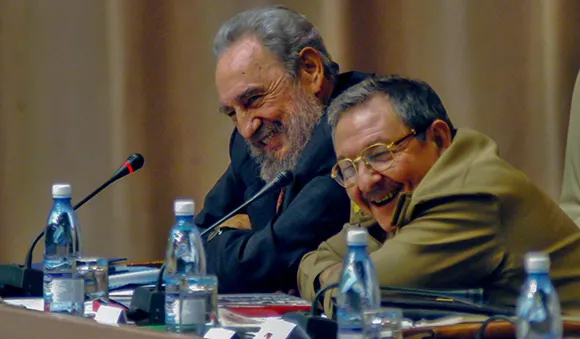
The Trump administration’s decision to pursue an indictment of former Cuban President Raúl Castro (2008–2018) over the shoot-down of two Brothers to the Rescue aircraft in February 1996 has drawn attention amid broader allegations of U.S. double standards. Analysts and political figures point to the contrast between this legal action and reported U.S. military operations in the Caribbean and eastern Pacific that have destroyed small boats and resulted in nearly 200 deaths, without any legal accountability.
The contradiction is difficult to ignore. From this perspective, the indictment is seen as part of a broader pattern in which senior Cuban officials are pursued for actions that aimed to defend national sovereignty, while comparable use of force elsewhere is treated differently. To many in Cuba, the latest attempts against Castro, brother of Cuba’s historic leader Fidel Castro, are inseparable from the long and contentious history between Havana and Washington, one marked by bombings, assassination plots, armed infiltrations, and attacks against civilian targets by militant terrorist groups based in Miami, Florida.
Those figures associated with violent campaigns against Cuba lived openly in the United States with no legal consequence, while Cuban leaders who defended the island against those threats are now portrayed as criminals. To many in Cuba and across Latin America, this reflects a selective application of international justice, one in which geopolitical adversaries are prosecuted while allies or politically useful actors are protected.
Raúl Castro, within the Revolution, is not merely a former head of state, but one of the principal architects of Cuba’s national defense and sovereignty. During the severe economic crisis of the early and mid-1990s, the so-called “Special Period” that followed the collapse of the Soviet Union, Cuba faced extraordinary pressure. The economy contracted dramatically, shortages intensified, and many analysts in Washington predicted the imminent collapse of the Cuban government.
At that critical moment, Raúl Castro — along with Fidel — played a central role in maintaining institutional cohesion, overseeing the armed forces, and ensuring political stability. Under his leadership, the military expanded into economic and logistical sectors to help sustain the country during one of the most difficult chapters in modern Cuban history. Supporters argue that his role was decisive in maintaining social union at a time when external pressure and internal hardship threatened the survival of the Revolution itself.
Today, similar predictions continue to emerge from U.S. political circles. Donald Trump has repeatedly portrayed Cuba as a system destined to collapse under economic and diplomatic pressure. Yet such forecasts have circulated for more than six decades, with the Revolution surviving multiple U.S. administrations and waves of sanctions. Despite profound economic difficulties, the Cuban political system has shown its capacity for endurance.
Rather than destabilizing the country, aggressive external pressure has always produced the opposite effect: reinforcing nationalist sentiment and strengthening the government’s narrative of resistance. For many Cubans, including those who oppose or critique the current domestic conditions, foreign attempts to dictate political outcomes are viewed as attacks on national sovereignty. Legal accusations against revolutionary figures consolidate support among the people, who understand that Cuba has the legitimate right to defend its independence against a far more powerful neighbor.
In this scenario of intensified hostilities, Cuba is not alone. Since 1959, Cuba has occupied a symbolic place in Latin America as a small nation that openly challenged U.S. dominance in the hemisphere. Even critics of the Cuban system often acknowledge the country’s outsized political and historical influence. The persistence of U.S. hostility throughout successive U.S. administrations reflects not only opposition to Cuba’s socialist model, but concern over the example it represents: national independence, social sovereignty, and resistance to external control.
The Revolution endured the Cold War, the collapse of its principal economic partner, decades of sanctions, and repeated failed efforts at isolation. That determination has given the Cuban state a powerful resilience that continues to shape the island’s political identity.
As tensions are once again amplified, Cuban leaders insist that the country remains committed to defending its sovereignty and preserving peace. The government continues to frame its position as one of national self-determination in the face of external coercion, and has affirmed that the island is ready to defend itself. This determination has been forged through decades of confrontation and sacrifice, and renewed legal or political pressure will not alter the continuity of the Cuban Revolution.
Alejandra Garcia is a Latin American correspondent for Resumen Latinoamericano and an evening anchor for teleSUR evening news in English.
Source: Resumen Latinoamericano – English
Join the Struggle-La Lucha Telegram channel