
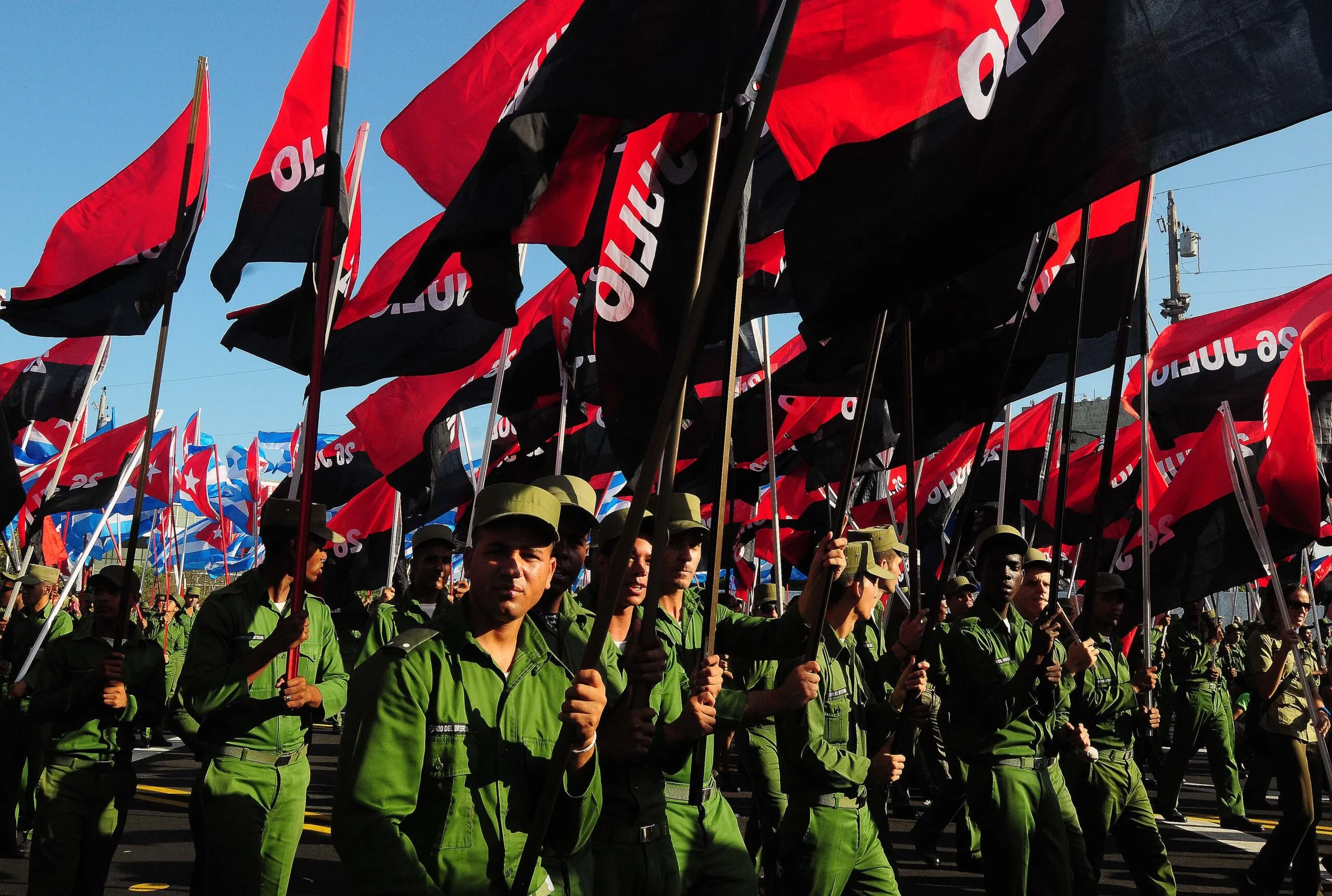
Cuba denounced a historic escalation in U.S. sanctions, describing the latest measures as a direct assault on the Cuban people and their right to self-determination. The announcement comes amid a decades-long policy of hatred, sustained by the successive U.S. administrations, with Cuba framing the latest executive order signed by the U.S. president on May 1 as a continuation, and intensification, of a blockade that has sought to isolate and economically strangle the island nation for more than 70 years.
“Our people already know the cruelty behind the actions of the U.S. government and the mercilessness with which it is capable of striking us,” declared Miguel Díaz-Canel Bermúdez, First Secretary of the Communist Party and President of Cuba, through a statement on X. The pronouncement came after the U.S. Department of State announced a new batch of sanctions under the executive order signed on May 1.
The Cuban leader described the measures as “a unilateral aggression against a nation and a population whose only ambition is to live in peace, in control of their destiny, and free from the pernicious interference of U.S. imperialism.” He added that while the sanctions intensify the already dire economic situation, they only strengthen Cuba’s resolve to defend the homeland, the Revolution, and socialism.
In the same vein, Cuban Foreign Ministry official Alejandro Garcia del Toro warned that the new executive order represents “an unprecedented escalation in Washington’s sanctions policy toward Cuba,” marked by the explicit use of extraterritorial measures. Speaking as deputy director general of the U.S. Directorate at the Ministry of Foreign Affairs (Minrex), Garcia del Toro said the policy stretches U.S. coercive reach “to extremes never before seen in U.S. legislation.”
Tracing the origins of the sanctions to the 1960s blockade under President John F. Kennedy, he described them as a decades-long campaign aimed at “suffocating the Cuban economy” and undermining the country’s production. Extraterritorial measures, he said, have long been a cornerstone of U.S. policy, citing early restrictions on Cuban sugar and, later, Cuba’s nickel exports—rules that penalize not just Cuba, but any country trading with it.
“The interest of the U.S. government is not merely to block Cuban exports directly,” Garcia del Toro said. “By controlling exports from third countries to the United States, they further restrict our capacity to trade and survive economically.”
He noted that the sanctions’ reach intensified with the Helms-Burton Act of 1996 and related measures, but he warned that the May 1 executive order represents a qualitative leap: “A desperate attempt to leave Cuba and its government practically without options to sustain the economy.”
Highlighting the human cost, Garcia del Toro emphasized that Cuba has endured “the longest and most comprehensive regime of coercive measures ever applied against any country” for more than 70 years. Blocking export revenue, denying access to international banking, and undermining Cuban medical brigades abroad threatens the country’s ability to maintain its free healthcare system.
“If there are no banks willing to process payments for our supplies, if we cannot collect payment for our exports, then there is no income to keep the economy functioning,” he said. “It becomes very easy for the U.S. government to push the narrative of Cuban ‘incompetence’, built on the suffering caused by their own policies.”
As the economic pressures mount, Cuba reaffirms its commitment to sovereignty, portraying the sanctions as more than a financial measure. They are an enduring challenge to the resolve and unity of its people.
Alejandra Garcia is a Latin American correspondent for Resumen Latinoamericano and an evening anchor for Telesur evening news in English.
Join the Struggle-La Lucha Telegram channel