
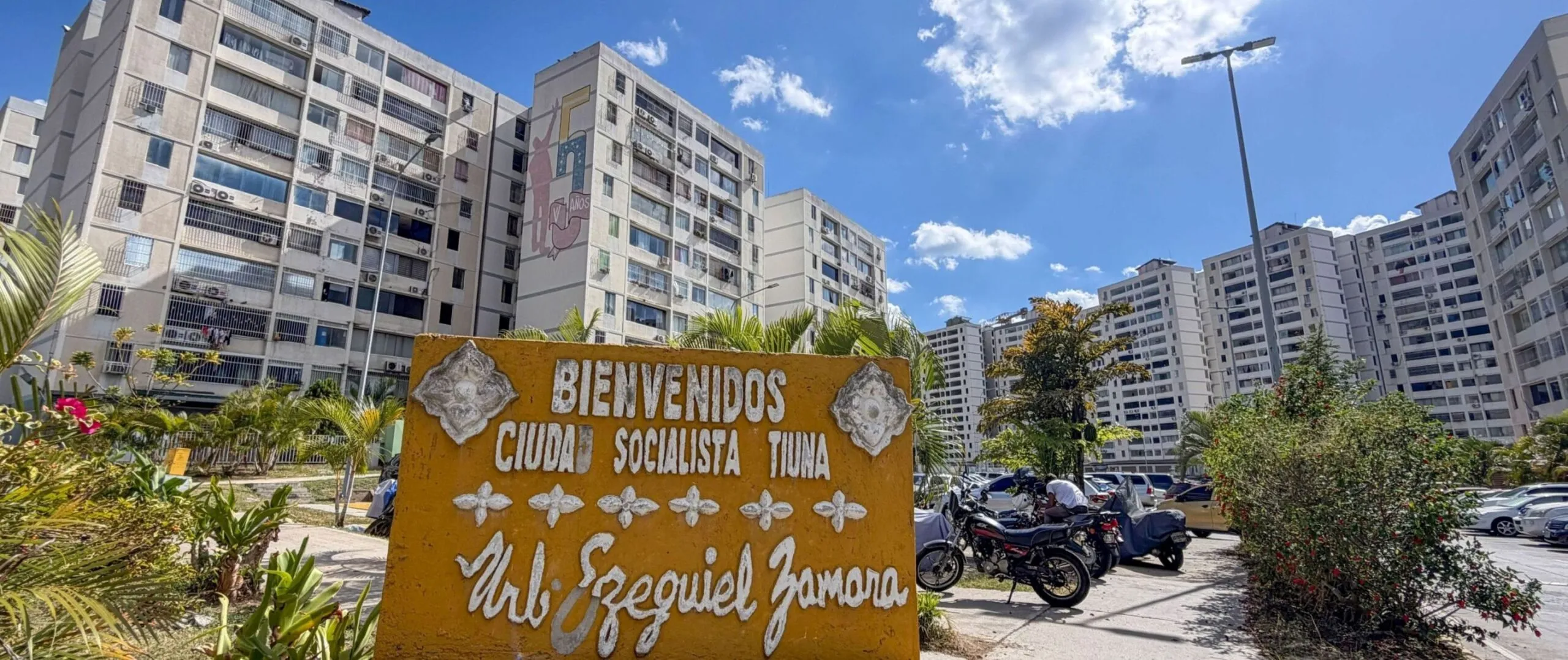
The large-scale U.S. airstrike on Venezuela was unprecedented in modern history. The surprise attack kidnapped President Nicolás Maduro and his wife, First Combatant Cilia Flores, from Fort Tiuna on the outskirts of Caracas. The U.S. killed more than 100 people in the early morning hours of January 3, 2026, including reported civilian casualties in the neighboring Ciudad Tiuna social housing complex.
We visited Ciudad Tiuna 50 days after the U.S. bombing to hear the residents’ accounts. We were the second “solidarity brigade” to visit Venezuela and the first to arrive by air. The delegation consisted primarily of activists from the U.S., along with Canada, Colombia, Brazil and Mexico. CodePink, Task Force on the Americas, Veterans for Peace and World Beyond War were among the solidarity organizations represented.
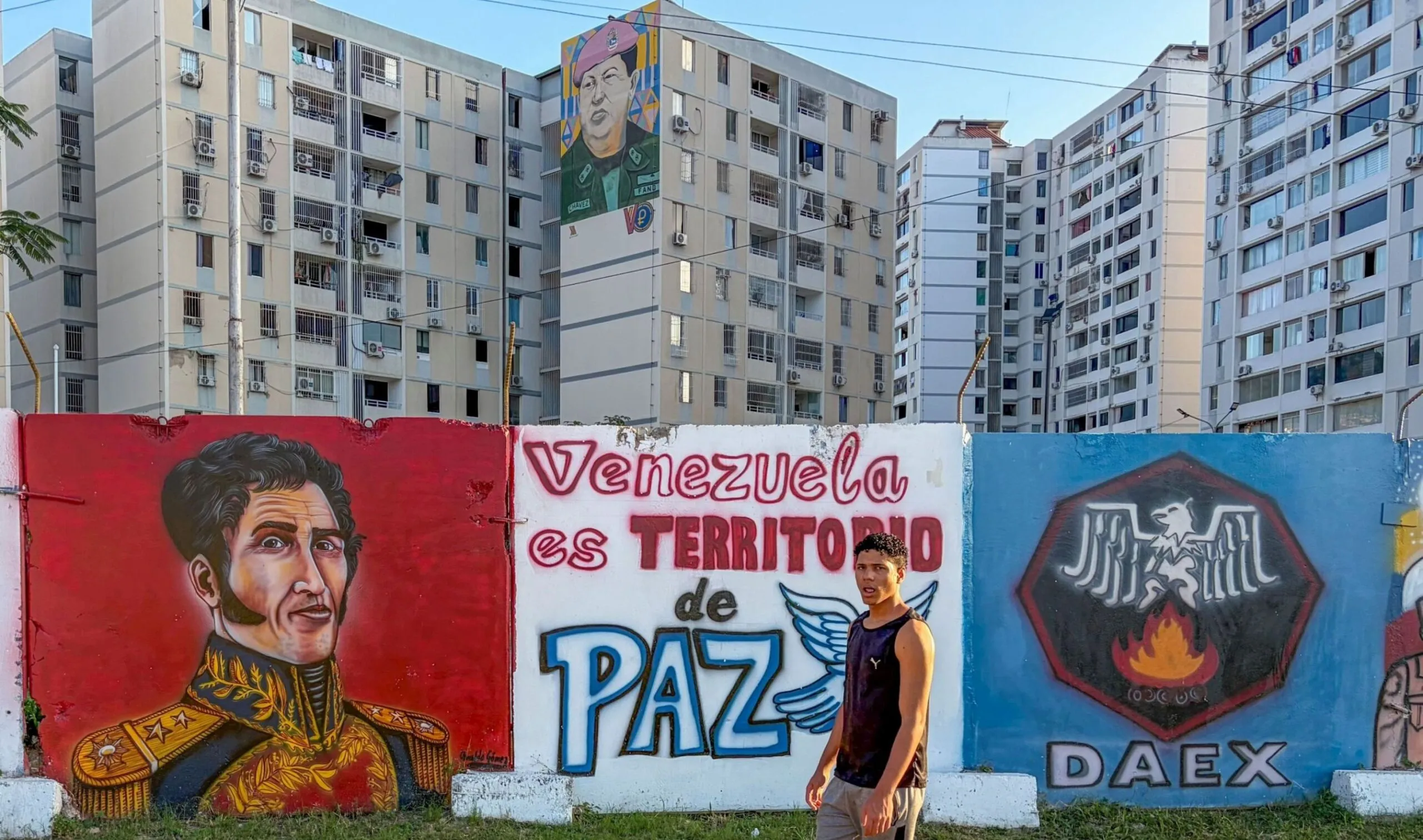
Ciudad Tiuna is a planned housing complex of some 20,000 units, part of the national Gran Misión Vivienda Venezuela program. Apartments are allocated with priority to families displaced by disasters and to low-income households. As of December 2025, more than 5 million units have reportedly been delivered nationwide.
A community-based club affiliated with the Abuelos y Abuelas de la Patria (Grandparents of the Homeland) mission greeted us enthusiastically. They organized a cultural presentation and introduced us to social and political organizations in their socialist city.
A woman sang for mother earth accompanied by a shaman drum. A man read poetry by Allen Ginsberg and Walt Whitman, remarking “not all North Americans fornicate with their mothers” (loosely translated from Spanish).
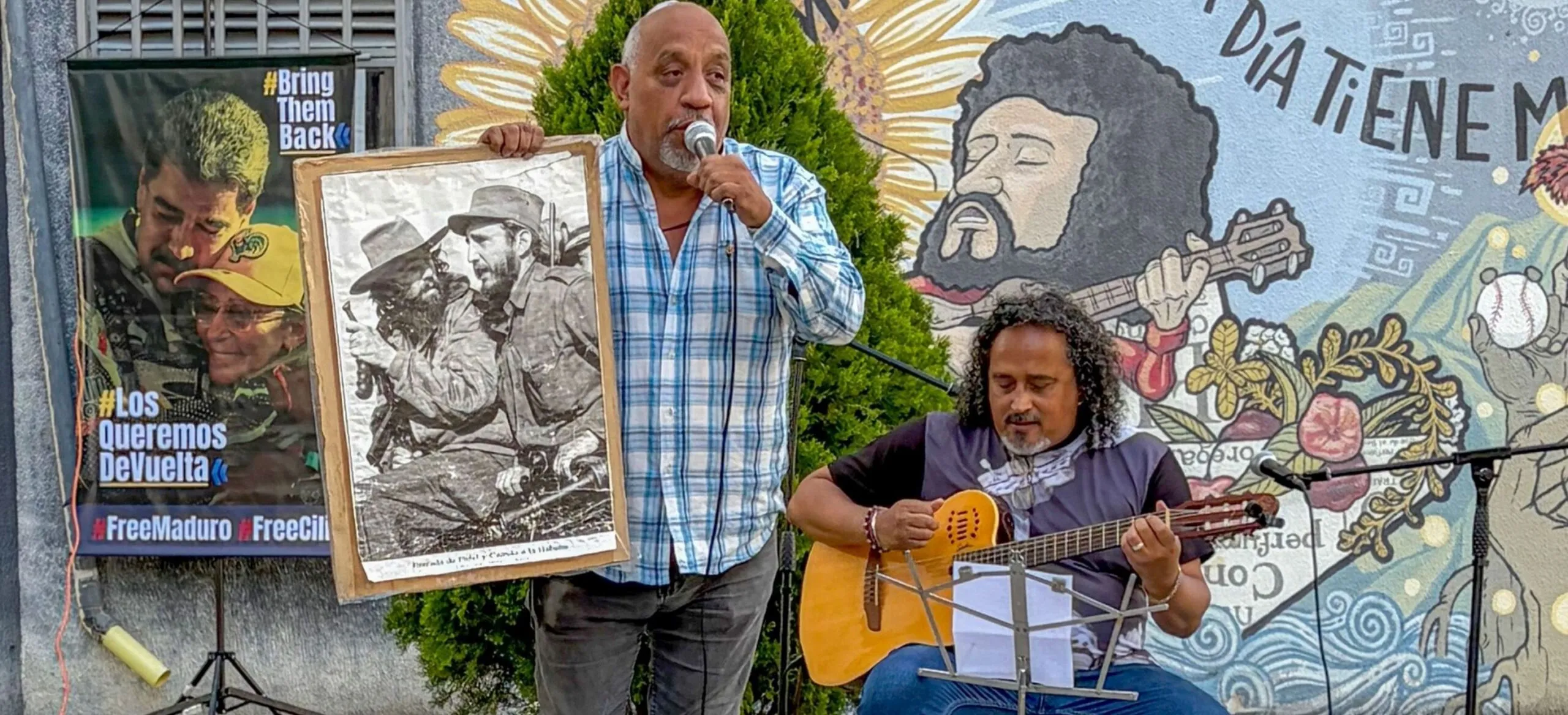
In a tribute to Cuba, residents said they do not speak of solidarity with Cubans because “we are one people.” They praised the Cubans’ courage, including the 32 presidential guards murdered by the U.S. in the January 3 attack. They also highlighted Cuba’s generosity in helping Venezuela achieve “territory free of illiteracy” status by 2005. Programs such as Misión Barrio Adentro brought thousands of Cuban doctors into poor urban and rural communities to provide free primary care.
Most of all, they deeply lamented the current U.S. military blockade of Cuba, which has prevented Venezuela from supplying vital oil to the island. The suffering Washington imposes on the Cubans pained them deeply.
They shared a flyer titled “Never Again — January 3 — Diplomacy for Peace,” which read in part:
Neither forgiveness nor forgetting! Memory is not resentment, but the heart of the people’s dignity who have been attacked. A people without justice becomes submissive. Impunity flourishes if we do not sow justice. We will not tire of weaving unity to triumph.
The flyer also calls for defense of popular sovereignty, no intervention by imperialism in Venezuelan affairs, and reparations for the “offended homeland.”
The flyer concludes with a quote from Delcy Rodríguez: “The dignity of the Venezuelan people is the first line of defense. We have to preserve our integrity as a people, guarantee our territorial integrity, and preserve our national independence.”
January 3 was not unanticipated but nevertheless a great shock. During a walking tour, residents described the terror of the sneak attack. They told us that each time the Venezuelan people successfully resisted Washington’s regime-change attempts — attacks dating back to the founding of the Bolivarian Revolution 26 years ago under then-President Hugo Chávez — the siege has been ratcheted up.
Fabricio, age 11, described a sky lit red with explosions and filled with U.S. helicopters. The elders vowed: “Never again will we allow our children to be traumatized.” Government mental health workers have since been regularly visiting Ciudad Tiuna.
They explained how they truly felt the horror that the Palestinians experience. The difference, they added, was that for them it was a single day while in Gaza it is every day.
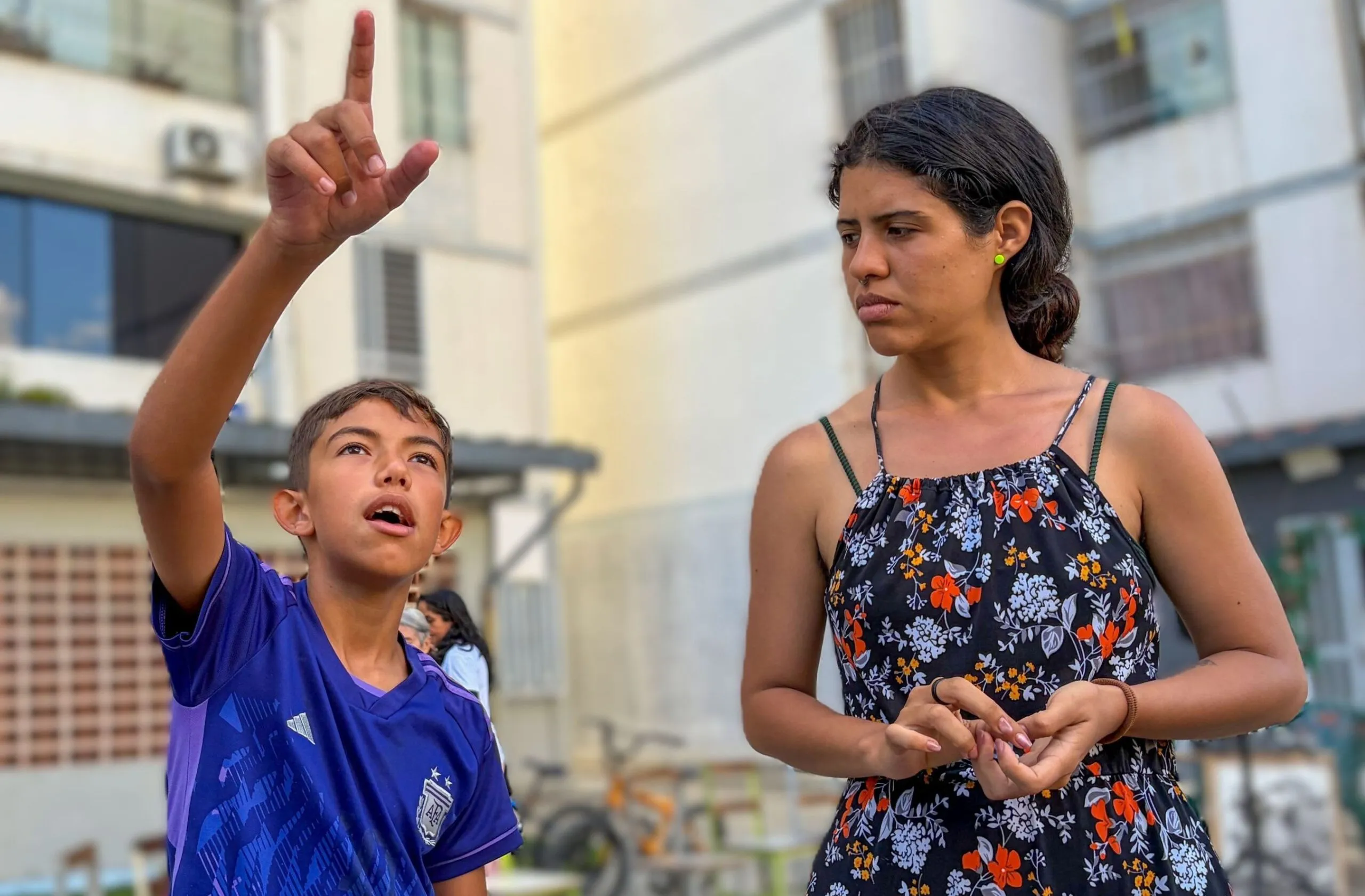
At the time, many feared the attack could signal a protracted full-scale land invasion. Such an incursion, they warned, could well be launched in the future. This was also the opinion of government officials with whom we conferred.
They are proud that the Bolivarian leadership remains firm and united. This they attribute to the support of the people such as themselves. The concessions forced upon the government under the threat of an even more devastating attack have been bitter to accept, but better than the alternative of greater destruction.
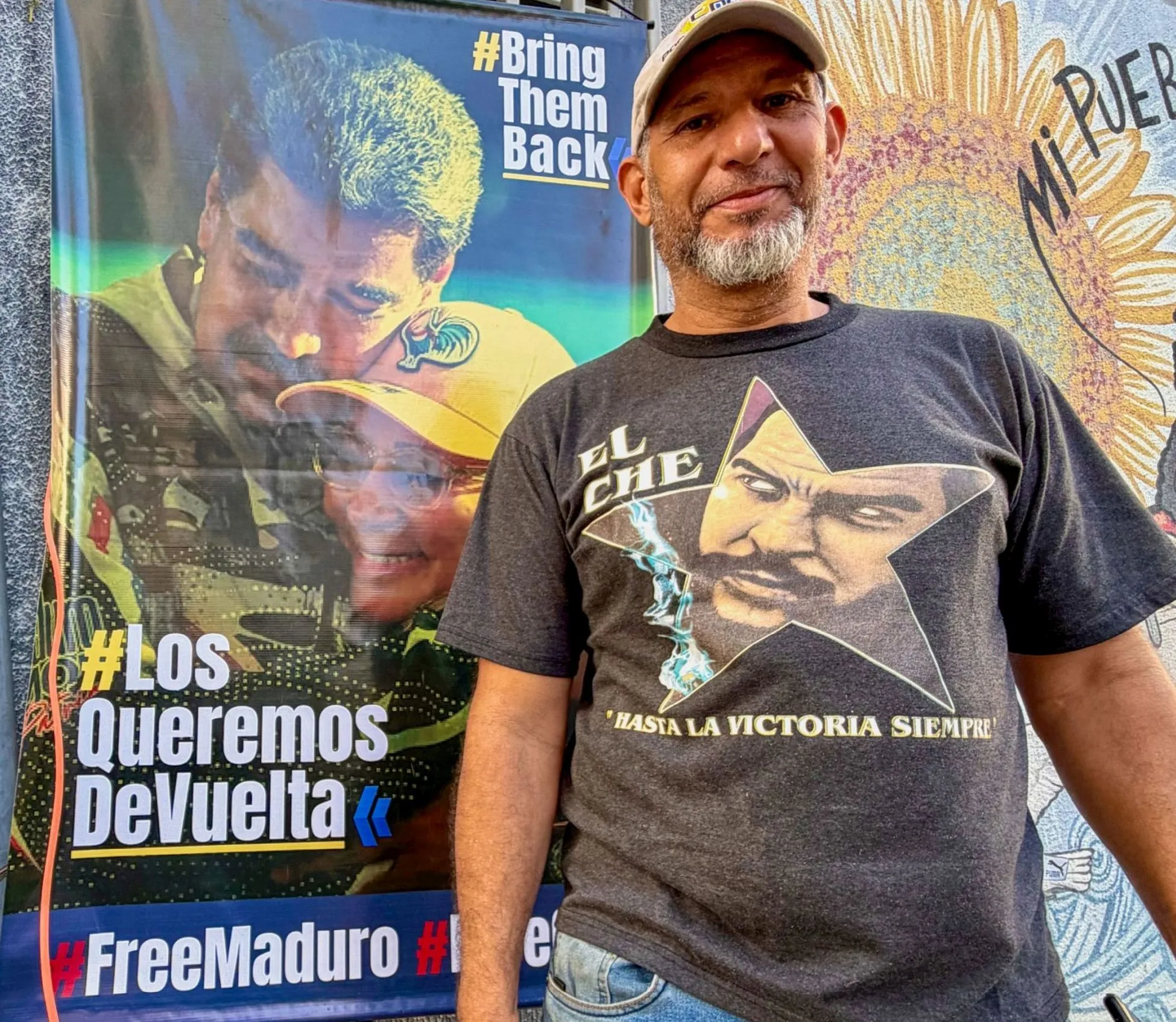
Our hosts described themselves as Chavistas, militants in support of the current government. Some wore shirts bearing the phrase dudar es traición — to doubt is to betray. Their lived experience is of a nation under imperial siege, in a perpetual state of war with the threat of more. Under such circumstances, unity is prioritized.
They rejected speculation that the kidnapping was aided by traitors within, arguing that such narratives serve the enemy’s purpose of eroding unity by fostering distrust. They emphasized the continuity of revolutionary policy from Chávez to Maduro and now to Delcy, as she is affectionately called.
Conditions have changed but not the leadership’s dedication. They noted that regional solidarity has weakened, leaving Venezuela ever more isolated.
Before we departed, several children gave us gifts: handmade wristbands in the national colors, decorated pencils, and a book on climate change from a Marxist perspective. Our hosts also had a frank take-home message for us: “We never invaded; we liberated. Take our passion and love to give you strength to do what you must and rise up.” The hardships caused by the U.S. sanctions — including shortages of medicine and essential goods — are linked to the failure of North Americans to restrain our own government.
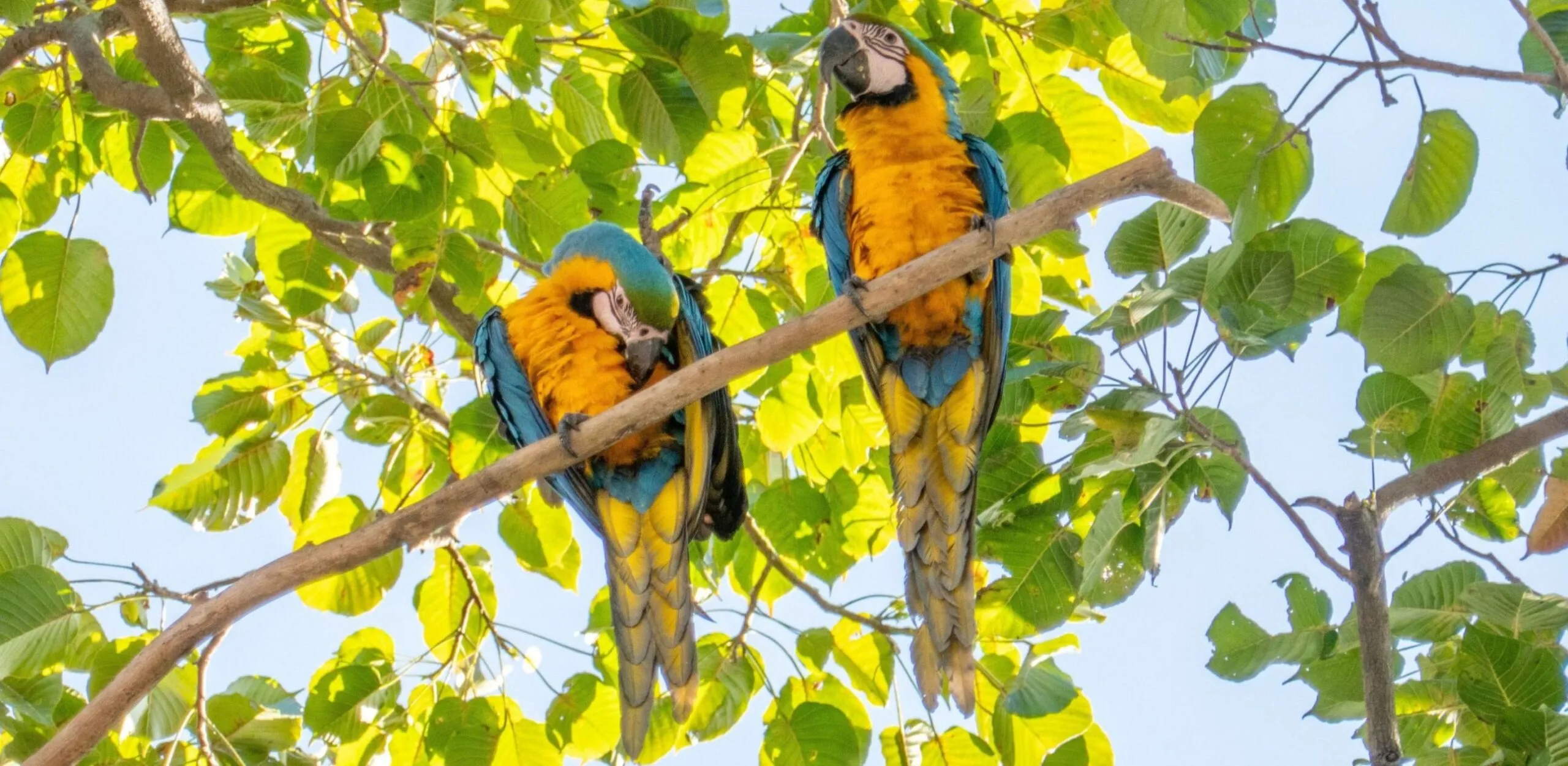
Meanwhile, the wild guacamayas (blue-and-yellow macaws), which once came to Ciudad Tiuna to be fed by residents but disappeared after the bombing, have now returned to a community that asks only to be left in peace.
Roger D. Harris is with the Venezuela Solidarity Network, the Task Force on the Americas and the U.S. Peace Council.
Source: Resumen Latinoamericano – English
Join the Struggle-La Lucha Telegram channel