
Reprinted from Internationalist 360°.
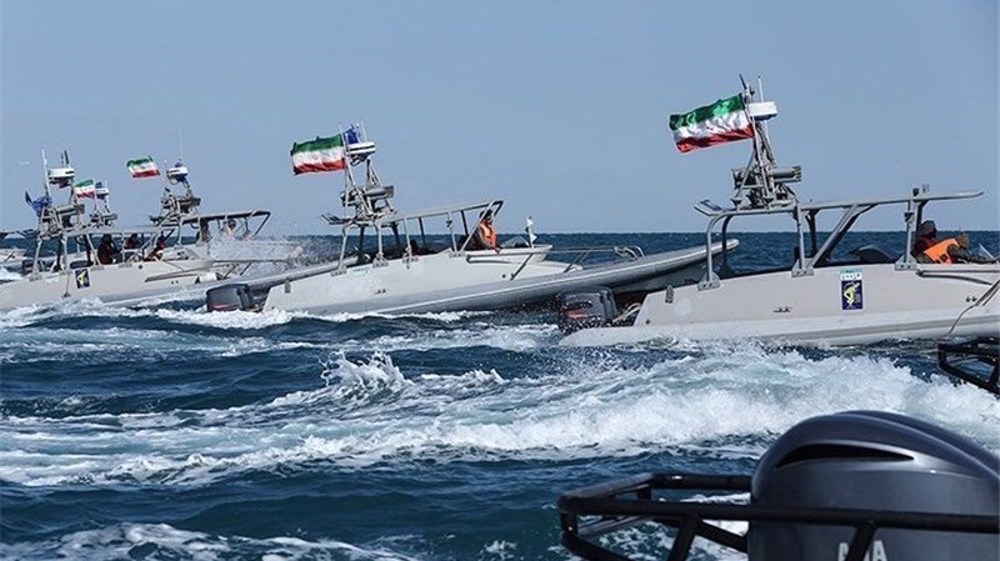
Russia’s Security Council warned April 14 that the Pentagon is using ceasefire negotiations as cover to prepare a ground operation against Iran, even as Iran’s Islamic Revolution Guards Corps Navy announced strict new controls over the Strait of Hormuz.
The Russian statement detailed a U.S. force buildup that now exceeds 50,000 troops in the region. The forces include 2,500 Marines of the 11th Expeditionary Corps, more than 1,200 soldiers from the elite 82nd Airborne Division, Delta special forces and the 75th Ranger Regiment.
The Pentagon has positioned roughly 500 aircraft on airfields across West Asia, including more than 250 tactical fighters. More than 20 U.S. Navy ships are deployed in the area. Deployment of additional 82nd Airborne units continues.
An amphibious assault group led by the USS Boxer, carrying 2,500 Marines, and a carrier strike group led by the nuclear-powered aircraft carrier USS George H.W. Bush are heading toward the Arabian Sea. The Russian Security Council noted that both are expected to arrive as the two-week truce expires.
“We should also expect active actions by the coalition forces to replenish strike and anti-missile weapons, as well as significant activity by intelligence forces,” the Security Council stated.
Trump has said these forces will remain “near Iran” until Tehran meets conditions set by Washington.
Iran asserts control over Hormuz
On April 17, the IRGC Navy announced a “new order” over the Strait of Hormuz, the strategic chokepoint through which roughly one-fifth of the world’s oil passes.
Under the new regulations, all commercial vessels may transit only through routes designated by Iran and only with explicit IRGC authorization. Military vessel transit remains strictly prohibited.
The IRGC said the measures are in accordance with the April 8 ceasefire agreement and follow the implementation of a ceasefire in Lebanon on April 17.
Iran’s Foreign Minister Abbas Araghchi announced the reopening of the strait to commercial vessels that day. “The passage for all commercial vessels through Strait of Hormuz is declared completely open for the remaining period of ceasefire, on the coordinated route as already announced,” Araghchi wrote.
Foreign ministry spokesperson Esmaeil Baghaei confirmed that all passage will take place along routes designated by Iran and in coordination with Iranian authorities.
A source close to Iran’s Parliament Speaker Ghalibaf said the Hormuz opening will be “practically limited,” adding that the conditions represent “precisely what Iran has been pursuing since the beginning of the war and is now imposing on America.”
Iran closed the strait to U.S. and allied vessels after the U.S.-Israeli coalition launched its war against Iran on Feb. 28.
Iran’s navy dismisses Trump blockade rhetoric
Iran’s Navy Commander Rear Admiral Shahram Irani dismissed Trump’s claims of a naval blockade. Trump has imposed a blockade “on his friends, not on the Islamic Republic of Iran,” the admiral said, calling the blockade “banditry and piracy.”
“To this day, we have not allowed U.S. and Israeli aircraft carrier strike groups and marines to enter the Sea of Oman,” Rear Admiral Irani stated.
Dr. Foad Izadi, a professor of American Studies at the University of Tehran, discussed the significance of Russia’s warning in an April interview with Dimitri Lascaris on Reason2Resist. Izadi addressed the U.S. blockade, China’s response and the role of the Gulf Arab autocracies in supporting Washington and Israel.
Sources: TASS, Press TV, The Hormuz Letter, Reason2Resist
Join the Struggle-La Lucha Telegram channel