
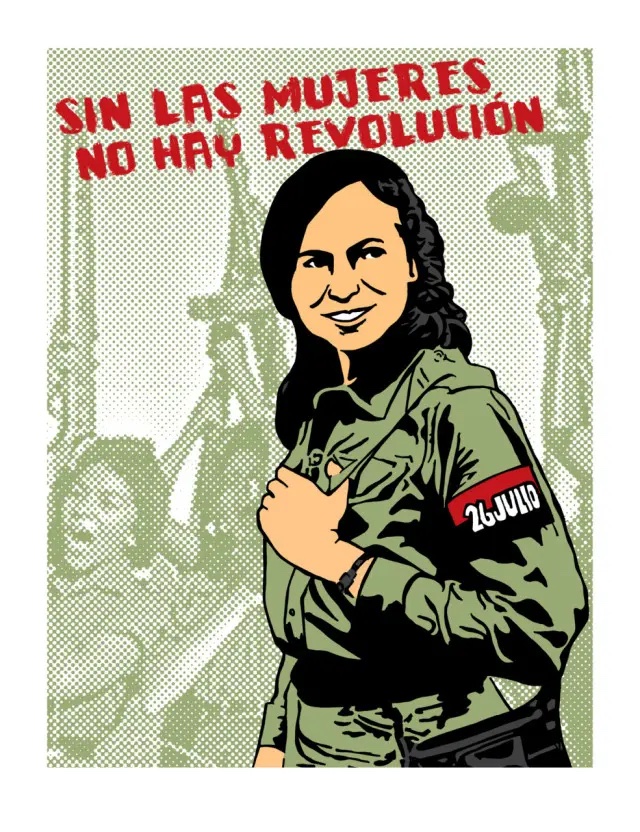
Cuban Women Resistance has become the defining characteristic of a nation under siege for more than six decades. The United States’ severe economic, commercial, and financial blockade has transformed daily life into an obstacle course that tests human endurance at every turn. This siege strikes not only the economy but reaches into the very heart of Cuban homes, where women have emerged as the backbone of survival and defiance.
In recent weeks, this pressure has intensified with new restrictive measures from Washington aimed at preventing fuel from reaching the island, triggering an energy crisis that once again tests the Caribbean nation’s capacity to reinvent itself. But amid scarcity, popular organization emerges, and above all, the strength of Cuban women shines through.
Healthcare Under Siege: Women Fighting for Life
Emma Doris Ricardo Santana knows intimately the weight of these restrictions. A mother and university-level teacher, her life took a dramatic turn when aggressive breast cancer forced her to leave the classroom. The blockade interfered directly with her recovery: the scarcity of cytotoxic serums prevented her from receiving complete treatment within the expected timeframe.
The lack of medications was compounded by the ordeal of transportation, forcing her to make pilgrimages to three different hospitals. Despite everything, Emma resurged thanks to the commitment of Cuban public healthcare and an unbreakable network of affection and solidarity.
“Medicines heal, but solidarity also cures. That’s what makes you get up,” she says with a recovered smile, though her eyes reveal a latent concern that never fully disappears.
Her 10-year-old daughter Claudia suffers from a growth disorder. The necessary reagents and hormones do not reach the island due to sanctions. “The family’s priority is her. The little one requires treatment that we still cannot do in Cuba,” Emma explains with heartbreaking clarity.
But far from surrendering, Emma remains firm in her convictions. “I have my boots on. We will not be intimidated; surrender has no place in Cubans. We decide our own destiny, no one else,” she declares with unwavering determination.
The Dream of Motherhood Against All Odds
At 29 years old, Rocío Rincón has a single objective in life: to become a mother. A civilian worker at the Carlos J. Finley Hospital, she lives with a pituitary tumor that has prevented her from fulfilling her dream. In her home, a Yoruba altar and a painting of five angel girls guard her deepest longing.
“None of those creatures are mine, but achieving having a baby is my goal,” she confesses with profound sadness, yet remarkable serenity. Rocío is grateful that her treatment is free thanks to the Cuban healthcare system, although the instability in medication supply—which often depends on donations from friendly countries—casts a constant shadow over her hopes.
“Too many people are suffering because of this blockade. With Trump, the situation is much more aggressive; these are measures to suffocate us, but they will not succeed,” Rocío states firmly, reflecting the sentiment of thousands of women who, between scarcity and faith, refuse to let go of the reins of their future.
The Cuban Women Resistance movement is not organized in formal structures but emerges organically from the daily struggles of mothers, daughters, sisters, and grandmothers who refuse to allow external pressures to dictate their destiny or diminish their dignity.
Geopolitical Context: A Six-Decade Siege
The U.S. blockade against Cuba represents one of the longest-standing economic sanctions in modern history, dating back to the early 1960s. This comprehensive embargo has been condemned repeatedly by the United Nations General Assembly, with near-universal opposition from the international community. The measures restrict Cuba’s access to international financial markets, limit trade opportunities, and create severe obstacles for acquiring essential medicines, medical equipment, and food supplies.
The humanitarian impact extends far beyond economic statistics, affecting every aspect of daily life from healthcare to education, from energy access to food security. Women, who traditionally bear primary responsibility for family welfare and community cohesion, face disproportionate burdens as they navigate these manufactured shortages while maintaining households and caring for children and elderly relatives.
The recent tightening of sanctions under successive U.S. administrations has specifically targeted fuel shipments, creating cascading effects throughout Cuban society. Energy shortages affect hospitals’ ability to operate equipment, schools’ capacity to provide education, and families’ basic ability to cook food or preserve medications. This strategic pressure point reveals the blockade’s true nature as a tool of collective punishment rather than a legitimate foreign policy instrument.
Community Manuel Isla: Cultivating Sovereignty in the Most Remote Corner
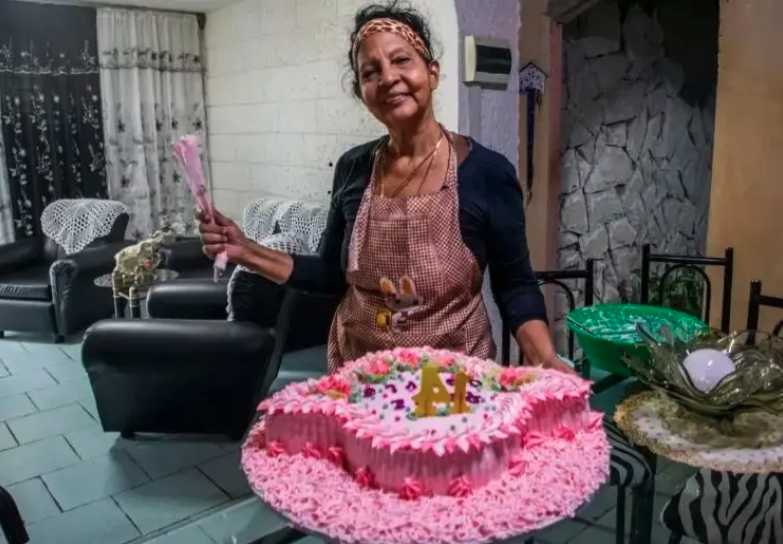
Far from the bustle of the capital, the Manuel Isla community—named in honor of a young martyr of the Revolution—stands as a model of self-management. There, professionals, educators, and workers have built an oasis of resistance that demonstrates the power of local solutions to global problems.
In this environment lives María Eva Puentes Torres, a Santiago baker over 60 years old who works wearing an apron adorned with bunnies and fights against blackouts to deliver her cakes. Each tart is a work of art and resistance, crafted with determination despite the obstacles designed to break her spirit.
“The blackouts take away our ability to work and affect my university daughter’s studies, who cannot even charge her phone to see her subjects,” she confesses indignantly, her frustration palpable yet controlled.
However, her stance remains unshakeable in the face of adversity. “This country is ours. We will resist with creativity. No one surrenders here,” María Eva declares with the quiet confidence of someone who has weathered countless storms and emerged stronger each time.
The Cuban Women Resistance exemplified by María Eva extends beyond individual survival to community building, food production, and the preservation of cultural values that external forces seek to undermine through economic warfare.
Ainara: The Voice of the Future That Knows No Fear
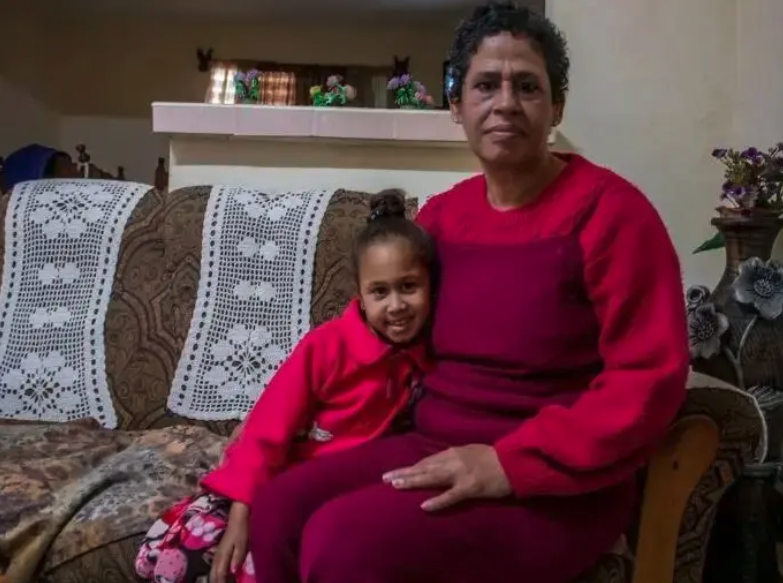
Cuban bravery knows no age limits. Ainara Neira Reyes, at just 11 years old, speaks with the maturity of someone who understands that her school is a trench of values and principles. Although the blockade limits her pencils, notebooks, or even the possibility of practicing volleyball because there are no balls, she feels protected by her teachers and community.
“The pioneers will always move forward,” affirms Ainara, who stays informed daily and understands that external hatred seeks to break her spirit but will never succeed.
Her message to children around the world is one of pure solidarity and unwavering hope. “We are going through a difficult moment, but if you go through something similar, from here we will support you. Do not let yourselves be defeated!” she proclaims with the clarity and conviction that only childhood honesty can provide.
The young pioneer represents the next generation of Cuban Women Resistance, proving that dignity and determination are not learned behaviors but inherent qualities that flourish even under the most challenging circumstances.
The Language of the “Indomitable Guerrilla”
As Tatiana Coll, a historical collaborator of the island and witness to the historic 1970 harvest, well remembers, Cubans have a special nature: perhaps in routine they may seem relaxed, but “as soon as the defense trumpet sounds, no one surpasses them.”
They activate in guerrilla mode, a characteristic that Fidel taught them and that today women—from the baker to the pioneer—embody with a dignity that knows no surrender. This capacity for rapid mobilization and creative problem-solving has become the hallmark of Cuban society’s response to external pressure.
In Cuba, resistance is not just a political concept; it is the hand of a mother baking a cake in the dark, it is a girl defending her right to study, and it is a community that, faced with the lack of fuel, decides to grow its own food. Solidarity and sovereignty, definitively, have a woman’s face.
The Cuban Women Resistance movement demonstrates that true strength lies not in military might or economic power, but in the unbreakable human spirit that refuses to be conquered, the community bonds that strengthen under pressure, and the unwavering belief that a people’s destiny must be determined by its own hands, not by foreign powers seeking to impose their will through starvation and scarcity.
Source: teleSUR
Join the Struggle-La Lucha Telegram channel