
Trump and the Kennedy Center Honors
With all the other crises going on, it may seem silly to even pause and think about President Donald Trump hosting the Kennedy Center Honors on Dec. 2. But the fact that this happened tells us a few things.
One is that the U.S. government’s authoritarianism is deepening: The executive branch – Trump – is trying to directly interfere in popular culture, even in a capricious and personal way (though always in the service of rich elites). The second is that there is a real assault on our very memory of the past, on who and what gets remembered, as well as how they are remembered. This is an escalation of the so-called “culture war,” using political power to intervene on the side of reaction.
Culture is important. As SLL writer John Parker reported this week from Venezuela, “Fidel Castro and many African liberation and Indigenous leaders recognized culture as the ruling class’s primary tool of ideological control — denying the oppressed and working class the ability to think independently, distracting them and directing them toward their own disempowerment.”
Trump’s authoritarian interventions in the media are glaring. For example, as with other legally independent government agencies, Trump has placed loyalists in the Federal Communications Commission (FCC). That agency regulates communications, including the internet and television. He also called for the firing of late-night TV host Jimmy Kimmel, who was fired by ABC but then rehired following public outrage.
As soon as his second term started, Trump began remaking the Kennedy Center for the Performing Arts. He fired the board members, and the replacements he brought in immediately put him in charge of the institute. This is unprecedented. At a Kennedy Center press conference back in August, Trump boasted that he was “very involved” in selecting the honorees and that he said no to “a couple of wokesters.” Hosting the awards was the final touch.
These awards are given to artists and entertainers for lifetime contributions. It’s about legacy. It’s another question why specific people made the list: disco artist Gloria Gaynor, action star Sylvester Stallone, or the rock band KISS. But based on Trump’s press conference statement, we can assume that someone like television maverick Norman Lear, an honoree in 2019, would not have made the cut in 2025.
So classic TV was ‘woke’?
Lear, who died at 101 in December 2023, wrote for, produced, or developed over 100 shows. He is primarily known for introducing political and social themes to sitcoms in the 1970s.
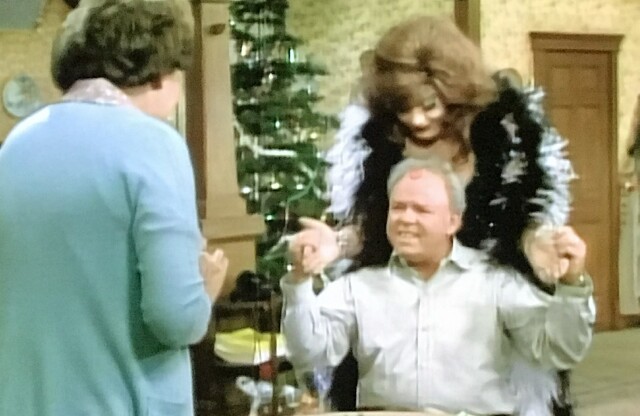
There’s a decent chance that if you ask someone who grew up in the U.S. to name a few ‘70s sitcoms, at least one of them will be Norman Lear’s. There’s a good chance that they’ll name more than one. The list includes some of the most popular shows of the period: “All in the Family,” “Maude,” “Sanford and Son,” “One Day at a Time,” “The Jeffersons,” and “Good Times.”
These shows tackled subjects like hate crimes against the queer community, drag, abortion, and many more, decades before the manufactured furor over drag story hour and beer commercials. Some shows featured interracial relationships. Hell, just the fact that several of these shows centered on Black families was groundbreaking. That wouldn’t have happened just a few years earlier.
These developments didn’t just stem from Lear’s genius. They were part of the zeitgeist. The 1960s-70s were a progressive era when people’s struggles were making gains. Culture – including pop culture – reflected that. The struggles made these shows possible.
Of course, none of this was perfect. Some Black writers and actors involved in these shows say that they were sidelined and have not received the full credit that they are due. Black screenwriter Eric Monte was a co-creator of multiple of these shows, such as “Good Times” along with “Good Times” actor Mike Evans. (Evans is best known for playing Lionel on that show.)
Likewise, the white actress Sally Struthers – who was 24 when she began playing Gloria in “All in the Family” – recently claimed that Lear did not take her seriously and was often rude to her, and that the mostly older male writers did not know how to write for her character; when they didn’t know what to do with her, they gave her lines like “I’ll set the table, ma” and “I’m going upstairs to wash my hair.” The contradictions in society play out in cultural production.
But again, looking beyond Lear, another indicator of the zeitgeist was “Sesame Street,” which first aired in 1969. The radical underpinnings of the show may be lost on many today. It was an ambitious experiment: Make children’s education available to the masses through public television. (The federal Head Start program to help poor and working-class preschoolers began in 1965. “Sesame Street” aimed to do the same thing through a different medium.) The show featured Black, Latine, white, and other characters in an inner city environment. In the beginning, Mississippi officials refused to air the show because of its multiracial cast!
Archie Bunker not a MAGA prototype
One of my social media pet peeves are the rightwing memes depicting the dads Archie Bunker and George Jefferson (of “All in the Family” and “The Jeffersons,” respectively), with captions like, “TV back when people weren’t offended by everything.” This fundamentally misrepresents what these shows were about.
Archie Bunker is not the prototype of the MAGA culture warrior. The latter always digs in and is actively helping to push back the progress of people’s struggles. Archie Bunker, a loading dock worker who also worked part-time as a cab driver to make extra money, is a working-class character from a different era. Projecting MAGA values onto him is wrong.
Yes, he is an older white man with oppressive social baggage. He is bullheaded. But he does not have the sociopathic cruelty celebrated by MAGA. When confronted with situations he doesn’t understand, like Black neighbors moving in (the Jeffersons), he eventually starts to come around.
That is the comedy – the exasperated look on his face when he has to accept something new. He’s the butt of the joke. But at the end of the day, he cares about other people. He learns. Without that human core, the show would hardly have been compelling. This has nothing in common with today’s comedians who intentionally try to offend by punching down at trans people or other oppressed groups.
Archie was part of a world that was progressing. He was along for the ride whether he liked it or not. The present was far from perfect, but movements throughout the country were making strides: women’s power, Black power, Indigenous power, LGBTQ+ power, union power.
And it wasn’t just the U.S. People’s movements all over the world were racking up victories, like when the Vietnamese people drove out the U.S. invaders and reunified their country.
The fictional world of “All in the Family” mirrored society in the real world. And the changes happening in the real world – the high tide of people’s struggles through the 1960s and ‘70s – made such a show possible.
The right wing wants us to forget
Right now, Trump is leading a colossal attack on the working class, helping to transfer more and more wealth to the top. His movement, which is controlling the government, is especially lashing out against immigrants and trans people, trying to divide people up so they can’t fight back.
If there is a “culture war,” we must be clear that this war is not just about ideas. It is a manifestation of the class struggle. The assault on progressive culture – representation in pop culture, the teaching of history, and more – is part of the broader assault on people’s movements; it is about reversing real gains made by those struggles.
They want us to forget past cultural representations reflecting those struggles because they want us to forget the struggles themselves, and to stop fighting today.
When the right wing promulgates the false idea that all of the pop culture of the past was simply reflective of reactionary values, and that only recently have TV series and films begun to explore social problems from a progressive angle, they are reinforcing the false idea that things never changed, and never will change. But the fact that these shows were so popular more than 50 years ago argues to the contrary.
Join the Struggle-La Lucha Telegram channel