Artists and speakers protest SXSW festival over defense sponsors, Gaza war

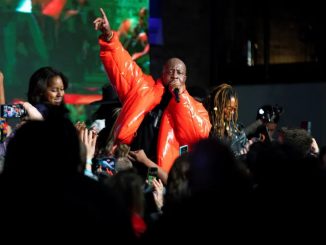
Haitian American rapper Wyclef Jean performs at the 2022 SXSW festival in Austin, Texas.

Dozens of acts scheduled to appear at the South by Southwest (SXSW) festival in the United States have withdrawn in an act of protest against sponsors with ties to Israel’s war in Gaza.

As of Wednesday, at least 80 artists and panelists have pulled out of the nine-day festival, citing the involvement of several weapons companies and agencies tied to the US Department of Defense, according to the Austin for Palestine Coalition, which helped organize the protest.

The event, billed as a “convergence of tech, film, music education and culture”, is among the most prominent entertainment festivals in the southern US.

Taking place each year in Austin, Texas, the festival has been a launchpad for up-and-coming indie acts and filmmakers since its opening in 1987. This year’s festival will conclude on March 16.

But several artists slated to appear this year have withdrawn, in an effort to show solidarity with the people of Gaza.

“I have decided to pull out of my official SXSW showcases in protest of SXSW’s ties to the defense industry and in support of the Palestinian people,” musician Ella Williams, who is known as Squirrel Flower, posted on Instagram on March 4.

https://twitter.com/Lambrini_Girls/status/1766550399069081805

The Austin for Palestine Coalition identified Williams as one of the first nine acts to withdraw as part of the protest.

Ibrahim Batshon, the founder of the BeatStars digital production company, posted a day later on social media that artists associated with his organization would also boycott the festival, which attracted over 345,000 people last year.

He cited the involvement of Raytheon and BAE Systems, two of the companies involved in this year’s SXSW festival.

“Both of these companies manufacture and provide weapons to the terrorist state of Israel, whom is currently conducting an internationally condemned genocide against an occupied and besieged population of Palestinians,” Batshon posted.

However, the boycott has since expanded to include featured speakers like labor union organizer Chris Smalls and musicians like Buffalo Nichols.

The advocacy organization United Musicians and Allied Workers has also thrown its support behind the protest, echoing its rallying cry on social media: “Warmongers have no place at SXSW!”

In announcing its withdrawal this week, Northern Ireland hip-hop trio Kneecap highlighted the costs small acts would incur by missing the high-profile event.

“This decision will have a significant financial impact on Kneecap, both on lost income and on logistical costs already incurred,” the trio said in a statement. “But it isn’t an iota of hardship when compared to with the [unimaginable] suffering being inflicted every minute of every day on the people of Gaza.”

As of Wednesday, at least 31,272 Palestinians had been killed in Israel’s operations in Gaza, the vast majority of them women and children, according to local authorities. The fighting has left the enclave on the brink of famine, with human rights groups accusing Israel of slowing the delivery of humanitarian aid.

The administration of US President Joe Biden has continued to pledge political and material support to Israel despite issuing stronger criticism of its military campaign in recent weeks.

“There are a lot of innocent people who are in trouble and dying,” Biden said last month. “And it’s got to stop.”

Governor responds: ‘Don’t come here’

The growing SXSW boycott effort, however, prompted a rebuke on Tuesday from Texas Governor Greg Abbott.

“We are proud of the US military in Texas,” he wrote on social media. “If you don’t like it, don’t come here.”

In late February, the Austin Chronicle also reported that SXSW organizers sent a cease-and-desist letter to the Austin for Palestine Coalition as they sought to rally support for the boycott.

The letter said the group had used trademarked SXSW art in their social media posts and threatened legal action, according to the news site.

Still, the festival defended the artists who chose not to participate in this year’s festival, responding directly to Governor Abbott’s comments.

“SXSW does not agree with Governor Abbott,” SXSW wrote on social media on Tuesday. “We fully respect the decision these artists made to exercise their right to free speech.”

In the same thread of messages, however, SXSW also attempted to justify its ties to the defense industry.

“The defense industry has historically been a proving ground for many of the systems we rely on today,” the festival wrote in its statement. “These institutions are often leaders in emerging technologies, and we believe it’s better to understand how their approach will impact our lives.”

The Austin for Palestine Coalition and the United Musicians and Allied Workers Union are set to host a protest show in Austin on Thursday.

Source: Al Jazeera
Strugglelalucha256


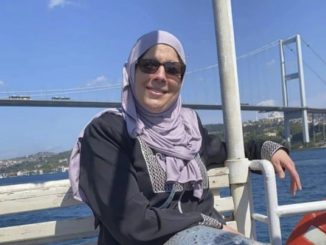
Samaher Esmail faces Israeli military trial over pro-Palestinian posts

The Zionist state plans to try a U.S. citizen and New Orleans-area resident – Samaher Esmail – in a military court over social media posts. They’re not even alleging that she did anything besides post pro-Palestinian pictures. 

So much for “Israel” being a “democracy in the Middle East” (West Asia). For Palestinians, there is no freedom of speech, movement, or any other kind in their occupied homeland. On the other hand, “Israeli” soldiers and settler mobs are free to post their acts of violence all over the internet and face no repercussions. 

Israeli Occupation Forces (IOF) dragged 46-year-old Esmail out of her family home in Silwad on the occupied West Bank on the night of Feb. 5. She is a cancer patient. Her family was able to capture the brutal kidnapping on video, which sparked outrage across the internet. 

Neither Genocide Joe Biden nor Louisiana’s racist governor, Jeff Landry, have said a word about Esmail’s treatment throughout the whole period she’s been in administrative detention. The local governments in Louisiana have been mute as well.

Four days passed before she was given access to a lawyer. It took 14 days for someone from the U.S. consulate to check on her. Meanwhile, during the first six days in prison, Esmail was denied access to her medications and lost consciousness at one point. 

The Zionist regime has let her out on bail but will not allow her return to the U.S. Her next trial date is March 31. The Zionists have no intention of giving her a fair trial. She’s facing bogus charges, and this is a sham court. The military courts constitute a separate legal system designed for abusing Palestinians in the West Bank and have a 99% conviction rate. “Israeli” citizens are not tried in these courts. 

But the movement in the greater New Orleans area has been fighting for her. During the Gulf Coast March for Palestine on Feb. 18, several thousand people from across the Gulf South and beyond chanted “Free Samaher Esmail” in the streets, as well as “Justice for Tawfik Abdeljabbar.” Abdeljabbar was a 17-year-old Palestinian New Orleans area native who was killed by an occupation officer when he visited his homeland of Palestine on Jan. 19. 

This action — the Gulf Coast March for Palestine — began with a rally in Armstrong Park, on the outskirts of the French Quarter. The park is the site of the historic Congo Square. 

Many consider Congo Square a sacred site, particularly those who draw from the African diaspora religions. It was a unique site in North America through various periods of the slave economy (under the Spanish, French, and then U.S. control). Because of peculiarities in Louisiana law, enslaved and free Africans here had some legal right to gather, and Congo Square became a place where masses of enslaved, free African, and Indigenous peoples were able to meet, celebrate, sell wares, and more. 

This history is one reason Congo Square was chosen as the march’s launching point. Many speakers invoked this history to highlight the continuities across time and among peoples regarding the liberation struggle. No one is free until we’re all free.     

The march was led by Masjid Omar mosque and some 20 other organizations. This broad coalition has continued to carry out actions since Feb. 18. We have to keep up the pressure. 

Justice for Tawfik! Free Samaher Esmail! 

The campaign to free Samaher Esmail has requested that supporters contact the U.S. State Department and Louisiana Congressperson Troy Carter. Suggested wording and contact information are given below. 

U.S. State Department, Office of Overseas Citizens Services: (888) 407-4747

Script:
Hi, my name is ___ and I live in____. I am calling regarding LA-District 2 constituent and U.S. citizen Samaher Esmail, who Israeli Defense Forces abducted in the occupied West Bank of Palestine on Feb. 5, 2024, and wrongfully imprisoned and charged. She is a cancer patient and has been denied essential medication. I am calling for the U.S. State Department to act immediately ahead of Esmail’s March 31 trial and to designate Esmail as wrongfully charged by Israel and to demand Israel drop all charges against Esmail and allow her to come home.

Congressman Troy Carter (LA-District 2): (202) 225-6636

Script:
Hi, my name is ___ and my zip code is ___. I am calling regarding LA-District 2 constituent and U.S. citizen Samaher Esmail, who Israeli Defense Forces abducted in the occupied West Bank of Palestine on Feb. 5, 2024, and wrongfully imprisoned and charged. She is a cancer patient and has been denied essential medication. I am calling for Congressman Carter to ensure that the U.S. State Department designate Esmail as wrongfully charged by Israel and to demand Israel drop all charges against Esmail and allow her to come home.


Strugglelalucha256


Richmond highway blockade ups the ante in support for Palestine

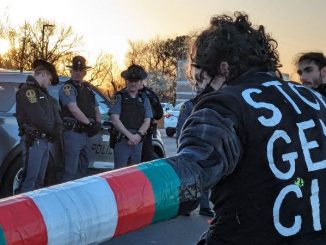
RICHMOND, Va., March 11 – At about 6:45 this morning, a multiracial group of nine young people chained themselves together and blocked traffic on the southbound lanes of Interstate 95 in Richmond near the exit to Arthur Ashe Boulevard.

An anonymous statement emailed early this morning to several local media outlets stated that the blockade was meant to “disrupt the flow of ‘business as usual’ in the heart of the Commonwealth, demanding that the U.S. empire cease all funding for the genocidal, Israeli occupation of Palestine at once.”

If the protesters’ purpose was to draw attention to the mass slaughter taking place in the Palestinian Gaza Strip – a genocide enabled and funded by the U.S. government – they definitely succeeded. The action was covered by all three local network TV affiliates, the city’s daily newspaper and NPR affiliate Virginia Public Media.

However, The Virginia Defender was the only media that managed to get close enough to the protesters to interview them.

The highway  – one of the busiest in the country – is under the jurisdiction of the Virginia State Police, who arrived at the scene, declared it an unlawful assembly and physically moved the protesters to the side of the breakdown lane, allowing traffic to resume.

According to both the protesters and a spokesperson for the State Police, the blockade lasted at least a half-hour.

“For the protesters’ safety and to expedite the reopening of the interstate lanes, the protesters were guided to the right, southbound shoulder of the interstate,” a VSP media release stated.

That’s one version of what happened.

Jasmine Cuellar, one of the protesters, gave the Defender a different one:

“The cops dragged us all the way across the interstate, hurt people, definitely down there (gesturing to other protesters lined up in the breakdown lane), threw them into the water and were like literally trying to shove us off the edge of this like, whatever this is called.”

Two people at the scene said they saw one state trooper push one of the protesters halfway over the concrete barrier along the breakdown lane.

Three people said that one officer tore off a protester’s COVID face mask, leaned in close and said,” I just want to see your face,” causing another officer to intervene.

Several other people said a few protesters had been pushed down onto puddles of water, soaking their clothes in temperatures of around 40 degrees.

Asked about these allegations at an impromptu press conference held at the foot of the embankment leading up to the highway, VSP spokesperson Corinne Geller said she had no information about those alleged incidents, but said she had seen at least two protesters deliberately lying down in the puddles.

There were nine protesters in all. One told the Defender that two of their number were African-Americans, two were Arab-Americans, one was Latina and most were LGBTQ+. According to the VSP release, their ages ranged from 21 to 30.

A total of 10 people were arrested. (As of our press time, there was no information about why the 10th person was arrested.) All 10 were charged with stopping the vehicle of another, obstructing free passage of others, unlawful assembly, and being a pedestrian on the interstate.

The first three charges are Class 1 misdemeanors, each of which carry possible penalties of up to a year in jail and/or a fine of up to $2,500. The fourth charge is a traffic offense.

According to the State Police, all those arrested were taken to the city jail, where the normal  procedure is for a magistrate to decide if and how they will be released.

As we go to press, opponents of the Israeli genocide are again attending the regular meeting of Richmond Coty Council, demanding that body pass a resolution calling for an immediate ceasefire in Gaza.

Among those scheduled to speak is Princess Blanding, sister of Marcus-David Peters, a young African-American high school teacher fatally shot by a Richmond police officer in 2018, a shooting that became a major focus of the 2020 Black Lives Matter protests in Richmond set off by the murder of George Floyd in Minneapolis.

Update

March 12—The latest we have heard is that all protesters have been released. At this time, we don’t know how the prosecutions will proceed. Updates will be posted on The Virginia Defender’s Facebook page as they become available.

Videos

After being moved to the side of the highway, waiting to be taken away, protesters remain defiant.

https://photos.google.com/share/AF1QipPIG5sggGu48E0LkKpwojfbyHFTTLzXVlwVV04f16b9RhB3ZzUUY_9OCY_XJoh9Kw?key=LWNhTWpBUkgzTURORzJzZUJEdHgwdWkyazBsZV9B

Still chained together and to a ladder, protesters wait to be arrested. (VIDEO)

https://photos.google.com/share/AF1QipOGAwdXirv27jtNPX_UxVS2QfXMdKtZDvsoLQl5CC6mlOSRQqVrgIP7ajFWrR6YWw?key=RHU3eUZZLTdKd2p1TEw1Yy1XX3U3NzYtcUFURnN3


Complete press conference by VSP spokesperson Corinne Geller. (Note: The questions about allegations of police misconduct were raised by The Virginia Defender.)

https://photos.google.com/share/AF1QipNimgU7gv6SgmyM-G94X6yteSann6Pvrz3MVGCY1nVGa5bck71I4Cq6xt5HPucjqA?key=S3pkcjdZbjBvdXMwLXBpb1N5eUkyenp3YXI2cmZB

Source: The Virginia Defender

Strugglelalucha256


Media malpractice: Blanking out genocide and disenfranchising Palestinian pain

Now more than ever, Americans deserve objective, diverse, trustworthy, and contextualized coverage of Gaza.

America’s corporate media serves as a key cog in the machinery of genocide.

Rather than providing the kind of objective, fact-based reporting integral to an informed citizenry, our mainstream press bombards us with explicit and implicit biases, false narratives, dehumanization, and misdirection, serving to stifle public dissent and justify, rationalize, and conceal the systematic oppression and extermination of the people of Gaza.

As dependable propaganda tools for Israel’s aggression, our news censors truth not only by what they choose to cover and how they spin it—but what they deliberately omit. This orchestrated disinformation campaign helps ensure the ongoing and unconditional support of the U.S. government and its continued role as Israel’s dutiful genocidal benefactor.

This isn’t war. It’s mass murder. But this isn’t what most Americans are watching, reading, and hearing on the news.

How does a Palestinian-American with family in the region reconcile the disconnect between “reality” and the “story” our press is “telling”?

Consider a day in the life in Gaza: Palestinian schools, hospitals, universities, places of worship, and heritage sites are being systematically destroyed. Civilians, nearly half children, are being murdered on a mass scale (over 30,000 dead, nearly half children). The calculated deprivation of food and water is literally starving families to death. Babies are being born into a living hell, with screams of terror, the ear-piercing explosions of limb-searing U.S.-made bombs, and the painful moans of their parents among the first sounds they hear. The electricity powering the oxygen machines keeping sick patients alive cut off, leaving them to struggle to gulp each of their final breaths. Amputations of children’s limbs without anesthesia with barbed wire have become obscenely routine. Broken but alive, Palestinian bodies riddled with shrapnel require each piece to be pulled from their flesh. Hungry children are found dead with single Israeli sniper shots to the head because they made the mistake of seeking out food from an aid truck. The deliberate decimation of Gaza’s telecommunications infrastructure has left families unable to communicate with one another or with the world, allowing daily atrocities to become increasingly invisible and unreported.

For those fighting for survival in Gaza, there is nowhere left to run, nowhere to turn, and no one to turn to. This isn’t war. It’s mass murder. But this isn’t what most Americans are watching, reading, and hearing on the news.

U.S. media’s Israel bias and censoring journalists

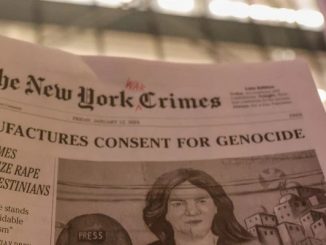
Quantitative analyses conducted by The Intercept, Fairness and Accuracy in Reporting, and an independent collective of U.S. journalists, writers, and media makers of coverage in The York Times, Washington Post, and Los Angeles Times lay bare our news media’s dramatic pro-Israel bias. The litany of press failings are disturbing in their sheer scope and intention. Findings included the systematic undermining of Palestinian, Arab, and Muslim perspectives and the invocation of inflammatory language that reinforces Islamophobic and racist tropes. Misinformation spread by Israeli officials is commonly printed along with consistent failures to scrutinize Israel’s indiscriminate killing of civilians in Gaza. Israeli deaths are disproportionately emphasized, and more humanizing language is used to describe them than Palestinians. This is to name just a few.

Case-in-point: In what’s now being called the Flour Massacre, at least 112 Palestinians in Gaza were killed and hundreds more injured after Israeli forces opened fire on civilians while waiting for food from desperately needed aid trucks. Leading news media descriptions referred to the slaughter as “food aid deaths,” “food aid-related deaths,” “chaotic incident,” and “reported killed in crowd near Gaza aid convoy.”

Do these headlines properly convey the massacre of starving civilians?

The New York Times: “As Hungry Gazans Crowd a Convoy, a Crush of Bodies, Israeli Gunshots and a Deadly Toll

The Washington Post: Chaotic Aid Delivery Turns Deadly as Israeli, Gazan Officials Trade Blame

The Guardian: “Biden Says Gaza Food Aid-Related Deaths Complicate Cease-Fire Talks”

BBC: “More Than 100 Killed as Crowd Waits for Aid, Hamas-Run Health Ministry Says

Sadly, censored journalists who speak out are paying the price. The Los Angeles Times recently banned 38 journalists from covering Gaza for at least three months after they signed an open letter criticizing Western newsrooms for their biased reporting on Israel and their role in dehumanizing rhetoric that has served to justify the ethnic cleansing of Palestinians.

But it’s not just print that is to blame. The Guardian reported the accounts of six CNN staffers from multiple newsrooms, including more than a dozen internal memos and emails, finding that daily news decisions are shaped by a flow of directives from CNN headquarters in Atlanta, which has set strict pro-Israel guidelines on coverage. Every story on the conflict must be cleared by the Jerusalem bureau—which has close ties with Israel’s military—before broadcast or publication.

In light of these exposés it’s no wonder, then, that after four months of some of the most indiscriminate and brutal attacks on civilians in human history, a global public outcry, and overwhelming support for a cease-fire in the United Nations, the U.S. continues to fund the slaughter and block international efforts to end it.

Holding media accountable, supporting journalists, and promoting independent news

There is no shortage of ways people can help bring this nightmare to an end. Among them should include pressure campaigns on the corporate media to commit to journalistic integrity and truth. Outlets like CNN and The New York Times have a unique opportunity to educate millions by providing rigorous, evidence-based reporting that could serve to end the ongoing genocide—rather than enable it.

Petitions to hold CNN and The New York Times accountable deserve support. But petitions aren’t enough. Direct actions (including protests, boycotts, and sit-ins) and strategies that target these institutions’ advertisers, revenues, and reputational interests are also required.

Israel’s ongoing genocidal annihilation of Palestinians in Gaza will be reviled by history—rendering the once solemn rallying cry “Never again!” cruelly hollow.

Over 122 journalists, more than any war in history, have been killed in Gaza. Journalists seeking to put their own lives at risk to report the truth must be protected. And journalists who have stories to tell about the censorship they have endured must be encouraged to tell them anonymously if necessary.

Finally, independent, non-corporate news serves as dependable sources of fact-based information and a powerful check on the official narratives of their corporate counterparts. Now more than ever, Americans deserve objective, diverse, trustworthy, and contextualized coverage of Gaza. Thankfully, these alternatives exist, and need our support, from Pacifica radio to a long list of independent news sites.

Israel’s ongoing genocidal annihilation of Palestinians in Gaza will be reviled by history—rendering the once solemn rallying cry “Never again!” cruelly hollow. “Never again” is not meant to be a phrase of remembrance but a call to action. Let’s not let the corporate media forget it.

Zack Kaldveer is an elected director on the Pacifica National Board as well as the KPFA Local Station Board.

Fatin is a Palestinian-American and an educator with family in the West Bank.

Source: Common Dreams


Strugglelalucha256


Israeli Army, not Hamas, killed civilians at Kibbutz Be’eri – media reports

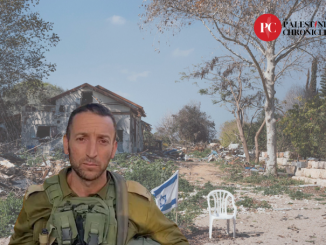
According to Al-Jazeera, KAN reported that the Israeli army and police forces exchanged heavy fire with Palestinian fighters in the kibbutz Be’eri on October 7, despite being aware that there were Israeli captives inside the building.

An investigation by the Israeli Broadcasting Corporation (KAN) revealed that the Israeli army was aware of the presence of Israeli captives in the house it targeted with two tank shells in the Be’eri settlement on October 7, Al-Jazeera reported on Saturday.

An Israeli detainee reportedly informed the Israeli forces that there were 12 Israelis inside the house. She told KAN that they did not believe her.

According to Al-Jazeera, KAN confirmed that Hamas fighters did not fire on the captives and that it was Israeli fire that killed the Israelis, along with 40 fighters.

The families of the Jewish settlers who were killed by Israeli tank shelling in the kibbutz Be’eri had previously called on the army to conduct a comprehensive and transparent investigation into the decisions that led to “this tragic outcome.”

This came after Israeli Brigadier General Barak Hiram told The New York Times that he had authorized tank fire towards the building, “even at the cost of civilian casualties”.

Israeli Army Radio previously revealed that Chief of Staff Herzi Halevy decided to launch internal investigations into all units into the events of October 7.

‘Hannibal Directive’

Israel did not officially recognize the implementation of the ‘Hannibal Directive’ on October 7. However, several investigations shed light on the events of that day.

Former Labor party leader Shelly Yachimovich called on December 24 for an investigation into the Israeli army’s implementation of the ‘Hannibal Directive’ in Israeli towns surrounding the Gaza Strip on October 7, Al-Jazeera reported.

‘Hannibal Directive’ is the name of a controversial procedure used by the Israeli army to prevent, at any cost, the capture of soldiers by enemy forces.

“There is a violent campaign to prevent any investigation/talk” about Israeli Brigadier General Barak Hiram “knowingly killing 12 hostages, including children” in a house in Be’eri,” Yachimovich wrote on her X platform.

“The reason?” she rhetorically wondered in her tweet, adding: “Hiram is ‘the hero of Israel’. The heroes of Israel protect the children of Israel, not kill them.”

The former Labor leader attributes the incident to the implementation of the Hannibal directive, sarcastically noting, “Hannibal turned over in his grave.”

Gaza Genocide

Currently on trial before the International Court of Justice for genocide against Palestinians, Israel has been waging a devastating war on Gaza since October 7.

According to Gaza’s Ministry of Health, 30,960 Palestinians have been killed and 72,524 wounded in Israel’s ongoing genocide in Gaza starting on October 7.

Moreover, at least 7,000 people are unaccounted for, presumed dead under the rubble of their homes throughout the Strip.

Palestinian and international organizations say that the majority of those killed and wounded are women and children.

The Israeli aggression has also resulted in the forceful displacement of nearly two million people from all over the Gaza Strip, with the vast majority of the displaced forced into the densely crowded southern city of Rafah near the border with Egypt – in what has become Palestine’s largest mass exodus since the 1948 Nakba.

Israel says that 1,200 soldiers and civilians were killed during the Al-Aqsa Flood Operation on October 7. Israeli media published reports suggesting that many Israelis were killed on that day by ‘friendly fire.’

Source: Palestine Chronicle

Strugglelalucha256


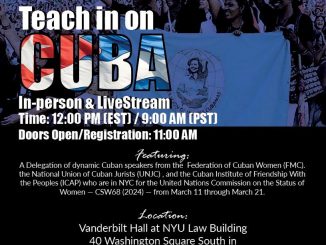
Webinar: Teach In on Cuba, March 16

https://us-cubanormalization.org/nyc-fmc/
In person and livestream
Time: 12 p.m. EST / 9:00 a.m. PST
Doors open / Registration: 11 a.m.

Featuring:
A delegation of dynamic Cuban speakers from The Federation of Cuban Women

Location:
Vanderbilt Hall at NYU Law Building
40 Washington Square South in
Manhattan, NYC

Join us on Zoom:
https://nyu.zoom.us/j/94384899073

Note: If you are planning to come in person to the NYU Campus, you must register:
https://docs.google.com/forms/d/e/1FAIpQLSd4CPvmecLux_UaWKNf5YksNtuBo5u7VJm6I8OX-zmNTh_tAw/viewform?usp=sf_link

Strugglelalucha256


Webinar: No Red Baiting, No Race Baiting, and No Queen Baiting, March 20

No Red Baiting, No Race Baiting and no Queen Baiting

Wednesday, March 20, 2024 at 7 PM to 9 PM

Pride at Work/Eastern Massachusetts is proud to present the
rarely-seen video, “No Red Baiting, No Race Baiting, and No Queen Baiting!” narrated by its author, the late gay Labor Historian, Alan Berube. This is the true story of how the Marine Cooks and Stewards forged unbreakable racial and queer/trans unity in the Marine Cooks and Stewards Union in the 1930s during the upsurge of the radical CIO between 1936-1955.

zoom https://cambridgecollege.zoom.us/j/85768008978 or

Send an email to maprideatwork@gmail.com and we will send you the zoom link

Strugglelalucha256


PFLP warns of suspicious U.S. plan for Gaza pier

PFLP questions the significance of Biden’s port plan in Gaza at a time when the United States could effectively impose aid entry through alternative means.

The Popular Front for the Liberation of Palestine (PFLP) has issued a warning against the U.S. plan to establish a temporary pier off the coast of Gaza for “transporting aid to the sector.”

The movement emphasized that the U.S. plan is “suspicious and dubious” and goes beyond the goal of aiding the Palestinian people, opening the door to executing other alarming objectives, such as forced displacement plans under humanitarian and other pretexts.

It also considered the issuance of instructions by the U.S. President to establish the port an attempt to appease public opinion in the United States and part of his electoral propaganda at a time when there had been no real pressure exerted to force the occupation to stop the starvation war or its crimes against the Palestinian people or to facilitate the entry of convoys into the Gaza Strip.

Furthermore, the PFLP affirmed that the step would be approached with caution and skepticism, especially given the behavior and positions of the U.S. administration, its actions against the Palestinians, and its bias toward the occupation.

It regarded the attempts to portray this step as evidence of a rift between the U.S. administration and the occupying entity as inaccurate, emphasizing the partnership between the two sides in aggression, genocide, and starvation.

The movement further questioned the significance of the step at a time when the United States could effectively impose aid entry through alternative means, such as compelling the opening of border crossings and delivering assistance via land routes through international institutions, particularly the United Nations Relief and Works Agency for Palestine Refugees (UNRWA).

It emphasized that the alternative to these suspicious plans was to press for the cessation of aggression and the complete withdrawal of the occupation from the Gaza Strip. This includes the return of the forcibly displaced to their areas and homes, as well as the opening of crossings to allow the entry of aid without restriction or conditions and its distribution across the Strip.

“Any actions beyond those aforementioned are futile, dubious, and unwelcomed,” it added.

PFLP concluded its statement by affirming that the Resistance will remain vigilant and will confront any “suspicious U.S. plans or any other actions that might compel Palestinians to be expelled to liquidate the Palestinian cause.”

It further confirmed that the U.S. presence would be a legitimate target for the Resistance.

Biden’s new port plan won’t bring relief to Gaza: Economist

According to The Economist, U.S. President Joe Biden announced on Friday, during his State of the Union, address that he has directed his military to lead a mission that will establish a temporary pier that will bring humanitarian aid into the Gaza Strip.

“Tonight, I’m directing the U.S. military to lead an emergency mission to establish a temporary pier in the Mediterranean on the Gaza coast that can receive large ships carrying food, water, medicine, and temporary shelters,” he said during his speech.

“No U.S. boots will be on the ground,” Biden claimed.

He added that the temporary pier would enable a massive increase in the amount of humanitarian assistance getting into Gaza but stressed that “Israel” must play its part in the process for it to be successful.

Earlier, a senior Biden administration official said the temporary port will feature a pier that will “provide the capacity for hundreds of additional truckloads of assistance each day.”

According to the official, the shipments will be screened by the U.S. and partners in European Union member Cyprus.

The people of Gaza are facing dire shortages of food, water, and medicine, with the United Nations warning of the risk of famine. The entire population of 2.2 million is in crisis or worse levels of food insecurity, according to the World Food Program (WFP).

The WFP reported that Gaza requires at least 300 vehicles each day to transport food, medicine, and other necessities. Shipments via Gaza’s two operational land border posts—the Rafah crossing with Egypt and the Karam Salem crossing with “Israel”—fall significantly short.

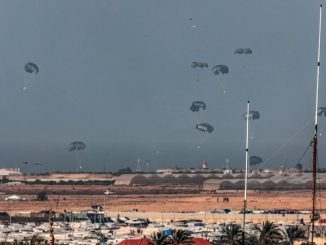
The U.S. has so far airdropped a total of 192 packages containing 112,896 meals to Gaza. The figure, according to The Economist, only represents one meal per six days for 5% of Palestinians, this is provided that all pallets arrived undamaged.

In addition, the challenge is not only getting the supplies into the Strip but distributing them around the territory, knowing that trucks and stores were attacked and Israeli tanks tore up the roads.

The Government Media Office in Gaza called earlier for the immediate and urgent opening of land crossings to allow thousands of tons of aid to enter, in order to prevent the deepening famine crisis in the Gaza Strip, especially in the north.

Commenting on the casualties resulting from the random air drops of aid, which led to the killing of 5 people and injury of several others, the office reiterated that such operations are not effective and are not the optimal way to deliver aid.

Five Palestinians, including two children, were killed on Friday due to an aid airdrop mishap, where at least one parachute malfunctioned, causing a package to fall on them. The tragic incident occurred in the al-Shati refugee camp in northern Gaza at approximately 11:30 am local time.

Airdrops of humanitarian aid to Gaza may not be necessary if pressure on the Israeli occupation was effective, Patrick Wintour of The Guardian reported.

According to The Economist, Biden refuses to utilize America’s clout to push “Israel” to let additional supplies into Gaza. Now, after enabling “Israel’s” behavior for months, he is seeking ways to free it of accountability.

The UN Relief and Works Agency is also concerned with the distribution of help once it arrives on the ground. Chris Doyle, executive director of the Council for Arab-British Understanding, believes the decision of the U.S. to airdrop aid is a sign of “America’s ineffectiveness.”

Doyle notes that airdrops are considered dangerous and not enough, emphasizing that the U.S. is only doing so since it “cannot persuade Israel to allow aid into Gaza by land and in trucks. It is the ultimate sign of weakness and shows the U.S. is unwilling to stand up to Israel.”

According to Politico, the airdrops expose Biden’s very limited approach with “Israel” since the U.S. usually delivers airdrops to areas that are occupied by “terrorist groups or hostile regimes, not allies.”

Source: Al Mayadeen English

Strugglelalucha256


Haiti: Journey to the heart of the anti-Ariel Henry mobilization, part 2

Part 2

It’s undeniable that Ariel Henry’s days in power in Haiti are numbered. As we write the second part of this column on Tuesday afternoon, nobody knows where the Prime Minister is. He is neither in Kenya nor in the United States. Rumor had it that he was in France for a so-called Café festival. But no one has seen him. What is certain is that he is not in Haiti either, as the country’s two international airports – Toussaint Louverture in Port-au-Prince and Hugo Chavez in Cap-Haïtien – are being watched like milk on fire by the population to prevent the plane carrying him from landing.  Even regional airports such as Jacmel, Jérémie and Cayes have been put on alert by the population, who have decreed Ariel Henry “persona non grata” in Haiti.  In other words, the mobilization against the regime that began over a month ago continues unabated. As was the case under the presidencies of Martelly, Moïse, and, before them, Aristide, Port-au-Prince remains the bastion of anti-Ariel Henry protests, while the police do not hesitate to make excessive use of tear gas and even live ammunition.

As a result, many people have been killed since the start of the anti-Ariel Henry protest movement, such as journalist Jean-Marc Jean, who lost an eye on February 8, 2024. On Monday February 5, 2024, all the capital’s neighborhoods – Canapé-Vert, Solino, Bel-Air, Bourbon, etc. – came under fire. Hence, the numerous victims recorded since the start of the protest movement against the ruling power, such as journalist Jean-Marc Jean, who lost an eye on February 8, 2024. On Monday, February 5, 2024, all the capital’s neighborhoods – Canapé-Vert, Solino, Bel-Air, Bourdon, Nazon, Champ de Mars, Lalue, Delmas, Delmas 32, etc. – were in an uproar, burning tires all over the city in anticipation of February 7.  On the same February 5, former Prime Minister Claude Joseph, leader of the EDE party (Les Engagés pour le Développement), and his supporters took to the streets, notably in front of the Villa d’Accueil serving as the Primature in Musseau, to stage a sit-in demanding the departure of the head of the Transition, Ariel Henry.  But the police, who seem to have been given firm instructions, showed no mercy. No one was spared. They intervened even before the protesters had time to unfurl their banners. They used tear gas and fired from all directions at the demonstrators, who were dispersed after the former Chancellor, Claude Joseph, had been sprayed with copious amounts of gas. The same happened to Pitit Dessalines party leader Jean-Charles Moïse on Sunday, February 4 and Monday, February 5.

The former Mayor of Milot nearly lost his life during the demonstration on Monday, February 5, 2024, in Delmas and around the Primature in Musseau. Caught under heavy fire from police and armed civilians on the route of the demonstration on Route de Delmas towards Pétion-Ville, the former senator’s life was saved only by the skill and vigilance of his supporters, who quickly extricated him and drove him into a ravine below the road, where he took refuge with the inhabitants of this shantytown. Haggard and unsettled, the political leader emerged in shock and was unable to complete the route of the demonstration, as the regime’s police made a show of force with their riot gear, whereas the former candidate for the presidency of Haiti and the population were merely demonstrating calmly at the time.

It has to be said that the forces of law and order were on their toes, given that Guy Philippe’s arrival in Port-au-Prince had been announced in the run-up to the major demonstrations on February 7, 2024. Admittedly, all the provincial towns were also on the move against the government, in particular against Ariel Henry. Nevertheless, it’s obvious that the capital took the spotlight from them on D-Day, i.e. February 7, the day on which, according to the opposition, Ariel Henry was supposed to leave the Prime Minister’s office. Indeed, the week before, Guy Philippe’s arrival was announced in the capital. In truth, the whole of Port-au-Prince was holding its breath. The government was wondering how to react if the leader of the protest movement managed to penetrate the power environment and took the lead of a procession of angry protesters. It was a false alarm.

Guy Philippe is not here. In the end, the population, who had been demonstrating daily, finally got fed up and decided to dispense with the rebel leader’s presence. He wanted February 7 to be a symbolic day, if ever there was one, to make a lasting impression. So he devised a strategy and a schedule for his visit to Port-au-Prince. Knowing that the authorities would do everything to prevent him from touching down in the capital, he took everyone by surprise. First, he booked a seat on a Jérémie/P-au-P flight for February 7, 2024. But since he knows the system and what he’s capable of, on Monday 5th, in the company of a few loyal followers and his bodyguards, he embarked incognito on a small boat bound for Port-au-Prince. With his journey planned down to the last detail, he avoided taking the large ships making the Jérémie/P-au-P route, where government agents might have recognized or discovered him and raised the alarm.On this frail boat, they sailed through the night, arriving in Port-au-Prince at dawn on Tuesday, February 6. After arriving in the capital, Guy Philippe took the usual precautions and made his presence felt at the scene of the crime, in Pétion-Ville, where, almost 7 years earlier, the Senator from Grand’Anse had been “kidnapped” by agents of the American DEA and the Haitian BLTS on charges of complicity in drug trafficking.

In fact, on the morning of Tuesday, February 6, 2024, as thousands of demonstrators prepared to set off from the airport crossroads at bas Delmas, the usual gathering place known as Kafou rezistans, Guy Philippe paraded around Place Saint Pierre in Pétion-Ville, shaking hands with onlookers and passers-by who couldn’t believe their surprise. Immediately, news of Guy Philippe’s presence in Pétion-Ville went viral on social networks, particularly in the country and in Port-au-Prince. Instantly, hundreds of motorcyclists waiting to take part in the demonstration took to the road towards Pétion-Ville, causing understandable panic in the capital and in Pétion-Ville. But very quickly, a wild rumor spread among the demonstrators and throughout the Republic, particularly in the Cité: Guy Philippe is in town! Guy Philippe marches on the Palais National! Guy Philippe is on his way to the Primature to arrest Ariel! Such were the shouts heard during this moment when everything seemed to stand still.

At the same time, the flood of images of a smiling, calm Guy Philippe on social networks continued to annoy members of the government, some of whom, as a precaution, were already taking cover, according to sources close to the government. To be sure that the videos circulating on social networks were indeed of him, the daily Le Nouvelliste, out of professional ethics, contacted the former leader of the 2004 armed struggle for authentication. Guy Philippe confirms that he is indeed in the flesh in the capital to accompany the population in its fight against the regime: “I promised the population that I would be in Port-au-Prince before February 7.I have never lied to my people.I’m here for the February 7 demonstration”, he proudly declares, reassured.

So Guy Philippe was able to keep his word by coming all the way to the capital with the revolutionary credo he has been trying to sell to the population since his expulsion from the United States. The Pestel native’s presence in Port-au-Prince would enliven and revive protesters across the country, particularly those in the Port-au-Prince metropolitan area, who staged a demonstration of force on Wednesday, February 7, 2024, but without Guy Philippe, for security reasons, he told the media the following day.

Everywhere in Delmas and Pétion-Ville, crowds were shouting their displeasure at the government, and particularly at Ariel Henry and Me André Michel. The latter seemed, at the time, to be holed up in a villa somewhere in Pétion-Ville or Debussy or even in a large hotel on the Place, according to some sources. But it was in Pétion-Ville that more victims were to be deplored. This was also the day when the Brigade de Sécurité des Aires Protégées (BSAP) counted the first deaths in its ranks. It all started very early with a contingent of agents from this state structure demonstrating on the Delmas and Pétion-Ville roads, accompanied by thousands of demonstrators shouting “vive BSAP, abas la police” all along the route. This merry-go-round lasted most of the day. Except that, just as they were about to return to their base on the Kenscoff side of the Thomassin road, the national police suddenly decided to intervene for no apparent reason. When UDMOs (police officers from a specialized unit) summoned a white pick-up bearing the initials BSAP and carrying a group of officers to stop, the latter didn’t react and naively even shouted: don’t shoot, BSAP and the police are brothers.

But it seems these police officers didn’t think so. In a split second, they opened fire, officially killing 5 BSAP officers and arresting 3 others. The victims were Mackendy Veillard, Dorvil Jean Fontange, Zéphyrin Daniel, Clersain Thomas and Chrisner Désir.This action caused widespread panic in the Laboule 10 area, all the more so as Guy Philippe, according to his own statements to the press, was following the procession of BSAP agents who were killed in another vehicle a few meters away. He claims to have been present throughout the operation and that he was the target of the attack, as the authorities had information that he was part of the motorcade. Officers from the Pétion-Ville UDMO were behind the operation, which was undoubtedly orchestrated by the President of the CSPN, none other than Prime Minister Ariel Henry, and the Director General of the PNH, Frantz Elbe.

Following this carnage, the police seized the vehicle in which these BSAP agents had been protecting the population, demonstrating against the regime in the morning. In the course of this deadly operation, not only was the vehicle seized, but a motorcycle also belonging to BSAP and carrying other agents was also confiscated. All these items were taken back to the Pétion-Ville police station to the jeers of angry demonstrators. That same evening, the bodies of the 5 agents were buried in a mass grave after authorization from the Government Commissioner, after he had been informed by the Pétion-Ville Police Commissioner that 5 bandits had been killed in clashes with the forces of law and order, without ever mentioning that they were five BSAP agents. The following day, the OPC (Office de Protection du Citoyen) issued a press release calling for a “thorough investigation into the circumstances of the violent death of the five agents of the Protected Areas Security Brigade in Laboule 10 on Wednesday, February 7, 2024, in circumstances that remain troubling”.

The Association des Militaires d’Haïti (AMH) has also issued a warning to the government following the incident in which 5 BSAP agents lost their lives.  According to a press release, the association said:

“(…) As a reminder, the current Commander-in-Chief of the FAd’H, certain officers of the Military High Command and all demobilized BSAP soldiers are members of the Military Association of Haiti.  Some 500 non-military members of the BSAP have been trained by the AMH and this list has been forwarded to the Grand Quartier General and the Ministry of Defense for possible incorporation into the Army.  A confrontation between FADH and BSAP is a confrontation between brothers-in-arms from the same Haitian Military Association.

Dr. Ariel Henry is therefore invited to put everything on the table, firstly to prevent a fratricidal 2-level confrontation between BSAP and FADH, a confrontation which he would certainly not survive, and secondly to issue the necessary instructions for BSAP to be transferred without delay to the command of FADH.

(…) Finally, the Military Association calls on all political actors to rise above their status as elites and warns against any infiltration or instrumentalization of the BSAP in provocative actions with the FADH and the PNH (…)”.

Finally, there is the statement from the Syndicat national de la police nationale d’Haïti (SYNAPOHA), which, through the voice of its General Coordinator, Lionel Lazarre, called on police officers to exercise caution and ask them to avoid manipulation by politicians. Lionel Lazarre said he was aware of the fierce criticism leveled at the police following the attack, which left 5 BSAP officers dead, but also claimed other victims among the population, notably almost a dozen journalists who were simply doing their job.

Speaking on Thursday, February 8, 2024, on Radio Magik9, the union leader called on police officers to pull themselves together:

“At Synapoha level, we are affected by the criticism of the PNH. We understand the concerns and frustrations expressed by the population in relation to what is taking shape. However, the PNH must exercise its function within the limits of the law. Any excesses must be corrected. The PNH must not give the impression of being effective in controlling demonstrations and weak in other areas, or worse, give the impression that it is protecting a power rather than accompanying the population. Today, the PNH must be at the service of all,” declared Lionel Lazarre, Coordinator of the Syndicat national de la police nationale d’Haïti.

During the day, there were countless scuffles between the police and the population across the country.

To be continued…

Source: Haïti Liberté / Translation by Internationalist 360°

Strugglelalucha256


Haiti: Journey to the heart of the anti-Ariel Henry mobilization, part 1

Part 1

The Head of the Transition, Ariel Henry, is in Guyana for the 46th Ordinary Session of the Heads of State and Government of the Caribbean Community (CARICOM), taking place from February 25 to 28, 2024. Then, according to a Primature press release, he was due to travel to Nairobi, Kenya, to sign the agreement authorizing that country and a number of other African states to deploy in Haiti as part of the Multinational Security Support Mission in Haiti (MMSS). For him, everything is under control. Under control! Not so sure. Indeed, given what happened on Monday, February 5, Tuesday, February 6, and Wednesday February 7, 2024, in Haiti, notably in Hinche, Cap-Haïtien, Ouanaminthe, Miragoâne, Jérémie, Gonaïves, Cayes, Petit-Goâve, Mirebalais, not to mention Port-au-Prince and Pétion-Ville, it’s indisputable that the authorities are not really in control of the country.

Ariel Henry can always argue that he did not leave power on February 7, as requested by the opposition and a large part of the population. Nevertheless, the evidence is there: he no longer has authority over anyone, perhaps only over his police force, who kill for him and brutalize street children. As we all know, for several weeks now, a Communiqué published in the official newspaper Le Moniteur on Tuesday, January 23, 2024, has outlawed the structure known as BSAP (Brigade de Sécurité des Aires Protégées – Protected Areas Security Brigade), which is the armed wing of ANAP (Agence Nationale des Aires Protégées – National Protected Areas Agency). an autonomous public body of the Ministry of the Environment. The communiqué ordered BSAP agents not only to lay down their arms but also to remain confined to their bases or barracks until further notice. However, as we have already written, since the dismissal of ANAP Director General Jeantel Joseph, head of BSAP, it is as if the interim regime had activated a new front against its presence at the head of the country.

Indeed, after former rebel leader Guy Philippe, freshly expelled from the United States where he served a six-year prison sentence for drug trafficking, launched a general uprising against the government, preceded by calls from the opposition for the resignation of Prime Minister Ariel Henry, it is now the agents of the Protected Areas Security Brigade who are getting in on the act in response to the population’s call to overthrow the regime, whatever the cost.

In fact, the country has been turned upside down for over a month now. Not a single major Haitian city has been spared by the protest movement, whose objective is the departure of Ariel Henry, who holds the posts of head of government, Minister of the Interior, President of the Republic, President of the CSPN, etc. But in this situation of revolt, the people are not alone. But in this situation of revolt, some regions are more affected than others. The Grand Sud and Grand Nord are the hard core of the protest.

The town of Jérémie, a stronghold of Guy Philippe’s supporters, where several journalists, including Wadson Pierre Richard, Wilborde Ymozan, Lemy Brutus, Stanley Belford, Samuel Auguste and Schneider Paulson, were victims of police brutality.

The inhabitants of the Cité d’Alexandre Dumas have paid a very heavy price since the beginning of this protest.The town of Les Cayes, where the former police commissioner has a large number of supporters, has also been on the barricades for over a month. On February 7, 2024, supporters of EDE and the Pitit Dessalines platform took to the streets of the town with placards demanding the Prime Minister’s departure. A young demonstrator was stabbed to death during the demonstration, and the UDMO made excessive use of tear gas. The previous day, several people had been shot and wounded by UDMO officers. It should be remembered that it was in this town that political activist Myrthil Marcelin, known as Arab, was arrested on February 12, 2024, by security agents of the Department Delegate.

These two metropolises – Jérémie and Les Cayes – have continued to fuel the movement initiated by Guy Philippe since his return to the country. But there’s also the department of Nippes, more specifically the town of Miragoâne, the stronghold of Government Commissioner (Procureur) Ernest Muscadin, a rebel in the eyes of the Port-au-Prince authorities, who don’t appreciate his approach to gang justice. Yet he has earned a reputation among Haitians for being incorruptible. As a result, the population of the Miragoânaise agglomeration has effortlessly embraced the anti-government protest movement. As a result, not a day goes by without the city turning into a people’s court of protest to demand the resignation of the Prime Minister and his allies. Monday, January 29, 2024, was a particularly eventful day. Schools and businesses were paralyzed. The Port of Miragoâne, one of the busiest in the country, operated at a snail’s pace while the doors of banks and other public and private administrations remained closed.

The population was more than motivated on February 7, 2024. Several thousand demonstrators took to the streets as far as the Desruisseaux crossroads, shouting “Si Ariel pa ale, nap mete dife” and “Ti rès la se pou pèp la.”BSAP agents also took to the streets, as they had been doing for weeks. Having come from Chalon, they ended their demonstration on the Gros-Trou side without entering downtown Miragoâne, much to the disappointment of the demonstrators who wanted to go there and take their demands to the Delegation (Prefecture). It should be noted that no public or private institution was able to function in the Nippes region. In particular, the ONA premises were attacked by protesters. Finally, on the same February 7, 2024, a press conference was organized by the EDE party of the former Minister of Foreign Affairs, Claude Joseph, with relatives of former Senator Guy Philippe.

Heading back towards the capital, things are no better. The town of Petit-Goâve, in the Palmes region serving as a bridge between the West and the South, has for years been the marker by which observers measure the extent of socio-political protest against the powers that be in Port-au-Prince. Faustin Soulouque’s town has maintained its reputation as a protest town, ahead of Gonaïves and Saint Marc in Artibonite.In Petit-Goâve, the Palace of Justice and the Town Hall were set on fire, while the population closed Route Nationale N° 2, the only road leading to three departments, notably Grand’Anse. Reputed to be one of the toughest towns in terms of anti-government mobilization, Petit-Goâve is and remains one of the spearheads of Guy Philippe’s movement, where, moreover, Jean-Bertrand Aristide’s ouster first proclaimed his intention to lead a revolution to bring down the quasi-feudal “system” that has governed the Republic since its foundation.A few kilometers away, we enter the town of Grand-Goâve.

More timid than its big sister, Grand-Goâve is nonetheless on the warpath. Barricades are legion here too. After negotiations with the rioters, whose demands were no different from those of the rest of the country: the resignation of the head of the Transition, Ariel Henry, it was difficult to cross the town. Finally, the town of Léogâne comes into view, a large suburb to the south of Port-au-Prince.It, too, has been the scene of anti-government protests for several decades.Between 2018 and 2021, Léogâne was one of the key cities for the anti-Jovenel Moïse opposition.It hosted several congresses, meetings and other opposition activities throughout the presidency of Jovenel Moïse.One of these was a large rally at which participants armed with machetes, cutlasses and other edged weapons said they were ready to do battle with the government if the President did not relinquish the National Palace by February 7, 2021.By refusing to comply, even though his constitutional mandate ran until February 7 2022, the Head of State paid with his life.

Under Ariel Henry, the de facto Prime Minister, Léogâne is back in action, albeit less warlike but no less active in the fight to overthrow the head of the Transition. Although opposition leaders have not yet organized any major events in the City of Queen Anacaona, several demonstrations have already taken place in this town so close yet so far from the capital. From Léogâne to Port-au-Prince, it’s just a straight shot across Carrefour, the town of the late Eric Jean-Baptiste de Père Eternel Loto, Secretary General of the RDNP and victim of insecurity, assassinated by a gang under the control, it is said, of a former opposition leader now in power. But to get there, you need patience and, above all, courage.Cardiac patients abstain!And with good reason.There’s the famous Mariani traffic circle, recently occupied by gangs who are vying with each other in their efforts and strategies to take over more of the territories that the government is handing over to them, or at least abandoning.These are the famous “Lost Territories” of the Republic to which the Minister of Justice, Émmelie Prophète-Milcé, was alluding.

At this strategic junction, motorists and travellers have three options: (1) pay a toll to the gangs controlling this territory, (2) be executed on the spot for refusing to comply, or (3) try to force their way through, with the guarantee of being killed a few meters away for disobeying the laws of these criminals. Leaving this tollbooth run by criminals, after the requisite formalities, you enter Carrefour, a once peaceful suburb. Today, faced with the indifference of the central authorities to the fate of the population, the latter is also raising its voice and calling for the resignation of the Transition regime.At a time when demonstrators are protesting against insecurity and the high cost of living, the Prime Minister’s departure has been added to the list of demands.In Carrefour, in fact, it is becoming difficult, even risky, to venture out on the rare, very rare public transport that runs between Carrefour and downtown Port-au-Prince, or even as far as Portail Léogâne.

If, by risking your life, you manage to do so, you are quickly caught up by the protest movement that has been sweeping the country for over a month.Port-au-Prince, the megalopolis that has been hibernating for two years, is suddenly awakening to the cries and calls of old and new opposition leaders.There are those who joined Ariel Henry from day one, following publication of the Core Group ‘s famous Tweet naming or confirming him as Prime Minister in place of Claude Joseph.Then there were those who followed up on the various Accords – notably Musseau and December 21, 2022 – which integrated the Transition regime.Since then, historical figures such as André Michel, Marjorie Michel of the SDP, Edmonde Supplice Beauzile’s Fusion, INITE and a branch of PHTK have maintained their support for the Prime Minister, while others have not. Jean-Charles Moïse of Pitit Dessalines and Liné Balthazar of PHTK have distanced themselves and intend to show the way out of the Prime Minister’s office to an Ariel Henry clinging to power as if he had received a mandate that he intends to defend, following the example of his predecessors.

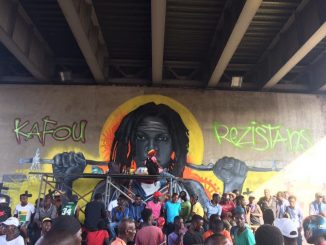
In the capital, it’s at the airport crossroads, under the Nazon viaduct or crossroads, also known as Kafou rezistans, that protesters gather whenever they intend to mobilize against the governments in power.Ever since almost all opposition leaders set February 7, 2024 as the date on which Ariel Henry was to leave power, this symbolic spot has been packed to the rafters.This crossroads is the nerve center of Delmas and Port-au-Prince, even in these times of rampant insecurity when gangs are not far away.This district of Delmas 17 is almost non-stop, day and night.Day after day, week after week, anti-government rallies continue unabated.From Carrefour Nazon, the demonstrators head for Pétion-Ville. Sometimes, when they arrive at the Delmas 60 junction, depending on the route chosen or authorized, they either head for Delmas 60 to arrive in front of the Villa d’Accueil in Musseau, where the Prime Minister’s office is now located, and then take the route de Bourdon to get to the Champ de Mars in the vicinity of the National Palace.

Alternatively, they could continue from Delmas road to the center of Pétion-Ville, before turning back via avenue Panaméricaine or route de Bourdon to downtown Port-au-Prince, with an inevitable stopover in front of the Prime Minister’s offices in Musseau.

Despite the insecurity, the capital is the center of the protests, where the most material damage and casualties have been recorded.In spite of everything, the forces of law and order continue to ensure the protection of administrative buildings and the safety of members of the government and senior civil servants.

To be continued…

Source: Haïti Liberté / Translation by Internationalist 360°


Strugglelalucha256
https://www.struggle-la-lucha.org/2024/03/page/4/