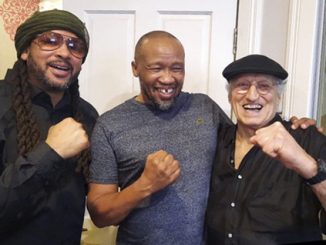
Marshall ‘Eddie’ Conway, ¡presente!

Former Black Panther Party leader and political prisoner Marshall “Eddie” Conway died Feb. 13 in Long Beach, California. He was a leading member of the Baltimore chapter of the Black Panther Party and was falsely convicted in 1971 of the killing of Baltimore police officer Donald Sager. He, along with community supporters, maintained his innocence and fought for his release. After serving 44 years, Eddie Conway was finally released in 2014, imprisoned for 43 years and 11 months. 

Rev. Annie Chambers, who is a former member of the Black Panther Party and presently an organizer with the Peoples Power Assembly and Baltimore Socialist Unity Party, said, “We send our condolences to his family, loved ones, comrades and to the people of Baltimore, who have lost a real fighter. Eddie continued the struggle while behind bars and after his release. His legacy will live on in our continuing fight against this rotten racist capitalist system. Marshall ‘Eddie’ Conway, ¡presente! Free all political prisoners!”

Struggle-La Lucha shares the announcement released by Real News where Conway worked as an executive producer and host: https://therealnews.com/eddie-conway-1946-2023

“Do your little part. Do whatever you can to help change these conditions. Because we’re moving into a critical period of history, not just for poor and oppressed people, Black people, but for humanity itself. So you need to engage. Do whatever little bit you can, but you need to do something.”

—Eddie Conway in 2019, celebrating five years of freedom

It is with the heaviest of hearts that we announce the death of our friend, co-worker, and comrade Marshall “Eddie” Conway.

Eddie joined the ancestors on February 13, 2023, surrounded by family and loved ones. After falling ill nearly a year ago, while still dealing with the immeasurable toll nearly 44 years of incarceration as a political prisoner took on his body, Eddie had been hospitalized and fighting valiantly to recover. That is who he is, who he was, and who he always will be: a fighter. After a lifetime of fighting, though, the time has come at last for our dear Eddie to rest—and for all of us to carry on his fight. 

Eddie was born on April 23, 1946, in a deeply segregated Baltimore—a city shaped by blockbusting, white flight, and the organized disinvestment from Black communities. At 18, he enlisted in the U.S. Army, an experience that would prove to be politically formative for Eddie, throwing into sharp relief the contradictions of a country founded on slavery, structural racism, and genocidal violence that nevertheless professed to defend “democracy” with bombs, guns, and endless war. 

Returning home to Baltimore, Eddie confronted the pervasive evils of racism head-on. He was working in the medical sector and at Bethlehem Steel when, in 1968, the city erupted like so many others following the murder of Martin Luther King, Jr. — an explosion of rage and pain and need for action that brought Eddie into the orbit of the nascent Black Panther Party, in which he became a core member of the newly-established Baltimore chapter.

The Baltimore BPP chapter, with Eddie’s support and leadership, built strong community ties through efforts like a free breakfast program, a system of robust internal political education, and an increasingly widespread local distribution network for the national BPP newspaper — despite near constant police harassment, and even high-level infiltration of the branch. This was the era of COINTELPRO, in which local police forces were enlisted by the national security state to crush the successful systemic challenge the Panthers and other associated revolutionary groups were posing to America’s racist, exploitative status quo. It was at the height of this era that Eddie was framed for the 1970 killing of a Baltimore police officer, convicted, and sentenced to life in prison in 1971, after a heavily politicized trial in which Eddie was denied proper legal representation. 

Even in the darkest of times, in the most hopeless of places, Eddie’s commitment to organizing for liberation was unwavering. Within his first weeks inside the Maryland penitentiary, he had already emerged as a leader of the incarcerated chapter of the BPP. Despite constant, dehumanizing, and often violent pushback from prison authorities, he would go on to play a lead role in creating organizations like the United Prisoners Labor Union and the Maryland Penitentiary Intercommunal Survival Collective, organizing with fellow incarcerated people to build collective power for self-determination and self-defense. While incarcerated, Eddie worked relentlessly to protect and expand prisoners’ rights to communication and education; for instance, he helped organize the “To Say Their Own Word” seminar program, developed as a way to cross-pollinate radical thought inside and outside the prison. He was also instrumental in the founding of Friend of a Friend, a mentorship program designed to help young incarcerated men prepare for reintegration into their communities upon release.

Year after year, decade after decade, Eddie carried on not only with the tremendous bravery needed to contest America’s brutal system of mass incarceration while he was himself confined within it, but also with an enduring and perhaps surprising commitment to modesty. As he wrote in his autobiography, published in 2011: 

Organizing is my life’s work, and even though I initially balked at becoming a prison organizer, that is where most of my work has been done. Friends and family tell me that I have influenced hundreds of young people, but I don’t know. I simply see the error of this society’s ways up close and feel compelled to do something about it; I have tried my hardest to avoid getting caught up in the cult of the personality that often develops around political prisoners. I have walked the prison yard and seen admiration in the eyes of others, but had to remind myself, as I straightened my posture, that it is about something bigger than me. Prisons are the place where society dumps those who have become obsolete, and at present there are perhaps no other people who have become more dispensable in this country than African-descended people. The minute that we began to stand up and hold this country accountable for the many wrongs done to us, the prisons began to swell with black women and men. It is as if the entire justice system is a beast that consumes black bodies, and prisons are the belly.

Eddie’s loved ones and supporters never gave up on him, keeping a decades-long solidarity movement going and agitating persistently for his release, but it was only in 2014—after a 2012 decision by the Maryland Court of Appeals that invalidated many historical verdicts due to faulty jury instructions—that Eddie was finally able to secure his freedom.

Despite the unimaginable toll that 44 years of incarceration had taken on him, Eddie’s organizing did not stop when he walked out of prison. He became our beloved colleague at The Real News Network, where he continued his passion for education and media-making in the service of the fight against mass incarceration as Executive Producer and the host of Rattling the Bars, his weekly video program. He also played a key role in the formation of Tubman House, which, in the wake of the Baltimore Uprising, seized vacant property and land for community needs in Sandtown-Winchester—the neighborhood where Baltimore police killed Freddie Gray.

Strugglelalucha256


Speaker of the House chaos highlights neo-fascist extremists

As 2023 began, a political whirlwind ended as the Republican party elected Kevin McCarthy Speaker of the House of Representatives, often considered the second most powerful position in the federal government. However, the fanfare was limited as McCarthy’s journey to the speakership was anything but smooth. The election took 15 ballots and four full days for McCarthy to receive the majority of votes required to win the gavel. 

Trouble began to brew before voting started on Jan. 4. After the 2022 midterm elections, a small but influential group of ambitious hardline right-wing ideologues made clear their intentions to resist McCarthy’s speakership. Leading this group were Florida Rep. Matt Gaetz and Colorado Rep. Lauren Boebert. 

Between these hardline ideologues and a slim Republican majority, McCarthy faced an uphill battle in gaining the votes he needed to seize the speakership. This was the longest and most contentious speaker’s race since 1856, when the issue that divided the U.S. Congress was whether states would enter the Union as “slave” or “free.” 

The issues at the core of this most recent speakership election saga are not nearly as heady nor noble as in 1856. The conflict that kept McCarthy from a victory for 15 ballots was instead between two camps of slightly differing fascist ideologies. 

The modern Republican Party is not moderate

As the voting dragged late into multiple weeknights, the mainstream media coverage became focused on a narrative. This was not the product of ideological infighting, or even simply a dysfunctional government. This was simply a few bad apples holding the noble and moderate Republicans from legislating. 

As the saga unfolded, CNN, the New York Times, Reuters, and alike carefully and methodically shaped the narrative. Panel after panel of talking heads combined with a flurry of online news articles all drew the same conclusion: This gridlock and dysfunction could be solely attributed to a small group of right-wing pro-Trump extremists hell-bent on chaos. Ultimately, the mainstream press concluded that U.S. democracy and reason would triumph over a small but loud Trumpian minority. 

There is just one problem with that. McCarthy’s Republican party is in the image of Donald Trump and, more recently, Ron DeSantis. This is no better demonstrated than by the fact that Donald Trump and notorious anti-Semite Marjorie Taylor Greene endorsed Kevin McCarthy. Greene was rewarded with a high-ranking committee seat. 

This Republican party is no longer that of Bush conservatism as if an era of oil wars and slashing of social welfare programs was not bad enough. The contemporary GOP has never been moderate, let alone progressive in nature. Yet, since 2016 the Republican Party has moved closer and closer to a fully neo-fascist platform. The party has recently seemed to rest upon a sort of “respectable” neo-fascism, that of Ron Desantis. The party’s focus has seemingly shifted from a Trump cult with its disrespect for civil liberties and equal rights toward “culture war” issues that resonate with a right-wing middle-class base. 

The drama on the House floor demonstrated this reality saliently. Before each vote, a Republican representative would make a nominating speech. The content of these speeches is telling. Some of these nominating representatives laid out the more traditional Republican talking points about small government and fiscal restraint. However, far more echoed the fire and brimstone political rhetoric that was the hallmark of the Trump era. 

Republican after Republican blamed China for the COVID-19 pandemic, railed against Latinx immigrants, and denounced Black Lives Matter protesters as dangerous anarchists. If this sounds familiar, it is because these principles were at the heart of Donald Trump’s administration. They are now out and in front as the Republicans’ core tenants. 

This was the political camp that won in the 2022 midterms and, ultimately, the camp that elected Kevin McCarthy as speaker. Neo-fascist extremists are not a congressional minority. In fact, they run the House of Representatives. 

So-called ‘Freedom Caucus’ tools of big capitalists 

The mainstream media’s narrative was immovable: This political crisis was due to a small group of right-wing extremists led by neo-fascists like Matt Gaetz and Lauren Boebert. While it is true that the “Freedom Caucus” was at the center of the resistance to McCarthy’s speakership, the idea that they operate from the fringes of U.S. society is misplaced. 

In fact, the billionaire Koch Brothers and similar ilk keep this powerful neo-fascist Congressional caucus well-fed and well-funded. The Freedom Caucus exists to shape the legislative agenda in accordance with the ruling class’ far right. 

CNN would love us to believe that racism and dysfunction are a product of just a few misbehaving congresspeople, but that just isn’t the truth. The truth is that the Freedom Caucus is the way Congress is run. 

To most people, Washington means the president and his cabinet, the House of Representatives, the Senate, the Supreme Court, and the vast array of agencies that support this structure.

That leaves out the various official and unofficial representatives of the large banks, the most powerful multinational corporations, and the military-industrial complex. These forces are there year in and year out while the elected politicians come and go. They set the agenda for the everyday actions of Congress. 

At the end of the day, the speakership race and the racist caucus at the center of the crisis are just more examples of how capitalism oppresses. 

It’s time for worker power and socialism!

Strugglelalucha256


State of the Union: Biden’s honest moment “I am a capitalist”

In President Joe Biden’s 2023 State of the Union address on Feb. 7, there was one honest moment. Biden said, “I am a capitalist.”

Well, he fudged a bit; he should have said, I am a capitalist and a servant to capitalism. But that’s a quibble.

Behind all of the rhetoric of “leave nobody behind,” almost everyone — with the exception of the wealthiest 1%, including the arms dealers, big oil and gas, and, of course, the Pentagon — have been left behind.

Major cuts to food stamps

When Biden took the podium, the government had announced it was lifting emergency allotments for food stamps. Severe cuts will begin after Feb. 23, 2023. Thirty million people will be impacted in 32 states; 18 states have already cut benefits. The average cut to benefits is $82 a month.

This is happening in the middle of an inflationary spiral that threatens the working class with runaway food prices and escalating utility and rent costs. Those most impacted will be children and the elderly.

The gap between reality and what Biden said

The reality for workers: In a bipartisan effort, Biden violated the rights of 115,000 unionized railroad workers to strike, consequently denying sick days and forcing an unwanted contract to cater to Wall Street.

And what about the infrastructure bill? As important as new roads and bridges are, it cannot cover up the fact that the Democratic Party and particularly Biden simply surrendered to the right wing.  

So much was scuttled: child tax credit payments, guaranteed parental leave, no subsidies for child care expenses, free community college, and funding for public housing repair. Hundreds of billions of dollars in investment in renewable energy was torpedoed.

The urgent need for universal health care has never been clearer.  

But instead of taking on big pharma and insurance companies, Biden has been content with putting a cap on the rising cost of insulin for seniors. This is certainly welcome. But on the other hand, ending the emergency measures for COVID will cause the loss of access to free at-home tests, vaccines, and treatments. Pfizer just announced its proposal to charge $110 to $130 per vaccine dose. 

Assertions on reproductive rights are hollow

Biden and the Democratic Party used the Supreme Court overturn of Roe v. Wade as a cynical tool to turn out the midterm vote; they could and should have fought back.  

Biden has the power to take executive action. He could have declared a public health emergency, bypassed the Hyde Amendment, and allowed Medicaid funds to cover the cost of abortions. The Biden administration could have set up abortion clinics on federal lands in states that have enacted bans. 

Tyre Nichols’ parents and police terror

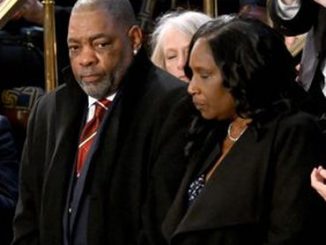
Tyre Nichols’ parents appeared at the State of Union Address at Biden’s request. The depth of their pain is unimaginable, and no matter how small any gesture or reform may appear to be, it is understandable that they would accept Biden’s invitation.

On the other hand, no one should give Joe Biden a pass. Rather than defund the police, he increased their budget. And after a brief acknowledgment of the Nichols family, Biden then went on to a lengthy praise of the police in general. 

If President Biden were serious about addressing white supremacy, there is much he could be doing, including ordering reparations for the descendants of chattel slavery, disarming the police, and implementing community control.  

War on Russia & China

Interestingly, in contrast to the non-stop saber-rattling we have heard for months, Biden didn’t seem to talk too much about Putin or the war in Ukraine. Perhaps there is not much more to be said in demonizing Putin. But it might also be that many workers are getting weary of the war and its economic consequences, and it was decided to save this discussion for later in the back rooms.

But this didn’t stop Biden from engaging in demagogic attacks on China. China’s Foreign Ministry spokesperson, Mao Ning, replied, “China does not fear competing with the U.S. but is opposed to defining the entire China-U.S. relationship in terms of competition.” She continued, “It is not the practice of a responsible country to smear a country or restrict the country’s legitimate development rights under the excuse of competition, even at the expense of disrupting the global industrial and supply chain.”

On the Pentagon budget, there is unity

On Feb. 12, the Hill reported, “A growing number of Senate Republicans are saying that President Biden and Speaker Kevin McCarthy (R-Calif.) should take defense spending cuts off the table in their negotiation over the debt ceiling.” 

While little was said by Biden in his State of the Union on Pentagon spending, he is planning to ask Congress for the largest Pentagon budget in history. This is according to the Defense Department’s chief financial officer.

Pentagon Comptroller Michael McCord said, “I do expect it will be a bigger number than Congress provided last year.” In December, $858 billion was allocated to defense spending, $45 billion more than Biden requested. This included $817 billion for the Pentagon and billions for nuclear weapons development through the Energy Department and other national security programs. 

It is no wonder that with all of the theater associated with the State of the Union Address — that is, the handshaking, the tear-jerking introductions of guests, and yes, even the shouts of “liar” from Georgia Republican Marjorie Taylor Green — one thing remains constant. The stoney-faced military generals remain silent and seated at the front as a constant reminder of their power as unshakeable servants to U.S. imperialism, regardless of the president at the podium.  

Strugglelalucha256


U.S. troops out of the Philippines!

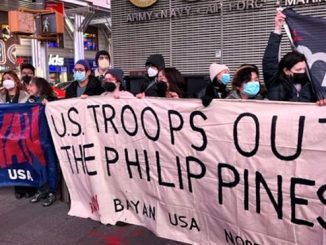
Filipinos and their supporters protested the Pentagon’s war buildup in the Philippines on Feb. 11 in New York City. People rallied at the Times Square military recruiting station on a busy Saturday night in the entertainment center.

The rally was called by the International Coalition for Human Rights in the Philippines-U.S.; BAYAN USA; and the Malaya Movement USA.

It’s a very dangerous period in the Philippines. Workers, peasants, students, and activists are being assassinated and arrested.

The current Philippines president is Ferdinand “Bongbong” Marcos Jr., the son of the late Filipino dictator Ferdinand Marcos. The current vice president is Sara Duterte, a daughter of the former president and wannabe dictator Rodrigo Duterte.

BAYAN USA distributed a statement that read in part:

“BAYAN USA condemns the recent expansion of U.S. military presence in the Philippines as a result of U.S. Secretary of Defense Lloyd A. Austin III’s February 1 visit with Philippine President Bong Bong Marcos (BBM) Jr. The United States’ access to four additional bases under the Enhanced Defense Cooperation Agreement (EDCA), making a total of nine bases, is an egregious violation of Philippine national sovereignty.

“The week of Lloyd Austin’s visit to the Philippines coincided with the 124th anniversary of the Philippine American War, when the United States led a genocidal conquest in the Philippines that left over one million Filipinos murdered and devastated the country’s land and resources. This colonial relationship continues today in the form of unequal military agreements like EDCA, which have persisted despite the nominal independence of the Philippines in 1946 and the people’s successful shutting down of Subic Naval Base and Clark Air base in 1991.”

Speakers from BAYAN, the International Coalition for Human Rights in the Philippines and the Malaya Movement drew interest from onlookers who stopped and listened.

“A few weeks ago, a U.S. general said the United States would be at war with China by 2025,” said Bill Dores, speaking for the International League of Peoples’ Struggle. “You see all this idiocy about the balloon. Meanwhile, in the name of preparing war with China, they are waging war against the people of the Philippines.”

“They are funding death squads. … murdering peasants and union leaders. …They used the Philippines as an advanced base for their mass murder in Korea and Vietnam and now they want to use it as an advanced base for a war with China,” Dores said.

U.S. out of the Philippines!

Strugglelalucha256


Cuba and Biden’s ‘State of the Union’

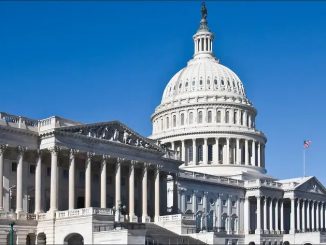
As happens every year, the act known as the presidential State of the Union address has just taken place in the U.S. Capitol, an exercise that has been carried out publicly and uninterruptedly since 1913 and that aims to provide a kind of balance on the situation of the country and the development of the agenda of the first president, who at that time is in power. George Washington initiated the practice in 1790, but Thomas Jefferson discontinued it (the public session) in 1801.

With the passage of time, this exercise has become one more act of political campaigning, which for its simplicity at times competes with the contents of the so-called reality shows, whether on television or social networks.

During most speeches over the decades, every president has claimed that his administration has been the best of all past and future administrations, consistently criticized his opponents and proclaimed them guilty of his failures both inside and outside Congress, and, as a rule, pointed to external enemies as demons responsible for all planetary ills. Rarely is there any introspective, self-critical, or factual analysis.

It is also an act that gradually loses originality because the poses are the same, the signs are repeated with the index finger towards the audience with the other hand placed on the heart, the formal applause is repeated when naming special guests who are in the audience and some of the ladies present wipe with similar discipline real or figurative tears when mentioning recent deaths (which are always in terms of ultimate sacrifice) or other events that provoke unequaled emotion.

More than 90% of the time the television cameras are focused on the figure of the president, plus the vice-president and the leader of the House, who are positioned behind the former. Depending on whether or not these actors belong to the same party, their histrionics, clapping and facial gestures are more or less intense.

In spite of this, an army of U.S. analysts is attentive before, during and after the speech to draw conclusions of all kinds, measure records, build scenarios and talk about agendas and legacies, even if the incumbent government is more, or less, efficient. Phrases are coined and headlines are launched for 24 or 48 hours, until new events bury the whole event in history.

In this text we do not intend to make an analysis of the content of the last text, since at this moment other specialists are engaged in these ponderations from the Cuban perspective and will expose their results shortly.

In this opportunity, the presidential phrase that caused immediate commotion among some politicians, journalists and observers who make a career in that country at the expense of the “Cuban issue” and that led them to use their thumbs intensely to write urgent messages on social networks on their cell phone screens, was said by the president after the speech.

It was at a time when Biden was not speaking officially in front of the cameras either, but was clapping his hands in a friendly manner and politely greeting friends and personalities present, who came to listen to him. In the first circle that gathered around the president when he came down from the podium, there was not the recipient of a phrase that the president addressed to him when he recognized him from a distance. Biden waved his hand and said, “Bob, I really need to talk to you about Cuba.” Screenshot 2023-02-11 at 19-36-50 Title President Joe Biden talks with Sen. Bob Menendez after 2023 State of the Union address Fox News Video

Bob is Robert Menendez, a Democratic senator who is chairman of the Foreign Relations Committee, recently survived corruption charges, and claims to have the “ear of the president” on Cuban issues. In other words, he is the alter ego of Marco Rubio, who apparently had access to the same part of the body ofTrump with relative ease.

Bob and Marquito have competed for years in the management of federal budgets for “regime change” in Cuba, with which they have guaranteed lifetime salaries for their supporters and sufficient contributions for their reelections. By the way neither of them have been able to link their names to any legislation of significance to ordinary Americans.

Upon hearing of Bob’s subpoena, the speculative mushroom cloud immediately spread over Miami. Some congressmen with less flight time (and brain cells) began to express concern about “possible concessions to tyranny”, others waited a few hours to reiterate the litany of issues that separate them from the ideological borders with the island.

There has been terror, for example, at the speculation that there might be some relaxation of the rules limiting the rights of U.S. citizens to travel to Cuba. Imagine thousands, tens of thousands, hundreds of thousands of Americans picking up the rhythms of 2018 and 2019, visiting the Island to return and say “but in Cuba I did not find enemies, I was treated with more civility than in other destinations”.

Among those who classify themselves as “experts on Cuban issues”, because they drink cortadito coffee, eat yucca for lunch once a week and hum Guantanamera without being able to quote the verses, crossword puzzles were set up to imagine the future decisions of the White House regarding Cuba.

In practical terms, what has been happening in recent weeks is that limited steps have been taken “in the right direction” and the damage to the bilateral relationship caused by the previous misgovernment has been minimally corrected. A new cycle has been completed, according to which the irresponsible actions of the U.S. authorities on the immigration issue (and many others) with respect to Cuba, had a direct impact on the generation of an irregular flow of migrants, which does not contribute to the national interest of the United States as a whole.

After listening as president-elect to the summaries of federal agency specialists, which indicated the end of history for Cuba, an already acting Biden waited for months in silence to make a first move on Cuba. Then came the “events of July 11” and the recycled Obamistas felt they had reason enough to wage their own war.

As much as they talked about police abuses, convictions of minors and repressed artists, they managed to confuse many, but only for a short time. The chain of events that they expected (the collapse) did not happen and that they predicted later for a November 25 that did not register any events to speak about. It was enough, rather than leaders with alternative platforms and popular demonstrations,  the planners of hard and soft coups saw from their computer screens how those operatives who were part of their “new Cuba” obtained visas, packed their bags and transited through Cuban airports on trips abroad without being disturbed.

The White House quietly asked around Pennsylvania Avenue for answers and found none. Then came another attempt to isolate Cuba at the international level, but still without a proper reading of the events taking place in the Latin American and Caribbean environment. And then came the spiritual fracture of the nasal septum with what happened at the Summit of the Americas organized in Los Angeles.  The one who was going to isolate the others remained isolated (for the umpteenth time). The remake of Cartagena de Indias.

No one knows for sure if when Biden said “seriously” to Bob, he meant to ask him for advice that really worked, or to ask him to account for previous proposals that proved to be no longer functional.

Anyone who has had the opportunity to know how American protocol works knows that there are no coincidences, no unplanned phrases, no open microphones by chance. This was not the case when President Obama greeted Army General Raul Castro during Nelson Mandela’s funeral.

Obviously, no one is talking about the secret behind the events referred to is that a process of exchange similar to what happened then can be foreseen, among other things because Cuba, the United States and the world have changed profoundly. There is another radically different ingredient; Washington and Havana do not need to “start” a negotiation, because they are fully aware of those issues that make sense for bilateral cooperation and those on which there are irreconcilable differences.

Moreover, behind each of the 22 memorandums of understanding signed between 2015 and 2017, between the US and Cuba, there is literally a legion of experts, scientists, academics, businessmen and ordinary people who defend the desirability of a constructive dialogue with Cuba. That position also extends to the communities of Cubans living in different parts of the U.S. geography that have seen postponed for years the possibility of hugging a relative, visiting the grave of a friend on the Island, sharing with their godfather of religion, or listening in silence to the rhythms of a music that has been tried to be copied many times, but that only sounds good in the largest Island of the Antilles.

We do not know if the dialogue between the president and the senator, between Joe and Bob has already taken place, however what does seem to be a reality is that some are once again strongly defending in those latitudes the “contaminating embrace” versus the “destructive attack”, or a combination of both, but leaving a space that allows firsthand knowledge of what is happening in Cuba and also to have the possibility of interrelating (and influencing) with the Cuban actors in a direct way.

Although the White House is covering its ears, the Latin American and global message that Cuba is a full and active member of both communities, in which it also has great leadership capacity, is increasingly heard. The G77 plus China has just said it loud and clear.

José Ramón Cabañas Rodríguez is the former Cuban Ambassador to the United States

Source: La Pupilia Insomne, translation Resumen Latinoamericano – US

Strugglelalucha256


Airforce spent millions to shoot down a U.S. weather balloon

February 11 — Yesterday, the U.S. airforce shot down another weather balloon:

The Pentagon said it shot down an unidentified object over frozen waters around Alaska on Friday at the order of President Biden, less than a week after a U.S. fighter jet brought down a Chinese spy balloon over the Atlantic in an episode that increased tensions between Washington and Beijing.

This ‘unidentfied object’ was much smaller than the previous balloon.

Three U.S. officials said that as of Friday evening, the government did not know who owned or sent the object seen above Alaska, which, like the Chinese balloon last week, was shot down by an F-22 fighter jet using a Sidewinder air-to-air missile.Several officials said they believed the object shot down Friday was a balloon, but a Defense Department official said it broke into pieces when it hit the frozen sea, which added to the mystery of whether it was indeed a balloon, a drone or something else.

Mr. Kirby said that the object was “much, much smaller than the spy balloon that we took down last Saturday” and that “the way it was described to me was roughly the size of a small car, as opposed to the payload that was like two or three buses.”

The Chinese weather balloon taken down earlier had likely nothing to do with spying. The crazy disinformation and policitics around it are just propaganda. There were antennas on Chinese weather ballon, but all weather balloons are carrying radiosondes to send down whatever they find.

After their measuring tasks are done, weather balloons are supposed to fly higher until the pressure within the balloon is much higher than the thin air surrounding it. In consequence, the balloon will rip open, and its radiosonde and debris will come down on a small parachute. There is usually an address on these and a request to send them back for reuse. In case you find one, please do so.

Sometimes the mechanism sending the balloon higher will fail. The balloon will then just follow the winds until something happens that brings it down.

That may well have happened to the Chinese weather balloon as well as the weather balloon sent up by the National Weather Service from its measuring stations in Kotzebue or Noma in northwest Alaska.

Dan Satterfield @wildweatherdan – 21:41 UTC · Feb 10, 2023

I back forecasted the latest “Balloon” shoot down in AK. Based on the location and time, it tracks back to near the Kotzebue NWS Rawinsonde site. Did we shoot down an NWS Weather balloon?? There is no data for the 12Z launch from that site and all the rest worked. #Chinaballoon

If not, then it goes back to the Bering Sea and then to NE Russia.

Also possible they did not launch a balloon at Kotzebue this morning at 12Z.

rawinsonde is by the way a combination of wind sensors and radiosonde:

rawinsonde – An upper-air sounding that includes determination of wind speeds and wind directions.

Historically, wind data were obtained by tracking a balloon-borne radiosonde with a radio direction finder. Contemporary methods include measuring position or radiosonde velocity from a global positioning system or Loran radio navigation signals.

Another weather station is in Nome, Alaska, which is in the same area as Kotzebue.

Dan Satterfield @wildweatherdan – 21:54 UTC · 10 Feb 2023

Nome sounding stopped at 100 mb today. It could be the NOME radiosonde balloon had issues.

If the measuring stopped at 100 millibar air pressure the balloon failed to rise further up into thinner air.

More:

Dan Satterfield @wildweatherdan 22:14 UTC · 10 Feb 2023

Could be the NOME Balloon if it failed and data stops at 100 mb at NOME on the 12z launch. It could have not gone up and burst as it should.

That isn’t the only account that came up with such findings:

altNOAA @altNOAA – 3:15 UTC · Feb 11, 2023

I could still be wrong, but it looks like balloon was launched at approx 2:00 am (Alaska Standard Time) from the National Weather Service WSO in Kotzebue, AK. It was intended for the 12z data (balloons launched twice per day approx 1 hr before 00/12 Zulu time). 6am eastern.

And to whoever flew this one… I hope your buddies are not too hard on ya. And thank you for your service!

This page should be populated with a SKEW-T diagram showing the 12z data from Kotzebue. The sounding diagram doesn’t exist because the data doesn’t exist because the balloon that was to send that data no longer exists.
(Pic of failed page search)

and

altNOAA @altNOAA – 8:04 UTC · Feb 11, 2023

The USAF either shot down the 12Z weather balloon from Kotzebue or (bear with me here), they shot down a little tiny spaceship from the Planet Smallrocksia. I’m seriously leaning toward our weather balloon. And it’s pretty well supported with the balloon optimization Hysplit.

I will admit that I’m not 100% on either possibility yet (99.998% positive it wasn’t a little tiny spaceship tho). I’m not even 100% sure if a 12z balloon was released at Kotzebue. But, I’m going to find out.

So it looks like the airforce sent up an AWACS surveillance plane, a tanker, and an F-22, the most expensive fighter plane ever, to fire a $400,000 Sidewinder missile to take down a failed weather balloon.

Had the balloon continued to fly, it would have turned toward the north pole. So a few million were spent to shoot down a U.S.-launched failed weather balloon on the tiny, tiny chance that some passenger plane would have crossed its path at its unusual 40,000 feet flight level.

I think that was a waste of money.

But it brought Biden some better press than the Chinese weather balloon disaster did. So there is the real reason for doing it.

Source: Moon of Alabama

Strugglelalucha256


Why Hersh’s Nord Stream bombshell may become legal nightmare for Team Biden & its Nordic allies

The White House has denounced Seymour Hersh’s Nord Stream bombshell as “fiction”. Oslo claimed that the Pulitzer-prize-winning journalist’s allegations are “nonsensical.” Still, the denials are unlikely to satisfy the public given that EU probes in the attack remain top secret, Sputnik’s interlocutors say.

“Many people – including myself – determined at the time that blowing up the pipeline was a U.S./NATO operation that was being falsely blamed on Russia,” Hans Mahncke, a U.S. investigative journalist and lawyer, told Sputnik.

“Many of the details of Seymour Hersh’s reporting were already known but not reported by Western media, including the fact that the Danish and American governments had agreed to station U.S. military personnel in Bornholm and the fact that NATO’s BALTOPS military exercise in June 2022 took place in the area of the Nord Stream 2 bombing. Hersh has added some details about the exact modalities of how the sabotage was carried out, which he attributes to a source. Hersh’s track record is solid and there is no reason to believe that the source is not credible.”

On February 8, Pulitzer-prize-winning journalist Seymour Hersh published an article on the U.S. online platform Substack detailing the Biden administration’s plot to destroy Russia’s Nord Stream pipeline network. The blasts occurred on September 26 at three of the four strings of Nord Stream 1 and 2 underwater pipelines, which were built to carry a combined 110 billion cubic meters of Russian gas to Europe annually. According to Hersh, the plan was carried out by U.S. operatives in coordination and collaboration with the Norwegian Secret Service and Navy.

Why Norway?

“[NATO Secretary General] Stoltenberg is one reason. Another reason is the competence (excellence) of our Navy Special Forces,” Norwegian investigative journalist and intelligence veteran Geir Furuseth told Sputnik.

Furuseth believes that only a very few Norwegian politicians and officers were in the know about Washington’s alleged covert operation.

“Norway has highly experienced military personnel, especially in connection with underwater and naval operations,” echoed Wall Street analyst and investigative journalist Charles Ortel while speaking to Sputnik.

“Norway’s involvement is natural though it seems highly ill-advised. Another set of questions concerns why the governments of Sweden and Denmark [were] willing to play along, as they were informed at high levels concerning this scheme, according to Hersh.”

Hersh revealed that “The Norwegians joined the Americans in insisting that some senior officials in Denmark and Sweden had to be briefed in general terms about possible diving activity” in their respective territorial waters. He specified, however, citing his source, that what Swedish and Danish officials “were told and what they knew were purposely different.”

Remarkably, following the sabotage, Germany, Denmark, and Sweden kicked off separate inquiries into the attack. Sweden was reportedly the first to leave the planned joint investigation team; Denmark followed suit. Thus, Germany was left to investigate the matter on its own.

European states didn’t invite Russian investigators to participate: at that time, the Western media actively disseminated an ungrounded assumption that Moscow blasted the pipelines itself. What’s more, neither of the European countries made their findings public.

Why hasn’t Sweden or any other of the implicated governments made their investigations public? This secrecy undermines all Western credibility!

It appears suspicious that Sweden, Denmark, and Germany are continuing to keep their cards close to their chest. The only thing European investigators and officials have admitted so far is that there is no evidence that Russia destroyed its own pipelines. Moscow had no motive to do this, while several international actors were interested in destroying Russia’s natural gas infrastructure in the Baltics, the U.S. mainstream media acknowledged, adding that the truth about the real culprit may never come out. Hersh’s bombshell appears to have proven the Western mainstream media wrong.

Cold War parallels

In some sense, the secrecy and controversies surrounding the blasts and subsequent investigations resemble Cold War-era cases. “I’m not an expert on the covert ops of the Cold War, but that said, I certainly see similarities,” said Furuseth.

During the Cold War era, Washington routinely attempted covert subversive operations against the USSR, its major rival at that time. Some of those ops have remained a subject of heated debate up to this day.

In February 2004, the U.S. press reported an alleged CIA plan to destroy a Siberian natural gas pipeline which was supposedly approved by then-President Ronald Reagan in 1982. Thomas C. Reed, a former Air Force secretary who was serving in the National Security Council at the time, described this episode in his book “At the Abyss: An Insider’s History of the Cold War.” The USSR did not acknowledge that the explosion had ever taken place.

Still, the Nord Stream sabotage is especially scandalous because it brought the West even closer to a nuclear war, according to Furuseth.

The attack came at a time when the U.S. and its NATO allies have been providing Kiev with sophisticated weapons to counter Russia’s special operation to demilitarize and de-Nazify Ukraine. In April 2022, U.S. Secretary of Defense Lloyd Austin proclaimed the weakening of Russia as Washington’s top priority.

For their part, Secretary of State Antony Blinken and Undersecretary Victoria Nuland openly expressed their satisfaction with the destruction of Nord Stream pipelines. Months before the attack, U.S. President Joe Biden directly threatened to nix the pipelines during a joint press conference with German Chancellor Olaf Scholz on February 7, 2022. “I promise you, we will be able to do it,” Biden asserted to the press at the time. It seems that the U.S. is overtly provoking Russia while Moscow is showing wise restraint, according to observers.

Investigation could be damning for Team Biden

Apparently, Hersh’s source came forward because he/she was concerned about the escalation of NATO involvement in the Ukraine conflict, suggested Hans Mahncke.

“If Hersh’s source is right – and we have no reason to doubt the source – the executive branch under Biden has unilaterally decided to wage war against Russia,” the lawyer said. “Aside from the obvious folly of such a decision, there are many legal problems, such as failure to inform Congress or even the congressional Gang of Eight. It is ironic that the military service chiefs – who for many years considered it their primary job to keep [then-U.S. President Donald] Trump under control, including having clandestine conversations with Chinese counterparts behind Trump’s back – did not raise any alarms when Biden decided to blow up Nord Stream 2.”

If responsible investigators go further, they would see that “the covert operation clearly increased energy prices substantially to the detriment of countless persons worldwide and likely to the benefit of energy companies, especially including Burisma,” assumed Ortel, referring, in particular, to the Biden family ties to the Ukrainian energy firm and the nation’s notorious oligarchy.

“During the 2020 campaign, we now know that credible allegations of corruption involving payments to the Biden family were suppressed in corporate-owned media and in social media while manifestly ludicrous allegations were intensely fanned against Trump and against Russia,” the Wall Street analyst said.

If Hersh’s allegations are proven true – as Ortel suspects, they shall be – then the world will see how U.S. political families are using the U.S., its military power, and sophisticated intelligence to undermine their competitors and pursue their own vested interests, according to the Wall Street analyst. “Peace through strength seems to have been turned on its head to become perpetual war using graft,” he stressed.

“In 2016, Hersh explained to me that inside many governments there are always pitched battles when it comes to making decisions,” continued Ortel. “In his career, Hersh has distinguished himself by bringing atrocities to light, while protecting his sources. Doing so using Substack, as he has, gave him the needed element of surprise as Hersh did not need to involve editors and others in the mainstream press, he just clicked a button on his Substack control panel and off his bombshell reporting went.”

The Wall Street analyst highlighted that Hersh’s revelation came on the heels of a series of other exposes which had also been almost completely neglected by the Western mainstream media.

One of them, written by U.S. investigative journalist Jeff Gerth, told the story of how the mainstream press brazenly promoted allegations against Donald Trump and then refused to attempt to atone.

Earlier, Matt Taibbi and others shed light on inconvenient truths about former Twitter employees, their censorship of free speech and their collusion with the U.S. federal government.

“I suspect more revelations are coming that will connect dots concerning bipartisan corruption in service of the false god of unregulated globalism,” Ortel pointed out. “The Biden administration has crises over trust, over competence and over decency. No one can puzzle through a disagreement rejecting facts or logic (…) The known facts about Biden family corruption in Ukraine and elsewhere are damning.”

What’s next?

If Hersh is right, all relations between the U.S. and Europe and within the Old Continent will be weakened, according to Furuseth.

“Plausible deniability may be a useful tool at times, but it doesn’t work that well with credibility,” the Norwegian journalist remarked.

He doubts that Norwegian parliamentarians will exert pressure on Oslo to launch an investigation into what Hersh revealed. According to him, the Nordic state’s lawmakers don’t have the guts and the liberty to do it. “As long as our mainstream media buys into the official narrative, they do as they want,” he added.

Furuseth quoted another Norwegian investigative reporter, Alf R. Jacobsen, who wrote a detailed analysis of the Nord Stream sabotage in October 2022, challenging an idea of Russia’s involvement in the blasts. According to Jacobsen, Hersh’s piece is credible, and along the lines, he indicated in his October article. Jacobsen hopes that the bombshell will increase the pressure on Sweden to release its findings.

“Several other nations ought to question their own governments’ involvement, too. That includes my own, for sure,” Furuseth added.

Meanwhile, Germany emerged as the big loser in this story, according to Mahncke.

“Germany should be extremely upset with the U.S. but won’t say anything because Germany is effectively a vassal state which, like all western countries, is completely dependent on U.S. security guarantees,” the U.S. investigative journalist said. “The reality is that the U.S. is running the show among western countries. U.S. contributions to Ukraine exceed those of other countries by a factor of 20 or more. So if the U.S. decides to blow up the pipeline, everyone else will toe the line, irrespective of what their own views are.”

Not only Germany’s industrial base was thrown under the bus, but the U.S. establishment also did everything to undermine Russo-German relations, according to Imelda Ibanez, a specialist in the history of Russian diplomacy and foreign policy at Saint Petersburg State University.

“In general terms, the [Nord Stream sabotage] was a terrorist attack against the alliance between Germany and Russia, which was formed many years ago, and which in geopolitical terms [the United States] wanted to prevent, because the potential that would be generated by both sides would have lessen the United States,” Ibanez argued citing the dichotomy of “maritime” and “continental” powers described by British geostrategist Halford Mackinder in early 20th century.

The attempt to shatter the Russo-German partnership also involves dark symbolism pertaining to Berlin’s decision to send Leopard 2 tanks to Ukraine 82 years after Nazi Germany’s Panthers and Tigers brought death and destruction to the U.S.SR. Washington is believed to have twisted Berlin’s arm into sending the armored vehicles to Kiev.

Sputnik’s interlocutors doubt that the U.S. and European nations will launch an all-out investigation into the sabotage plot discovered by Hersh anytime soon.

However, it appears that the Pulitzer-prize-winning reporter won’t let the potential culprits off the hook.

“You are assuming I am done reporting … not so,” Hersh told Sputnik.

Source: Sputnik

Strugglelalucha256


French workers’ movement debates general strike to beat Macron

Demonstrations in a record number of towns – over 260 – took place last Saturday, 11 February. This was the fourth day of action to defend pensions in France, as the Pensions Bill begins its month of debate in the National Assembly. The dynamism of the movement is inspiring, but even many strikers think that the government will never back down. So, can Macron be beaten, and if so, how?

Movements of mass revolt are complex, and it’s always extremely difficult to know which movements will accelerate and send the neoliberal government running for cover and which ones will tire and fade, helped along by trade union leaders’ determined “moderation” and a few minor concessions.

The present movement to stop Macron’s plan to move the standard retirement age from 62 to 64 certainly has much to inspire anticapitalists across the globe. “The biggest movement for over thirty years,” according to one union leader – that is, since a month-long strike wave in 1995, in which the Paris metro and the French railway network were shut down for weeks on end until Prime Minister Juppé abandoned his attack on retirement rights.

At least two million people were on the streets last Saturday following the mass one-day strike of Tuesday, 7 February. Over 260 towns held protests, down to places like Avesnes sur Hepe, which has only 4,000 inhabitants. On a previous day of action, on 31 January, the town of Guéret in the center of France had a particularly impressive turnout: 4,300 people demonstrated out of a population of only 13,700! And Guéret is not an isolated case.

Some workplaces, in particular oil refineries, electricity services, and docks, have been going further than the official national union strategy of a weekly day of action. The docks of Le Havre (the second largest port in France) and Lorient were blockaded by strikers during this last week, while electricity workers in a number of regions refused to cut off electricity to families who couldn’t pay and put hospitals and other such services on cheap rate electricity. “It’s not legal, but it’s moral,” said a local leader.

On Saturday, Air Traffic Controllers at Paris Orly airport called a wildcat strike to join the movement, and half the day’s flights were canceled. Some factories in private industry, such as Mecachrome in Toulouse, are striking for two hours every day. In the Louvre museum, workers posed with a banner in front of Delacroix’s well-known work “Liberty leading the people,” while at the annual classical music prizegiving “Victoires de la musique” one of the musicians gave a much-applauded speech about the importance of defeating Macron’s attack.

Young people are getting more involved in the rebellion, too. This week there were occupations or blockades in universities in Paris, Toulouse, Montpellier, Lille, Clermont, Grenoble, and Mulhouse.

General strike?

Under great pressure from the rank and file, some union leaders are more radical than usual, but they are sticking with the extremely risky strategy of building up the strike movement very slowly, one day a week at present. Union leaders are promising wider and longer strike action in a month’s time.

But there is a real danger that workers will be demoralized by regularly losing a day’s wages without seeing a dynamic, urgent, and fast-moving movement which can obviously win. The national joint union statement Saturday morning declared they intended “to shut France down on the 7th of March” if the government did not retreat.

The careful wording was intended to keep the less combative CFDT on board. CFDT leaders immediately went on to say that, in their view, this was not a call for a general strike. The more radical CGT leaders said that each workplace will decide how long strike action would go on. Many in the movement think that the “General Strike now!” strategy would have more chance of victory.

The union leaders’ official excuse is that the movement is popular, and they do not want to risk its popularity by striking during school holidays, which have just begun and are staggered by region over the next month. This argument is always shaky – public opinion does not really do much to defend workers’ conditions; otherwise, nurses, who are very popular indeed, would be the best-paid and best-treated of employees!

In the present case, it is particularly ridiculous. Over 85 percent of those who have not yet retired support the movement, and this number has risen over the last three weeks! Sixty-six percent of the entire population believes that “if the country is blockaded by the strikes the government is mainly responsible”. And only 21 percent of the population think that the present movement “will quickly run out of steam”.

In the French workers’ movement, there is something called the “renewable strike” which means that strikers meet every day or two and decide whether to continue striking for another 24 or 48 hours. The advantage of this method is that rank-and-file workers are involved in the discussions, and national trade union leaders no longer control the revolt so much. The disadvantage is that it can lead to workplaces deciding on their own, with no one putting forward a determined national strategy. How workers are won to renewable strikes and the links made between the different sectors will be key to victory.

Political parties

Political parties of left and right are being tested by the revolt. Left-wing groupings such as the France Insoumise and the New Anticapitalist Party have been organizing mass meetings around the country, and on television and in parliament, France Insoumise MPs (there are 74 of them) have been loudly defending the movement.

Although the main long-term strategy of the FI is to win radical change through parliament, they have made it clear that the strike movement is key. Interviewed by BFMTV on Saturday, FI leader Jean-Luc Mélenchon declared, “Mr Macron treats people like cattle… but people entering into the struggle are entering into dignity.” In parliament, Rachel Keke, a Black FI MP who worked for many years as a cleaner before becoming MP, tore strips off Macron; “You have no right to bring to their knees those people who keep France on its feet!” she declared.

On Sunday, 12 February, France Insoumise is organizing a seven-hour-long online event in order to raise money for union strike funds. Nevertheless, the FI leadership maintains, sadly, the old idea that it is for union leaders, not political leaders, to put forward a strategy for winning.

Prime Minister Elizabeth Borne has made tiny concessions in order to get the votes in parliament of the traditional right-wing Republican party. The 5% of retirees who started work young will be able to stop at 63, not 64, she promises. The Republicans are worried though – huge demos, even in their traditional strongholds, prey on their minds.

As is generally the case, a rise in class struggle is very bad news for the fascists. Some 84% of those who voted for the far-right Rassemblement national in recent elections support the movement, but the RN and its 87 MPs dare not show themselves openly on the demonstrations for fear of being thrown off, although they have been flyposting “No to Macron’s Pensions Reform – join the RN!” posters along the demonstration routes.

Marine le Pen, their leader, does not call for people to go on the streets, and in parliament, the RN is reduced to appealing to their hardcore extremists, claiming that stopping immigration would save money to pay for pensions and that the solution is for white French people to have larger families, encouraged by the state. They are being forced to show how far they stand from working-class interests.

Further days of mobilization have been called for the 16th of February and for the 7 March, and some sectors, such as the Paris metro, have already announced renewable strikes from the 7 March on. Macron can be beaten if the movement does not listen too much to the professional negotiators at the top of the trade union confederations.

John Mullen is a revolutionary socialist living in the Paris region, and a supporter of the France Insoumise. 

His website is randombolshevik.org .

Strugglelalucha256


Ninety years since Hitler took power

German working class supported socialism. How did the Nazis crush them?

Ninety years ago, on Jan. 30, 1933, Adolf Hitler was appointed Chancellor of Germany. A dozen years of hell followed, with tens of millions killed. Six million Jewish people and over 300,000 Roma and Sinti people were murdered.

Never forget that 27 million Soviet people from more than 150 nationalities gave their lives to defeat the Nazis. It was on the Eastern Front that the Nazi war machine was destroyed.

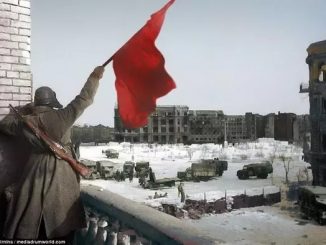
That’s where almost 80% of the Third Reich’s military casualties occurred. Soviet soldiers fought 1,400 miles from Stalingrad on the Volga River to Berlin. On Jan. 27, 1945, the Auschwitz extermination camp was liberated by Soviet forces.

How did the Nazis take over the homeland of Marx and Engels? Hitler was put into power by the biggest German capitalists. The Krupp steelmaking and munitions empire; the Flicks that run Mercedes-Benz; the Quandt family, owners of BMW; Deutsche bank; and Allianz insurance all bankrolled the Nazis.

German industrialists and banksters took a country that gave Beethoven and Einstein to the world and put it in the sewer. The U.S., British, French, and Dutch capitalists — whose fantastic wealth started with the African Holocaust — are no better. Belgian King Leopold II killed millions of Africans in Congo for rubber profits. About half the Congolese population died.

George Washington’s Mount Vernon estate and every other plantation were concentration camps for enslaved Africans. Every concentration and death camp, including Auschwitz, had a factory.

While Yankee insurance companies, like Aetna, insured enslaved Africans, Allianz insured the concentration camps.

The defeat of the German working class still hangs over workers and oppressed peoples today. Germany became the breakwater for the Bolshevik Revolution.

Instead of expected socialist revolutions triumphing in Western Europe, the Soviet Union was isolated for a quarter-century.

All the socialist countries today — China, Cuba, Peoples’ Korea, Laos, and Vietnam — had been plundered by colonialism. The only parts of the imperialist metropolis that came under working-class rule were East Germany and Czechoslovakia.

Despite many working-class struggles, billionaires in the United States, Canada, Western Europe, and Japan continue to exploit Africa, Asia, and Latin America. The super-rich are cooking the earth and threatening to launch World War III against the Russian Federation and China.

A world in flames

By 1919 capitalism seemed to be coming apart at the seams. Workers and peasants took power in the former Russian Empire on Nov. 7, 1917. The German Kaiser was overthrown a year later, on Nov. 9, 1918.

Europe was devastated by World War I. Twenty million people were killed, and millions more were disabled.

The dead included African and Asian soldiers press-ganged from European colonies. The subsequent influenza epidemic killed 50 million people worldwide, including at least five percent of Ghana’s population.

Workers revolted everywhere. One out of seven industrial workers in the United States went on strike in 1919. They included 365,000 steelworkers led by future communist leader William Z. Foster.

The Honorable Marcus Garvey rallied millions of Black people in the United States, the Caribbean, and Africa. Garvey admired Lenin, the leader of the Bolshevik Revolution.

After Lenin died in 1924, Garvey declared, “We as Negroes mourn for Lenin because Russia promised great hope not only for Negroes but to the weaker people of the world.”

Asia rose up against colonialism. Millions of Koreans revolted against the Japanese occupation on March 1, 1919. Thousands were killed.

On April 13, 1919, a pro-independence rally in Amritsar, India, was fired upon by British colonial troops, killing hundreds. 

The May Fourth Movement of Chinese students in 1919 was the beginning of the Chinese Revolution.

The Hungarian Soviet Republic was established on March 1, 1919. A day later, the Communist International, often described as the Third International, was founded in Moscow.

This was the most dangerous period of the Russian civil war. The Red Army of workers and peasants was attacked by a dozen armies. Among them were U.S. troops that occupied Arkhangelsk and Vladivostok.

Being surrounded, the Red Army could offer little help to their Hungarian comrades. After 133 days of existence, the Hungarian Soviet Republic was crushed on Aug. 1, 1919.

Socialism and war

All eyes were on Germany. German sailors had revolted and took over Kiel on Nov. 3, 1918. Six days later, the Kaiser fled on his private train.

General Ludendorff, who functioned as the military dictator of Germany during the war, demanded an armistice be signed. He feared the soldiers would follow the sailors’ example.

The country’s new Social Democratic leaders, Friedrich Ebert and Philipp Scheideman, even hesitated to declare a republic. They were terrified by German workers, soldiers, and sailors who had formed workers’ councils called soviets, inspired by the Bolshevik Revolution.

Ebert and Scheideman instead helped drown the German Revolution in blood. Among those assassinated were the revolutionary leaders Rosa Luxemburg and Karl Liebknecht, who were killed by army officers on Jan. 15, 1919.

Almost 1.8 million German soldiers were killed in World War I, while a million civilians died of hunger. Germans still died after the armistice because of the continuing Allied blockade. The U.S., British and French capitalists sought to starve the working class into submission.

The Social Democratic Party (SPD) was Germany’s largest party. It won 37.9 percent of the vote in the January 1919 elections. The Independent Social Democratic Party (USPD) — an anti-war split from the SPD — won 7.6 percent.

Both these parties called for socialism. Together they got almost 14 million votes, or 45.5% of the total. But neither the SPD nor the USPD was revolutionary.

The SPD was founded in 1869 by followers of Karl Marx and Frederick Engels. Its leaders were August Bebel and Wilhelm Liebknecht, the father of Karl Liebknecht.

This was the first mass working-class party in the world. It became a model for socialists around the world, including the Bolsheviks.

Lenin said that the Bolsheviks stood on the shoulders of the 1871 Paris Commune. But there also would have been no Bolshevik Revolution without the experience of the German working-class movement.

This can be seen in “What Is To Be Done,” written by Lenin. It emphasized the role of German socialists in saturating millions of workers with class consciousness and tackling every political question.

One example Lenin gave was the SPD’s defense of so-called obscene literature. This probably referred to Magnus Hirschfeld, a pioneering defender and researcher of LGBTQ+ people.

Workers of the world unite!

Unlike French capitalists who politically exploited the legacy of the 1789 revolution, German moneybags had nothing to brag about. They helped betray the 1848 revolutions. German unification was accomplished under the leadership of the Prussian monarchy and landlord aristocrats called “Junkers.”

August Bebel and Wilhelm Liebknecht had already been elected to the Reichstag — the German parliament — when the Franco-Prussian war began in 1870. They courageously protested the German annexation of the French territories of Alsace-Lorraine.

The Junker Chancellor Otto von Bismarck had Bebel and Liebknecht jailed for treason. However, this didn’t stop the SPD from winning the support of more and more workers.

Bismarck responded by imposing harsh anti-socialist laws in 1878. Thousands of workers were jailed. This was the SPD’s best period.

It was because of this crackdown that the largest memorial meeting for Karl Marx, who died on March 14, 1883, was held in New York City’s Cooper Union auditorium. José Martí wrote about it for “La Nación” in Buenos Aires. 

Bebel became famous for using the Reichstag to attack capitalism. SPD members would vote against the government budget, with Bebel thundering, “Not a penny for this system!” Lenin described Bebel as a “people’s tribune” in “What Is To Be Done.”

This example helped inspire workers in other countries to form socialist parties. With the help of Frederick Engels, a Socialist International of workers’ parties was formed.

It was founded in Paris on July 14, 1889, the 100th anniversary of the storming of Bastille prison, the beginning of the Great French Revolution. Echoing the Communist Manifesto, its slogan was “workers of all countries unite!”

The SPD’s growing strength forced the repeal of the anti-socialist laws in 1890. Large numbers of workers were being won over to socialism. It was socialists who organized workers into unions.

By 1914, the SPD had a million members and was the largest party in the Reichstag, with 110 seats. But the party’s leadership was no longer revolutionary. Bebel had died.

The long period of relative capitalist stability had corrupted most of the SPD leaders. On Aug. 4, 1914, all of the socialists in the Reichstag voted for war appropriations.

On the same day, every one of the 102 French socialists in the Chamber of Deputies also voted for an imperialist war. The workers of the world were now in the trenches killing each other for their capitalists.

A failed revolution

The Second International was dead. Rosa Luxemburg, a socialist leader and theoretician active in Germany and Poland, called the SPD a “stinking corpse.”

Not all of the socialist parties were swept up in supporting the military slaughter. The six Bolsheviks in the Russian Duma denounced the war. So did the two socialist members of Serbia’s National Assembly.

Lenin called for turning the imperialist war into a civil war. Liebknecht broke with the other SPD Reichstag members and started to vote against war appropriations.

He declared that the main enemy was at home. On May 1, 1916, Karl Liebknecht shouted, “Down with the Kaiser!, Down with the war!,” at an anti-war demonstration in Berlin’s Potsdamer Platz.

Liebknecht was immediately arrested. Rosa Luxemburg had already been jailed.

That May Day, 55,000 workers in Berlin had gone on strike against the war, with thousands more stopping work in other cities. On Aug. 2, 1917, 400 sailors on a battleship mutinied and marched into Wilhelmshaven.

The dam broke in the fall of 1918. The masses were sick of war and starvation. German workers went on strike while soldiers and sailors refused to kill other poor people.

The people wanted the Junkers and war-profiteering capitalists overthrown. The Communist Party of Germany was born on Dec. 30, 1918.

The leaders of the SPD and the unions were hostile to a socialist revolution. They were willing to let military officers in vigilante gangs called the “Freikorps” murder thousands of revolutionaries, including Rosa Luxemburg and Karl Liebknecht.

But when General Kapp attempted to overthrow the newly formed republic in March 1920, the unions called a general strike that stopped the “Kapp Putsch.”

Germany was defeated, yet it remained the biggest industrial country in Europe. German capitalism was propped up by loans from U.S. banks, which helped modernize factories.

The real victor of World War I was Wall Street. The Du Ponts made so much money from explosives that they bought General Motors.

Both GM and Ford built plants in Germany. The Rockefeller-controlled Standard Oil of New Jersey (now Exxon Mobil) gave the chemical giant I.G. Farben 2% of its shares, worth millions.

This was in exchange for licensing Farben’s process for making synthetic oil and rubber from coal. During World War II, Farben built a gigantic plant for doing this at Auschwitz, where it also supplied the Zyklon B for the gas chambers. (“The Crime and Punishment of I.G. Farben” by Joseph Borkin)

Capitalists turn to fascism

The Great Depression devastated Germany. One out of four workers became unemployed.

It was also a crisis for the capitalist class, whose profits nosedived, and export markets shriveled.

German capitalists relied on various political parties to keep themselves in power during the 1920s. While the wealthy despised the Social Democrats, they used them to fight communism.

During the May Day marches in 1929 led by the Communist Party (KPD), it was the Social Democratic government in the state of Prussia that killed 61 workers. The Catholic Center Party also served to prop up the capitalist order.

The capitalists themselves, particularly the “smokestack barons” of heavy industry like the Krupps, would have welcomed a return to the monarchy. But this went nowhere.

The high point of their political vehicle, the German National People’s Party (DNVP), was in the December 1924 federal elections, when it received 20.5% of the vote. By July 1932, the DNVP only got 8.34%.

German capitalism needed a hangman in a plebeian disguise. They got one in Adolf Hitler.

The wealthy and powerful feared being overthrown by the workers and poor. The KPD had 300,000 members and received nearly 5.3 million votes in the July 1932 elections. Communists were the biggest party in Berlin and got 60% of the vote in the city’s Wedding neighborhood.

Capitalists required fascism not only to crush communists but also to pulverize every form of working-class organization. The SPD, the unions, and the entire working class culture had to be shattered in order to cut wages sharply.

These included cooperative stores, sporting, cultural, and bicycle clubs, and hundreds of newspapers built up over the decades.

Big Capital poured millions into the Nazi coffers to put thousands of Nazi thugs in brown shirts on the street. These stormtroopers were a German Ku Klux Klan terrorizing the workers and poor.

Hitler, Henry Ford, and hate

The Junkers and big capitalists were so discredited that Hitler called his party the “National Socialist German Workers Party.” The multimillionaire former Trump advisor Steve Bannon says he wants to form a “workers’ party.”

Hitler was no worker and dreaded becoming one. One of his heroes was Henry Ford, whose thugs beat up Walter Reuther and other union organizers at the “Battle of the Overpass.”

In 1923, the German radical publication Das Tagebuch said Ford was financing the Nazis. That was the year of Hitler’s “Beer Hall Putsch” when the Nazis tried to overthrow the government in Bavaria.

A photograph of Ford was prominently displayed in the Nazi headquarters in Munich. “I regard Henry Ford as my inspiration,” Hitler told a Detroit News reporter in a 1931 interview.

It wasn’t just Ford’s wealth that attracted the Nazis. Henry Ford had his car dealers distribute the “Dearborn Independent,” a newspaper with a circulation of 900,000 copies. It ran a 91-part weekly series called “The International Jew” that blamed Jewish people as “the world’s problem.”

The Russian Czars used murderous anti-Jewish riots called pogroms to divert the masses and stay in power. These massacres were like those that killed hundreds of Black people in East St. Louis, Illinois, in 1917 and Tulsa, Oklahoma, in 1921.

A gusher of hate was pouring from the top of capitalist society. Hundreds of Black people were killed in U.S. cities, including Chicago and Washington, D.C., during the summer of 1919.

The counterrevolutionary White Guards killed 100,000 Jewish people in Ukraine during the Russian civil war. The capitalist class in Europe and the United States blamed Jewish people for the Bolshevik Revolution.

In a Jan. 3, 1920, speech, Winston Churchill attacked British socialists who “believe in the international Soviet of Russian and Polish Jews.” Later that year Churchill called Jews “the main instigators of the ruin of the [British] Empire.” 

The bigoted U.S. 1924 immigration act kept Anne Frank’s family and thousands of other Jewish people out of the United States.

IBM’s German subsidiary, Dehomag, made the punch cards that helped organize the Jewish and Roma Holocaust. One of Dehomag’s plants was next to the Warsaw ghetto.

While U.S. Secretary of War Henry Stimson had Hiroshima and Nagasaki incinerated, he refused to bomb the railroad lines leading to Auschwitz.

Hate and the class struggle

This record hasn’t prevented U.S. imperialism from shoveling over $140 billion into the apartheid regime that occupies Palestine. Both Ford and IBM have research laboratories in Israel.

The U.S. has now spent over $100 billion to prop up a Ukrainian regime that uses the former TV comedian Volodymyr Zelenskyy as a Jewish figurehead. Meanwhile, Kiev’s military forces, like the Azov Battalion, are openly pro-Nazi.

The European disease of anti-Jewish bigotry is connected to the class struggle. “Set fire to their synagogues or schools,” declared the old German priest, Martin Luther, in his pamphlet “On the Jews and Their Lies.” 

This was the same Luther who called German peasants — more than four-fifths of the German nation — “mad dogs” during the great peasant war in 1525. Lutheranism became the state church for backward feudal regimes in northern Europe. Only under the impact of the French Revolution was serfdom overthrown in those countries.

Racism alone doesn’t explain the Nazis’ victory. As Mark Twain described it, “The United States of Lyncherdom” experienced more racist violence in the 1920s than Germany did.

In 1928, the Black prisoner Charley Sheppard was paraded for hours through Mississippi before being burned alive in front of a crowd of 6,000 whites. (“Mississippi: The Closed Society,” by James W. Silver.)

The Nazis hated Black people and wanted a return of the former German colonies in Africa. Herman Goering was the number two Nazi who became the number one war criminal at the Nuremberg trials. His father was a German colonial governor of Namibia.

Tens of thousands of Herero and Namaqua people were murdered there by German troops. Germany refuses to pay any reparations for this genocide.

In defiance of the Nazis, some of the biggest rallies for the Scottsboro defendants — nine Black youths framed on phony rape charges in Alabama — were held in Germany.

As many as 100,000 German workers came out In Hamburg to hear Ada Wright in May 1932, a few months before Hitler came to power. She was the mother of two of the Scottsboro defendants.

This international campaign, along with the mobilization in the Black community, saved the Scottsboro defendants from the electric chair. German workers said no to racism.

The workers divided will be defeated

Despite the explosive growth of the Nazis, their greatest strength was in rural areas, smaller towns, and wealthy neighborhoods. They had little support among union members.

In Berlin, “the highest levels of support for the National Socialists came from the upper- and upper-middle-class districts,” according to “Who Voted for Hitler?,” by Richard F. Hamilton. 

In the Nov. 6, 1932, elections, three out of eight German voters cast their ballots for either the Social Democrats or Communists. Their combined total was 13,228,140 votes.

The Nazis got 11,737,021 votes, a drop of two million from what they received in the July 31, 1932, elections. In contrast, Communists gained almost 700,000 votes in three months.

This trend terrified the big capitalists. German tycoons turned decisively to back Hitler.

But how could they smash two working-class parties with millions of followers and unions with a membership of five million in a country of 65 million people?

The SPD was a dues collection agency. Their leaders had betrayed the working class, supported the imperialist war, and presided over the murders of Rosa Luxemburg and Karl Liebknecht.

German communists wanted a revolution. But to overthrow capitalism, the KPD had to win over millions of workers who supported the SPD.

There was a line of blood between the SPD and KPD members. It was Social-Democratic cops who beat up and sometimes killed KPD members, like on May Day in 1929.

Around 90% of KPD members were unemployed. The Communists were a party of largely jobless young people, while SPD members were usually older and more likely to have a job still. Almost all the unions were allied with the SPD.

This division helped paralyze the working class and paved the way for the Nazis. The SPD union leaders refused to mobilize workers and declare a general strike as they did in 1920 against the Kapp Putsch.

Hitler’s victory was tragically like the overthrow of the Soviet Union. In both cases, it was a largely cold takeover against the backdrop of a demoralized and confused working class.

The burning of the Reichstag on Feb. 27, 1933, which was orchestrated by the Nazis, served as an excuse for a reign of terror.

Thousands of communists and other anti-fascists were sent to concentration camps. Communist leader Ernst Thälmann was imprisoned at Buchenwald, where he was executed on Aug. 18, 1944.

A super Kornilov

Just as Bolsheviks studied the struggles of the German working class, German communists needed to learn from the Bolsheviks. Lenin urged them to do so in “‘Left-Wing’ Communism, an Infantile Disorder.”

Many experienced Communist leaders, like Rosa Luxemburg and Karl Liebknecht, had already been assassinated with the acquiescence of SPD leaders. Communists were justifiably bitter, and their anger was often directed against fellow workers who remained in the SPD.

The SPD leaders convinced many of their followers that communists were dangerous extremists who served as tools of reaction. Some of the KPD actions reinforced this attitude.

The Aug. 9, 1931, “Red Referendum” was a notorious example. This was a plebiscite endorsed by the Nazis to dissolve the Prussian Landtag, or state assembly, which was led by Social Democrats.

The only alternative at that point to an SPD-led Prussian government was one led by or in coalition with the Nazis.

The KPD endorsed the plebiscite, which fortunately lost. The KPD’s support for this referendum only deepened the distrust that Social Democratic workers had for Communists.

So did the term “social fascist,” which was used by the communist movement at the time to describe moderate socialists. How was it possible to form a united front against the Nazis if communists called SPD members in the workplace or neighborhood “social fascists”?

Following the “July Days” in 1917, Lenin was denounced as a German agent and driven underground. The Bolsheviks were mercilessly attacked not only by the capitalist “Cadet” party but also by many Mensheviks and Social Revolutionaries.

This didn’t prevent the Bolsheviks from appealing to Menshevik and Social Revolutionary workers, soldiers, and sailors to defend the soviets against an inevitable counter-revolutionary coup.

When General Kornilov tried to be the revolution’s hangman, the Bolsheviks were able to lead the resistance. By doing so they won over a majority of the workers and were able to take power in the name of the soviets on Nov. 7, 1917.

Hitler and the Nazis were super Kornilovs. Winning over social-democratic workers to fight together against the fascists was a life-or-death necessity. This defensive struggle of millions of workers would have stopped the Nazis and led to the overthrow of the capitalists who financed the scum.

Lessons for today

The tragedy of the German working class has many lessons for today’s struggle. Steve Bannon and other Trump supporters want to build a fascist movement.

One of their main targets is Drag Queen story hours. The fascist Proud Boys were met with hundreds of opponents when they tried to stop a reading at the Jackson Heights library in Queens, New York City, on Dec. 29, 2022,

The police protected these fascists and escorted them to a nearby subway station without even paying a fare.

In the fall of 1974 in Boston, a mass fascist movement arose under the name “Restore Our Alienated Rights,” or ROAR. Targeting school busing for integration, this fascist mobilization seemed to be unstoppable. School buses carrying Black, Asian, and Latinx children were attacked.

Massachusetts Sen. Ted Kennedy and the entire liberal establishment were silent. Mass action was required. The Dec. 14, 1974, March Against Racism helped stop this fascist movement.

Mao Zedong, the leader of the Chinese Revolution, famously asked, “Who are our enemies? Who are our friends?”

Super racists Tucker Carlson and Donald Trump are not our friends, even if they’re making some anti-war noises about Ukraine. They want a war against China instead.

Under certain conditions, it is permissible and even necessary for the left to block with the center to fight the right. But it’s treason against workers and oppressed people to block with the right against the center.

That’s the case with the Rage Against the War Machine rally scheduled for Feb. 19 in Washington, D.C. It calls for disbanding NATO, ending the war in Ukraine, and freeing Julian Assange.

The rally is co-sponsored by the Libertarian Party, which wants to abolish social security and every other government program. One of the speakers will be the racist former congressman Ron Paul.

It’s revealing that none of the rally’s ten demands mention the war preparations against the People’s Republic of China. That’s especially important because of media hysteria over balloons.

Such a rally puts a stamp of approval on bigots like Tea Party founder Ron Paul and the right-wing Libertarian Party. It confuses workers like the “Red Referendum” did 90 years ago.

We need to mobilize for the March 18 genuine anti-war and anti-racism rally in Washington, D.C., that’s called by the ANSWER coalition and other organizations.

Working and poor people united can defeat the capitalist cutbacks and all the Bannons and Trumps!

Strugglelalucha256


South Africa’s National Union of Metalworkers will join call for Mumia’s freedom

ILWU attends South African Conference commemorating the 1973 Durban strikes

Representatives from the International Longshore & Warehouse Union (ILWU) gathered with union leaders from Namibia and South Africa at a Jan. 26 – 28, 2023, conference in South Africa to mark the anniversary of the 1973 Durban strikes that preceded the formation of South Africa’s powerful trade union movement.

At the conference were international and ­local activists, academics, and leaders of the Revolutionary Transport Union of South Africa ­(RETUSA) and the General Industries Workers Union of South Africa. A goal of the Durban conference was to tackle issues currently facing dockworkers.

The event marks the 50th anniversary of the Durban strikes, where some 100,000 African and Indian workers downed their tools to demand better wages and working conditions. The strikes impacted a wide range of production, from textile firms and brick factories to metal and chemical plants. 

The 1973 Durban strikes were followed by the formation of the Federation of South African Trade Unions in 1979 and the Congress of South African Trade Unions in 1985. The union movement played a pivotal role in the liberation struggle against apartheid.

The ILWU’s campaign against apartheid

In 1984, members of ILWU Locals 10 and 34 in San Francisco refused to offload South African cargo for 11 days, inspiring a community and labor anti-apartheid movement that spread across the country. When Nelson Mandela spoke at the Oakland Coliseum in 1990, he recognized Local 10 for its historic solidarity.

Retired Local 10 past Secretary-Treasurer Clarence Thomas, speaking at a Durban media briefing, said: “Dockworkers hold a strategic position in the global economy. Dockworkers have more leverage than any workers in the world by working at the point of production of the global supply chain. We shut down shipping, rail, trucking, and cargo flight schedules when we strike. The food we eat, the cars we buy, the fuel we put in them, the computers and handheld devices we use, and the shoes and clothes we wear all come off of ships. No workers in the world understand capitalism better than longshore workers. If the cargo doesn’t come off the ship it cannot be sold

Thomas spoke of how unions globally should organize to fight against privatization

RETUSA General Secretary Joseph Dube welcomed the collaboration between unions.

“We are fighting privatization as you are. We need to learn from each other and make our unions an active fighting force for permanent jobs, democratic workers’ control over the harbor facilities, and above all to fight for a living wage for all.” Dube said.

The National Union of Metalworkers will protest for Mumia’s Freedom 

On Jan. 24, 2023, Jack Heyman, Local 10 retired, and David Newton, Local 10 dispatcher and executive board member, met with officers of NUMSA (National Union of Metalworkers of South Africa.)

General Secretary (G.S.) Irvin Jim of NUMSA (364,000 union members) commended the ILWU for international solidarity actions at the meeting. NUMSA officers reviewed Local 10’s revolutionary actions against South African apartheid. 

When the ILWU delegation informed G.S. Jim that they wished to build international actions calling for Mumia Abu-Jamal’s freedom on Feb.16, he offered to organize NUMSA to mobilize for a mass demonstration at the U.S. Embassy in Pretoria. 

Furthermore, G.S. Jim said he would write a letter to Judge Lucretia Clemons, the judge presiding over Mumia’s case, calling for his freedom. In gratitude, the ILWU invited NUMSA to visit Local 10 on May Day 2023.

NUMSA was presented with a signed copy of Clarence Thomas’ book, which includes the history of the ILWU’s role in fighting apartheid, “Mobilizing in Our Own Name: Million Worker March.” NUMSA union polo shirts were exchanged with Million Worker March tee shirts and other union gear.

Strugglelalucha256
https://www.struggle-la-lucha.org/2023/page/69/