A Cuban perspective on race and revolution

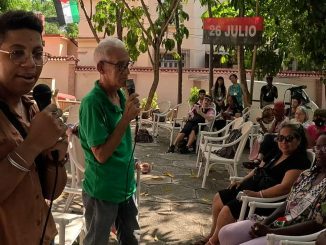
A sign reading ‘La Habana de todos’ or ‘Havana for everyone’ in downtown Havana, Cuba, in 2023. Photo: Gregory E. Williams.

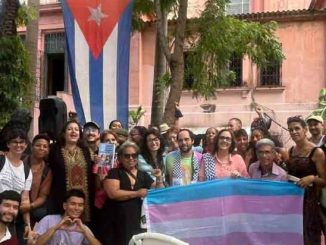
In preparing Part 4 of this series on the history of the populist movement, I included a section comparing the starkly different post-slavery trajectories of Cuba and the U.S. While preparing that material, I spoke with a young Cuban woman of African descent. We met her during our U.S. Friends Against Homophobia and Transphobia delegation to Havana in 2023. Here, she is identified as “R” for “respondent.”

Gregory E. Williams: My article concerns the legacy of the Civil War in the United States. Both Cuba and the U.S. abolished slavery after a long struggle. But the reality in the two countries is quite different today because of the two different social systems: capitalism in the U.S. and socialism in Cuba. 

Cuba doesn’t have racist housing discrimination or police murdering hundreds of Black people every year like in the U.S. So I am comparing that in one section of the article.

What do you think about the progress Cuba has made regarding equality of people of African descent since 1959? Does Cuba have racism in any way comparable to the United States?

R: In Cuba, the triumph of the Revolution in 1959 brought radical changes to the lives of people of African descent. But, although the progress is unquestionable, manifestations of racial discrimination still persist since it is not so easy to reverse centuries of racist and discriminatory attitudes in 65 years.

 In 2019, the National Program Against Racism and Racial Discrimination was created as a strategy at the highest management level to provide a definitive solution to these issues. 

However, it is important to mention that the signs of discrimination based on skin color, which may still be present in Cuban society, are not at all comparable to the situation in the United States. All Cubans equally enjoy the same rights and access to opportunities under the legal protection of the Constitution of the Republic.

GEW: This gives a good context for people to understand. Of course, racism is a continuing problem because of the centuries of racist colonial oppression, as you say. But, Cuba is proactive and making new advances, not just resting on the old achievements of the revolution. 

This is one thing I really respect about the Cuban revolutionary approach. As with gender and sexual rights — areas where Cuba is advancing — it is a question of how to move forward. By contrast, with the capitalist class’s attacks in the U.S., we are moving backward. 

En español 

Al preparar la cuarta parte de esta serie sobre la historia del movimiento populista, incluí una sección que compara las trayectorias marcadamente diferentes de Cuba y EEUU después de la esclavitud. Mientras preparaba ese material, hablé con una joven cubana de ascendencia africana. La conocimos durante nuestra delegación de Amigos de Estados Unidos contra la Homofobia y la Transfobia a La Habana en 2023. Aquí, se la identifica como “R” de “encuestado” o “respondent” en inglés. 

GEW: Mi artículo trata sobre el legado de la Guerra Civil en los Estados Unidos. Tanto Cuba como Estados Unidos abolieron la esclavitud después de una larga lucha. Pero la realidad en los dos países es bastante diferente hoy debido a los dos sistemas sociales diferentes: el capitalismo en Estados Unidos y el socialismo en Cuba. 

Cuba no tiene discriminación racista en materia de vivienda ni policías que asesinan a cientos de afrodescendientes cada año como en Estados Unidos. Así que estoy comparando eso en una sección del artículo. 

¿Qué opinas sobre los avances que ha logrado Cuba en materia de igualdad de los afrodescendientes desde 1959? ¿Cuba tiene un racismo comparable al de Estados Unidos?

R: En Cuba, el triunfo de la Revolución en 1959, trajo consigo cambios radicales para la vida de los afrodescendientes. Pero, si bien los avances son incuestionables, aún persisten manifestaciones de discriminación racial, pues no es tan fácil revertir en 65 años siglos de actitudes racistas y discriminatorias.

En 2019 fue creado el Programa Nacional contra el Racismo y la Discriminación Racial como una estrategia, al más alto nivel de dirección, para dar solución definitiva a estos temas. 

No obstante, resulta importante mencionar que las muestras de discriminación por color de la piel, que puedan aún estar presentes en la sociedad cubana, para nada son comparables con la situación en EEUU. Todos los cubanos, disfrutan por igual, de los mismos derechos y acceso a oportunidades bajo el amparo legal de la Constitución de la República.

GEW: Esto proporciona un buen contexto para que la gente lo entienda. Por supuesto, el racismo es un problema continuo debido a los siglos de opresión colonial racista, como usted dice. Pero Cuba es proactiva y logra nuevos avances, y no se basa simplemente en viejos logros de la revolución. 

Esto es algo que realmente respeto del enfoque revolucionario cubano. Al igual que con los derechos del género y la sexualidad – áreas en las que Cuba está avanzando – es una cuestión de cómo avanzar. En cambio, con los ataques de la clase capitalista en Estados Unidos, estamos retrocediendo.

Strugglelalucha256


Cuba goes immediately into recovery after Hurricane Rafael leaves the island

News coming out of Cuba is spotty this morning as the second hurricane in a week has pounded the island, once again knocking out the compromised national electric grid of the blockaded country.

Ed Newman from Radio Havana Cuba has reported that Hurricane Rafael, which followed a trajectory that passed between Pinar del Rio and Artemisa in the western part of the country, left the island last night at 8 p.m. leaving behind significant damage but at this time there are no reports of any deaths.

Nov. 7 — As soon as Hurricane Rafael began to leave Cuba, the National Defense Council, headed by President Miguel Díaz-Canel Bermúdez, met to evaluate the steps to be taken after the strong impact of this meteorological phenomenon.

We are going immediately to the recovery, with no time to lose, from the early hours of Thursday, said President Miguel Díaz-Canel Bermúdez, when heading, on Wednesday evening, the meeting of the National Defense Council, in which the next steps were evaluated, after the strong impact of Hurricane Rafael.

The meteorological phenomenon reached the western zone of Cuba with category three, and registered winds of over 180 kilometers per hour.

Accompanied by the members of the Political Bureau of the Party, Manuel Marrero Cruz, Prime Minister, and the Secretary of Organization of the Central Committee, Roberto Morales Ojeda, as well as the heads of several ministries, the President indicated to make the preliminary assessment of the damages during the night and early morning, in order to make the first analysis early in the morning, and trigger the recovery process.

The President will be, with several ministers, touring the affected areas as from Thursday, to assess the damage on the ground and make decisions.

The Minister of Economy and Planning, Joaquín Alonso Vázquez, head of the Economic-Social Group of the National Defense Council, informed about the measures taken for the protection of people and material goods, the distribution of the standard family food basket, the anticipated harvests, the production of bread, the supply of fuel to the generators, the protection of vessels, the preparation of the brigades for the recovery, among other decisions.

The implementation of the strategy to connect the National Electric System, which has been down since Wednesday afternoon due to the strong winds of the hurricane, is underway, for which electric subsystems are being created in the Center and the East.

The revision of the distribution lines in the West has begun in order to start the recovery of the electric service.

Source: Granma, translation Resumen Lationamericano – English

To make an urgent donation to help Cuba’s recovery from Hurricanes Rafael and Oscar visit Peoples Forum

https://secure.givelively.org/donate/peoples-forum-inc/let-cuba-live-donate-for-urgent-humanitarian-aid

Strugglelalucha256


Venezuela sends aid to Cuba in response to Hurricane Rafael

November 7, 2024 –  On Wednesday night, Venezuelan President Maduro expressed his solidarity with the Cuban people as Rafael, a Category 3 hurricane, made landfall with winds reaching up to 175 kilometers per hour.

“We are sending a ship with humanitarian aid that will arrive in Cuba in four days. We are preparing a second shipment with additional aid,” he said, referring to a load of approximately 300 tons that includes supplies, construction materials, and first aid equipment.

“Solidarity and brotherhood will continue to be the fundamental principles uniting our nations,” Venezuelan Foreign Affairs Minister Yvan Gil affirmed from La Guaira port.

Rafael caused significant damage in Artemisa, Mayabeque, and Havana, three provinces where the electricity service was cut off. In Artemisa, authorities reported damage to hospitals, schools, homes, roofs, and the electrical grid. In Mayabeque, the main impacts occurred in banana and cassava crops.

Hurricane Rafael made landfall at 4:20 p.m. local time (9:20 p.m. GMT) along the southern coast of the Artemisa province and left Cuban territory more than two hours later via the northern coast of Pinar del Río. The Cuban Meteorological Institute recorded winds up to 185 kilometers per hour (115 mph) and rainfall reaching 200 millimeters (7.9 inches).

On Thursday, while rains continue in Cuba, President Miguel Diaz-Canel confirmed that his administration is focusing its efforts on infrastructure recovery tasks following the hurricane’s passage.

Lazaro Guerra, the Director of Electricity at the Ministry of Energy, reported that the power supply had already been restored in several areas of Matanzas, Sancti Spíritus, and Holguín.

By midday Thursday, Rafael was moving toward Mexico at 155 km/h (96 mph), impacting the weather conditions in El Salvador, where afternoon and nighttime rain and storms are expected.

Source: teleSUR / Resumen

Strugglelalucha256


Venezuela condemns the blockade and expresses solidarity at the UN

Once again the U.S. along with Israel, its partner in genocide against the Palestinian people, were alone against the annual vote condemning the blockade of Cuba at the UN.

In a strong statement from the General Assembly of the United Nations, Venezuelan President Nicolás Maduro condemned the economic blockade imposed on Cuba by the United States, reaffirming Venezuela’s unwavering support for the Caribbean island. On this occasion, 187 countries joined together to demand the lifting of sanctions that severely affect the Cuban people.

“Today, for the thirty-second time, 187 countries raise our voices in the General Assembly to demand the lifting of U.S. sanctions. Cuba deserves, and has earned, the right to choose its path to develop in peace and with total freedom,” Maduro declared in his speech.

The Venezuelan leader extended his solidarity to President Miguel Díaz-Canel and General of Armies Raúl Castro, as well as to all Cubans who continue to fight for their sovereignty and well-being. “On behalf of Venezuela, I express my willingness to continue opening paths and creating formulas that allow us to advance in the search for concrete solutions that lead us to the integral well-being of our nations,” he added.

Maduro emphasized the importance of unity among Latin American and Caribbean peoples to face the challenges imposed by hegemonic powers. “A new world is possible, and free peoples will build it. We will not allow sanctions and blockades to divide our struggle for justice and self-determination,” he asserted.

Venezuela’s statement adds to a long history of mutual support between the two countries, which have faced the onslaught of imperialism together. The international community has reiterated its rejection of the aggressive policies of the United States, which not only affect Cuba but also seek to destabilize sovereign nations like Venezuela.

Javier Milei removes Argentine Foreign Minister following vote for UN Resolution against U.S. blockade

Meanwhile in an unexpected turn of political events in Argentina, President Javier Milei decided to dismiss his Foreign Minister Diana Mondino following the UN vote, where Argentina joined 186 countries in rejecting the blockade imposed on Cuba.

This decision was confirmed by presidential spokesperson Manuel Adorni, who announced that Gerardo Werthein, the current Argentine ambassador in Washington, D.C., will take over the position.

The vote, which reflects the long history of solidarity between Argentina and Cuba, has been a point of tension in Milei’s government, which has shown a clear alignment with the policies of the United States and Israel.

However, Argentine diplomacy had maintained its commitment to historical causes, such as supporting the Caribbean island in its struggle against the blockade.

On social media, Milei hinted at his dissatisfaction by sharing a tweet from PRO deputy Sabrina Ajmechet, who expressed: “Proud of a government that neither supports nor is complicit with dictators. Long live #CubaLibre.”

This message seems to have set the course for Argentine foreign policy, prioritizing a critical stance towards Cuba and its leaders. Despite this change in the foreign ministry, it is important to remember that Cuba has been a steadfast ally of Argentina in its claim for sovereignty over the Malvinas Islands.

Over the years, the Cuban government has strongly supported Argentina’s cause in international forums, reinforcing ties between both nations. The recent vote in New York serves as a reminder of the overwhelming support Cuba receives annually at the UN to end the blockade.

Similarly, Argentina has garnered support from the Decolonization Committee for Britain to recognize its sovereignty over the Malvinas and open a dialogue on this matter.

With Mondino’s dismissal, questions arise regarding how this decision will affect bilateral relations between Argentina and Cuba. International observers expect that Cuba will continue to support Argentina’s sovereign claim despite internal diplomatic tensions.

This episode could serve as a call for reflection for the new Argentine government on the importance of maintaining a coherent and supportive stance in international matters.

Source: Telesur / Resumen LatinoAmericano English

Strugglelalucha256


NYC rally demands: “Stop the U.S. blockade of Cuba!”

Oct. 27 — A rally at Grand Central Terminal in midtown Manhattan demanded an end to the cruel U.S. economic war against Cuba. Just within the last year, U.S. sanctions have cost the Caribbean country $5 billion.

The sanctions prevented Cuba from replacing transformers and other equipment, which resulted in the recent electrical outages there. The rally was held a few days before the United Nations is scheduled to again overwhelmingly pass a resolution condemning the blockade, as it has done for over 20 years.

Many organizations came together to build this event. December 12th Movement members provided security.

The Rude Mechanical Orchestra accompanied the rally wonderfully.

Venceremos Brigade members carried a banner saying “Hands Off Cuba.”

The two co-chairs were Justine Medina of the Young Communist League, an Amazon union activist, and Danny Valdes of the Democratic Socialists of America. Both grew up in Cuban immigrant families.

Brooklyn’s State Senator Jabari Brisport denounced the blockade. He asked the capitalist establishment, “If you think that socialism doesn’t work, why do you blockade Cuba?”

Vinson Verdree of the December 12th Movement reminded everyone that when Africa called, Cuba answered. Two thousand Cuban soldiers gave their lives alongside their African comrades in defeating the old South African apartheid armies.

Representing the Bronx Anti-War Coalition was Richie Merino, who denounced the blockade.

Two recent graduates of the Latin American School of Medicine (ELAM) in Havana spoke of the free education they received there. Both of the young doctors are now helping poor people in the U.S.

More than 200 ELAM graduates work in U.S. hospitals and clinics. Cuban President Miguel Díaz-Canel Bermúdez has announced that Cuba is giving 200 scholarships to Palestinian medical students.

Speakers denounced the hypocrisy of the U.S. in putting Cuba on its State Sponsors of Terrorism list while supplying the bombs to kill Palestinian and Lebanese Children.

The crowd welcomed long-time Cuban solidarity activists Rosemari Mealy, J.D., Ph.D., and Gail Walker, Executive Director of the Interreligious Foundation for Community Organization (IFCO).

Mealy described the efforts of people in the U.S. to raise funds to purchase hundreds of pacemakers for Cuban heart patients. Walker encouraged people to visit Cuba and find out the truth about the accomplishments of the Cuban revolution.

That’s good advice. U.S. hands off Cuba!

Strugglelalucha256


Cuba: Blackout and blockade

Cuba is going through its greatest energy crisis, with practically the entire island and 10 out of 11 million inhabitants deprived of electricity. The blackouts that have been occurring with increasing frequency and duration for some time now, turned into a total collapse of the electrical system as a result of the shutdown of its main thermoelectric plant on Thursday, Oct. 17, which forced the suspension of classes and the closure of almost all economic activity while the authorities and technicians work to reestablish the power supply. The population fears that this situation could lead to an imminent famine due to food putrefaction.

The immediate cause of the crisis lies in the lack of fuel to feed their thermoelectric power plants, worsened by a climatic situation that delayed the arrival of a ship with fuel oil. However, the ultimate cause is the same as the one shared by the island’s major and minor problems: the commercial and financial blockade imposed by Washington more than six decades ago with the declared purpose of starving the Cuban population and forcing it to rise up against its authorities. Although that sinister objective has been frustrated, the endless difficulties Havana has to face to raise foreign currency and acquire essential supplies have indeed led the country to a severe shortage of everything necessary for daily life.

It is often thought that the argument of the blockade is a mere pretext and the criminal nature of the dozens of laws and decrees that make up the most dense network of unarmed aggressions directed against a sovereign nation is forgotten. As an island located in the Caribbean Sea, Cuba’s natural economic vocation lies in tourism, and its location only 144 kilometers from the United States makes Americans its logical and elementary market. But Washington’s illegal regulations prohibit its citizens from traveling to the island. The illegal application of sanctions not only affects the inhabitants of the superpower, but any company, from anywhere on the planet, that buys or sells any object – be it an onion, a cancer drug or a notebook for children to study – to Havana is subject to prosecution and crushing by the country that dictatorially controls the global financial system. One of the most important sources of income for practically all Latin American and Caribbean states, the remittances sent by their nationals working abroad, is also closed to Cuba because it is not allowed to access the international payment system, one of the many tentacles of U.S. imperialism.

Since Hugo Chavez democratically came to power in Venezuela at the head of the Bolivarian Revolution, Caracas has provided invaluable assistance to the Cuban people with its shipments of hydrocarbons. But as Washington has made Venezuelans victims of the same atrocities it perpetrates against Cubans, the government of Nicolás Maduro has had to cut its aid to Cuba, which has ended up overwhelming an extremely precarious situation. Likewise, Havana is prevented from buying machinery, tools and spare parts to reverse the deterioration of the electric power infrastructure, so the failures will continue to be structural as long as Washington’s boot suffocates the island. Cuba is also not allowed access to the technologies needed to undertake the energy transition, despite the fact that, in their discourse, the current occupant of the White House and other Western leaders proclaim themselves to be promoters of the fight against climate change.

In this century, with the exception of Israel over the Palestinian people, no country has been as systematically and enduringly sadistic with the civilian population as the United States in its onslaught against the Cubans. The human suffering and the stripping of any prospect of a dignified life in their own land are testimony to the total disregard of the U.S. political class for the welfare of the people and the freedom in the name of which they speak.

Source: La Jornada, translation Resumen Latinoamericano – English

Strugglelalucha256


Cuba: Havana’s electricity system fully restored

Empresa Eléctrica UNE reported through its usual Telegram channel the reestablishment of the electric system in the Cuban capital, after a new total nationwide disconnection suffered yesterday.

Yesterday at  4:01 pm (local time), Havana’s electricity service was fully restored, according to the report issued by the company, although some breakdowns and minor damages persist in some neighborhoods.

Work is still being carried out to solve these problems as soon as possible to guarantee a stable supply to the population.

However, the impossibility of maintaining constant flows in the acquisition of fuel necessary for the operation and maintenance of the country’s thermoelectric power plants continues to be an aggravating factor in the current situation regarding the sustainability of the electric service, beyond the announced reestablishment. Until the blockade is ended once and for all and Cuba is allowed to trade normally with the world this types of crisis will re occur.

We must always remember that Cuba is going through an energy crisis, caused by this lack of raw material acquisition in the international market; directly caused by the existence of the economic, commercial and financial blockade imposed by the United States and its extraterritorial nature, as was denounced by President Miguel Díaz-Canel in his last public appearance.

The water supply system in Havana has also been affected by the energy contingency, since it practically depends on electric energy, which led to the adoption of strategies to sustain basic issues in the aqueduct systems.

In this sense, the Empresa Aguas de La Habana reported on the prioritization of basic services to hospitals and other critical places; meanwhile work furiously continues in order to guarantee that the total supply will be available for the population.

Source: Cuba en Resumen

Strugglelalucha256


U.S. blockade of Cuba causes electricity system to collapse due to lack of stable fuel supply

On Sunday, Oct. 20, Cuban President Miguel Díaz-Canel pointed directly at  the blockade policy of the United States government as the fundamental cause of the national collapse of the National Electric Power System (SEN) over the past few days. It is not complicated and it is not rhetoric that Cuba’s lack of a stable supply of fuel is because of the threats of fines that the US government through its Office of Foreign Assets Control (OFAC)  has levied on banks, shipping companies and any other enterprise attempting to trade with Cuba.

The President of the country and head of the Cuban National Defense Council, on Sunday evening, clarified the situation the country is going through after the disconnection of the national electric system and the impact of hurricane Oscar, which is hitting the eastern part of the island with winds of over 130 kilometers per hour.

The President declared that the country is living an exceptional situation determined by two events of great complexity: national energy emergency and the impact of Hurricane Oscar in the eastern provinces, with its consequences at territorial level hitting the country at the same time.

In the meeting, he explained the actions being taken to face the meteorological event in each one of the provinces and to protect the lives of the population, the first objective of the Civil Defense during the passage of hurricanes, were specified.

The first secretaries of the Cuban Communist Party (PCC) and the governors of the eastern provinces took part  detailing the measures taken so far.

The head of the nation informed that the country is working in two directions: to stabilize the National Electro-energetic System and to continue the efforts to achieve a stable supply of fuels, which will make it possible to reach a better situation in the next two days.

Regarding specific acts of public disorder that have occurred in the capital, he clarified that there are mechanisms in place to respond to any concerns of the population, but acts of vandalism that disrupts the tranquility of the people will not be allowed, and he did not end his speech without highlighting the understanding and the necessity for the solidarity of the Cuban people to face these situations, as well as the commitment of the workers of the electricity sector who are committed to achieving stability of the service.

As of this post over 60% of Havana has electricity back. During the blackouts hospitals continued to function with power.

Source: Cuba en Resumen

Strugglelalucha256


Cuba under intensified U.S. sanctions confronts its greatest challenge: The continuity of Obama-Trump-Biden policy

“The majority of Cubans support Castro … every possible means should be undertaken promptly to weaken the economic life of Cuba…to decrease monetary and real wages, to bring about hunger, desperation and overthrow of government.”

Lester D. Mallory, U.S. Deputy Assistant Secretary of State, 1960.

Despite draconian coercive measures by the U.S. – overwhelmingly condemned every year by the UN General Assembly, with the next vote slated for October 29-30 – the Cuban Revolution has had extraordinary successes. This small, impoverished, formerly colonized island nation has achieved levels of education, medical services, and performance in many other fields, including sports, that rival the first world, through the application of socialist principles.

Cuba has rightly become a model of internationalism and an exemplar of socialism. As a consequence, every U.S. administration for over six decades has targeted this “threat of a good example.” Back in its early days, the Cuban Revolution was bolstered by socialist solidarity, particularly from the Soviet Union.

The contemporary geopolitical situation is very different. Most notably the socialist bloc is defunct. Meanwhile, Cuba continues to be confronted by a still hegemonic U.S.. In turn, the Yankee empire is now challenged by the hope of an emergent multipolar order. Cuba has expressed interest in joining the BRICS trade alliance of emerging economies and will attend their meeting in Russia, October 22-24.

Successes turned into liabilities

Today, Cuba is confronting perhaps its greatest challenge. The ever intensified U.S. blockade is designed to perversely turn the successes of the revolution into liabilities.

For example, the revolution achieved one hundred percent literacy, created farming collectives and cooperatives, and mechanized cultivation, thus freeing the campesinos from the drudgery of peasant subsistence agriculture.

But now, most tractors are idle, in need of scarce fuel and embargoed spare parts. Agricultural production has subsequently contracted. In May, I was on a bus that traveled the length of the island. Mile upon mile of once productive agricultural fields lay fallow.

Historical yields of key crops are down nearly 40% due to lack of fertilizers and pesticides, according to a Cuban government statement. The daily bread ration has been slashed, Reuters reports.

In order to feed the nation, the state has had to use precious hard currency to import food; currency which otherwise could be used to repair a crumbling infrastructure. Broken pipes have caused widespread shortages of drinking water.

Under siege, some 10% percent of the population, over a million Cubans, have left between 2022 and 2023. This has, in turn, led to a drain of skilled labor and a decrease in productivity, contributing to a vicious cycle driving out-migration.

Le Monde diplomatique cautions: “Cuba is facing a moment that is extraordinarily precarious. While numerous factors have led to this…U.S. sanctions have, at every juncture, triggered or worsened every aspect of the current crisis.”

The Obama engagement

 Of the some 40 sovereign states sanctioned and slated for regime-change by Washington, Cuba is somewhat unique. Until recently, the island did not have the domestic social classes from which a counter-revolutionary base could be recruited.

In Cuba, most bourgeoisie under the Batista dictatorship left the country shortly after the revolution. The large U.S. corporations that they had operated were expropriated. Similarly, when the government nationalized many small businesses in the 1960s, others fled to U.S. shores.

By 2014, then-U.S. President Obama lamented that Washington’s Cuba policy had “failed to advance our interests.” Obama’s new strategy was to engage Cuba in the hope of fostering a counter-revolutionary class opposition.

Obama reestablished diplomatic relations with Cuba after a hiatus dating to 1961. Travel and some trade restrictions were lifted. And more remittances from relatives living in the U.S. could be sent to Cuba.

In his famous March 2016 speech in Havana, Obama proclaimed to rousing applause: “I’ve called on our Congress to lift the embargo.” This was an outright lie. The U.S. president had only remarked that the so-called embargo (really a blockade, because the U.S. enforces it on third countries) was “outdated.”

Obama lauded the cuentapropistas, small entrepreneurs in Cuba, and pledged to help promote that stratum. He promised a new U.S. policy focus of encouraging small businesses in Cuba. “There’s no limitation from the United States on the ability of Cuba to take these steps” to create what in effect would be a potentially counter-revolutionary class, Obama promised.

Obama warned the Cubans, “over time, the youth will lose hope” if prosperity were not achieved by creating a new small business class.

While normalizing relations with Cuba, Obama took a more adversarial stance toward Venezuela. He declared the oil-rich South American nation an “unusual and extraordinary threat” and imposed “targeted sanctions” on March 2015. The successes of Venezuela’s Bolivarian Revolution in promoting regional integration were challenging U.S. influence in Latin America, prompting Washington to adopt a “dual-track diplomacy” of engagement with Cuba and containment with Venezuela.

Obama spoke of the “failed” U.S. policy on Cuba, which had not achieved “its intended goals.” Often left unsaid was that the “goal” has been to reverse the Cuban revolution. Obama’s intent was not to terminate the U.S. regime-change policy, but to achieve it more effectively.

His engagement tactic should not be confused for accord. Obama still championed the three belligerent core elements of the U.S. policy: a punishing blockade, occupation of the port of Guantanamo, and covert actions to undermine and destabilize Cuba.

Trump undoes and outdoes Obama

 Donald Trump assumed office at a time when the leftist Pink Tide was ebbing. Taking advantage of the changed geopolitical context, the new president intensified Obama’s offensive against Cuba’s closest regional supporter Venezuela, while reversing his predecessor’s engagement with Havana. His “maximum pressure” campaign against Venezuela devastated their oil sector, thereby reducing Cuba’s petroleum subsidies from its ally.

Trump enacted 243 coercive measures against Cuba. He ended individual “people-to-people” educational travel, banned U.S. business with military-linked Cuban entities, and imposed caps on remittances. In the closing days of his administration, he relisted Cuba as a State Sponsor of Terrorism, which further cut the island off from international finance.

Biden continues and extends Trump’s policies

 Joe Biden, while campaigning for the presidency, played to liberal sentiment with vague inferences that he would restore a policy of engagement and undo Trump’s sanctions on Cuba.

By the time Biden assumed the U.S. presidency, Cuba had been heavily impacted by the Covid pandemic. Temporary lockdowns reduced domestic productivity. Travel restrictions dried up tourist dollars, a major source of foreign currency.Once in office and Cuba ever more vulnerable, Biden continued and extended Trump’s policies, including retaining it on the State Sponsors of Terrorism list.

At the height of the Covid pandemic, Belly of the Beast reported how scarcities in Cuba fueled anti-government demonstrations on July 11, 2021. Eleven days later, Biden imposed yet more sanctions to further exacerbate the scarcities.

As an article in the LA Progressive explained, “Cuba’s humanitarian crisis – fueled by the sanctions maintained by Biden – seems to have only encouraged his administration to keep tightening the screws,” concluding “his policy remains largely indistinguishable from that of Trump.”

Biden, however, continued the Obama policy of empowering the Cuban private sector. He allowed more remittances, disproportionately benefiting Cubans with relatives in the U.S. (who tend to be better off financially). He also facilitated international fund transfers involving private Cuban businesses. Amendments to the Cuban Assets Control Regulations enhanced internet access to encourage development of private telecommunications infrastructures for “independent entrepreneurs.”

 What about Democratic Party presidential hopeful Kamala Harris?

“When evaluating the impact of a possible Kamala Harris electoral victory on the United States’ Cuba policy,” On Cuba News admits, “the first thing that should be recognized is the lack of evidence or antecedents to form a well-founded forecast.” Likewise, the Miami Herald finds Harris’s current Latin American policies a mystery with “few clues and a lot of uncertainty.”

Going back to when she was on the vice-presidential campaign trail in 2020, Harris commented about the possibility of easing the blockade on what she called the “dictatorship.” She said that won’t happen anytime soon and would have to be predicated on a new Washington-approved government in Cuba.

Alternative for Cuba

 If Cubans want to see what an alternative future might be like under Yankee beneficence, they need only look 48 miles to the east at the deliberately failed state of Haiti.

In the U.S., the National Network on Cuba, ACERE, and Pastors for Peace are among the organizations working to end the blockade and get Cuba off the State Sponsors of Terrorism list.

As the U.S. Peace Council admonished: “No matter how heroic a people may be, socialism must provide for their material needs. The U.S. blockade of Cuba is designed precisely to thwart that and to discredit socialism in Cuba and anywhere else where oppressed people try to better their lot. … The intensified U.S. interference in Cuba is a wakeup call for greater efforts at solidarity.”

Roger D. Harris is with the human rights group, Task Force on the Americas, founded in 1985.

Source: Resumen Latinoamericano – U.S.

Strugglelalucha256


Cuba: Power outages prolonged due to delays in energy recovery

Today, Cuba once again experienced a total power outage after the recovery process of the National Electric System (SEN), initiated the day before following a blackout caused by a failure at a thermoelectric plant, failed. The Caribbean nation is unable to purchase or modernize its electrical machinery due to the draconian, unilateral  blockade of the US.

The process of re-energizing the SEN was then initiated, gradually restoring power to certain areas of the country with the goal of expanding and connecting them to eventually reach the thermoelectric plants and restart them. However, a new total disconnection thwarted the progress that had been made.

“Today at 6:15 a.m., the National Electrical System experienced a total disconnection. The Electric Union is working on restoring it,” the state-owned Electric Union (UNE) reported on social media.

On Friday morning, the SEN collapsed due to a failure at the Guiteras thermoelectric plant, one of the country’s main power generators. This caused a complete blackout across the country. The situation had already been labeled as an “energy emergency,” as President Miguel Diaz-Canel had said on Thursday.

This week, the supply of electricity has been reduced by up to 50 percent on some days. As a result, authorities halted all non-essential state labor activities starting Friday, including ministries and schools. Diaz-Canel also stated that “there will be no rest” until electric service on the island is restored and emphasized that the situation is “tense and complex.”

Due to the U.S. blockade, which restricts the influx of foreign currency to Cuba, the SEN is in a very precarious state because of fuel shortages and frequent failures in thermoelectric plants, which have been operating non-stop for over four decades.

Power outages have been common for several years, but since the end of August, the situation has worsened, reaching levels similar to the worst moments, such as in 2021 and 2022.

In recent years, the Cuban government has rented several floating power plants to alleviate the lack of generating capacity. Frequent blackouts are damaging Cuba’s economy, which contracted by 1.9 percent in 2023 and is still below the levels of 2019.

Venezuela Expresses Unconditional Solidarity with Cuba Amid Energy Crisis

The Bolivarian Republic of Venezuela has issued a statement expressing its “absolute solidarity and unconditional support” for its sister Republic of Cuba amidst the energy crisis facing the island. This support is framed within what Venezuela describes as a “cruel intensification of the economic war and financial persecution” by the United States, through the “illegal blockade” imposed on the Cuban people.

The statement acknowledges Venezuela’s recognition of the “heroic efforts made by the people of Cuba, as well as their president, Miguel Díaz-Canel Bermúdez,” to mitigate the effects of these “criminal unilateral coercive measures.” The Bolivarian government views these actions as a form of “collective punishment,” which it believes constitutes a “crime against humanity” directed at Cuba.

Furthermore, the text emphasizes that Cuba has the backing of the Bolivarian Revolution to confront this situation, reaffirming confidence that the Cuban nation will overcome its current challenges. In this regard, the Venezuelan government also calls upon the international community, particularly in Latin America and the Caribbean, to mobilize in support of Cuba and to categorically condemn the blockade affecting it.

Additionally, it requests the “immediate removal of the infamous unilateral list” that includes countries allegedly linked to terrorism, which it claims is “the main cause of the hardships currently endured.”

This pronouncement underscores the historical and supportive relationship between both nations.

Source: Resumen

Strugglelalucha256
https://www.struggle-la-lucha.org/cuba/page/6/