Fidel’s economics of national liberation

Fidel en el campo 2
Fidel Castro visiting agricultural production in Cuba. Photo: Granma

August 13, 2025 marked what would have been the 99th birthday of Cuban revolutionary Fidel Castro. It also marks the beginning of year-long celebrations for his centenary. Castro is known as many things: a hardened revolutionary, charismatic orator, skilled diplomat, and moral compass of the Third World project.

But Castro was also a Marxist theoretician steeped in the practical struggle of revolution and socialist construction. He assumed leadership of a plantation economy that was the product of 400 years of colonization, while facing unprecedented external constraints in the form of an over six-decade-long economic embargo by the United States. This meant that Castro probably had to think about economics and development more than most leaders. It was a fundamental question for Cuba’s survival.

In the current conjuncture, where heightened protectionism, militarism, and unilateralism from the Global North threaten the prospects for peace and development for the global majority, it is worth revisiting some elements of Castro’s economic thought.

Industrialization cannot wait forever

In October 1953, following the heroic assault on the Moncada Barracks, Castro was arrested and brought to trial, where he delivered his iconic speech, “History Will Absolve Me”. This speech provides some early insights into Castro’s frustration with Cuba’s underdevelopment, his analysis of its root causes, and his desire to trigger a social transformation:

“Except for a few food, lumber and textile industries, Cuba continues to be primarily a producer of raw materials. We export sugar to import candy, we export hides to import shoes, we export iron to import ploughs … Everyone agrees with the urgent need to industrialize the nation, that we need steel industries, paper and chemical industries, that we must improve our cattle and grain production, the technology and processing in our food industry in order to defend ourselves against the ruinous competition from Europe in cheese products, condensed milk, liquors and edible oils, and the United States in canned goods; that we need cargo ships; that tourism should be an enormous source of revenue. But the capitalists insist that the workers remain under the yoke. The state sits back with its arms crossed and industrialization can wait forever”.

A few key points can be gleaned from this passage. First, Castro’s awareness of the international division of labor that had relegated Cuba to a producer of raw materials. Second, his understanding of the need for both heavy industrialization and agricultural modernization to develop the country. Third, that the local capitalist class, contrary to classical analysis, preferred to hold back the development of the productive forces in order to prevent further development of the working class. Fourth, that the existing state structures and the domestic class interests that governed it were fetters to the development of the country.

This short passage demonstrates that the then twenty-seven-year-old Castro already had a razor-sharp understanding of the problems of underdevelopment. Perhaps he had read Raul Prebisch’s classic text on underdevelopment, “Economic Development of Latin America and its Principal Problems”, which was published three years earlier in 1950. Or perhaps he came to this analysis through his own experiences in revolution and in discussion with his comrades.

From Cuban liberation to Global South emancipation

Castro may have started his revolutionary career as a voice for Cuban liberation, but as his international stature grew, he soon became an icon for the emancipation of the entire Global South. In 1983, at the Seventh Summit of the Conference of Non-Aligned Countries in New Delhi, Castro presented a book-length report titled “The World Economic and Social Crisis: Its Impact on the Underdeveloped Countries, Its Somber Prospects, and the Need to Struggle if We Are to Survive”. Though printed under Castro’s name, the report’s introduction acknowledges that it was a collective effort: a product of cooperation between economists from Cuba’s World Economic Research Center and the International Economic Research Center of the University of Havana’s School of Economics.

The report argued that the crises of 1979–1982 originated in a crisis of overproduction in the industrialized countries. The monetarist response to this (namely, the heightening of interest rates) helped externalize the crisis and transmit it to the unindustrialized countries, causing currency depreciation, widening trade deficits, high inflation, poverty and a general widening of the gap between the industrialized and unindustrialized countries. Castro’s analysis was not a linear explanation of the crisis but a conjunctural analysis, taking into account a range of factors including the arms race and the food and energy crises.

The report ends with an exhaustive agenda for action, emphasizing the need for unity within the Global South, while also making the case that a solution for the Global North’s own crises would be to end the exploitation of the South:

“The economic backwardness, lack of financial means, severe contraction of foreign trade, hunger, unemployment and absence of even the most basic living conditions in the Third World cannot, in the long run, be beneficial to any of the developed capitalist countries. To the contrary, the positive outcome of our situation would have a favorable influence on the upsurge in world trade and would alleviate the unemployment, under-utilization of installed capacities and stagnation of their economies. It is an obvious truth that, if our economies expanded, this would help reduce the tense crisis situation that has been generated in those countries. The continuation of the exploitation that is ruining the Third World would inexorably end in ruin for all.”

Those last three words, “ruin for all”, echo Karl Marx and Friedrich Engels’ warning in the Communist Manifesto that class struggles can culminate “either in a revolutionary reconstitution of society at large or in the common ruin of the contending classes”. Castro takes this prognosis and adapts it to the age of imperialism. He was for the revolutionary reconstitution of society.

Nearly two decades later, Castro cut a lonely figure at the UN Millennium Summit in Geneva. This was Castro’s last speech at the UN and one delivered during the peak of neoliberal globalization and the Washington Consensus. It was much shorter than his famous 1960 speech at the UN but no less significant. He began with a jab at the countries of the Global North, which “monopolize the economic, political and technological power” and “offer more of the same recipes that have only served to make us poorer, more exploited, and more dependent”. He concluded that “There is nothing in the existing economic and political order that can serve the interests of humankind”.

Towards an economics of national liberation

Economics has never been a value-neutral field of inquiry. Its formation into a distinct academic field is a result of the birth of capitalism. Economics as we know it has historically had to provide ideological cover for at least three distinct class struggles: first, the struggle between landed feudal interests and the emerging industrial capitalists; second, the struggle between the capitalists and workers; and third, the struggle between industrialized nations and the colonized and imperialized nations. These struggles have defined the morality (or lack thereof) of the field of economics.

Castro’s economics was an economics of national liberation. It valued the sovereignty of nations and the dignity of its peoples. Like all economic models, it can be said to contain a few assumptions: There is an external constraint – the international division of labor enforced by multinational corporations and the existing international financial institutes. Additionally, any attempt to overcome this constraint leads to violence – coups, assassinations, sanctions, and embargoes. And finally, the majority of people in the Global South, and indeed across the world, have a common interest in uniting to put an end to this system of exploitation and the polarization and crises that it begets.

In his last speech, delivered in 2017 at the 7th Congress of the Communist Party of Cuba, Castro said that “the ideas of the Cuban communists will remain as proof that on this planet, if we work with fervor and dignity, the material and cultural goods that human beings need can be produced”.

It is an interesting turn of phrase that ideas can produce the goods human beings need.

According to the Oxfam report “Takers not Makers”, the number of people living in poverty has barely changed since 1990. In the last ten years, the wealth of the top one percent of the world’s population has grown by over $33.9 trillion – enough to end poverty twenty-two times over. Perhaps it is time for new ideas.

Shiran Illanperuma is a Sri Lankan journalist and political economist. He is a researcher at Tricontinental: Institute for Social Research and a co-editor of Wenhua Zongheng: A Journal of Contemporary Chinese Thought.

This article was produced by Globetrotter.

Strugglelalucha256


Socialist development is a dialog: Cuban LGBTQI+ activists push for more rights and win

Following are follow-up comments made by Mariela Castro Espín after a talk on July 29 at the ICAP (Instituto Cubano de Amistad con los Pueblos / Cuban Institute of Friendship with the Peoples) House of Friendship, in Havana, Cuba, with the participation of the Venceremos Brigade and LGBTIQ+ activists from the United States, along with members of the community networks linked to Cenesex (Centro Nacional de Educación Sexual / National Center for Sex Education), among other invited individuals.

This event was the Cuban launch of the book published in the U.S. by Struggle-La Lucha, “Love is the law: Cuba’s queer rights revolution.” Castro Espín contributed to the book, and is the director of Cenesex, which has led the way in advancing LGBTQI+ rights.

Transcribed and translated by Gregory E. Williams

I still have one thing left to say. When we were discussing the Constitution and the Families Code, we were very scared. And sometimes, we thought, what are we going to do if it’s not approved? Do you remember, Paquito, how we all argued? What are we going to do if the Families Code isn’t approved in the referendum and in the Constitution?

I’m not going to say what he told me, but we thought about it. We thought about what we’re going to do if the popular referendum doesn’t approve it.

The debates were very interesting. We had to run a very strong communications campaign. When there wasn’t much experience in Cuba with communications campaigns, how do you do it?

When we still didn’t have much experience in conducting communications campaigns, we began learning step by step, but with the desire to convince. And we succeeded. However, now, in the latest laws that have been passed, the most interesting aspect has been the flexibility that exists.

People are already convinced. And I’ll give you an example: the Cuban Sports System Law. We at Cenesex had put more energy into the Law on Children, Adolescents, and Youth and the Civil Registry Law, which was a challenge that would take many years. 

And, honestly, we hadn’t put much energy into sports. So it was written in a very general way, so that the situation could be resolved in the regulations that were supposed to follow.

So people were very relaxed. And at the last minute, [name] sent me, via WhatsApp, a number of ideas and changes, aware that it was quite late, because the law had already been widely discussed. That bill was already almost perfect for taking to the National Assembly.

He was aware of it. Still, with support from the legal team at Cenesex, a letter was prepared for the drafting committee, informing them that this group of transmasculine activists was making this proposal, and that we considered it fair to include them.

The drafting committee immediately responded to us. So, which ones were included in the law? And which ones were included in the regulations that would be applied later? There was no discussion. They were assimilated.

They thought it was very fair and in line with the Constitution. It didn’t change the essence of what was already written; on the contrary, it strengthened it. And, as Paquito can tell you, it was impressive. We’ve changed. Society has changed.

Not as much as we had hoped for. But from our legal perspective, that’s evidence of the changes these institutions and these laws are making in Cuban society.

Strugglelalucha256


Cuba’s 2022 Families Code is shaping new progressive laws

Following are comments by Maiteé Navarro Giro on July 29 at the ICAP (Instituto Cubano de Amistad con los Pueblos / Cuban Institute of Friendship with the Peoples) House of Friendship, in Havana, Cuba, with the participation of the Venceremos Brigade and LGBTIQ+ activists from the United States, along with members of the community networks linked to Cenesex (Centro Nacional de Educación Sexual / National Center for Sex Education), among other invited individuals.

This event was the Cuban launch of the book published in the U.S. by Struggle-La Lucha, “Love is the law: Cuba’s queer rights revolution.” Navarro Giro is a legal advisor to Cenesex, which has led the way in advancing LGBTQI+ rights.

Transcribed and translated by Gregory E. Williams

Hello, I am a legal advisor to Cenesex. And also I belong to the Lesbian and Bisexual Network of Cenesex. I wanted to make a brief comment on the question regarding the implementation of the Families Code. 

Our boss has already said to many of you, but by the end of 2024, we registered 2,170 same-sex marriages. Among these marriages, 850 were between women. The rest were between men. 

Two hundred eighty-two unions were made between people of the same sex. And more than 3,188 people signed up to access techniques of assisted reproduction (in vitro fertilization).

And what I believe to be the most important thing about the Families Code is the language that has educated all of our society. It has been used to educate our society.

The Code has also shaped the laws that we are creating currently. These were mentioned briefly before and have gained international recognition. For example, the approval of the law for civil status registration, the law for the Cuban sports system, and the Code of Children, Adolescents, and Youths. 

All of these were viewed with a gender perspective and were revolutionary steps for Cuba. They give queer and trans people access to the rights that we were always hoping for and fighting for. Especially our community and social activism networks. That’s it, thank you.

Strugglelalucha256


Fidel, Hurricane Katrina and solidarity

Following is a statement from the Cuban Institute of Friendship with the Peoples (ICAP), published on Aug. 22 in the institute’s newsletter, “Cuban Happenings: News of the Island and of Solidarity.” It was prepared by ICAP’s Directorate of Communication and Historical-Documentary Heritage.

Translated by Iliana García Giraldino with Siempre con Cuba.


Twenty years have passed since Hurricane Katrina’s devastating passage through the U.S. states of Louisiana, Mississippi and Alabama, and Cuba’s immediate offer to send doctors to help — without any conditions — in the dramatic situation that claimed the lives of more than 1,200 people. Fidel reiterated his offer of solidarity. The U.S. government ignored it, knowing that such assistance would save lives.

The Commander in Chief closely followed the events, insisted on the proposal, emphasized his desire to help people without seeking any publicity, and continually issued instructions.

The destructive meteorological phenomenon struck on Aug. 29, 2005, and at 11:32 a.m. the following day, the leader of the Cuban Revolution directed that a message be sent through the U.S. Interests Section in Havana and Washington. Fidel expressed condolences to the U.S. government for the hurricane and offered assistance with health care, “because we knew, from the news we were receiving, that a catastrophe was unfolding there.”

The message expressed, in light of the emergency: “We want to take a break,” alluding to the state of relations between the two countries. The objective was to send doctors and medical personnel to the affected areas and three field hospitals.

In a speech delivered days later, on Sept. 19, at a meeting with more than 1,500 doctors from the forces pledged to support the American people, the Commander in Chief stated: “(…) It was evident that the greatest danger lay with those desperate masses of poor people, among them many elderly with health problems, pregnant women, mothers and children, who were in urgent need of medical attention.”

He emphasized that Cuba offered aid, “from the very first moment, on Tuesday, Aug. 30, at 12:45 p.m., when the winds and rain had barely ceased. We do not regret it, even though our country was not even mentioned (by the U.S.) in the long list of countries that offered solidarity to the American people.”

Addressing the doctors, he said: “You, with your swift and unhesitating response, willing to fulfill your duty in new and difficult conditions, are writing a page in the history of solidarity among peoples and are showing a path to peace for the suffering and threatened human species to which we all belong.”

And Fidel emphasized: “If in the end no response comes (from the U.S. government) or your cooperation is not necessary, there will be no discouragement in our ranks — neither in you nor in us, nor in our people.  Quite the contrary, we would feel satisfied to have fulfilled our duty…”

At that meeting with the doctors, the Contingent of Doctors Specialized in Disasters and Serious Epidemics emerged. At Fidel’s suggestion, it took the name “Henry Reeve” — a young New Yorker who fought for Cuban independence in the 19th Century and rose to the rank of General.

Since then, the Henry Reeve Brigade has provided its valuable services in more than 20 nations and provided assistance to millions of people in emergency situations (Ebola epidemics, earthquakes and hurricanes).

This contingent is part of the magnificent Cuban medical collaboration since the first brigade in 1963, which worked in Algeria.

Other momentous events have included the creation of the Comprehensive Health Program after Hurricanes George and Mitch hit Central America in 1998; in 2003, the Special Mission to Venezuela, the Barrio Adentro Program; and “Operation Miracle,” which restored vision to millions of people. More than 600,000 Cuban health workers have collaborated in more than 160 countries.

Faithful to Fidel’s legacy, Cuba currently maintains more than 24,000 collaborators in 56 countries. The island’s offer to help the American people after Hurricane Katrina in 2005 is remembered as one of the crucial moments in the history of solidarity of the Cuban Revolution. 

(Iliana García Giraldino / Siempre con Cuba)

*Prepared by:  ICAP’s Directorate of Communication and Historical-Documentary Heritage

Strugglelalucha256


Cuba denounces the presence of the U.S. Navy in the Southern Caribbean

Under the pretext of combating drug trafficking, the U.S. has deployed more than 4,500 military personnel in waters near Latin America and the Caribbean, even though 90 percent of the drugs that leave South America for the U.S. travel via the Pacific Ocean.

Cuba raised its voice in protest against the significant presence of U.S. naval and air forces in the southern Caribbean, describing these activities as a deployment under false pretexts and from and from the corrupt agenda of U.S. Secretary of State Marco Rubio.

Cuban Foreign Minister Bruno Rodríguez Parrilla reiterated on social media that Latin America and the Caribbean must be respected as a Zone of Peace and rejected any action that compromises the sovereignty of the countries in the region.

Cuban diplomacy stressed that this military presence represents a threat to the security and peace of Latin America and the Caribbean, a denunciation that adds to a previous Cuban criticism, issued on March 19, 2025, against the deployment of the destroyer USS Gravely in the Gulf of Mexico, also under the alleged pretext of combating illegal drug trafficking.

On that occasion, Foreign Minister Rodríguez Parrilla warned that this military presence endangered the stability of the subcontinent.

According to reports from the U.S. Navy, the U.S. deployment includes more than 4,000 additional Marines and sailors in the waters surrounding Latin America and the Caribbean, supposedly to combat drug cartels, although it is known that 90 percent of drugs leave for the U.S. via the Pacific Ocean.

Part of this operation is the deployment of the Amphibious Ready Group (ARG) Iwo Jima and the 22nd marine infantry. In addition, a nuclear-powered attack submarine, P8 Poseidon reconnaissance aircraft, several destroyers, and a guided-missile cruiser have been assigned to the mission.

Since Donald Trump’s administration, there has been a tendency to intensify militarization in the region rather than address the causes of growing drug consumption within the U.S., the world’s largest market.

However, the justification for the fight against drug trafficking is “part of a broader political agenda that undermines peace and sovereignty in the region,” as the Cuban foreign minister pointed out.

Source: Cuba en Resumen / Resumen Latinoamericano – English

Strugglelalucha256


The Cuban Revolution inaugurates the centennial of Fidel’s birthday

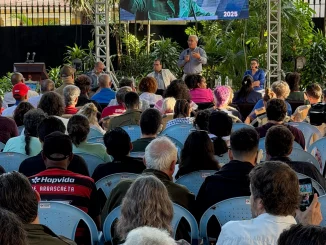
On Aug. 13, friends of Cuba were invited by the Cuban embassy to celebrate the 99th birthday of Fidel Castro.

Fidel Alejandro Castro Ruz was born on Aug. 13, 1926. His 100th birthday will be next year, so the Cuban Revolution will celebrate him for the entire year ahead.

A packed hall greeted the Cuban Ambassador Lianys Torres Rivera. The ambassador gave remarks on the legacy of Fidel: “It is one that endures through generations and beyond borders.” 

The original plan for the day’s event was to present a new book by author Arnold August called “Fidel Castro: la visión de un canadiense” or “Fidel Castro: a Canadian’s vision.” However, scholar and historian James Counts Early informed the audience that August was stopped at the Canadian border and not allowed to enter the United States because of his journalism on Palestine. 

Arnold August instead sent a video message, in which he informed the audience that he was detained and interrogated for six hours. James Early said, “It’s not a sign of times ahead. It’s a sign of right now.” 

James Early remarked on the global impact of the Cuban revolution. He recounted a story told to him by Danny Glover: the unforgettable day that Danny and his coworkers at a post office in Oakland gathered around a tiny black and white TV to watch Fidel march into Havana. 

Next was an unveiling of two oil paintings by artist Ian Matchett, depicting two different Fidels. Ian’s approach was to show the Fidel we usually imagine — the comandante, at the podium, recognizing you in the crowd — as well as Fidel the compañero, struggling through moment to moment like any of us. (His work can be found at matchettian.com or @matchettian on social media.) 

Second Secretary of the Cuban Embassy David Ramírez Álvarez surprised the audience with a special appearance of Black Cuban hip-hop artist Jonathan Mackenzie, who presented an original poem honoring Fidel, and a freestyle rap. 

The Struggle for Socialism Party will honor Fidel’s centenary by continuing to build the revolutionary movement here in the belly of the imperialist beast, and to bring down the vicious blockade of Cuba. 


Strugglelalucha256


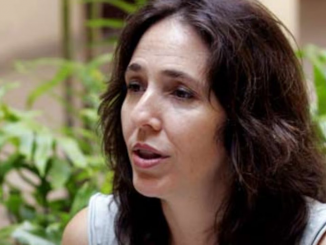
Mariela Castro on Cuba’s path to LGBTQI+ rights

Following is a talk by Mariela Castro Espín on July 29 at the ICAP (Instituto Cubano de Amistad con los Pueblos / Cuban Institute of Friendship with the Peoples) House of Friendship, in Havana, Cuba, with the participation of the Venceremos Brigade and LGBTIQ+ activists from the United States, along with members of the community networks linked to Cenesex (Centro Nacional de Educación Sexual / National Center for Sex Education), among other invited individuals.

This event was the Cuban launch of the book published in the U.S. by Struggle-La Lucha, “Love is the law: Cuba’s queer rights revolution.” Castro Espín contributed to the book. She is director of Cenesex, the Cuban National Center for Sex Education, which has led the way in  advancing LGBTQI+ rights.

Transcribed and translated by Gregory E. Williams

United by all struggles against injustice

Good afternoon, thank you for organizing this meeting. Thank you very much for coming and for your solidarity with Cuba and the rest of the peoples. Well, I really enjoyed the book presentation, everything you said.

So, I’m going to speak as an activist. Here, we are integral activists; women fight for men, men for women, LGBT people for straight people. We are interactivists. We are comprehensive activists. We also share solidarity with each other. We are united by all struggles against injustice.

So, we’ve been working on this within Cuban society for many years. This was achieved after many years of work, many dialogues, many opportunities to raise awareness.

We also had to study a lot. What did the different sciences have to say about this? What did the different social groups have to say about this?

We watched the struggle for civil rights in the United States with great respect. But we haven’t experienced what you experienced in your political struggles in your country. There were situations of injustice with which we disagreed, and which are inconsistent with our revolutionary ideals. 

And we said we have a very complex dialogue to undertake, and we have to convince a lot of people. And those are the arguments we used to convince our colleagues in Cuban society.

If we’re fighting for a socialist revolution — that socialist revolution for human rights and equality for all people — it has to address all issues. And we took it upon ourselves to demonstrate that there were problems that we had to resolve.

And that has been above all our work, our activism: educate, educate, educate.

We had to expose those inconsistencies with words that would convince people what we had to do. And then, after many years, we saw results.

And we were inspired by the activism of the Federation of Cuban Women. And by the activism that public health institutions had developed to confront the HIV epidemic. And little by little, we made progress, advancing in dialogue, in the design of policies and laws.

And since we started organizing the Cuban Days Against Homophobia and Transphobia, we tried to empower the Cuban population to talk about these issues. These were taboo topics.

[SLL note: The “Jornadas” or Days Against Homophobia and Transphobia, the Days for Children’s Rights, etc., are national mobilizations that occur annually.]

Prejudice a colonial legacy

And we found that many used derogatory terms to refer to LGBT people. Even when we began developing a film-discussion space called Cine Club Diferente. In that debate, the LGBT population participating reproduced the same prejudices they internalized against themselves. They thought they were sick people. They apologized. They said, “I’m sorry I’m like this. Why am I like this?”

And precisely what we tell them in these debates is that the disease isn’t in you, it’s in society. It’s a colonial and neocolonial legacy that we haven’t transformed. There was no awareness that it needed to be transformed. Nor did anyone know how to do it. Nor did we know. That’s why this collective space for dialogue allowed us to learn about them collectively.

Struggle cannot be compartmentalized

And then we started developing LGBTI rights activists, also encouraging non-LGBTI people to get involved. Because sexual rights don’t just focus on LGBTI issues, it’s much broader.

And we didn’t want to compartmentalize the problem with respect to Cuban society. Also, taking into account the experiences other countries have had – seeing or taking into account LGBTI activism in other countries – we learned from that and included it in our work.

And we were able to see how, through funding from certain international organizations, they tried to co-opt, blackmail, direct, and fragment these LGBT struggles, apart from other popular struggles. And when I was in San Francisco, on Castro Street, I went to a small LGBT museum, and I talked to many people, even on the street. It was very interesting because they recounted those experiences.

They questioned the New York-centric nature of LGBT struggles. And they said, a lot of blood was shed here in San Francisco before it was in New York. And in the same museum, you could see how the grassroots struggles were all connected, all integrated. And they were anti-system struggles. They were deep struggles. And they divided the groups, they divided them.

And so they have tried to prevent these divided popular struggles from uniting to change the capitalist system. And neoliberalism, above all, worked to divide the struggles of the proletariat, using, above all, diversity as a trap.

But you were all very clear in your speeches at today’s event: Our struggles are inseparable. And I believe this perspective unites us. And I believe we must continue uniting, strengthening ties, to strengthen these struggles. To strengthen solidarity. 

Anti-imperialism key for LGBTQI+ liberation

I see how the government is brutalizing people in the United States, in your protests. In your demonstrations against racism. In the struggles of immigrants. Against anti-immigrant policies. Against the genocide of the Palestinian people, Libya, Syria, Lebanon. In other words, they’re repressing solidarity with all countries with anti-imperialist and anti-Zionist stances.

You’ve seen that the official space of politics in the United States is completely Zionist. Both the Republican and Democratic parties are Zionist. Both are imperialist. 

Two years ago, when we began our Days Against Homophobia, Cuban LGBTI activists dedicated the day to the Palestinian struggle. And this year, we dedicated ourselves to the anti-imperialist, anti-colonial, and anti-fascist struggle. We cannot allow them to trivialize the struggles of LGBT people. We cannot allow them to obscure the classist nature of discrimination.

We’re going to join forces to organize different spaces to fight for LGBT rights as part of everyone’s struggle. We have to join forces. 

Liberation isn’t a spectator sport

But during these campaigns, when we ask people to sign declarations for LGBTQI rights, there are people who don’t sign! It’s like solidarity is up in the sky somewhere. They’re like spectators. They don’t participate. They don’t take part in these struggles for solidarity. But everything is connected. When you fight for the rights of LGBTQI people, you’re also fighting for all people and against the blockade of Cuba.

And to discredit what we were doing, there were foreign journalists who said, “Well, since you’re defending Palestine, you’re homophobic. Muslims are homophobic.” Huh? What did you say? Why are we defending Palestine if Muslims are homophobic?

And we responded, there’s homophobia in every society. There’s homophobia in every religion. In the United States, there’s a homophobic policy. And all the governments that support U.S. foreign policy are homophobic, including the countries of the European Union.

Because sometimes they support LGBTI communities, sometimes they don’t — it’s just politics. There’s no conviction behind their actions.

Consciousness transformed through struggle

Well, then, I’m very pleased to meet people like you. It’s truly fascinating to meet people who share our ideological stance. Sometimes, we don’t find them here in Cuba. So it’s a constant ideological struggle in the country.

Most of the 33% who voted against the Families Code did so only because it guarantees the right to equal marriage. Were they all religious? No, they weren’t. Some were also Communist Party activists!

But that’s part of the process of revolutionary transformation. We must continue the fight, the dialogue, and the educational campaigns.

The most important thing is that the political will of the Cuban Communist Party, the state, and the government has been clearly expressed in policies and laws. The Constitution of the Republic has protected the rights of LGBT people as constitutional rights.

Almost no country has that in its constitution. There are only 10. And the Constitution was approved by a constitutional referendum as an exercise of democracy.

People agreed. And that demonstrates the process of cultural transformation in socialism. In the 1970s, people didn’t think that way. Now they do. But there has been intentional education. As Paulo Freire said, “educate for freedom.” The meaning of education is freedom. That’s our job. That’s what Cenesex’s mission is all about: educating for emancipation, educating for freedom.

I always say, jokingly, that the sex education that Cenesex proposes isn’t about teaching the positions of the Kama Sutra! That’s not what we’re interested in. It’s true. That doesn’t matter to us.

Our goal is to eliminate violence. What’s important to us is to educate to overcome prejudice, to educate for freedom.

Strugglelalucha256


Fidel Castro’s centenary begins: A legacy for today’s troubled world

8 15 fidel

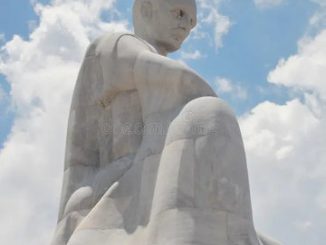
Today marks the beginning of Fidel Castro’s centenary—a hundred years since the birth of the historic leader of the Cuban Revolution. As we enter this centenary period, we do so not with statues or monuments, for Fidel himself rejected such commemorations. Instead, we honor him in the most profound way possible: by continuing the struggles to which he dedicated his life—against exploitation, imperial domination, and injustice; for socialism, peace, dignity, and the full emancipation of humanity.

His legacy is not entombed in stone, but alive in the trenches of resistance across the globe. Fidel does not require marble or bronze to be remembered. From the youth marching in defence of the planet, to communities fighting for healthcare and housing, to movements resisting settler colonialism and racial capitalism, Fidel is there – present in spirit and example. He lives in every act of courage that dares to imagine and build a world founded on human dignity.

More than a political leader, Fidel was a revolutionary in the fullest sense of the word: someone who not only dreamed of a better world but organized and mobilized the people to bring that dream into being.

With the triumph of the Cuban Revolution on January 1, 1959, Fidel and the Cuban people broke the chains of U.S. domination and opened a new chapter in the history of Latin America and the Global South. They showed that it was possible to seize control of a nation’s destiny and to place human needs above private profit.

Fidel’s leadership was always rooted in a deep ethical commitment to justice. His was a politics of principle—dignified, consistent, and unbending in the face of the most formidable enemies. Despite more than six decades of blockade, sabotage, and vilification, Cuba under Fidel remained steadfast: abolishing illiteracy, eradicating preventable disease, advancing gender equity, and offering sanctuary and solidarity to the oppressed – a revolution of principles, not privilege.

Fidel’s internationalism was never rhetorical. It was lived, practiced, and institutionalized. In southern Africa, Cuba played a crucial role the decisive defeat in Angola of the racist armed forces of the apartheid South African state, which led to the immediate independence of Namibia, accelerating the end of racist rule in South Africa.

Thus, Cuban medical brigades saving lives in Africa, Latin America, and even in wealthy nations like Italy during the COVID-19 pandemic are not anomalies—they are the natural outgrowth of the revolutionary principles Fidel instilled. From Angola to Haiti, Cuban internationalism has been a beacon of what human solidarity can look like in action.

We live in perilous times. Around the world, fascism rises, genocide is normalized and routinized, the gap between rich and poor ever deepens and widens, and the planet edges closer to ecological catastrophe. In the face of such crises, Fidel’s life and legacy illuminate a different path—one based not on accumulation and domination, but on solidarity, justice, and the flourishing of humanity.

His example calls on us not to despair but to organize, not to retreat but to resist, to struggle – to build the new world. In Fidel, we see the power of commitment fused with clarity of vision; the power of revolutionary love grounded in rigorous struggle.

Bertolt Brecht once wrote: “There are those who struggle for a day and they are good. There are those who struggle for a year and they are better. There are those who struggle many years, and they are better still. But there are those who struggle all their lives: These are the indispensable ones.”

Fidel was, and remains, one of those indispensable ones. In today’s global context Fidel’s vision is not a relic of the past but a roadmap for the future: in a world adrift, a compass.

As we commemorate the 100th anniversary of Fidel’s birth, let it not be merely a remembrance, but a renewal of commitment. Let it inspire not nostalgia, but revolutionary responsibility.

This centenary must be a time to rekindle the fires of resistance, to deepen our internationalist commitments, and to build the better world Fidel knew was possible—and necessary.

Fidel is not a figure of the past. He is a living force in the present, guiding us toward a better future yet to be won.

We declare, with conviction and clarity:

¡Fidel Presente! ¡Hoy, mañana y siempre!

¡Hasta la victoria siempre!

¡Venceremos!

Isaac Saney is a Black Studies and Cuba specialist and coordinator of the Black and African Diaspora Studies (BAFD) program at Dalhousie University in Halifax, Nova Scotia

Source: Resumen Latinoamericano – English

Strugglelalucha256


Book launch in Havana contrasts Cuban LGBTQI+ advances with U.S. anti-trans repression

The following talk was presented on July 29 at the ICAP (Instituto Cubano de Amistad con los Pueblos / Cuban Institute of Friendship with the Peoples) House of Friendship, in Havana, Cuba, with the participation of the Venceremos Brigade and LGBTIQ+ activists from the United States, along with members of the community networks linked to Cenesex (Centro Nacional de Educación Sexual / National Center for Sex Education), among other invited individuals.

This event was the Cuban launch of the book published in the U.S. by Struggle-La Lucha, “Love is the law: Cuba’s queer rights revolution.” Gregory E. Williams is the book’s editor.

July 26 set the stage

Thank you for having me here today. How auspicious that we’re together in Havana when Cuba just celebrated the July 26 holiday. This is the date when, in 1953, the revolutionaries led by Fidel Castro attacked the Moncada Barracks in Santiago de Cuba, and Raúl Martínez Ararás led the attack on army barracks in Bayamo. This combined offensive set the stage for the defeat of the U.S.-backed Batista dictatorship in 1959.

Because of that victory, today Cuba is a sovereign state building socialism. And the institutions of socialist democracy – along with guaranteed access to housing, health care, and more – are the basis for Cuba’s tremendous advance with the Families Code adopted in 2022. This comprehensive reform of the legal system expands the rights of women, children, LGBTQI+ people, those with different abilities, elders, and ultimately all Cubans. It’s about much more than same-sex marriage.

In addition, the very first all-LGBTQI+ Venceremos Brigade is here with us today. Congratulations! That’s an accomplishment, given the simultaneous tightening of Washington’s blockade of Cuba and the increased repression against queer and trans people in the U.S.

Also, our host, ICAP – the Cuban Institute for Friendship with the Peoples – is celebrating 65 years of fostering the kinds of internationalist connections we’re making today. Congratulations to ICAP!

Today’s event is the Cuban launch of the book about the Families Code, “Love is the law: Cuba’s queer rights revolution,” released in the U.S. by Struggle-La Lucha, the publishing arm of the Struggle for Socialism Party. Our friend Paquito [Francisco Rodríguez Cruz] from Cenesex has already explained the significance of the book. Thank you Paquito! I agree with him that a Spanish translation is needed. Let’s talk more.

I’d like to recognize several contributors to the book who are present: Cheryl LaBash, co-chair of the National Network on Cuba in the U.S.; Mariela Castro Espín, director of Cuba’s National Center for Sex Education, or Cenesex, which contributed greatly to the development of this Code; also, the amazing initiator of this event, Aylen Lesmes Bonachea of ICAP; Alejandra Garcia of Resumen Latinoamericano; and Verde Gil Jiménez of the Grupo Trans Masculinos de Cuba. Verde helped me develop this presentation by asking questions about the trans struggle in the U.S. Thank you, everyone! If I’ve missed anyone, please let me know.

LGBTQI+ delegation learned from Cuba

Let me just emphasize that this book grew from the U.S. Friends Against Homophobia and Transphobia Delegation, which went to Cuba in May 2023 to learn about the Code. It was organized by ICAP and Women in Struggle / Mujeres en Lucha.

During that trip, we met with queer and trans organizers, delegates from neighborhood assemblies, and a deputy of the National Assembly of People’s Power — the equivalent of the U.S. Congress. (But note that Cuba’s representatives are ordinary workers – medics, plumbers, teachers — not millionaire career politicians like in the U.S.). The testimonies from this delegation are a central part of the book. Hopefully, the book is just one more step in our continuing collaborations.

The true face of U.S. imperialism is revealed

The book has come out in a particular historical context that I’ve already alluded to. Allow me to say something about that. I am referring not only to Cuba-U.S. relations, but to the present state of the global capitalist (or imperialist) system led by the U.S. That should ground our discussion.

I believe that in this moment, the real face of U.S. imperialism is more fully revealed before the world. Because of Gaza. Because of the cruelty and vulgarity of Trump’s regime. Of course, Trump is just a symptom. But in this moment, Washington’s beautiful words about democracy and human rights – used to justify sanctions and war – don’t have the power they once did. The naked brutality of imperialism is revealed.

The system is truly decayed, and it’s because of this decadence that the imperialists are so dangerous. Their desperation causes them to lash out in all directions. They’re burning children alive in Gaza. They’re pushing for war with China.

And this terrorist government of the United States, which has killed many millions of people worldwide, is trying to destroy Cuba. They want to destroy the socialist system that made the Families Code possible. They want to impose a government that would let Wall Street plunder Cuba like in the ‘50s.  

This decadence of the imperialist system is fueling resurgent fascism. Within its own borders, the Yankee government is furiously attacking workers and oppressed people, including the trans community. Like immigrants, trans people are scapegoats for this system’s failures.

But they can’t hide the fact that conditions inside the country are deteriorating. Homelessness increased 18% from 2023 to 2024. While austerity is imposed on the population, most of the state budget is given to the military and police, including ICE. They no longer make any pretense of improving the lives of the people.

Anti-trans hysteria fuels violence

Trump’s movement has escalated rhetoric against trans people and pushed through many anti-trans laws. Violence against trans people has risen dramatically. Murders of trans people almost doubled between 2017 and 2022.

In that time, 65% of trans women killed by guns were Black. One third were experiencing housing insecurity. Clearly, transphobia is bound up with racism and economic exploitation.

There was a horrific case at the beginning of this year: the murder of Sam Nordquist, a young multi-racial trans man from Minnesota. In late 2024, Sam went missing after going to rural New York to stay with a girlfriend he met online. This woman and six other people sexually abused and tortured Sam for over one month before killing him.

One of the most shocking aspects is that some of the perpetrators are themselves LGBTQI+. That’s why prosecutors don’t consider it a hate crime. But I think it demonstrates the deep rot of the social fabric and can’t be separated from anti-trans hysteria.

Again, that happened in New York, a so-called “liberal” state. California is another. Yet this month, thousands of trans children and youth are losing access to gender-affirming care in Los Angeles, California. The L.A. Children’s Hospital is ending trans services because Trump threatened their funding. People have been fighting back, rallying outside the hospital. Our comrade Onyinye will tell us more about the fight in L.A.

No equivalent in U.S. to Cuba’s popular democracy

Back to the Families code and why the U.S. and Cuban situations are so different. We must understand that because of their socialist system, Cuba has institutions of popular democracy that we don’t have in the U.S.

In the U.S., just as there’s no equivalent to this popular democracy, there’s nothing comparable to the Families Code. Certainly, there are progressive laws (whether they’re enforced or not), but each one is passed individually after a big struggle.

For example, some states began legalizing same-sex marriage starting in 2004, with federal recognition coming in 2013. That was a people’s victory. But getting each of these laws passed was an uphill struggle because the capitalist state generally opposes progressive change.

But on top of the difficulty of getting any progressive law passed, rights won are later snatched away. That’s part of the inevitable slide toward fascism as the imperialist system declines.

Queer and trans liberation part of anti-capitalist struggle

In the Struggle for Socialism Party, we affirm that the fight for queer and trans rights is part of the larger struggle against capitalism. The oppression of women and LGBTQI+ people is an outgrowth of class society – of premodern arrangements dividing those with wealth from those without it. Capitalism continues such oppressions in new forms.

So, when we talk about overcoming the capitalist mode of production, we are also talking about eliminating all forms of oppression, including gender and sexual oppression. Conversely, we can’t have queer and trans liberation without overcoming capitalism.

We shouldn’t be confused when corporations seeking queer and trans customers co-opt the symbols of our struggles. Neither should we be confused when imperialist governments use claims about our rights to justify their actions.

When Washington plans to destroy a country, it talks about the rights of people there. They say they’re going to liberate women and bring democracy. This never happens. They bring death while backing the most reactionary forces everywhere.

U.S. imperialism can be defeated

Yes, we’re up against a tremendous monster, but it can be defeated. The heroic peoples of Palestine, Yemen, Lebanon, and Iran are striking real blows against this monster. It’s not invincible. And Cuba has stood firm for 66 years.

The Cuban people and the working-class and oppressed majority in the U.S. have the same enemy. In the U.S., we’re being crushed by a system that benefits a small ruling class. The forces of that same class are trying to destroy Cuba. We have to work together.

With political education, the U.S. masses can understand this. For our part, as queer and trans activists from the U.S., we must spread the word about Cuba’s achievements. And we must keep up the pressure to end the blockade and take Cuba off the bogus State Sponsors of Terrorism list.

Cuba stands firm

Before I conclude, let me state that I know Cuba’s institutions of socialist democracy aren’t perfect. But consider this remark from President Diaz-Canal’s July 18 speech to the National Assembly:

“When we review all the periods of the 66 years of the Revolution in power, what we find, in addition to victories, are third world challenges, enemy obstacles and also our own mistakes and lessons learned, all fruits of the never abandoned eagerness to conquer and sustain social justice as a supreme aspiration, in a completely adverse world context, since the Soviet Union and the socialist camp ceased to exist.

“If, in spite of all that, the Cuban Revolution is standing and fighting for the possible prosperity, it is because of its authentic and genuine character. We are not an accident of history. We are the logical consequence of a history of resistance and rebellion against abuse and injustice that has very deep reasons to believe in its own strength.”

I want to emphasize this phrase, “in a completely adverse world context.” In the past 50 years, more or less – in the long phase of capitalism called “neoliberalism” – what we’ve seen is a global revolutionary retreat, with the imperialist bourgeoisie on the offensive. Most of the socialist camp was destroyed by imperialist-backed counterrevolution, resulting in a plunge in life expectancy in those countries. At the same time, the liberation struggles of Africa, Asia, and Latin America faced major setbacks following the high tide of the ‘60s and ‘70s.

In the imperialist center, even in Western Europe, social democracy is effectively dead. Unions have been beaten back. Almost everywhere, the gains of people’s struggles have been reversed. And as I’ve said, with this global system in crisis – economically, politically, and ecologically – the trend is toward fascism.

But in that completely adverse world context, Cuba has stood firm. The Families Code shows that this revolution is still alive. It is still possible to gather the people’s forces to advance that revolutionary process. That’s the task of the new revolutionary generations here.

We must make a revolution in the U.S. 

The mere existence of this workers’ state is a light for people struggling everywhere, including for us in the U.S., where we have to make our own revolution. That is essential for us, for Cuba, and for the survival of humanity and all the other species on this planet.

That’s the flipside of the system’s terminal decline. Even though this period is dangerous, opportunities are emerging. Formerly colonized countries of the Global South are finding new ways to maneuver against a system that cannot tolerate sovereign development benefiting the masses. That’s why the imperialists are against China, and Trump is attacking BRICS. But we know that overcoming capitalism is a prerequisite for true multipolarity, where all can develop in peace.

Moreover, today, the working class truly is global, and not just in the sense of being present everywhere. Our class all over the world is interconnected. That is our strength, and it’s why we’re the class that can defeat the capitalists once and for all. But we have to organize for it.

That ends my presentation, thank you!

Strugglelalucha256


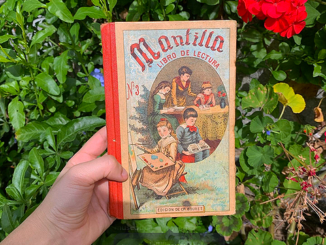
A book against the blockade of knowledge: ‘Love is the law: Cuba’s queer rights revolution’

The following text was presented by Francisco Rodríguez Cruz on July 29 at the ICAP (Instituto Cubano de Amistad con los Pueblos / Cuban Institute of Friendship with the Peoples) House of Friendship, in Havana, Cuba, with the participation of the Venceremos Brigade and LGBTIQ+ activists from the United States, along with members of the community networks linked to Cenesex (Centro Nacional de Educación Sexual / National Center for Sex Education), among other invited individuals.

This event was the Cuban launch of the book published in the U.S. by Struggle-La Lucha, “Love is the law: Cuba’s queer rights revolution.” Rodríguez Cruz is the vice president of the Cuban Union of Journalists (UPEC) and a gay activist. He is better known as “Paquito el de Cuba.”


One of the biggest surprises and disappointments I have experienced when representing Cuba in international forums on LGBTIQ+ rights, or simply in my daily contact with supportive friends from other countries visiting Cuba, is the widespread ignorance, sometimes almost total, of all our most recent struggles and achievements in this area.

The smear campaign about homophobia and transphobia in the Cuban Revolution continues to be the prevailing opinion in the major transnational media, reinforced time and again by the permanent decontextualization by the counterrevolutionary press financed from abroad of the problems we still have, of course, in this cultural battle to overcome prejudice and stigma, discrimination and injustice based on people’s sexual orientation and gender identity.

And precisely in a world where misinformation about Cuba is systematic and where advances in LGBTIQ+ rights on the island are ignored or distorted, the book “Love is the law: Cuba’s queer rights revolution” stands as a beacon of truth and solidarity, seeking to shed light on an induced and far from innocent darkness against our country.

Published by Struggle-La Lucha and presented at the Urban Reads bookstore in Baltimore — a space that has bravely resisted attacks by neo-Nazi groups — this work documents the democratic and revolutionary process that led to the approval in Cuba almost three years ago of the new Families Code, a pioneering legal framework that expands rights for women, children, the elderly, people with disabilities, and especially the LGBTIQ+ community.

This book not only documents the legal content of the Code, but also contextualizes its emergence from a Marxist, anti-colonial, and deeply humanist perspective. Readers will find testimonies from Cuban activists, historical analyses, excerpts from speeches, including those by Mariela Castro, director of Cenesex, and a rich reflection on how Cuban socialism has created conditions for the sustained expansion of rights, in contrast to the regressive offensive underway in the United States.

Because the U.S. blockade against Cuba is not only economic, it is also a cultural and political blockade that seeks to silence the achievements of the Revolution. While in the United States and much of the world, a narrative is promoted that caricatures Cuba as a country lagging in human rights, the reality is radically different. As the book points out, Cuba has built, through a process of popular democracy, one of the most advanced legal systems in terms of LGBTIQ+ rights, surpassing even many capitalist nations.

The book highlights a key point that is often forgotten: the processual and dialectical nature of the Cuban Revolution. Instead of clinging to dogma, the socialist process in Cuba has demonstrated, through the new Families Code, its ability to learn, rectify, and move forward. The fact that the Cuban government actively promotes LGBTIQ+ rights — through Cenesex, public health policies, legislation, and political representation — challenges all the stereotypes constructed by the Western media.

I should add here that this is not just about the renewal of family law, which is the focus of this important title. Following the approval of the Families Code, Cuba has incorporated approaches to protection and guarantees for LGBTIQ+ people into other updated regulations or those that have emerged as a development of the 2019 Constitution.

The Penal Code; public health regulations, including those relating to assisted reproduction and surrogacy; the extension of maternity and paternity rights; and just a few days ago, the approval of the new Code on Children, Adolescents, and Youth, together with the Civil Registry Law; complete what we can safely say is one of the most comprehensive and revolutionary legal systems in the world in terms of LGBTIQ+ rights, and one that will surely continue to develop.

But let us return to our book, which we hope will soon be available in Spanish from a Cuban publisher, also to contribute to the education of our citizens, who are in great need of it on these issues.

Because in these dangerous times of colonization of thought, historical obfuscation, and traps for de-ideologization, we can also learn a lot from the analysis of transgender communist Leslie Feinberg, who in her/zir essay “Rainbow Solidarity in Defense of Cuba” (2009) [included in “Love is the law”] contextualizes the Cuban LGBTIQ+ struggle within our history of anti-colonial and anti-imperialist resistance. Feinberg highlights how, unlike the United States — where the Stonewall rebellion (1969) was a response to police brutality and marginalization — Cuba has managed to integrate the demands of diverse sexualities into a socialist project that prioritizes collective justice.

Another of the book’s major contributions is to debunk the myth that Cuba has historically been homophobic and unevolved. While the early years of the Revolution were marked by prejudices inherited from Spanish colonialism and U.S. neocolonial influence, as well as the mistakes inherent in an armed national liberation process that reinforced the symbolism of a rebellious and exclusively heterosexual masculinity, the Cuban women’s movement — led by the Federation of Cuban Women (FMC) — paved the way with the first Family Code in 1975, a milestone that guaranteed equal pay, reproductive rights, and child protection decades before the United States.

As part of the counterinsurgency analysis presented in the book, passages that have been used to unfairly attack Cuba are put into a more balanced perspective. It compares, for example, how in the 1980s, in the face of the AIDS epidemic, Cuba implemented public health policies that provided free medical care and housing to people with HIV, in contrast to the deliberate neglect of the Reagan administration. The creation of the National Center for Sex Education (Cenesex) in 1988, later directed by Mariela Castro Espín, consolidated a state model of active promotion of LGBTIQ+ rights, including free gender affirmation surgery since 2008.

The book also details the 2019 constitutional process, and highlights Article 42 of the current Constitution, which prohibits all discrimination based on sexual orientation and gender identity, and the subsequent referendum on the Family Code (2022), approved with 66.85% of the vote, after 79,000 popular assemblies and 6.5 million participants in the consultations.

This code, as we already know, legalized same-sex marriage, recognized the wide diversity of existing families (same-sex parents, multi-parent families, families with grandparents as caregivers, etc.), guaranteed adoption for all family types and non-profit surrogacy, introduced progressive autonomy for children and adolescents in decisions about their bodies, and strengthened protection against domestic and gender-based violence.

At a time when the international fascist movement — led by figures such as Donald Trump — is attacking LGBTIQ+ rights and public services, the book underscores the importance of learning from Cuba. While trans rights are being cut and teachers are being persecuted in the United States, Cuba has already moved forward with policies such as extending maternity leave to 15 months in 2024, and has just banned corrective surgery for intersex infants, established by law the right to comprehensive sexuality education and freedom of expression and respect for identity from childhood, adolescence, and youth, as well as the possibility for trans people to change their identity documents without the need for genital reassignment surgery.

The context cannot be forgotten: All this is happening under the brutal conditions of the economic, political, and cultural blockade imposed by the United States for more than six decades. A blockade that not only suffocates the country economically, but also imposes an information and symbolic siege. As one of the trans activists interviewed in the book points out, the shortage of hormones is not due to a lack of political will, but to the restrictions imposed by the blockade, aggravated by the absurd inclusion of Cuba on the list of state sponsors of terrorism.

Meanwhile, the United States is experiencing a reactionary legislative wave, with anti-trans laws, book bans, restrictions on abortion, and the criminalization of critical thinking in schools. The comparison is inevitable for the authors, who honestly highlight this contrast. While in Cuba, millions of people are consulted to expand rights, in the U.S., rights are being eliminated by judicial decrees signed by unelected judges who respond to corporate and fundamentalist interests.

Of particular relevance is the fact that this work denounces the hypocrisy of the U.S. government, which includes Cuba on its spurious list of State Sponsors of Terrorism while financing wars and supporting genocide in Palestine. In contrast, it is recognized that Cuba exports solidarity: doctors, education, and a model of social justice that inspires the world.

“Love is the Law” is not just a book; it is an act of resistance. It recovers the legacy of Feinberg and Bob McCubbin — whose Marxist analysis of LGBTIQ+ oppression is fundamental — and updates it for a new generation. In the words of editor Gregory Williams: “Stonewall means struggle, and Cuba shows us that another world is possible.”

This text is also a tool for decolonizing knowledge about Cuba, inspiring struggles in countries subjected to neoliberalism, and strengthening international solidarity against imperialism.

“Love is the law” is, therefore, much more than a legal or historical testimony. It is a tool for queer internationalism. An invitation to look south, toward socialist processes and anti-colonial resistance, to learn, be inspired, and build bridges. Because if this book teaches us anything, it is that the struggle for LGBTIQ+ rights cannot be separated from class struggle, feminism, anti-racism, and anti-capitalism.

In the words of editor Gregory E. Williams during the launch: “We must oppose those who seek to erase history. There is an alternative to capitalist oppression. With socialist revolution, people can move forward continuously instead of always being on the defensive.”

That is why we need this book, because it is a living memory of a revolution that continues to march forward. Because it dismantles the myths of imperialist propaganda. Because it reminds us that there are alternatives. As Feinberg wrote: “Trans and queer liberation is linked to the liberation of all oppressed people.” This book is another step on that path.

This book — I repeat — is urgent. Not only because the reactionary offensive is advancing in countries like the United States, but also because, from the imperialist centers, a distorted narrative of the Cuban Revolution has historically been promoted, particularly regarding the rights of LGBTIQ+ people. There is a silence — or worse, a lie — that hides the fact that Cuba has been, in recent decades, a remarkable example of how a socialist process can expand sexual and gender rights from a logic of social justice, structural equity, and real democratic participation.

That silence must be broken. And works like this achieve that.

Thank you very much.

Strugglelalucha256
https://www.struggle-la-lucha.org/cuba/page/3/