ICE kills in Minnesota, then moves to crush protest

NekimaLevyArmstrong
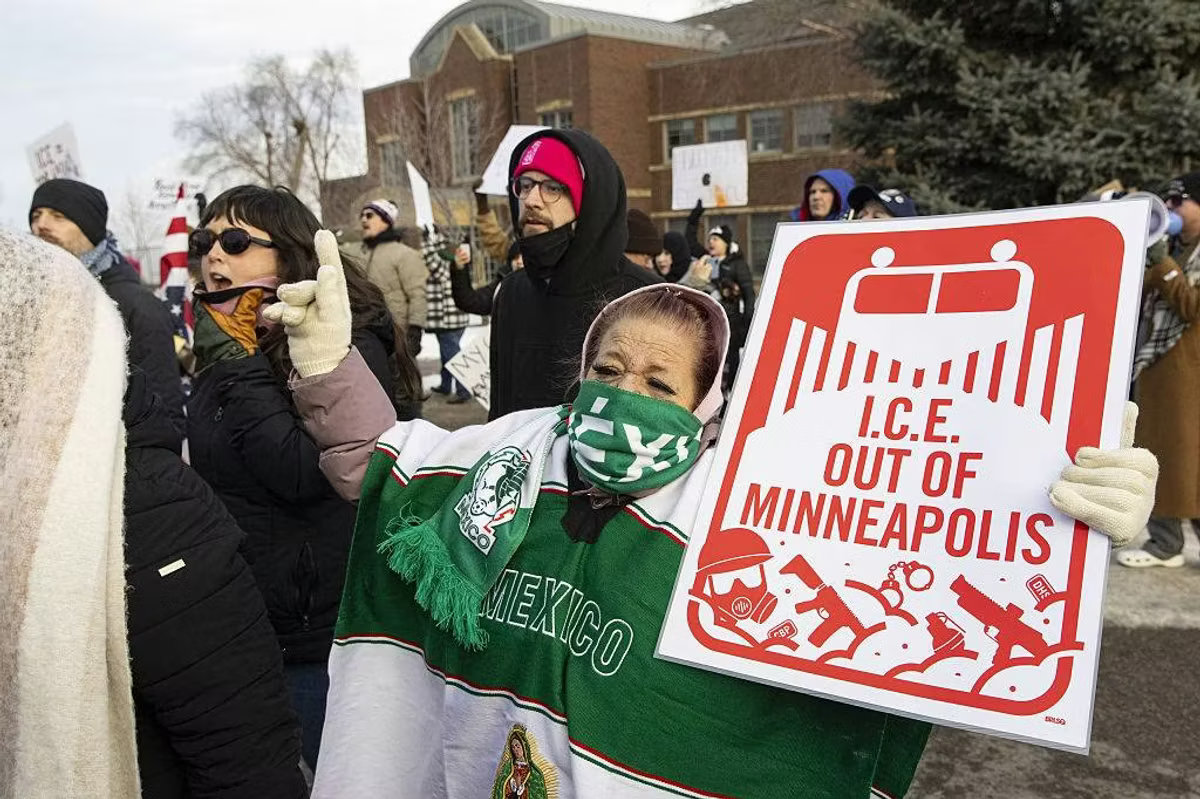
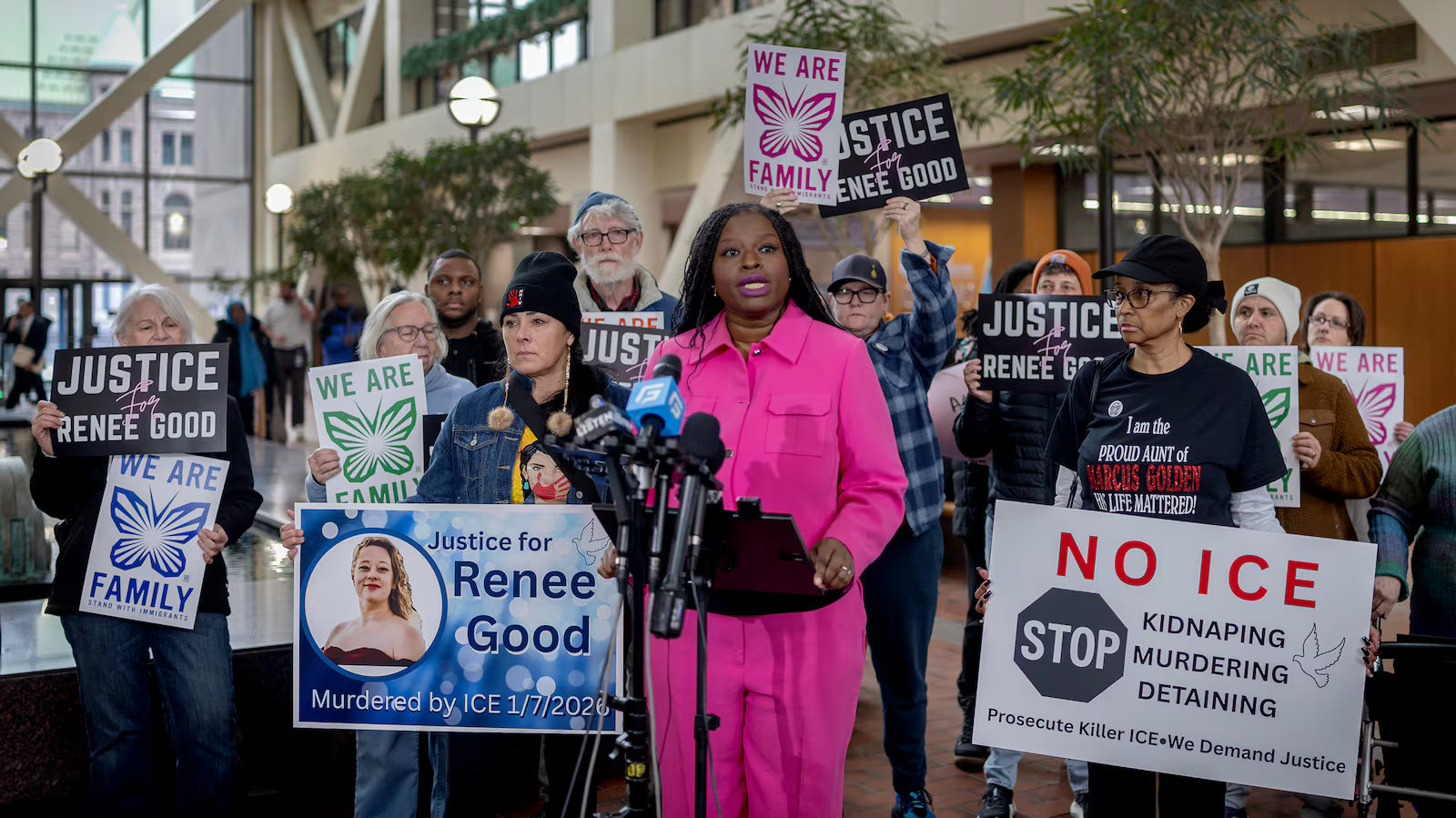
Nekima Levy Armstrong and community leaders speak during a press conference in the lobby of the Hennepin County Government Center in Minneapolis on Jan. 8, 2026, calling for accountability following the fatal shooting of Renee Good by an ICE agent, a killing that has sparked protests against federal enforcement and demands for independent investigation.

Federal authorities arrested civil rights organizers in St. Paul, Minnesota, after a protest at a Southern Baptist church that demanded accountability for an ICE killing.

Among those arrested were Nekima Levy Armstrong, an ordained minister with decades of organizing experience, and Chauntyll Louisa Allen, a sitting member of the St. Paul Public Schools Board of Education. Others were charged as well. The charges were federal.

The targeting of Nekima Levy Armstrong and Chauntyll Louisa Allen was not incidental. Both are organizers whose work links protests against police violence with resistance to ICE raids. Armstrong is a longtime civil rights leader shaped by Minneapolis’s Black Lives Matter movement and by repeated uprisings against police killings. Allen is an elected school board member active in immigrant and community defense. Together, they represent a growing overlap between opposition to police violence and resistance to ICE enforcement.

That overlap matters. In Minneapolis, Black Lives Matter protests against police brutality and protests against immigration raids have increasingly drawn from the same neighborhoods, the same families and, in some cases, the same organizers. When those fights converge, they challenge not just one agency, but a broader system of policing, surveillance and detention.

By responding with federal felony charges and conspiracy allegations, the Department of Justice moved to break that connection. The arrests sent a clear signal about which forms of solidarity will be tolerated and which will be punished. Organizing across movements — Black communities confronting police violence and immigrant communities resisting ICE — is being treated not as dissent, but as a federal crime.

The protest was one of several that erupted after an armed Immigration and Customs Enforcement (ICE) agent shot Renee Good, a U.S. citizen, dead inside her car in Minneapolis. Rather than open a criminal or civil-rights investigation, the Department of Justice declined to pursue one.

Because the shooter was a federal agent acting under federal authority, the refusal to investigate was an assertion of power. No independent body was assigned. No federal grand jury was convened. The Department of Justice declined to open a civil rights inquiry. The killing was closed without testimony, without public evidence, and without consequence. The message was unmistakable: When ICE kills, the federal government will protect its agents, and those who demand answers will not find them through official channels.

That refusal came first. Everything else followed.

A killing without an investigation

The officer who fired the shots, Jonathan Ross, was not arrested. 

When people demanded answers from the federal government, it responded with arrests instead of an investigation.

One of the protests took place at a Southern Baptist church on Sunday morning to confront the pastor, who is also the local head of ICE.

Federal authorities reacted immediately.

Prosecutors did not use minor trespass laws. Instead, they reached for heavy federal conspiracy charges and a law passed to block violent interference with abortion clinics, the Freedom of Access to Clinic Entrances Act, commonly known as the FACE Act.

That law was turned into a tool to make a church protest a federal crime.

A secret policy to enter homes without warrants

While these prosecutions moved forward, another shift was taking place inside ICE itself.

ICE staff leaked a secret memo signed by acting Director Todd Lyons, ordering agents to enter homes without a judge’s warrant, relying only on paperwork signed by ICE.

The policy was not circulated openly. Supervisors were told to show it briefly and take it back. Agents were instructed verbally. At least one ICE instructor resigned rather than teach it. Employees who objected were disciplined.

The reason for the secrecy is obvious. No judge has granted ICE the power to break into homes without a warrant.

The policy allows armed federal agents to force their way into private homes without a judge’s approval — the very practice the Fourth Amendment was written to prevent. No court has ever authorized ICE to operate this way.

ICE moved ahead anyway.

At the same time, the agency expanded enforcement under what agents call “Operation Catch of the Day.” Minnesota was one of several states targeted. The old rule barring arrests at schools, churches and hospitals had already been revoked. Agents were given broad discretion to operate anywhere.

Federal officials have explicitly framed the ICE escalation in Minnesota as punishment for the state’s sanctuary policies. The Trump administration has singled out Minnesota not only for limits on cooperation with ICE, but also for its legal protections for immigrants and its status as a refuge for LGBTQIA+ people. In public statements, these protections have been cast as defiance rather than civil rights. Federal officials have presented the enforcement surge as a warning. States that protect immigrants and LGBTQIA+ people will face raids and arrests.

The results followed quickly.

Indigenous community members in Minneapolis have also faced heightened federal enforcement and joined resistance to ICE action. Reports from the ground describe Native people being profiled and targeted in immigration sweeps, creating fear and disruption in Indigenous neighborhoods, where people say they are afraid to leave their homes amid the raids. 

Tribal citizens from the Oglala Lakota Nation were among those detained near housing complexes as ICE pressure in the city intensified, drawing protests and statements from Native organizers condemning the federal operations. 

Indigenous organizers and residents have taken to the streets in neighborhoods with deep histories of Native resistance, including renewed patrols along the American Indian Cultural Corridor, rejecting federal enforcement as another form of state violence.

ICE has used a range of tactics to enforce this crackdown.

In one reported case, ICE agents used a 5-year-old child to draw his father into an arrest. Both were taken into custody and sent to a detention center in Texas. Schools were monitored. Churches were entered. Communities were put on notice.

Deaths in custody follow

In El Paso, Texas, Geraldo Lunas Campos died at a makeshift ICE detention facility known as Camp East Montana at Fort Bliss Army base. The county medical examiner ruled the death a homicide by guards, caused by asphyxia from neck and torso compression.

Federal power has drawn a line. ICE agents can kill and expect protection. ICE can enter homes without a judge’s order. Churches aligned with enforcement are shielded. Those who challenge this arrangement are charged with conspiracy.

The issue is no longer legality. It is whether people will accept a system in which federal agents are protected after a killing and protesters are prosecuted for demanding accountability.

That will not be decided in courtrooms. It will be decided by struggle.

Strugglelalucha256


Remembering the revolutionary spirit of Rev. Martin Luther King in Brooklyn

Cold weather didn’t stop people from marching in the Bedford-Stuyvesant neighborhood of Brooklyn, New York, to commemorate Dr. Martin Luther King’s holiday on Jan. 19. The action was called by the December 12th Movement.

The demonstration started with a rally in Jitu Weusi Square, named after the late revolutionary educator and organizer. A recording was broadcast of Dr. King’s famous April 4, 1967, address at Riverside Church, where he denounced the dirty war in Vietnam.

There, King declared: “The greatest purveyor of violence in the world is my own government.” For courageously telling the truth, he was executed exactly one year later in Memphis during a strike of sanitation workers for union recognition.

Roger Wareham, an International Secretariat member of the December 12th Movement, told people that he was there when Dr. King spoke. Wareham and other speakers denounced Trump’s fascist raids in Minneapolis targeting Somali immigrants. Just as fascist was Trump’s kidnapping of Venezuelan President Nicolás Maduro and First Combatant Cilia Flores. 

People marched down Harriet Ross Tubman Avenue carrying the Red, Black and Green Liberation Flag designed by the Honorable Marcus Garvey. Palestinian, Somali and Venezuelan flags were also carried. People chanted, “We aren’t afraid of Trump, Trump is afraid of us.” 

A banner quoting Dr. King, “reclaim the revolutionary spirit, declare eternal hostility to poverty, racism and militarism,” led the march that took over the street. Drivers showed their support, and so did people on the sidewalks.

The ending rally was held near Utica Avenue, where Omowale Clay, chairperson of the December 12th Movement, spoke. Other speakers included representatives of the Palaver Collective and the United Negro Improvement Association, founded by Marcus Garvey.

The freedom fighter Marcus Garvey was a Jamaican immigrant who was framed, jailed and deported, just like immigrants are being attacked today. Everyone was determined to stop Trump’s fascist war drive against poor people everywhere.

Strugglelalucha256


New York nurses strike over patient care, demand hospitals bar ICE

Bronx, New York, Jan. 22 — Nurses at Montefiore Medical Center in the Bronx walked off the job this week, shutting down routine operations as they pressed a demand that has not previously appeared in a major U.S. health care labor contract: a binding rule barring Immigration and Customs Enforcement (ICE) agents from entering hospital facilities.

“In the Bronx, we have a very high population of Black and Brown people, and we have a population of immigrants that we are trying to protect and make sure that they feel safe coming into hospitals,” said Michelle Gonzalez, a Montefiore nurse and executive committee member of the New York State Nurses Association, speaking on Democracy Now! on Jan. 21.

The demand did not appear suddenly. For more than a year, NYSNA nurses worked with the Committee of Interns and Residents and 1199SEIU — the union representing other hospital workers — to push hospital administrators to voluntarily adopt protections against ICE agents inside medical facilities. Management refused. After months of meetings produced no change, nurses moved the issue into formal contract negotiations.

“We’ve been unsuccessful, which is why we’ve brought it into our contract demands,” Gonzalez said. “But still, to this point, they have not negotiated.”

What nurses are already facing nationwide

What nurses at Montefiore describe is already happening in hospitals across the United States.

At Hennepin County Medical Center in Minneapolis, doctors and nurses have begun using encrypted group chats to warn one another about ICE activity near the hospital. Health care workers described plainclothes agents stopping patients and staff, particularly people of color, and demanding documentation as they enter or leave the facility. In one incident described by hospital staff, an officer unnecessarily shackled a patient receiving care.

In Portland, Oregon, the Oregon Nurses Association sent a letter to Legacy Emanuel Medical Center documenting cases in which ICE officers pressured clinical staff to discharge patients early. “Nurses have reported instances where physicians have recommended continued hospitalization, but ICE insisted on removing the patient,” the union wrote, describing discharges that went against medical advice.

The cost paid by patients

The effects show up in patients’ lives.

In Minnesota, doctors reported that a pregnant woman skipped prenatal appointments because she feared encountering ICE agents at a clinic. A nurse later found her at home, already in labor. Another patient with kidney cancer was taken into ICE detention without his medication. Legal advocates intervened to get the medicine sent to him, but doctors said they could not confirm whether he was able to take it. Diabetic patients have gone without insulin. Wounds that could have been treated early progressed into medical emergencies requiring intensive care.

“Immigrants are absolutely avoiding medical care due to fear of being targeted,” said Sandy Reding, vice president of National Nurses United and president of the California Nurses Association. In Southern California, nurses reported declining patient numbers as people stayed away from hospitals and clinics.

Hospitals are workplaces — and ICE is entering them

Montefiore nurses are not describing a misunderstanding or a communication problem. They are describing what happens when ICE enforcers enter their workplace.

Hospitals are places where nurses and other staff work long shifts under staffing shortages and time pressure. Administrators answer to boards, insurers and bondholders. When ICE enforcers walk hospital corridors or wait outside entrances, patients stop coming. Workers become afraid to report for shifts. Nurses are left managing more advanced illnesses, more emergencies and more preventable complications.

Hospital executives allowed immigration enforcement to operate inside medical facilities rather than confront federal authorities. Patients and workers paid the price.

The claim of neutrality

Hospital administrators often say their hands are tied by federal law or that they must remain “neutral” on immigration enforcement. At Montefiore, those claims collapse under the weight of how the institution actually operates.

Montefiore Medical Center is an $8.6 billion medical corporation that brings in more annual revenue than many major cities. While it claims nonprofit status to avoid taxes, it operates as a commercial engine, prioritizing its bond ratings and executive compensation — including a CEO salary of over $16 million — over the safety of the Bronx community.

Its board of trustees reads like a directory of the billionaire class. It includes Daniel Tishman, a real estate magnate tied to Tishman Realty, and Zygmunt Wilf, owner of the Minnesota Vikings and a major real estate developer, alongside executives whose careers are built on controlling and profiting from vast pools of capital.

While the system expands into luxury concierge-style medicine in Manhattan, it imposes austerity in the Bronx and allows ICE enforcers to operate inside its public-facing facilities.

Hospital executives allowed ICE enforcers to operate inside medical facilities and made no attempt to stop it. Patients skipped care, workers feared reporting for shifts, and hospitals became places of arrest instead of treatment.

Using labor power to force the issue

With hospital management allowing ICE enforcers to continue unchecked, nurses turned to the only leverage they control: their labor.

“ICE is bad for patients, bad for communities, and bad for health care workers,” said Karen Sanchez, a registered nurse at California Hospital in Los Angeles, in a 2025 statement released by National Nurses United. “Our hospitals need to be sanctuary spaces for people who need care, and the presence of ICE in the facility severely impacts how safe patients feel here.”

What distinguishes the NYSNA demand is not only what it calls for, but how it is being pursued.

Nurses are not asking elected officials to pass new laws. They are not waiting for courts to intervene. They are asserting through collective bargaining that safe patient care requires keeping ICE agents out of hospitals.

For a year, nurses, doctors and hospital workers coordinated across unions to build support for the demand. When management refused to act voluntarily, they escalated. The strike is not a collapse of negotiations. It is the point at which workers use organized power to force an issue management has refused to address.

Hospital administrators have so far declined to agree to protections from ICE agents. The outcome remains uncertain. But nurses at Montefiore have already drawn a clear line: They are willing to strike not only over staffing levels and working conditions, but over whether patients can enter a hospital without fear of arrest.

On the picket lines outside Montefiore in the Bronx, that fight continues.

Strugglelalucha256


Solidarity actions for Minneapolis general strike spread to 250 cities

ICEoutnow

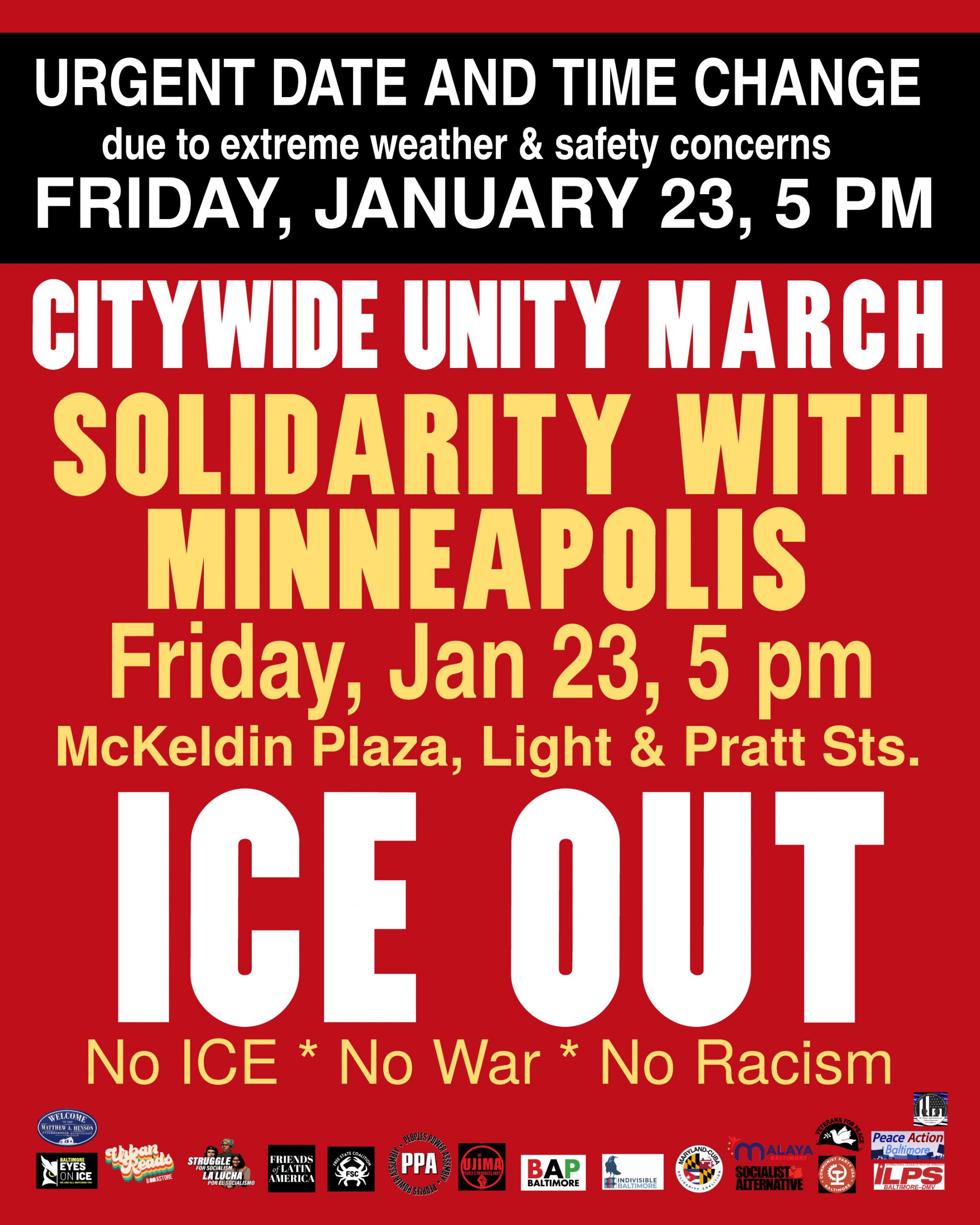
Solidarity actions called for Jan. 23 in support of the Minneapolis general strike have spread rapidly across the United States, jumping from “dozens” of cities to at least 80 in just four days.

The expansion has been tracked by Payday Report, which monitors labor actions nationwide. On Jan. 19, solidarity actions were being planned in “dozens of cities.” By Jan. 21, that figure had risen to at least 43 cities. As of Jan. 22, Payday Report documented at least 250 cities with confirmed actions tied to the Jan. 23 strike call.

The surge follows protests and organizing after the killing of Renee Good and the escalation of ICE raids in Minneapolis. Organizers describe the strike call as a direct response to federal repression aimed at immigrant and working-class communities.

“I think we will have tens of thousands of workers in the street in the Twin Cities,” said Kieran Knutson, president of CWA Local 7250, one of the strike’s main organizers, in comments reported by Payday Report. “Hopefully, what is happening in Minnesota becomes a model of how we can fight back against these raids.”

National networks are already in motion. Protests responding to Good’s killing took place Jan. 10–11 in cities including Baltimore, Los Angeles, Seattle, Detroit, Chicago, Houston, Austin, Washington, D.C., Portland, New York City, and Philadelphia. Organizers involved in those protests are now mobilizing for Jan. 23.

In Minnesota, the strike call has drawn broad backing across the labor movement and community organizations. More than 90 organizations have endorsed the action. Endorsers include the Minneapolis and St. Paul Regional Labor Federations, the Minnesota AFL-CIO, multiple area labor councils, and unions representing transit workers, teachers, nurses, health care workers, hotel and food service workers, communications workers, and graduate employees. Community and faith-based groups have also joined, linking labor action to opposition to ICE raids and police violence.

Organizers say the speed and scale of the national response reflect a shared understanding that the fight unfolding in Minneapolis is not local, but part of a broader confrontation between the working class and the machinery of repression.

IN BALTIMORE

Baltimore

Strugglelalucha256


‘The Yankee Empire is in irreversible decline’: Cubans respond to Trump’s threats

In the wake of the unilateral U.S. attack on Venezuela, an emboldened empire has sought to intimidate and threaten other nations which threaten its total hegemony.

Three weeks later, the ramifications of the unprecedented U.S. attack on Venezuela continue to reverberate. The military action in itself provoked nearly unanimous condemnation among experts in international diplomacy and law and has been also been a tremendous source of pain for the families of the more than 100 people killed in the nearly two-hour operation on South American territory.

The illegal operation also sparked concerns about the consequences that such a unilateral measure taken by Washington will have on the region and on global geopolitics.

After the attack, several journalists asked Donald Trump directly if the next target would be Cuba, which his administration has been targeting by exacerbating the economic blockade and seizing Venezuelan tankers bound for the island. They repeated threats made by his own Secretary of State, Marco Rubio, a declared opponent of the revolutionary government.

Trump’s ambiguous response to reporters sparked much speculation, until the U.S. president himself wrote on Truth Social: “Cuba lived, for many years, on large amounts of oil and money from Venezuela. In return, Cuba provided “Security Services” for the last two Venezuelan dictators, BUT NOT ANYMORE! Most of those Cubans are DEAD from last week’s U.S.A. attack, and Venezuela doesn’t need protection anymore from the thugs and extortionists who held them hostage for so many years. Venezuela now has the United States of America, the most powerful military in the World (by far!), to protect them, and protect them we will. THERE WILL BE NO MORE OIL OR MONEY GOING TO CUBA – ZERO! I strongly suggest they make a deal, BEFORE IT IS TOO LATE.”

Despite threats, a massive march of nearly 500,000 people paraded through the streets of Havana to honor the 32 Cuban combatants who were killed in Venezuela. During the march, the country’s top leaders promised that they would not surrender in the face of renewed imperialist aggression.

Abel Prieto, Cuban writer and the president of Casa de las Américas, and Dr. José R. Cabañas, the director of the Center for International Policy Research and former Cuban ambassador to the United States, spoke to Peoples Dispatch to share their perspectives on the threats lodged by Trump and how the attack on Venezuela has transformed the region.

Regarding the regional impact of the U.S. military action that resulted, among other things, in the capture of Venezuelan President Nicolás Maduro and his wife Cilia Flores, Abel Prieto asserts that this is an act of extreme right-wing aggression that broke the most basic rules of international law and opens a new and dark chapter in the history of the Americas.

“What the Trump administration did in Venezuela was an act of fascist barbarism, completely illegal, against all norms of civilized coexistence between nations,” he said. “It represents the beginning of a sinister era where, as Ivan Karamazov said, ‘everything is permitted’ for the most powerful. It has been a blow to the Venezuelan people, to the Cuban people, and to all Latin American peoples.”

“However,” Prieto says, the attack has also turned the tide among the progressive movement, “I believe it has strengthened anti-imperialism and anti-fascism in all decent people, whether they are on the left or not. The Yankee Empire is in irreversible decline, and this makes it more violent and rabid.”

Dr. José R. Cabañas, for his part, affirms that the United States’ act of ignoring and destroying international law reveals a geopolitical purpose that cannot be hidden: “The full application of the Monroe Doctrine attempts to dominate the region’s natural resources, prevent countries such as Russia or China, but also the European Union as a whole, from developing preferential economic ties with Latin American and Caribbean nations. The actions of January 3 against Caracas and other subsequent actions have caused fear among certain political forces in the region, but at the same time have reinforced the independent national agenda of several governments that have demanded that the U.S. develop bilateral relations based on greater equality and respect.”

An emboldened empire will be met with steadfast resistance

Regarding the growing danger facing Cuba following Washington’s more aggressive stance, Prieto states: “This supposed ‘victory’ [in Venezuela] has emboldened [the United States]. That is why there are threats against Cuba.”

We feel a mixture of pain and pride [for the 32 Cuban combatants killed on January 3]. Pain, obviously, because 32 Cuban families have been brutally torn apart. Pride, because we know that they faced an enemy that was vastly superior in numbers and military technology, and that they fell with courage and honor, doing their duty. They are our heroes, and they will inspire us in the face of any new aggression.”

Dr. Cabañas agrees that the killing of the 32 Cuban soldiers in combat is already an act of aggression against Cuba: “At the moment, the most significant impact on Cuba has been the loss of our 32 heroes who fell defending the same ideals as our internationalists in Africa, Grenada, or other regions of the world. The imperial forces do not understand the ties between Venezuela and Cuba, which long predate the revolutionary processes of both nations. Their roots go back to the independence movements against the European colonial powers.”

In this regard, Prieto added that the defense of the Cuban Revolution will be carried out to the bitter end: “I don’t know how far these fascists, full of hatred and lacking in morals, will go to hurt Cuba. Our people are not afraid. They will defend their Revolution in the worst circumstances, without ever giving up.”

A long history of aggression and resistance

Perhaps that is why Cuba is the country that has known the most in the history of the entire continent about U.S. hostility and boycotts against a sovereign government. Dr. Cabañas recalls: “Over the last 67 years, the United States has used every weapon possible to destroy the Cuban Revolution. In the 1960s, there were more than 100 CIA-armed gangs in the country that caused hundreds of deaths among the civilian population; there were several terrorist actions, from the invasion of Playa Girón to the persecution of Cuban ships on the high seas.”

The former diplomat recalled that this year marks the 50th anniversary of one of the worst CIA-backed terrorist attacks against Cuba “which claimed dozens of civilian victims. In the 1970s, strains of animal and human diseases were introduced into the country, causing great losses.”

He also recalled that the economic and commercial blockade is a U.S. strategy of attrition that the Cuban people know better than anyone: “The blockade against Cuba was originally established in 1962, but it was updated in legislative bodies that were approved in 1992 and 1996. Not to mention the barrage of negative information against the country, trying to isolate it from the rest of the international community and cause frustration among the local population.”

In this regard, Dr. Cabañas recalls that for six decades, despite facing diverse and persistent attacks, the Cuban Revolution has creatively resisted and continued building a society that centers people’s needs and defies U.S. interests for the region. “They have tried to use all means to destroy us and have failed in their essential purpose. Cuba faced the COVID-19 pandemic with its own resources and had five times fewer victims than the United States, which supposedly had all the resources to prevent thousands of deaths.”

Now, Dr. Cabañas says, Cuba faces the effects of an even stronger economic, commercial, and financial blockade, “But even under these circumstances, Cuba repeats the same question: how would the country progress if it were not the victim of that hostile policy, which is much older and much more complex than the recent events we are referring to now?”

Perhaps that is why Cuba has also been the country that has most vigorously rejected U.S. intervention in Venezuela, not only through diplomatic communiqués, but also through the mobilization of masses who rejected an aggression that seems to loom as a possibility on its borders. Dr. Cabañas states: “Havana was perhaps the capital that, in a matter of hours, mobilized its population for a mass demonstration condemning the crimes committed against Venezuela. These demonstrations have spread throughout the country… Our government has repeatedly expressed Cuba’s historic position both in terms of solidarity with our Latin American and Caribbean brothers and sisters, and in terms of the respectful and equal relationship that the United States is obliged to have with its neighbors and with the international community as a whole.”

Source: People’s Dispatch

Strugglelalucha256


New Orleans high school students stage walkout against ICE

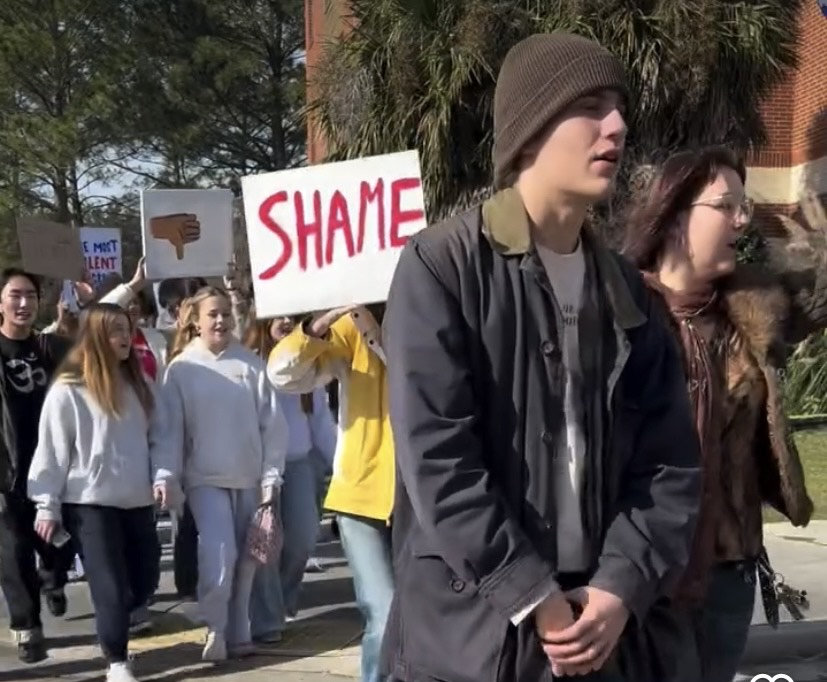
New Orleans, Jan. 20 – High school students at three city schools staged a two-hour walkout against ICE on the one-year anniversary of Trump’s second term inauguration. The schools were NOCCA (New Orleans Center for Creative Arts, New Harmony High School, and Benjamin Franklin High School, whose students led several walkouts over the past few years in support of LGBTQIA+ rights.

Chants captured on social media include “El pueblo unido jamás será vencido / The people, united, will never be defeated” and “Hate does not make America great.” 

Some signs read: “ICE = Gestapo,” “Hot people melt ICE,” “ICE out,” and “shame.” 

A report on New Orleans Public Radio included an excerpt from a statement released by the students. It said that they “refuse to accept a reality shaped by fascism, tyranny, and fear.”

The New Orleans action was part of a nationwide wave of student walkouts on Jan. 20. Students at schools in New York City, Los Angeles, Washington D.C., Atlanta, Minneapolis, Oklahoma City, Hartford, and Chicago staged similar protests against ICE. News reports said that tens of thousands walked out at over 800 high schools and colleges in all 50 states.

Walkout

Strugglelalucha256


From Minneapolis to Texas: ICE means death, get ICE out

On Jan. 14, Immigration and Customs Enforcement reported that Victor Manuel Diaz, 36, had died in federal custody. He was pronounced dead at 4:09 p.m. at Camp East Montana, an immigration detention site in west Texas. ICE described the death as a “presumed suicide,” while stating that the official cause remained under investigation.

Eight days earlier, Diaz had been arrested in Minneapolis.

Between arrest and death, he was moved more than 1,200 miles. He went from a city street to a tent camp on a military base near El Paso. The transfer took days. The outcome took one week.

Diaz was arrested on Jan. 6, as federal immigration agents surged into Minneapolis under Operation Metro Surge. The operation unfolded alongside lethal force. On Jan. 7, Renee Good, a Minneapolis resident, was shot and killed by an ICE agent.

Good had dropped off her child earlier that morning. She was unarmed when the agent fired. She died at the scene.

The killing and the arrests were not separate events. They occurred during the same federal operation, carried out by the same agency, and under the same conditions of expanded enforcement.

How the arrests spread

Operation Metro Surge was publicly announced as an enforcement effort targeting undocumented Somalis in Minneapolis. The claim was repeated by the Trump administration and circulated widely.

In practice, arrests spread quickly across the city.

Most Somalis in Minnesota are U.S. citizens, by birth or naturalization. That did not limit the scope of the operation. Immigration arrests expanded across neighborhoods and workplaces. The people who later died in custody were not Somali. Victor Manuel Diaz was Nicaraguan. Geraldo Lunas Campos was Cuban. Others who died in January came from Mexico and Cambodia.

Federal officials did name several Somali men taken into custody during the operation: Abdikadir Sheik Yusuf, Abdulkadir Sharif Abdi, Sahal Osman Shidane, Mukthar Mohamed Ali, Ahmed Mohamed Said and Feisal Mohamed-Omar. No public information has been released about where they are being held or the conditions they face.

Attorneys tracking transfers say most people arrested in Minneapolis are moved within days, mainly to Texas. Immigration attorney David Wilson said several detainees held at the Kandiyohi County Jail were sent to the Port Isabel Service Processing Center in southern Texas. Data compiled by the Sahan Journal shows this has been ICE’s routine. More than half of those booked into immigration detention in Minnesota in recent years were later transferred elsewhere.

Attorneys representing detainees say the pace has increased since Operation Metro Surge began. Michele Garnett McKenzie, an attorney with the Advocates for Human Rights, said at least 100 people linked to the operation have been detained, with most transferred to facilities in Texas.

Somali detainees transferred out of Minnesota are held far from family and legal counsel. Their locations are often learned secondhand. Their cases move across state lines. Attorneys say some face removal not to Somalia but to third countries such as Uganda or Rwanda.

Temporary Protected Status for Somalia is set to end March 17. Work authorization will be revoked, pushing more people into detention.

The Disappearance Before Death

After Victor Manuel Diaz was arrested, ICE released no public information showing whether he spoke with a lawyer or contacted his family. There has been no public statement from relatives. His location was not publicly known. He reappeared only after his death.

For people arrested in Minneapolis, Camp East Montana in Texas is one of the main destinations.

Lawyers based in Minnesota cannot easily represent clients held in Texas. Families cannot visit. Hearings take place by video, if they happen at all. Distance denies access.

Inside Camp East Montana

Camp East Montana is a tent detention camp on the Fort Bliss military base near El Paso. It is run by Acquisition Logistics, a private company paid $1.24 billion under a federal contract. Before receiving that contract, the company had no experience operating immigration detention facilities.

The camp is designed for rapid intake. People are housed in tents, not buildings. Guards are contract staff. Medical care is also provided by outside contractors. 

In December 2025, the American Civil Liberties Union sent a letter to federal officials describing what detainees reported inside the camp. Based on interviews with people held there and with their attorneys, the letter described beatings by guards, sexual abuse, denial of attorney access, inadequate food and delayed medical care. Detainees reported waiting days to see medical staff as their conditions worsened.

Deaths in custody

Victor Manuel Diaz died at Camp East Montana. 

Eleven days earlier, another man had died at the same camp. On Jan. 3, Geraldo Lunas Campos, 55, a Cuban national, was found dead in custody. The El Paso County medical examiner later indicated that his death was “likely a homicide by guards,” choked to death. 

Two men died in the same detention camp on the same day.

Their deaths came amid a rising toll nationwide. In the first 20 days of 2026, five people died in ICE custody.

On Jan. 5, Luis Gustavo Nunez Caceres, 42, died at the Joe Corley Processing Center in Texas. On Jan. 6, Luis Beltran Yanez-Cruz, 68, a Mexican national, died at the Imperial Regional Detention Facility in California.

On Jan. 9, Parady La, 46, a Cambodian national, died after being held at the Federal Detention Center in Philadelphia. 

In 2025, 32 people died in immigration detention, one of the deadliest years on record, as the detained population increased sharply.

ICEoutstrike

Minneapolis, and the demand to stop the arrests

Victor Manuel Diaz was arrested in Minneapolis on Jan. 6. Eight days later, he was dead in a detention camp in Texas.

One day after his arrest, Renee Good was shot and killed by an ICE agent in Minneapolis.

Those two deaths — one on a city street, one in federal custody — came from the same operation.

In Minneapolis, protests and organizing for the Jan. 23 general strike have grown in response to police violence, mass arrests and the expansion of federal enforcement. The demand raised in the streets is direct: ICE out.

That demand targets the arrests that begin the chain. As long as immigration enforcement operates in the city, people will continue to be seized, transferred out of sight and placed in conditions where abuse and death are routine.

Victor Manuel Diaz cannot be brought back. Renee Good cannot be brought back. What can be done now is to stop the arrests that sent one into a detention pipeline and put the other in the path of federal gunfire.

Stopping ICE in Minneapolis is the action that would end the arrests and transfers that lead to detention, abuse and murder.

Strugglelalucha256


‘Full Circle’: AIM patrols back on Minneapolis streets as tensions rise

Supporters are pouring in from across Indian Country to protect the Minnesota community from ICE

The wave of federal immigration agents swarming the Minneapolis area might be unprecedented in law enforcement history, but the response in the Indigenous community is not.

Half a century ago, the American Indian Movement was founded on Franklin Avenue, the heart of the urban Indian diaspora in South Minneapolis, to counter overzealous municipal policing.

Today, AIM patrols are back, watching over elders, youths and aunties along the same avenue in what is now known as the city’s American Indian Cultural Corridor.

“History shows us time and time again, it doesn’t repeat, but it rhymes,” said Heather Bruegl, an activist, historian and Oneida Tribe of Wisconsin citizen who has studied the American Indian Movement. “So you can look throughout history and see different examples of what we see today happening in the past.”

And if the history rhymes, some of the names do even more. Some are the same.

Crow Bellecourt, Bad River Band of Chippewa, has been out on the recent patrols. His father, the late Clyde Bellecourt, was among the founding members of AIM in 1968.

“I grew up in the movement,” said Bellecourt, executive director of the Indigenous Protector Movement, a group with AIM roots. “I always like to say, ‘I’m second-generation American Indian Movement.’ It’s, like, full circle for me.”

The confrontations between law enforcement and protestors in Minneapolis – including the shooting of 37-year-old Renee Good –  have brought reports that Indigenous people have also been swept into custody.

A cohort of Indigenous patrollers  has now reached close to 100, Bellecourt said.

“We’re running from seven in the morning to seven in the evening,” he said. “And even more. We still have some patrollers going out until like 11 or 12 at night.”

And just like in 1968, the patrollers are on the street to help community members feel safe.

“It’s really scary here,” said Mary LaGarde, executive director of the Minneapolis American Indian Center, which operates from its base on Franklin Avenue.

Federal Immigration and Customs Enforcement officers have surged into the Twin Cities area to counter what the Trump administration has called corruption and criminality in area immigrant populations. At this point, there are more federal law enforcement officers in Minneapolis than metropolitan police.

The dramatic presence has prompted widespread protests and rebukes from state and local officials. There have been at least two shootings involving the federal officers.

“We woke up and we had all these ICE agents everywhere,” said Bellecourt. “They’re all over our neighborhood. I’m scared for our old people and the young ones who just wanted to catch the city bus to go to the grocery store. … I worry about them getting picked up from ICE.”

LaGarde, White Earth Band of Chippewa, knows the feeling.

“It’s like you don’t want to leave the house,” LaGarde told ICT. “That’s how most of our people are feeling right now. Our elders are scared. Our young people, too. This is really impacting our kids.”

LaGarde said the patrols — by AIM members and other groups such as the Many Shields Warrior Society — are needed.

“it’s really important that we’re out protecting,” she said.

The numbers of volunteers out patrolling are growing.

“We have relatives coming in from South Dakota, Wisconsin and neighboring states,” Bellecourt said. Some have come from as far away as Oklahoma, he said.

Just like in the old days, AIM members are gathering along Franklin Avenue just as they gathered for occupations of Alcatraz Island in San Francisco in 1969, the Bureau of Indian Affairs headquarters  in 1972, and the Wounded Knee massacre site in 1973.

AIM members also turned out in force in Minneapolis in 2020 after the death of George Floyd at the hands of law enforcement.

What’s different from the early years? Modern communication tools.

“We didn’t have these cell phones and all this social media back in them days,” Bellecourt said. “Everybody called on house phones and it was amazing how many people would show up. My dad called it the ‘moccasin telegraph’ and people would just call one another and, wherever they needed people to be, everyone would show up.”

They came to help the people.Then and today.

“One of the first acts that AIM did when they were forming was patrolling the streets and making sure that if their community members were stopped or pulled over by the police, that their rights were being followed, like, you know, ‘Hey, you have the right to this, you have the right to that,’” Bruegl said.

“And we see that now happening again [because] people’s rights are being violated. We see Indigenous folks, tribal members being detained,” Bruegl said. “It’s important that groups like AIM and other groups are coming out again, working in community and making sure that we’re protecting each other.”

Stewart Huntington is an ICT producer/reporter based in central Colorado. ICT is IndiJ Public Media’s flagship multimedia outlet, delivering award-winning Indigenous news to national and global audiences.

Source: ICT

Strugglelalucha256


As Trump threatens Cuba, a solidarity visit shows the impact of U.S. sanctions

Between December 21 and January 3, I traveled to Cuba to participate in events organized to celebrate the 65th anniversary of the Cuban Institute for Friendship with the Peoples. I stayed at ICAP’s “Julio Antonio Mella International Camp” in the province of Artemisa along with approximately 120 Cuba solidarity activists from 24 countries (including Australia, Austria, Brazil, Catalan Countries, Chile, Colombia, Costa Rica, Denmark, Ecuador, Germany, Greece, Honduras, Luxembourg, Mexico, Panama, Peru, Russia, Sweden, the United States, and Venezuela.)

The timing was dramatic: Our visit happened just as Donald Trump was attacking Venezuela and seizing its president—and as he was threatening Cuba and even insisting that Marco Rubio could be the next president of the island nation.

Venezuela and Cuba are close allies, and cutting off Venezuelan oil supplies will be another economic blow to a country reeling from decades of U.S. boycotts and sanctions.

ICAP was created by Fidel Castro on December 30, 1960, almost one year after he declared the triumph of the Revolution. It aims “to build global solidarity with Cuba, counter U.S. isolation, and promote the Cuban Revolution’s ideals by connecting international citizens with Cuban people through cultural exchanges, work brigades, conferences, and advocacy against the U.S. blockade.”

During our time in Cuba, we participated in events to commemorate the accomplishments of ICAP, to observe the 67th anniversary of the Cuban Revolution, and to begin celebrating the 100-year birthday of Fidel (in 2026). Besides lectures and seminars (on the Cuban economy, and U.S.-Cuba relations), we engaged in work activities, notably weeding, clearing rocks, and planting seeds in fields surrounding the Camp.

One of the highlights of my trip was a meeting with three representatives of the Ministry of Sports at the municipal level, including Hernando Rodriguez Silva, a former Olympian who continues to coach the younger generation in his event, rowing. He and others on the panel remarked on how they were affected by the U.S. blockade, making it harder to purchase needed equipment. They also criticized the current U.S. actions denying visas to Cuban athletes who wanted to travel to the U.S. or Puerto Rico to participate in preliminary events to qualify for the 2028 Olympics, to be held in Los Angeles.

While our group was arriving to visit the museum dedicated to the U.S. mercenary invasion at Playa Girón (Bay of Pigs) in 1961, some members saw online a CNN report that the main harbor of Venezuela had been bombed. Although the story was picked up by a German media outlet, this turned out to be fake news.

However, as I was going to the airport to catch my return flight, I encountered what I had hoped was also fake news but turned out to be true as well as reprehensible, a report that Trump had ordered bombings in areas of Caracas followed by a kidnapping (termed an “arrest”) of President Nicolas Maduro and his spouse, the first lady of Venezuela. They were whisked away and brought to New York City, where they were made to stand trial for allegedly being involved in “conspiracy to commit narco-terrorism.”

I am in agreement with the words included in the Final Declaration of the International Solidarity Brigade – 65 Years of Love for Cuba: “This is the moment to consolidate anti-imperialist unity to resist and overcome adversity, the only path that should lead us to the great avenues where free men and women can walk to build a better society.”

Source: Resumen-English

Strugglelalucha256


80 years without a general strike. Then ICE came to Minneapolis

Shutdown

For most of U.S. history, general strikes have been rare — not because workers lacked the will to fight, but because the ruling class moved quickly and violently whenever that power surfaced. 

When workers across an entire city stop work together, they do more than make demands. They expose who actually keeps society running, and that revelation has repeatedly been met with repression: police violence, mass arrests, court injunctions, federal intervention, and laws written to make such actions illegal before they can spread.

That history is no longer abstract. On Jan. 7, Immigration and Customs Enforcement agent Jonathan Ross shot and killed Renee Good, a 37-year-old lesbian mother and U.S. citizen, on a residential Minneapolis street. Good had been observing ICE operations near her home after dropping her six-year-old son at school.

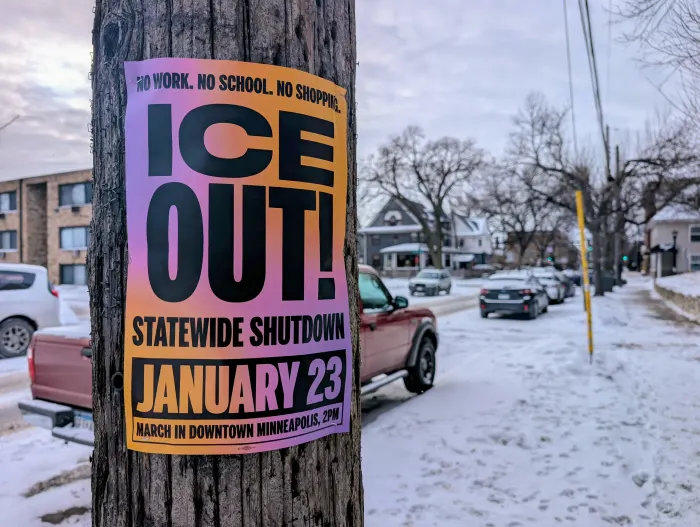
In the days since, federal agents have been filmed violently detaining protesters and bystanders. In response, a coalition of Minneapolis community organizations, immigrant defense groups, and labor unions has called for a citywide mass action on Jan. 23 — a day of no work, no school, no shopping — demanding that ICE leave the city.

More than 90 organizations have endorsed the “ICE Out of Minnesota: Day of Truth & Freedom” call for no work/school/shopping Friday, Jan. 23.

Union endorsers include: Minneapolis Regional Labor Federation AFL-CIO, ATU Local 1005, SEIU Local 26, UNITE HERE Local 17, CWA Local 7250, St. Paul Federation of Educators Local 28, Minneapolis Federation of Educators AFT Local 59, IATSE Local 13, Graduate Labor Union, and UE Local 1105.

If large numbers of workers withhold their labor across the city on that day, the action would amount to a general strike.

Renee Good was white and a U.S. citizen. She was not the target of an immigration arrest and was not accused of any crime. Her killing came amid a sharp escalation of immigration enforcement violence under the Trump administration’s second term — violence that has overwhelmingly targeted immigrants and people of color. In 2025 alone, 31 people died in ICE custody, the highest number in more than two decades. In the first days of 2026, several more followed. For years, authorities treated such federal repression as routine while it remained directed at immigrants and communities of color.

The general strike

The general strike — workers across an entire city or region stopping work simultaneously — represents one of the most powerful weapons in the working-class arsenal. It is also one of the rarest in U.S. history. 

That rarity has nothing to do with a lack of militancy. U.S. workers have repeatedly shown a willingness to fight. What makes general strikes exceptional is their scope: they are mass actions, drawing in workers across industries, workplaces, and neighborhoods at the same time.

When labor is withdrawn on that scale, it disrupts not just individual employers but the normal functioning of an entire city or region. 

That is precisely why such actions provoke a harsh response. In the United States, strikes are routinely met with police violence, mass arrests, injunctions, and federal intervention. Sympathy strikes and secondary actions have been criminalized, and even legally permitted strikes are hemmed in by court orders and enforcement powers designed to contain them. 

The United States is the most undemocratic of the world’s top industrialized imperialist powers when it comes to labor — workers have few rights, and even those few are routinely suppressed.

Seattle 1919: The high-water mark

The Seattle General Strike of February 1919 remains the largest general strike in U.S. history. For five days, 65,000 workers shut down the city. Shipyard workers had walked out for higher wages; within days, the entire Seattle labor movement joined them in solidarity.

The action was coordinated by unions, but its scope quickly exceeded any single organization’s control. What followed was later known as a general strike.

Workers did not simply stop working—they organized to keep the city running on their own terms. Union-run milk stations ensured deliveries to hospitals and families with infants. Labor guards maintained order without police. Cafeterias fed thousands of workers each day.

Yet the strike ended without winning its original demands. The strike committee faced immediate hostility from the federal government, the press, and national AFL officials. Seattle’s mayor denounced the strikers as Bolsheviks in the wake of the Russian Revolution. Federal troops were mobilized. Pressure mounted to return to work.

Crucially, the strike lacked specific, achievable demands beyond solidarity with the shipyard workers. When the shipyard dispute stalled, the General Strike Committee voted to end the action. Workers returned without concessions — but they had demonstrated something that terrified the ruling class: For five days, workers shut down a major U.S. city and ran it themselves. That demonstration shaped the repression that followed.

San Francisco 1934: When police violence sparks mass action

Fifteen years later, San Francisco showed a different dynamic. The 1934 General Strike grew out of a two-month West Coast longshore strike that had already paralyzed Pacific ports. On July 5 — “Bloody Thursday” — police opened fire on picketers, killing two workers.

Outrage swept the city. Within days, up to 150,000 workers walked out.

In San Francisco, police killings transformed a bitter but contained struggle into a citywide shutdown. When violence by police and government forces becomes impossible to ignore, anger that has been building for years can break into open, collective action.

The strike differed from Seattle in key ways. It grew out of an ongoing fight with clear demands: union recognition for longshore workers and an end to the “shape-up” hiring system. Workers had already endured months of confrontation. They had leadership tested in struggle and rank-and-file support prepared for escalation.

The National Guard occupied the waterfront. Hundreds were arrested. But after four days, workers won. Arbitration granted union recognition and established the hiring hall, shifting power on the docks for generations.

Minneapolis’s demand — ICE out of the city — is similarly clear. But it targets federal power rather than an employer.

As Chris Silvera, the longest-serving principal officer in the Teamsters and former chairperson of the Teamsters National Black Caucus, has emphasized in his address “1934: A Year of Good Trouble,” the San Francisco General Strike was not an isolated eruption. 

It was part of a broader working-class upheaval during the depths of the Great Depression — from the Toledo Auto-Lite strike to the Minneapolis Teamsters’ strikes and the coast-wide longshore shutdown. With unemployment soaring, banks collapsing, and entire cities thrown into crisis, violence by police and federal authorities in 1934 did not contain these struggles; it accelerated them, turning strikes that began in single industries into citywide confrontations that reshaped the labor movement for decades.

In 1934, Minneapolis was transformed by police violence into a center of mass labor revolt; in 2026, it is once again testing how police and federal repression reshapes collective response.

Oakland 1946: How the strike was shut down from above

The Oakland General Strike of December 1946 began with women department-store workers. Police escorted scab trucks through picket lines at two downtown stores where women clerks had been on strike for weeks. Outrage spread quickly.

Workers across Oakland walked out spontaneously — 130,000 in a city of about 400,000. Downtown became a workers’ festival, with jukeboxes dragged into the streets and bars offering free drinks to strikers.

The Oakland General Strike of December 1946 shows how quickly mass action can be demobilized when officials step in to contain it.

The strike showed how quickly rank-and-file solidarity can spread across a city — and how quickly it can be cut off when union officials intervene to protect their own authority and position, even if that means ending a struggle workers themselves started.

Why general strikes disappeared

The strike wave of the 1930s and 1940s terrified the ruling class. Their response was systematic.

The Taft-Hartley Act of 1947 banned sympathy strikes, secondary boycotts, and mass picketing — the very tactics that had made general strikes possible. It required union officials to sign anti-communist affidavits, driving militants and left-wing organizers out of unions.

The Cold War completed the process. What replaced class-struggle unionism was “business unionism”: unions reduced to negotiating contracts, policing their own members, and maintaining institutional stability, rather than mobilizing workers as a class against employers and the government.

The result was more than seven decades without a general strike in any U.S. city.

2006: Mass action without structure

The 2006 “Day Without Immigrants” showed that mass work stoppages were still possible in the United States — and also showed their limits when they are not backed by durable organization.

On May 1, 2006, millions of immigrant workers and their supporters stayed home from work or walked out across the country to protest the Sensenbrenner bill, which would have criminalized undocumented immigrants and those who assisted them. Meatpacking plants shut down or slowed across the Midwest. Construction sites across the Southwest and California were deserted. Restaurants, hotels, garment shops, and food-processing facilities closed or operated with skeleton crews. In cities like Los Angeles, Chicago, Dallas, and Denver, marches drew hundreds of thousands, in some cases more than a million people.

For a single day, the action made something unmistakably clear: Immigrant labor is central to the U.S. economy, and when that labor is withdrawn, entire industries feel it immediately.

But the action was not rooted in workplace organization or strike committees. It was called largely by coalitions of immigrant rights groups, churches, and Spanish-language media, not by unions prepared to sustain a work stoppage. When May 1 ended, most participants returned to work the next day. There was no coordinated escalation, no mechanism to defend participants from retaliation, and no organization capable of turning a one-day shutdown into sustained pressure.

The Sensenbrenner bill was eventually dropped, but broader demands — legalization, an end to raids, and full rights for immigrant workers — were never secured.

2018–2019: Teachers show another path

In 2018, teachers in West Virginia struck illegally. Public-sector workers there had no collective bargaining rights, and the state had not seen a major strike in decades. Educators shut down every public school in the state for nine days. With broad public support and workers refusing to return under pressure, the legislature approved a 5% raise — not only for teachers, but for all state workers.

The following year, teachers in Los Angeles struck for nine days, pressing demands that went beyond wages. They called for smaller class sizes, more nurses and counselors, and limits on charter school expansion. In Chicago, educators stayed out for 11 days, winning enforceable class-size caps, staffing increases, and protections for students facing housing insecurity and immigration enforcement.

These were sustained work stoppages carried out illegally, in defiance of labor law and political threats. They shut down school systems, disrupted daily life, and forced concessions. They were limited to a single sector, not citywide shutdowns.

What’s different now — and what Jan. 23 could mean

Any citywide work stoppage today faces formidable obstacles. Union density is lower. Legal repression is harsher. Workplaces are fragmented. Many workers lack formal collective bargaining rights.

Yet the Minneapolis call has emerged with notable strengths. It is broad from the start. It links labor action to opposition to police and federal repression. And it has drawn union endorsement without being limited by formal strike procedures.

Whether Jan. 23 remains a one-day action or opens onto something larger will be decided by what happens next.

History does confirm this much: When workers across a city stop work together, they demonstrate a power no other form of protest can match. That power terrifies those who benefit from workers remaining divided. 

Renee Good was shot and killed by a United States Immigration and Customs Enforcement agent during a federal operation on Jan. 7, igniting widespread protests and public outcry. If Minneapolis workers withhold their labor together, they will be confronting a question the ruling class has long tried to suppress: What happens when working people decide they’ve had enough?


Strugglelalucha256
https://www.struggle-la-lucha.org/2026/01/