Yemen: An indomitable people (part 1)

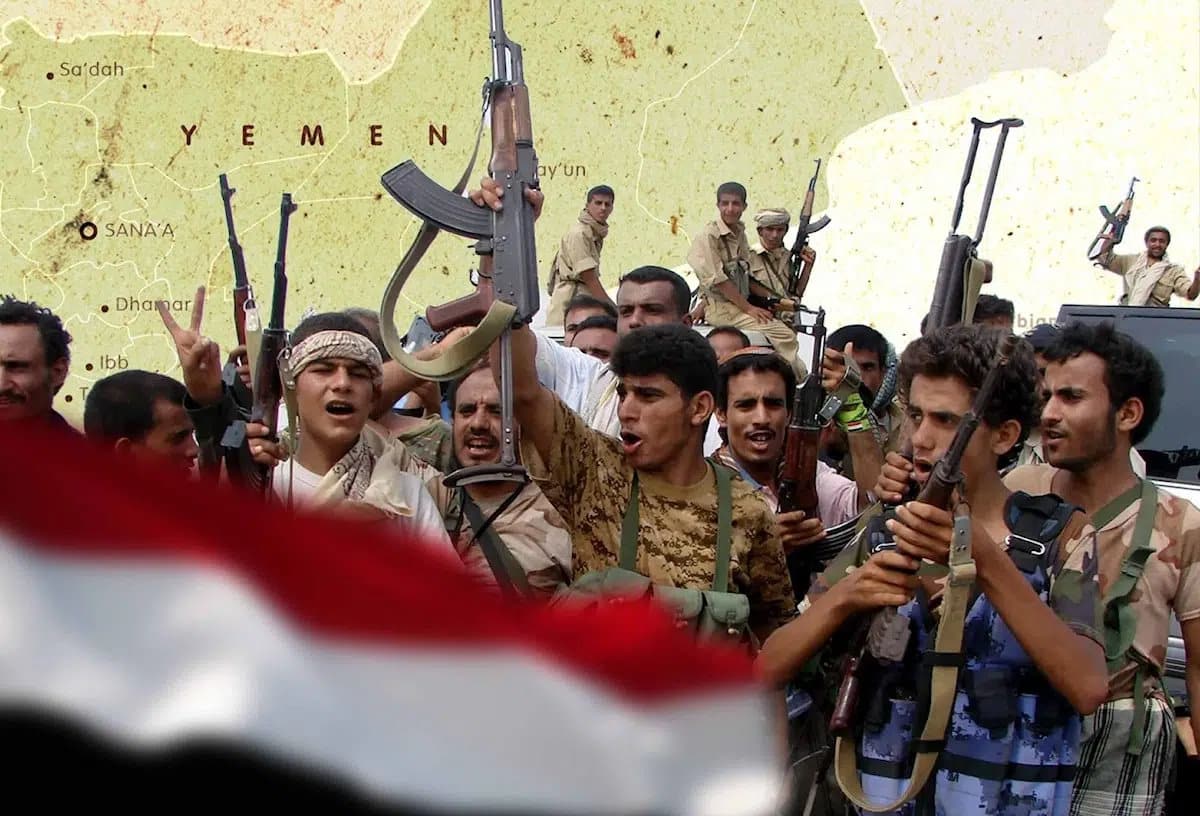
Photo composition showing Yemeni fighters raising their machine guns next to the Yemen flag with the map of Yemen in the background. Photo: Al Mayadeen

In 2015, Yemen, a country unknown to many in the West, started a war in defense of its sovereignty that was being threatened by an interventionist alliance led by Saudi Arabia.

The Yemeni people had to pay for the lives of almost 400,000 of their children to maintain their independence. Many people have wondered how a country considered the poorest in Western Asia has been able to resist and defeat a coalition made up of some of the richest countries on the planet.

Although the conflict has continued for almost a decade, it appears to have reached a situation that could lead to its possible cessation. Although a tense situation and war conditions of different kinds remain, there has been a reduction in military actions in recent months. It is no longer a total war, but it is not a real peace either. Under the mediation of China, Saudi Arabia and Iran reconciled, paving the way for overcoming several conflicts in Western Asia and North Africa. Hopefully, Yemen is one of them.

Now, after the “Israeli” invasion of Gaza, Yemen, together with the Lebanese Hezbollah movement and other Arab and Muslim revolutionary forces, has taken an active role in the solidarity campaign with Palestine. Once again, Yemen has surprised everyone by making decisions that have not only a local impact but also a regional and global one. Once again, the world is wondering how this could have happened. In two installments, I am going to present some elements so that readers can get to know Yemen and learn about the historical struggle and the heroism of its people to understand the scope and dimension of the Yemeni decision to support, with all the resources at its disposal, the just struggle of the Palestinian people.

The Republic of Yemen is located in a strategic place, in a region where trade routes connect Asia, eastern Africa, and the Mediterranean. Its territory, located on the coasts of the Arabian Sea and at the gates of the Red Sea, overlooks the Bab el Mandeb Strait, placing it in a privileged place on the globe, especially since the 20th century when, on the one hand, large deposits of oil and gas were discovered in the region, and on the other it became a mandatory passage for most of world trade between the West and the enormous economic growth and development of East Asia.

The ancient cities of the territory were part of the biblical kingdom of Sheba in ancient times. From that time began the struggle of the inhabitants of the current Yemeni territory for their liberation and independence, as they had to face the Roman Empire in the 1st century AD. The powerful Roman Empire was defeated in its attempt to dominate Yemen.

Unlike the rest of the Arabian Peninsula, Yemen had prodigious vegetation that provided great wealth to its population due to the great possibilities for consumption and trade it offered. Thus, the Greek mathematician Ptolemy named Yemen “Happy Arabia.”

Over the course of history, the Yemenis had to fight with Jewish Himyarites, who persecuted the majority Christian population until the intervention of the Ethiopians in the 6th century. When Islam arrived in the region during the 7th century, it began to shape a culture that was based on the interweaving of varied cultural and scientific knowledge and would make great contributions to humanity.

However, for many centuries, Yemen remained outside the cultural and economic development established by Islam. It was in the 15th century when the territory of today’s Yemen began to gain strategic value. In their desire for commercial expansion, the Europeans began the domination of territories throughout the world. The first Europeans to arrive in Yemen were the Portuguese, who dominated the country to control the sea route that allowed them to trade spices from Asia to Europe through the Red Sea.

In the 16th century, the Ottoman Empire began occupying regions on the coast of the Red Sea, while the interior of the country and the southern coast remained independent, governed by the Zaydis. In 1634, the Ottomans were finally driven out of Yemen by the Zaydis. Soon after, the English made their appearance in the area, installing a post of the East India Company in the port of Moka on the Red Sea.

In the 19th century, the British expanded their presence by occupying the entire southwestern tip, settling in Aden, the best port in the region, in 1839. In 1872, the Turks were able to consolidate their dominance in the interior of Yemen, for which they settled de facto a hereditary monarchy in the name of a local imam. This division effectively split Yemen into two countries.

Around 1870, with the inauguration of the Suez Canal and the consolidation of Turkish rule over northern Yemen, Aden acquired new importance for British global strategy: it was the key to the Red Sea and, therefore, to the new canal.

At the beginning of the 20th century, Turkey and the United Kingdom marked a border between their territories, which became known as North Yemen and South Yemen, respectively.

During the First World War, Imam Yahya Mahmud al-Mutawwakil, who had already been the imam of the Zaydis since 1904, allied North Yemen with the Ottoman Empire. The defeat of the Turks allowed Yemen to regain its independence in November 1918. However, Great Britain, after recognizing the independence of Yemen in 1928, began a campaign to secure control of the entire south of the country, up to the border with Oman. By 1934, it controlled the territory and converted Aden into a protectorate, then, in 1937, into a colony. Once again, the Yemenis had to resort to armed struggle for independence. In 1940, the nationalist Free Yemen Movement emerged to fight against the control of the country by the imams who had allied themselves with Great Britain.

The fighting took separate paths in the north and south. In 1962, the Yemen Arab Republic was created in the north, while in the south, the National Liberation Front, created in 1963, took Aden in 1967 and proclaimed independence, starting a socialist revolution.

South Yemen was renamed the People’s Democratic Republic of Yemen. It closed all British bases in 1969 and took control of banking, foreign trade, and the naval industry, and undertook land reform. In foreign policy, it maintained a close alliance with the Soviet Union. It also promoted an open anti-Zionist struggle and support for the Palestinian people.

In October 1978, at a congress that enjoyed considerable support from the population, the National Liberation Front founded the Yemen Socialist Party. In December, the first popular election since independence was held to appoint the 111 members of the People’s Revolutionary Council.

From the first years of its existence, the People’s Democratic Republic of Yemen was subjected to constant hostility from Saudi Arabia, which aspired to control parts of the territory in which oil deposits had been discovered. Tensions were aggravated by the growing U.S. military presence in Saudi Arabia.

Meanwhile, in the north, the National Democratic Front (NDF), which brought together all the progressive forces in the country, was leading the armed struggle against Ali Abdullah Saleh, who became president in 1978. When the NDF was about to take power, Saudi Arabia plotted to divert the conflict into a war against the Democratic People’s Republic of Yemen. The mediation of some Arab countries led to a ceasefire and an agreement by which negotiations for reunification, suspended since 1972, were resumed.

Finally, on May 22, 1990, the two republics united to form the Republic of Yemen, which established Sana’a, the former capital of the Yemen Arab Republic, as the political capital, while Aden (the former capital of the People’s Democratic Republic of Yemen) was designated as the economic capital. In a joint session of the Legislative Assemblies of the two held in Aden, a Presidential Council led by General Ali Abdullah Saleh was elected. The unification of Yemen was not received well by Saudi Arabia. Consequently, the Saudis began a policy of supporting infighting and secession. In May 1994, secessionists proclaimed a Yemeni republic in the south of the country but were defeated by forces loyal to the government.

Between June and August 2004, a movement emerged that expressed the beliefs of a specific branch of Shiite-oriented Islam: the Zaydis, under the leadership of the cleric Hussein al-Houthi. Following his martyrdom in September of that year, the movement took the name Houthi, Huthi, or Ansarallah (supporters of God). The history of Zaydism is over a millennia old and it dates back to the mid-8th century. Zaydism is a branch of Islam that emphasizes the struggle for justice and human responsibility in achieving that justice. It believes that Muslims have an ethical and legal obligation by their religion to rise up and depose unjust leaders including unrighteous sultans and caliphs. This ideology, which was marginalized after losing power in 1962, formed the basis of Ansarallah’s political and religious thought.

Ansarallah’s fight against the pro-Western and pro-Saudi government of Ali Abdullah Saleh was long and bloody. They had to resort to arms on five occasions between 2006 and 2008 in defense of their territory in the north of the country until they began to expand their support base and the geographical space under their control. In 2009, Saleh formed an alliance with the Saudis to combat the growing Ansarallah Movement.

For Ansarallah, the fact that a country like Saudi Arabia with an extremely conservative Wahhabi current was present and interfered in the country’s affairs was seen as a threat to the sovereignty of the nation in general and particularly to their existence as a minority. From that moment on, their struggle, which had originally been strictly internal, became a confrontation against foreign intervention.

Although at first, the Ansarallah fighters suffered heavy defeats, including (as mentioned before) the fall of their top leader, they grew stronger over time. From 2011 onwards, under the leadership of al-Houthi’s younger brother, Abdul Malik, the Ansarallah Movement began to claim significant victories and inflict significant setbacks on the enemy. The anti-imperialist and anti-Zionist rhetoric was strengthened by identifying Saudi Arabia as the dominant partner of the United States and “Israel” in the area.

The so-called “Arab Spring” had a special influence on the growth of support for Ansarallah in their fight against Saleh’s repressive government. In Yemen, the political earthquake that shook a significant part of the Arab world had a much more organized response than in neighboring countries. Faced with the strength of the protests, Saleh fled the country and took refuge in Saudi Arabia, being replaced by his vice president, Abdo Rabu Mansur Hadi, who tried to bring order to the country by reaching an agreement with factions opposed to Saleh “to change everything without changing anything,” leaving out the Ansarallah movement.

At the end of 2014, Ansarallah decided to begin the offensive to reclaim the capital, Sana’a. In this context, Saleh — surprisingly, in an attempt to regain power — established an alliance with Ansarallah to confront Hadi. Ansarallah, which had not supported the peace agreements signed by Hadi, allied themselves with their greatest enemy to take the capital. The Republican Guard, a force loyal to Saleh, favored the entry of Ansarallah into Sana’a. Hadi fled to Riyadh, the Saudi capital, from where he “runs” the territories not yet controlled by Ansarallah. In reality, Hadi is a puppet of the Saudi Wahhabi monarchy and its masters in Washington.

Once in power, the Ansarallah Movement formed a Revolutionary Committee to run the country. They were forced to fight simultaneously with the terrorist forces of Al Qaeda, with Saudi Arabia that protects them, and a coalition of other Gulf countries. All these enemies were armed and supported by the West, primarily the U.S., Britain, and Germany.

Saleh considered that Ansarallah had not fulfilled the agreements that, according to him, meant that he had to assume power again, and with Saudi support, he turned against them. Following this betrayal, Ansarallah attacked Saleh’s house, executing him on the spot.

From Riyadh, Hadi called for Saudi intervention in Yemen. To fulfill this request, the Saudi monarchy organized a coalition of Sunni countries to launch the Decisive Storm operation in 2015. This operation relied on air attacks against all populated areas of North Yemen and killed many thousands of people.

This action was planned as a definitive offensive to take control of the country and was followed by a second operation called Restore Hope which was focused more on diplomatic rapprochement. In reality, the war did not cease at any time; on the contrary, the alliance’s land, air, and maritime actions were reinforced by a naval blockade that prevented the entry of international aid, plunging the country into the worst humanitarian crisis in world history until the current Zionist actions in Gaza were unleashed, both with explicit support from the United States.

Ansarallah, which had popular support and better knowledge of the terrain, began using guerrilla warfare tactics inspired—according to the movement—by the liberation struggle in Vietnam and the resistance movements in Latin America. The fighters of Ansarallah were incredibly effective against this invading army that lacked morale, discipline, and motivation for battle. The U.S.-led Saudi-UAE coalition soldiers, which included a very large contingent of mercenaries hired by private companies, have been unable to claim military victories.

Riyadh received heavy blows even in its own territory when Ansarallah’s combative operations struck deep into Saudi territory through an advanced attack system using drones and long-range missiles that hit armed forces barracks, oil refineries, and critical infrastructure works at great distances across the border.

Source: Al Mayadeen Translation: Orinoco Tribune

 

Strugglelalucha256


Struggle ★ La Lucha PDF – January 15, 2024

Get PDF here

  • Hands off Yemen!
  • Charge the Zionist state with genocide!
  • Detroit ceasefire car rally shuts it down
  • Ralph Poynter used his strong voice and stout heart to fight for justice
  • NOLA fights for Palestine through the holidays
  • Shutting down New York City bridges and tunnels for Gaza!
  • Massive march for Gaza in Los Angeles
  • Biden’s illegal arms shipments kill Palestinian children
  • U.S. broadens imperialist terror campaign with flurry of airstrikes on Iraq
  • Israeli war crimes expose imperialists’ anti-North Korea propaganda
  • Activists link Gaza freedom to climate justice at COP28
  • 55th Anniversary of the Communist Party of the Philippines
  • Baja población Boricua
  • Vinie Burrows, una vida completa
Strugglelalucha256


NOLA: Come to City Hall Thursday, January 18, 10:30 AM

No Tax Break for Genocidal Shell!

Come to City Hall This Thursday, January 18, 10:30 AM

Demand a Public Hearing on the $21.6 Million Shell Oil Tax Giveaway

Let the People Decide!

Fund Housing, Healthcare, Education, Not Corporations Profiting From Genocide in Palestine

Join us this Thursday, January 18, at 10:30 a.m. at City Hall to demand that city council hold a public hearing on the $21.6 million in tax exemptions given to Shell and on the proposed River District neighborhood. Shell, the ninth richest corporation in the world, has reaped massive profits off the Israeli siege and bombardment of Gaza and continues to be one of the world’s largest polluters.
Keep the pressure on! Demand that city council cancel the tax exemptions and fund the people’s needs, not war-profiteering, planet-destroying companies like Shell!

Contact Us: workersvoicesocialistmovement@gmail.com


Strugglelalucha256


Hands off Yemen! U.S.-British airstrikes support Gaza genocide

On orders of President Joe Biden and Prime Minister Rishi Sunak, the U.S. and Britain bombed Yemen, the poorest country in the Middle East, on the night of Jan. 11, in violation of international and U.S. laws.

The airstrikes were blatant support for Israel’s ongoing genocide against the Palestinian people in Gaza. The Ansarallah movement (called “Houthis” by the racist Western media), which leads Yemen’s military, heroically declared that it would not allow any ships bound for Israel to pass through the waters of the Red Sea.

The Associated Press reported: “The bombardment — launched in response to a recent campaign of drone and missile attacks on commercial ships in the vital Red Sea — killed at least five people and wounded six, [Ansarallah] said. The U.S. said the strikes took aim at more than 60 targets in 16 different locations across [Ansarallah]-controlled areas of Yemen.”

Yemen’s Brig. Gen. Yahya Saree vowed that the strikes would “not go unanswered or unpunished.”

On Jan. 12, millions of Yemenis took to the streets of the capital, Sana’a, to protest the act of war by the Western powers. “We are not afraid,” they chanted.

While the so-called “democratic West” offers excuses, justifications, and support for genocide, the Yemeni people are taking action to stop it, just as the South African government did this week with its genocide case against Israel at the International Court of Justice.

The U.S. and Britain once again exposed themselves by punishing those who oppose their Israeli puppet’s genocide in Gaza.

In the tradition of every modern U.S. president, both Democrat and Republican, Genocide Joe Biden carried out this act of war against Yemen without the legally required approval of the U.S. Congress.

In 2020, candidate Biden said then-president Donald Trump did “not have the authority to take us into war with Iran without Congressional approval” after Trump ordered the assassination of General Qasem Soleimani. 

“A president should never take this nation to war without the informed consent of the American people,” Biden said – back then.

Meanwhile, British PM Rishi Sunak, whose government is actively attempting to outlaw the existence of trans people, had the gall to call the attack on Yemen an act of “self-defense” to “de-escalate tensions and to restore stability to the region.”

Emergency protests against the U.S.-British attacks on Yemen were held Jan. 11 in New York’s Times Square, outside the White House in Washington, D.C., and Vancouver, British Columbia. More protests are planned Jan. 12 in Los Angeles and other cities.

Yemenis slaughtered by U.S.-Saudi war

Missing from most corporate media coverage of Ansarallah’s military action against genocide and the Western retaliation is any mention of the more than 377,000 people killed in the 2015-2021 war waged by Saudi Arabia and the United Arab Emirates against Yemen. 

Like the genocide in Gaza, it was a proxy war carried out on behalf of U.S. imperialism, relying on U.S. weapons and military support.

That war became so unpopular that Biden actually claimed to oppose it when he was campaigning for the presidency in 2020, trying to cover himself in a paper-thin progressive veneer that is now completely stripped away.

Two-thirds of the victims of the U.S.-Saudi war in Yemen were children. A whole generation has been stunted by hunger and disease – those fortunate enough to have survived. 

Nevertheless, the Ansarallah movement has prevailed, uniting the country under a program of national liberation and opposition to Israeli genocide. Yemen is part of the Axis of Resistance to imperialism in West Asia that includes the Islamic government of Iran, the secular government of Syria, the Hezbollah movement in Lebanon, and popular militias in Iraq.

Below are statements condemning the U.S.-British airstrikes compiled by Resistance News Network:

Ansarallah spokesperson Mohammed Abdul Salam (Yemen):

The blatant American-British aggression against the Republic of Yemen was carried out to protect “israel” and to stop Yemen’s operations in support of Gaza. They committed foolishness with this treacherous aggression, and they are mistaken if they think it will deter Yemen from supporting Palestine and Gaza.

Yemen will continue its religious and humanitarian stance and will always stand by Gaza with all it is capable of. This aggression will only make Yemen stronger and more resolute.

We affirm that there is absolutely no justification for this aggression on Yemen, as there was no threat to international navigation in the Red Sea and the Arabian Sea. The targeting was and will remain directed at “israeli” ships or those heading to the ports of occupied Palestine.

Hezbollah movement (Lebanon):

Hezbollah strongly condemns the blatant American-British aggression against the brotherly Yemen, its security, sovereignty, and its free and honorable people, who stood with all strength, courage, and responsibility alongside the Palestinian people and their valiant resistance, exerting their utmost effort to break the siege on it by all available means and capabilities.

The American aggression confirms once again that America is a full partner in the tragedies and massacres committed by the zionist enemy in Gaza and in the region. America works to support and supply it with the machinery of killing and destruction, covering up its aggression and crimes and attacking everyone who stands beside the oppressed Palestinian people across the region.

As we salute the dear Yemen, its national army, its proud people, and its generous leadership, we affirm that this aggression will not weaken their resolve. Rather, it will increase their strength, determination, and courage to face it, defend themselves, and continue the path in supporting the Palestinian people and advocating for their legitimate and just cause.

Mohammad Ali Al-Houthi, head of the Revolutionary Committee in Yemen:

The American-British strikes are barbaric terrorist acts. This deliberate and unjustified aggression reflects a savage mentality.

These strikes reaffirm once again that they are the ones directing the aggression on Gaza as well as in Yemen and that they protect “israeli” terrorism as they themselves are the terrorists, with “israel” being a part of this.

What they have done is a blatant and unjustified attack, occurring at a time when the world seeks to stop the genocide in Gaza, only to have these strikes confirm their protection and intentional continuation of it. These airstrikes on the Republic of Yemen will not pass unnoticed, and Allah willing, there will be a response announced later in a statement.

May Yemen remain dear, and may Palestine remain Palestine. Shame and disgrace on the Americans and the British.

“There is no aggression except against the oppressors.”

Eternity for the martyrs, and healing for the wounded.

Hamas, the Islamic Resistance Movement (Palestine):

In the name of Allah, the Most Gracious, the Most Merciful,

We strongly condemn the blatant American-British aggression on Yemen, and we hold them responsible for its repercussions on the security of the region.

We in the Islamic Resistance Movement (Hamas) condemn in the strongest terms the American-British aggression, the aerial and naval bombing on Yemeni territory, and consider it a crime and blatant aggression on Yemeni sovereignty and a threat to the security of the region which is witnessing American and British militarization that came to protect the Nazi-zionist occupation and to cover up its crimes against the Palestinian people and the entire Arab region.

As we highly appreciate the position of our brotherly Yemen and its heroic people in standing with our Palestinian people in the Al-Aqsa Flood battle, we affirm that the brutal aggression on Yemen is an uncalculated terrorist act, influenced by the will of the zionist occupation and its extremist Nazi leadership, and will only increase ignition and tension in the region. Washington and London bear the responsibility for the repercussions.

We affirm that the region will not witness security and stability except by ending the zionist occupation of our Palestinian and Arab lands, which requires Washington and London to review their colonial policies, out of respect the sovereignty of states and the interests of the Arab peoples, who will not stand idly by in the face of the brutal zionist crimes, the genocide war that our Palestinian people are subjected to, and the violations of our Islamic and Christian sanctities, foremost among them the blessed Al-Aqsa Mosque.

Yemeni Armed Forces:

In the name of Allah, the Most Gracious, the Most Merciful.

Allah the Almighty said: “So whoever has assaulted you, then assault him in the same way that he has assaulted you. And fear Allah and know that Allah is with those who fear Him.”

This is the truth of Allah Almighty.

The American and British enemy, as part of its support for the ongoing “israeli” crimes in Gaza, launched a brutal aggression against the Republic of Yemen with 73 raids. These strikes targeted the capital Sana’a, and the governorates of Al-Hodeidah, Ta’izz, Hajjah, and Sa’dah, leading to the martyrdom of five and injuring six others from our armed forces.

The American and British enemy bears full responsibility for this criminal aggression against our Yemeni people, and it will not go unanswered and unpunished.

The Yemeni Armed Forces will not hesitate to target sources of threat and all hostile targets on land and sea in defense of Yemen, its sovereignty, and its independence.

This brutal aggression will not deter Yemen from its position of supporting and standing with the oppression of the Palestinian people. The Yemeni Armed Forces confirm their continued prevention of “israeli” ships or those heading to the ports of occupied Palestine from navigation in the Arabian and Red Seas.

Allah is sufficient for us, and He is the best disposer of affairs, the best master, and the best helper.

Long live Yemen, free, dignified, and independent.

Victory for Yemen and for all the free of the nation.

Sana’a, 1 Rajab 1445 Hijri

Popular Front for the Liberation of Palestine (PFLP):

The Popular Front condemns, in the strongest terms, the aggression of the coalition of evil against Yemen and emphasizes the necessity of intensifying strikes against the American, Western, and zionist aggression.

The Popular Front for the Liberation of Palestine strongly condemned the aggression of the American, British, and zionist coalition of evil against Yemen early this Friday morning. It confirmed the failure of the objectives of this aggression, stating that the quick Yemeni response to American and British targets is proof of the lies propagated by the American and British propaganda machine, which claimed the success of these strikes in stopping Yemen’s capabilities.

The Front asserted that this aggression is not only against the Yemeni people but also against Palestine, the Arab nation, and all the free people of the world. Its malicious objectives are not to protect maritime navigation in the Red Sea but to protect the security of the zionist entity. This is evident from the significant and costly losses it suffers and the strong strikes it faces from the Palestinian and Arab resistance factions. The Front stressed the ability of the Yemeni army to confront the aggression and to stand firm, given its high fighting will and noble, honorable stance.

The Front saluted the original Yemeni stances and its valiant army for standing beside the Palestinian people since the beginning of the occupation’s aggression on the Gaza Strip. It affirmed that contemporary history will record in golden letters these honorable Yemeni stances that revived the hope in the capabilities of the Arab nation to support Palestine and strike the enemy.

The Front considered the Bahraini regime’s participation in this aggression against the Yemeni people as a blatant betrayal and a treacherous stab in the side of the Arab nation, confirming that this disgrace will continue to haunt this zionist, decrepit, and submissive regime and one day it will pay the price for its betrayal of the nation and its causes.

The Front called on all the living forces in the region to take their natural place and engage in the trench of confrontation alongside Palestine, Yemen, and all the oppressed and to intensify the strikes against the American, zionist, and Western aggression that aims to try to impose surrender on our peoples, and enforce dominance and normalization on the Arab nation, and liquidate the Palestinian cause.

Popular Front for the Liberation of Palestine
Central Media Department

Strugglelalucha256


Charge the Zionist state with genocide!

A news conference was called on Jan. 9 to support the petition of South Africa to the International Court of Justice charging “Israel” with genocide. “Keep hope alive” was the event’s theme, which was held in front of the South African Mission to the United Nations in New York City.

The conference was called by the Palestinian Assembly for Liberation (PAL), Al-Awda NY: The Palestinian Right to Return Coalition, and its Commission on War Crimes, Justice, Reparations and Return. 

Palestinian mothers belonging to PAL presented flowers to South African diplomats, thanking them for indicting the Zionist apartheid state. Several of the moms gave heartfelt remarks describing the mass murder of children and other family members.

Nelson Mandela’s statement was quoted: “We know too well that our freedom is incomplete without the freedom of the Palestinians.”

Human rights lawyer Lamis Deek, a founding member of PAL, denounced the genocide that’s being financed with billions from the U.S.A. A Palestinian mother, born in Gaza, movingly spoke about the war crimes being committed by the Zionist state.

Roger Wareham, a member of the International Secretariat of the December 12th Movement, pointed out Israel’s support for the apartheid state in South Africa. Israel even helped that Nazi regime to develop a nuclear weapon. 

Margaret Kimberley of the Black Alliance for Peace and executive editor of Black Agenda Report denounced the genocide in Gaza and the rest of Palestine.

Rabbi Weiss from Neturei Karta said that the Zionist state of Israel doesn’t represent many Jews who are appalled by the mass murder being committed by Israel.

Manolo De Los Santos, executive director of The People’s Forum, spoke of the massive march taking place in Washington, D.C., on Saturday, Jan. 13. Busses are being organized around the United States to stop the genocide. 

Strugglelalucha256


Baja población Boricua

El 2024 ha comenzado en Puerto Rico con noticias que nos auguran muchas dificultades. Aumentos en la tarifa de luz, de los peajes, de la canasta básica; cierres de hospitales, en fin, se podría decir que es más de lo mismo que ha estado ocurriendo desde que se instauró el modelo neoliberal en esteroides de mano de la Junta de Control Fiscal dictatorial impuesta por el Congreso estadounidense para disque solucionar los desastres fiscales del gobierno.

Pero resalta una noticia muy penosa: el vertiginoso descenso de la población boricua. En el 2023, solo nacieron poco más de 17,000 bebés, mientras que murieron más de 33,000 personas. Esto, en una población de 3 millones 300 mil habitantes. 

Desde el año 2000 cuando nacieron cerca de 60,000 criaturas, y fallecieron alrededor 30,000 personas, y los nacimientos superaban a las muertes, esta tendencia ha ido revirtiéndose. 

El Puerto Rico actual es un país envejecido donde su población carece de los servicios más básicos para gozar de una buena calidad de vida. 

Por las políticas sociales y económicas erradas de los gobiernos corruptos que trabajan para el provecho de sus familias, de los negocios locales y extranjeros gringos, se ha abandonado todo interés por beneficiar al pueblo. 

De pronto, ese mismo gobierno se ha dado cuenta de que la baja poblacional afecta el desarrollo económico y están instando a las mujeres a parir. Pero, ¿cómo traer bebés al mundo donde han eliminado servicios de salud y cerrado escuelas? Donde las viviendas asequibles casi no existen porque se ha priorizado el establecimiento de alquileres a corto plazo cuyos dueños extranjeros reciben descuentos del propio gobierno? Donde los y las jóvenes no encuentran un trabajo digno y se ven forzados a emigrar a la nación que nos oprime, Estados Unidos? 

Por eso, este año tenemos más razones para luchar por la descolonización para lograr la soberanía que nos permita construir un Puerto Rico más justo.

Desde Puerto Rico, para Radio Clarín de Colombia, les habló Berta Joubert-Ceci.

Strugglelalucha256


Cuba supports South Africa’s claim before the International Court of Justice against Israel’s genocide in Palestine

Israel continues to act with total impunity because it has the complicit protection of the United States, which repeatedly obstructs and vetoes the action of the Security Council, undermining peace, security and stability in the Middle East and globally

The Ministry of Foreign Affairs reiterates its deep concern over the continued escalation of violence by Israel in the illegally occupied Palestinian territories, in flagrant violation of the Charter of the United Nations and international law, including numerous UN resolutions.

The Ministry once again strongly condemns the killing of civilians, especially women, children and UN humanitarian workers, as well as the indiscriminate shelling of Palestinian civilians and the destruction of homes, hospitals and civilian infrastructure.

Israel continues to act with total impunity because it enjoys the complicit protection of the United States, which repeatedly obstructs and vetoes the action of the Security Council, undermining peace, security and stability in the Middle East and globally.

The Republic of Cuba has been a State Party to the Convention on the Prevention and Punishment of the Crime of Genocide since 1953 and, in accordance with the commitments undertaken in that framework, has the obligation to prevent and punish genocide.

In this context, it expresses its support for the request of the Republic of South Africa to initiate proceedings against Israel in the International Court of Justice in relation to violations by that country of its obligations under the Convention on the Prevention and Punishment of the Crime of Genocide.

This proceeding before the principal organ of justice of the United Nations should be understood and heeded as an urgent call to stop the horrific international crimes of genocide, crimes against humanity and apartheid being committed against the Palestinian people.

In spite of repeated calls for peace in the illegally occupied territories, for 75 years a crime of genocide has been clearly being committed, which is now taking on extreme proportions and requires the joint action of the peoples and governments of the world to put an immediate stop to the indiscriminate extermination of girls, boys, women and the civilian population in general.

Havana, January 11th, 2024

Strugglelalucha256


Shutting down New York City bridges and tunnels for Gaza!

Three bridges and tunnels in Manhattan, New York City, were shut down by supporters of Palestine on Jan. 8. They were the Brooklyn, Manhattan, and Williamsburg bridges, as well as the Holland Tunnel that links Manhattan with New Jersey.

The dramatic protest called by Shut It Down for Palestine was seen around the world. Police arrested 325 people who chanted as they were detained. 

The Palestinian Youth Movement hailed the dramatic action: “We jam the arteries of the city, and we reclaim the bridges and tunnels — which are funded by our taxes and fares — in solidarity with Palestine and all who are immiserated by the forces of capitalism and imperialism.”

At the same time, hundreds of people marched from City Hall to Wall Street. They rallied in the world’s center of evil, right across from the New York Stock Exchange.

Speakers addressed people in front of 23 Wall Street, the former headquarters of the “House of Morgan,” which at one time controlled many of the biggest U.S. corporations. Today’s JP Morgan Chase bank has nearly $4 trillion in assets.

Manolo De Los Santos, executive director of The People’s Forum, declared, “This is the Wall Street that enslaved our ancestors!” New York City became a financial center by being the bankers for the Southern slave masters.

Today JP Morgan Chase is a partner of Big Oil in sucking out billions in profits from Western Asia. Big Oil needs the apartheid state occupying Palestine to protect its empire.

A speaker from the Al-Awda, the Palestine Right to Return Coalition, pointed out that “Wall Street is the heart of the U.S. imperialist project. That’s why we’re here … These financial institutions have been profiting off the blood of our people for generations – Black Rock, HD, JP Morgan, the list goes on and on … all of them are complicit in the genocide of our people.” 

Disrupting the Philharmonic

Rain didn’t stop a thousand people from marching in Manhattan on Friday night, Jan. 5, for Palestine. They gathered in front of the big reference library on Fifth Avenue and marched over to the New York Times, which lies about Palestine while Palestinian children are being killed. 

Hundreds then marched uptown to Lincoln Center, where an opera house and other facilities were built by evicting thousands of Puerto Rican families from their homes. It was a mini-Nakba, like the Nakba, that kicked 800,000 Palestinians from their homes by Zionist settlers in 1948.

Demonstrators disrupted the season opening of the New York Philharmonic, upsetting the tuxedo set.

Shut It Down for Palestine includes the Palestinian Youth Movement; Al-Awda, the Palestine Right to Return Coalition; The People’s Forum; ANSWER coalition; and the Party for Socialism and Liberation. Jewish Voices for Peace; Neturei Karta, Jews United Against Zionism; and the Democratic Socialists of America also supported these protests.

The next step is to join hundreds of thousands and march in Washington, D.C., on Saturday, Jan. 13. From the river to the sea, Palestine will be free!

Strugglelalucha256


NOLA fights for Palestine through the holidays

Throughout the holiday season, people in New Orleans and surrounding towns have continued to protest in the streets for Palestine. That continued throughout Thanksgiving, Hanukkah, Christmas, and is carrying over into the area’s most distinctive season, Mardi Gras.

Die-in at Lakeside Mall

NOSHIP (New Orleans Stop Helping Israel’s Ports) is an organization formed after Oct. 7 that is calling for the Port of New Orleans and other city and state entities to cut ties with the Zionist regime. NOSHIP led a demonstration outside the packed Lakeside in Metairie, Louisiana, the day before Christmas Eve.

This was not an easy feat in the suburban sprawl of one of the town’s biggest shopping areas at the height of the holiday rush. Despite difficulties, some 50 pro-Palestine demonstrators gathered outside and conducted a lively rally in a high-traffic median. A handful of hostile motorists shouted obscenities, but they were outnumbered by others waving, honking, and raising their fists in support.

In the spirit of the radical LGBTQ+ movements of the past like ACT UP, a group of activists inside the mall carried out a die-in, lying on the ground while holding placards with the names of Palestinians – including children – martyred by the Washington-backed Zionist forces.

Mall security massed around them and ejected them from the building, but many shoppers heard the message. The protesters outside cheered for these activists as they exited the mall and joined the crowd.

Roll ‘Til Palestine is Free

Jan. 6 was Epiphany, the first day of Mardi Gras, when the beloved Joan of Arc Parade is held in the city. This is the first Mardi Gras parade of the season.

That same night, hundreds joined in a march through the packed French Quarter, led by a brass band playing Palestinian music. The flier read, “Procession for Palestine: New Orleans Musicians Roll ‘Til Palestine is Free!”

Many bystanders out for Carnival celebrations were energized by the message, often joining in the chants for a free Palestine.

One speaker said, “U.S.-made bombs are falling on Palestinians as we speak. Carnival season starts on this night, but we’re not stopping until Palestine is free!”

The crowd cheered wildly.

She continued: “Louisiana is giving $25 million to the Israeli military per year. Do we want that money for our roads? Do we want that money for schools? Do we want that money for housing?” The crowd shouted in the affirmative.

A Palestinian musician and activist named Marco spoke towards the end of the night.

“Gaza has been under siege for 17 years. The blockade on Gaza has always sought to deprive Palestinians access to the most basic necessities of food, medicine, essential construction materials, and so on.

“But it doesn’t stop there. The occupation forces that control what is allowed to come in and out of Gaza have always done their best to stifle Palestinian life and Palestinian joy in any way that they can. One such way that they attempt to do so is by banning musical instruments from entering Gaza.

“As musicians and as music lovers in the city of New Orleans – a place with a long and deep history of music as well as a music scene and culture that is very much alive in the present, as is very clear all around us – we should all know how intimately connected music is to living a life that is full. …

“But life finds a way, resistance finds a way. The tunnels built by the resistance in Gaza have also been used to bring in instruments. …

“All of you here are part of the reason that Israel will never be able to erase Palestinians! …

“Sing and play and dance with us, but fight with us too! Ceasefire now! We’re gonna end the genocide in Gaza, end the siege, end the occupation, and end the Zionist slander of Palestinian humanity!”


Strugglelalucha256


Ukraine’s 2023 offensive: The turning point that was not

The last 12 months, fundamentally focused on the preparation, development, and analysis of the failure of the counteroffensive with which Ukraine intended to definitively recover the initiative in the war, have been confirmation that there is no short-term solution and that, in a dynamic of the military path as the only possible one, all participants – direct and indirect — must prepare for a long-term fight. The beginning of the year, with an attack that caused dozens of deaths among Russian recruits in Makeevka just one minute after midnight, seemed to portend for Ukraine a continuation of what happened in the last quarter of 2022.

Faced with the inability to maintain such a broad front and with attacks at both ends with a contingent significantly smaller than the Ukrainian one, with serious logistical deficiencies and excessive errors, the Russian troops had no choice but to withdraw from the city of Kherson and the territories of the right bank of the Dnieper without even fighting. The objective was to preserve the integrity of the group present in those territories, with some of the most prepared units, and avoid a military defeat similar to the one suffered two months earlier in Kharkov, where the disorderly withdrawal in the face of the unstoppable Ukrainian advance endangered an important part of the territory gained in Lugansk. 

After the recovery of the Kharkov territories, Ukraine hoped to be able to continue its advance in the north of Lugansk, where the defense of Kremennaya and Svatovo was maintained, according to journalists as close to the Kremlin’s positions as Alexander Kots, despite the military commanders and no thanks to them. Russia ended 2022 trying to recover from its moment of greatest weakness.

In this context, Ukraine never hid its preparation for a major offensive to repeat the success of the assault on the Kharkov region. On the other side of the front, Russia also did not try to keep secret its transition to the creation of a series of defense lines against the Ukrainian attack, of which it always knew what direction would be. Kiev’s goal has not changed since 2014, to recover Crimea, so a move in that direction was the only real possibility for Ukraine. Geography and conditions completely ruled out a massive attack in the Donbass or Kherson areas, where Russian troops were protected by the barrier of the Dnieper River, with its main bridge, the Antonovsky, completely destroyed by the Ukrainian attacks in 2022. 

The only surprise option in Ukraine’s hands, a massive attack through Russia, was never real due, in part, to the American veto of extending the war to Russian territory. But even apart from that red line, that option had further expanded a front that has proven difficult to maintain for both parties in the conflict. The Tokmak-Melitopol-Crimea direction through the open countryside of Zaporozhye was always the obvious line of attack that the Ukrainian troops would take the moment they received the required weapons from their partners and the new brigades finished their training.

Flexible defenses

Under the command of General Surovikin, Russia began the construction of what would become a flexible defense line based on fortifications created and improved since November 2022, when the loss of the Kherson territories was completed. As Russian reporters showed for months, the work of building defense strongpoints was, at that time, the main task of Russian troops, who were buying time to equip, arm, and instruct the around 300,000 soldiers recruited since the Kremlin gave the order for partial mobilization after the September defeats.

The delay in preparing the Ukrainian offensive gave Russia even more room for maneuver when it came to improving those aspects that had failed in 2022. With a less extensive front, with fewer logistical difficulties and with a smaller imbalance of troops with respect to Ukraine, Moscow was able to anticipate Ukrainian movements and prepare exactly for the upcoming operation. Russia was also aware that Kiev’s Western partners, to whom planning and command capabilities are fully vested, were preparing a ground offensive that would seek a quick rupture using large armored columns. Months of propaganda about the value of Western tanks and the pressure campaign to get Germany to approve the shipment of the desired Leopard-2 had made this clear.

Time would also confirm that Ukraine was not going to have, for this operation planned by NATO countries, the air cover that this type of offensive requires. Ukrainian pleas for Western aviation began the moment the delivery of Western tanks was unblocked, but it was always evident – partly due to the time required for pilot training — that the F-16s that Zelensky demanded would not be available in the 2023 offensive. As was later learned, the United States was aware that Ukraine did not have the necessary means to carry out the planned offensive, although it hoped that “Ukrainian courage” would make up for the shortcomings. 

In an example of how the official narrative can become dogma, both Kiev and its partners chose to blindly trust in the superiority of Western weaponry, training and tactics in the face of Russia’s inability to learn from its mistakes and mobilize its industry to produce the necessary material and, above all, the Ukrainian morale to fight against the broken, undersupplied and ill-equipped Russian army. Months later, Ukrainian officials would publicly denounce that their partners had sent the Ukrainian Armed Forces on an offensive under conditions they would never have accepted for their soldiers.

The change in trend and the Russian ability to prepare to defend itself from an operation in which it anticipated all movements was evident in the first week of June. Days before, after a bloody battle that caused thousands of casualties among its troops, the Russian Federation had achieved its greatest success in almost a year with the capture of Artyomovsk. This advance occurred amid the escalation of the conflict between the Ministry of Defense and the owner of the private military company Wagner, which a month later would give rise to the failed mutiny that made the most optimistic Western pro-Ukrainian analysts see the beginning of a “Russian civil war.” Neither the confrontation nor the mutiny affected the front. Although certain shortcomings persisted – the shortage of artillery shells was one of Prigozhin’s complaints before his notorious coup attempt – and the tactics of the frontal assault could be questioned, from the first moments of June it was obvious that a change had occurred.

Utilizing Iranian drones

Months earlier, Russia had turned to Iran, seeking support for an area in which it had been left behind: the use of drones. The beginning of the Ukrainian offensive with the march of the first armored columns through the open field of Zaporozhye, perfectly in sight of the Russian troops, demonstrated that Russia had not limited itself to introducing the Iranian Shahed, but had developed kamikaze drones with the Ukrainian operation in mind. 

The learning capacity, overcoming obvious shortcomings and good planning of the combined use of drones in the attack, but also in surveillance in combination with artillery, surprised Ukraine. So did the strength of the Russian minefields, an incomprehensible aspect and serious failure in Western planning. In the same way that it was known that Russia built its Surovikin line for defense, it was absolutely foreseeable that it would be capable of extensively mining the fields through which the Leopards, Bradleys and other types of armored vehicles would travel. Without air cover for Ukraine, Russia had extensive superiority in the air, which it complemented with the efficient use of unmanned aviation.

Just a few days after the Ukrainian tank columns left in the direction of Rabotino, Russia achieved the desired image of a first Leopard tank burning in the minefields. That same week, in what seemed a premature assessment, Vladimir Putin declared the offensive a failure. Time and the results of the operation have ended up proving the Russian president right. Already at that moment, when the first change in tactics occurred to abandon large armored columns in favor of smaller and more difficult to detect groups, the United States was also aware of the situation. As can be read six months later, when it is no longer necessary to try to hide the failure of the counteroffensive, it was the American media that confirmed that the objective was a quick break, capture of Rabotino in the first 24 hours, and advance towards Melitopol.

This breakdown of the front and advance on the main city of the territory of southern Ukraine would have meant for Russia a dangerous approach of Ukrainian troops to Crimea. Politically, this deep penetration into territory under Russian control sought, as Western officials such as Emmanuel Macron and Jens Stoltenberg have made clear, to force Russia into a negotiation in which it would find itself in a position of weakness. Leaks from Pentagon officials in the months of preparation for the offensive had shown that not even Ukraine’s partners had confidence in the conquest of Crimea. However, the threat to control of Crimea was understood as the way to pressure Moscow to give in to the Ukrainian diktat.

In the six months of the offensive, Kiev has finally achieved the advance it hoped to achieve on the first day of the attack. After months of fighting, Ukraine conquered the destroyed and uninhabited town of Rabotino, but was unable to overtake it. There was no Russian retreat and the area became a pocket of fire in which casualties continued to be suffered. Russia now appears to be trying to recover that little lost territory while Ukraine moves, just as Russian troops did a year ago, into a defensive phase. Those who then mocked the placement of dragon teeth on the southern front now place them in other areas such as Kharkov.

Siege of Donetsk

Ukraine’s move to a more defensive posture does not necessarily mean that a large-scale Russian offensive is occurring or will occur. This year, Russia has demonstrated its defense capacity on the front, although not so much in the rear, where Ukraine has obtained, especially against the Black Sea Fleet, its greatest successes. However, little can be said about Russian offensive capabilities, which this year have been limited to advances on Artyomovsk, put in danger after Wagner’s withdrawal and the start of the Ukrainian offensive and the Donetsk area. 

The Russian attempt to move the Ukrainian Armed Forces away from the surroundings of the Donbass capital has had only limited success. After a year of fighting and the complete destruction of the city, Russia finally managed to capture the entire territory of Marinka, west of the city, in December. To the north, the advance on Avdeevka continues, although at a slow pace and at the cost of significant losses (which Ukraine is greatly exaggerating to offset doubts about its huge casualties in Zaporozhye). Both cities are part of the first line of fortifications that Ukraine has built throughout the almost 10 years that the war has lasted in that region.

The prospects for 2024 depend on Ukraine’s ability to obtain the necessary financing from its European partners to keep the state afloat and the United States’ ability to approve funds that allow the Ukrainian Armed Forces to continue fighting. The mechanisms are already in place according to which Kiev will receive the precious F-16s for its next offensives. As Andriy Ermak promised on his last visit to the United States, next year will be the definitive turning point in the war. Something similar was promised a year ago, and even six months ago, when Antony Blinken declared in the first days of the Ukrainian offensive that Kiev had everything necessary to defeat Russia on the battlefield. 

Although it is hoped that financing for Ukraine will be approved — perhaps not at the levels desired by Zelensky, but enough to guarantee the continuation of the war – the reality is that the disappointment of 2023 makes it difficult for the Ukrainian executive to mobilize resources of his partners based on rhetoric of a last effort before the final victory.

The continuation of the battle is the only option available to Zelensky and his team, who more than a year ago closed the door to a negotiated solution. Installed in the maximalism of the demand for complete capitulation of Russia, the Office of the Ukrainian President will continue to navigate between the argument of immediate victory and that of the danger of certain defeat to ensure that the continuous flow of weapons, ammunition and financing is maintained.

Russia, for its part, seems to have understood that it has to play its cards in a long-term war. The recovery of industrial production, the maintenance of a sufficiently large group, and the control of a front not as extensive as a year and a half ago have guaranteed the status quo of 12 months ago. A series of weak points persist for Russia, among which are its fleet but also some of its cities. This is demonstrated by what happened yesterday: an artillery attack that cost the lives of at least 22 civilians in the center of the Russian city of Belgorod. Despite constant complaints about lack of ammunition, Ukraine maintains intact its ability to harm Russia in the rear, both with the use of missiles against Crimea and with artillery or Grad variants in cities closer to the front line or border.

In terms of attack, for the moment, Moscow has made do or has had to make do, with little progress limited to Donbass, where it has not yet been able to move Ukrainian troops back enough to avoid the bombing of Donetsk. What the defensive and offensive plans of the Russian command will be in the short term is the main uncertainty for the coming months.

Translated by Melinda Butterfield

Source: Slavyangrad.es


Strugglelalucha256
https://www.struggle-la-lucha.org/2024/page/67/