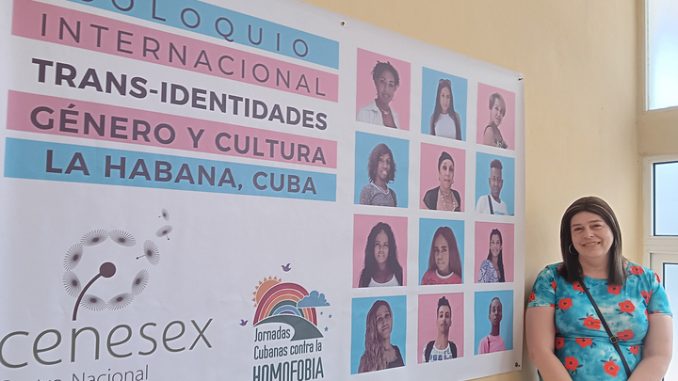
A trans person reflects on Cuba and Florida: 90 miles and a world apart

Photo: Serena Sojic-Borne

Returning from 12 days in Cuba in mid-May, I spent an uncomfortably long six-hour layover at the Miami airport, waiting for my connecting flight to New York.

It wasn’t uncomfortable just because of the usual inconveniences like overpriced food and crappy seats but because I was a trans woman existing in the state of Florida, where the far-right anti-trans crusade has been centered this year. 

As I sat in Miami, I was keenly aware that Gov. Ron DeSantis was preparing to sign several laws aimed at banning trans people from public life and getting the health care they need to live. 

(DeSantis did sign these laws just a few days later, not by coincidence, on May 17 – the International Day Against Homophobia, Biphobia, and Transphobia.)

One of those state laws bans trans people from using public restrooms that match their gender expression – including those in airports. When that law takes effect on July 1, trans women like me will be faced with the choice of risking arrest using the women’s room or risking humiliation and violence using the other option.

During my six-hour sojourn, I used the airport restroom three times. Yes, I kept count; I was on guard for my safety and hyper-aware of everything around me. But as usual, no one objected to my presence or even noticed. 

Waiting in Miami, I had plenty of time to reflect on the stark contrast between Cuba, where queer rights are advancing by leaps and bounds, and the United States, where they are being dragged backward by state-sanctioned violence. 

That violence comes in the “official” form carried out by bigoted politicians like DeSantis and the off-the-books sort used by fascists coast-to-coast, who get a wink and a nod from the cops and big bucks and lavish media attention from the capitalists.

International Trans Colloquium

In May, I was part of the LGBTQ+ delegation to socialist Cuba organized by Women in Struggle-Mujeres en Lucha in cooperation with the Cuban Institute for Friendship with the Peoples (ICAP) and the National Center for Sex Education (CENESEX). 

We went to learn about Cuba’s revolutionary new Families Code, adopted by referendum last year. This document, described as the most advanced of its kind in the world, elevates the legal status of queer and other nontraditional families. It expands the rights of LGBTQ+ family members, children and youth, elders, people with disabilities, and more.

We also went to learn about the effects of the six-decade-long U.S. blockade on LGBTQ+ Cubans and all Cuban people. Our mission was to bring back information to help educate our communities, encourage them to oppose the blockade, and understand that another world is possible.

Officially, our delegation lasted for one week, from May 7-14. But two of us, both trans women, arrived in Havana a few days earlier to attend the VII International Colloquium on Trans Identities, Gender, and Culture, held from May 4-6. 

This annual event, organized by CENESEX, brings together experts, medical professionals, and academics from several countries to discuss the latest research on gender-affirming care and the social challenges facing trans communities. This year there were participants from Mexico, Italy, Argentina, the U.S., and other countries, as well as Cuba.

Trans voices heard and respected

A lot of valuable information and views were shared throughout the colloquium. It was especially enlightening to hear how U.S. anti-trans propaganda is rippling throughout Latin America and Europe. 

But for me, the most memorable moment came during the first afternoon’s session, held in the beautiful building that is home to CENESEX. 

A panel of doctors and researchers had just spoken about the medical challenges of gender-affirming care, from hormone therapy to surgery to mental health and treatment for trans youth. A group of trans women from Cuba, Uruguay, and Mexico had been sitting in the front row, listening intently to the presenters.

After the final panelist spoke, the women consulted among themselves, then demanded the floor. They objected to the tone and perspectives of some of the experts, who focused entirely on clinical research and standards of care divorced from the actual lived experiences and needs of trans people.

Mariela Castro Espín, CENESEX director and convener of the colloquium took the floor to support the trans activists, emphasizing how Cuba’s approach to all kinds of health care, and trans health in particular, can never be divorced from the social conditions of the people it serves.

I couldn’t help but imagine what would happen if a group of trans activists demanded the floor at a medical or academic conference in the U.S. to object to statements by official presenters. In all likelihood, they would be dragged out by security, perhaps even arrested. 

This has happened in several U.S. state capitols recently when people dared to speak out against anti-trans legislation in those supposed “houses of the people.”

But at this international event in Cuba, hosted by an official body of the Ministry of Health and in the presence of representatives of the country’s media, trans people were not only free to take the floor and voice their concerns; their opinions were treated with respect and, in my view, helped change the tone of the rest of the conference.

Conga and the future

Following the conclusion of the International Trans Colloquium, on the evening of May 6, we were invited to attend the Gala Against Homophobia and Transphobia at the National Theater near Revolution Square. The fantastic, colorful annual event featured well-known Cuban musicians, live theater and dance, and incredible drag performances. 

Unlike the recent invitation-only Pride event at the White House in Washington, D.C., the gala was open to everyone, and the 3,500-capacity hall was packed with happy, cheering queer couples and families. Tickets cost the equivalent of 35 U.S. cents.

The following day, we welcomed the rest of the delegation, including activists from Atlanta, Baltimore, Los Angeles, and New Orleans. 

Over the next week, we attended several sessions at CENESEX to learn about different aspects of the Families Code and the development of queer rights; we visited a polyclinic to learn more about Cuba’s primary health care system and how the recommendations made by CENESEX for trans health care are integrated into the system from top to bottom; toured the Denunciation Memorial, a museum that exposes the history of U.S. terrorism against the Cuban Revolution; and received a briefing at the biotechnology center about Cuba’s development of groundbreaking vaccines.

We also met with the Federation of Cuban Women and learned about its long history of elevating LGBTQ+ issues (going back to the early 1970s); spoke with district representatives about their responsibilities as elected community leaders; received a guided tour of the new Fidel Castro Center, documenting the life of the Cuban revolutionary leader; and finally, visited the national capitol to learn about Cuba’s electoral and legislative process from a member of the National Assembly of People’s Power.

One of the most exciting things I learned about was Cuba’s constitutional “progress principle.” This means that once granted, rights cannot be taken away. How unlike the U.S., where every one of our hard-fought rights is liable to be rolled back like the right to abortion was a year ago!

On our final full day in Havana, we joined the Conga Against Homophobia and Transphobia, marching through the streets shoulder to shoulder with our Cuban siblings, chanting, “¡Socialismo, sí! ¡Homophobia, transphobia no!”

The memory of the marchers’ joy and political determination, of the happy neighbors and families cheering from apartment windows and sidewalks, of revolutionary political leaders in the front ranks, helped me get through the long hours in Florida, a state increasingly suffocated by censorious, repressive, and frankly murderous laws meant to keep workers down and the rich on top.

In Cuba, I was never misgendered, never worried about using a restroom, and never felt unsafe for being openly and unabashedly myself. I want that for myself and all my trans siblings, everywhere, every day.

As I boarded my flight home, I felt more determined to build a National March to Protect Trans Youth and Speakout for Trans Lives in Florida this autumn – to give hope to our trans community there, to other communities under attack, to all of us. And more convinced of the need to show the LGBTQ+ movement that the Cuban path – the path of revolutionary socialism – is the way forward to trans and queer liberation.

Strugglelalucha256


LGBTQ+ delegation meets with Federation of Cuban Women

Havana — The LGBTQ+ delegation included multicultural, multi-generational, gay men, lesbians, bisexual, trans, and gender-nonconforming representatives from all over the U.S. We visited so many organizations, but among the most inspiring for this writer was the visit to the Federation of Cuban Women. 

It was inspiring because it provided a beacon of hope as to what is possible for women and gender-nonconforming people in a socialist society. The FCW has been the seat of power for Cuban women and their families for over 60 years.

The structure begins from the base in each neighborhood, municipality, and province. Most members are volunteers, but there are some paid positions, particularly in the municipalities. The FCW is the organization that takes care of all concerns women in Cuba may have. 

There is a national mandate for the advancement of women, and the FCW carries this program into action. 

The FCW was founded by Vilma Espín, who is honored as the eternal president. But also in the national leadership are the First and Second General Secretaries. The Congress of the Federation of Cuban Women meets every five years and will be held next year in 2024.

Health is a priority

The health of Cuban women and their families is a priority for the FCW and the Cuban government. Health activities are handled by the Hygiene Brigade, which works with the local doctors and nurses living in the communities they serve. 

“We must erect a monument to the women in the Hygiene Brigade during the COVID-19 pandemic,” said the First Secretary of the FCW.

Regarding domestic violence, each ministry has created a program to address the victim and the aggressor. After the COVID-19 pandemic, a national leadership was organized to begin addressing and ending gender-based violence, another priority for FCW.

The national leadership develops penal codes and new laws related to gender-based violence.

Violence against women and other oppressed genders is harshly punished. Someone who kills their current or former female partner receives life in prison automatically. Depending on other extenuating circumstances, they may also receive mental health or substance use services while incarcerated. But some rights afforded to other prisoners may not be granted, i.e., overnight stays in the community.

The principal violence against Cuban women and other gender-oppressed people continues to be the U.S. blockade. This has been made worse by including Cuba on the list of State Sponsors of Terrorism.

The gall of the worst state sponsor of terrorism in the history of the world, the United States of

Amerikkka, calling this small island a terrorist because they want to live in peace, without interference from any imperialist state. They want to care for their people, educate their children, provide health care from birth to old age, provide housing for all, and share with the rest of the world. 

“We don’t give our leftovers we give what we have,” said the First Secretary of the FCW.

Strugglelalucha256


‘Socialismo sí, homofobia/transfobia no!’ Cuba’s Conga celebrates advances in LGBTQ+ rights

Conga, the traditional music and dance ensemble of Cuban carnival, with its pounding percussion, colorful costumes, and swirling dance, is beloved throughout the Caribbean and around the world. 

A very special Conga took place in Havana on May 13 – the Conga Against Homophobia and Transphobia. Much like Pride Month celebrations in the U.S., Conga is both a proclamation and celebration of Cuba’s LGBTQ+ community. 

This year was the first in-person Conga held since the beginning of the COVID-19 pandemic. With 95% of Cuba’s population vaccinated with the country’s excellent locally developed vaccines, the event was able to go full-steam ahead.

The sweltering heat and threatening clouds of previous days had relented, and there was much to celebrate. Last autumn, Cubans overwhelmingly approved a national referendum on a new Families Code – one that vastly expands the legal rights of queer families and all families. 

That victory was encapsulated in the theme of this year’s Conga, “Por todas las familias, el amor es ley”: For all families, love is the law.

Congas in Havana and Sancti Spíritus are highlights of the annual Cuban Days against Homophobia and Transphobia, marked this year from May 3-20. A visiting delegation of LGBTQ+ activists from the U.S., organized by Women in Struggle-Mujeres en Lucha, joined the Havana march.

As a crowd gathered near the Malecon in the late afternoon, friends old and new embraced, groups held aloft banners and flags, and activists posed for photos. A huge orange truck festooned with blue, white, and pink Trans Pride flags rounded the corner, carrying loudspeakers and drag performers, waved in by Malú Cano Valladares, coordinator of the Transcuba Nacional network.

Conga musicians and dancers took their places and warmed up while dozens of hands took hold of the massive rainbow flag brought by Cenesex – Cuba’s National Center for Sex Education. 

At the front of the march, holding a long banner nearly the width of the street, an array of activists from Cenesex, Transcuba, HSH gay men’s network, and the Network of Lesbian and Bisexual Women, were joined by international guests, including Puerto Rican trans matriarch Dianne Trinidad and Deirdre Deans, a Black lesbian member of the U.S. delegation.

They marched alongside Cuban First Lady Lis Cuesta Peraza, Cenesex director Mariela Castro Espín, Vice Minister of Public Health Carilda Peña, and Jorge Luís Broche, head of the Department of Attention to the Social Sector of the Communist Party of Cuba.

As the march stepped off, families, neighbors, and coworkers gathered on sidewalks and leaned out of windows to watch and cheer on the Conga. Some brought signs and banners of support.  Parents hoisted children on their shoulders to watch. No hate groups were jeering or protesting from the sidelines – only solidarity and joy.

The day’s most popular chant was “Socialismo sí, homofobia/transfobia, no!” – yes to socialism, no to homophobia and transphobia. Other chants celebrated the Families Code and denounced the U.S. blockade that causes grave harm to Cuba’s queer community and all Cuban people.

As the march concluded, the thousands of participants joined a festival prepared in their honor. People ate, danced, talked, and flirted long into the night. Tomorrow, the work continues to educate and enact “the most advanced family code in the world,” in the words of Cenesex’s Castro Espín.

Strugglelalucha256


En Cuba, la Asamblea Nacional del Poder Popular representa verdaderamente al pueblo

La Habana – Lo primero que notas al venir de los EE. UU. a la hermosa isla de Cuba es lo relajada que es la gente. Pasan el rato hasta altas horas de la noche, charlando, jugando al dominó, escuchando música o simplemente pasando tiempo con sus vecinos. 

Lo segundo que notas es que los funcionarios del gobierno no temen a las personas que representan. Es verdaderamente un gobierno del pueblo y para el pueblo. 

A diferencia de los funcionarios del gobierno estadounidense que no se mezclan con la gente, Lis Cuesta Peraza, esposa del presidente cubano Miguel Díaz-Canel, y la diputada a la Asamblea Nacional Mariela Castro Espín marcharon entre la gente en la Conga Contra la Homofobia y la Transfobia sin ningún elemento de seguridad.

Cuando visitamos el Capitolio en La Habana el 12 de mayo, no había guardias armados rodeando el edificio donde se reúne la Asamblea Nacional del Poder Popular. En la entrada había dos guardias que dieron el pase a nuestra delegación de activistas LGBTQ+ de EE. UU. A través del edificio nos acompañó Sergio Martínez, un diputado de la asamblea, quien se reunió con nosotros y nos explicó el proceso político cubano. 

La Asamblea Nacional tiene 470 diputados electos. No reciben un salario por su servicio y no se les permite obtener fondos de campaña. También están sujetos a revocación por parte de la gente de sus distritos en cualquier momento. Por lo tanto, no se pueden comprar y no pueden traicionar a los distritos que representan allí. 

Los diputados deben mantener sus trabajos en las profesiones que eligieron. ¡Qué contraste con los miembros del Congreso de EE. UU. y otros funcionarios electos que son propiedad y están controlados por cabilderos corporativos y dinero oscuro!

En el Capitolio trabajan durante todo el año el presidente, el vicepresidente, el secretario de la asamblea, los presidentes de las comisiones y su personal. Pero la mayoría de los diputados electos trabajan en sus comunidades y se reúnen en La Habana dos veces al año. Si es necesario, el presidente puede convocar una reunión especial para discutir asuntos urgentes. 

A fines de mayo de 2023 se realizará una sesión especial para discutir y aprobar la legislación de Comunicaciones Sociales, para proteger al pueblo cubano de la constante guerra de desinformación que libra Estados Unidos. 

El gobierno de EE. UU. espera que esta guerra de desinformación pueda funcionar con la juventud cubana porque saben que no ha funcionado con los cubanos mayores, quienes recuerdan cómo era el país bajo el yugo de Washington antes de la revolución: donde los niños morían de hambre y otras enfermedades curables, la gente vivía en chozas, y la mayoría de la población era analfabeta.

Pero incluso la juventud cubana, especialmente la de la Unión de la Juventud Comunista y la Federación de Estudiantes Universitarios, sigue defendiendo su revolución y su patria. “Aunque estamos agradecidos por la solidaridad que el mundo nos ha mostrado, no podemos esperar a que nadie defienda nuestra revolución; tenemos que seguir construyendo nuestra revolución y una Cuba mejor hoy”, aseveró una joven dirigente de la federación.

Elecciones en Cuba

Cuando se trata del proceso electoral en Cuba, inmediatamente se nota que las mentiras y la desinformación también se propagan a la gente de los EE. UU. con respecto a las elecciones “corruptas” en Cuba. 

Hay un solo partido político, el Partido Comunista de Cuba. Pero cualquiera puede postularse para un cargo. Los candidatos son seleccionados por la comunidad en la que viven y trabajan. Cada vecindario da de 2 a 8 nominaciones para delegados que son bien conocidos y respetados por su comunidad, por lo que las campañas de estilo capitalista no están permitidas ni son necesarias. Representan a sus barrios en la Asamblea Municipal.

De estos, se seleccionan los candidatos a la Asamblea Nacional. El cincuenta por ciento de los candidatos pasan por este proceso. El otro 50% de los candidatos postulados provienen de las organizaciones de masas de la sociedad civil, donde se encuentran la Federación de Mujeres Cubanas, Comités de Defensa de la Revolución, Central de Trabajadores de Cuba, y otras.

Todas las nominaciones luego van a la Comisión Nacional de Candidaturas, donde son examinadas minuciosamente. No se exige que un candidato sea miembro del Partido Comunista, aunque muchos lo son. Esto desacredita totalmente la afirmación del gobierno de los Estados Unidos de que el Partido Comunista de Cuba selecciona la legislatura.

Los políticos capitalistas estadounidenses nunca podrán entender la integridad, la honestidad o el servicio al pueblo porque se les pone en el poder para satisfacer las necesidades y los deseos de la clase dominante. 

La Comisión Nacional de Candidaturas propone una lista final de candidatos, que vuelve a las Asambleas Municipales para su aprobación, y finalmente a las elecciones generales. En cualquier parte de este proceso, los cubanos pueden rechazar a un candidato, pero deben proporcionar evidencia de por qué creen que el candidato no puede servir.

Actualmente, el 55% de los delegados a la Asamblea Nacional son mujeres. Un 73% de la gente votó en las últimas elecciones. Compare eso con los EE. UU., donde poco más de la mitad de la población votante participó en las elecciones generales de 2020. 

Una vez instalada la Asamblea Nacional, los diputados eligen al presidente, vicepresidente y secretario del parlamento, así como al presidente y vicepresidente de la República y a los miembros del Consejo de Estado. 

Por ley, un miembro del parlamento lleva el voto y los asuntos de su comunidad, reuniéndose con su electorado una vez al mes. El trabajo de un miembro de la Asamblea Nacional es uno de servicio sin remuneración. Viven en sus comunidades y se les puede pedir que respondan a un vecino constituyente en medio de la noche después de un largo día de trabajo. Están obligados por ley y por deber a responder con prontitud. El pueblo tiene derecho a solicitar la destitución de cualquier funcionario electo.

El papel del Partido Comunista es desarrollar las directrices para el desarrollo de una sociedad socialista. El mandato del Partido es satisfacer las necesidades de la mayoría de los cubanos, tener justicia social para todos y asegurar que cada cubano pueda expresarse y participar en el desarrollo del tipo de sociedad que los cubanos quieren. 

Contrariamente al papel declarado de los “representantes” en los EE. UU., la realidad para el pueblo es que la justicia no existe, hay falta de vivienda, no hay  atención médica,  hambre y violencia sancionada por el estado.

Proceso legislativo

Para que una legislación se convierta en ley, debe ser aprobada por la Asamblea Nacional. En el caso de leyes que afecten a toda la población, el pueblo deberá votar por ellas.

El Consejo de Estado se reúne entre las dos sesiones anuales. Veintiún diputados son elegidos por la Asamblea Nacional para servir en el consejo. Su cargo es servir a la legislatura mediante la organización y recopilación de información sobre los problemas presentados por sus electores u organizaciones de masas. 

La legislación es preparada por un grupo de expertos que desarrollan un borrador de propuesta. Luego va a los respectivos sectores para recibir aportes; por ejemplo, los agricultores tendrán aportes en cualquier legislación que afecte a los agricultores. Cualquiera que tenga interés en el tema puede solicitar su inclusión en la discusión y el  desarrollo de la ley.

Después de que la Asamblea Nacional aprueba una nueva legislación importante, puede ir a referéndum para que la gente vote sí o no. Tal fue el caso del Código de Familias, aprobado en Cuba el año pasado, una ley que está muy por delante de cualquier país, especialmente de Estados Unidos, en lo que se refiere a las familias y la comunidad LGBTQ+. (Un artículo futuro sobre el Código de Familias explorará esto más a fondo).

El interés del pueblo cubano es primordial para la Asamblea Nacional. Imagínese si nosotros en los EE. UU. realmente pudiéramos tener líderes que hicieran que nuestros intereses fueran más importantes que los intereses de Big Oil, Big Pharma o Big Banks. Imagine a nuestros representantes trabajando para el desarrollo de una vida mejor para todas las personas en los EE. UU.

Estos sinvergüenzas, nuestros llamados “representantes”, no saben nada de sacrificio, servicio o compromiso. Nunca renunciarán voluntariamente a sus donantes millonarios, sus mansiones y sus costosas vacaciones pagadas por estos donates. Solo una revolución socialista en los EE. UU. les arrebatará el poder y se lo devolverá al pueblo donde pertenece.

Impacto del bloqueo económico Estadounidense

El diputado Sergio Martínez terminó nuestra reunión como la mayoría de las personas con las que nos reunimos terminaron sus reuniones, con una discusión sobre cómo las sanciones más largas impuestas a cualquier país han impactado y continúan impactando al pueblo de Cuba. Habló de su impacto en la producción de energía, la agricultura y la medicina.

“La administración Biden no ha sido amiga y de hecho ha sido más dañina con la desinformación, el bloqueo y ahora poniendo a Cuba en la lista de estados patrocinadores del terrorismo”, explicó Martínez. 

Cuando visitamos el Memorial de la Denuncia en La Habana, me asqueó el descaro del gobierno imperialista norteamericano de tener una lista de los llamados “Estados patrocinadores del terrorismo”. Este mismo gobierno de Estados Unidos ha hecho llover torturas, violaciones y asesinatos sobre Cuba, en todo el mundo y sobre sus propios ciudadanos. Llamar a cualquier otro país  terrorista es simplemente hipocresía al más alto nivel. 

Una reunión reciente de países latinoamericanos votó en contra de la exclusión de Cuba y exigió el fin del bloqueo, así como sacar a Cuba de la lista de terroristas.

“No podemos esperar a que Estados Unidos ponga fin al bloqueo. Tenemos que desarrollar nuestro país con él todavía en su lugar. La soberanía es un derecho al que no renunciaremos a como dé lugar ni a ningún precio”, afirmó el humilde y revolucionario servidor del pueblo cubano.

Strugglelalucha256


In Cuba, National Assembly of People’s Power truly represents the people

Havana – The first thing you notice coming from the U.S. to the beautiful island of Cuba is how chill the people are. They hang out late into the night, chatting, playing dominoes, listening to music, or just watching the sights. 

The second thing you notice is that government officials do not fear the people they represent. It is truly a government by the people and for the people. 

Unlike U.S. government officials who do not mix among the people, Lis Cuesta Peraza, wife of Cuban President Miguel Díaz-Canel, and National Assembly Deputy Mariela Castro Espín marched among the people in the Conga Against Homophobia and Transphobia without any security detail.

When we visited the Capitol in Havana on May 12, there were no armed guards surrounding the building where the National Assembly of People’s Power meets. At the entrance were two guards who waved our delegation of LGBTQ+ activists from the U.S. right in. We were escorted through the building by Sergio Martínez, a deputy of the assembly, who met with us and explained the Cuban political process.

The National Assembly has 470 elected deputies. They do not receive a salary for their service and are not allowed to get campaign funding. They are also subject to recall by the people of their districts at any time. Therefore they cannot be bought, and they cannot betray the districts they are there to represent. 

Deputies must maintain their jobs in their chosen professions. What a contrast with U.S. Congress members and other elected officials who are owned and controlled by corporate lobbyists and dark money!

At the Capitol, the president, vice president, and secretary of the assembly, the presidents of the commissions, and their staff work throughout the year. But most elected deputies work in their communities and meet in Havana two times per year. If needed, the president can call a special meeting to discuss urgent matters. 

At the end of May 2023, a special session will be held to discuss and approve the Social Communications legislation, to protect the Cuban people from the constant misinformation war waged by the United States. 

The U.S. government hopes this misinformation war may work on Cuban youth because they know it hasn’t worked on older Cubans, who remember what the country was like under Washington’s thumb before the revolution – where children died of hunger and other curable diseases, people lived in shacks, and the majority of the population was illiterate. 

But even the Cuban youth, especially those in the Union of Communist Youth and Federation of University Students, continue to defend their revolution and their homeland. “Although we are grateful for the solidarity the world has shown us, we can’t wait for anyone to defend our revolution; we have to continue to build our revolution and a better Cuba today,” asserted a young woman leader of the federation.

Elections in Cuba

When it comes to the electoral process in Cuba, you immediately notice that lies and misinformation are also propagandized to the people in the U.S. regarding “corrupt” elections in Cuba. 

There is only one political party, the Communist Party of Cuba. But anyone can run for office. Candidates are selected by the community they live and work in. Each neighborhood gives from 2-8 nominations for delegates that are well-known and respected by their community, so capitalist-style campaigns are not allowed or necessary. They represent their neighborhoods in the Municipal Assembly. 

From these, the candidates for the National Assembly are selected. Fifty percent of the candidates go through this process. The other 50% of the nominated candidates come from the mass organizations of civil society, where one will find the Federation of Cuban Women, Committees for Defense of the Revolution, Cuban Workers’ Central, and others.

All the nominations then go to the National Candidacy Commission, where they are thoroughly vetted. There is no requirement that a candidate be a member of the Communist Party, although many are. This totally debunks the U.S. government’s assertion that Cuba’s Communist Party selects the legislature. 

U.S. capitalist politicians can never understand integrity, honesty, or service to the people because they are put into power to serve the needs and wants of the ruling class. 

The National Candidacy Commission proposes a final list of candidates, which go back to the Municipal Assemblies for approval, and finally to the general elections. Anywhere in this process, Cubans can reject a candidate but must provide evidence as to why they believe the candidate is unable to serve.

Currently, 55% of the National Assembly delegates are women. Some 73% of people voted in the last election. Compare that to the U.S., where just over half of the voting population participated in the 2020 general election.

After the National Assembly is seated, the deputies elect the president, vice president, and secretary of the parliament, and also the president and vice president of the Republic and members of the Council of State. 

By law, a member of parliament carries the vote and the issues from their community, meeting with their constituency once a month. The work of a member of the National Assembly is one of service with no pay. They live in their communities and may be called upon to respond to a neighbor constituent in the middle of the night after a long day at their job. They are required by law and by duty to respond promptly. The people have the right to request the removal of any elected official.

The role of the Communist Party is to develop the guidelines for the development of a socialist society. The Party’s mandate is to meet the needs of the majority of Cubans, to have social justice for all, and to ensure that every Cuban can express and participate in the development of the type of society Cubans want. 

Contrary to the stated role of “representatives” in the U.S., the reality for people here is no social justice, homelessness, no medical care, hunger, and state-sanctioned violence.

Legislative process

For legislation to become law, it must be approved by the National Assembly. In the case of laws that affect the entire population, the people must vote for them. 

The Council of State meets between the two annual sessions. Twenty-one deputies are elected by the National Assembly to serve on the council. Their charge is to serve the legislature by organizing and gathering information on issues brought by their constituents or mass organizations. 

Legislation is prepared by a group of experts who develop a draft proposal. Then it goes to the respective sectors for input – for instance, farmers will have input in any legislation that affects farmers. Anyone who has an interest in the topic can request inclusion in the discussion and development.

After the National Assembly approves major new legislation, it may go to a referendum for the people to vote yes or no. Such was the case of the Families Code, passed in Cuba last year, a law that is far ahead of any country, especially the United States, as it relates to families and the LGBTQ+ community. (A future article on the Families Code will explore this further.)

The interest of the Cuban people is paramount for the National Assembly. Imagine if we in the U.S. could truly have leaders that make our interests more important than the interests of Big Oil, Big Pharma, or Big Banks. Imagine our representatives working towards the development of a better life for all people in the U.S. 

These scoundrels, our so-called “representatives,” know nothing about sacrifice, service, or commitment. They will never willingly give up their millionaire donors, their mansions, and their paid expensive vacations. 

Only a socialist revolution in the U.S. will wrench power from them and give it back to the people where it belongs.

Impact of U.S. economic blockade

Deputy Sergio Martínez ended our meeting as most of the people we met ended their meetings – with a discussion on how the longest sanctions imposed on any country have impacted and continue to impact the people of Cuba. He spoke of its impact on energy production, agriculture, and medicine.

“The Biden administration has not been friendly and in fact has been more harmful with misinformation, the blockade, and now putting Cuba on the list of state sponsors of terrorism,” Martínez explained. 

When we visited the Denunciation Memorial in Havana, I was disgusted by the gall of the U.S. imperialist government in having a list of so-called “state sponsors of terrorism.” This same U.S. government has rained torture, rape, and murder on Cuba, all over the world, and upon its own citizens. Calling anyone else a terrorist is simply hypocrisy at the greatest level.

A recent meeting of Latin American countries voted against the exclusion of Cuba and demanded an end to the blockade, as well as taking Cuba off the terrorist list. 

“We cannot wait for the U.S. to end the blockade. We have to develop our country with it still in place. Sovereignty is a right we will not renounce no matter what or at any cost,” the humble, revolutionary servant of the Cuban people stated.

Strugglelalucha256


Cuban socialism advances biotechnology

Twentieth anniversary of the Human Genome Project

April was the 20th anniversary of the official completion of the Human Genome Project (HGP). This was an international collaboration to identify all the DNA sequences comprising the human genome. 

Planning for this colossal effort began as far back as 1984. The execution took 13 years, from 1990 to 2003. In actuality, the identification of nucleotide base pairs making up the genome was only 92% complete in 2003, when the project was declared completed. It was not until 2021 that the genome was sequenced, with only 0.3% of base pairs remaining undetermined.

The achievement by 2003 was astonishing. Countless hours of human labor combined with advances in computing power resulted in a nearly complete picture of the human genome only 50 years after the DNA structure was determined. The project was driven primarily by public collaboration – not market forces – with a relatively free exchange of information. Researchers worked in some 20 institutions in six countries, including China.

Since 2003, major milestones have been reached. For example, as of March this year, a Mississippi woman named Victoria Gray is experiencing a complete cessation of all symptoms of sickle cell anemia, a painful disease mainly affecting Black people. She began receiving experimental gene therapy using CRISPR technology in 2019. This would not have been possible without the HGP and other recent advances in genetics.

Advances hampered by the profit motive

The full potential of these and other scientific advances is hampered by the profit motive inherent in the capitalist mode of production. Consider that recombinant human insulin has been on the market since 1982, yet 1.3 million diabetic people in the U.S. rationed insulin in 2021; the Biden administration has moved to bring down prices, but, again, this is 41 years after the product became available.

In a period marked by anti-intellectualism, academic and even journalistic information remains behind paywalls. On the other hand, disinformation – as with the far right’s anti-vaccine propaganda – is often free.

And on top of the more “normal” limitations placed upon scientific development are imperialist blockades and sanctions. The anti-imperialist movement should be clear that sanctions are war by other means. The blockade of Cuba is designed to put maximum pressure on the population to force regime change, benefitting foreign capitalists. It is designed to hurt common people, especially children and older people. The Cuban government estimates that as of spring 2022, they have lost more than $150 billion because of the blockade. That is $150 billion that could have gone toward health care, housing, or combatting climate change. It could have gone toward improving infrastructure to withstand the frequent hurricanes that batter the island.

Cuba develops biotechnology industry

Cuba is known around the world for its medical professionals. Cuban nurses and doctors go where there is need, to any country where they can travel. But Cuba is also distinguishing itself with world-class biotechnology research and manufacturing.

In Havana, our delegation visited the Centro de Ingeniería Genética y Biotecnología de Cuba – in English, the Center for Genetic Engineering and Biotechnology in Cuba, established in 1986. Multiple staff were gracious enough to take a couple of hours out of their workday to explain the history of this industry in Cuba, detailing achievements made despite seemingly impossible conditions imposed by the blockade. This demonstrates how seriously they take internationalist solidarity. As with everywhere else we went, the staff emphasized the importance they give to interchange with people from the U.S.

This institution had humble beginnings when, in 1980, Fidel Castro met with U.S. oncologist Dr. Randolph Lee Clark and others to discuss the promise of interferons and other cutting-edge medicines. Fidel had a grand vision for this industry in Cuba. He understood how it could improve people’s lives, developing alongside the free, comprehensive health care system.

Today, this sector can manufacture over 70% of the medicines used on the island. This strengthens the resilience and sovereignty of the national economy and assures access for the population. Since 2012, the biotechnology industry has been grouped principally under the state-owned BioCubaFarma, uniting multiple pre-existing entities. According to the presentation we saw, BioCubaFarma has 996 products on the national market, with 76% relating to public health.

By prioritizing this sector and integrating it with on-the-ground health care through socialist planning, Cuba has radically decreased the incidence of infectious diseases. The entire population up to 40 years old has been immunized against Hepatitis B, which kills up to 1 million people worldwide each year. As of 2021, Cuba has fewer than 100 cases of acute Hepatitis B. No cases have been reported for people 15 years old and younger.

This is just one example. Cuba is also on track to eliminate meningitis.

BioCubaFarma has produced a recombinant human epidermal growth factor – a drug called Heberprot-P – which improves healing of advanced diabetic foot ulcers. Around the world, patients with diabetic foot ulcers have a mortality rate of almost 50% within five years, making this condition a significant public health concern, including in the U.S.

To date, this industry has produced five vaccines against COVID-19, with Cuba’s Abdala being the first COVID-19 vaccine developed in Latin America. Abdala has a 92.28% efficacy at three doses. Importantly, these vaccines do not require special refrigeration, making them suitable for wide distribution in the developing world.

In all, the presenter explained the development and impact of around 13 different biotechnology products. All of these are the result of heroic efforts in the face of the blockade. He was clear that the full development of the sector is impossible so long as the blockade is in place. As a worker in a U.S. molecular biology lab, this writer knows that all of the materials and equipment needed to carry out even the most basic research in these areas are expensive. It is difficult for laboratories in Cuba to replace non-functioning equipment or to obtain chemical reagents. He described these difficulties as “a continual nightmare.”

For these reasons, biotechnology development is held back. This harms the Cuban people, who are deprived of income and more rapid scientific development. But it also harms people worldwide who could benefit from access to Cuba’s products. That includes people in the U.S., especially the working class and oppressed.

For the free exchange of information

The Human Genome Project showed that great advances in knowledge and technical ability are possible with international collaboration and a free exchange of information. That project itself was nearly thwarted by forces representing a different vision – one which saw genetic therapies and even genes as exploitable for profit. This is emblematic of science under capitalism. Fortunately, the public project won out. But in general, the existence of capitalism and imperialism thwart the full flowering of human potential, including scientific advancement.

Cuba’s scientific achievements under present circumstances are enormous. BioCubaFarma does have collaborative projects in some countries, including China and Spain. But without the blockade, much more would be possible. Imagine if researchers from Cuba and the United States could work together without this interference. Imagine how much poor and oppressed people in the U.S. would benefit from Cuban medicines and aid from their incredible medical professionals. Imagine the benefit to Cuba if its products were widely available in the U.S.

The working class in the U.S. has no interest in continuing the blockade. For us – as for the working class in Cuba – it is a detriment. What will benefit us, again, is the free exchange of knowledge and expertise. What will benefit us is internationalist collaboration. 

Strugglelalucha256


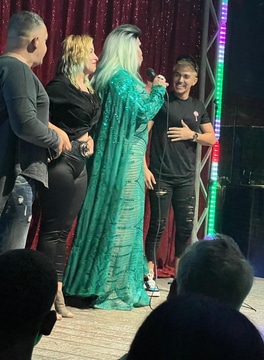
A drag show In Havana

May 13, Havana — Almost the moment we arrived at the corner next to the state-owned club, Cabaret Las Vegas, a car with one of our friends from the National Center for Sex Education (Cenesex) stopped by. She called us over to say hello before going on her way; she had just returned from airing a television roundtable with Mariela Castro Espín and others.

The place was nearly empty because we arrived too early, at 11:00 p.m. But by 1:00 a.m. and the start of the drag show, it was absolutely packed.

I was moved to see community members as well as foreign guests enjoying themselves. We experienced a brief blackout earlier in the night, reminding us of the blockade.

(The electricity came back online quickly, though; this is the only one we have witnessed since being here.)

There was a wide age range represented, from very young to elders. In the crowd, we saw another friend from Cenesex — a trans woman whom we happen to know is 74 years old! Congratulations to her for being a model of strength and determination, as well as grace.

With all the people gathered at tables sharing drinks, there was little room for dancing, though some did. People sat talking and laughing with their arms wrapped around one another. Some kissed.

The drag performers regaled the people not only with style but affection. Throughout their performances, people got up on stage to give them money, hugs, and kisses.

The patrons were relatively mixed. There were masculine-presenting people as well as feminine ones throughout the bar.

Overall there was a strong impression of affection and community.


Strugglelalucha256


‘First on the Fifth’: Marching with Cuba’s Cenesex on a historic May Day

Havana — May Day in Cuba. Nothing quite like it – even if it takes place a little later than expected. 

Havana is renowned for its huge, colorful, and powerful marches every May 1, International Workers’ Day. This year was already planned to be different. Because of severe fuel shortages caused by the U.S. blockade, it was decided to focus on local marches in Cuba’s provinces and the various municipalities that make up Havana. 

Then severe weather struck. Havana’s May 1 celebrations had to be postponed. Instead, it was “the First on the Fifth” — the great workers’ action was held on Friday, May 5, the 205th birthday of Karl Marx, the founder of scientific socialism. 

Another difference: in an additional move to conserve fuel for urgent people’s needs, the usual march through the Plaza of the Revolution was changed to a mass rally along the Malecón, Havana’s famous sea wall.

I arrived in Cuba from New York City on May 3 to attend the VII International Colloquium on Trans Identities, Gender, and Culture, hosted by the National Center for Sex Education (Cenesex), together with Serena Sojic-Borne, a comrade from the New Orleans chapter of Freedom Road Socialist Organization.

Comrade Mariela Castro Espin, director of Cenesex, invited the international delegates from Mexico, Italy, the United States, and other countries to join the center’s delegation in the May Day action, a proposal we gladly accepted.

Queer youth for socialism 

In the U.S., it’s impossible to imagine a city full of workers rising well before dawn to defend the system they live under. U.S. workers are exploited by their bosses, lied to by politicians, overworked and underpaid, without universal health care or the right to housing.

How different is Cuba! In Havana, workers from every sector, along with students and other organized groups, began gathering by 4 a.m. As the international delegates walked by the University of Havana, contingents of young people were already starting to arrive, chanting, singing, and drumming.

Across the wide boulevard, workers representing Radio Rebelde (founded by Che Guevara) and other media outlets were gathering around their banners.

As we reached the intersection where Cenesex was gathering, outside a movie theater, comrade Mariela Castro was among the first to arrive — greeting people, keeping the group motivated and excited. Organizers from TransCuba Nacional, the national network of trans women, distributed trans flags to the many young queer people as they arrived and kept folx from wandering too far afield. 

At the intersection where we gathered, we witnessed young people organized by the Committees in Defense of the Revolution (CDRs) blocking streets and directing traffic away from the marchers. A CDR leader took time to snap some group photos of our contingent for Mariela. 

‘Love is the law’

The dozens of queer youth who gathered with Cenesex, a majority of them Black Cubans, carried an enormous rainbow flag and a lead banner that read, “Por todas las familias, el amor es ley” — “For all Cuban families, love is the law.”

This refers to the revolutionary new Families Code approved last year, which expands the rights of all families, including LGBTQ+ families and chosen families. May is also the International Month Against Homophobia and Transphobia and is celebrated in Cuba much like Pride Month is in the U.S.

For Cenesex and the networks of trans, gay, lesbian, and bisexual people, this is a key time to educate the queer community and the broader Cuban public about the provisions of the new code.

As we marched down the wide, dark street toward the Malecón, more people streamed into the contingent at each intersection. We took our place among the tens of thousands already gathered beside the sea, while revolutionary songs played over gigantic speakers that reached everyone in the rally.

Dozens of hands of all colors and gender expressions took hold of the massive Pride flag and shook it in time to beat. Beside the Cenesex group were health care workers’ unions, unions of the economic ministry, parents holding small children on their shoulders, and portraits of Marti, Fidel, and Che, all awaiting the inspiring words of Ulises Guilarte, general secretary of the Cuban Workers Federation (CTC). 

The beautiful sunrise over the sea slowly spread across the massive demonstration — a beautiful symbolic moment.

Together we sang, chanted, and celebrated the triumph of the Cuban Revolution, the achievements of socialism despite the punishing and illegal U.S. blockade, and the continuing struggles of the world’s workers and oppressed.

Viva Cuba! El amor es ley!

Strugglelalucha256


LGBTIQ activists from Cuba and U.S. exchange on struggles and challenges

Defending their rights and denouncing religious and political fundamentalisms are common goals shared by LGBTIQ (lesbian, gay, bisexual, trans, intersex and queer) activists from Cuba and the United States.

Representatives of the TransCuba Network, the Network of Lesbian and Bisexual Women, HSH (men who have sex with other men) and LGBTIQ activists from the United States exchanged about the approval of the Families Code in the Caribbean nation, the forms of organization of activism, and homo-lesbo-transphobic violence.

The meeting was held on May 8 at the National Center for Sexual Education (Cenesex), as part of the 16 Cuban Days against Homophobia and Transphobia, which are held until May 20 in Havana and Santi Spíritus.

Melinda Butterfield, trans activist from the U.S. organization Women in Struggle, recalled her previous visit to the country, since she has been a member of the solidarity movement with Cuba for 30 years.

“I came before and after I transitioned. Now we have been motivated by the victory of the Families Code and we want to bring people from our communities to learn about this law and, when they return, they can educate about the need to end the blockade on Cuba,” said Butterfield.

The group of activists visiting Cuba was interested in the process of approving the Families Code and how it attracted the support of the Cuban government.

“In the United States the government is against us; in various states, laws are being passed that seek to annihilate and eliminate us. That’s why we’re here, to learn how you have accomplished all of this,” said lesbian activist Elizabeth Toledo of the Socialist Unity Party.

Gustavo Alberto Pi, a specialist from Cenesex, highlighted the support of the Cuban state as a crucial element in the process of approving the code. A struggle that was not easy, he said.

“The approval of the Families Code is the result of political will and decades of education and awareness by institutions such as Cenesex and civil society,” he explained.

“From a legal point of view, it’s a precious document. It is not only a code that recognizes the right to marriage and adoption by LGBTIQ people. It is a law that protects the rights of all people in society, particularly the most vulnerable, and settles a historical debt with gay and trans people,” added Alberto Pi.

The group of visitors was also interested in the functions and agenda of the existing collectives in Cuba, spaces for socialization and challenges that still persist.

Representatives of the TransCuba Network, the Network of Lesbian and Bisexual Women and HSH pointed out some of the issues they work on and the forms of organization of their networks, present in all the country’s provinces and in most of its municipalities.

At the meeting, it emerged that, unlike TransCuba and HSH, the Lesbian and Bisexual Women’s Network faces the challenge of not having its own budget.

“Since they are not considered a population at risk for HIV and sexually transmitted infections, lesbians cannot access international financing dedicated to the prevention of the HIV epidemic,” explained Alberto Pi.

Other challenges shared by activists from both countries were violence and religious fundamentalisms, which in the case of the United States have seeped into politics and the media, increasing hate speech.

“There are many differences between the various states in the U.S. In some the rights of LGBTIQ people are being taken away and they are making it illegal to exist in public. In a few states we maintain our rights, but there is no national protection policy and the national government refuses to intervene,” said Melinda Butterfield.

“Now there is a lot of hate in the media and that means more violence everywhere. New York, where I live, is considered a safe city, but fascists are coming into our spaces and as a community we have to stand up to them. In Florida and Texas, it’s worse,” added the trans activist.

“Here we are also victims, especially trans people. We suffer police harassment, family abandonment and social discrimination. That often forces us to drop out of school, turn to sex work as a way to survive, and many live with HIV,” said Alexandra Hernández Naranjo, coordinator of TransCuba in the Habana del Este municipality.

For her part, Teresa de Jesús Fernández, national coordinator of the Network of Lesbian and Bisexual Women, shared some of the points on the agenda developed by the network, among them: the approach to sexist violence, internalized lesbophobia, the recognition of lesbian parental families, the exercise of reproductive rights of lesbian women, the visibility and reality of their rights, bullying at school, work and in the community.

“Our fundamental objective is to contribute to the transformation of society and to dismantle patriarchy,” the activist concluded.

Source: SEMlac Cuba

Strugglelalucha256


Activistas LGBTIQ intercambian sobre luchas y desafíos

La defensa de sus derechos y la denuncia de los fundamentalismos religiosos y políticos son propóstios comunes que comparten activistas LGBTIQ (lesbianas, gays, bisexuales, trans, intersex y queer) de Cuba y Estados Unidos.

Representantes de la Red TransCuba, la Red de Mujeres Lesbianas y Bisexuales , HSH (hombres que tienen sexo con otros hombres) y activistas LGBTQ de los Estados Unidos intercambiaron sobre la aprobación del Código de las Familias en la nación caribeña, las formas de organización del activismo y las violencias homolesbotransfóbicas.

El encuentro se realizó el 8 de mayo en el Centro Nacional de Educación Sexual (Cenesex), como parte de las 16 Jornadas Cubanas contra la Homofobia y la Transfobia, que se celebran hasta el próximo 20 de mayo en La Habana y Santi Spíritus.

Melinda Butterfield, activista trans de la organización estadounidense “Mujeres en lucha”, recordó sus visitas anteriores al país, pues desde hace 30 años integra el movimiento de solidaridad con Cuba.

“Vine antes y después de hacer la transición. Ahora nos ha motivado la victoria del Código de las Familias y queremos traer a personas de nuestras comunidades para que aprendan sobre esta ley y que, al regresar, puedan educar sobre la necesidad de terminar con el bloqueo a Cuba”, dijo Butterfield.

El grupo de activistas que visita Cuba se interesó por el proceso de aprobación del Código de las Familias y cómo concitó el apoyo del gobierno cubano.

“En Estados Unidos el gobierno está contra nosotros; en diferentes Estados se están aprobando leyes que buscan aniquilarnos y eliminarnos. Por eso estamos aquí, para aprender cómo ustedes han logrado todo esto”, aseveró la activista lesbiana Elizabeth Toledo, del Partido Socialista Unido.

Gustavo Alberto Pi, especialista del Cenesex, resaltó el apoyo del Estado cubano como elemento crucial en el proceso de aprobación del Código. Una lucha que no fue fácil, dijo.

“La aprobación del Código de las Familias es resultado de la voluntad política y de las décadas de educación y sensibilización por parte de instituciones como el Cenesex y la sociedad civil”, explicó.

“Desde el punto de vista legal, es un documento precioso. No es solo el Código que reconoce el derecho al matrimonio y a la adopción por parte de las personas LGBTIQ. Es una ley que protege los derechos de todas las personas en la sociedad, en particular las más vulnerables, y salda una deuda histórica con las personas homosexuales y trans”, agregó Alberto Pi.

El grupo de visitantes también se interesó por el funcionamiento y la agenda de los colectivos existentes en Cuba, los espacios de socialización y los desafíos que aún persisten.

Representantes de la Red TransCuba, la Red de Mujeres Lesbianas y Bisexuales y HSH apuntaron algunos de los temas que trabajan y las formas de organización de sus colectivos, presentes en todas las provincias del país y en la mayoría de sus municipios.

En el encuentro trascendió que, a diferencia de TransCuba y HSH, la Red de Mujeres Lesbianas y Bisexuales enfrenta el desafío de no contar con presupuesto propio.

“Al no ser consideradas como población de riesgo ante el VIH e infecciones de transmisión sexual, las lesbianas no logran acceder a financiamientos internacionales dedicados a la prevención de la epidemia del VIH”, explicó Alberto Pi.

Otros desafíos compartidos por activistas de ambos países fueron las violencias y los fundamentalismos religiosos, que en el caso de los Estados Unidos se han filtrado en la política y los medios de comunicación, incrementando el discurso de odio.

“Existen muchas diferencias entre los diferentes Estados de la nación, en algunos se les están quitando derechos a las personas LGBTIQ y haciendo que sea ilegal existir en público. En unos pocos Estados mantenemos nuestros derechos, pues no existe una política nacional de protección y el gobierno nacional se rehúsa a intervenir”, contó Melinda Butterfield.

“Ahora existe mucho odio en los medios y eso significa más violencia en todos los lugares. Nueva York, donde vivo, es considerada una ciudad segura, pero los fascistas están yendo a nuestros espacios y como comunidad tenemos que hacerles frente. En Florida y Texas es peor”, agregó la activista trans.

“Aquí también somos víctimas, sobre todo las personas trans. Sufrimos acoso policial, abandono familiar y discriminación social; eso nos obliga muchas veces a dejar los estudios, acudir a la prostitución como sobrevivencia y la mayoría vive con VIH”, dijo Alexandra Hernández Naranjo, coordinadora de TransCuba en el municipio Habana del Este.

Por su parte, Teresa de Jesús Fernández, coordinadora nacional de la Red de Mujeres Lesbianas y Bisexuales, compartió algunos de los puntos de la agenda que desarrolla la Red, entre ellos: el abordaje de las violencias machistas, la lesbofobia interiorizada, el reconocimiento de las familias lesboparentales, el ejercicio de los derechos reproductivos de las mujeres lesbianas, la visibilidad y realidad de sus derechos, el acoso escolar, laboral y en la comunidad.

“Nuestro objetivo fundamental es contribuir a la transformación de la sociedad y a desmotar el patriarcado”, concluyó la activista.


Strugglelalucha256
https://www.struggle-la-lucha.org/tag/cenesex/