Remembering historic prison liberation struggles

The month of September holds several major anniversaries in the struggle for prisoner liberation and to end the racist prison-industrial complex. It is important to salute the struggles of those prisoners who rose up against brutal conditions and also those who were persecuted and imprisoned for espousing revolutionary politics. 

Attica prisoners during the rebellion in September 1971.

Attica prisoners seize control to address torturous conditions 

Beginning on Sept. 8, 1971, some 1,500 prisoners in Cell Block D seized control of upstate New York’s Attica Prison. The prisoners rebelled after they submitted a 27-point manifesto, demanding that the state Department of Corrections take immediate steps to improve the brutal conditions inside New York prisons. 

Attica prisoners were experiencing severe overcrowding inside the prison. The prison was built for 1,600 prisoners. By 1971, 2,300 people were crammed within Attica’s walls. Prisoners were limited to one shower per week and one roll of toilet paper a month. Every prisoner labored five hours a day, paid at most $1 for the entire day’s work. 

The uprising was indicative of more than just situational rage, but of growing revolutionary politics in the Black and Latinx communities. The Black Panther Party, the Young Lords and the Nation of Islam had members and organizers imprisoned for various reasons. They formed a Liberation Faction that played a crucial role in organizing the rebellion against Attica’s inhumane and racist conditions. 

The uprising was eventually broken by a vicious massacre of prisoners at the hands of New York State Police, resulting in 39 dead and 85 wounded. Even with this horrific ending, the bravery of the Attica prisoners lives on as an inspiration to revolutionary movements inside and outside of the oppressive walls. 

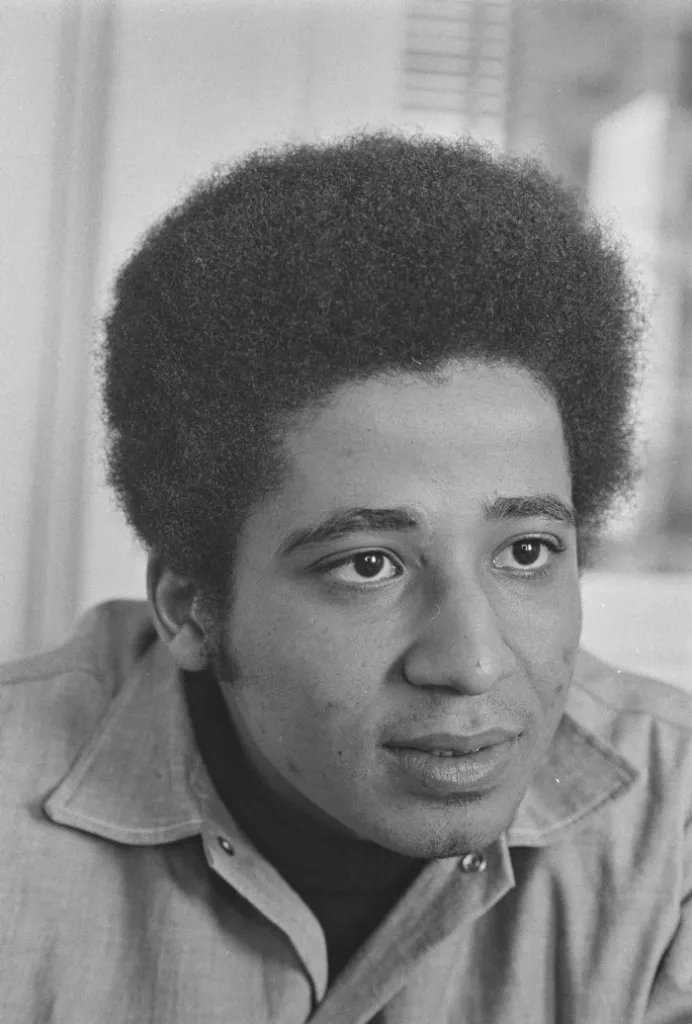
George Jackson, revolutionary prison organizer, is born

On Sept. 23, 1941, George Jackson was born in Chicago. Jackson was charged and convicted of armed robbery with a sentence of one year to life in prison. The alleged stolen money amounted to $70 and Jackson was just 18 at the time of the robbery. Nonetheless, Jackson faced a prison sentence that essentially equated to life in prison. 

While in San Quentin State Prison, Jackson was introduced to revolutionary Marxist figures and leaders like Karl Marx, Mao Zedong, Frederich Engels and Leon Trotsky. From his personal experiences with prison and his journey into revolutionary politics came writing that changed the movement against U.S. racism forever. 

During his time in prison, Jackson organized for the Black Panther Party – People’s Revolutionary Army and completed several books, including “Soledad Brother” and “Blood in My Eye.” He never stopped fighting. 

In 1971, a tower guard assassinated Jackson during an alleged escape attempt. Many community figures and thinkers, including James Baldwin, believed that Jackson was simply assassinated for his political activity. 

We remember Jackson’s sacrifice to the struggle against the racist prison system and his commitment to a world of liberated Black and Brown people all over the world. 

Strugglelalucha256


We want justice! Stop locking up our people!

According to Prison Policy Initiative, white people are proportionately underrepresented in prisons and jails, while Black, Native, and Latino people are overrepresented. In a graph showing the racial makeup of U.S. prisons – Black people and white people each make up 38% of the prison population, while the U.S. population is 60% white and 13% Black. When Black, Latino, and Native prisoners are counted together, they constitute 61% of the state and federal prison population but only 32% of the total population. 

Socialist Unity Party supports the struggles of all prisoners; prisoners of conscience, prisoners of war, and prisoners imprisoned because of their political beliefs. We believe that all prisoners are political prisoners because of the racist, corrupt and greedy profit-based system we live in. We want to build solidarity with incarcerated and formerly incarcerated individuals by building coalitions, uniting all oppressed nationalities, and fighting side by side to shut down the U.S. prison-industrial complex.

We understand that the U.S. criminal justice system is flawed from the point of contact with the police to the arrest, trial and conviction. The Sixth Amendment of the Constitution guarantees citizens the right to a criminal trial by an impartial jury. But there is no requirement that the jury reflect the racial diversity of the community from which the person on trial comes. 

We can list the impediments to a jury of your peers in a capitalist society, but we must ask ourselves if there are any benefits to standing up against racist courts. When I asked formerly incarcerated author and community activist Curtis Howard about his thoughts on jury duty, his reply was:

“The experience is worth it; seeing a jury pool with people who look like me, from my community and knows some of the stuff that I’ve been through may have curved my option of taking a plea bargain or having a judge decide my fate.” 

Howard adds that the experience of going through the whole process, the orientation in the jury hall, observing the people, hearing your name called for a jury pool, and being selected as a juror is worth it.

On jury duty

I have been summoned for jury duty many times during the last 30 years. My name was called to be a potential juror three times. I reported to a courtroom and swore under oath to tell the truth when answering a series of questions. One of those times, I was selected as a juror in a case. The initial jury pool in the courtroom was full, with about 60 potential jurors. There was a laminated sheet of paper with a list of questions on one side and our juror number on the other. I was very surprised to be selected as a juror after answering all the questions from the judge and the lawyers as truthfully as I could.

It was a DUI case, which I thought was not a big deal. After we all answered the questions on a sheet, the judge and lawyers excused people for various reasons. Over half of the people were left with 12 in the jury box when the selection process began. The lawyers took turns using what I learned was called peremptory challenges — challenges used without any explanation or stated reason. 

This process was like musical chairs that began with the jurors in the jury box. The lawyers would excuse a juror, and the next juror in sequence took that seat. I was further down in the numbers and thought that the jury would be complete before they reached my number, but they kept dismissing and reseating until my number was called to take a seat in the jury box. I knew I would be dismissed, but I believe they ran out of peremptory challenges, and the judge announced this was our jury, and we took another oath. This process took two days.

I won’t go into all the trial details — opening, evidence and closing statements took one day. It took three days for 12 of us to deliberate and reach a verdict that we all agreed on. I will remind you this was a case of two counts — DUI and blood alcohol level above 0.08%. 

After we reached a verdict, we were taken back into the courtroom. As the presiding juror, I handed the verdict to the bailiff. I saw the look of relief on the face of the defendant as the judge read not guilty and then thanked the jury for our service.

The process took six days (eight, including the weekend). I felt it was worth it; some thought it wasn’t. 

The crime of all-white juries

This experience confirmed a Duke University study of a decade of criminal convictions in Florida, which found that all-white jury pools convicted Black defendants 16% more than white defendants. But when just one Black person was added to the jury pool, the gap in conviction rates nearly disappeared.

The whole experience of going into a courthouse is scary and intimidating; security checks, police everywhere, almost as if you are on trial. However, we must understand that it is our right to be on a jury and our choice whether we want to serve on a jury. We must not let this corrupt system make that decision for us.

We must remember: There is a long and ugly history of excluding Black people from juries, particularly in the South, and we haven’t figured out a way to escape this legacy.

In the case of the Scottsboro brothers in 1935, eight of nine Black youths were found guilty of raping two white women and sentenced to death. In the lynching of 14-year-old Emmett Till in 1955, Roy Bryant and J.W. Milam were acquitted by an all-white jury of this vicious murder that they openly bragged about and later admitted to. In the 2006 case of the Jena 6, Mychal Bell, 17, was convicted by an all-white jury of aggravated battery facing 22 years.

Jury duty is not a solution to ending mass incarceration, but it may save one person, one family, one community the expense and grief of a loved one spending decades in prison. We know that Black, Brown, and poor people make up the majority of those in prison, and they are relying on us on the outside to fight for their freedom by organizing, educating and strategizing on ways of ending this system of mass incarceration by abolishing the prison-industrial complex. 

Black and poor people can be and will be impartial and are the most qualified to be on any jury. The system knows this, and that is why Black, Brown, and poor people are the first to be excluded in these proceedings, by making it difficult for us to take the time because of the economic and domestic hardships we face.

I received a check for $60 for my five days of jury service over ten years ago. Today in California, jury duty compensation remains at $15 a day. Fifteen dollars a day is a financial hardship for poor people and people living on the edge, especially today in California. Jurors whose employers do not pay for jury duty should get paid a minimum wage from the state. Single parents needing childcare should be given vouchers to cover those expenses. Employers should not penalize employees for serving on a jury, whether for one day or several weeks. The state should provide these incentives to show how valuable your service is and how much you are needed.

The solution to mass Incarceration is to abolish capitalism.

Stop locking up our people, Free our aging freedom fighters, Free our youth, Free them all! 

Strugglelalucha256


Sacramento: A day of solidarity with prisoners and formerly incarcerated people

Based on remarks at the Socialist Unity Party national plenum on Aug. 13.

This is the story of my experience going to Quest for Democracy 2022 on Aug. 8 in Sacramento, California’s state capital.

I was offered the opportunity to go to Sacramento with All Of Us Or None (AOUON), a grassroots organization led by formerly incarcerated people, whose purpose is to strengthen the voice of people most affected by mass incarceration and the growth of the prison-industrial complex. Their goal is to build a powerful political movement to win full restoration of human and civil rights for incarcerated and previously incarcerated individuals.

I was told Quest for Democracy is a statewide lobbying day giving incarcerated and formerly incarcerated individuals and their families the opportunity to meet with state representatives and learn the process by which bills are passed. Most important, it is a chance to hold elected officials accountable.

We were given a list of bills and asked to choose a couple that interested us. When meeting with assembly members, we were to speak on why the bill is important and ask the representatives, “Can we count on your ‘yes’ vote on this bill?”

I was a bit hesitant, because I was told not to bring up other issues and stick to the issues on the list. I don’t consider myself a lobbyist and I don’t have any confidence in the capitalist criminal justice system or the politicians to do the right thing.

Early on the morning of Aug. 8, a group of seven activists, including me, boarded two flights from San Diego to Sacramento. We rented a van and drove to the capital, where everything was set up. 

Some groups came the day before and received training on how to approach assembly members and present their concerns in a concise manner. The time you have is very limited, so you must make your point in 2 to 3 minutes or less. 

There was a line at the AOUON booth to get t-shirts, a lunch ticket, a packet listing summaries of many bills on prison reform, and a package of “courage score sheets” for state representatives. We were asked to review this information before going to visit with our assigned representative. I knew little about what was going to happen when we sat with the State Assembly member.

End involuntary servitude!

I was excited when the announcement was made from the capitol steps for everyone to gather in a semi-circle to prepare for a rally. 

The rally began with a respected Indigenous community member acknowledging the land where we gathered and the ancestors whose shoulders we stand on. He emphasized that we stand together to do the work here today that will bring justice and dignity to all those in prison and those of us who are in transition, our families, friends and all our relations.

The first speaker was Dorsey Nunn, co-founder of All of Us Or None, executive director of Legal Services for Prisoners with Children (LSPC) and one of the organizers for Quest for Democracy. Nunn was sentenced to life in prison when he was 19 years old.

Nunn spoke about justice, dignity and humanity for incarcerated and formerly incarcerated individuals, and the importance of ACA 3: the California Abolition Act – a bill which would amend the state constitution to end involuntary servitude in prisons.

Although more than 100 people came out and many groups were represented here, there was a great sense of unity, community and commitment to the issues of prisoners, families, reunification, support and education. It was very welcoming, and I could feel the gratitude towards everyone that came out on such a hot day. 

Listening to the stories from the speakers, all former incarcerated individuals, I felt the heat was nothing compared to what those in prison go through every day.

I thought about the MOVE 9 and Sekou Odinga, who told their stories at the Malcolm X Library in San Diego. In my mind I compared their stories of life as formerly incarcerated people in the U.S. with that of the Cuban 5, who returned to Cuba as heroes after 16 years in U.S. prisons.

All the bills addressed issues that the Cuban people had already worked out through roundtable discussions and popular mobilization using the principles of socialism. Cuba is our shining example; Cuba has paved the way. 

Fighting for basic needs

Christopher, a 17-year-old completing his first year at San Diego City College, came with our group. His thoughts on the bills echoed mine when he said, “Why should there be a debate about a prisoner’s right to call their family for free?” 

Prisoners and families should be able to call without paying extortionate phone rates (SB1008). Families should be encouraged to visit and stay connected with their loved ones in prison (AB990). Families should be notified right away when an imprisoned son, daughter, father, mother, brother, or sister has a medical emergency (SB1139).

There are so many bills that resonated with me, like one to prevent children 12 years old from being tried in juvenile court (SB429). Or the bill to release medically vulnerable people who are the most expensive to incarcerate and least likely to reoffend (AB960).

I was somewhat surprised as one of the State Assembly members spoke. I didn’t get her name, but I heard her say: “People just don’t know about the inhumanity that is prevalent in the California Department of Corrections and Rehabilitation (CDCR). Some think [imprisonment] is a vacation or a break. 

“You spend months, years or decades in prison, and when you get out you get $200. What the fuck can you do with $200?” she shouted. 

She supported a bill that would raise the “gate money” given upon release to $1,300, which she said is “still not enough.” (SB 1304) What’s needed is a path to reentry – training, counseling, housing, a job with a living wage, and compensation while you make that transition. 

There were many bills that impacted incarcerated peoples’ reentry into society. These are issues that Cuba has figured out. Yes, in Cuba you do the time, but the whole purpose is to come out restored, renewed, reunited with family and community, and hopefully you will do better. The system is not set up for you to fail.

As Gerardo Hernandez, one of the Cuban 5 who is now head of the Committees for the Defense of the Revolution (CDR), said: “Our purpose is to help. We talk with the family, we encourage the family to stay involved, because it is understood that the family suffers when a loved one is incarcerated.

“Prisoners need not be discriminated against because they went to jail. Our objective is not to make a repressive action against those persons but to help those persons, who are victims themselves in many cases.”

Cuba’s neighborhood CDRs number 138,000, with over 8 million members, and continue to work on programs and solutions to the problems of petty crime, drugs and mental illness.

Solution to mass incarceration

I think about the remarks by Cuban President Miguel Díaz-Canel on May 16: “In the United States, 2,000 children are arrested every day and 44,000 are in prison. We only cite this data to demonstrate, once again, the hypocrisy and double standards of those who presume to judge what happens around the world.”

Diaz stated, before our people and the world, that in Cuba no one under 16 years of age is imprisoned!

There are coalitions such as those which organized Quest for Democracy 2022 throughout the U.S. The Socialist Unity Party’s Prison Solidarity Caucus will work with these groups. We will support incarcerated and formerly incarcerated people, listen to their demands, support their efforts to reform this system and fight for their right to exist and live with dignity.

These organizers are aware of the hard, long struggle it’s going to take to pass these bills, because it took 10 years just to pass “Ban the Box” – the box on applications that is used to deny formerly incarcerated people access to livable wages, decent housing, medical care and many other life-sustaining benefits. 

When we had our 20 minutes with State Assembly member and Local Government Committee Chair Cecilia Aguilar and two of her staff, I asked about ACA-3, the amendment to end involuntary servitude. Aguilar said: “This is a hard bill to pass. My staff and I will research this bill. This is what we do with all bills.”

Each person spoke about bills, and she expressed her support for all of them. We thanked her for taking the time out of her schedule to talk to us and she thanked us for coming. 

We returned to our rented van and made our way to the airport for our 5:00 flight back to San Diego.

It was a learning experience. It didn’t change my position on lobbying with the politicians, but I am glad I went. It just shows how much work we must do to educate our class about socialism.

Prisoners should be compensated for their labor while incarcerated and at the time of their release. They should have a path for reentry, be united with family and community, be treated with dignity, and not be punished or discriminated against because they went to jail.

With over 2 million people in U.S. prisons, affecting millions of families, this is a major concern.

Every hard-won reform and act of solidarity, however small, is important. But as Cuba shows, the only solution is a socialist revolution.

Abolish capitalism! Shut down the prison-industrial complex! End mass incarceration now!

For more information about LSPC, AOUON and Quest for Democracy, visit PrisonersWithChildren.org/Policy-Advocacy/.

Strugglelalucha256


Albert Woodfox: Angola Three Warrior Passes

Who has not heard of the Angola Three, three young Black prisoners who were falsely accused of killing a prison guard in 1972, in the infamous Louisiana maximum-security prison sited at a former slave plantation, and named for the place where the African captives came from: Angola. On Thursday, August 4th, attorneys for Albert Woodfox announced his passing at the age of 75.

For over 43 years, Woodfox and several other Black men were held in brutal solitary confinement, one of the longest-held solitary prisoners on Earth. 43 years, seven days a week, 23 hours a day. The United Nations Special Rapporteur on Torture has stated that any time above 13 days constitutes torture and a violation of international law. 13 days, 43 years.

How did Woodfox survive? He cites the teachings of the Black Panther Party; books by Frantz Fanon, Malcolm X, and Marcus Garvey; and lastly, the daily work they did for decades of calling down the tier to quiz guys on Black history, on math, and spelling bees. In an interview in The Guardian, Woodfox said, “Our cells were meant to be death chambers, but we turned them into schools, into debate halls.” By keeping their minds alive, they kept the beast of madness at bay.

After a bitter court fight, Woodfox was freed in 2016, and he returned to the remnants of his family. His daughter, Brenda, and her children and grandchildren, greeted his return. He wrote a book entitled Solitary and spoke at colleges around the world about his time in Angola.

In his last six years of freedom, he thought more and more of his mother, Ruby Mable Hamlin, who died while he was in Angola. He called her his true hero. She was, he said, “functionally illiterate.” But he added, “I never saw a look of defeat in her face no matter how hard things got. I grew into my mother’s wisdom. I carry it within me.” Albert Woodfox returns to his ancestors.

In love, not fear, this is Mumia Abu-Jamal.

These commentaries are recorded by Prison Radio.

Strugglelalucha256


Guilty until proven innocent

The so-called U.S. criminal justice system is just plain criminal. Two of its biggest atrocities are cash bail and solitary confinement.

Black Lives Matter activist Sandra Bland was held in a Waller County, Texas, jail because she couldn’t afford $5,000 bail.

Three days after Bland was arrested for a minor traffic violation, the 28-year old Black woman was found hanged in her jail cell on July 13, 2015. Many people don’t believe she committed suicide.

Albert Woodfox spent nearly 45 years in solitary confinement in Louisiana’s notorious Angola prison. Woodfox, who with two other members of the Black Panther Party were known as the “Angola 3,” was released in 2016. 

The Eighth Amendment of the U.S. Constitution ― part of the Bill of Rights ― clearly states that “excessive bail shall not be required, nor excessive fines imposed, nor cruel and unusual punishments inflicted.”

Bail is excessive for anyone who can’t pay it. Solitary confinement is torture.

Unable to afford bail, Kalief Browder spent three years in New York City’s jail complex on Rikers Island before his charges were dropped. For two of those years, the Black youth was in solitary confinement without trial or conviction.

Kalief Browder was jailed when he was just 16 years old. Two years after his release he hanged himself on June 6, 2015.

Sparked by this tragedy, a grassroots movement forced the New York State Legislature to pass laws that largely did away with cash bail. Police and their supporters launched a vicious campaign to repeal this needed legislation.

Cheering them on are Fox News and the New York Post, both owned by the billionaire hate-monger Rupert Murdoch. New York City Mayor Eric Adams also wants more people facing trial held on bail and more prisoners held in solitary confinement.

No justice for the poor

It’s a big lie that everyone in the United States is considered innocent until proven guilty. Not being able to afford bail means you can’t contact witnesses that could prove your innocence. Any effective legal defense is largely denied.

Being kept in hellholes makes many innocent people confess to lesser charges just to get out of jail. These forced confessions also prevent poor people from voting.

In 2020, 5.2 million people were kept off the voting rolls because of a previous conviction. Just cashing a check with insufficient funds can be enough to block someone from voting. Their real crime was being poor.

On an average day, 533,000 people are being held in local, state and federal dungeons without being convicted. Ten million people are driven through these lock-ups every year. Most people in jail are legally innocent. 

More than 80,000 people are in solitary confinement. The United Nations Committee Against Torture has repeatedly condemned the use of solitary confinement in the U.S. 

Any jail or prison is dangerous. Nearly 3,000 imprisoned people have died of COVID-19. That’s criminal.

Who needs to be locked-up are billionaire CEOs who are jacking-up prices. In just the first three months of 2022, the five biggest oil companies pumped out $35 billion in profits. 

The more than two million people in prisons are members of the working class. The labor movement needs to demand “Jobs Not Jails!”

On July, 14, 1789, poor people in Paris tore down a hated prison called the Bastille and started the French Revolution. There are thousands of bastilles across the United States. We need a socialist revolution to tear them down.

Kidnappers demand ransom. Bail is ransom for the poor while prisons are concentration camps for the poor.

Strugglelalucha256


40 years is too long! Free Mumia Abu-Jamal!

Demonstrators in Philadelphia on July 3 demanded freedom for Mumia Abu-Jamal. They carried colorful signs and banners under a blazing sun.

The rally was in front of the Municipal Services Building across from City Hall. Forty years before on the 4th of July weekend in 1982, the world-renowned political prisoner had been sentenced to death.

Abu-Jamal was framed for the death of police officer Daniel Faulkner. Abu-Jamal was really convicted for having been a member of the Black Panther Party.

Among the speakers was Mike Africa, Jr., who was born in prison. His parents―Debby Africa and Mike Africa, Sr.―were members of the MOVE 9 who spent 40 years in prison before being released.

Mike Africa Jr. reminded people of the illegal stunts that prosecutor Joseph McGill used in order to send Mumia Abu-Jamal to death row.

One of the “lost” items later found in the District Attorney’s office files was a letter written by a lying witness. The witness asked where was his money for testifying?

Demanding the death penalty, McGill read to the jury an interview with a 16-year old Mumia Abu-Jamal. The teenager quoted Mao Zedong that “political power grows out of the barrel of a gun.”

Judge Albert Sabo allowed McGill to inflame the jury. Sabo was overheard saying “I’m gonna help ’em fry the n—-r.”

It was only the power of the people that stopped Mumia from being executed, even though two death warrants had been signed by Pennsylvania’s Gov. Tom Ridge. Jamal was finally taken off death row in 2011, but the wealthy and powerful want him to die in prison.

People marched around City Hall demanding justice. Some drivers honked their horns in approval.

Mama Pam denounced the racism of the wealthy and powerful. Nearby used to be a statue of former Philadelphia Mayor Frank Rizzo who urged his supporters to “vote white.”

Authorities were forced to remove this obscene monument because of the Black Lives Matter movement.

Twenty-three prisoners have been exonerated while Philadelphia District Attorney Larry Krasner has been in office. They were convicted because of misconduct committed by cops, judges and prosecutors.

But Krassner is still trying to keep Mumia Abu-Jamal in jail, despite the same illegal practices having been used against the revolutionary political prisoner. Krasner needs to stop fighting Mumia’s release. Mumia Abu-Jamal must be set free.

Strugglelalucha256


Freedom and med care for Leonard Peltier

For 40 years, former American Indian Movement (AIM) activist Leonard Peltier has been in the clutches of the U.S. prison system –The Iron House of the whites, as indigenous people call them – on trumped up murder charges. Now, as he suffers poor health and an abdominal aortic aneurism, time is no longer on his side.

The aneurism, diagnosed just weeks ago, threatens his very life, so supporters of Leonard are demanding his freedom, so he doesn’t perish in the Iron House.

Decades ago, when Bill Clinton was president, he visited Pine Ridge, South Dakota (once Peltier’s home) and told people there: “Tell Leonard I won’t forget about him.”

A promise from Clinton proved as empty as any politician’s promise: gas, air, wind. (He musta forgot, huh?)

So Peltier languished in the Iron House as decades passed. He wrote. He painted – and he awaited white justice.

He’s still waiting.

His supporters want people to write to the Bureau of Prisons (BOP), demanding his health care and release. The International Leonard Peltier Defense Committee needs you to write and call on Leonard’s behalf.

Contact:www.bop.gov/inmates/concerns.jsp.

Refer to Leonard Peltier #89637-132 and his home jail, USD Coleman I.

And while you’re at it, contact the White House and demand Leonard’s executive clemency.

Leonard Peltier needs freedom now; and Native Peoples need him to return home.

Source: Prison Radio

Strugglelalucha256


58 years of unjust imprisonment – Free Ruchell Magee!

The Free Ruchell Magee Coalition held a rally on Dec. 18 in front of the CNN building in Los Angeles. They demanded that the powers that be – including the governor and corporate media – stop ignoring the case of extreme racism in sentencing and denial of human rights to Ruchell “Cinque” Magee. 

Magee, who is now 82 and under medical care, has suffered incarceration for 58 years. He was given a life sentence for an alleged $10 robbery. Later in 1970, Magee was involved with Jonathon Jackson in the attempt to free political prisoner George Jackson, after eight years of not being allowed parole or any acknowledgement of the racist sentencing and trial.

Participants in Saturday’s rally included the Party for Socialism and Liberation, the Socialist Unity Party and the Harriet Tubman Center for Social Justice. Former Black Panther and organizer of the monthly Black Panther Party Breakfasts, Harold Welton, spoke at the event. He has been the main organizer in Los Angeles for the freedom of Ruchell Magee.

A petition demanding the release of Magee says: “As an elder, he faces constant mental and physical health risks every day from nearly six decades of incarceration. With the COVID-19 pandemic raging across California’s prisons throughout 2020 and 2021, Ruchell has been in significant danger of falling ill.”

Strugglelalucha256


Labor leader calls for action to free Mumia Abu-Jamal

On Dec. 9, the Free Mumia webinar began with a message from political prisoner Mumia Abu-Jamal, who has been unjustly imprisoned in the U.S. for 40 years. Mumia, a journalist who was Minister of Information for the Black Panther Party in Philadelphia before he was framed-up, spoke about the U.S. military-industrial complex. The call was moderated by Gabriel Bryant and Sophia Williams.

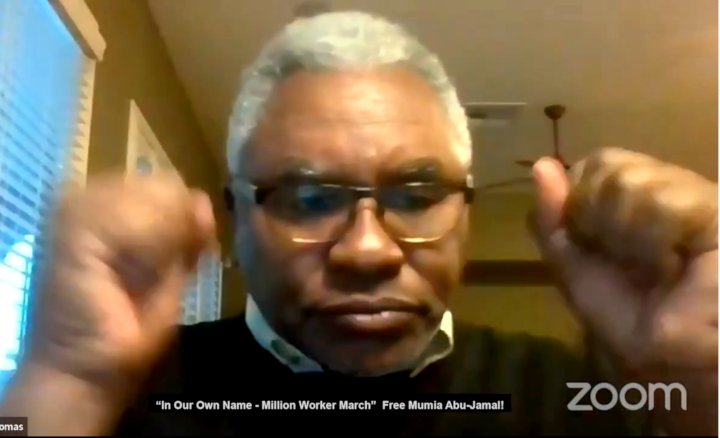
Clarence Thomas is a retired rank-and-file union leader who was part ot the International Longshore and Warehouse Union Local 10’s effort to free Mumia for over 30 years. He is also author of the anthology “Mobilizing in Our Own Name: Million Worker March.” As the first speaker, Thomas established the historic roots and breadth of the worldwide campaign to free Mumia and all U.S. political prisoners. There will be a protest in Philadelphia to “Free Mumia!” on Dec. 11.

Call to Action: For international workers’ action – Free Mumia Abu-Jamal and all anti-racist and anti-imperialist freedom fighters!
Statement by Clarence Thomas

Dec. 9, 2021

The International Longshore Warehouse Union (ILWU) has a long tradition of defending oppressed nationalities and political prisoners such as Angela Davis in the 1970s. As a retired member and officer of ILWU Local 10, I have been a part of the Local’s efforts to free Mumia Abu-Jamal and all political prisoners. For more than 30 years, the ILWU has been in the vanguard of the labor movement to free the award-winning journalist, ‘the voice of the voiceless’ and former Black Panther Party member, Mumia Abu-Jamal.

In my recent anthology, “Mobilizing in Our Own Name: Million Worker March,” there are many articles by Mumia that are featured, documenting his support of all labor (organized and unorganized), including ILWU Local 10 and the Million Worker March. Mumia describes himself as “a proud card-carrying member of the National Writers Union which affiliated with the United Auto Workers.” During his forty years of imprisonment, his support for labor and the working class has been unwavering.

During the 1960s, the Black Liberation Movement awakened my political and social consciousness along with countless other Afro-American youth. I joined the Black Panther Party which facilitated my anti-racist, anti-capitalist, and anti-imperialist activism and the need for Afro-Americans to have “self-determination.”
Declaring the Black Panther Party “public enemy number one,” the U.S. government sanctioned the murder of its leaders, vilified the organization in the press, and falsely imprisoned Party members, Mumia Abu-Jamal has always maintained his innocence of the murder of Philadelphia police officer Daniel Faulkner.

There are Black Panther Party members that were a part of the Black Liberation movement who have been languishing in prison for more than half a century. Native American political prisoner Leonard Peltier has been imprisoned since 1977. The horrific imprisonment and the abuse of these political prisoners represent the long legacy of slavery, Jim Crow, apartheid, and racial violence perpetrated against African Americans.

The labor movement can and must play a vital role in the release of all political prisoners. The ILWU recognizes that the prosecution of radical labor leaders such as Tom Mooney and Harry Bridges is directly connected to efforts by the U.S. government to use lies and frame-ups to put away these fighters for freedom and justice that was promised yet denied to African Americans and people of color in the U.S.

The ILWU Longshore Division shut down the entire West Coast in 1999 to demand: “Stop the Execution and Free Mumia!” On June 19 (Juneteenth), 2020, the ILWU shut down all 29 ports on the West Coast including Vancouver, Canada, to commemorate Juneteenth, to End Systemic Racism, and to Stop Police Terror. No maritime cargo was moved for 8 hours on the entire West Coast. This solidarity action on the part of West Coast dockworkers represents the power of labor at the point of production. It is this type of action that labor must find the courage to exercise on a global level to bring home Mumia Abu-Jamal and all political prisoners.

“An Injury to One is an Injury to All”

“Free Mumia Abu-Jamal”

Clarence Thomas
ILWU Local 10 retired
Co-founder Million Worker March
Author of Mobilizing in Our Own Name: Million Worker March
MillionWorkerMarch.com


www.MillionWorkerMarch.com

“Mobilizing in Our Own Name’” documents struggles in news articles, interviews, letters, posters, photos, speeches and video transcripts.

Danny Glover who was a part of the MWM, wrote, “‘Those of us that are activists in the struggle and are contemporaries of my brother and comrade Clarence ‘Buzz’ Thomas, whom I’ve known since our days at San Francisco State, he has done what many of us have talked about but refused to do; write a book! This anthology captures the Million Worker March and so many subsequent struggles that really underscores how ILWU Local 10 continues its long radical history and tradition of struggle. To quote sister Angela Davis, when we both spoke at the Juneteenth 2020 rally at the Port of Oakland, “Whenever the ILWU takes a stand, the world feels the reverberation.”

Strugglelalucha256


Russell ‘Maroon’ Shoatz is free, but other political prisoners languish

The demand for freedom of political prisoners must be consistently made for their sakes and for all at risk of joining them in the future.

Russell “Maroon” Shoatz has been granted compassionate release after 50 years in prison. The length of his sentence is outrageous but it is hardly unique. The United States not only has the dubious distinction of being the country with the largest population of incarcerated people, but it also has political prisoners held longer than anywhere else in the world. Shoatz is now 78-years old and suffering from cancer. To be blunt, he is being released so that he can die outside of prison walls.

Of course there is deeply felt happiness that Shoatz will be freed for whatever time remains in his life, but no one should forget the tortures he suffered, including 22 years in solitary confinement. No one should forget the other prisoners such as Mumia Abu Jamal, Ruchell Magee, Sundiata Acoli, and Dr. Mutulu Shakur. They are the best known, but there are hundreds of people imprisoned since the days of the liberation movement. That movement was crushed in part because its most committed fighters were locked away.

As the late Glen Ford pointed out, we must say their names while they are still alive. We must say their names because they still live, instead of only remembering those who are dead at the hands of the police. Our remembrance should not be restricted to those who have passed but should be expanded to include the men and women whose lives were taken from them by imprisonment under brutal conditions.

There is also an element of self defense in advocating for these elders. The members of the Black Liberation Army and Black Panther Party were obvious targets so many years ago, but so were people who took to the streets of Ferguson, Missouri in the wake of the killing of Michael Brown in 2014. Six of them died mysteriously in the years that followed. Others are serving long sentences for minor offenses. Anyone who makes themselves known as an activist is a potential political prisoner. The noble act of fighting for their freedom is also necessary self protection.

The defeat of the movement created amnesia for some and a genuine lack of knowledge for the generations that followed. Demanding community control of the police or defunding or abolition are logical steps in a process begun by the freedom fighters who have been locked away for so long. Today’s struggle against the state is a continuation of what Shoatz and others carried out decades ago.

Lest anyone forget, the state is no less dangerous now than it was 50 years ago when he and others were first imprisoned. In the wake of the September 11, 2001 terror attacks the FBI changed tactics and began initiating crimes that were then prosecuted. Once again, draconian sentences were dispensed to Black people such as the Newburgh Four and the Liberty City Seven . They and others were entrapped by agent provocateurs who ensnared them in crimes they had created themselves and then testified against them in court.

Police departments all over the country surveil activists by old fashioned means and with the use of modern day technology. The Patriot Act was created in the days after September 11 and is regularly renewed by congress with as little scrutiny as when it was passed. The National Security Agency has records of every American’s electronic communications, from phone calls to emails. The FBI created a new designation, the Black Identity Extremist, which can mean anything they want it to mean, and gives them the ability to ensnare anyone they like for any reason at all.

The word fascism is bandied about frequently and often incorrectly. But it certainly applies in any description of Black people’s interactions with law enforcement. The mass incarceration state has quadrupled since 1970 and it can be said that most of those imprisoned are in fact political prisoners. The prison system grew so large in direct response to political activity. The end of legal segregation demanded a new means of control. It can be said that the more than one million incarcerated Black people are all political prisoners, locked away not because most of them are dangerous, but because the resistance of the 1960s and 1970s demanded harsh reaction.

We are grateful that Shoatz will be free but there are many more left behind bars. We can’t celebrate the release of the surviving members of the MOVE 9 or Shoatz or anyone else unless all of the names are lifted up. “What’s the call? Free ’em all!”

Margaret Kimberley’s column appears weekly in BAR, and is widely reprinted elsewhere. She is the author of Prejudential: Black America and the Presidents . Her work can also be found at patreon.com/margaretkimberley  and on Twitter @freedomrideblog. Ms. Kimberley can be reached via e-Mail at Margaret.Kimberley(at)BlackAgendaReport.com.

Source: Black Agenda Report

Strugglelalucha256
https://www.struggle-la-lucha.org/prisoners/page/6/