In conversation with Dmitri Kovalevich

Dmitri Kovalevich is a Ukrainian journalist and activist of the banned communist organization ‘Borotba’.

The organization was banned in 2014 for active protests against pro-U.S. coup and against legalization of neo-Nazism. It was banned along with the Communist party. It acts illegally in Ukraine and legally in Donbas republics (Donetsk and Lugansk). His organization supported Donbass rebels in the civil conflict which lasts since pro-U.S. coup in 2014.

The International: How would you explain the events unfurling in Ukraine right now?

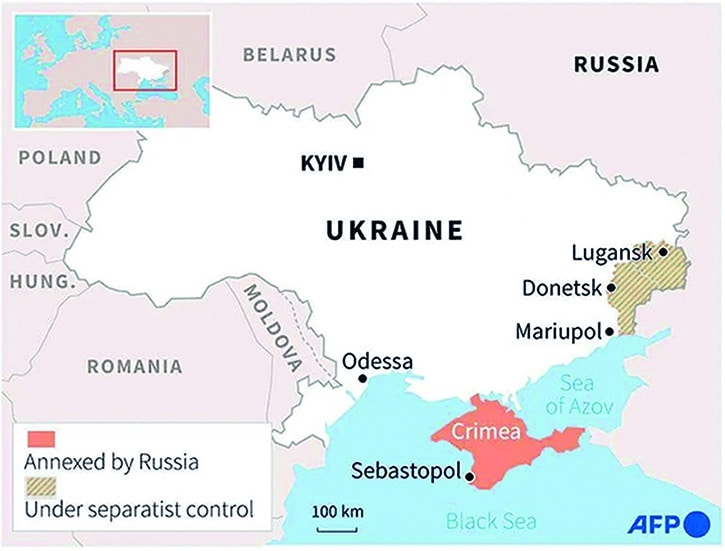
Dmitri Kovalevich: The current events are a continuation of the Donbass conflict which has been going on since 2014. For years Kyiv media and West MSM used to tell that Ukraine was confronting the Russian invasion – and now that happened in reality – as soon as Russia recognized the republics. The official stated aim of the operation: ‘denazification of Ukraine’. Donbass republics seceded in 2014 exactly because they were outraged by legalization of WW2 Nazi collaborators of Ukrainian origin.

The International: Was the situation inevitable? Could it have been resolved through a series of negotiations?

Dmitri Kovalevich: The negotiations have been going on since 2014. Ukraine twice signed the Minsk agreement but refused to fulfill them fearing that armed neo-Nazis would overthrow the government like in 2014. The Minsk agreement implied the reintegration of Donbass republics back in Ukraine but providing the special autonomy status with right to have their own cultural and language policy. This was unacceptable for our radical nationalists who would like to see unified and monoethnic pro-Nazi Ukraine. So, it is either communists are banned and here or Nazis. There is no third option.

Members of the fascist Azov Battalion at the March of Patriots in Kiev, March 2020.

The International: How are the Ukrainians dealing with this?

Dmitri Kovalevich: There are some 5-6% of Ukrainians sharing pro-nationalist or pro-Nazi ideology. There are some 5-6% of commited communists or sympathizers. The rest support those who are winning at the moment. Last years millions of Ukrainians migrated: some 3.5 million to Russia and they would like to come back in case of change of the government. Some 3.5 – labor migrants in western countries, they tend to share Western media narratives.

The International: What ramifications will this have for the Donbass Republics?

Dmitri Kovalevich: I suppose they will be a sort of independent countries like Abkhazia, South Ossethia, Transnistria. Since Ukraine refused from Minsk agreements, they will not come back, given also much blood spilt within 8 years which divide Kiev and Donetsk.

The International: So far everyone has been playing the blame game and rooting for either of the sides. Is there something that the media has hidden from the public?

Dmitri Kovalevich: The main thing hidden from the public is that there are numbers of outright Nazis integrated into Ukraine’s army, police and National Guard. The Ukrainian education system brainwashes children glorifying WW2 Nazis and blaming Soviets. West media preferred to ignore the daily shelling of Donbass cities and the resistance of Donetsk coal-miners, but are outraged when only when pro-U.S. side is being bombed.

The International: If the NATO pushes back, is there a possibility of a full-scale war?

Dmitri Kovalevich: I can’t predict that. But definitely, it’s a new war between pro-NATO and anti-NATO sides. There are deep changes on the geopolitical level and the First World countries face economic crisis. The only way they see in a conflict is profiting on arms trade and sales. They are also to show for the Third World countries that U.S./UK are still strong to impose their imperialist agenda, especially after fails in Afghanistan). A possible loss of any pro-NATO force or country may enforce further economic conflict within the First World countries providing more opportunities to the Third world countries to improve their economic situation.

Strugglelalucha256


Why Russia recognized the Donbass republics

In order to have a clear anti-war, anti-imperialist position today, class-conscious workers need to understand the significance of the Russian Federation’s Feb. 21 decision to recognize the Donbass republics of Donetsk and Lugansk as independent, sovereign countries, nearly eight years after they first declared independence from Ukraine.

Following an unprecedented live telecast of the meeting of Russia’s National Security Council, President Vladimir Putin announced, “I deem it necessary to make a decision that should have been made a long time ago – to immediately recognise the independence and sovereignty of the Donetsk People’s Republic (DPR) and the Lugansk People’s Republic (LPR).”

Putin signed presidential decrees recognizing the republics; establishing treaties of friendship and mutual cooperation with them; and authorizing Russian peacekeepers to be deployed to the Donbass if requested. Reciprocal decrees were signed by the leaders of the DPR and LPR, Denis Pushilin and Leonid Pasechnik.

The U.S. and its global allies denounced the decision.

Russia’s decision came after several days of heightened Ukrainian military attacks on the two small republics. Two-thirds of Ukraine’s NATO-armed and -trained military forces are poised on the roughly 200-mile “line of contact” with Donetsk and Lugansk, near Russia. Some 175,000 NATO troops, meanwhile, are also stationed on Russia’s western border.

Hundreds of Ukrainian artillery attacks, shootings and terrorist acts have been carried out since Feb. 17, killing and wounding civilians and members of the Donbass People’s Militias, destroying homes and damaging vital infrastructure like water filitration plans, gas pipelines and schools. 

Mass evacuations of civilians from Donetsk and Lugansk began Feb. 18. Everyone understood that a Ukrainian invasion was imminent, even though the Biden administration, standing reality on its head, kept repeating that Russia was planning to invade Ukraine.

Although the shelling of Donetsk, capital city of the DPR, subsided briefly after Russia’s announcement, Ukrainian attacks soon resumed, including a bomb attack on the Donetsk television center and the killing of two Lugansk civilians by a Ukrainian anti-tank missile Feb. 22.

What Washington wants

Since November 2021, Washington has relentlessly pushed Ukraine to launch a major attack on the Donbass in hopes of drawing Russia into a conflict to justify further NATO expansion and shut down Russian fuel exports to Western Europe. 

For three decades, the bipartisan goal of U.S. capitalism has been to break up Russia and bring it firmly under Washington’s control – something Putin acknowledged in his Feb. 21 address to the Russian people.

On Feb. 22, Biden and “Defense” Secretary Lloyd Austin ordered the deployment of thousands more U.S. troops, attack helicopters and fighter planes to Eastern Europe. 

Biden imposed broad new sanctions on Russia, including individual sanctions on parliamentarians who supported the decision to recognize the Donbass republics. Other imperialist countries and U.S. puppet regimes quickly followed suit.

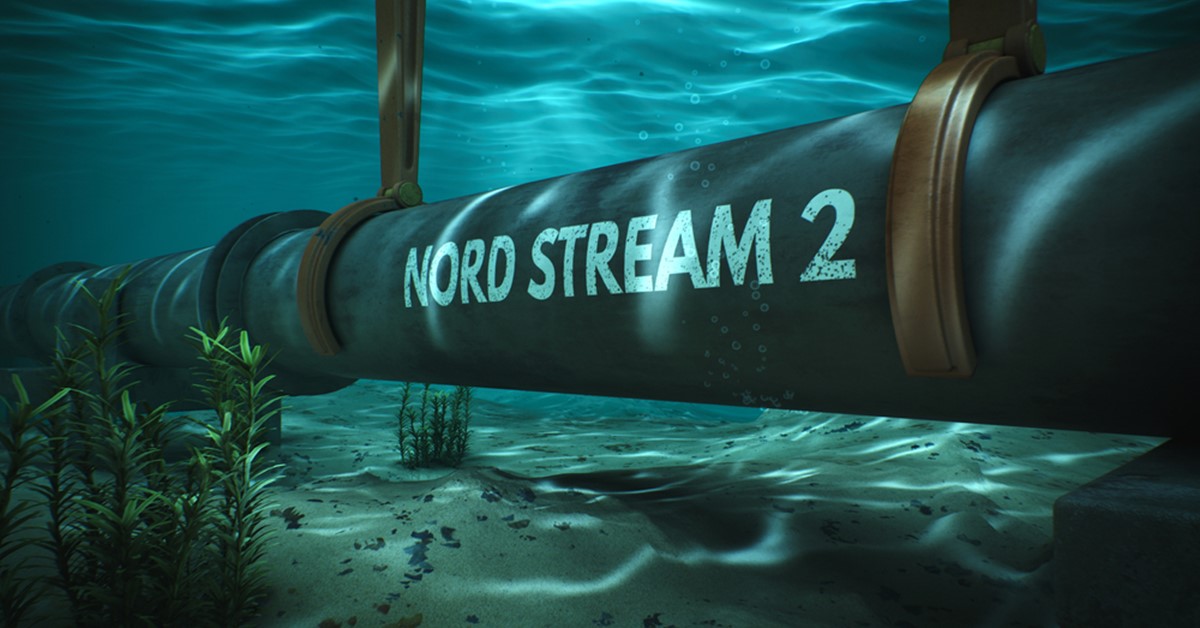
Perhaps most important, Germany announced Feb. 22 that it was stopping authorization of the newly completed Nord Stream 2 gas pipeline that was set to significantly increase the flow of fuel from Russia to the European Union. 

Cutting off this relationship – forcing Europe to buy oil and gas products from U.S.-owned and -controlled sources, directing the profits into U.S. banks – was a major goal of Washingon’s anti-Russia campaign. On cue, oil and gas prices jumped to near-record levels, with oil close to $100 a barrel on Feb. 23.

Of all the NATO imperialists, Germany had most dragged its feet in supporting the U.S. war drive. But it’s important to recall that Germany, though the strongest economic power in Europe, is also militarily occupied by the Pentagon, with a whopping 119 U.S. military bases, second only to another imperialist frenemy, Japan with 120.

Real significance of recognition

Russia’s recognition of the Donetsk and Lugansk republics was greeted with great enthusiasm by Donbass residents, who have lived under eight years of Ukrainian war and sanctions, at the cost of more than 14,000 lives. It was an important, if belated, acknowledgement of their democratic decision in the referendum of May 11, 2014 and the sacrifices they have made to fend off NATO/neo-Nazi encroachment.

They understand, as do the Ukrainian fascists that seek to “cleanse” the Donbass region, that further aggression by Kiev now means a military confrontation with Russia. Ukraine’s President Volodymyr Zelensky fears this, but as a willing tool of Washington has no power to resist.

At the same time, Russia had little choice but to take this step, which was forced upon it by Washington. For eight years, since the 2014 U.S.-backed coup in Kiev, Moscow has parried numerous Western attempts to draw Russian forces into a fight with Ukraine. But it has become apparent that room to maneuver has run out.

Among the Russian people there is massive support for the residents of Donbass. It’s doubtful that the Putin government could have survived the abandonment of Donetsk and Lugansk.

Putin’s televised address combined a clear-eyed assessment of the stakes of the current confrontation for Russia with an analysis of Ukrainian history severely distorted by anti-Sovietism and Russian nationalism. We must honestly acknowledge that this is an impediment to rebuilding solidarity between Russian and Ukrainian workers.

But the true significance of Russia’s decision to recognize the Donetsk and Lugansk People’s Republics goes in another direction. It’s an acknowledgement of the deeply rooted traditions of anti-fascism and internationalism of the multinational Soviet working class, even three decades after the socialist USSR was broken up.

Today as never before, the workers and oppressed of the U.S. and the world must reject the lies of Washington, Wall Street and the corporate media and demand: No war with Russia! Biden, recognize Donetsk and Lugansk! U.S. out of Ukraine!

Strugglelalucha256


Biden gives Big Oil a win, gas prices going up

On Feb. 22, President Joe Biden announced new sanctions on Russia and on the company that built Nord Stream 2 and its German CEO. These sanctions will mean higher gas prices in the U.S. as well as in Europe.

“As I said last week, defending freedom will have costs, for us as well and here at home,” Biden said. “We need to be honest about that.” Biden added that he will take measures to “blunt” gas price increases, “to limit the pain the American people are feeling at the gas pump.” 

Biden said he’s doing this in coordination with the major oil producers, but gave no details, meaning that there’s really no limit planned. It’s a signal of support to Big Oil profits, particularly in the heating gas market in Europe.

An inflation rate in the U.S. at 7.5% — higher prices for gas, food and rent — has been a severe wage cut for all workers here. At the same time, corporate profits have reached a 70-year high. 

“Two dozen of the most profitable oil and gas companies — a group that includes Shell, BP, ExxonMobil and Chevron — recorded $74.9 billion in net income” in the third quarter of 2021, reports Common Dreams. “Big Oil’s soaring profits come as gasoline prices have hit a seven-year high in the U.S. … with Americans now paying about $3.40 for a gallon of fuel compared with around $2.10 a year ago.”

The sanctions on Russia and Nord Stream 2 — the ones that will drive gas prices even higher, with some predicting pump prices going up to $7 a gallon — are driven, in part, by the demands of Big Oil. The sanctions were announced after Russia gave recognition to the Donetsk People’s Republic and the Lugansk People’s Republic in Donbass. 

If the goal of U.S. sanctions was really for peace in Ukraine, why didn’t the Biden administration demand implementation of the 2015 Minsk 2 agreement, which is the policy supported by both France and Germany? Minsk 2 requires Ukraine to negotiate with the two Donbass republics on autonomy, but no serious negotiations have been held.

EU gets gas from Russia

The European Union imports 40% of its gas from Russia. The primary route for gas from Russia is through the Nord Stream 1 pipeline to Germany. Nord Stream 2 was built to provide a more secure and stable pipeline that has at least double the capacity.

Biden really spilled the beans earlier when he indicated that he wanted to block Nord Stream 2, a pipeline built to bring Russian gas under the Baltic Sea directly to Germany.

On Feb. 7, Biden threatened to take control over the German-Russian project that the U.S. has no relation with. From the White House transcript:

[By previous arrangement, the first question went to a Reuters reporter.]

Reuters.  Andra- — Andrea. You’ve got the first question.

Q: Thank you, Mr. President. And thank you, Chancellor Scholz. Mr. President, I have wanted to ask you about this Nord Stream project that you’ve long opposed. You didn’t mention it just now by name, nor did Chancellor Scholz. Did you receive assurances from Chancellor Scholz today that Germany will, in fact, pull the plug on this project if Russia invades Ukraine? And did you discuss what the definition of “invasion” could be?

PRESIDENT BIDEN: The first question first. If Germany — if Russia invades — that means tanks or troops crossing the — the border of Ukraine again — then there will be — we — there will be no longer a Nord Stream 2. We will bring an end to it.

Q: But how will you — how will you do that exactly, since the project and control of the project is within Germany’s control?

PRESIDENT BIDEN: We will — I promise you, we’ll be able to do it.

Blocking Nord Stream 2 has been a goal of Big Oil and therefore of the U.S. government. It was near the top of Donald Trump’s agenda. Despite what reports may say, the record of the Trump administration is a long series of sanctions and hostile actions against Russia, as the Brookings Institution has detailed.

Mostly unknown here, Trump worked overtime to block the Nord Stream 2 pipeline. In 2018, Trump got German Chancellor Angela Merkel to agree to spend $1 billion building a new liquified natural gas (LNG) port to import highly priced U.S. LNG. The plan was canceled after Trump lost the election and Merkel left office.

With the U.S. pushing a NATO expansion to Russia’s borders and supporting a coup government in Ukraine, the Biden administration found another way to block Nord Stream 2. As Under-Secretary of State for Political Affairs Victoria Nuland explained in a State Department press briefing on Jan. 27: “If Russia invades Ukraine one way or another Nord Stream 2 will not move forward.”

On Feb. 22, when Biden announced his sanctions on Russia, Germany announced it was halting the certification process for Nord Stream 2. The Nord Stream 2 project was finished in September, but has stood idle pending certification by Germany and the EU.

Dmitry Medvedev, Russia’s former president and now deputy chairman of its Security Council, tweeted: “Welcome to the new world where Europeans will soon have to pay 2,000 euros per thousand cubic meters!” — suggesting prices were set to double.

Strugglelalucha256


A century of lies for war, about Russia

Before the planes can drop the bombs, capitalist newspapers and TV networks have to spread the lies. In 1898, U.S. banksters wanted to grab Puerto Rico, Cuba and the Philippines from Spain.

They used the explosion aboard the battleship USS Maine while it was docked in Havana to do so. Two hundred sixty sailors were killed. From coast-to-coast, newspapers ran headlines proclaiming “Remember the Maine!”

Within 10 weeks Congress declared war on Spain. Not until 1976 did U.S. Rear Admiral Hyman Rickover, as the head of an official inquiry, admit that the explosion was accidental and that Spain wasn’t responsible. Puerto Rico is still a U.S. colony.

In 1964, President Lyndon Johnson claimed Vietnamese PT boats attacked the U.S. naval vessels in the Gulf of Tonkin. This big lie was the excuse to step up bombing of Vietnam and Laos. Millions of people were killed in that dirty war, including 58,000 GIs.

Who can forget George W. Bush’s Big Lie that Iraq had weapons of mass destruction? The hundreds of thousands of Iraqi people whose family members were killed certainly can’t.

Now the target of war propaganda is the Russian Federation. An elected Ukrainian government was overthrown eight years ago with the assistance of fascist gangs. The 2014 coup was greased by $5 billion in U.S. payoffs since 1991.

The CIA was behind the Ukraine coup just as it pulled the strings in overthrowing Chile’s elected President Salvador Allende on Sept. 11, 1973. Communist organizations were outlawed in both Chile and Ukraine.

The Ukrainian regime even banned the singing of the revolutionary anthem “the Internationale,” which was which was written to commemorate the Paris Commune. Over 40 people were murdered when the House of Trade Unions in Odessa was set on fire by neo-Nazis.

This is the “democracy” that President Biden wants us to support. The man in the White House said nothing about 14,000 people being killed in the Donetsk and Lugansk People’s Republics by intense shelling by Ukraine.

The Russian intervention has helped rescue people in Donetsk and Lugansk. It’s aimed to prevent Ukraine from being a NATO base against Russia. Pentagon generals view the Russian Federation as six million square miles to be occupied by the U.S.

Lying in order to invade Russia

It’s not new for capitalist newspapers to lie about Russia. “Documents prove Lenine and Trotzky hired by Germans” was the New York Times’ front-page headline on Sept. 15, 1918.

The sensational article — first of a series — claimed Bolshevik leaders Vladimir Lenin and Leon Trotsky were “German agents” and “the Bolshevist revolution was arranged for by the German Great General Staff.”

According to the Times, the millions of people from dozens of nationalities that rose up in a socialist revolution, was just a conspiracy hatched by the German Kaiser. This is like John Birch Society members who claim the Black Lives Matter movement or the French Revolution are and were the result of conspiracies.

The 1918 Big Lie was based on 70 documents provided by U.S. government agent Edgar Sisson. The problem was the “Sisson Documents,” supposedly originating from different locations, were almost all typed on the same manual typewriter.

It was an obvious fraud that swiftly boomeranged. In the 1950s, retired U.S. Ambassador George Kennan — himself a Cold War architect — pronounced them forgeries.

Yet this fake news was used by President Woodrow Wilson to justify sending troops to occupy Arkhangelsk and Vladivostok in revolutionary Russia. That didn’t stop Seattle dock workers from smashing crates of rifles going to former Czarist Admiral Kolchak, who threw suspected Bolsheviks into the boilers of steam locomotives.

Black Liberation fighters including Claude McKay, Langston Hughes, W.E.B. Du Bois, Claudia Jones and Paul Robeson were inspired by the Bolshevik Revolution.

Less than two months after the “Sisson Documents” were published, German workers and sailors, inspired by the Bolshevik Revolution, overthrew the Kaiser.

Triumph and defeat

The Soviet Union that resulted from the Bolshevik Revolution lifted up people from more than 100 nationalities. They established the world’s first and largest affirmative action programs that fought for equality.

Ukraine is a good example. Between 1915 and 1965, the number of students in Ukraine more than tripled to reach 8.5 million. In the same period the number of college students increased twenty times. (“National Languages in the USSR: Problems and Solutions” by M. I. Isayev.)

These students were taught primarily in Ukrainian. Compare that to the mission schools in the United States and Canada where Indigenous youth were beaten if they spoke their own languages. Many died.

Never forget that 27 million Soviet people, including millions of Ukrainians, died defeating Hitler. It was the Red Army that liberated Auschwitz on Jan. 27, 1945. One of the sheroes was the Ukrainian woman sniper Lyudmila Pavlichenko who killed 309 Nazis. 

Tragically the Soviet Union was overthrown 30 years ago. Like Reconstruction’s bloody overthrow by the Ku Klux Klan, it was a defeat for all poor and working people.

While monuments to Confederate slave masters have been toppled by the Black Lives Matter movement, thousands of statues of revolutionaries and Red Army leaders have been destroyed in Ukraine. Meanwhile statues of the Nazi collaborator Stepan Bandera, whose followers slaughtered thousands of Jewish and Polish people, have been erected.

Eighty-one million people voted against Trump and racism in 2020. They didn’t vote for a war against the Russian Federation.

Our enemies are the landlords who are jacking-up rents by as much as 40%. President Biden isn’t able to defend voting rights but he’s threatening a new dangerous armed conflict with nuclear-armed Russia.

Hands off the Donetsk and Lugansk People’s Republics, and the Russian Federation!

Strugglelalucha256


NATO expansionism in Europe


“NATO’s enlargement in the last decades has been a great success and has also paved the way for a further enlargement of the EU”: this was reiterated last Saturday at the Munich Security Conference by NATO Secretary General Jens Stoltenberg. In order to fully understand his words, it is necessary to reconstruct this “great success” story in its essential terms.

It begins in the same year – 1999 – in which NATO demolishes Yugoslavia with war and, at the Washington summit, announces that it wants to “conduct crisis response operations, not provided for in Article 5, outside Alliance territory”. Forgetting that it had committed itself to Russia “not to expand even one inch to the East”, NATO began its expansion to the East. It includes the first three countries of the former Warsaw Pact: Poland, Czech Republic and Hungary. Then, in 2004, it extends to seven more: Estonia, Latvia, Lithuania (formerly part of the USSR); Bulgaria, Romania, Slovakia (formerly part of the Warsaw Pact); Slovenia (formerly part of the Yugoslav Federation). In 2009, NATO incorporates Albania (formerly a member of the Warsaw Pact) and Croatia (formerly part of the Yugoslav Federation); in 2017, Montenegro (formerly part of Yugoslavia); in 2020, North Macedonia (formerly part of Yugoslavia) In twenty years, NATO expands from 16 to 30 countries.

In this way, Washington achieves a triple result. It extends the military alliance close to Russia, even inside the territory of the former USSR, and maintains the levers of command: the Supreme Allied Commander in Europe is, “by tradition”, always a US general appointed by the US president and the other key commands also belong to the US. At the same time, Washington ties the Eastern countries not so much to the Alliance, but directly to the US. Romania and Bulgaria, as soon as they entered, immediately made available to the United States the important military bases of Constanta and Burgas on the Black Sea. The third result obtained by Washington with the enlargement of NATO to the East is the strengthening of its influence in Europe. Out of the ten Central-Eastern European countries that joined NATO between 1999 and 2004, seven joined the European Union between 2004 and 2007: the United States superimposed NATO on the EU, which expanded to the East, over Europe.

Today 21 of the 27 countries of the European Union belong to NATO under US command. The North Atlantic Council, the Alliance’s political body, according to NATO rules decides not by majority but always “unanimously and by common accord”, i.e. in agreement with what is decided in Washington. The participation of the major European powers in these decisions (excluding Italy, which obeys by keeping silent) generally takes place through secret negotiations with Washington on give and take. This involves a further weakening of European parliaments, in particular the Italian one, already deprived of real decision-making powers on foreign and military policy.

In this framework, Europe finds itself today in an even more dangerous situation than during the Cold War. Three other countries – Bosnia Herzegovina (formerly part of Yugoslavia), Georgia and Ukraine (formerly part of the USSR) – are candidates to join NATO. Stoltenberg, spokesman for the US before NATO, declares that “we keep the door open and if the Kremlin’s goal is to have less NATO on Russia’s borders, it will only get more NATO.”

In the US-NATO escalation, clearly directed to explode a large-scale war in the heart of Europe, nuclear weapons come into play. In three months, the U.S. begins mass production of the new B61-12 nuclear bombs, which will be deployed under U.S. command in Italy and other European countries, probably also in the East even closer to Russia. In addition to these, the U.S. has in Europe two land bases in Romania and Poland and four warships equipped with the Aegis missile system, capable of launching not only anti-missile missiles but also cruise missiles with nuclear warheads. They are also preparing intermediate-range nuclear missiles to be deployed in Europe against Russia, the invented enemy that can, however, respond destructively if attacked.

To all this is added the economic and social impact of growing military spending. At the meeting of defense ministers, Stoltenberg triumphantly announced that “this is the seventh consecutive year of increased defense spending by European Allies, increased by $270 billion since 2014.” More public money diverted from social spending and productive investment, while European countries have yet to recover from the 2020-21 economic lockdown. Italian military spending has exceeded 70 million euros per day, but it’s not enough. Prime Minister Draghi has already announced “We must provide ourselves with a more significant defense: it is very clear that we will have to spend much more than we have done so far”. Very clear: let’s tighten our belts so that NATO can expand.

Source: Il Manifesto (Italy)

Strugglelalucha256


War crisis: Donbass resists U.S.-planned attack, needs solidarity

Feb. 21 – Before dawn on Feb. 20, the 79th Airborne Assault Brigade of the Ukrainian Armed Forces attempted to cross the Seversky Donets River in Lugansk, near the Russian border, and attack positions of the People’s Militia of the Lugansk People’s Republic (LPR). The antifascist militia soldiers drove back the Ukrainian troops. As they fled, the Ukrainian soldiers fired on the village of Pionerskoye, destroying five homes and killing two civilians.

Since Feb. 18, the independent republics of Donetsk and Lugansk in the Donbass mining region have come under heavy attack from Ukraine. There have already been multiple attempts by the Ukrainian military to break through the 200-mile ceasefire “line of contact” established in 2015, to find a vulnerable spot to begin an invasion, including one Feb. 20 at the Svetlodarsk Arc, about halfway between the republics’ capitals, and one that is ongoing at the time of writing in the south of the Donetsk People’s Republic (DPR), near the fascist-occupied city of Mariupol.

The attacks are the most intense the region has seen since the Donetsk and Lugansk People’s Militias defeated a Ukrainian invasion in February 2015 at the Battle of Debaltsevo. The renewed assault by the U.S.-supported government in Kiev is in flagrant violation of the 2015 Minsk II ceasefire accords, to which Ukraine is a signatory.

Since 2014, more than 14,000 people have died in Ukraine’s war on Donbass.

The illegal Ukrainian attacks are carried out with hundreds of tons of weapons supplied by the United States and other countries of the NATO military alliance. Many of these weapons are in the hands of neo-Nazi battalions that have pledged to ethnically and politically “cleanse” the Donbass of its Russian-speaking and other “foreign” residents and leftist Ukrainians.

More than 150,000 Ukrainian troops, or roughly two-thirds of the country’s military, is currently stationed on the line of contact, poised to invade. Strategic points are occupied by the Right Sector, Azov Battalion and other fascist groups that have been officially incorporated into the Ukrainian Armed Forces and received military training from the U.S., Canada and Britain.

As Struggle-La Lucha has frequently explained, the true danger of invasion is not coming from the Russian Federation against Ukraine, but from Ukraine against the people of Donbass. Washington has been relentlessly pushing the government of Ukrainian President Zelensky to attack Donbass for months in hopes of provoking a confrontation with Russia.

As it has done before every major war in its history, U.S. imperialism is lying about the real causes of the war crisis in Eastern Europe and the former Soviet Union. Like the claim of “weapons of mass destruction” 20 years ago that preceded the U.S. invasion of Iraq, the hue and cry from Washington and the corporate media about an “imminent Russian invasion” stands reality on its head. 

It is the four million residents of Donbass – who have lived under the shadow of war and blockade for nearly eight years – who are facing the consequences of U.S-NATO lies. They continue to resist. They need our solidarity now more than ever.

Evacuation ordered

On Feb. 17, as a gesture of goodwill after meeting with German Chancellor Olaf Scholz, Russian President Vladimir Putin announced the pullback of some Russian troops from their defensive positions on the country’s western border. 

Instead of accepting Moscow’s olive branch, Washington and Kiev took this as the opportunity to launch a major attack on the small republics near Russia. President Joe Biden once more declared that Putin had “decided to invade Ukraine.” This shows that Biden & Co. had no interest in preventing a war, only inciting it.

On Feb. 18, with the intensification of Ukraine’s attacks and the clear preparations for invasion,  Denis Pushilin and Leonid Pasechnik — heads of state of the DPR and LPR — announced the voluntary evacuation of civilians to Russia. Priority is given to elders, children and parents. So far more than 53,000 people have been evacuated to hastily prepared refugee centers in Rostov-on-Don and other cities in western Russia.

Soon after, Pushilin and Pasechnik ordered the full mobilization of the male population between the ages of 18 and 55 for service in the People’s Militia to defend their embattled homeland. Many other Donbass residents of all genders and ages, including political exiles from Ukraine, have decided to stay and resist, including workers responsible for the upkeep of infrastructure and vital services, healthcare workers and political activists.

On the night of Feb. 20-21, as Ukrainian shock troops attempted to break through the DPR’s southern border near Russia, shelling by Kiev’s military knocked out the pumping station that provides drinking water for 21,000 residents. The Donetsk News Agency reported that a Ukrainian saboteur blew himself up attempting to place a bomb at the railway station in Donetsk, the capital city. Two schools were reported damaged by shelling. 

Meanwhile, in a stark provocation, fire from Ukrainian-controlled territory destroyed a border outpost on Russian territory. Earlier, two Ukrainian shells were reported to have hit fields in Russia’s Rostov region.

Voices from Donbass

After a Ukrainian projectile exploded outside her home, Anzhela Martynenko, a resident of the Petrovsky district of Donetsk, told a News Front reporter: “The shelling has started since yesterday. The child and I did not sleep, the child was frightened. 

“Why are we being fired upon? Please tell us what we did to [Ukrainian President] Zelensky? Why have we been suffering for eight years? Innocent people, children. … There is nowhere to hide, peaceful people live here – miners, teachers, doctors, children who still go to kindergarten.”

To the Biden administration, the New York Times and Washington Post, Bloomberg News and CNN, these embattled residents of Donbass are reduced to a “Russian false flag operation,” “separatists” and “Russian proxies.” 

To Democratic and Republican politicians, like the oligarchs and neo-Nazis of Kiev, the workers of Donbass are merely collateral damage, incidental casualities encountered in reaching the goal of NATO expansion and the suffocation of Russia.

As the Ukrainian military sends exploding shells whistling into civilian areas of Lugansk and Donetsk, its Sabotage and Reconnaissance Groups (DRGs) attempt to sow fear by infiltrating the republics and carrying out acts of terror. 

On the night of Feb. 18, as Ukrainian bombs rained on the world’s longest gas pipeline, causing a massive explosion in the capital of Lugansk, a DRG blew up the car of the Donetsk People’s Militia leader outside the government center in Donetsk. No one was killed. 

Then, on Feb. 20, a dramatic night battle took place between DPR special forces and a Ukrainian DRG in the Kievsky district of Donetsk. Two DPR troops were wounded. One Ukrainian terrorist was killed, and another taken prisoner.

Alexey Albu, an antifascist exile from Odessa, Ukraine, now living in Lugansk, witnessed the aftermath of the gas pipeline explosion from his home. He told Struggle-La Lucha: “The next day we tried to evacuate our comrades, but Ukrainian Nazis mined an important bridge in Samsonovka village. There was a big traffic jam. We drove in fields and got lost many times. When we came back we saw that the bridge was open and a lot of cars went to the border.”

Stanislav Retinsky, a secretary of the Communist Party of the Donetsk People’s Republic, told SLL: “Due to the aggravation of the situation on the front line through the fault of Ukraine, the educational process, cultural and sports events have been suspended in the Donetsk People’s Republic. 

“Due to the increased demand, there was a temporary shortage of fuel at petrol stations. Large queues can be observed near ATMs. In this regard, the Central Republican Bank has set a daily cash withdrawal limit on one card of 10 thousand rubles. 

“At the same time, card payments in retail chain stores can be carried out without restrictions. Hospitals are operating normally.”

Sveta Licht, a political activist who grew up in Donetsk and returned there after the 2014 U.S.-backed coup in Kiev, explained: “The evacuation that is currently taking place in Donbass is voluntary. Everyone who left, left of their own will. 

“Most of the remaining are those who left in 2014-15 and now do not want to, or their work is related to the functioning of important infrastructure, for example. Among those who remain, it is really people ready to become volunteers [to defend against invasion].

“We don’t panic, we’re fine. We are not planning to evacuate for now according to family circumstances. … Plus, the elderly and children are the priority, the republic is saving pensioners from nursing homes and orphanages first, and that’s right. Those who had to live as refugees will understand.”

It is because of the bravery, determination and sacrifice of the Donbass people that U.S. ambitions to provoke a bigger war with Russia have been held back for the last eight years. They continue to resist, true to the traditions of their Soviet ancestors who fought back and defeated the German Nazi occupation and its Ukrainian collaborators during World War II.

Today the responsibility of the workers of the world, and especially those in the U.S. and other NATO countries, is to extend the hand of solidarity to them and shut down Washington’s war plans.


Strugglelalucha256


Cuba: Ukraine and the spark of Donbass

In a tweet, the member of the Political Bureau and Cuban Foreign Minister, Bruno Rodríguez Parrilla, wrote: “We strongly reject the propagandistic and communicational hysteria unleashed by the U.S. government against Russia and we firmly oppose the expansion of NATO to the borders of that brother country”.

The last week – that of the Russian “invasion” of Ukraine, fabricated by Washington – ended, and with it even the Russian military maneuvers, scheduled in advance, began the timeline for the return home of those involved.

Both the President of the United States, Joe Biden, as well as the highest exponents of NATO and some European rulers or subordinates were left wanting the shots to ring out and insisted on new lies on the same subject, but now more towards the inside of Ukraine than in the foreign environment.

The Kyiv government, used as “bait” for Russia to “take the bait” of the West and provoke a war, seems to be disappointed by so many lies and manipulation of those who have promised it NATO membership and the guarantee of its security in the face of a possible reaction from Moscow.

However, with these actions, the only thing they have caused Ukraine is a substantial economic loss that already exceeds $3 billion, without counting the bills that will be passed on later for the “aid” in weapons of all kinds that they are providing it with. But where are the shots and the supposed casualties caused by the Russian invasion? Where did the tanks and artillery that Washington announced would reach Kyiv come in.

Then they remembered a key piece in this puzzle: the separatist republics of Donbass with their territories of Donetsk (DPR) and Lugansk (LPR), in Ukraine, became, overnight, the spark of a new provocation against Moscow.

Kyiv, with its army, is staging a montage that cannot be sustained, but which already this weekend left some civilians dead and more than 40,000 people of Russian origin were forced to cross the border and take refuge in the Russian region of Rostov.

In view of the heated warlike mood, both Russia and Belarus, which had already ended their joint military maneuvers, have decided to prolong them. Belarusian Defense Minister Viktor Khrenin described the current scenario as “a strong smell of gunpowder” in the region, with the possibility of “Europe being pushed into a war”, as several neighboring countries are accumulating more advanced weapons, according to RT.

He also reiterated that the goal of the Russian and Belarusian maneuvers remains the same: “to ensure an adequate response and de-escalation of the enemies’ military preparations.”

In the meantime, the spark in Donbas may become, with the help of the West and the mainstream press at its service, a detonator that will make what Russia and the international community want to avoid – a war – a reality.

Source: Walter Lippmann/Granma

Strugglelalucha256


War in Europe and the rise of raw propaganda

Marshall McLuhan’s prophecy that “the successor to politics will be propaganda” has happened. Raw propaganda is now the rule in Western democracies, especially the U.S. and Britain.

On matters of war and peace, ministerial deceit is reported as news. Inconvenient facts are censored, demons are nurtured. The model is corporate spin, the currency of the age. In 1964, McLuhan famously declared, “The medium is the message.” The lie is the message now.

But is this new? It is more than a century since Edward Bernays, the father of spin, invented “public relations” as a cover for war propaganda. What is new is the virtual elimination of dissent in the mainstream.

The great editor David Bowman, author of The Captive Press, called this “a defenestration of all who refuse to follow a line and to swallow the unpalatable and are brave.” He was referring to independent journalists and whistleblowers, the honest mavericks to whom media organizations once gave space, often with pride. The space has been abolished.

The war hysteria that has rolled in like a tidal wave in recent weeks and months is the most striking example. Known by its jargon, “shaping the narrative,” much if not most of it is pure propaganda.

The Russians are coming. Russia is worse than bad. Putin is evil, “a Nazi like Hitler,” salivated the Labour MP Chris Bryant. Ukraine is about to be invaded by Russia—tonight, this week, next week. The sources include an ex-CIA propagandist who now speaks for the U.S. State Department and offers no evidence of his claims about Russian actions because “it comes from the U.S. Government.”

The no-evidence rule

The no-evidence rule also applies in London. The British Foreign Secretary, Liz Truss, who spent £500,000 of public money flying to Australia in a private plane to warn the Canberra government that both Russia and China were about to pounce, offered no evidence. Antipodean heads nodded; the “narrative” is unchallenged there. One rare exception, former prime minister Paul Keating, called Truss’s warmongering “demented.”

Truss has blithely confused the countries of the Baltic and Black Sea. In Moscow, she told the Russian foreign minister that Britain would never accept Russian sovereignty over Rostov and Voronezh—until it was pointed out to her that these places were not part of Ukraine but in Russia. Read the Russian press about the buffoonery of this pretender to 10 Downing Street and cringe.

Dangerous farce

This entire farce, recently starring Boris Johnson in Moscow playing a clownish version of his hero, Churchill, might be enjoyed as satire were it not for its willful abuse of facts and historical understanding and the real danger of war.

Vladimir Putin refers to the “genocide” in the eastern Donbas region of Ukraine. Following the coup in Ukraine in 2014—orchestrated by Barack Obama’s “point person” in Kiev, Victoria Nuland—the coup regime, infested with neo-Nazis, launched a campaign of terror against Russian-speaking Donbas, which accounts for a third of Ukraine’s population.

Overseen by CIA director John Brennan in Kiev, “special security units” coordinated savage attacks on the people of Donbas, who opposed the coup. Video and eyewitness reports show bussed fascist thugs burning the trade union headquarters in the city of Odessa, killing 41 people trapped inside. The police are standing by. Obama congratulated the “duly elected” coup regime for its “remarkable restraint.”

In the U.S. media the Odessa atrocity was played down as “murky” and a “tragedy” in which “nationalists” (neo-Nazis) attacked “separatists” (people collecting signatures for a referendum on a federal Ukraine). Rupert Murdoch’s Wall Street Journal damned the victims—“Deadly Ukraine Fire Likely Sparked by Rebels, Government Says.”

Professor Stephen Cohen, acclaimed as America’s leading authority on Russia, wrote:

“The pogrom-like burning to death of ethnic Russians and others in Odessa… reawakened memories of Nazi extermination squads in Ukraine during World War II. … [Today] stormtroop-like assaults on gays, Jews, elderly ethnic Russians, and other ‘impure’ citizens are widespread throughout Kiev-ruled Ukraine, along with torchlight marches reminiscent of those that eventually inflamed Germany in the late 1920s and 1930s…

“The police and official legal authorities do virtually nothing to prevent these neo-fascist acts or to prosecute them. On the contrary, Kiev has officially encouraged them by systematically rehabilitating and even memorializing Ukrainian collaborators with Nazi German extermination pogroms…, renaming streets in their honor, building monuments to them, rewriting history to glorify them, and more.”

Today, neo-Nazi Ukraine is seldom mentioned. That the British are training the Ukrainian National Guard, which includes neo-Nazis, is not news. (See Matt Kennard’s Declassified report in Consortium News on February 15.) The return of violent, endorsed fascism to 21st-century Europe, to quote Harold Pinter, “never happened… even while it was happening.”

On December 16, the United Nations tabled a resolution that called for “combating glorification of Nazism, neo-Nazism and other practices that contribute to fuelling contemporary forms of racism.” The only nations to vote against it were the United States and Ukraine.

Almost every Russian knows that it was across the plains of Ukraine’s “borderland” that Hitler’s divisions swept from the west in 1941, bolstered by Ukraine’s Nazi cultists and collaborators. The result was more than 20 million Russian dead.

Russian proposals

Setting aside the maneuvers and cynicism of geopolitics, whomever the players, this historical memory is the driving force behind Russia’s respect-seeking, self-protective security proposals, which were published in Moscow in the week the UN voted 130-2 to outlaw Nazism. They are:

  • NATO guarantees that it will not deploy missiles in nations bordering Russia. (They are already in place from Slovenia to Romania, with Poland to follow.)
  • NATO to stop military and naval exercises in nations and seas bordering Russia.
  • Ukraine will not become a member of NATO.
  • the West and Russia to sign a binding East-West security pact.
  • the landmark treaty between the U.S. and Russia covering intermediate-range nuclear weapons to be restored. (The U.S. abandoned it in 2019.)

These amount to a comprehensive draft of a peace plan for all of post-war Europe and ought to be welcomed in the West. But who understands their significance in Britain? What they are told is that Putin is a pariah and a threat to Christendom.

Russian-speaking Ukrainians, under economic blockade by Kiev for seven years, are fighting for their survival. The “massing” army we seldom hear about is the 13 Ukrainian army brigades laying siege to Donbas: an estimated 150,000 troops. If they attack, the provocation to Russia will almost certainly mean war.

In 2015, brokered by the Germans and French, the presidents of Russia, Ukraine, Germany and France met in Minsk and signed an interim peace deal. Ukraine agreed to offer autonomy to Donbas, now the self-declared republics of Donetsk and Luhansk.

The Minsk agreement has never been given a chance. In Britain, the line, amplified by Boris Johnson, is that Ukraine is being “dictated to” by world leaders. For its part, Britain is arming Ukraine and training its army.

Since the first Cold War, NATO has effectively marched right up to Russia’s most sensitive border having demonstrated its bloody aggression in Yugoslavia, Afghanistan, Iraq and Libya and broken solemn promises to pull back. Having dragged European “allies” into American wars that do not concern them, the great unspoken is that NATO itself is the real threat to European security.

In Britain, a state and media xenophobia is triggered at the very mention of “Russia.” Mark the knee-jerk hostility with which the BBC reports Russia. Why? Is it because the restoration of imperial mythology demands, above all, a permanent enemy? Certainly, we deserve better.

This article was produced by Globetrotter. John Pilger is an award-winning journalist, filmmaker, and author. Read his full biography on his website here, and follow him on Twitter: @JohnPilger.

Strugglelalucha256


The Western allied nations bully the world while warning of threats from China and Russia

On January 21, 2022, Vice Admiral Kay-Achim Schönbach attended a talk in New Delhi, India, organized by the Manohar Parrikar Institute for Defense Studies and Analyses. Schönbach was speaking as the chief of Germany’s navy during his visit to the institute. “What he really wants is respect,” Schönbach said, referring to Russia’s President Vladimir Putin. “And my god, giving someone respect is low cost, even no cost.” Furthermore, Schönbach said that in his opinion, “It is easy to even give him the respect he really demands and probably also deserves.”

The next day, on January 22, Ukraine’s Foreign Minister Dmytro Kuleba summoned Germany’s ambassador to Ukraine, Anka Feldhusen, to Kyiv and “expressed deep disappointment” regarding the lack of German weapons provided to Ukraine and also about Schönbach’s comments in New Delhi. Vice Admiral Schönbach released a statement soon after, saying, “I have just asked the Federal Minister of Defense [Christine Lambrecht] to release me from my duties and responsibilities as inspector of the navy with immediate effect.” Lambrecht did not wait long to accept the resignation.

Why was Vice Admiral Schönbach sacked? Because he said two things that are unacceptable in the West: first, that “the Crimean Peninsula is gone and never [coming] back” to Ukraine and, second, that Putin should be treated with respect. The Schönbach affair is a vivid illustration of the problem that confronts the West currently, where Russian behavior is routinely described as “aggression” and where the idea of giving “respect” to Russia is disparaged.

Aggression

U.S. President Joe Biden’s administration began to use the word “imminent” to describe a potential Russian invasion of Ukraine toward the end of January. On January 18, White House Press Secretary Jen Psaki did not use the word “imminent,” but implied it with her comment: “Our view is this is an extremely dangerous situation. We’re now at a stage where Russia could at any point launch an attack in Ukraine.” On January 25, Psaki, while referring to the possible timeline for a Russian invasion, said, “I think when we said it was imminent, it remains imminent.” Two days later, on January 27, when she was asked about her use of the word “imminent” with regard to the invasion, Psaki said, “Our assessment has not changed since that point.”

On January 17, as the idea of an “imminent” Russian “invasion” escalated in Washington, Russia’s Foreign Minister Sergei Lavrov rebuked the suggestion of “the so-called Russian invasion of Ukraine.” Three days later, on January 20, spokeswoman for Russia’s Foreign Ministry Maria Zakharova denied that Russia would invade Ukraine, but said that the talk of such an invasion allowed the West to intervene militarily in Ukraine and threaten Russia.

Even a modicum of historical memory could have improved the debate about Russian military intervention in Ukraine. In the aftermath of the Georgian-Russian conflict in 2008, the European Union’s Independent International Fact-Finding Mission on the Conflict in Georgia, headed by Swiss diplomat Heidi Tagliavini, found that the information war in the lead-up to the conflict was inaccurate and inflammatory. Contrary to Georgian-Western statements, Tagliavini said, “[T]here was no massive Russian military invasion underway, which had to be stopped by Georgian military forces shelling Tskhinvali.” The idea of Russian “aggression” that has been mentioned in recent months, while referring to the possibility of Russia invading Ukraine, replicates the tone that preceded the conflict between Georgia and Russia, which was another dispute about old Soviet borders that should have been handled diplomatically.

Western politicians and media outlets have used the fact that 100,000 Russian troops have been stationed on Ukraine’s border as a sign of “aggression.” The number—100,000—sounds threatening, but it has been taken out of context. To invade Iraq in 1991, the United States and its allies amassed more than 700,000 troops as well as the entire ensemble of U.S. war technology located in its nearby bases and on its ships. Iraq had no allies and a military force depleted by the decade-long war of attrition against Iran. Ukraine’s army—regular and reserve—number about 500,000 troops (backed by the 1.5 million troops in NATO countries). With more than a million soldiers in uniform, Russia could have deployed many more troops at the Ukrainian border and would need to have done so for a full-scale invasion of a NATO partner country.

Respect

The word “respect” used by Vice Admiral Schönbach is key to the discussion regarding the emergence of both Russia and China as world powers. The conflict is not merely about Ukraine, just as the conflict in the South China Sea is not merely about Taiwan. The real conflict is about whether the West will allow both Russia and China to define policies that extend beyond their borders.

Russia, for instance, was not seen as a threat or as aggressive when it was in a less powerful position in comparison to the West after the collapse of the USSR. During the tenure of Russian President Boris Yeltsin (1991-1999), the Russian government encouraged the looting of the country by oligarchs—many of whom now reside in the West—and defined its own foreign policy based on the objectives of the United States. In 1994, “Russia became the first country to join NATO’s Partnership for Peace,” and that same year, Russia began a three-year process of joining the Group of Seven, which in 1997 expanded into the Group of Eight. Putin became president of Russia in 2000, inheriting a vastly depleted country, and promised to build it up so that Russia could realize its full potential.

In the aftermath of the collapse of the Western credit markets in 2007-2008, Putin began to speak about the new buoyancy in Russia. In 2015, I met a Russian diplomat in Beirut, who explained to me that Russia worried that various Western-backed maneuvers threatened Russia’s access to its two warm-water ports—in Sevastopol, Crimea, and in Tartus, Syria; it was in reaction to these provocations, he said, that Russia acted in both Crimea (2014) and Syria (2015).

The United States made it clear during the administration of President Barack Obama that both Russia and China must stay within their borders and know their place in the world order. An aggressive policy of NATO expansion into Eastern Europe and of the creation of the Quad (Australia, India, Japan and the United States) drew Russia and China into a security alliance that has only strengthened over time. Both Putin and China’s President Xi Jinping recently agreed that NATO’s expansion eastward and Taiwan’s independence were not acceptable to them. China and Russia see the West’s actions in both Eastern Europe and Taiwan as provocations by the West against the ambitions of these Eurasian powers.

That same Russian diplomat to whom I spoke in Beirut in 2015 said something to me that remains pertinent: “When the U.S. illegally invaded Iraq, none of the Western press called it ‘aggression.’”

This article was produced by Globetrotter. Vijay Prashad is an Indian historian, editor and journalist. He is a writing fellow and chief correspondent at Globetrotter. He is the chief editor of LeftWord Books and the director of Tricontinental: Institute for Social Research. He is a senior non-resident fellow at Chongyang Institute for Financial Studies, Renmin University of China. He has written more than 20 books, including The Darker Nations and The Poorer Nations. His latest book is Washington Bullets, with an introduction by Evo Morales Ayma.

Strugglelalucha256


Across the U.S., protests demand ‘No war on Russia and Donbass!’

On Feb. 5, anti-war and community organizations took to the streets across the United States in a united demand to the Biden administration: No war on Russia!

It was a crucial moment of visible opposition to the rapid U.S./NATO war buildup that has marked the first weeks of 2022. 

An ad hoc coalition of anti-imperialist organizations, including the Socialist Unity Party and Struggle-La Lucha newspaper, Solidarity with Novorossiya and Antifascists in Ukraine, longtime Minneapolis antiwar activist Alan Dale, Women Against Military Madness, the Communist Workers League and Workers Voice Socialist Movement first put out the call for “National Days of Action Feb. 4-12: No War on Russia and Donbass! U.S./NATO Out of Ukraine!”

“Biden claims that there is an imminent threat of a Russian invasion of Ukraine,” says the call to action. “But the real invasion threat stems from U.S.-allied Ukraine against the independent Donbass republics of Donetsk and Lugansk, near Russia’s western border.

“Washington and its NATO partners have been pushing Ukraine’s government to invade Donbass, hoping to provoke a response from Russia that can cover further NATO expansion. Ukraine has deployed 125,000 troops [now more than 150,000] to the ceasefire zone, including battalions of neo-Nazis, armed with NATO weapons.

“Poor and working people are wracked with crisis after crisis here at home. … We need a struggle to end racism and poverty, not another criminal war abroad!”

The national call was endorsed by the Anti-War Committee, Alberto Lovera Bolivarian Circle, International League of Peoples’ Struggle – U.S. chapter, Freedom Road Socialist Organization, Peoples Power Assembly, Moratorium Now Coalition, Harriet Tubman Center for Social Justice and others.

Shortly after, Code Pink: Women for Peace made its own call for a national day for “negotiations, not war” with Russia on Saturday, Feb. 5. Other anti-war formations, including the ANSWER Coalition, Peace Action, United National Antiwar Coalition, Veterans for Peace and International Action Center, also mobilized. 

In many cities, the groups joined forces for united anti-war activities.

‘Bring the troops home’

In New York City, the anti-imperialist coalition organized a speak-out Feb. 5 at Columbus Circle. Hundreds of fact sheets were distributed to passersby while protesters chanted: “Hands off Russia! Hands off Donbass! Bring the troops home!”

At the speak-out, activists explained that the U.S. and NATO pose the real invasion threat to the Eastern European region. They also contrasted the massive flood of U.S. weapons to Ukraine in recent weeks with the Biden administration’s failure to provide promised N95 masks to people here during the omicron COVID surge.

Speakers included Johnnie Stevens of Parents to Improve School Transportation (PIST NYC), Michaela Martinazzi of NY Community Action Project (NYCAP) and International League of Peoples’ Struggle (ILPS), Teri Kay of Communist Workers League and Greg Butterfield of Solidarity with Novorossiya and Antifascists in Ukraine.

The protesters then held a small but spirited march down Broadway to join the rally called by Code Pink at Times Square. The group entered chanting, “Hey hey, ho ho, NATO has got to go,” helping to set a militant tone for the second event. 

Bill Dores spoke at the Times Square rally representing Struggle-La Lucha. He said, “The health care system is collapsing, millions are facing eviction, people are drowning in student debt, Congress can’t pass the Build Back Better Act – but they have endless money for war and destruction. Because only war and destruction can preserve the domination of Wall Street and the U.S. dollar in the world economy. And they’re willing to risk global destruction for that purpose.”

Other speakers included Margaret Kimberley of Black Alliance for Peace and Larry Holmes of Workers World Party.

‘Fight fascism and white supremacy’

In Los Angeles, a broad coalition of anti-war forces rallied at the downtown Federal Building. 

John Parker, candidate for U.S. Senate in California representing the Socialist Unity Party and Peace and Freedom Party, spoke about his recent visit to Honduras as part of a solidarity delegation to celebrate the inauguration of leftist President Xiomara Castro. He described the parallels between the people’s struggles against fascism and white supremacy under the U.S.-backed coup regimes in Honduras and Ukraine.

“The regime created by the coup in Ukraine in 2014 with U.S. support bans communist and socialist organizations, but they allow Nazi collaborators to be lauded. The FBI finally admitted that some of the white supremacists who were in Charlottesville in 2017 went to Ukraine for training. Then they come back here and attack us. That’s the link, and we have to explain it to people here.”

Organizers from Parker’s Senate campaign said they plan to distribute more fact sheets about the U.S./NATO war danger as they hold neighborhood outreach events.

In San Diego, Socialist Unity Party activists visited several locations to distribute fact sheets and talk to organizers about the importance of building the anti-war struggle, including at San Diego State University, Malcolm X Library, Black Resource Center, World Beat Cultural Center, City Heights Library and the Centro Cultural de la Raza.

A rally and car caravan drew about 30 protesters in Baltimore. Bright green signs declared, “Banks and Big Oil profit from Pentagon wars” and “Money for healthcare, not for fascists and war profiteers!”

Despite frigid temperatures, 70 people came out in Minneapolis to demand “No war on Russia” at the call of Minnesota Peace Action Coalition, Anti-War Committee, Veterans for Peace, Women Against Military Madness and others. 

The protesters then joined with hundreds of others marching to demand justice for Amir Locke, a young Black man slain by Minneapolis police days before.

Two actions were held in New Orleans. The Workers Voice Socialist Movement held a mass leaflet distribution. “Whether it’s at bus stops, grocery store parking lots, or barber shops, we need to get the word out: We workers have no interest in another bloody war for the rich,” the group explained.

At Congo Square, Freedom Road Socialist Organization, ANSWER Coalition, the Communist Party of Louisiana and others rallied against war on Russia.

Protests were held in dozens of other cities Feb. 5, including Washington, D.C.; Des Moines, Iowa; Topsham, Maine; Kansas City, Missouri; and Missoula, Montana

In Detroit, the Moratorium NOW! Coalition and Michigan Emergency Committee Against War & Injustice are planning a rush-hour protest on Friday, Feb. 11. Visit the Facebook event page for details.

With reports from Sharon Black in Baltimore, John Parker in Los Angeles, Greg Butterfield in New York and Gloria Verdieu in San Diego.

SLL photos: Sharon Black, Maggie Vascassenno, Greg Butterfield

Strugglelalucha256
https://www.struggle-la-lucha.org/nato/page/21/