Los Angeles teachers’ strike bulletin – Jan. 16, 2019

On Wednesday, the third day of the United Teachers Los Angeles (UTLA) strike, picket lines remained strong — while more cracks showed in the armor of the Los Angeles Unified School District (LAUSD) bosses headed by Superintendent Austin Beutner. You could almost feel the city’s rich and powerful quaking at this week’s massive show of working-class solidarity.

Despite on and off torrential rain, following the morning pickets at every school, UTLA members held successful rallies at seven locations spread out over the entirety of Los Angeles, including offices of LAUSD and selected schools. Numerous sympathy strikes are happening and 1,000 charter school workers represented by UTLA, but not employed by LAUSD, struck against their own private employer.

Significantly, the number of students attending scab-run classrooms fell dramatically, down from 159,000 on Tuesday to 132,000 on Wednesday. That means only 27 percent of enrolled students showed up for classes.

One reason for the decline is that union members and supporters are succeeding in breaking through lies and rumors spread by LAUSD through the media that students might face penalties for being absent during the strike.

“In all, the district says it has lost $69.1 million in state funding based on attendance” since the start of the strike, reported the Los Angeles Times. “Subtract the $10 million a day in wages it hasn’t had to pay its striking workforce, and that’s a net loss of $39.1 million.”

The head of the school administrators union, Juan Flecha, suggested that campuses may need to close entirely because of “dire and unsafe working conditions.” And School Board member Scott Schmerelson broke ranks with Beutner, declaring, “I believe that there are resources available to end this strike.”

Meanwhile, School Board President Monica Garcia, a staunch supporter of Beutner’s anti-union hard line, found herself confronted by more than 100 protesting students, parents and teachers who held a rally outside her home, chanting “Monica, come out!” Instead of responding to the protesters’ demand to meet with them, Garcia called the cops.

Late in the day, the UTLA announced that there would be another attempt at bargaining on Thursday, Jan. 17. Negotiations broke off last Friday after LAUSD came forward with a new proposal that addressed the lack of school nurses and overcrowded classes, but for only one year, and limited to certain grades. After one year, a clause included in previous contracts would allow the district to again increase class sizes and eliminate nurses and other important staff.

The newly announced negotiations will include Mayor Eric Garcetti, who claims to be playing the role of mediator. However, it’s been reported that Garcetti referred to Beutner’s “strategic plan” to divide the district into 32 small units as a possible vehicle to resolution, if the union would collaborate with him.

Beutner once admitted to a group of businesspeople that this strategic plan could mean that there would be no public education system in Los Angeles by 2021. His plan to make all education, education for profit has been clearly and forcefully rejected by the people of Los Angeles this week.

This is an important fight for union rights, for sure. But it is also a huge labor and community battle to fight for and defend quality public education, at a time when school workers from Oakland to Chicago to the state of Virginia have drawn the line. UTLA and Los Angeles parents and students will win.


Day 3 Valley West rally

[fb_plugin video href=”https://www.facebook.com/mrdavidlyell/videos/2079555948776240/” width=340 ]

 

Strugglelalucha256


Los Angeles teachers’ strike bulletin – Jan. 15, 2019

If the first day of the United Teachers Los Angeles (UTLA) strike was dramatic, then the second truly showed the strength of the union and its supporters.

UTLA President Alex Caputo-Pearl, speaking to union members, reported that 100 percent strike participation by schools in the Los Angeles Unified School District (LAUSD), the country’s second largest, continued on Jan. 15.

Some 30,000 members were out on strike, he said, joined by thousands of parents, and community and labor allies. “Our picket lines grew on the second day,” Caputo-Pearl explained.

Also, for the second day in a row, more than 50,000 people rallied in downtown Los Angeles. This time their target was the headquarters of the California Charter Schools Association, which UTLA calls “a corporate lobby group powered by millions in donations from wealthy privatizers like Eli Broad so they can buy school boards and push the corporate takeover of schools.”

A new front opened in the struggle against school privatization on Tuesday as teachers and school workers went on strike at Accelerated Charter School in Los Angeles. It’s the first strike at a charter school in California, and only the second ever in the U.S. Workers there are “fighting for basic rights,” said Caputo-Pearl, adding, “We are reshaping the charter school debate.”

He also reported that a Loyola Marymount University poll found that nearly 80 percent of people living in Los Angeles County support the teachers — a phenomenal amount.

Scott Scheffer of Struggle-La Lucha gave an example of the widespread support. “When I was leaving from the morning picketing yesterday to go to my job, I was traveling north on the 110 Freeway. As I was approaching an overpass, I saw that there were a number of people, each holding up a sign on the overpass so that commuters could read them. Each one had one letter on it and it just said one word: TEACHERS.

“As I got closer, I could hear what must have been every single horn honking in all the northbound lanes, and when I looked in my rearview mirror, I saw people flashing their headlights,” Scheffer reported. “I can’t remember ever seeing this kind of public support for a strike, and it made me realize that this is more than a strike by the union. This is the communities defending their children’s education.”

LAUSD Superintendent “Austin Beutner is scrambling,” said Caputo-Pearl. “He did not expect the strength of the strike, of the community and the labor movement.” Beutner held a press conference where he had some parents make the ridiculous claim that union teachers don’t care about their students because they all send their own children to private schools.

Beutner and those behind him have also been spreading lies in the corporate media, claiming that the union refuses to negotiate, and spreading rumors that students who are absent during the strike will be penalized. Neither of these claims is true.

In response to the scare campaign, Unión del Barrio-Los Angeles has called a press conference for Friday, Jan. 18, at 6:30 a.m. at Maya Angelou High School, 300 E. 53 St. in South Central Los Angeles. There, parents and students will speak out in support of the teachers’ strike and explain to other parents and students that they will not get in trouble for being absent during the strike. Everyone is encouraged to attend and show their support.

Video en español: Ruben Tapia (KPFK) sobre huelga de maestros

[fb_plugin video href=”https://www.facebook.com/strugglelalucha/videos/255804242007469/” width=”350″]


Strugglelalucha256


Los Angeles teachers’ strike bulletin – Jan. 14, 2019

Jan. 14 — Today, some 27,000 members and supporters of United Teachers Los Angeles (UTLA) picketed school sites on the rainy first morning of the Los Angeles teachers’ strike, then gathered for a huge rally at Grand Park downtown.

Students walked out of many schools to join the rally. Some traveled on a union-supplied bus to show support for their teachers, school nurses, counselors and librarians.

Thousands of union signs showed that these education workers are fighting, on behalf of their students, to turn back years of defunding and neglect by the national drive to privatize public schools.

Struggle-La Lucha activists joined the morning picket line at Maya Angelou High School in South Central Los Angeles, followed by the mass rally downtown. (See videos from the picket line below.)

Bargaining had broken off on Friday, Jan. 11. In response to the announcement of a new state budget that includes more money for education, the Los Angeles Unified School District (LAUSD) came forward with a new contract proposal. But the new offer was more publicity stunt than bargaining, and negotiators for the teachers and school workers rejected it immediately.

Instead, union organizers spent the weekend preparing for the strike on Monday and the days ahead.

On Tuesday, after the morning picketing at school sites, UTLA members will rally at the office of the California Charter Schools Association. Seven more rallies are scheduled for Wednesday after the morning picketing, including at LAUSD headquarters and two LAUSD district offices.

Details of all strike activities can be found on the calendar on UTLA’s website.  

Union power! Go UTLA!

Photos: SLL, John Parker

Videos: John Parker

[su_row][su_column size=”1/3″ center=”no” class=””][fb_plugin video href=”https://www.facebook.com/strugglelalucha/videos/960332684159681/” width=”220″][/su_column] [su_column size=”1/3″ center=”no” class=””][fb_plugin video href=”https://www.facebook.com/strugglelalucha/videos/2254174898205329/” width=”220″][/su_column][su_column size=”1/3″ center=”no” class=””][fb_plugin video href=”https://www.facebook.com/strugglelalucha/videos/387256965171393/” width=”220″][/su_column][/su_row]


Strugglelalucha256


Support Los Angeles teachers, school workers and students!

Education is a right for all!

The upcoming strike by United Teachers Los Angeles (UTLA) — teachers, nurses, librarians, counselors and social workers in the Los Angeles County Unified School District (LAUSD) — will be critical not only for teachers, school workers and students in Los Angeles but for communities across the country.

What’s at issue is a national anti-union drive whose goal is not only to eradicate collective bargaining by public school workers but also to attack education rights for poor and working-class students. The intransigence of LAUSD and School Superintendent Beutner indicates their intent to further privatize public schools and to continue to allow charter schools to function without oversight or regulation in the second largest school district in the country.

The lack of oversight of charter schools and private schools is tantamount to the resegregation of our public school system nationally.

Those students remaining in Los Angeles public schools — largely students of color, students who are entitled to special education services and overall from low-income families — have needs that cannot continue to be neglected.

We, the undersigned, extend our full solidarity with UTLA in this important struggle.

We call on unions, communities and students to join the picket lines when possible and to reach out to community organizations, churches, co-workers, family and friends, and educate them about this important battle for union rights and for the health and development of 640,000 students.

If you are not in Los Angeles, consider holding solidarity actions and pickets in your own city, town or state. Have your union or group pass resolutions. Circulate this statement and call Superintendent Beutner at (213) 241-1000 to say that you support Los Angeles school workers.

To add your name or organization, message us on Facebook at https://www.facebook.com/SupportLATeachers/ or send an email to harriettubmancenter@gmail.com.

#UTLAstrong #StrikeReady #Red4Ed

Endorsers (list in formation):

United Electrical, Radio and Machine Workers of America (UE Union) California
American Federation of Teachers Guild 1931, San Diego
Steve Gillis, Financial Secretary, United Steelworkers Local 8751, the Boston School Bus Drivers’ Union
Los Angeles Tenants Union — Eastside Local
Rev. C.D. Witherspoon, president emeritus, Southern Christian Leadership Conference, Greater Baltimore
American Indian Movement — Southern California
Alise Sochaczewski, National Union of Healthcare Workers (ret.)
Harvard Blvd. Block Club — South Central Los Angeles
Los Angeles Workers Assembly
Youth Against War & Racism, Baltimore
Peoples Power Assembly, Baltimore
Prisoners Solidarity Committee
Puerto Rican Alliance — So Cal
Harriet Tubman Center for Social Justice — Los Angeles
International Action Center, West Coast
Lizz Toledo, LCSW, Latinx LGBTQ activist
Project Solidarity, New York City
Baltimore Bus Riders Union
Solidarity with Novorossiya & Antifascists in Ukraine

Strugglelalucha256


¡Apoye a lxs maestrxs, trabajadorxs escolares y estudiantes de Los Ángeles!

¡Educación es un Derecho de Todxs!

La próxima huelga de la UTLA  — maestrxs, enfermerxs, bibliotecarixs, conserjes y trabajadorxs sociales en el LAUSD (Los Angeles County Unified School District) — es importante no solo para lxs maestrxs, trabajadorxs escolares y estudiantes en Los Ángeles, sino también para todas las comunidades en todo el país.

El centro de la cuestión es una campaña nacional antisindical que tiene no solo el  propósito de erradicar la negociación colectiva de lxs trabajadorxs escolares públicos, sino que también ataca los derechos educativos de estudiantes pobres y de clase trabajadora. La intransigencia del LAUSD y del superintendente escolar Beutner nos indica sus intenciones de privatizar aún más las escuelas públicas y seguir permitiendo que las escuelas chárter continúen funcionando sin supervisión ni reglas en el distrito que es el segundo más grande del país.

La falta de supervisión en las escuelas chárter y en las escuelas privadas equivale a la re-segregación de nuestro sistema de escuelas públicas a nivel nacional.

Lxs estudiantes que se quedan en las escuelas públicas de Los Ángeles  — en gran parte estudiantes de color, estudiantes con necesidades especiales y en general de familias con  bajos ingresos — tienen necesidades que no pueden seguir siendo ignoradas.

Lxs abajo firmantes, extendemos nuestra plena solidaridad con UTLA en esta importante lucha.

Llamamos a todos los sindicatos, comunidades y a lxs estudiantes a que cuando les sea posible se unan a los piquetes y se acerquen a organizaciones comunitarias, iglesias, compañerxs de trabajo, familiares y amigxs para educarles acerca de esta batalla tan importante para los derechos de los sindicatos y para la salud y el desarrollo de 640,000 estudiantes.

Si no está en Los Ángeles, considere organizar una acción de solidaridad y  piquetes en su ciudad, pueblo o estado.

Haga que su sindicato o grupo apruebe sus resoluciones. Haga circular esta declaración y llame al superintendente Beutner al 213-241-1000 para decirle que apoya a lxs trabajadores escolares de Los Ángeles.

Iniciado por el Harriet Tubman Center for Social Justice, Los Ángeles

Para añadir su nombre u organización mande un correo electrónico a: harriettubmancenter@gmail.com o https://www.facebook.com/SupportLATeachers/

Endosantes:

United Electrical, Radio and Machine Workers of America (UE Union) California
American Federation of Teachers Guild 1931, San Diego
Steve Gillis, Financial Secretary, United Steelworkers Local 8751, the Boston School Bus Drivers’ Union
Los Angeles Tenants Union — Eastside Local
Rev. C.D. Witherspoon, president emeritus, Southern Christian Leadership Conference, Greater Baltimore
American Indian Movement — Southern California
Alise Sochaczewski, National Union of Healthcare Workers (ret.)
Harvard Blvd Block Club — South Central Los Angeles
Los Angeles Workers Assembly
Youth Against War & Racism, Baltimore
Peoples Power Assembly, Baltimore
Prisoners Solidarity Committee
Puerto Rican Alliance — So Cal
Harriet Tubman Center for Social Justice — Los Angeles
International Action Center, West Coast
Lizz Toledo, LCSW, Latinx LGBTQ activist
Project Solidarity, New York City
Baltimore Bus Riders Union
Solidarity with Novorossiya & Antifascists in Ukraine

Strugglelalucha256


India: Workers strike against right-wing government

On Jan. 8 and 9, Indian workers, 200 million strong, carried out a general strike that may be the largest in labor history.

The fury of the strike took many forms, without a unified agenda. In rural areas, protests by agricultural workers and small farmers were organized to shut down rail and road traffic. Transport workers’ unions supported the strike.

Laborers, factory workers, government and bank employees led protest marches. In large cities, like the capital New Delhi, all industries and factories were shut down.

Students supported the strike and, in some states, schools and colleges declared holidays. In many states, especially those without repressive labor laws, hospitals, post offices and banks were closed.

Right-wing Indian Prime Minister Narendra Modi campaigned for office in 2014 by promising jobs. Behind the false economic promises of Modi’s Bharatiya Janata Party (BJP) government, is a more sinister program of using religious fundamentalism to aggressively divide and rule the country.

This national strike, the third since Modi took office, has strengthened class solidarity, crushing the efforts to divide people along religious lines, Hindu against Muslim.

Union-busting legislation

Plans to organize the strike were initiated by the country’s largest unions last September when Modi proposed the 2018 Trade Unions Amendment bill.

The central labor unions (CTUOs) responded to Modi’s legislation by jointly calling a national strike. These include the Indian National Trade Union Congress (INTUC), All India Trade Union Congress (AITUC), Centre for Indian Trade Unions (CITU), Hind Mazdoor Sabha (HMS), Trade Unions Coordination Centre (TUCC), Self Employed Women’s Association (SEWA), All India Central Council of Trade Unions (AICCTU), Labour Progressive Federation (LPF), United Trade Union Congress (UTUC) and All India United Trade Union Centre (AIUTUC). Only one national union, the Bharatiya Mazdoor Sangh (BMS), which is associated with the ruling BJP party, didn’t participate.

Modi’s proposed legislation would give the the state and central government sole authority to recognize labor unions. It would deny the unions their independence from government and the ability of labor to speak for itself.

Modi prepared the legislation in secret talks, abandoning the long established practice of negotiations between the bosses, the government and unions representing the workers.

The CTUOs had 12 demands for the national strike, some of which targeted Modi’s proposal to alter the existing laws that protect labor rights and jobs, proposals which aim to make conditions “easier” for businesses. The trade unions have also called for the protection of rights of the large population of informal workers and to immediately address the agrarian crisis that has been plaguing the nation.

Other important demands of the labor strike ranged from raising the monthly minimum wage to Rs. 18,000 ($250) to protecting the public sector from rising food prices.

A significant demand, meant to protect India from imperialist exploitation, centered on preventing foreign or private investment in key public sector areas, including defense manufacturing, railways and other public transport, and banking and finance.

Numbering over 520 million, only a small portion of India’s workers are unionized. Most union members work in the public sector.

Roughly 62 percent of the employed are daily wage workers. Their sources of income are seasonal and very vulnerable to market fluctuations.

According to a January 8 article by Peoples Dispatch: “Those dispossessed by the agrarian crisis that has been plaguing rural India since the mid-1990s have taken to migrating to urban centers in search of livelihoods. According to the last census, conducted in 2011, more than 450 million Indians were migrants to other regions, usually to urban centers. Most of them migrate to work only for short periods of time, not only making any meaningful organizing of this group extremely difficult but also making them very vulnerable to exploitation.”

Despite having one of the world’s largest economies, India is also among those having the lowest average wages. A new study by the Centre for Monitoring Indian Economy (CMIE) estimates that India lost almost 11 million jobs in 2018, making it the worst year for employment in decades.

Strugglelalucha256


Unions call for end of anti-worker shutdown

On January 10, in spite of cold and windy conditions, hundreds of union workers and their supporters gathered outside AFL-CIO headquarters in Washington, D.C., to protest the current federal government shutdown. A coalition of more than 30 labor unions sponsored the event.

The rally lasted for around 90 minutes and included speeches from union presidents, elected officials and, most importantly, federal workers who are among those feeling the brunt of this shutdown.

The workers’ message was clear: three weeks of closed doors is more than enough. The federal government must end this political charade motivated by Donald Trump’s demand for Congress to fund his anti-migrant, anti-refugee border wall.

Union members spoke of feeling anxious and afraid for their families in the face of financial uncertainty. Some are furloughed, but many are working without pay. These workers have mortgages, rent payments, student loans and a multitude of other expenses.

The coalition of workers then marched across Lafayette Park directly in the front of the White House, where the demonstration lasted for another hour. Some workers wore yellow vests in the spirit of the anti-government demonstrations in France.

This shutdown demonstrates the capitalist state’s utter callousness towards the working class. The Democrats or the Republicans might win a political victory at the end of this saga, but one thing is sure: the federal workers are losing on all fronts. Frustrated and fed up, they made their voices heard.

Strugglelalucha256


Labor, community mobilize to support LA teachers strike

Los Angeles — All eyes are on the impending strike by United Teachers Los Angeles (UTLA).  As in the rest of the U.S., teachers and other school workers are underpaid and public schools are in shambles.

The Los Angeles Unified School District (LAUSD) and Superintendent Austin Beutner are crying poverty and using every anti-union trick in the book, including the courts, to avoid meeting the just demands of the 33,000 teachers, nurses, librarians, social workers and counselors.

The district also claims to have hired 400 strike-breakers.

As the clock was ticking down, UTLA leaders went to court Jan. 8 to try and fend off a delaying tactic designed to weaken the momentum of the strike. The strike deadline has been set for Jan. 10, but district officials now claim that the union didn’t provide proper notice, so the deadline should legally be Jan. 14.

Because the court still had not ruled on Jan. 9, the union decided to officially delay the start of the strike to Monday, Jan. 14, to avoid confusion for workers, students and parents.

Earlier, Beutner lost a bid to force special education teachers to work in the event of a strike.

Defunding public schools

LAUSD is the second-largest public school district in the country, with 900 schools and 640,000 students. The growth of charter schools in Los Angeles has decimated state funding.

Charter schools – overwhelmingly not unionized and unregulated — receive public funds but are allowed to “cherry pick” the students that they accept. This leaves behind a disproportionate number of students of color, children with special needs, and children from low-income households, effectively re-segregating public education.

This pattern has been replicated in most major cities, as a campaign funded by right-wing billionaires with the aid of both Democratic and Republican politicians has rolled across the country.

While the teachers’ strikes that quickly spread to five states last spring helped to enlighten millions of people in the U.S. about the low wages of teachers and bad conditions in public schools in much of the country, the data is still shocking.

LAUSD’s student population suffers unbelievable poverty. According to LA School Report, there may be up to 21,000 homeless students in L.A. public schools.

While there are funds for a special school police force and plenty of armed cops in schools, the severe lack of counselors, social workers and nurses adds to the many crises that poverty imposes on thousands of Los Angeles families. According to UTLA, the student-to-nurse ratio is 1,224 to 1, and the student-to-counselor ratio is 945 to 1.

Teresa Chuc, a 13-year public school teacher, spoke of the conditions she has seen in an interview with Truthout:: “I was teaching at Harrison Elementary/Middle School in East Los Angeles. It was a year-round school, and my classroom was in the bungalows overlooking the asphalt playground and Interstate 10 freeway.

“I learned that the bungalows had been condemned and reopened five times, said Chuc. “When I turned on the water of the drinking fountain, the water was brownish-yellow and there was debris coming out of the water.”

She continued: “My current high school students have desks from around the 1980s, and sometimes a student will sit at their desk and the whole desk will fall apart.”

Community support for teachers’ fight

At the end of negotiations on Jan. 7, there was no substantive breakthrough on wages. UTLA is calling for 6.5 percent wage increase retroactive to July 1, 2016. The increase of 6 percent offered by the district is contingent on a decrease in health and retirement benefits for people hired in the future, and is not retroactive to July 1, 2016, as the union demands. UTLA negotiators are refusing to back down.

But the union is also fighting hard on issues that affect the community and their students – smaller classroom sizes, more nurses, librarians and counselors, and oversight of charter schools.

Because Los Angeles public teachers and staff have made these issues central to the negotiations and are digging in, they have won much community support in addition to union solidarity.

On Jan. 5, South Central Neighborhood Council and Unión del Barrio held a well-attended public forum to help drum up support for the possible strike. UTLA member and organizer Erick Carbajal spoke about the important teachers’ strikes in early 2018 that hit Southern and Southwestern states.

“This is a national issue,” said Carbajal. “I’ve organized teachers across the country and seen the defunding of education. We must say no and give the students the tools they need to become critical thinkers who can change the world.”

Ingrid Villeda, a Los Angeles teacher and UTLA member, said: “We have seen an increase in people of color in our schools corresponding to a decrease in funding. LA district has a majority of Latino students. The data says that they are not interested in my students.”

Forum organizers offered ways that people in the community could aid the strike and gave quantities of handouts to volunteers.

Some who attended were members of Service Employees Local 99, which also represents education workers in Los Angeles. They said that their local was discussing the possibility of carrying out a sympathy strike. As Struggle★La Lucha wrote previously, the California School Employees Association, another union representing LAUSD workers, wrote an open letter to the district asserting their right to do so as well.

International Longshore and Warehouse Union Local 63, which represents workers in the ports of Los Angeles and Long Beach, has been reaching out to its membership and the community to encourage people to “adopt a school” by picketing along with teachers, bringing food and drinks, and helping to build support in any other way possible.

On Dec. 15, some 50,000 UTLA members, students and union supporters marched through downtown Los Angeles and displayed the new awareness of the plight of education workers. Now there are rallies scheduled for January 10 and 11 by UTLA and the “Red for Ed” movement – public educators that coalesced in the aftermath of the 2018 teachers’ strikes.

No doubt, they will send one more powerful message to the right-wing, union-busting billionaires who want to destroy public education in the U.S.: UNION POWER!

Strugglelalucha256


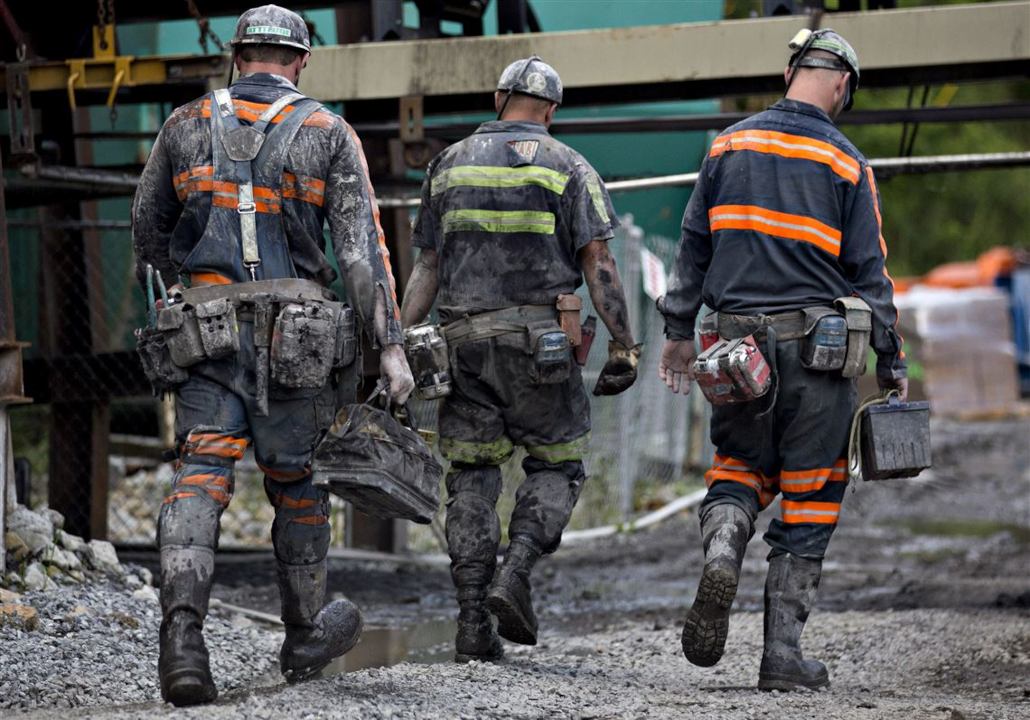
Trump, big coal and black lung

Black lung disease is a terrible way to die. Coal miners’ lungs become crusty and useless, according to Dr. Robert Cohen, a pulmonologist at the University of Illinois. Towards the end, Dr. Cohen told National Public Radio’s All Things Considered, patients are “essentially suffocating while alive.” (Dec. 18, 2018)

Miners get black lung because capitalist coal companies put profits  before safety. And the U.S. capitalist government helped cover up a growing black lung epidemic, as National Public Radio found out:

“A federal monitoring program reported just 99 cases of advanced black lung disease nationwide from 2011 to 2016. But NPR identified more than 2,000 coal miners suffering from the disease in the same time frame, and in just five Appalachian states.” (NPR)

Actually, the National Institute for Occupational Safety and Health reported last July that “one in ten underground coal miners who have worked in mines for at least 25 years were identified as having black lung … coal miners in central Appalachia are disproportionately affected with as many as 1 in 5 having evidence of black lung — the highest level recorded in 25 years.”

What’s the response of the Trump administration to this epidemic? The excise tax on coal mining that’s used to finance black lung benefits is scheduled to be reduced from $1.10 per ton to fifty cents on Dec. 31, 2018. That’s sixty cents per ton added to the profits of outfits like Arch Coal, which made $582 million in 2017.

The real war against coal miners

There never was a war on the coal industry, as Trump has claimed. But there’s been a war on coal miners for at least 150 years.

Trump’s own commerce secretary ― Wilbur Ross ― owned the Sago mine in West Virginia where a dozen miners were killed on Jan. 2, 2006.

Just from 1900 to 1970, the U.S. Labor Department recorded 101,704 coal miners who lost their lives.

That’s a larger figure than the 94,725 GIs who died in the dirty U.S. wars against the Korean, Vietnamese and Laotian people. And that’s not counting more than 76,000 miners who died of black lung since 1968, according to former Labor Secretary Thomas Perez.

Fabulous fortunes were made, like that of Henry Clay Frick. His estate’s art collection on Manhattan’s Upper East Side is probably worth at least a billion dollars.

Frick’s coal mines fed Pittsburgh’s steel mills. As a partner of steel tycoon Andrew Carnegie, he broke the 1892 strike of steelworkers in Homestead, Pa. If he were still alive, Frick would be praising Trump on Fox News.  

In the 1870s, Pennsylvania anthracite coal mine bosses framed Irish mineworkers and their supporters, the Molly Maguires. Twenty-one of these labor heroes were hanged.

The same Keystone State capitalist class is today keeping the innocent Mumia Abu-Jamal and MOVE 9 in jail.

Mineworkers built the labor movement

It was the rise of the United Mine Workers union that eventually brought down the death rate in the mines. The UMW supplied the funds and many of the organizers in the the great labor organizing drives of the 1930s.

UMW president John L. Lewis became president of the Congress of Industrial Organizations ― the mighty CIO. Former UMW president Richard Trumka is current president of the AFL-CIO.

But the UMW, like many other unions, has been decimated by automation. Membership has dropped from 500,000 to less than 70,000. Especially affected were Black coal miners, who numbered 55,000 in 1930. By 2014, there were less than 2,500 Black mineworkers.

Wyoming’s largely nonunion open pit mines accounted for 316 million tons of coal in 2016, compared to the 184 million tons mined in West Virginia, Pennsylvania and Kentucky.

Steam locomotives are not coming back. Neither are the anthracite coal mines that once heated homes and employed 250,000 miners.

What’s left are poor communities throughout Appalachia whose wealth was stolen by the billionaire class. Trump lied to the mineworkers, and attacked black lung benefits.

But there’s a new wind of struggle in West Virginia, where 20,000 teachers went on strike in 2018. These education workers are the future, not Trump’s bigotry.

Strugglelalucha256


35,000 maestrx de Los Ángeles iniciaron la huelga de enero

20 Diciembre – Después de veinte meses de negociaciones con Unified School District (LAUSD) de Los Ángeles y sin haber tenido un contrato por todo un año, 35,000 miembros del United Teachers Los Angeles (UTLA) han fijado el día del 10 de enero para comenzar una huelga. Un fuerte apoyo comunitario y sindical se está movilizando para las y los maestros.

LAUSD es el segundo distrito más grande de todo el país.  No a habido una huelga desde 1989.

En la votación por la huelga sindical, participó el 83 por ciento de lxs miembros con el 97 por ciento votando a favor. Trescientos sindicatos en el  County Federation of Labor han votado para apoyarla y LASchoolReport.com anunció que la California School Employees Association – que también representa a  lxs trabajadores de LAUSD – ha reafirmado su derecho a realizar una huelga de solidaridad.

El 15 de diciembre, un mitin y marcha masiva en el centro de Los Ángeles — con una participación estimada de 50,000 personas – ilustró firmemente la determinación y el apoyo de lxs miembros del sindicato. Miles con camisas rojas golpeando tambores serpentearon por las calles. Consignas como “UT L A!” “¡Poder sindical!” y “¡Beutner, Beutner, no te puedes esconder! ¡Podemos ver tu lado codicioso!” Retumbaban por las paredes del centro de negocios de la ciudad.

¿Quién es Austin Beutner?

La cara de la intransigencia de LAUSD en la negociación es el nuevo superintendente de escuelas Austin Beutner. Su nombramiento a esa posición en mayo de 2018 despertó una protesta por parte de educadores, trabajadorxs y padres. Su nombramiento se hizo con el apoyo del desarrollador billonario de Los Ángeles Eli Broad, el multimillonario de Netflix Reed Hastings, la Fundación Walton y otros quienes han estado propulsando y financiando la campaña nacional para convertir en chárter y privatizar las escuelas públicas.

Beutner es un ex-banquero de inversión con la reputación de romper compañías y vender las partes divididas. El trabajó en Rusia ayudando a vender las propiedades socializadas de lxs trabajadorxs de la ex Unión Soviética. El también fue el editor de Los Angeles Times hasta que fue despedido en 2015. El planea dividir el LAUSD en 32 “redes de vecindarios”. Según la página web del UTLA, en julio aparentemente, él le dijo a un grupo  de partidarios corporativos que el distrito escolar podría “no existir más” en 2021.

Con la adición de Beutner como  superintendente, la Junta Escolar de Los Ángeles está dominada por  fuerzas privatizadoras y pro chárter. Lxs miembros de UTLA saben que están peleando no sólo por salarios y condiciones de trabajo justas, sino que también por la supervivencia de un sistema de escuelas públicas que atiende a 90 por ciento de estudiantes de color y 85 por ciento con ingresos bajos.

¡El dinero existe!

Según LAUSD no hay suficiente en el presupuesto para cumplir con las demandas del sindicato por un 6,5 por ciento de aumento en salario, aulas más pequeñas, más enfermeras, consejeros de salud mental y más suministros escolares. Lxs negociadores de UTLA apuntan al fondo de reserva de $1,7 mil millones del distrito, que sería más que suficiente para hacer todas las mejoras que lxs educadores dicen que son necesarias.


La afirmación de que el distrito está legalmente obligado por el estado de California a guardar la reserva para “uso de emergencia solamente” es un truco. El estado de California sólo requiere que el 1 por ciento del propuesto del distrito se ponga en reserva, pero la reserva de $1,7 mil millones es el 26 por ciento del presupuesto de LAUSD.

Las condiciones de las aulas ya han llegado al punto donde cualquier observador objetivo reconocería como una situación de emergencia, con algunas clases teniendo 45 o más estudiantes, las escuelas no tienen ni lo básico de mantenimiento y casi nunca hay enfermeras disponibles para estudiantes enfermxs o heridxs. Muchas veces no hay ni papel disponible. LAUSD afirma que a lxs maestrxs no les importan sus estudiantes, pero regularmente lxs maestrxs gastan  $500 anualmente de sus propios bolsillos para suministros.

El empuje por escuelas Chárter: racista y discriminatorio

Los Ángeles ya tiene el número más grande de escuelas chárter en el país: 279 desde la última cuenta. Las escuelas chárter casi nunca tienen sindicato. El número de miembros de UTLA ha bajado por casi  10,000 miembros en años recientes porque cortan los fondos para escuelas públicas cuando éstas pierden estudiantes.

El empuje para la creación de escuelas chárter y la privatización es una campaña racista y discriminatoria. Los efectos positivos de la lucha masiva y las victorias para desagregar las escuelas públicas  en décadas anteriores están siendo desintegradas. Las escuelas chárter pueden rechazar cualquier estudiante sin la debida supervisión. A medida que las familias con más recursos transfieren a sus hijxs a escuelas chárter, las escuelas públicas pierden estudiantes y maestrxs. Lxs estudiantes que quedan en las escuelas publicas  a menudo son de bajos ingresos, lxs que luchan con discapacidades del desarrollo y, en general, son desproporcionadamente estudiantes de color.

En una reciente entrevista en  Jacobinmag.com, la secretaria de UTLA Arlene Inouye, explica por qué el empuje de las chárter ha hecho un impacto tan grande: “Esto es como una forma de segregación  … las escuelas chárter casi siempre tienen más recursos, no se requieren las mismas normas, pueden elegir los estudiantes que quieren, dejando a los estudiantes que necesitan más servicios en las escuelas públicas. …  La privatización sirve los intereses corporativos y se trata de control. Dado los años de ataques a escuelas públicas, es comprensible por qué algunos padres están buscando el modelo de chárter”.

La explotación de lxs trabajadores no desaparece en las escuelas chárter, como sus defensores pueden hacernos creer. Si hay un algo positivo – es que ahora la UTLA representa  más de 1,000 trabajadorxs de la educación en escuelas chárter quienes anunciaron su solidaridad total con la lucha de lxs trabajadores de las escuelas públicas. Como los sindicatos que representan educadores en otros sistemas de escuelas públicas por todo el país, la UTLA  también continúa organizando a lxs trabajadores de las escuelas chárter.

Una serie histórica de huelgas de maestrxs  empezó en 2018 en West Virginia y luego se extendió a Kentucky, Oklahoma, Arizona y Colorado. De los cinco, sólo Colorado no es un estado de “right-to-work” (¡por menos!) donde el derecho a organizar de lxs trabajadores es legalmente  obstruido. Todas esas luchas electrizantes ganaron victorias al menos parcialmente, y cuando se creía sería improbable. También expusieron la gran disminución de los niveles de vida y las condiciones de clase en las escuelas públicas a nivel nacional.

La UTLA dice que esas huelgas han fortalecido el valor y la determinación de sus 35.000 miembros. El apoyo de la comunidad también ha crecido. Si el impulso actual para una victoria de la UTLA es un índice, 2019 puede que sea un año de victorias para maestrxs y para trabajadorxs en general. ¡Apoyemos las escuelas públicas y lxs miembros de la UTLA!

Strugglelalucha256
https://www.struggle-la-lucha.org/labor/page/17/