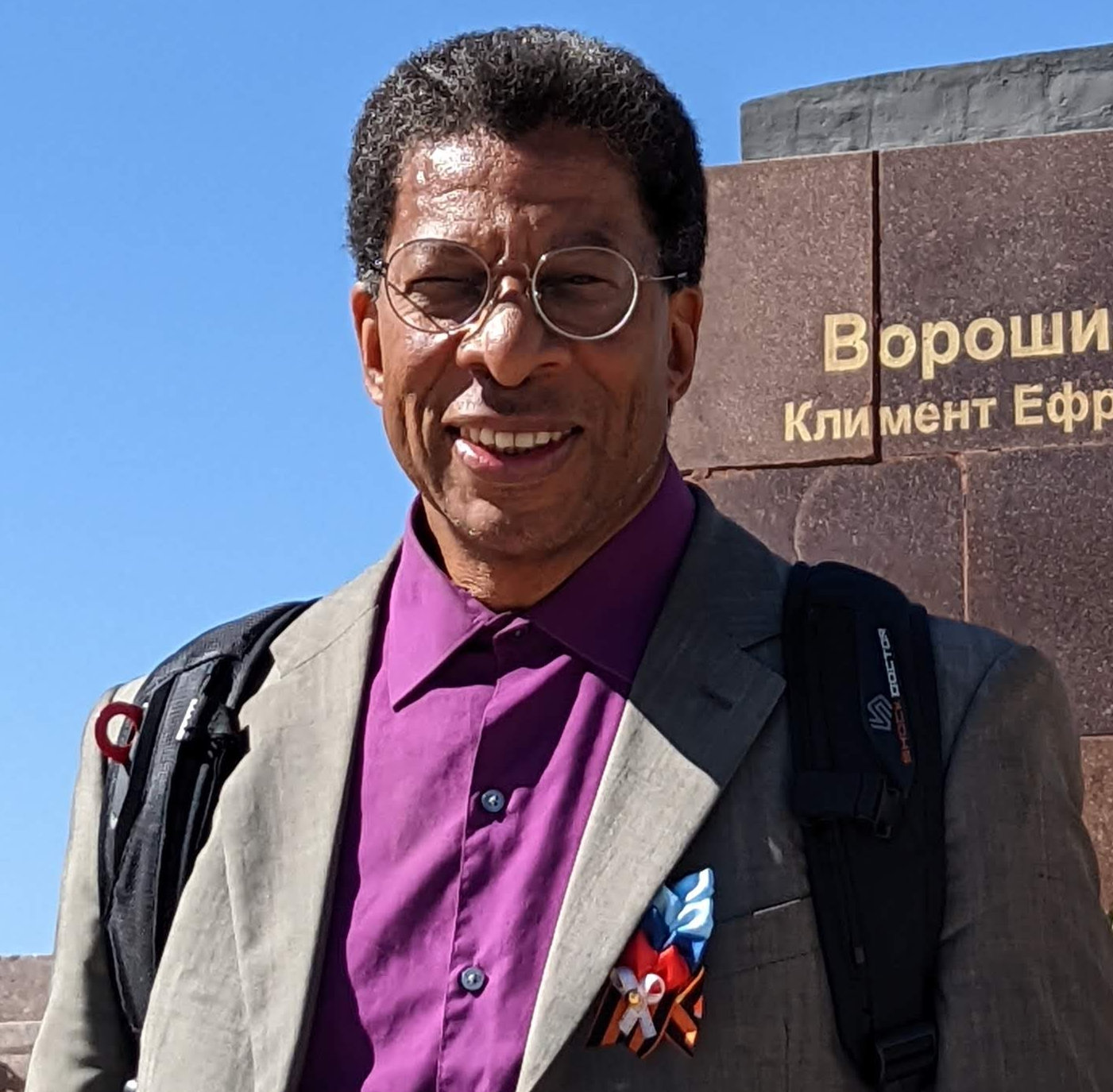
Build a movement to stop genocide from Los Angeles to Gaza

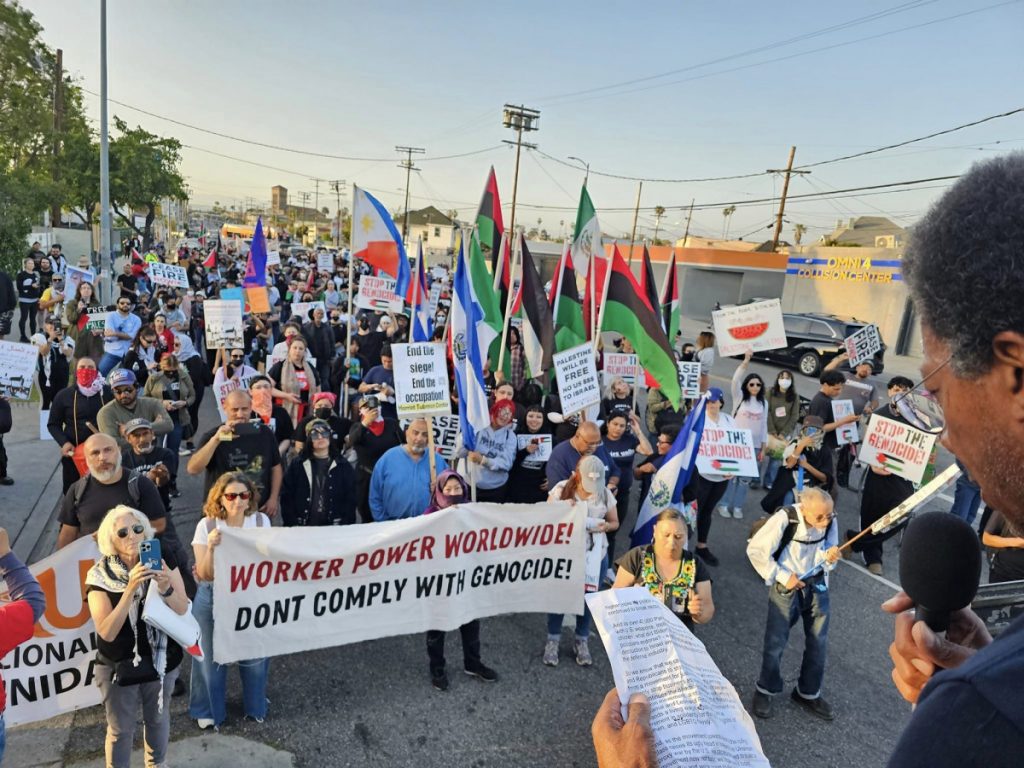
John Parker (right) speaks on May Day in Los Angeles. Photo: Unión del Barrio – Los Angeles

Talk given at the 2024 Los Angeles May Day march by John Parker of the Socialist Unity Party and Harriet Tubman Center for Social Justice.

We remember George Floyd. We remember white knees on Black necks. We remember that on April 18, Frank Tyson was murdered by that white knee on his Black neck in Ohio. And the last thing he said was, “I can’t breathe.” 

How many times have we heard that? We’ve heard it many times, and it’s just part of the genocide that has been going on. It’s been beating records every year in terms of police killings of Black and Brown people.

We’re well aware of the murder of immigrants at the border, at detention centers and the denial of health care for immigrants that is currently causing more deaths. 

With so much genocide going on here that we can see with our own eyes, why would anyone be tolerant of genocide overseas in Gaza? We can see the denial of health care and homes and food that is afflicting all of the working class. 

When we talk about genocide against people of color, we also have to remember that during the height of the COVID pandemic, the likelihood of death for Black and Brown people was sometimes three times higher. 

And what did Biden do when federal funds were supposed to go to the states for pandemic relief? He told people like New York City Mayor Eric Adams, “Don’t worry about using money for COVID. Use it to hire more police.” He said that during another record year of police killings. 

We know that the genocide will continue until the movement for justice is strong enough to stop it. 

How do you stop genocide by building a movement? By making it so powerful that business as usual will not be possible. That’s what we’re going to do. We’re doing it right now and we’re going to do it tomorrow and we’re going to do it until those bombs that are falling on children in Gaza finally stop.

Palestine will be free, from the river to the goddamn sea!

Strugglelalucha256


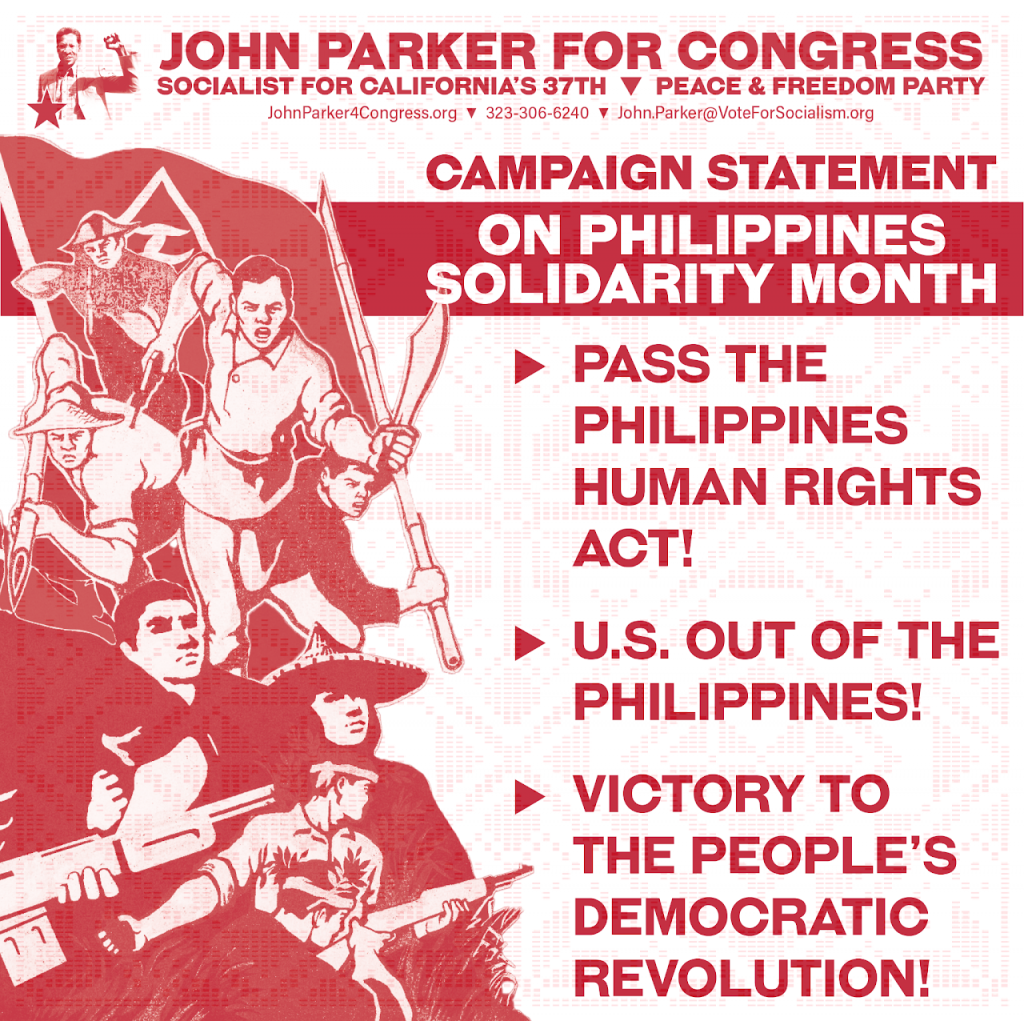
On Philippines Solidarity Month: Pass the Philippines Human Rights Act!

U.S. out of the Philippines! Victory to the People’s Democratic Revolution!

Black History Month happens to share February with Philippines Solidarity Month, though through no fault of either. Forget that February is already the shortest month. It is more a function of what imperialism and white supremacy will tolerate from oppressed nationalities. 

John Parker, socialist candidate for California’s 37th Congressional District, explains: “For the rich and powerful, the less time the colonized, occupied, and exploited spend thinking about their histories and what connects them, the better. The less time we spend discovering our common enemy, the better.”

So, of course, we honor Philippines Solidarity Month. We salute not only the revolutionary legacy of the Filipino people, we hold in the highest regard their living revolution – their People’s Democratic Revolution. 

“The role of the U.S. in the Philippines, much like its role in Palestine and in so many other countries,” said John Parker, “is both deeply buried and deeply repugnant.” 

In the late 1800s, the Filipino people, under the working-class leadership of Andrés Bonifacio’s Katipunan movement, organized a nationwide armed struggle to free themselves of Spain, their 300-year colonizers. 

The U.S. seized the opportunity to strike a deal with Spain, buying the Philippine islands for a clearance rate of $20 million U.S. Adjusted for the current value of the U.S. dollar, the U.S. made off with an entire country for under $800,000. 

To quell the people’s movement and establish its imperial domination, the U.S. invaded as an occupying force. The first waves of military occupation in 1898 and 1899 wiped out a sixth of the Filipino population. 

By 1905, the end of the hot war, the U.S. had murdered 1.4 million Filipinos. After the first two decades of military occupation, 3 million Filipinos were dead at the hands of the United States.

How U.S. maintains control

Though the Philippines gained nominal independence in 1934, the U.S. ruling class stayed in control through its various puppet governors and, thus, the entirety of the Philippines’ political and economic life. This system gave the U.S. ruling class free rein to maintain its military occupation and rule through sheer force of violence – all without paying a cent on overhead.

”President” Ferdinand Marcos Sr., for example, in September of 1972, implemented a martial law so brutal, it left in its wake thousands of known extrajudicial killings and “disappearances” and tens of thousands of documented tortures and political incarcerations. 

The Armed Forces of the Philippines (the “IDF” of the Philippines) and the Philippines National Police adopted a tactic called “salvaging,” in which they would leave the tortured and mutilated bodies of suspected activists in places to be discovered by the public. For these, the United States footed the bill. The top brass of these operations were trained by the CIA. All of these details are eerily reminiscent of the coup against Chile’s Salvador Allende. 

The U.S. and its puppet ruling class in the Philippines, however, were right to be so desperately afraid of the Philippine masses. 

“A genuine People Power Revolution ousted Marcos Sr.,” John remarks. “And another one ousted ‘President’ Joseph Estrada, another U.S. stooge, who was about to get impeached anyway.”

Bonifacio’s revolution was never truly defeated. The armed struggle, like any struggle, waxed and waned through the decades, but nonetheless survives and remains a vital, necessary, and influential tool for the people’s revolutionary struggle. The New People’s Army, in fact, has only grown stronger under the leadership of the Communist Party of the Philippines.

The story of the Philippines must never remain buried. It must be one more tool wielded by people’s movements everywhere. 

“This is our solidarity message,” said John Parker. “On Philippine Solidarity Month, this campaign commits to never let the true story of the Philippines be buried. We commit to expose the imperialist United States for what it is – vicious, hideous, repugnant.” 

“If I am elected, I will support the passage of the Philippines Human Rights Act as introduced by Representative Susan Wild. If it fails, I will reintroduce it to every session of Congress thereafter if I have to. Just as I will demand an end to funding genocide in occupied Palestine, I demand an end to funding the political and military occupation of the Philippines.” 

Strugglelalucha256


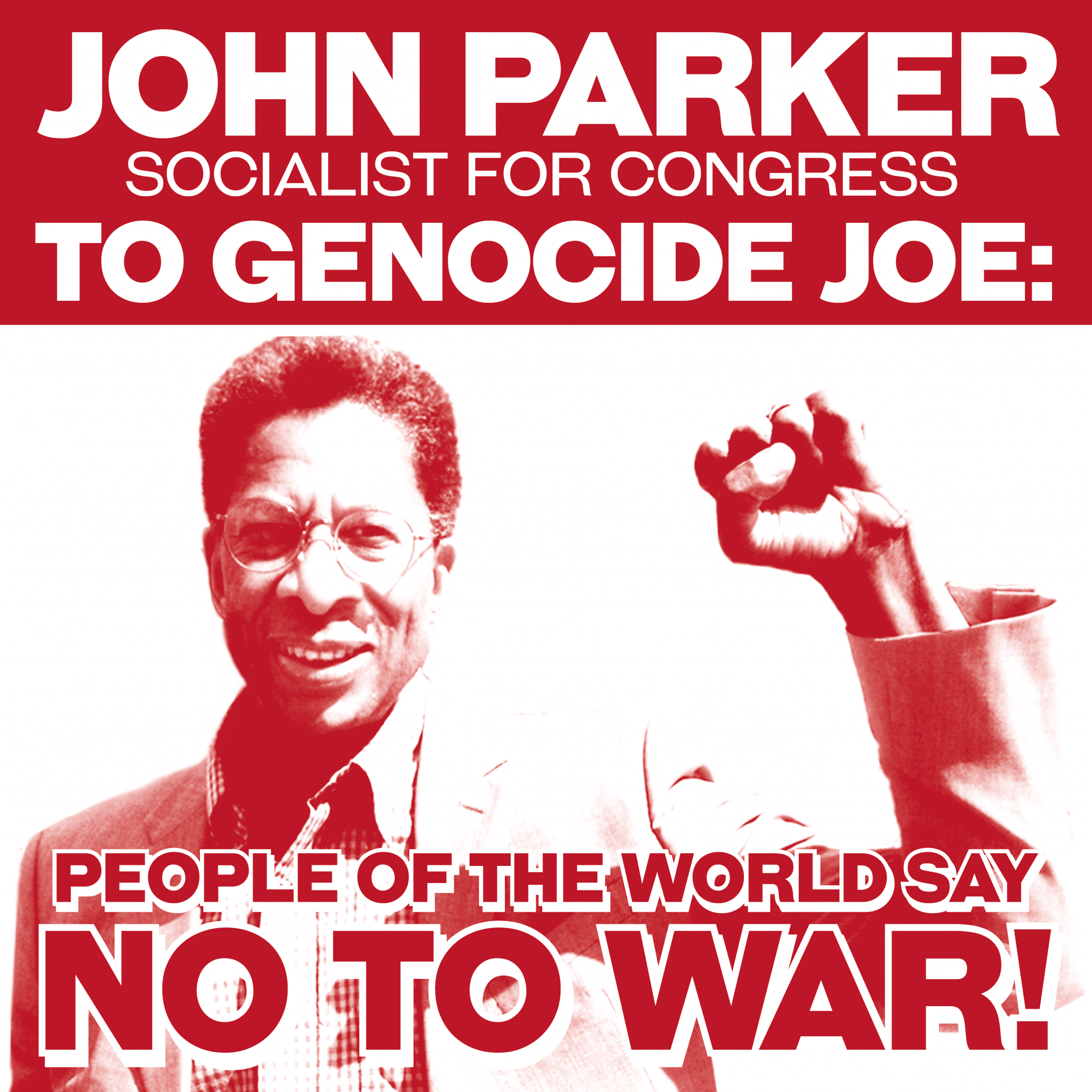
John Parker to Genocide Joe: People of the world say no to war!

On Feb. 2 and 3, the U.S. bombed alleged Iran-linked targets in Syria and Iraq. U.S. authorities say this was in retaliation for the attack that killed three U.S. soldiers in Jordan on Jan. 28. The attacks represent a further escalation in U.S. military action in the region amid its strikes in Yemen. 

John Parker, socialist congressional candidate for California’s 37th district, demands the White House and Congress end all wars and war provocations. 

“The same way the overwhelming majority of the world stands with Palestine, so do they oppose war,” said John Parker. “U.S.-led wars serve only the interests of the billionaires and war profiteers, offering the people nothing but pain, death, and suffering.” 

To this day, the U.S. has not formally ended its 74-year war on the Democratic People’s Republic of Korea, nor its political and military occupation of the Korean peninsula. Yet the West’s corporate media rattles sabers whenever People’s Korea demonstrates its ability to defend itself. Ostensibly, only the U.S.’s biggest aircraft carrier, “Israel,” has the right to self-defense.

Parker mourns the death of the three Black soldiers killed in the Jordan attack. At the same time, their deaths are an indictment of U.S. imperialism and white supremacy. 

“Black, Brown, and poor working class people will always bear the brunt of the ruling class’s wars,” John reminds us. “Another war puts the most marginalized and exploited people in the line of fire. The ruling class can thank their poverty draft for that.”

Parker declared: “Whether or not I am elected, I am calling on all peace-loving people to unite and build a mass movement strong enough to topple imperialism. It is the only way to truly stop the genocide in Gaza and to end the occupation of Palestine.” 

For more information on John Parker’s campaign, visit Vote4Socialism.org.

Strugglelalucha256


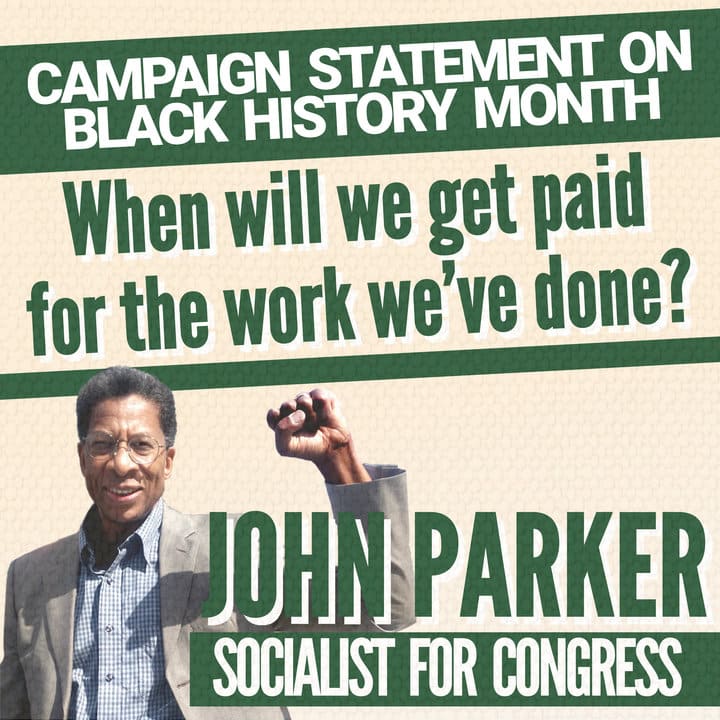
Justice demands reparations: Socialist candidate on Black History Month

California’s 37th district socialist congressional candidate John Parker declared that “justice demands reparations” at the beginning of Black History Month. While supporting the efforts of California legislators to secure restitution of stolen property and other important items, Parker believes more has to be fought for.

“Over 50 years ago, the Staples Singers asked ‘when will we be paid for the work we’ve done?’” said John Parker. “The money is there. Just the four richest California billionaires have a total stash of over $600 billion. All of their loot represents the unpaid wages of workers that produced that vast wealth.”

Parker pointed out that “Biden can hand over $14 billion to Israel to kill over 30,000 Palestinians in Gaza, of whom over 10,000 were children. Meanwhile SNAP benefits, formerly known as food stamps, were cut by a monthly average of $90 per household last year. Gaza’s children are literally starving while millions in the United States are forced to line up for food banks.

“Reparations include bringing home the sisters and brothers who’ve been railroaded to prison,” said Parker. “Trump and all the other corporate gangsters, banksters and slumlords should be locked up instead.”

The socialist candidate declared that “capitalist deindustrialization has deliberately targeted Black workers. While 50 years ago General Motors was the largest employer of Black workers, who were members of the United Auto Workers, today more Black workers are employed at low-wage, non-union Walmart than anywhere else.

“Stopping the war against Black people will be a victory for all poor and working people,” said John Parker. “It goes hand-in-hand with demanding a ceasefire in Gaza and justice for Palestine.”

John Thompson Parker is a member of the Socialist Unity Party who’s running as the Peace and Freedom Party candidate for the 37th congressional district, which includes much of South Los Angeles, as well as parts of Culver City and Inglewood. He was jailed in Egypt while part of a solidarity delegation seeking to bring aid to Gaza.

John Parker can be contacted at John.Parker@voteforsocialism.org.

Strugglelalucha256


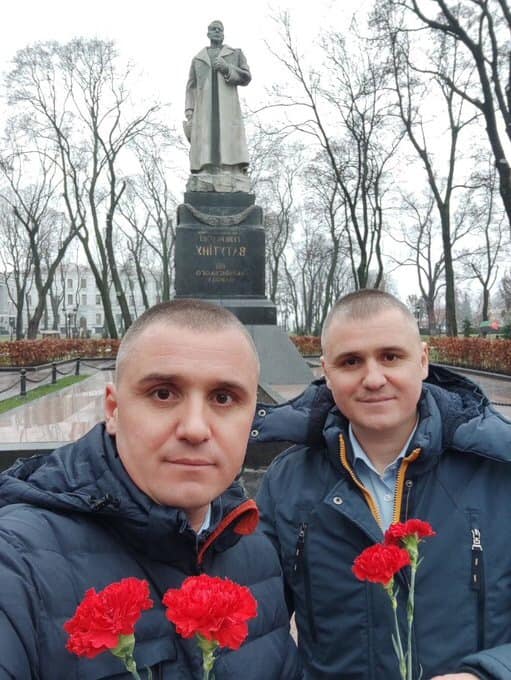
Prisoners for profit: from the Kononovich brothers to U.S. jails

Based on remarks given at “Free the Kononovich Brothers: International Campaign Meeting” on Aug. 25. Mikhail and Alexander Kononovich are leaders of the Leninist Communist Youth Union of Ukraine. They were among hundreds of political opponents of the Ukrainian regime jailed this year, and thousands since the 2014 U.S.-backed coup.

On July 18, Ukrainian political prisoner and ethnic Belarusian Mikhail Kononovich called out the Belarusian opposition and its leadership for talking about political prisoners in Belarus, but not mentioning Belarusians in prisons in Ukraine. 

That hypocrisy he exposes is very similar to those human rights advocates who selectively allege atrocities by any enemy of U.S. imperialism, but fail to mention a word about Israeli genocide against the Palestinian people, funded by the U.S., or the bombing of Somalia by the U.S. Not a care for those people, nor the political prisoners in the U.S. like Indigenous leader Leonard Peltier or Mumia Abu-Jamal.

Many of these political prisoners in the U.S., like the Kononovich brothers, endure daily torture and are there simply because they challenged the imperialist policies of the U.S. creating war, racism and poverty.

Almost all prisoners in the U.S. are political prisoners. Most wound up there due to economic desperation caused by capitalism and others for their political activism which threatens the hold of the capitalist ruling class over our working class.

And like the Kononovich brothers, they also face torture.

The United Nations states that solitary confinement for more than 13 days constitutes torture and is a violation of international law.

Almost 50,000 prisoners are being held in prolonged solitary confinement in U.S. prisons. They remain in cells the size of parking spaces. Six thousand prisoners were in isolation for over a year, and 1,000 of those have been in solitary confinement without the touch, smell or conversation with another human being for a decade or longer.

Where are the human rights advocates who so conveniently use their criticism against the latest country targeted by U.S. imperialism, yet never say a word about this torture and racism faced by so many in the U.S.?

There’s much talk by those so-called human rights advocates about the lack of democracy, they say, in Russia and China. The timing of those attacks against those countries also conveniently aligns with the U.S. drive towards World War III, using Ukraine and Taiwan as proxies.

Well, let’s talk about democracy as it relates to the situation with the Kononovich brothers’ imprisonment. How many in Ukraine are being imprisoned simply for being socialist or communist and how large has the prison population grown there? These human rights hypocrites do not inquire about that.

USA, a prison house of nations

The U.S. is supposed to be the greatest democracy, so its prison population must be the smallest – correct?

The fact is that the percentage of those in prison in the U.S. is five times the rate of that in China and twice the rate in Russia. It’s actually the highest number in the world, in both percentage of population and actual numbers – some 2.1 million in 2020.

Just as the budgets for Ukrainian security and military forces like the Security Service of Ukraine (SBU) have increased exponentially due to U.S. aid, in the last 40 years police budgets in the U.S. have tripled and they are also the recipients of military weaponry, including artillery, to be used against local communities.

And, as in Ukraine today, who is targeted for incarceration in the U.S. is a reflection of the ideology of fascism and white supremacy.

The likelihood of a Black person born in 2001, for example, to be incarcerated in the U.S. is six times that of a white person. One in three Black men born in that year will be incarcerated in their lifetime.

This increased rate of incarceration was also driven by the lucrative contracts for private prisons, which incentivize judges to pass longer sentences and whose Wall Street stocks are seen as good investments.

The war in Ukraine is also driven by U.S. imperialism’s insatiable appetite for profit.

In just the first three months of 2022, the five biggest oil companies made $35 billion in profits.

U.S. imperialism is profiting off of the war, especially the private military contractors like Lockheed Martin.

In the May 2022 aid package for Ukraine, up to $20 billion was made available for U.S. weapons manufacturers.

How did that happen? Well, while the Congress was debating this package in April, military supplier Lockheed sent over $200,000 in donations, right then, to 150 members of Congress.

Undoubtedly, this allegiance to profit and the $30 trillion deficit the U.S. now holds will continue to eat into the social needs of working and poor people in the U.S. We, like the working and poor people in Europe, will be asked to sacrifice until we have no more to give.

But before that happens, people will, and are, beginning to revolt.

Sacrificed for profits

The economic situation for the people of Ukraine follows this path of an economy being sacrificed for oligarchs and the needs of U.S. imperialism. This requires repression by the ruling class to keep people from fighting back. 

That’s why the U.S. began supporting Nazis in Ukraine even before the Euromaiden coup in 2014 – to prepare the extralegal military forces.

The SBU kidnaps and assaults leftists in Ukraine with the participation of the Nazi Avov Battalion.

This is similar to how the U.S. security and police forces work hand in hand with white supremacist groups. The number of white supremacist gangs in police departments in the U.S. is well-documented. However, it doesn’t stop at the local level. 

The FBI and federal government collude with white supremacist groups by refusing to put them on the terrorist list, which could effectively shut down their activity in the U.S. Like the Ukrainian Nazis who are being paid well with U.S. weaponry, training and dollars, the U.S. is building its reserve extra-judicial army to meet the resistance of people in this country, who are getting extremely frustrated by the lack of food, gas, healthcare and housing they can afford.

The latest increase in the military aid to Ukraine that was announced yesterday – a $3-billion package that will push total U.S. aid well past the annual budgets of at least eight federal programs, including the entire judicial branch – exacerbates their desperation and poverty.

Working people of Europe are also frustrated as they watch their economic conditions deteriorate further due to their government leaders’ allegiance to U.S. imperialism.

This is why international solidarity is so important. Our movement should use that justified frustration and its exposure of the bankruptcy of aligning with U.S. imperialism. This exposure will help build solidarity with our international family of workers across the globe.

And we can use the example of the Kononovich brothers who, during one of their appearances at trial, wore shirts in solidarity with Cuba, which is also fighting the deadly sanctions and embargoes of U.S. imperialism.

This shows that we all have the same basic enemy – U.S. imperialism and its puppets in Europe and Ukraine – and we as a class, our working class, must come together and fight that enemy.

A big part of that battle is to build international solidarity for the Kononovich brothers. Every Ukrainian embassy in every country should hear our outrage. Every administrative building representing an imperialist country that is participating in this push towards WWIII should be protested until our brothers are released from the Nazi-hell that is now Ukraine.

Strugglelalucha256


‘Bitter Street’ in Lugansk – a battle line drawn with Nazi elements after 2014

Part One: Fact-finding trip to Donbass: A front-line shelter in Rubizhne

Part Two: Ukraine and Russia without the lens of Facebook & corporate media

Part Three: ‘Bitter Street’ in Lugansk – a battle line drawn with Nazi elements after 2014

From May 1 to May 12, I traveled to both Russia and the Lugansk People’s Republic, an independent republic in the Donbass region, formerly part of eastern Ukraine. The purpose of this fact-finding mission initiated by the Socialist Unity Party and Struggle-La-Lucha.org was to report the suppressed information challenging the narrative of NATO and its member states, led by the U.S., in this proxy war in Ukraine against Russia. 

My visit to Lugansk was made possible with the assistance of Borotba (Struggle), a socialist political organization in Ukraine and Donbass that we have worked with for many years. Alexey Albu, one of the leaders of Borotba, also provided translation for me during interviews. This is the third part of my report.

 On May 8, two days after we visited the Rubizhne shelter, we made our way from Lugansk city to the villages of Sokilnyky and Krymske. Both had recently been taken over by the joint forces of the Lugansk People’s Militia (LPM) and the Russian military. 

After the 2014 U.S.-sponsored coup in Ukraine that brought to power a pro-Washington, anti-Moscow regime partnering with fascist forces, the majority Russian-speaking people of the Donbass region decided they didn’t want any part of this backsliding of history. 

Dramatic evidence of the new coup government’s fascist leanings came in its support for the neo-Nazis who burned alive activists at Odessa’s House of Trade Unions on May 2, 2014. To this day, none of the perpetrators have been charged with any crime. Given that incident, the people of the Donbass region declared themselves the independent Donetsk and Lugansk People’s Republics (DPR and LPR). They voted by 89% in Donetsk and 96% in Lugansk for that change.

Instead of honoring the wishes of the people of Donbass, Kiev labeled them terrorists and sent armed forces with heavy artillery and aircraft against civilians, threatening to wipe out the population. The Lugansk People’s Militia was organized to defend the area. 

When the Minsk II cease-fire agreements took effect in 2015, the opposing sides’ positions were drawn. Sokilnyky was controlled by the Lugansk People’s Republic. Krymske was occupied and controlled by the Ukrainian military.

If the cease-fire stipulations under the Minsk II agreements were adhered to by the Ukrainian military, it would have protected this community. Instead, the agreement was used by Ukraine to create a one-sided shooting range against civilians in Sokilnyky. Today no one lives there and the homes and buildings have been destroyed. 

The road that runs between Sokilnyky and Krymske is called Vulytsya Horkoho, named for the great Russian writer Maxim Gorky. Google also translates it as “Bitter Street.” The name is fitting since less than a quarter-mile north runs the Siverskyi Donets River – the border between two conflicting sides in a war.

When you travel along this road towards Sokilnyky, you see idle and broken-down Ukrainian tanks that were used against the villagers after 2014, when no military force was there to protect those communities.

Ukraine continued war after Minsk II

122-mm shells from the Ukrainian government’s arsenal rained down on villagers from the north of the river’s edge and west of Sokilnyky, aimed at anyone driving along this road or just relaxing at home. These shells are capable of stopping tanks, penetrating bunkers and taking down aircraft. And as we could see along the way, many homes were blown to bits or barely left standing. 

The 2015 Minsk II agreements were negotiated by Russia, Ukraine, Germany, France, and the Donetsk and Lugansk republics, allowing for some self-determination of the Donbass regions and the right to be protected by their own military forces – the Lugansk People’s Militia and the Donetsk People’s Militia.

By 2017, however, most residents on this road east of Krymske who survived left the area since it was too dangerous.

Although the Minsk agreements forbade attacks within this area, our guide told us that after 2015 the Lugansk militia forces began calling this street the “Road of Life,” where LPR forces had to travel fast to keep from being shot at. “For seven years Nazis violated the Minsk agreements … They attacked peaceful people who lived in this village during those Minsk violations,” explained our LPM guide, who led us to our next location further west towards Krymske. 

We saw further evidence of houses resembling Swiss cheese rather than safe spaces for families. We stopped on the edge of Zynamyanka village, where a monument commemorating fallen World War II soldiers was located. We had to follow the steps of the person in front since the area was filled with unexploded shells dropped by the Ukrainian forces. 

We reached an administrative building that was now more cinder block pieces than structure. Two wires strewn across our path warned us not to go any further since that area was not partially cleared of unexploded shells or mines. 

Against the advice of our guide, a very brave journalist from the news service Izvestia, continued walking and laying a path for us. Why would he take such a risk? Because, he said, he felt it was important for us to see up close the monument with the names of those from this and nearby villages of both Ukrainian and Russian Soviet soldiers killed fighting the Nazi threat during World War II – so we could appreciate the respect these residents had for their relatives who fought fascists. And to appreciate their suffering in being targeted by those who adhere to that same fascist ideology.

My comrades insisted they walk in front of me, following the soldier from the LPM. Then it hit me hard. From our friends in Borotba to the guides from the Lugansk People’s Militia and brave journalists dedicated to telling the truth – they were all here assisting me, putting their bodies on the line to keep me safe, because they believed the message I would relay back to the U.S. was that important.

I truly wish the U.S. anti-war movement that has so cynically and arrogantly dismissed any facts or testimony coming from the people in Lugansk and Donetsk, who refuse to acknowledge their experiences or even existence, could feel just one-tenth of what I felt in that moment.

When we reached the monument, carefully, the words with the hundreds of names of buried soldiers read: “Your Heroism is Immortal and Your Glory is Eternal.” 

[Video walking to the Monument in Zynam’yanka]

Sister towns separated by war

The once Ukrainian-held territory in and around Krymske, just west of us, included areas within eyeshot of the LPR-held Sokilnyky village. In 2014 almost 2,000 people lived in Krymske, and 1,000 lived in Sokilnyky. They lie about five minutes from each other by car. 

In fact, the communities were very close. One of the Izvestia reporters with us wrote: “If a guy from Krymske married a girl from Sokilnyky, the wedding was played in two villages at once.” But after the battles in 2014 and by 2015, the two communities remained separated with blocks of concrete and barbed wire.

After passing the town of Sokilnyky, we drove about a quarter mile to where the Ukrainian military installed bunkers and barracks to target that village, using these places to launch missiles and those 122 mm-shells against the LPR-held territories, even in the years when civilians were still there. 

The south side of this “Bitter Street” had been swept for mines but the north side was not, so to remain relatively safe we stayed on the south side. On the ground was strewn Kalashnikov 5.45 caliber bullets and casings leading into an eight-foot dugout to tunnels of dirt and darkness protected by sandbags from retaliatory fire. 

The Ukrainian forces were routed after the February operation by the Russians and the LPM, so undoubtedly gunfire was exchanged. But even if there was activity targeting this compound in response to shellings, it lies over a quarter-mile from 99% of the homes in the Krymske village.

In other words, the civilian population living in Krymske village was only victimized by the Azov, Aidar or Right Sector fascist regiments leading the Ukrainian military occupation there. This is according to the residents we spoke to, who also verified that those leading these soldiers were wearing Nazi regiment colors and fascist symbols.

Just about 100 feet down the road from the bunker, taking us into the eastern edge of Krymske, we observed on the side of the road a leftover decoy that had been used to frighten the Lugansk militia forces, mimicking a Swedish surface-to-air missile. The threat would have been believable since those real missiles and other military aid totaling $102 million was promised to Ukraine from Sweden on June 2 – this on top of the other anti-armor weaponry already delivered.

Nazi symbols

Due to the actual weapons present at that moment, the most common phrase I heard observing these sites was again, “Don’t step there” – not only because of the unexploded shells on this side of the river but also because the Ukrainian military would “sow” the area with mines that couldn’t be seen in the grass. 

We then drove a few feet further to a complex that was part of a tuberculosis clinic. The Ukrainian forces retrofitted this clinic for war by evicting the patients and healthcare staff. In one of the buildings, the Ukrainian soldiers felt comfortable enough to scrawl in large letters the word representing a fascist soccer team in Ukraine, the ULTRAS — a team, we were told by one of the journalists with us, that is owned by an oligarch who funds Nazi regiments. 

Something that seemd out of place, given the graffiti praising Nazi symbols and organizations, was a letter shaped as a heart with the colors of the Ukrainian flag from a child thanking these Nazi-led Ukrainian forces for keeping them safe. That is not surprising, since the Azov Battalion set up children’s “educational” facilities. According to a Time article from January 7, 2021, the battalion even has an entire building loaned to them by the Zelensky government in Kiev that serves such a purpose. 

In addition to general misinformation passed on in their libraries, this facility raises funds by selling key chains, t-shirts and other items adorned with swastikas and other Nazi symbols. Again, this building is on loan from the Ukrainian government, supporting what goes on there. 

In another building here, 122-mm shells were stacked on top of each other. Their presence in this room seemed to be a testament to the threat against humanity symbolically displayed over half of one of the walls with drawings of a swastika and a Black Sun or Sonnenrad.

[video of tuberculosis hospital complex]

It should be noted that this Azov identifier is the same symbol used by the white supremacist shooter who recently targeted Black shoppers in Buffalo, New York. He was inspired by a white supremacist in New Zealand who murdered 51 Muslim worshippers in two mosques there. That New Zealand killer said he was in contact with the Azov Battalion and planned to go to Ukraine for military training.

As shocking as this is, it shouldn’t be too surprising that young people are falling into the hands of these unchecked fascist movements. In the 2021 report “Like, Share, Recruit: How a White-Supremacist Militia Uses Facebook to Radicalize and Train New Members,” Time explains how Azov’s use of Facebook’s algorithm drives white supremacists and disaffected youth toward them, allowing Azov exponential visibility growth.

Just a few steps away, another building turned military bunker contained lookout holes punched through the walls, with coordinates written in pen giving targeting coordinates for the LPM positions and civilians when they lived there. On another wall the words “No One But Us” were written in Ukrainian in blue and yellow.

Military-industrial profits

We were accompanied by more than one camera crew with journalists representing various media from Ukraine and Russia. During our inspection of this site, one of the journalists from a Russian news agency found a container that once held explosive materials. This object, the journalist said, came from either the U.S. or a Western European country. 

Of course, this is not surprising given that U.S. military aid to Ukraine, as reported in the May 20 New York Times, amounts to more money than given in any kind of aid to any country in the last decade. “It is roughly two times the amount given in 2011 to Afghanistan, the largest U.S. foreign aid recipient until now,” reported the Times.

The U.S. had already surpassed the entire defense budget of Russia back in May. Perhaps the reason for this unprecedented funding, in addition to world domination, also has to do with profits. Business Insider reported May 23: “One of the largest defense contractors in the nation donated to nearly 150 members of Congress as they debated Ukraine military aid.” 

On May 3, President Joe Biden went to Lockheed Martin’s Pike County Operations facility in Troy, Alabama, and did a photo op at the Javelin missile production facility. And the top member of Congress in charge of the military budget, Democrat Adam Smith from Washington state, is also the top recipient of money from the weapons makers. 

In its 2010 Citizens United decision, the U.S. Supreme Court ruled that corporations can spend unlimited amounts on elections. When the selfish ambitions of the bought-and-paid-for politicians coincide with the goals of the ruling class, the sky isn’t even the limit. The death and fear created are of no consequence to them.

Speaking of fear, while exploring this hospital complex I heard a constant buzzing, sounding like a flying bee with a megaphone. When I asked what that sound was, I was told it was from a drone overhead. This caused me some concern, knowing that in April the U.S. had been training Ukrainian soldiers in the use of a very advanced drone called the Switchblade Drone 600. 

By that month, two of the lethal aid packages for Ukraine of over $1 billion included those drones, capable of flying 24 miles. That distance was well within the area between us and the current Ukrainian positions. In fact, I could see with my naked eyes the plume of smoke from recent targets hit by either the Ukrainian or Russian and Lugansk forces. And these drones carry warheads that can take out tanks.

With the recent memory of Ukrainian forces bombing an apartment building near the shelter where we were conducting interviews in Rubizhne, I felt a bit uneasy about that noise overhead and was therefore happy when we later returned to the cars to continue on our way.

As we continued to Krymske, the sight of almost all of the homes intact was a startling comparison to Sokilnyky. Although a relatively small percentage of those homes are damaged, according to our LPM guide, it was due to fighting that occurred in 2014, when they were also being shelled by the Ukrainian military. 

Even if those homes destroyed in 2014 were mistakenly said to come from the more recent hostilities, the comparison of the two villages makes it clear that neither the LPM forces during the Minsk Agreements to the present time, nor the Russian military that came in February, carried out any bombing campaigns against Krymske. 

[comparison video of Krymske vs Sokilnyky]

‘Everything Zelensky says is a lie’

When we arrived in Krymske there were a few children running around and playing — finally.

A stark difference from the situation at the Rubizhne shelter, where kids could not play for any significant length of time due to their proximity to the front lines and therefore within reach of the Ukrainian delivery of shells. 

Now, the only deliveries being made are that of food and other humanitarian aid coming from the city of Lugansk. It is received at the former village council building.

With the exception of one person, all the residents I interviewed were very glad about the presence of Russian soldiers and the Lugansk People’s Militia and the absence of the Ukrainian military. 

Local resident Irina said: “In 2014, the Nazi Aidar and Right Sector battalions came to us. They entered houses and fired over our heads.”

One person did complain about the military presence. He was upset with the sentencing of his son by the Lugansk People’s Militia. His son was accused of collaborating with the Ukrainian troops. In spite of that, he still desired the protection of the military forces here now. 

I was able to catch up to one of those children running around the overgrown playground, whose grass had not been cut during the Ukrainian occupation. 

Eleven-year-old Ivan told me his family left in 2014 when the Ukrainian military began attacking civilians here. “The windows in our house shattered, but I stayed asleep and my mom had to wake me up. Then we left.” As he spoke I saw him looking at a dog nearby. When I told him about my dogs and asked him if he had any pets, he sadly said his dog had to be left behind. 

On this day, however, he seemed happy. He said he was glad to be back since this is where his grandparents live as well. I asked him what he studies in school and he said math and science, but now school is only open two days per week. 

After talking about his favorite exercise and sports – basketball and football (soccer) — I moved on to more serious topics. I told him how the newspapers and TV news in the U.S. describe the Russians as hurting the people of Ukraine and that the Ukrainian government and its military are protecting people. “What do you think?” I asked. 

He told me he strongly disagreed. “It is completely untrue that Russia attacks peaceful people. Russia protects civilians and their interests. Everything Zelensky says is a lie because when he says that this is a Russian occupation it is completely untrue, it is completely a lie, Russia protects civilians.” 

I figured that was enough war talk for a child and I’d give him a break and go back to my previous challenge to race him to the edge of the building. But instead of wanting to lighten the conversation or go play like most children his age in the U.S., he wanted to give some advice to the Ukrainian military and Zelensky: “Now the Ukrainian forces hide in Donetsk, but it will be better if they give up, because the peace will come sooner and we can repair our cities.” 

After thanking him for helping me get the message to people in the U.S., he said, “Yes, I told you because I understand that my speech can make a little influence on people in the world and maybe peace will come more quickly here.”

Although they may run around in a playground when war is present children are forced to ponder things they should not have to. But when war comes knocking at their door – or shattering their windows – they have no choice.

[Video of 11-yr-old Ivan]

Laughter and solidarity

I then approached a few elderly women sitting on a bench. I asked about the situation here under Ukrainian military occupation. They all described the military as being led by the Aidar Battalion, which they could tell by the colors of their patches and Nazi symbols they wore. 

They said that, although not all of the soldiers were Nazis, their leadership was. “They would make them get down on their knees and hit and humiliate them,” said one of the women about the treatment of rank-and-file soldiers who weren’t Nazis by their superior officers. They all assumed this was designed to indoctrinate them. 

When I asked one woman what it was like during the occupation, her eyes quickly darted down and her head gestured “no.” This made me wonder how horrible an experience she may have had, given the documented war crimes of the Aidar Battalion during this conflict, especially against women. So out of compassion for her I dared not ask again. If they humiliated their own troops, what might they have done to these civilians? 

When I asked the women what they thought about people in the U.S. who send money to the Ukrainian government in the belief that they are protecting them from the Russians, one exclaimed: “Duratskiy!” A few of the definitions for that Russian word are “foolish,” “fatuous”  and “idiotic.” 

When Alexey told me it meant “stupid” and I repeated it in Russian, they all started laughing – first shyly, then out loud when they saw I joined them. I was glad our shared laughter communicated better than words my solidarity with their struggles here today. 

[video of Krymske residents]

The last interview in Krymske was with a member of the Communist Party. He explained the situation in 2014, when the people here demanded their governor reject the coup government in Kiev. But, he said, the governor sided with the coup and left. 

After we talked, he walked me to an area where two monuments commemorated all of the people from the village who were killed fighting the Nazis during World War II and another honoring the soldiers who were not from that village, but died there fighting the German fascist military. This individual said he was very thankful that the Ukrainian occupiers did not destroy these two monuments as they had done in other parts of the Lugansk region.

 [video of WWII memorial in Krymske]

This visit to Krymske was very inspiring. From the determination and wit of the women on the bench, to the 11-year-old willing to take time out from the playground for important matters, to the passion of the communist who was so proud of the monuments with names of his own family members inscribed on one of them — and all of this community’s unceasing commitment to fight fascism if it rises here once again. 

It is also clear that here the military that is despised is the Ukrainian one. When we first arrived, we noticed people walking around as if life was normal – although it is not. But now, for the remaining residents in Krymske — no longer threatened by the Ukrainian soldiers – the cessation of the worst horrors of war and occupation allows them to take a breath.

Fire in the sky

The day before we visited Krymske, Alexey Albu and Evgeniy Miroshnichenko, a member of the Youth Parliament under the State Duma of Russia, invited me on a tour of Lugansk, the capital city of the LPR. We observed the monuments and also met with officials from the Lugansk city administration. We were, however, momentarily interrupted by the sight of smoke in the sky, coming from either a drone or rocket that had been intercepted by a Russian missile.

As we walked further I saw a playground and happier thoughts took over.

Playgrounds are wonderful. They are a place where children go to socialize and spend their energy with such excitement and joy. However, given the proximity of shellings or the very recent liberation of areas once occupied by the Ukrainian military, the priorities of food and shelter forced a lack of maintenance in those areas. 

However, there in the city of Lugansk, which had been mostly free of attack for some time, I saw a beautiful playground full of children on the swings and slides and varied apparatus designed for the sole purpose of making joyful noises.

… But what I had just seen threatening the skies above this well-attended and most precious sanctuary was a killer of children — thankfully destroyed, this time. What would have happened to this playground had the Ukrainian military, now armed with even more sophisticated weaponry thanks to the Biden Administration and every other complicit politician, been successful?

The new reality we face as activists and members of organizations promoting social justice and peace is that the propaganda of the ruling class has become so capable, so well-funded, so fluid in its use of social media and Hollywood, that most, including many in the movement for social justice, are not even aware of its effects in molding our own opinions and distorting our sense of reality.

This three-part series began solely as an attempt to expose the fact that the war in Ukraine was manufactured to further the expansion of U.S.-led NATO, targeting Russia and China. But perhaps the more important story is how the State Department and its right hand – the corporate media – are today able to so effectively use false information manufactured in such a consistent and frequent manner and build on those past prejudices against Russian people.

The political left movement in the U.S. and Europe has a big problem that comes from a cultural disease developed especially by U.S. capitalism’s history of racism. Not only is there class bias, but the added dehumanization with all its arrogant trappings intrinsic to the system of racism carries over to anyone deemed as “the other.” 

In the U.S., the other is usually anyone who is non-white and is therefore not taken as seriously, not as believable, not as legitimate and reliable a source of information, and definitely not due as much empathy. This is carried over even to other white people deemed as the other. And we are told by the U.S. government who the latest other is – sometimes it’s the Iraqis and their leaders, or it’s the Syrians and their leadership, or the Libyans and their leadership. In spite of the fact that information coming from the U.S. corporate media during a U.S. war drive is consistently false – from the Lusitania incident in 1915 or the Gulf of Tonkin lie pushing the U.S. into war with Vietnam or the lies pushing war in Iraq and Libya – we are supposed to accept it as gospel and reject all information coming from the official or unofficial sources from the latest target of U.S. imperialism.

This is why the sources of information coming directly from white supremacist neo-Nazi military organizations in Ukraine is more trusted than those in the Donbass region – because the people of Donbass, in Lugansk and Donetsk, are the other.

My friends from Borotba, the Communist Party of the Russian Federation, the United Communist Party – the other; the 82-year-old woman from the shelter in Rubizne, who was crying over the bombing of her home by Ukrainian tanks and the loss of all her belongings; and the women in Krymskoye who identified the Right Sector and Aidar Batallion as their occupiers and torturers; the entire political and religious leadership in Lugansk; the Lugansk People’s Militia members – all the other. 

And even to much of the “left” in the U.S. and Western Europe, who refused to even acknowledge their existence, they are deserving of neither an ear nor a heart for empathy.

Is the history of the Soviet Union or Russia before this current conflict filled with the intentional targeting of civilians in any degree close to that of the U.S. military and NATO?

Did the Soviet Union yesterday, or Russia today, participate in European and U.S. colonialism or neocolonialism, or have a worldwide troop deployment and military bases anywhere near that of the U.S. or NATO?

Some will say that Russia is not the Soviet Union and now it’s capitalist. Well, so are Finland and Sweden. But because years of Cold War propaganda did not target the integrity of the people of Finland and Sweden, folks see them in a different light – even though those governments said nothing about the NATO expansion for the past 20 years that caused this crisis and are now enabling and actively expanding the most belligerent military alliance in history at this critical and dangerous moment in time.

Accusations that are today thrown against Russia, if thrown against their people or soldiers, would not be so easily believed, even though the people of Sweden and Finland did not play the deciding role in defeating fascism in World War II that the people of Russia heroically played.

Hopefully, this information countering the lies of the ruling class will help in refocusing our attention on the reality that the U.S. and its imperialist allies are driving us not towards fighting runaway inflation that threatens to impoverish us all, and not towards solutions stopping life-threatening climate change, but are instead driving us towards World War III. And that’s a very bad thing. 

So let’s refocus, quickly.
Strugglelalucha256


Ukraine and Russia without the lens of Facebook & corporate media

What do the New York Times, Kiev Independent, Euromaidan Press, Twitter, Facebook, Reddit, TikTok here in the U.S. have in common?

They are all funded by or staffed by Western and U.S. intelligence members pushing the U.S. narrative about the war in Ukraine. This is why Struggle-La-Lucha.org organized a fact-finding mission to Ukraine and Russia to report on the suppressed information that challenges the narrative of NATO and its member states, led by the U.S. This is the second part of my report. (Part 1: Fact-finding trip to Donbass: A front-line shelter in Rubizhne)

The social media outlets are an open door to organizations like NATO, military suppliers, and the Atlantic Council, with executives making decisions about what content is allowed to circulate widely on social media and what content is encouraged to support U.S. foreign policy goals. Some of these same organizations sold us the misinformation about weapons of mass destruction regarding Iraq — like the Australian Strategic Policy Institute, funded by the U.S. government and its defense industry contractors. They partner with Twitter and others to allegedly stop misinformation and provide “alternate” information that counters or eliminates views that don’t agree with the Pentagon’s narrative on Russia, China, or Ukraine.

In John Pilger’s 2016 documentary, “The Coming War on China,” he says: “ASPI has played a leading role — some would say, the leading role — in driving Australia’s mendacious and self-destructive and often absurd China-bashing campaign. The current Coalition government, perhaps the most right-wing and incompetent in Australia’s recent history, has relied upon the ASPI to disseminate Washington’s desperate strategic policies, into which much of the Australian political class, along with its intelligence and military structures, has been integrated.”

Russian stereotypes return

Thanks to the actual “big brother” watch dogs, Russian stereotypes that are as sophisticated as the 1960s cartoon characters Boris and Natasha are showing their ugly heads again. However, this time — in addition to pushing war and anti-communism despite the fall of the Soviet Union — the media is elevating fascism along with apologies for fascist organizations.

And, of course, Hollywood must get involved to help the lies go down smoothly with Hollywood movies like “Old Man” with Jeff Bridges or “Stranger Things” (third and fourth seasons), reinforcing those messages as we relax in front of the tube. 

In fact, in a video interview, novelist Stephen King thought he was talking to Ukraine’s Volodymyr Zelensky, praising Stepan Bandera. Bandera, a Ukrainian fascist and war criminal, was the head of efforts to assist Nazi Germany in their genocide in Ukraine, killing tens of thousands of Polish and Jewish people. King also said during the video meeting that he would even consider screening a fake film passed off as authentic, praising the neo-Nazi Azov Batallion and vilifying Russians.

All this to make those who used to know better forget that the people of the Soviet Union and Russia were responsible for defeating one of the greatest threats to humanity — fascism — during World War II, losing 27 million of their people doing so.

Celebrating May 1 and May 9

I got reminded of the pride felt by the Russian people in defending humanity from fascism while making my way to the Lenin monument at October Square in Moscow on May 1 of this year. This was one of the many celebrations of International Workers Day leading up to the “Great Patriotic War” celebrations on May 9. Many shops along the way had posters proudly displaying the hammer-and-sickle flag of the Soviet Union to show that pride.

In addition to the activities by the Communist Party of the Russian Federation, the second largest Party in Parliament, other celebrations were being held by the Union of Communists — which my organization, the Socialist Unity Party, has worked with in the past — which I also attended. 

One of the Brazilian participants who is now in Moscow studying Russian said: “I am here because I think it is very important, the fight of workers in all the world who are working in difficulty in all countries. Many are without jobs or have low salaries and in my country, people are living in the roads. So, this is a very important moment to gather together to say we need a just world, we need better social conditions all over the world. There are people here who are communists and remember their conditions were better under the Soviet Union so it is important to celebrate here with Lenin.”

At home with organizer Olga

An organizer for the Communist Party of the Russian Federation, Olga, made her way to this celebration after participating in her organization’s parade earlier. She explained why May 1 is so important: “It’s a great day, the first of May. We remember that this was founded by Chicago workers who were the first to come on the street to fight for their rights in 1886. In this time people in many countries celebrate, including Russia too, because we know it should be free education, free medical care and we still have lots of problems that must be decided together.” Olga mentioned that the policies of the Soviet Union regarding free medicine continued in Russia after its fall and it helped the Russian people, including her mother, handle the COVID crisis better.

In Moscow, I was accompanied by Leonid Ilderkin, from the Union of Political Refugees and Political Prisoners of Ukraine. He is one of the many individuals forced to flee Ukraine due to the political persecution of communists or members of many labor or workers organizations. Leonid and members of the socialist organization Borotba helped us organize this trip and provided translation for me.

After the powerful speeches, we were invited to join Olga and her family for dinner to discuss the movement in the U.S. and my questions about Russia today. The type of hospitality we experienced reminded me of being down South in the U.S., and not fitting the stereotype of the cold Russians at all.

After leaving her family’s home and enjoying a great meal, we came away with a better understanding of the connections that people here have with people living in Ukraine. They are in solidarity with their friends and family, who are now targeted by the allies of U.S. imperialism. When discussing Ukraine with Olga’s mom, she cried, telling me about her friend who was caught in the violence by fascist forces there.

We are now being told that the Russian people are also bloodthirsty and are purposely targeting civilians and committing unspeakable war crimes in Ukraine. In part one of these articles, I mentioned the National Endowment for Democracy-sponsored Kiev Independent, published in Ukraine. That media’s reliance on unsubstantiated reports and videos given them by one of the fascist regiments, the Azov Batallion, is then passed on to Western media without any verification of its content.

Euromaidan Press — U.S. sponsored media

Another media source out of Ukraine also funded by Western intelligence sources — the Euromaidan Press — does a thorough job of keeping the U.S.-sponsored narrative alive.

For example, their accounts of what went on immediately after the Russian intervention on February 23 and the current situation in areas of Ukraine that I visited were completely different from my experience. 

During the first month after the Russian intervention in Ukraine, the Euromaidan Press reported “evidence” and videos indicating that the main targets of the Russian military were civilians.

However, in an exposé published by Newsweek, “Putin’s Holding Back,” analysts and advisers working for the Pentagon became unlikely whistleblowers. Covering most of the same period Euromaidan Press was referring to — the first 24 days after the Russian intervention on February 23 — Newsweek quotes U.S. military officers and analysts, all were surprised at how little civilian loss there was on the part of the Russian military. One of the quotes from an adviser who is also a U.S. Air Force officer makes clear their message and intentions: “I’m frustrated by the current narrative — that Russia is intentionally targeting civilians, that it is demolishing cities, and that Putin doesn’t care. Such a distorted view stands in the way of finding an end before true disaster or the war spreads to the rest of Europe.”

About two months before I arrived there, Euromaidan Press wrote about a village in the Lugansk region of Ukraine called Rubizhne. See what essential detail is twisted in this report. The article “How the Russian Invasion Destroyed My World,” by Orysia Hrudka, shares an account of someone who was in touch with relatives and friends in Rubizhne about two weeks after the Russian intervention in Ukraine:

“Since 8 March I have been unable to contact my close ones in Rubizhne. … My grandmother, together with many other people from Rubizhne in Luhansk Oblast, was brought to the town nearby. The town was not yet ready to place the refugees in one of the buildings. Food and mattresses were just being brought there. …

“On 11 March, at 10:56 pm, I learned that my friend’s husband’s parents had been shot at a checkpoint on the way from Rubizhne to Kreminna. Her husband’s parents were kind people and were bringing food from the village to Rubizhne because the city was cut off from food supplies. The mother died immediately, and the father was able to call his son and say his last words. The son talked with his father until his father’s heart stopped. We still can’t find the bodies of our friends’ parents. …

“On 25 March, my friend’s mother was killed in the Russian shelling. She came to bring the water to the South district in Rubizhne. Her body is still there.”

What I saw in Rubizhne

This is a heart-wrenching account of brutality and neglect, the lack of water and food, danger in leaving and coming to Rubizhne at that time. It generally corresponds with what I heard from the people of Lugansk at the shelter where there were 350 people who had escaped as their homes were bombed by tanks. They were left with nothing and totally dependent on the humanitarian aid of food and water to survive and the protection of the military to stay alive. However, they all said it was the Ukrainian military — not the Russian military — that shot into their homes with guns and tanks; that abandoned them with no food, water, or transportation. In fact, the residents of the shelter in Rubizhne I spoke to said if not for the protection of the Russian soldiers they would not have survived. See Part 1 for the full interviews of Rubizhne residents forced to flee their homes.

“Ukrainian soldiers did not help at all,” said a teary-eyed Larisa, who was in charge of the shelter and reflected on the hardship for the children there. “That is unacceptable. No one from the Ukrainian side asked us or visited us. I had supported Ukraine, but after I saw how they left these people I no longer supported them.”

The thunder heard around us while we were there was a constant reminder of how the area was still very dangerous. That thunder was not from lightning. It was the sound of exploding artillery shells that, like lightning, hit a nearby apartment building while we were there. And, to be clear, that artillery was fired from Ukrainian military positions.

When I arrived in Rubizhne on May 6, the area was under the control of the Russian military and the Lugansk Peoples Militia, which brought in humanitarian aid. In my short time in Lugansk, from the border to the shelter, I witnessed many trucks bringing water, grains, diapers, milk, etc. My clumsy attempt at helping to bring the supplies in, ending in an almost dropped box, confirmed these items were diapers and foodstuffs.

How residents got aid

The Euromaidan Press account also left the impression that the Russian forces were targeting civilians at checkpoints and on the dangerous roads they controlled. However, this area only came under Russian control a little over three weeks prior to our visit on May 6. According to Alexey Alba, an organizer with Borotba who accompanied me in Lugansk: “The roads here, although dangerous now, were even more dangerous during Ukrainian control, so leaving was not a safe option then. It became more possible after the area came under Russian control.” 

Larisa added: “We tell people it is not safe, but if they want to leave here, of course, they can. No one will stop them.”

Alexey, once a resident of Odessa who moved with his family to Lugansk, was an elected member of the Odessa Regional Council and a former member of the Central Committee of the Communist Party of Ukraine. Alexey barely escaped with his life in the violence of fascists after the 2014 coup, a coup financed by the U.S.

Instead of discouraging and shooting at civilians trying to bring food to Rubizhne, as the journalist from Euromaidan Press implied of the Russian soldiers, Alexey explained a different reality: “Because of the war, getting assistance to the shelter was difficult. The trade unions in charge of delivering food in Lugansk were unable to due to the area becoming a war zone. So, they had to hand over that task to the military.”

Despite the danger and the fact that the Ukrainian military still controlled the area, Alexey continued, “the Russian and Lugansk soldiers, at great risk to their own lives, were determined to get aid to the residents of the shelter even before the area was liberated.”

Why such a different view from Euromaidan Press, a view contradicted by U.S. military sources covered in Newsweek and my own live interviews and experience there?

Funded by U.S. National Endowment for Democracy

Euromaidan Press is an NGO partly funded by the National Democratic Institute, one of the four core institutes of the National Endowment for Democracy. Euromaidan Press is also partly funded by the British Embassy in Kiev. And Euromaidan Press is partly funded by the International Renaissance Foundation subsidized by the Soros’ Open Society Foundation, which funds regime change efforts and was heavily involved in funding the anti-Russian opposition in Ukraine.

Alya Shandra, the editor-in-chief at Euromaidan Press, and Christine Chraibi, an editor, both state in their profiles their wish for European integration, especially, said Chraibi, in terms of NATO membership.

Orysia Hrudka, the writer of this particular piece in Euromaidan Press, is also employed at the Agents of Change School, funded by the United States Agency for International Development (USAID) — a U.S. government agency— and the U.S. Embassy Democracy Fund, which, according to their website, “supports unique and promising projects that promote the capacity building and self-sufficiency of NGOs in Ukraine.”

Since the first U.S.-sponsored coup in 2004, those NGOs were how the U.S. government poured billions of dollars into regime-change efforts, culminating in the second undemocratic 2014 coup in Ukraine.

Euromaidan Press also ran stories pushing the allegations of rape by Russian soldiers, “confirmed” by former Ukrainian Ombudsman Lyudmyla Denisova who said that 25 teenage girls were kept in a basement in Bucha and gang-raped; nine of them are now pregnant. After evidence showed those claims were false, the accusations called into question the legitimacy of other Ukrainian government claims. The Ukrainian Parliament promptly fired Ombudsman Denisova with the advice: “Check the facts before publication” and “disclose only information for which there is sufficient evidence.” 

The neo-Nazi Azov Battalion

Another staff person at Euromaidan Press is Bohdan Ben. According to his description on the site, Ben is a researcher in the field of social and ethical philosophy and the field of local governance. He was among the winners of the program “Youth Will Change Ukraine” organized by the Bohdan Hawrylyshyn Foundation.

On November 4, 2019, Ben did a piece countering the letter circulated by 40 U.S. House members asking that the Azov Battalion be put on the terrorist list. In it, he characterizes the Azov Battalion as a mixture of various ideologies leaning towards far-right politics but stresses that they cannot be considered a neo-Nazi organization since they are an official part of the Ukrainian military.

However, his admissions in the article remarkably defeat his premises and lousy logic. In denying that the Azov Batallion has aided and abetted terrorists around the world he says, reflecting on the letter: “That the Azov Battalion ‘openly welcomes neo-Nazis into its ranks’ is true in some cases. Indeed, several radically far-right individuals were fighting or training in this detachment … several commanders of the Battalion previously belonged to right-wing Ukrainian NGOs or political parties. Naturally, volunteers with nationalist political backgrounds preferred serving in Azov rather than other detachments, to have like-minded people around. This is entirely within the legal framework.”

It should be noted that the “legal framework” has been radically changing since 2014 to favor fascist organizations and ban and criminalize their greatest opposition —  the communist parties.

He also states that the political entity most affiliated with the Azov Batallion, the National Corps, is a separate organization and cannot be assumed to represent the views of the Azov organization when they promote Nazism and terrorism. When he then mentions that the Corps is led by Andriy Biletskyi, who he admits is “a far-right nationalist who espoused white supremacist views.” He also forgets to say that Biletskyi founded the Azov militia group in 2014. Ben also quotes Biletskyi in 2010 saying the Ukrainian nation’s mission was to “lead the white race of the world in a final crusade … against Semite-led Untermenschen.” Untermenschen is an unscientific term used by Nazi Germany, implying an ethnic designation. They are supposedly inferior people who fall into a category of basically anyone not “accepted” by the German Nazis.

Ben also admits:

“Azov Battalion and the National Corps Political Party indeed had contacts with persons who called for violence or committed crimes … Olena Semeniaka, for example, acknowledged contacts with the American Rise Above Movement (RAM) and said that RAM members came to Ukraine to ‘learn how to create youth forces in the ways Azov has’… However, there is little evidence of any calls for terrorism or violence by members of the Battalion.”

Azov and ‘Unite the Right’ riot in Charlottesville

After this meeting with RAM that Ben was referring to, three RAM members participated in and helped organize the August 11, 2017, Unite the Right riot of neo-Nazis in Charlottesville, North Carolina, where Heather Heyer was killed by a white supremacist driving into the counter-protest she participated in. Those three were arrested in Virginia for inciting and organizing violence there, and sentenced to a little over two years in prison.

It’s especially clear how far from the truth Euromaidan Press is willing to go in allegiance to the Azov Battalion when comparing what Ben is saying to the 2019 report by TIME.com – which is no friend of Russia or the Donbass republics and is a supporter of the Ukrainian military. That report — “Like, Share, Recruit: How a White-Supremacist Militia Uses Facebook to Radicalize and Train New Members — contradicts Ben’s assertion that the Corps is not related to nor speaks for Azov.

TIME reporters Simon Shuster and Billy Perrigo expose that the National Corps, instead of being separate from Azov, is an integral part of an Azov recruitment center in Kyiv. They write: “The main recruitment center for Azov, known as the Cossack House, stands in the center of Kyiv, a four-story brick building on loan from Ukraine’s Defense Ministry [my emphasis -JP]. In the courtyard is a cinema and a boxing club. The top floor hosts a lecture hall and a library, full of books by authors who supported German fascism, like Ezra Pound and Martin Heidegger … On the ground floor is a shop called Militant Zone, which sells clothes and key chains with stylized swastikas and other neo-Nazi merchandise. [my emphasis -JP]

The reporters interviewed the person Ben mentioned, Olena Semeniaka, who has almost achieved celebrity status in the white supremacist world:

“It could be described as a small state within a state,” says Olena Semenyaka, the head of international outreach for the Azov movement. On a tour of the Cossack House in 2019, she told TIME that Azov’s mission was to form a coalition of far-right groups across the Western world, with the ultimate aim of taking power throughout Europe.

Semenyaka is speaking for the Azov organization. However, Ben said the National Corps she represents is separate. The TIME reporters also agree with Semenyaka regarding the direction of Azov. They write:

“Outside Ukraine, Azov occupies a central role in a network of extremist groups stretching from California across Europe to New Zealand, according to law enforcement officials on three continents. And it acts as a magnet for young men eager for combat experience. Ali Soufan, a security consultant and former FBI agent who has studied Azov, estimates that more than 17,000 foreign fighters have come to Ukraine over the past six years from 50 countries.”

Brenton Tarrant, who killed 51 Muslims in March 2019 as they worshiped in a Christchurch, New Zealand, mosque wrote in his manifesto that he visited Ukraine. He also wore the emblem of the Battalion when he did the killing and featured the Azov emblem in his manifesto. By the way, the recent killing in Buffalo, New York, of 10 Black people in a supermarket was done by an 18-year-old white supremacist who said he was influenced by Tarrant — and the beat goes on.

The Facebook algorithm driving white supremacists

TIME explains how Azov grew such a wide and influential global presence — in a word, Facebook and other social media. However, it was Facebook’s algorithm driving white supremacists and disaffected youth toward them that allowed Azov exponential visibility growth.

In a simple experiment done while writing this article, I was able to get to an Azov Battalion recruiting video simply by searching the word “Azov,” on Facebook, which led me in about two clicks to the recruitment video on Youtube with the Azov logo, the Sonnenrad. You can find my search here: My_Search_for_Azov.  

Why have social media outlets in the U.S., that were quick to act when it was revealed that ISIS was successfully recruiting members through Facebook and Youtube and other social media, refused to act on white supremacist terrorism and recruitment?

Perhaps a former leader of the Atlantic Council, the NATO entity which regulates Facebook, can answer that.

Alina Polyakova, at the time working as Director of Research for Europe and Eurasia at the Atlantic Council, where she developed and led the institute’s work on disinformation and Russia, is quoted in an article in Jacobin on Stepan Bandera saying:

“The Russian government and its proxies in eastern Ukraine have consistently branded Kyiv’s government a fascist junta and accused it of having Nazi sympathizers. Moscow’s propaganda is outrageous and wrong.” Given Ukraine’s deepening economic woes, she continued, “should Ukraine watchers be concerned about the potential growth of extreme right-wing parties?” Her answer: “Absolutely not.”

Regarding the U.S. proxy war against Russia, the sole purpose of U.S. and Western European-sponsored media outlets like Euromaidan Press and Kiev Independent is to be a disseminator of Nazi propaganda about the war and handle international public relations for fascist organizations in Ukraine.

Their coverage of events around the same time I was in Lugansk as compared to what I saw and heard from residents there exposes the lies of their sponsors and puppet masters, especially those in the U.S.

2014 massacre at Odessa House of Trade Unions

What is scarcely covered, however, are horrors like that which occurred in the city of Odessa in Ukraine on May 2, 2014, at the House of Trade Unions, witnessed by those I interviewed here in Moscow at a memorial outside of the Kremlin. “Today is the second of May,” said a journalist covering the event. “Eight years ago my city of Odessa was full of beauty on the seashore, for artists, writers, musicians. We had the best architects who built the opera theater house. But those Ukrainian Nazis burned the Odessan people alive and shot them. They say there were 48 who died but that number is not correct since there were many more victims reported in the morgue. They burned alive people who were hiding, and those who escaped the building were beaten with sticks and iron pipes and shot at. None of the perpetrators were punished. Innocent people died for their right to speak their language by a Nazi regime. This was repeated in Mariupol on May 9, 2014, with killings in that Russian-speaking area. I was there in Mariupol as a journalist also. It’s been eight years, and nobody cared, and they continue to kill us using weapons originating in the USA and European Union. And any honest journalists reporting on this are being hidden there in Ukraine.”

He then introduced me to Vasilly, who had been trapped inside the House of Trade Unions. He took many photos of the situation then —  from the beginning of the incident until about 8:30 p.m. when people began to jump out of the windows of the burning building. “By 7 p.m. it started, before that, there was a fight outside … I have many photos and showed these to many journalists from the West but they did nothing with them,” he said.

I asked him what he thought about Zelensky appointing a governor of Odessa a few months ago who is affiliated with fascist organizations. “Zelensky is not only a comedian, he is also a clown. He is not an independent person, he works for Biden. What is there to think about a person who goes to Great Britain and first meets with the chief of MI6, his other boss? Our great regret is that there was a president Yushchenko in 2004 who also pushed to power oligarchs, and he began inviting Nazis and gave the highest honor to Bandera.”

Another commemorator who had just finished placing roses at the monument, then making the sign of the cross on his chest, showed me his cell phone with texts he had just received from someone also trying to commemorate the day, but unable to. His friend texting him at that moment was in Odessa, but a curfew was established to discourage such activity. This curfew was being enforced with bullets from the Ukrainian police, his friend who was witnessing the violence there told him. “One woman was injured and the police were ordered to shoot, with no warning, anyone holding public commemorations outside,” he read from his phone.

Here in Moscow, where that terror did not exist we visited another commemoration in another part of the city with mainly youth carrying signs with the words “Odessa May 2, 2014.” At the front of the thousands who were lined up to pay tribute by placing roses where the pictures of the dead victims were, another witness of the Odessa tragedy was playing Rachmaninoff’s Prelude in C Sharp Minor on a piano moved right there on the sidewalk. The intense piece she chose was fitting because in 1898, one of the many titles of that piece introduced to the west by a London publisher was called “The Burning of Moscow.”

Commemorations on May 9 for the victory over Nazi Germany are also outlawed in Ukraine. But, like the May 2 commemorations, here in Russia, celebrating the defeat of the Nazis is welcomed.

Coming in part 3: Two cities in Ukraine, two ideologies, two experiences of war.


Strugglelalucha256


John Parker’s U.S. Senate campaign declares success

Los Angeles — With 94% of the vote tallied, John Parker for U.S. Senate won over 97,600 votes in the California primaries on June 7. Campaign workers and the candidate declared this a major victory. 

Parker ran openly as a socialist on the Peace and Freedom Party ballot, representing the Socialist Unity Party.

Election results are still being tallied. June 14 is the last day for mail-in ballots to be counted, and voting results will be certified on July 15.

At this writing, Parker is listed in 8th place among 23 candidates. The top two candidates compete in November’s general election.

Supporters of John Parker’s campaign were elated that so many voters chose to support a revolutionary socialist. This despite the fact that Parker interrupted his campaign for over two weeks for an urgent anti-war fact-finding trip to Donbass and Russia, which made the results all the more outstanding.  

Campaign organizer Maggie Vascassenno explained: “We were worried on two levels: first for John’s safety at the front line in Lugansk; and second that he took time away from vital local campaign work to travel to Donbass and Russia. But he insisted on the importance of being able to bring back the truth of what was taking place in the U.S./NATO proxy war in Ukraine.”

John Parker stated: “The issues in California, such as runaway inflation, evictions and homelessness, the outrageous cost of gas and food, even racism and police terror, are linked to the war. The Biden administration is spending $80 billion to continue the destruction abroad while people are suffering here at home.

“What I was able to see with my own eyes and document is the role of fascists and neo-Nazis in the U.S./NATO war against the people of the Donbass region. Nazi propaganda is being proliferated by the fascist forces in Ukraine. 

“The Azov Battallion’s symbol of the black sun was also used by the racist Buffalo shooter, who said that his inspiration came from a person in New Zealand who was in touch with those forces in Ukraine. This is what the imperialist West is propping up in a war not only against the people in Donbass but also aimed at Russia and then China,” proclaimed Parker.

Campaign organizers continue to meet with groups and individuals who were inspired by the campaign. Parker and the Socialist Unity Party plan a national speaking tour about his trip this summer and fall. 

The campaign still needs your support and donations to cover campaign costs and the upcoming speaking tour. Readers can contribute here: https://johnparkerforussenate.org/donate/.


Strugglelalucha256


Fact-finding trip to Donbass: A front-line shelter in Rubizhne

Part One: Fact-finding trip to Donbass: A front-line shelter in Rubizhne

Part Two: Ukraine and Russia without the lens of Facebook & corporate media

Part Three: ‘Bitter Street’ in Lugansk – a battle line drawn with Nazi elements after 2014

I had just left the Lugansk People’s Republic, making my way to an interview in Moscow, when I saw a May 11 CNN story claiming Russia had targeted civilians in the Ukrainian city of Odessa. This was after the bombing of a hotel and shopping center there. When such structures are bombed, one assumes that they were filled with civilians.

Odessa was also the location of a massacre that took place after the 2014 coup, funded for years prior by the United States. The fascist element that was part of that coup burned the Odessa House of Trade Unions on May 2, 2014, killing progressives, socialists, trade unionists and anti-fascists.

My friend and guide during the Lugansk portion of my trip was Alexey Albu, who was  inside that burning building and one of the few who escaped. At the time, Alexey was an elected member of the Odessa Regional Council. He was a former member of the Central Committee of the Communist Party of Ukraine and at that time the local coordinator of Union Borotba (Struggle). He and others were working on solving the contradictions created in society by the coup in a peaceful way through the still-existing legislative processes.  

However, by May 2, time had run out. The fascists who praised Nazi collaborators and pushed ultra-nationalism against the Russian population turned even more violent against any opposition. Political repression and jailings were on the rise by the coup government, and six days after the massacre, Alexey found out he was to be arrested. He and his family then fled to Crimea where they felt safe. He later went to Lugansk to continue his political work, but had to separate from his family for four years to do so.

As he is from Odessa and still has many connections there, I wanted to ask Alexey about the bombing on May 11. Alexey responded: “Yes, Russia attacked the luxury hotel Grande Pettine, because there were foreign mercenaries operating there. And the big shopping and entertainment center Riviera was attacked because they made it into a warehouse for NATO weapons.

“It’s also important to know that Russia used high-precision missiles, so as not to cause harm to civilians. And it is very interesting that CNN did not pay attention when more than 40 civilians were drowned in blood and burned in fire in the Trade Union building on the second of May 2014,” said Alexey.

Challenging U.S. narrative

The Russian intervention in Ukraine began Feb. 24 at the request of the Donetsk and Lugansk People’s Republics (DPR and LPR). About a month later, unlikely sources – analysts and advisers working for the Pentagon — became whistleblowers in an exposé published by Newsweek, “Putin’s Holding Back.” 

The authors, many of whom were military officers, had to remain anonymous in order to be as truthful as possible, since they were still working as advisers. The article challenged the official narrative that Russian President Putin was targeting civilians.

Regarding a similar earlier accusation by the corporate media about a Russian bombing, said to have targeted “peacekeeping facilities” (as if belonging to the U.N.), one of the analysts responded: “And the so-called peacekeeper training ground [in Yavoriv] was hit because it was the place where the ‘international legion’ [Ukrainian military unit, training international mercenaries] was to have trained.”

This quote from one of the advisers sums up their motivation for becoming whistleblowers: “I’m frustrated by the current narrative — that Russia is intentionally targeting civilians, that it is demolishing cities, and that Putin doesn’t care. Such a distorted view stands in the way of finding an end before true disaster hits or the war spreads to the rest of Europe,” said this Pentagon adviser and U.S. Air Force officer.

It’s interesting that CNN reported that only one person died and five were hospitalized in the May 11 bombing. In a shopping center and hotel filled with people, as they implied, many more likely would have died.

One of the ways to determine whether someone is telling the truth when you have no access to events far away, under media whiteouts and the jailing of journalists, is to either catch the liar at other lies to bring their credibility into question, or find a way to get access to the location of the events. 

We did both.

Fact-finding mission

On April 27, I began a trip to the LPR in the Donbass region as part of a fact-finding mission organized by Struggle-La Lucha newspaper in the U.S. to gather eyewitness observations and testimony of Lugansk residents, some of whom I found were living in shelters near the front lines of the war. The loud blasts are a constant reminder for them of the artillery of the Ukrainian military, targeting apartment buildings nearby and hopefully continuing to miss them.

This trip would not have been possible if not for our friends from Borotba, who we’ve been collaborating with for eight years. Borotba was founded in 2011 and in the process of becoming a political party, but the Maidan coup interrupted that process.

While passing through Russia on the way to Lugansk, I spoke to progressive, socialist and communist organizations at the Moscow May Day celebrations and a commemoration of the Odessa Massacre on May 2.

I also interviewed visiting journalists from Belarus who were covering the May 9 Victory Day parade, commemorating the defeat of Nazi Germany and honoring the 27 million Soviet people who died fighting fascism – a fact which everyone should consider as context in today’s vilification of Russia. Soviet Russia, along with the rest of the USSR, was essential in order to defeat Nazi Germany in World War II. 

Although Russia is no longer socialist, that doesn’t change the fact that the parents and grandparents of most of the people in the country sacrificed for that victory. That deep understanding of the dangers of fascism did not go away with the counterrevolution. Nor did the targeting of this region by U.S. imperialism end.

The U.S. government says that the current Russian intervention was an uninvited “invasion,” that the justification of self-defense and concern over the growth of fascist forces in the Ukrainian government and military is just a smokescreen designed to facilitate the takeover of that country. They claim the Russian military is targeting civilians and the Ukrainian military is not. 

The Biden administration also says that it would be better for all of the people in the region if the Russian military withdrew its troops, with no acknowledgment of the eight-year Ukrainian war against the people of the Donbass region.

Surprisingly, a significant portion of organizations here in the U.S. that consider themselves anti-imperialist and socialist agree with the assessment pushed by the U.S. State Department.

The celebration of victory against the Nazis, by the way, is illegal in Ukraine. President Zelensky will not allow it. I know, the irony is unbelievable, but the fact remains – celebrating Victory Day in Kiev and anywhere controlled by the Ukrainian regime is illegal. 

In spite of Zelensky’s recent announcement giving lip service to the day for cover, the fact is that there was a curfew in place that day to discourage it. While in Lugansk, I asked someone what would happen if I were to have a sign celebrating Victory Day in Kiev. The answer was that in five minutes I would no longer be carrying that sign, and probably would be taken to prison.

But perhaps that’s just a quirky policy meant for public safety? Let’s dig deeper.

Rubizhne: Life on the front line

“Don’t step there!” a soldier from the LPR warned me as my foot was about to step into the grass, away from the established path of the soldier walking in front of me. 

This trek began in the morning, hitching a ride with the Lugansk People’s Militia to an area in the north of Lugansk, close to the front line of war against the Ukrainian military, where the LPR with the help of Russian soldiers recently liberated a residential area in Rubizhne. This city in Lugansk was previously occupied by Kiev forces.

Here there was a shelter in an abandoned apartment complex. Unexploded armaments and even mines from the Ukrainian military littered the area, the soldier said. 

Of course, I obliged and changed my path. I also immediately understood why no children were running around the grounds or using the playground. Instead, they mostly seemed to stay in the shelter or sometimes came out to play soccer in a small patch of land directly in front of it, under the watchful eye of a young LPR soldier.

At that moment my parental feelings kicked in and all I wanted to do was play with them, comfort them. But I had work to do.

This was once a lively apartment complex with a school and a beautiful playground. But now it looked like the backdrop to a “Walking Dead” episode.

Borotba’s Alexey Albu accompanied me and provided translation. The video clips linked here include some of these conversations and contain more footage from this portion of the trip.

We spoke with the woman in charge of the shelter, Larisa. She reluctantly took the position of caretaker for the shelter, voted in by the residents who trusted her. It definitely seemed like the right choice, because she keeps it in the best order that can be expected in these times. With all the work and responsibilities, she still manages to share compassion with those in need of comfort – war makes apparent the devils, but also the angels.

Basic foodstuffs and supplies – grains, water, and diapers – were neatly stored away. Getting food is especially a challenge for people who have nowhere else to go. Some residents who had alternative dwellings and were not disabled left Rubizhne, but the area is still not safe for travel. Many stayed to remain under the protection of the soldiers of both the LPR and Russia. 

Russia provides humanitarian aid

Humanitarian aid arrives frequently in Rubizhne, delivered by Russian soldiers. (In the short time I was at the border entering Lugansk from Russia, I saw 10 large trucks full of humanitarian aid entering the LPR.)

While we were at the shelter, two shipments of aid were delivered in a van, which we helped bring into the shelter. The box I was carrying almost broke open, with utensils and napkins barely making it to the bench where other items, especially diapers, were being placed.

Larisa explained that fuel, which is now hard to come by, had been used as their primary source for electricity, refrigeration and water (running the generator and water pump). So the aid is essential in order that people do not starve or die of thirst.

“Because of the war, they had problems getting assistance to the shelter,” Alexey explained. The trade unions in charge of delivering food in Lugansk were not able to, due to the area becoming a war zone, meaning they had to hand over that task to the military. 

Despite the danger and the fact that the Ukrainian military still controlled the area, the Russian and Lugansk soldiers, at great risk to their own lives, were able to get some aid to the residents of the shelter even before the area was liberated.

Recalling this moment, and the effect it had on her own child, brought Larisa to tears. She needed a minute to recover. 

“Ukrainian soldiers did not help at all,” she said when she returned. “That is unacceptable. No one from the Ukrainian side asked us, visited us. I had supported Ukraine, but after I saw how they left these people I no longer supported them.”

Accompanying us was a journalist from an Italian media organization. He asked why people stayed here at the shelter, and if they were allowed to leave. Although Larisa made the facility as comfortable as possible, the conditions were hard and the constant thunder of bombings was heard during our entire time there. 

Alexey explained that the roads here, although dangerous now, were even more dangerous during Ukrainian control, so leaving was not a safe option then. It became more possible after the area came under Russian control. “We tell people it is not safe, but if they want to leave, of course they can. No one will stop them,” explained Larisa.

Another issue Larisa wanted to address was the propaganda that has spread throughout Ukrainian society saying that the Russian soldiers rape and kill the people living in areas they’ve taken control of. She wanted to make it clear that this was not true.

“No, everything was very good, relations were very good and polite with the Russian soldiers. Even when we ask for some special foods like coffee or tea, they give it to us.”

Soldiers and civilians

To get a feel for the character of the relationship between the residents and the Russian and LPR soldiers, here’s one encounter that stuck with me. When we visited the school in the complex, which is now a shelter, I saw a woman reprimanding one of the soldiers for having the humanitarian aid truck remain too long at the entrance. 

Alexey said she was complaining that if they had to evacuate the school quickly, the truck would be in the way. The soldier politely nodded and agreed to move it soon, as if she was in charge. From her tone it seemed like that to me, and it definitely didn’t reflect a repressive relationship – not for the residents anyway.

Both in the village of Krymskoye and here in Rubizhne, folks talked about living underground, in their basements, to avoid being hit by bombs. In this shelter we walked down the stairs into a dark hall where we had to use the light from our phones to navigate, leading to the basement. Everyone slept with cots on the concrete floors, with just a few feet of space between each other, to have some semblance of privacy and illusion of personal space. Paint chips were peeling from the green concrete walls. Most of those spaces contained many members of a family.

We interviewed a woman who looked like she was in her 80s. She was alone in her space. Unlike the majority in Lugansk, she spoke Ukrainian. She was bundled in layers of clothing, although the weather was nice around noon, in the 60s°F (18°C). At night temperatures drop into the 40s°F (7°C) this time of year. Given the situation with no heat and her age, the layers made sense.

With a handkerchief hiding her tears, she spoke to us. “I have no relatives, I have no family,” she cried. Right away the caregiver of the shelter answered her: “Don’t worry, don’t worry – we are your family now.” Alexey, knowing Ukrainian, was able to translate her words for us. 

“Soldiers shot into my home and burned all my things. Everything that I own is right here,” she said, pointing to the bed she sleeps on. I could see nothing but blankets and pillows. Her age and situation makes leaving an even worse prospect.

After we were done, I tried to give her a hug, forgetting that we were required to wear bulletproof flak jackets and helmets the entire day. I accidentally head-bumped this 80-year-old woman. I panicked, thinking I’d hurt her, but it didn’t affect her a bit. Our compassion and willingness to listen to her story, however, did affect her. 

If only the compassion for the images, sometimes real, sometimes manufactured, used to promote support for U.S. war escalation against people in Lugansk and Donetsk, would extend to actual people like this woman, with the added compassion to at least listen to their stories!

Can’t eat Biden’s weapons

We then heard from a family of three – a mother, son and grandson. The son and grandson were both adults. The mother and son were disabled and therefore unable to find any employment in this environment, let alone travel. 

They, like many others, were dependent on the humanitarian aid given by Russia. They can’t eat Biden’s high-tech weaponry sent to the Kiev regime. So they remain here. 

They shared a similar story of having to leave a building that was being shot at. Although they said they couldn’t say for sure who was shooting at them, they were sure the shells were coming from where the Ukrainian military brigades were stationed.

I then asked them if they felt safe here in the shelter. They all said they did and that they didn’t know what they would do without this place. 

I also wanted to know how they felt about the Russian soldiers being at the shelter. Both Russian and Lugansk People’s Republic troops are present in this location, with the greatest number being LPR soldiers. But I wanted to specifically know how they felt about the Russian troops. So I asked them: “If the Russian soldiers left this shelter, how would that affect you?” The son and grandson answered immediately that they would not feel safe, and the mother nodded agreement.

The last interview we did in that basement was more detailed, regarding the circumstances of a family of four (five if you count the big gray cat held protectively by the teenage daughter).

The grandmother spoke to us about how they came to be there. She said that although this family was Russian, their neighbors were Ukrainian. When the Ukrainian soldiers came to their area, they told those soldiers that they didn’t have to worry because there were no Russian troops there. About a half hour later, the Ukrainian tanks came and began shooting into the houses.

“The dogs were very frightened and my neighbors were running out of burning houses,” said the grandmother. “They were shouting, ‘What are you doing, why are you shooting at us? We are Ukrainians.’ When they asked that, the soldiers just laughed and turned their faces away from the burning houses.”

She said: “I had to see who exactly was doing this, so I went outside and found some soldiers standing around and asked them, ‘Why are you shooting at my neighbors’ houses?’ No one answered me. But about 20 minutes later another Ukrainian tank came and shot directly into my house.”

When asked by another journalist how she felt about this situation, she recalled the hardship for her children and grandchildren after the 2014 coup. “They [the Ukrainian government] did not like that we used our native language [Russian]. So all schools, all kindergartens, changed their program to Ukrainian. But they are children who learned their language in homes that speak Russian. So we continued to teach our children in Russian. 

“My granddaughter and great-granddaughter both pleaded with me: ‘Please, I want to change schools because I don’t understand.’ But we couldn’t do anything about it. And with exact sciences like mathematics they had bigger difficulties because they couldn’t understand what was written.

“This shows how the Nazis feel about us and why they killed us and harmed our homes and organized shellings against us – they don’t consider us as their people.”

The Italian journalist asked: “So they were not locals, these were western Ukrainians?”

“Yes,” she replied, “I think they were western Ukrainians.”

This is just a small reflection of the Ukrainian nationalist tendencies that grew out of the 2014 regime change and inspired the Donbass regions of Lugansk and Donetsk to become independent republics. Ukraine, instead of honoring Victory Day on May 9, now honors Nazi collaborators — like the notorious Stephan Bandera — with statues and street names.

Under Ukrainian bombs

It happened while we were there! Another apartment nearby got bombed by Ukrainian artillery while we were interviewing the families down in the shelter basement. 

Another irony hit me (like the bomb attempted to do): my tax dollars were a portion of the billions spent on weapons like the one that just targeted the area where I and the people I was interviewing stood. Thanks for that, President Biden and all the Republicans and Democrats on board with escalating this proxy war against Russia. 

Fortunately, that apartment building close to us was already abandoned, unlike the demolished homes of the 350 people who were using and had used this shelter.

The bombing is so constant that it almost fades away in the background. But reminders like the shelling of the nearby apartment bring them, and the fear, back up to the conscious mind.

The constant threat of bombings also makes cooking a challenge. Right outside the shelter are two areas for cooking. Since there are no gas stoves due to lack of fuel, the cooking has to be done outside in self-made fire pits – and as illustrated by the recent bombing, it has to be done fast so as not to be outside too long. 

“We cook bread and a very tasty dessert specific to Lugansk here,” said Larisa. I asked her if she and the others who cook outside get worried about their safety. “Yes, of course we are afraid, but we need to cook because everyone needs to eat something.”

Today we find ourselves once again being sold a war by the U.S. government, this time against Russia. And – as in all U.S. imperialist wars – the corporate media follow along, dutifully reporting and publishing every video and “news story” they become aware of, with sources unknown at best and dubious at worst. 

These hidden parts are the other side of that story, the more truthful side.

Next: School’s out for now; take a tour of the after-effects of two opposing camps separated by ideology; and more voices from Lugansk, in the once Ukrainian-occupied village of Krymskoye.

John Parker is the Socialist Unity Party candidate for U.S. Senate in California on the Peace and Freedom Party ticket and a member of the Black Alliance for Peace. 

Strugglelalucha256


Donate to support Struggle-La Lucha’s John Parker on the frontline in Donbass

Dear readers and friends,

Your help is urgently needed at this time.

Struggle-La Lucha’s John Parker is in the Lugansk People’s Republic, reporting from the frontline of the U.S./NATO proxy war in Ukraine. John is interviewing Donbass residents who’ve lived under eight years of Ukrainian bombing and occupation, bearing witness to war crimes committed by Ukraine in the name of NATO expansion. He’s traveling alongside Ukrainian activists forced into exile after the U.S.-backed Maidan coup in 2014.

Despite considerable expense, logistical challenges and personal risk to himself, John undertook this journey because it is so important for workers and oppressed communities here to get factual information about the conflict that is being censored by Washington, the corporate monopoly media and Big Tech social media companies. He knows that the people’s movement must challenge the U.S. government’s diversion of billions of dollars needed for housing, education, health care and pandemic control at home to a bloody war for Big Energy profits. Washington’s alliance with neo-Nazis and white supremacists in Ukraine must be exposed as we continue the fight racist police terror here.

John Parker brings considerable know-how to the job. He is currently the Socialist Unity Party candidate for U.S. Senate in California on the Peace and Freedom Party ticket. In the past, he traveled to other hot spots in countries targeted by U.S. imperialism, including Iraq and Sudan alongside former U.S. Attorney General Ramsey Clark. Most recently, he attended the inauguration of President Xiomara Castro in Honduras at the invitation of the Libre Party.

Struggle-La Lucha’s coverage of the war crisis in Ukraine and Donbass has been absolutely unique in the U.S. Our writers have followed the anti-fascist struggle of the Donbass republics and Ukrainian underground for many years. We raised the alarm last year that Washington was deliberately creating a situation that would force Russia to respond militarily to prevent a genocidal Ukrainian invasion of the Donetsk and Lugansk People’s Republics. While other alternative media quickly fell in line with the U.S. anti-Russia narrative, we continue to fearlessly speak out and print the truth: that Washington’s proxy war against Russia threatens not only the people of Donbass and Ukraine, but Europe, Asia, Africa, in fact the whole world.

It’s not just words. We organized the first webinar to bring the voices of Donbass to the U.S. anti-war movement; held protests and community educational events when larger anti-war groups were unwilling to take the streets; and now, John Parker’s visit to Russia and Donbass to bring a message of solidarity to the people resisting the U.S. and NATO and to bring back truthful information to people here at home.

We need your help to keep doing this vital work. Because of U.S. sanctions and restrictions, travel to the region costs thousands of dollars. Please donate generously to help cover the cost of John’s trip to the front line and enable us to continue this essential work.

Donate to Struggle-La Lucha online or make a check payable to Struggle-La Lucha and send to: 703 East 37th St., Baltimore Maryland 21218.

A huge thank you,

Struggle-La Lucha writers and staff


Strugglelalucha256
https://www.struggle-la-lucha.org/john-parker/