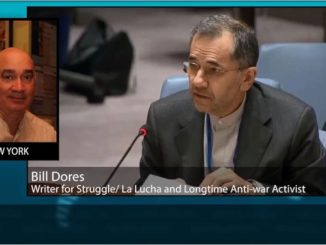
U.S. engaged in 30-year futile war in Middle East

An American political commentator has said that the United States has been engaged in a 30-year long futile war in the Middle East to regain the monopoly on the world’s energy reserves.

Bill Dores, a writer for Struggle-La Lucha and longtime antiwar activist, made the comments in an interview with Press TV on Monday.

“Today we celebrate the life of great Black leader Dr. Martin Luther King Jr. who fought for peace and justice and was likely murdered by agencies of the U.S. government,” he said.

“Dr. King pointed out the bombs the United States was then dropping on Vietnam also explode at home, destroying the possibility of a decent life for millions here, especially for working class and oppressed people. Washington’s wars and sanctions still have that effect today,” he added.

“For the past 30 years, the United States has been engaged in a long and futile war to try and regain the monopoly that U.S. oil companies once had on the world’s energy reserves. This is only for the benefit of a handful of multibillionaires not the majority of people,” the analyst said.

“We do not benefit from sanctions on other countries, or giant war fleets roaming the seas thousands of miles away, or the endless stream of arms and aid to Israel, which occupies Palestine and bombs and shells Gaza and Syria, on an almost daily basis,” he stated.

Iran’s ambassador to the United Nations says the United States should stop its hostility toward Iran and recognize the Islamic Republic as a regional power in order to improve its image in the eyes of its own and world people.

“Americans must stop hostility toward Iran and understand that Iran is a definite reality and a powerful country in the region, which intends to live in peace with its neighbors within framework of the international law,” Majid Takht-Ravanchi said on Monday.

Iran’s UN envoy made the remarks in an exclusive interview with IRNA when asked about the possible impact of a change in the U.S. foreign policy apparatus under the new administration of president-elect, Joe Biden.

“The ambassador said that the United States should recognize Iran as a regional power. Iran is part of the region. It has helped other nations in West Asia to develop their economies, and defend themselves. The United States intervention there has been purely destructive. The sanctions have killed millions on top of the bomb. These cruel and inhumane sanctions must end right now,” Dores said.

“The United States has no business trying to dictate to the people of the region. Endless wars and sanctions enrich the few and prevent the possibility of a better world for people everywhere. The U.S. should get all its military forces out of that region, out of the so-called Middle East and stop funding the Israeli occupation of Palestine. It should engage in peaceful trade and relations with Iran and the other countries in the region,” he noted.

Source: Press TV

Strugglelalucha256


Iran and Iraq demand Trump’s extradition

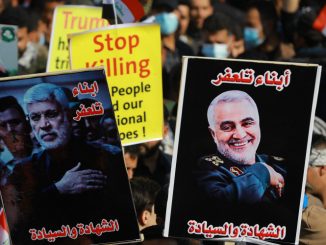
A year before his abortive coup attempt in Washington, Donald Trump ordered the murder of Iran’s Gen. Qassem Soleimani in cold blood. Eight others died with the general in the Jan. 3 drone strike at Baghdad International Airport. Among them was Majdi Abu Muhandas, deputy commander of Iraq’s Popular Mobilization Units. Now both Iran and Iraq have filed requests for Trump’s extradition. 

General Soleimani’s funeral was one of the largest in history. Millions turned out as his coffin was carried across Iraq and Iran to his final resting place in his hometown of Kerman. He was loved for leading the fight against ISIS, Al Qaeda and other U.S.-backed terrorists in Syria and Iraq and his role in driving U.S.-Israeli forces out of Lebanon. His murder was a “crime against peace” under international law, an attempt to start a war. The U.S. should honor Iraq and Iran’s just requests and send Trump to face justice.

Strugglelalucha256


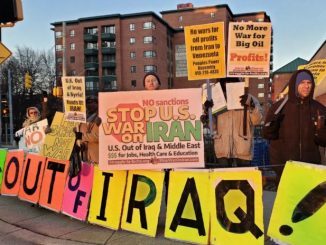
Stop U.S. attacks on Iran. No war! End sanctions!

On Facebook: Emergency Day-After Protests: U.S. Hands Off Iran

We call on the anti-war and anti-imperialist movement, workers’ and community organizations to be on alert for the possibility of a U.S. military attack on Iran. We urge the movement to join us in calling for emergency day-after protests in cities around the country to demand “Hands Off Iran” in the event of a strike by the Pentagon or its proxies. The U.S. may use Israel to initiate an attack.

Since Election Day, the Trump administration has escalated war threats against Iran. On Nov. 27, Israel assassinated Iranian scientist Mohsen Fakrizadeh Mahabadi. Israel is a proxy state completely dependent on Washington. It could not have carried out such a provocative act without prior approval from the U.S. government. 

On Nov. 30, the U.S. aircraft carrier Nimitz and its strike group of guided-missile cruisers and destroyers entered the Arab/Persian Gulf off the coast of Iran. On Dec. 10, U.S. B-52 bombers based in Louisiana flew another run over the gulf off the coast of Iran. Saudi, Bahraini and Qatari warplanes — made in the USA — flew with them. On Dec. 21, the U.S. nuclear submarine Georgia, accompanied by two other warships, passed through the Strait of Hormuz.

On Dec. 20, several Katyusha rockets were fired at the Green Zone in Baghdad, Iraq, which houses the U.S. Embassy. One Iraqi civilian was killed and there was minor damage to the perimeter of the U.S. Embassy complex. The U.S. Central Command issued a statement claiming that the attack was “almost certainly conducted by an Iranian-backed rogue militia group,” a charge disputed by Iraqi officials. On Dec. 23, Trump tweeted: “If one American is killed, I will hold Iran responsible. Think it over.”

The Trump administration’s baseless and illegal withdrawal from the 2015 Iran nuclear agreement was a pretext to escalate war preparations. Unilateral sanctions imposed on Iran by Washington and enforced against other countries have caused terrible economic harm as well as death, especially during the COVID-19 pandemic. Sanctions are another form of war. 

Last January, Trump ordered the assassination of Iranian Gen. Qasem Soleimani while he was on a peace mission to Iraq. Soleimani helped lead the resistance to imperialist-funded forces seeking to overthrow the sovereign government of Syria. On Dec. 24, Israel launched a missile attack in western Syria.

The section of the U.S. capitalist class that most favors Trump includes oil and gas bosses who profited from the fracking boom after the U.S. invasion of Iraq in 2003. Overproduction of oil on the global market has sent their profits into a downward spiral. They are eager for a war to disrupt the supply chain and boost their profits at any cost.

Trump may use a war with Iran as part of his strategy to overturn the election and remain in office. But even if Joe Biden takes office on Jan. 20, there is no guarantee that he would end a war that Trump set in motion. One only needs to look at recent congressional bipartisan actions — $696 billion for the U.S. war machine and a mere $600 in “stimulus” for workers — to see the real priorities of both the Republicans and Democrats.

Thirty-one years ago, George H.W. Bush and the Pentagon used the December holidays as a screen for the brutal, illegal invasion of Panama. The rulers must be put on notice that they will be met with opposition in the streets if they dare to attack the people of Iran.

Money for COVID relief for the people, not for war! 

U.S. troops out of Syria and Iraq!

End the sanctions! U.S. hands off Iran!

Socialist Unity Party/Partido de Socialismo Unido and Struggle-La Lucha newspaper

December 25, 2020

Strugglelalucha256


Trump seeks war on Iran to save U.S. fracking industry

Blood and oil and Trump and Biden, part 1

The Trump regime sees war with Iran as its salvation. They’re using his last legal weeks in office to provoke one. The racist state of Israel is their advance guard and agent provocateur. Israeli Prime Minister Benjamin Netanyahu is a partner in the crime. 

It’s not about Iran’s peaceful nuclear energy program. Or Trump’s ego and legal woes. It’s a last-ditch effort to bail out the fracking billionaires who own Trump and the Republican Party, and prevent the collapse of the U.S. fossil fuel industry. 

Fracking — the hydraulic fracturing of oil and gas from shale rock — is the cornerstone of Trump’s fantasy of “U.S. energy dominance.” He tells his followers it’s a recipe for peace. But in fact the fracking industry needs endless war to survive. And the idea of “U.S. energy dominance” is genocidal and insane. 

Blood and fracking

The “shale revolution” that once enchanted bankers and investors was a product of the energy-price boom caused by the 2003 Iraq War. It was an artificial bubble, sustained for over a decade by bloody wars and cruel sanctions. 

It has now burst. Hundreds of billions of dollars have been lost. Mountains of debt cannot be repaid. The Trump regime is trying desperately to reinflate it. 

The shale debacle turned many on Wall Street against Trump. But he retains a base among those capitalists whose fortunes depend on fracking.

Those fortunes are collapsing with the price of oil, and Trump’s political fortune with them. The fracking barons are desperate for subsidies, tax breaks and an end to environmental regulation. 

They are also desperate for an oil war. Not a war to “get oil” — contrary to popular belief, the U.S. has never, ever gone to war for that purpose. Rather, a war to restrict supply and drive up prices, profits and rates of return. That’s what Washington’s 30-year war in the “Middle East” (Western Asia and North Africa) is all about.

Stealing Palestine’s gas

Also involved is the fate of Secretary of State Mike Pompeo’s pet East Mediterranean Pipeline Project, a U.S.-Israeli scheme to bring stolen Palestinian gas to Europe. Its investors dream of challenging Russia for the European energy market. 

The racist state of Israel has always been Washington’s hit man in the region — a highly paid one. Washington props Israel up with an endless stream of arms and dollars. Within that relationship, the Republican Party and Netanyahu’s Likud Party have a special alliance. 

Their ties grew stronger in 2010, when Texas-based Noble Energy began drilling for gas in the stolen waters off the coast of Palestine. Noble built close links with the Trump campaign in 2016. In October 2020, oil giant Chevron acquired Noble for $5 billion. It also assumed the company’s $8 billion debt. Chevron has now replaced ExxonMobil (XOM) as the largest U.S. oil monopoly.

On Oct. 20, the racist Israeli regime and the United Arab Emirates signed a deal to transport UAE oil to Europe via occupied Palestine. The oil would travel through the Eilat-Ashkelon Pipeline, built to bring Iran’s U.S.-owned oil to Europe in the Shah’s time. There is now talk of a direct pipeline from Saudi-occupied Arabia to the Mediterranean across stolen Palestinian land.

U.S. & Israel: partners for war

On Nov. 27, in a brazen terrorist attack, an Israeli death squad murdered Dr. Mohsen Fakrizadeh, director of Iran’s Center for Defensive Innovation and Research. They ambushed him on his way to visit his family. Dr. Fakrizadeh helped Iran produce its own medical equipment, including a COVID-19 test kit. Trump retweeted an Israeli post praising his murder.

A week before Dr. Fakrizadeh’s murder, Trump’s Secretary of State Pompeo met Israeli Prime Minister Netanyahu in Jerusalem. Bahrain’s Foreign Minister Abdullatif Al Zayani joined them there. As Pompeo arrived in occupied Palestine, Israel’s made-in-the-USA air force attacked Damascus International Airport in Syria. 

War criminal Elliot Abrams, Trump’s “special representative” on Iran and Venezuela, met Netanyahu on Nov. 9. Abrams, who served under Ronald Reagan and both Bushes, has a long record of involvement with covert operations and death squads.  He was pardoned by George H.W. Bush for lying to Congress about U.S. crimes in Central America.

On Nov. 21, the U.S. Air Force dispatched B-52 bombers to the Arabian/Persian Gulf. They flew over Israeli-occupied Palestine before landing in Qatar. Pompeo was in Qatar that day.

On Nov. 23, Pompeo and Netanyahu were in Saudi-occupied Arabia for a secret meeting with Crown Prince Mohamed Bin Salman. As they met, Yemeni Resistance missiles hit a Saudi ARAMCO oil storage site in Jeddah. 

The Saudis deny this meeting happened. Reports say the Saudi prince is reluctant to risk war with Iran. Like the U.S. ruling class, the House of Saud is riven with factions. 

On Nov. 30, the U.S. aircraft carrier Nimitz and its strike group of guided-missile cruisers and destroyers entered the Arab/Persian Gulf off the coast of Iran.

On Dec. 1, Israeli media reported a drone attack on Iran’s Islamic Revolutionary Guard Corps soldiers at the Iraq-Syria border. The IRGC is helping both countries fight U.S.- and Saudi-funded terrorists. It also claimed the assassination of an Iranian official in oil-rich Ahwaz province.

On Dec. 2, Pompeo was back in Riyadh, this time with Trump’s son-in-law and adviser Jared Kushner and a “team.” Kushner has built a real estate empire with Saudi and Israeli cash. 

Kushner also went to Qatar to meet Prince Hamid Khalifa and bring him into the anti-Iran alliance. The ruling-class faction behind Trump wants to build an international alliance that outlasts his presidency. 

On Dec. 10, U.S. B-52 bombers based in Louisiana flew another run over the Arab/Persian Gulf off the coast of Iran. Saudi, Bahraini and Qatari warplanes — made in the USA — flew with them.

Murder in Iraq and Yemen

The Trump regime has worked desperately to provoke war with Iran. Last Jan. 3, 2020, Trump ordered the assassination of Iranian Gen. Qassem Soleimani in Baghdad. Iraqi commander Abu Mahdi Al Mohandas was also murdered in the U.S. drone strike. The two had led the fight against ISIS and al-Qaida in Iraq and Syria.

Gen. Soleimani was in Iraq to meet Saudi representatives about reducing tensions. On Sept. 22, Trump bragged about the assassinations in a hate filled rant to the United Nations General Assembly.

Following the assassinations, on Jan. 10, Iraq’s parliament voted that U.S. troops should leave the country. The Trump regime refused. 

It has also escalated the war in Yemen. In March, U.S. Marines invaded the Yemeni island of Socotra. They came to back up UAE forces in the genocidal war against Yemen. Israeli troops joined them there. 

Every 10 minutes, a Yemeni child dies from the brutal blockade that the U.S., Saudi Arabia and the UAE have imposed on that impoverished land. 

In 2019, Trump vetoed bills restricting U.S. involvement in that war and ending U.S. arms sales to Saudi Arabia. 

On Dec. 11, Steve Mnuchin’s Treasury Department put sanctions on five Yemeni officials. The White House says it will add Yemen’s Ansarullah government — the “Houthis” — to the State Department terror list. Aid organizations say that that will make it harder to bring humanitarian aid to the war-ravaged country. 

On Dec. 9, Iran sanctioned U.S. Ambassador to Yemen Christopher Henzel for his role in the humanitarian catastrophe there.

Trump’s ‘peace deals’ are war moves

War with Iran is the object of Trump’s vaunted Abraham Accords.” That’s what he calls the “peace deal” he “brokered” between Bahrain, the United Arab Emirates and the Israeli occupation regime in Palestine. 

Bahrain is over 1,200 miles from Palestine. The UAE is more than 1,600 miles away. Neither state has ever been at war with Israel. Bahrain is, however, only 480 miles over open water from Iran. The UAE is just over 600 miles away. That’s 20 and 30 minutes respectively as the F-35 stealth fighter flies. 

The U.S. has already gifted Israel two squadrons of F-35s. On Dec. 9, the U.S. Senate approved Trump’s $23 billion arms sales to the UAE. Fifty F-35s are included in the sale. Lockheed Martin keeps a production line running to supply F-35s to Bahrain. 

On Dec. 10, Trump announced that U.S.-backed King Mohammed VI of Morocco would also “normalize” relations with the Israeli settler state. In return, the U.S. would openly recognize Morocco’s annexation of the Sahrawi Arab Democratic Republic. The king, who has a personal fortune of $2.1 billion, spent $3.5 billion of his people’s money on U.S. arms this year. 

The ‘supermajors’

Powerful forces in the U.S. ruling class are wary of Trump’s war schemes in the Arab/Persian Gulf, unless they can be assured of a quick victory and that they would reap the benefits. 

They worry about its impact on their European and Asian investments, the price of oil and the value of the U.S.’s No. 1 export: the dollar. Bankers fear war would disrupt the flow of petrodollars that the ruling families of the Arabian peninsula pour into their vaults. 

The four energy “supermajors” — XOM, Chevron, British Petroleum and Royal Dutch Shell — made huge profits off the wars in Iraq, Libya and Syria. Now they share the crisis of their industry. They have lost tens of billions of dollars this year. 

In January, Chevron wrote off $11 billion in fracking investments. In August, BP — registered in Britain but controlled by U.S. investors — reported a $17 billion second-quarter loss. XOM, once the crown jewel of the Rockefeller empire, lost its 92-year-old spot on S&P’s Dow Jones Industrial Average. On Dec. 1, the oil giant wrote off $20 billion in U.S. domestic assets, the biggest downgrade in its history. 

Their most important strength in the world market is their relationship with Saudi Aramco, which owns the biggest and cheapest oil reserves in the world. They once owned it outright, when it was the Arabian-American Oil Company. They still control most of its exports. They also operate in Iraq, Kuwait, Bahrain and the UAE. With those resources, they dominate the Asian energy market. 

The Big Four have close ties to JPMorgan Chase and Citibank, which “manage” hundreds of billions of Gulf State petrodollars. XOM owns much of the Saudi petrochemical industry. 

Those companies owned Iran’s oil when the U.S. puppet Shah was in power. When the Iranian people overthrew the tyrant in 1979, they lost a gold mine. They dream of overthrowing the Islamic Republic and making Iran a colony again. 

But a war that disrupts Arabian energy production or closes the Straits of Hormuz could make their bad situation worse. They don’t want to lose vital markets to Russia — which they see as their main competitor — or lose out to their rivals in the U.S. fracking industry. Trump helped his friends at Cheniere Energy score liquefied natural gas (LNG) supply contracts with China and South Korea this year.

Middle East Escalation Threatens Global Chemical Supply, Demand,” Business & Industry Connection magazine warned after the Soleimani assassination. 

Like the frackers, the supermajors want higher prices. But the prices the frackers need would also boost the renewable energy and electric vehicle industries. In their fight for the world market, the supermajors need access to cheaper production. 

‘Game of Thrones’ in Washington: Persian Gulf vs. Permian Basin

Former XOM CEO Rex Tillerson was Trump’s first secretary of state. He said it was in the “U.S. interest” to stay in the Iran nuclear deal. Trump fired him in March 2018. Secretary of Defense Jim Mattis agreed with Tillerson. He was gone by the end of that year.

Trump replaced Tillerson with CIA Director Mike Pompeo. In his time on Capitol Hill, Pompeo was known as the “Congressman from Koch.” Koch Industries gets most of its revenue from North American energy operations. It also competes with XOM in the petrochemical industry. 

For Koch, a devastating war in the Arab/Persian Gulf would be a windfall. As it would be for all the fracking barons and speculators behind Trump. They don’t have access to the oil and gas of West Asia, Africa and South America. The supermajors have locked them out. They don’t have interlocking directorates with transnational banks and corporations or their vast cash reserves. They want to follow in the footsteps of the Rockefellers, Pews and Mellons: robber barons who became monopolists. They are a century too late. 

Their profits come from the Permian Basin in the southwestern U.S. — a region stolen from Mexico and Indigenous peoples — not the Persian Gulf. Yet they are no less imperialist than their blue-chip cousins. They too must follow the iron law of capital: expand or die. They too are in constant struggle with declining rates of profit. They too must conserve the value of their capital and find new outlets for its profitable investment.

That law has driven every U.S. imperialist war since President William McKinley invaded Cuba, Puerto Rico and the Philippines in 1898. 

The billionaires who own Trump

Who are they? “Big oil remembers ‘friend’ Trump with millions in campaign funds,” the British Guardian reported August 9. The headline is misleading. 

The capitalists behind Trump are very rich indeed. But they are not from among the shrinking club of giant multinationals that made up Big Oil. They are “new money” oil drillers and speculators, corporate “outsiders.” Their fortunes multiplied in the energy-price boom created by the Iraq War. The biggest banks flooded them with cash. They are deep in debt and fighting to survive. 

The Iraq War pushed them into the big leagues. Trump got them the White House. They don’t want to give it up. 

The Guardian article describes a fundraising gala for Trump at billionaire Kelcy Warren’s “palatial Dallas,Texas, home.” Warren’s company, Energy Transfer Partners, is majority owner and operator of the Dakota Access Pipeline (DAPL). 

Trump’s first act in office was to unleash federal troops against Native water protectors blocking the pipeline. Trump personally invested in ETP and Phillips 66, which owns 25% of DAPL.

The Guardian also mentioned Trump donors Harold Hamm of Continental Resources, Jeff Hildebrand of Hilcorp, John Catsimatidis of United Refining Co., Syed Anwar of Midland Energy, Robert Murray of Murray Energy and Joe Craft of Alliance Resource Partners. Joe Craft is married to Kelly Craft, Trump’s representative to the United Nations. She introduced his hate-Iran talk at the General Assembly in September by bragging about U.S. intervention in Syria. 

Other big capitalists who’ve bet big on Trump and fracking include Blackstone Group’s Steven Schwarzman, Ken Fisher of Fisher Investments, Texas banker Andy Beal, John Paulson of Paulson & Co., Jack Fusco of Cheniere Energy, Henry Kravis of KKR, Marc Rowan of Apollo Global Management, Paul Singer of Elliot Management, and the Hunts and the Wilks brothers. Oil-money heirs Timothy Mellon and Ross Perot Jr. also gave big to the Trump campaign. 

Schwarzman has since called for Trump to accept the election results. So has energy magnate Charles Koch, who helped put the Manhattan real estate parasite in the White House. No doubt promises have been made.

Trump’s biggest lie

In the Oct. 22 presidential debate, Trump told a whopper even by his standards. “We are energy independent for the first time,” he claimed. “We don’t need all of these countries that we had to fight wars over because we needed their energy. We are energy independent.”   

But even Trump knows that Washington’s 30-year war in the “Middle East” is not about getting oil. He knows it’s a war for monopoly, to control the world’s energy reserves and revenues. Trump basically admitted that a year ago when he ordered U.S. troops to seize Syria’s oil fields. He offered them to XOM. 

Trump also knows that the U.S. fracking industry cannot survive without endless war. 

Fracking barons need war

Fracking is not only environmentally destructive. It is very expensive. It costs from $45 to $90 per barrel to extract a barrel of oil from North American shale. Pumping a barrel of crude in Iran or Iraq costs less than $10. A barrel of heavy crude from Venezuela’s Orinoco Belt costs about $12 to pump. A barrel from Arabia’s giant Ghawar Field costs less than $3. 

A barrel of bitumen oil from Canada’s Athabascan tar sands costs $85 to produce. The Koch brothers made billions there after the Iraq war. They abandoned their leases there last year.

Meanwhile, the onward march of technology is making renewable energy — wind, solar, fuel cells, etc. — cheaper and more practical, threatening the future of fossil fuels.

In April, the price of oil fell to -$40 a barrel — that is, below the cost of production. Oil companies had to pay for storage. It wasn’t just the COVID pandemic. There was a price war between Russia and Saudi Arabia. 

Bloodbath For America’s Oil Frackers As Saudis Declare Price War On Russia” was the headline of a March 9 article in Forbes magazine. 

Here is how Forbes described the situation: “Oil companies are suffering massive share price losses, with ExxonMobil down 10%, Chevron 13% and BP 19%. Shares in Saudi Aramco also lost about 10%, sending the implied market cap of the world’s biggest oil giant down to $1.6 trillion—down 20% from its December high. 

“Those losses are modest. The pain is much more acute among the heavily indebted, high-cost shale frackers like Chesapeake Energy (–22%), EOG Resources (–30%), Occidental Petroleum (–35%), Marathon Oil (–40%) and Diamondback Energy (–48%) so far today. 

“At the beginning of 2020 oil prices were just above $60 per barrel — even that was scarcely high enough for American drillers to break even. Now all of a sudden we’ve nearly revisited the lows of $26 last seen during the price war of 2016.” 

The Financial Times of March 29 declared, “Wall Street calls time on the shale revolution.

What did Trump do? In words, he tweeted, “Good for drivers, low gas prices.” But in deeds, he ordered the U.S. Strategic Reserve to buy oil and drive up prices. Then he gave the Saudis an ultimatum: Stop the price war and cut production. If not, the U.S. would end military support for the genocide in Yemen. 

War in Iraq made fracking profitable

The year 2020 has been the energy industry’s worst year since 1998. That’s when the collapse of the Russian ruble drove prices below $10 a barrel. That crash happened despite the murderous sanctions on Iraq imposed by the first Bush regime. Bill Clinton continued the Bush sanctions, hoping to induce U.S. oil firms to invest in the former USSR. 

The year 1998 was also the year that Texas wildcatter George W. Mitchell patented the technology that the fracking industry uses today. It took the 2003 invasion of Iraq to make it profitable. 

The entire U.S. ruling class and political establishment united behind the Iraq War, and the invasion of Afghanistan before that. Sen. Joe Biden of Delaware was the cheerleader from the Democratic side of the aisle. 

Blood feast in Iraq

The U.S. invasion of Iraq devastated that country. Hundreds of thousands of Iraqi people died. Five million children became orphans. Six million people became refugees.  

In the U.S., skyrocketing fuel prices forced poor families to choose between heating and eating. Lakota elders on the Pine Ridge reservation burned their clothes for fuel. Venezuela’s Bolivarian government led by Hugo Chávez donated heating oil to help poor and oppressed communities in the United States. The U.S. government didn’t care.

For Big Oil and Wall Street, the war was a bonanza. To these modern-day plunderers, Iraq was what the silver mines of Potosí were to the 16th-century Spanish conquistadores. Except in this case, the plunder came not from enslavement and exploitation but from simple destruction. 

Accumulation by destruction

In 2002, before U.S. invaders destroyed Iraq’s state-owned oil industry, the price of West Texas Intermediate crude, a benchmark used by the oil industry, hovered around $20 a barrel. By April 2003, when U.S. tanks rolled into Baghdad, WTI crude was over $40 a barrel. By 2007, it hit $79 a barrel. XOM and Chevron saw their profits rise nearly 300%.

Then, the 2007 subprime mortgage meltdown hit. Prices fell back to $30 a barrel. In January 2008, the U.S. Navy provoked a confrontation with Iran in the Straits of Hormuz. In March, the Bush regime imposed new sanctions on Iran, Sudan, Syria and Venezuela. 

By July, oil prices soared to $147 a barrel. It was XOM’s most profitable year ever. The oil giant’s market cap hit $504 billion. It was $234 billion in 2002, the year before the invasion of Iraq.

Mass murder in Iraq made profitable the DAPL and Keystone XL pipelines, the plunder of Canada’s tar sands, and mountaintop removal projects in Appalachia. Or so it seemed.  

Shelved projects like BP’s Baku-Tbilisi-Ceyhan pipeline from the Caspian Sea to the Mediterranean and XOM’s Chad-Cameroon Pipeline in West Africa became realities. XOM and Saudi Aramco built a huge refinery in Tianjin, China.

The slaughter unleashed a 21st-century gold rush into the shale plays and tar sands of North America. Credit flowed like a river. “Nonperforming” loans became “performing” loans.  “Nonproductive” assets became “productive” assets.  Millionaires and billionaires became multibillionaires. 

XOM and Chevron competed with “new money” wildcatters and speculators for fields once thought marginal. The biggest banks competed to finance them all.

Shale oil, bitumen, offshore drilling, coal, even ethanol, all flourished. Firms like General Electric and Berkshire Hathaway poured money into fracking. Four of the top 10 companies on Fortune’s 500 list for 2009 were energy companies. XOM was No. 1. In 2020, only XOM remained, at No. 3.

The flood of investment in North American shale paid off big in Obama’s second term. In 2013, the U.S. Energy Information Agency declared that the U.S. had replaced Russia and Saudi Arabia as the world’s top petroleum producer. (Trump, of course, claims it happened on his watch and that he made it possible.)

Capitalist bubbles always burst

But the boom was not without downsides for the U.S. capitalist class as a whole. High oil prices hurt such sectors as airlines, retail, auto sales, trucking and delivery companies and online retailers dependent on them (including Amazon).

High prices helped oil-producing countries free themselves from the grip of U.S. finance capital. They empowered the Venezuelan-led ALBA bloc in South and Central America and Libyan leader Muammar Qadaffi’s vision of an African central bank and a gold-backed pan-African currency. 

The Chávez government in Venezuela was able to build 500,000 units of rent-free housing and even help poor and oppressed communities in the U.S. It also strengthened Russia economically and militarily. A surge of Russian direct overseas investment challenged Wall Street. 

But the biggest problem was capitalism itself. When prices and profits boom, capitalists will produce and invest more than “the market can bear.” Collapse follows. Every capitalist bubble bursts. Every boom leads to a crash. 

In 2009, XOM spent $30 billion to buy fracking giant XTO. The firm was No. 5 on Fortune’s list of “100 fastest-growing companies.” The purchase made the biggest U.S. oil company the biggest gas producer in North America. 

Financial analysts now say that the purchase was the worst decision the XOM ever made. On Dec. 1, 2020, the giant wrote off XTO as a $20 billion loss. 

From restricting supply to predatory pricing

The Obama administration’s wars inflated the bubble further.  

The year 2011 was a bloody year. The U.S. and its NATO allies bombed Libya and murdered Muammar Qadaffi. It joined with the Saudis, the UAE and Israel to arm and fund a mercenary war in Syria. That war has raged for nine years and taken hundreds of thousands of lives. It has blocked construction of the planned Friendship Pipeline, a project to bring natural gas from Iran and Iraq to the Mediterranean. 

The U.S. also imposed new sanctions on Iran, Sudan and Venezuela. Oil prices stayed over $90 a barrel. 

Nonetheless, by January 2014, overproduction was driving prices downward. In February, the U.S.-backed coup in Ukraine threatened Russian energy shipments to Europe. “Oil hovers near $108 as Ukrainian crisis worsens,” CNN reported on April 14, 2014. Foreign Affairs magazine, the organ of the Council on Foreign Relations, devoted its spring issue to the glorious future fracking would bring. 

Russian gas kept flowing west, however. And east. In May 2014, Russia and China agreed to build a $55-billion gas pipeline, called Power of Siberia, from Yakutsk to China. A second pipeline deal was signed that September. 

In July 2014, Russian President Vladimir Putin toured Latin America, meeting Fidel Castro, Daniel Ortega, Nicolás Maduro and Brazilian President Dilma Roussef. In Havana, Putin announced that Cuba’s $32-billion debt to Russia was canceled. Russia agreed to help Cuba develop newly discovered oil deposits in its waters, pledged more aid to Venezuela and to help build a canal across Nicaragua. 

Washington responded with a major strategy shift, from doomed efforts to restrict supply to “predatory pricing.” Ida Tarbell popularized that term in the late 19th century to describe a tactic John D. Rockefeller’s Standard Oil trust used to crush its competitors. The Reagan regime and Saudi Arabia used it in the 1980s against the Soviet Union. 

In June 2014, Secretary of State John Kerry met Saudi King Abdullah in Riyadh. According to Reuters, Kerry and Abdallah “briefly discussed oil supplies.” In reality, the U.S. ordered its Saudi clients to ramp up production and flood the world oil markets. The two met again in September.

On Nov. 27, at an OPEC ministers’ meeting in Vienna, the Saudis blocked production cuts. When the Saudis opened their taps, everyone else had to do the same. The price of oil plummeted. By January 2015, it was back below $40 a barrel. 

The Saudis got paid off in March 2015, with U.S. support for their war against Yemen.

Another kind of war

U.S. corporate media, which pretend the Saudi kingdom is an independent country, played the price war as an attack on U.S. producers: OPEC vs. Texas. “Oil prices keep plummeting as OPEC starts a price war with the U.S.,” Vox news reported dutifully. But in fact, the “price war” was waged in collaboration with both Washington and the oil supermajors who export and market most Saudi oil. 

Rightwing military analyst Ralph Peters (USA Lt. Col. ret.) called it more honestly.  “Saudi Arabia’s oil war against Iran and Russia” was how he described it in Rupert Murdoch’s New York Post (Dec. 14, 2014).

“Did you know there’s an oil war? And the war has an objective: to destroy Russia,” Venezuelan President Nicolás Maduro said on Dec. 29, 2014. “It’s a strategically planned war … also aimed at Venezuela, to try and destroy our revolution and cause an economic collapse.”   

“The fall of the oil prices is not just something ordinary and economical, this is not due to only global recession,” said Iran’s Prime Minister Hassan Rouhani. “It is a political conspiracy by certain countries against the interest of the region and the Islamic world.”

The U.S. fracking industry also took a beating, however. To the supermajors it was all good. They had huge cash reserves, ties to the biggest banks, and cheap oil and gas from around the world. If the “independent“ drillers went under, they could buy up their assets and take their place in the next boom. 

“Exxon Could Be the Big Winner of the Oil Crash,” wrote Bloomberg News on Feb. 2, 2015. 

Fracking barons revolt, bring in Israel

Then the Obama White House announced progress on the Iran nuclear deal (JCPOA), which could lead to lifting sanctions. “Iran’s Nuclear Deal Could Open Oil Flood,” Murdoch’s Wall Street Journal warned (March 15, 2015). 

(Full disclosure: Rupert Murdoch sits on the board of New Jersey-based Genie Energy, which had a contract to explore for oil in the Israeli-occupied Golan Heights. The project was found to be “not commercially viable” — prices weren’t high enough.)

The frackers rebelled. Their political servants in the Republican Party invited Israel’s Netanyahu to address a hate-Iran, hate-Obama rally in the Capitol on March 3, 2015. It was an unprecedented action. 

In June 2015, Trump threw his hat into the ring. He made tearing up the JCPOA a plank on his platform. He also said Saudi Arabia should have nuclear weapons. And he raved against Obama’s alleged “war on coal.”

Price wars are easier to start than to finish. Capitalist market forces don’t advance or retreat on command. By 2016, even the supermajors were hurting. In April, Standard & Poor’s stripped XOM of its AAA credit rating. It had held that rating since the Great Depression, when the company was known as Standard Oil of New Jersey. 

The Saudis and the UAE also chafed at Washington’s low price diktat. They threatened to cut back on U.S. arms contracts. They funneled money to the Trump campaign. 

Trump’s rebellion of oil billionaires

Donald Trump’s campaign was neither a Russian plot nor a populist upsurge. It was a rebellion of the fossil fuel industry against low prices, environmental regulations and the Obama administration’s retreat from military confrontation with Iran and Syria. 

In December 2016, the Obama White House ordered work stopped on the DAPL pipeline. It was a parting shot against the frackers. Trump lifted the stop-work order and unleashed federal troops against Indigenous water protectors. 

In January 2017, the Saudis made major production cuts and most of OPEC followed. “Saudis cut oil output to lowest in 2 years, pledge further reductions,” Reuters reported (Jan. 12, 2107).

Trump wanted to assassinate Syria’s president

In April 2017, Trump did what Obama backed down from doing in September 2013. He ordered the first direct U.S. attack on Syrian government forces: a missile strike on the Syrian airbase at Al Shayrat. In September 2020, Trump told Fox News that he had planned to order the murder of Syrian President Bashar Assad. He said Secretary of Defense James Mattis restrained him. 

The exit of Tillerson and Mattis marked the breaking of the alliance that put Trump in the White House. The most desperate “new money” oil interests and speculators were now in charge. They were less interested in invasion and occupation than the quick profits of destruction. War with Iran was their priority. 

Everything the Trump regime has done in the last two years — from troop redeployments to the courting of Turkey’s President Recep Erdoğan — should be seen in that context. 

An example of the conflicts inside the ruling class was Trump’s April 21, 2020, order to Chevron to stop drilling in Venezuela. It was good for Trump’s fracking bosses and bad for Venezuela. But it was also bad for Chevron. 

The new regime

What will Joe Biden do? The same as every other U.S. president has done: What he’s told. 

Presidents, including Trump, are not decision makers. They are paid actors hired by ruling class factions. There will be a fight over which ruling class faction does the telling. 

In monopoly capitalist states, finance capital is the ultimate power. But even the bankers are not their own masters. The sands of the world economy shift constantly beneath their feet. They are slaves to the ceaseless battle of capital against crisis and contraction, which defines the monopoly capitalist era. 

The Biden regime is also a coalition. It faces the same contradictions as Trump’s does. There is the clash between the position of U.S. monopoly capital in the world economy and the need and right of oppressed nations to develop their own productive forces. There is a constant battle for position between capitalist factions, which intensifies in times of economic contraction. 

It often appears as a fight over grand strategy, but usually comes down to who gets what. Both are expressions of the contradiction between the explosive growth of human productivity and the fetters of capitalist ownership. That contradiction leads inevitably to crisis and war. 

The real interests of working-class and oppressed people in this country are opposed to those of monopoly capital. We have nothing to gain from U.S. banks and investment funds being at the center of the world economy. Imagine how much better off we would be in a world of cooperation, not competition, destruction and plunder. 

Shut down the U.S. Central Command! Bring home all the troops, ships, planes, spies and other weapons and agents of destruction! End the sanctions! End all U.S. aid to the racist state of Israel! 

Make the arms plants manufacture vaccines, ventilators, medical equipment and PPE, not weapons of destruction. Money for health care, housing, schools and the people, not endless war!

Strugglelalucha256


Trump wants Iran’s oil and gas off the market for the benefit of U.S. oil corporations: Expert

From PressTV

U.S. President Donald Trump’s pursuit of confrontation with Iran is about keeping its oil and gas off the market for the benefit of U.S. oil corporations, an American political analyst has said.

Bill Dores, a writer for Struggle-La Lucha and longtime antiwar activist, made the remarks in an interview with Press TV on Thursday while commenting on the statement of EU foreign policy chief Josep Borrell who said the United States needs to rejoin the Joint Comprehensive Plan of Action (JCPOA).

The European official also called for Iran to resume its full compliance with the nuclear accord.

“We need to find a way for the U.S. to rejoin the Iran nuclear deal, and for Iran to come back into full compliance. The nuclear deal is still assessed as a landmark of successful diplomacy … We are proud of it as the biggest success of our diplomatic capacity,” Borrell told a GLOBSEC webinar on Tuesday.

“First of all, the Trump regime’s opposition to the JCPOA, and its pursuit of confrontation with Iran, is not about Iran’s peaceful nuclear energy program, which everyone knows is peaceful. It’s about keeping Iran’s oil and gas off the market for the benefit of U.S. oil corporations, monopolies, in particular the fracking interests in the United States who are behind the Trump regime. They are desperate for confrontation, even war with Iran,” Dores said.

“From the point of view of Europe that would be a disaster. The United States has long used its control of the energy resources of West Asia and North Africa and its ability to use war to disrupt the flow of energy as leverage over Europe. And most of the West European countries or EU countries don’t have oil. They don’t have gas. They want oil and gas at the cheapest prices. And they need trade. They don’t want to be at the mercy of U.S. oil monopolies anymore,” he added.

“And so this creates a conflict of interest in the U.S. corporate establishment as well. It will be a conflict of interest in the incoming Biden administration. There are different factions, those who may benefit at the moment from relaxing sanctions, and those who, like the Trump regime are working with Israel to not only keep sanctions in place but actually escalate to war, as we can see with the murder of Dr. Fakhrizadeh,” he stated.

In May 2018, Trump withdrew Washington from the JCPOA, and since then, he has been piling sanctions on Iran as part of his administration’s so-called maximum pressure campaign.

In response to the U.S.’s unilateral move and Europe’s failure to help Iran take advantage of economic benefits of the deal, Tehran rowed back on its nuclear commitments five times in compliance with Articles 26 and 36 of the JCPOA.

As the Europeans continued to fail to put their verbal support for the deal into action, the Iranian Parliament (Majlis) passed a law last week to protect Iran’s interests against the Western sanctions.

Under the law, the Tehran administration is required to halt UN inspections of its nuclear sites and step up uranium enrichment beyond the limit set under Tehran’s 2015 nuclear deal if sanctions are not eased in two months.

The Islamic Republic has, however, stressed that its retaliatory measures will be reversible as soon as Europe finds practical ways to shield the mutual trade from the U.S. sanctions or if the U.S. decides to return to the JCPOA unconditionally and compensate for the economic losses Tehran suffered due to its abrupt pullout.

Strugglelalucha256


Condemn terrorist attack and murder of Iranian scientist Mohsen Fakriadeh!

Statement by Struggle-La Lucha newspaper and the Socialist Unity Party

The Socialist Unity Party and the publication Struggle-La Lucha send our deepest condolences to the Iranian people, the government of the Islamic Republic of Iran and to the family and loved ones of scientist Mohsen Fakrizadeh Mahabadi, murdered in a terrorist attack by agents of the Israeli government. The regime in Tel Aviv is a tool of U.S. imperialism, which provides billions of dollars in financial and military aid to keep the Israeli occupation of Palestine afloat.

Fakhrizadeh served as the head of the Research and Innovation Organization of the Defense Ministry.  This made him a major target for Israeli’s intelligence services, who have a track record of killing Iranian scientists. His murder comes on the heels of the illegal assassination of beloved Islamic Revolutionary Guard Corps Commander Qassem Soleimani in January, ordered by U.S. President Donald Trump.

What hasn’t been publicized widely by the U.S. media is that Dr. Fakhrizadeh helped to develop a homegrown COVID-19 test kit, a fact that the United Nations recognized and applauded. 

This is of incredible importance. Iran has suffered under harsh U.S. sanctions that have prevented it from getting crucial medical aid and other necessities during the global pandemic. As a result, children are dying and people are unable to get the medical care that was once taken for granted. Sanctions are another form of war meant to subjugate and destroy sovereign countries. 

What is taking place is not about Iran’s peaceful nuclear energy program. The continuing war on Iran is part of a broader strategy to protect U.S. oil and energy profits at the expense of the people, both at home and abroad. At this moment, the oil, gas and fracking industry is desperate to stave off collapse.

What is needed now is not to continue this war on the people of Iran, but rather to build global solidarity to fight a health crisis that has left nearly 1.5 million people dead so far. In the United States alone, which leads the world in COVID cases, at least 267,000 people have perished. 

The shameful and cowardly attack on Iran’s scientist Fakhrizadeh and other war provocations come at a time when the fight to end the scourge of racism and police violence in the U.S. is far from finished and when workers throughout the capitalist world are facing mass evictions, hunger and joblessness.

We call on the anti-imperialist and anti-war movement, on workers and community organizations in the U.S., to join us in demanding:   

  • Stop the U.S./Israeli war on Iran
  • End all sanctions — Reparations for damages 
  • End all aid to the racist state of Israel — Boycott-Divestment-Sanctions now 
  • All U.S. troops, ships, planes and spies out of the ‘Middle East’
  • Bring home the Fifth and Sixth Fleets. Shut down the U.S. Central Command 
  • End all arms sales to Saudi Arabia 
  • Fight COVID and racism, not wars for oil profits
  • Money for stimulus and people’s needs, not war! 

Dec. 1, 2020

Strugglelalucha256


Washington pushing to impose imperial will on Iran: Analyst

PressTV: Washington pushing to impose imperial will on Iran: Analyst 

Writer and activist Cheryl LaBash says the United States is attempting to make Iran bend to its imperial will by causing economic hardship for the Iranian people.

Source: urmedium.com/c/presstv/39034

Strugglelalucha256


Trump cannot order the waves to rollback against Iran

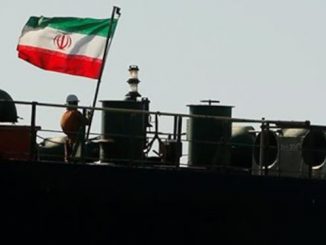
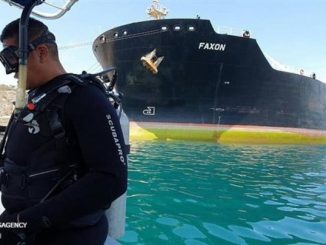
Iran completes second fuel delivery to Venezuela in defiance of U.S. sanctions

Well, first, congratulations on the tankers going through. It’s a great victory, not only for the people of Venezuela and Iran but for the people of the world. It is a defeat for US energy monopolies, who dream of restoring the control they once had of the world’s energy resources. The interests of the monopolies and Wall Street banks are at variance with those of the people of the United States. We have no need for permanent war just to keep some corporations wealthy and to keep the wealth of the world pouring into Wall Street. The people of the United States would benefit from cooperation with the people of the world.

What President Rouhani at the UN General Assembly last week said was in such contrast President Trump’s hate-filled rant, where he bragged about ordering the murder of General Soleimani and imposing “crippling sanctions” on the people of Iran. He also called Covid 19 the “China virus.”

President Rouhani on the other hand spoke of resistance and resilience and against racism war and hatred. He compared the boot of US power on the people in the world to the knee of the Minneapolis cop who murdered George Floyd.

As you know we have a major uprising here in this country against racism, police brutality and injustice. There should be solidarity between the people of this country and the people of Iran and everyone else who is fighting an unjust global order, an unjust order both here and in the world.

The Trump regime in particular represents oil and gas interests. It is pursuing confrontation with Iran and Venezuela because it wants US oil monopolies to again be the center of the world economy. The only way to defeat them is to keep challenging them.

Their imperialist system is in decline, in crisis, which is why someone like Trump is in the White House. People here are rising up against that unjust system. And inside the ruling class they are fighting each other.

A thousand years ago King Canute of England went to the sea and ordered the waves to roll back. He was showing he didn’t have absolute power because of course the waves didn’t roll back. Trump seems to actually believe he can order the waves of change to roll back, but he can’t. Nor can Biden or anybody else in Washington.

The world is changing, and it’s in the best interests of the majority of people in the United States to embrace that, to live in peace and solidarity with the people of the world. Bring all the troops and warships and planes home. Stop funding Israel. We don’t need any more wars for corporate profit.

Bill Dores is an American political analyst, a writer for Struggle-La Lucha and longtime antiwar activist. He recorded this article for Press TV website.

Source: PressTV

Strugglelalucha256


U.S.-Israel wage war of sabotage against Iran

On July 2, a huge explosion did extensive damage to Iran’s most important nuclear fuel enrichment facility at Natanz. The investigation by Iranian officials is ongoing, but there is little doubt that this was the latest attack on Iran by the United States and Israel. Investigators believe a bomb was brought directly into the building. 

The U.S.-backed Israeli regime responded to questions from the press with very thinly veiled comments that all but took responsibility for the deadly sabotage. In 2010, the U.S. and Israel carried out a cyberattack against the same facility using the Stuxnet virus. Initially, it was thought to have set back Iran’s centrifuge program for years, but the damage then turned out to be minimal.

The July 10 issue of the New York Times quoted anonymous U.S. officials who described U.S.-Israeli strategy as “a series of short-of-war clandestine strikes.”  

On July 23, three weeks after the Natanz explosion, two U.S. F-15 fighter jets flew toward an Iranian passenger plane headed to Beirut. While flying over Syria, the pilot was forced to take such sudden evasive maneuvers that some passengers flew from their seats and hit the ceiling of the aircraft from the sudden drop in altitude.

The attack on Natanz comes just six months after the Jan. 3 U.S. assassination of Iranian Gen. Qassem Soleimani, Mahdi al-Muhandis, deputy commander of Iraq’s Popular Mobilization Forces, and eight others. Soleimani was Iran’s most important military figure and was widely admired in Iran. 

Soleimani was in Baghdad, according to Iraq’s Prime Minister Adil Abdul-Mahdi, to discuss a message from Saudi Arabia intended to ease the ongoing confrontation with Iran. Saudi Arabia has been waging war against Yemen, where Houthi forces drove the pro-U.S. government out of the capital in 2014 and have held most of the country since. The Houthis receive aid from and are in an anti-imperialist alliance with Iran.

The uranium enriched at Natanz only reaches the 4.5 percent purity level for electrification. The advanced centrifuges that Iranian engineers are working on are to help make their outdated power grid more efficient, and free up gas and oil for export. Uranium needs to be enriched to 90 percent or higher purity to make a nuclear bomb. Iran doesn’t possess or want the technology to accomplish that. 

Undermine Iran’s development

Under the guise of preventing Iran from developing nuclear weapons, the attacks on Natanz are more attempts at undermining Iran’s development. The U.S. is the only country to have carried out a nuclear attack when it snuffed out the lives of hundreds of thousands of Japanese and Korean people at Hiroshima and Nagasaki in 1945 — a criminal and militarily unnecessary move, launched only as a threat to the Soviet Union.

Brian Hook, the U.S. State Department’s special envoy for Iran, was quoted in the same New York Times article saying, “We have seen historically that timidity and weakness invites more Iranian aggression.” The “aggression” that Hook refers to is Iran’s unyielding four-decades-long effort to guard its sovereignty and aid anti-imperialist struggles in Western Asia and North Africa.

Iran’s alliance and support for the Palestinian struggle and progressive forces in Lebanon, Syria and Yemen are thorns in the side of U.S. imperialism. Iran’s Lebanese ally Hezbollah fought alongside the Syrian Arab Army and defeated U.S. proxy forces there. 

Saudi Arabia is armed to the teeth with advanced U.S. military equipment used in the brutal war on Yemen. But inexpensive drone technology and ballistic missiles enable the Houthi forces in Yemen to strike back deep inside Saudi territory. In the most well-known incident, in September 2019, a Houthi drone strike heavily damaged two major oil facilities run by Saudi Aramco.

The imperialist ruling class wants to destroy the Islamic Republic of Iran. But the strength of Iran’s military and its potential ability to block the Strait of Hormuz — which much of the world’s oil is transported through — gives the imperialists pause regarding an all-out war. This conundrum brings about differences among them. 

During the Obama administration, an agreement was struck that curtailed Iranian nuclear research and development and imposed 24/7 International Atomic Energy Association (IAEA) monitoring of all of its nuclear facilities. The agreement also granted access to military sites. None of this was favorable to Iran; but in return, some of the deadly economic sanctions were lifted in 2016. 

Donald Trump’s early signals that he would end the agreement, his appointment of John Bolton, a hard-line enemy of Iran, to the administration, and the May 2018 withdrawal from the agreement, garnered a great deal of criticism. European allies and others were afraid of an all-out war.  

After Bolton was ousted as Trump’s national security advisor, and after the assassination of General Soleimani was followed by Iranian missile attacks on Pentagon bases housing U.S. troops and equipment, it was widely reported that Trump had pulled back from the brink of war with Iran. This was yet another slight shift in strategy and reflected the problems and frustrations for the imperialist ruling class over how to deal with the strength of Iran and other anti-imperialist forces in the region. 

A new and stronger anti-imperialist movement is needed in the U.S. Only a tiny clique of billionaires benefit from the horrors of imperialist war. 

The uprisings in defense of Black lives show how quickly pent-up anger can erupt into a militant struggle. As anti-capitalist sentiment spreads throughout the U.S. over the profit-first, people-be-damned response to the COVID-19 pandemic and the racist disparities revealed by it, an anti-imperialist movement is bound to develop.

Strugglelalucha256


U.S. refuses to leave Iraq, tightens siege on Iran

Iraq’s parliament and prime minister have asked the U.S. to end its 16-year occupation of their country. The Trump regime, which claims it wants to “end forever wars,” is refusing to bring them home. It is instead sending more troops, ships and planes to the region.

On Jan. 5, Iraq’s elected parliament passed a resolution calling for U.S. troops to leave. Trump responded by threatening the war-torn country with “sanctions like they’ve never seen before.” He also demanded Iraq reimburse the U.S. military for the costs of the U.S. bases there. 

In a Jan. 9 phone call, Iraqi Prime Minister Adil Abdul-Mahdi asked U.S. Secretary of State Pompeo to make plans for U.S. troops to leave his country. Pompeo said no. 

State Department spokesperson Morgan Ortagus said U.S. troops in Iraq are “a force for good” and would not leave. “At this time, any delegation sent to Iraq would be dedicated to discussing how to best recommit to our strategic partnership — not to discuss troop withdrawal, but our right, appropriate force posture in the Middle East,” she said. 

Ortagus repeated the Trump regime’s pretext for keeping U.S. troops in Iraq and Syria — the fight against ISIS. But on Jan. 3, in a cowardly sneak attack, the U.S. Air Force murdered two leaders of the fight against ISIS and al-Qaida in the region — Gen. Qassem Soleimani of Iran’s Islamic Revolutionary Guard Corps (IRGC) and Abu Mahdi Muhandis, deputy chief of Iraq’s Popular Mobilization Units (PMU).

In reality, the U.S., Israel and Saudi Arabia have covertly armed and funded ISIS, al-Qaida and other terrorist organizations in Syria and in Iraq. The Syrian Army, Iraqi Popular Mobilization Units, Iranian Revolutionary Guards, the Lebanese Resistance and Russia have borne the brunt of the fight against them. While U.S. troops occupy Syria’s oil fields, the Trump regime has openly authorized large arms shipments to al-Qaida forces holding the Syrian city of Idlib. 

Soleimani was on peace mission 

The two commanders were assassinated on Iraqi soil at Donald Trump’s orders. Gen. Soleimani had landed in Iraq to meet Prime Minister Mahdi. 

It was a peace mission. The Iraqi prime minister was trying to reduce tension between Iran and Saudi Arabia. That is something the Trump oil-money regime does not want to see happen. 

The assassination of two leaders of countries with which the U.S. isn’t at war is a crime under international and U.S. law. It is “a crime against peace,” the highest level of war crime. 

It wasn’t the Pentagon’s only war crime that day. U.S. forces also tried but failed to assassinate IRGC officer Abdul Reza Shahlai in Yemen. 

Shahlai was advising Yemeni forces resisting the brutal U.S.-backed Saudi siege war that has killed 85,000 Yemeni children and threatens millions with starvation. In April, Trump vetoed a congressional resolution limiting U.S. involvement in the Yemen war. 

Three days earlier, the U.S. Air Force bombed Iraqi soldiers deployed to fight ISIS, killing 25. In response, Iraqi protesters stormed the huge U.S. Embassy in Baghdad. The Soleimani-Muhandis assassinations prompted the Iraqi government to call for U.S. withdrawal. 

Sanctions are siege warfare

At a Jan. 8 press conference, Trump appeared to back down from a direct military attack on Iran. For now. However, he made clear that the U.S. siege against the Iranian people will intensify. That includes new economic sanctions against the oil-rich country, hitting its mining, construction, manufacturing and textile sectors. 

Sanctions are siege warfare. Tens of thousands of Iranians have already died from U.S.-imposed sanctions, which seriously hurt the country’s health care system. 

Reflecting broad anti-war sentiment in the U.S., the Democrat-controlled House of Representatives passed a resolution restricting Trump’s war-making powers. It will likely die in the Republican-controlled Senate. Trump had stated that his tweets constituted legal notification for Congress of U.S. military action. 

Leading Democrats had castigated Trump last year when he pretended to withdraw U.S. troops from Syria. On Dec. 12, 188 Democrats joined the GOP in voting for Trump’s $788 billion war budget. 

Millions Honor Soleimani

Gen. Soleimani’s three-day funeral, held in several cities, was one of the largest in history. Millions turned out to honor him, not only in Iran, but in Iraq, Lebanon, Syria and Yemen. Christian churches held masses in his honor. Leaders of Iran’s Jewish community visited Soleimani’s family. 

Soleimani is a hero across the region for organizing resistance to the U.S.-Israel-Saudi axis and its wars in Iraq, Lebanon, Palestine, Syria and Yemen. In a rare interview on Oct. 19, Soleimani revealed he had served in Lebanon during the 2006 Israeli invasion. 

Before Gen. Soleimani was laid to rest, the Iranian Revolutionary Guard Corps fired a farewell salute of rockets at two U.S. military occupation bases in Iraq. Yemeni Resistance forces hit a U.S.-Saudi base the same day. 

Iran’s Ayatollah Ali Khameini described the rocket attack, which destroyed planes and buildings, as “a slap in the face” to U.S. imperialism. ”What is important about confrontation is that the military action as such is not sufficient,” Ayatollah Khamenei continued. “What is important is that the seditious American presence in the region must end.” 

Airline passengers’ blood on Trump regime’s hands 

Hours after the rockets hit U.S. bases, an Iranian surface-to-air missile struck Ukrainian Airlines Flight 752, which had just taken off from Tehran’s Imam Khomeini International Airport. All 176 passengers and crew, Iranians, Ukrainians and Canadians, died. 

Iranian air defenses were on high alert after repeated threats from Washington. On Jan. 5, Trump tweeted, “We have targeted 52 Iranian sites … some at a very high level & important to Iran & the Iranian culture, and those targets, and Iran itself, WILL BE HIT VERY FAST AND VERY HARD.” 

South Carolina Sen. Lindsey Graham threatened an attack on Iran’s oil facilities. 

Iranian President Hassan Rouhani and Iranian military commanders have taken responsibility for the tragedy. The officer who ordered the shootdown and others will be prosecuted. 

This is a very different attitude than that of the U.S. government. On July 3, 1988, the U.S. guided missile cruiser Vincennes shot down Iran Air Flight 655 off the coast of Iran. All 290 aboard died. 

Capt. William Rogers III, who ordered the massacre, suffered no consequence. President George H.W. Bush said, “I will never apologize for the United States — I don’t care what the facts are. … I’m not an apologize-for-America kind of guy.” 

Trump and the U.S. military deliberately created the state of war in which this tragedy happened. The blood is on their hands. The 176 deaths must number among the millions of casualties caused by Washington’s wars in the region. We cannot allow this tragedy to be a pretext for further attacks on Iran. 

The U.S. killing spree continues 

Meanwhile, on Jan. 9, a U.S. drone strike in Afghanistan killed 60 civilians. A day earlier, an air strike, likely by Israel’s U.S.-armed Air Force, murdered eight Iraqi soldiers near the Syrian border. 

Trump’s Jan. 8 press conference was filled with lies and threats. He opened by saying, “Iran will not be allowed to have a nuclear weapon.” 

The U.S. has 4,018 nuclear weapons. Trump has announced plans to build more. The U.S.-armed and U.S.-funded Israeli settler state has a “secret” stash of nuclear weapons, perhaps as many as 400. 

Iran has long pledged not to develop the bomb. In May 2018, the U.S. pulled out of the Joint Comprehensive Action Plan that the Obama administration had signed with Iran, Britain, China, France, Germany and Russia. The JCPOA limits Iran’s production of enriched uranium, even for peaceful purposes. On Jan. 5, after the Soleimani assassination, Iran withdrew from the agreement. 

Trillions for war, nothing for Puerto Rico, the disabled, the hungry or veterans 

“The American military has been completely rebuilt under my administration, at a cost of $2.5 trillion,” Trump bragged. “U.S. Armed Forces are stronger than ever before. Our missiles are big, powerful, accurate, lethal, and fast. Under construction are many hypersonic missiles,” he went on. Trump also called for expanding NATO — the North Atlantic Treaty Organization — into the “Middle East.” 

Meanwhile, the White House refuses to release $18 billion in disaster relief that Congress appropriated for Puerto Rico. Two-thirds of Puerto Rico’s 3.2 million people remain without power after an earthquake on Jan. 7. Tens of thousands of Puerto Ricans remain homeless. While the U.S. spends billions to occupy Iraq, arm racist Israel and surround Iran, the Trump regime is cutting food stamps, Social Security disability benefits and even veterans’ benefits. 

Trump also repeated the lie that the Obama administration “gave” Iran $1.8 billion to sign the JCPOA. That money was Iran’s own, held by the U.S. for nearly 40 years. Stolen from the Iranian people, it was stashed by the U.S. puppet shah in Wall Street banks before the 1979 Revolution. Some of it had been paid by the Shah for U.S. arms shipments that the Islamic Republic canceled. 

The Shah of Iran was restored to Iran’s throne in 1953 after a CIA-orchestrated coup overthrew popularly elected Prime Minister Mohammed Mossadegh. During the next 25 years, his tyrannical regime became Chase Manhattan Bank’s largest depositor and the best overseas paying customer of the U.S. military-industrial complex. When the 1979 Revolution chased the shah off his throne, the Carter regime in Washington froze Iran’s money. 

No more blood for monopoly profits

U.S. wars and sanctions have wrought havoc and destruction from Afghanistan to Yemen, from Iraq and Syria to Palestine and Libya. They are a desperate and futile attempt to control and restrict the world energy supply in the interests of U.S. banks and corporations, to keep the wealth of the world flowing into their coffers and maintain their position in the world economy.

The Trump regime in particular is tied to the U.S. fracking industry. Mike Pompeo was known as “the Congressman from Koch.” The U.S. invasion of Iraq created an energy price bubble that gave birth to the U.S. fracking industry. That bubble has collapsed, and the fracking industry is in crisis. So are the banks that finance it. The oil-soaked gang in Washington no doubt dreams that a new war could bail them out.

Endless war is also a pretext to plunder working-class and oppressed people here to support a bloated, parasitic military-industrial complex. 

The people of Iraq, Iran, Syria and the entire region have made it clear that they do not want U.S. troops on their land or U.S. ships in their waters. They are demanding that the U.S. leave. We need to build a mass people’s movement here to support their just and righteous demand.

Strugglelalucha256
https://www.struggle-la-lucha.org/iran/page/2/