One Big Boom?

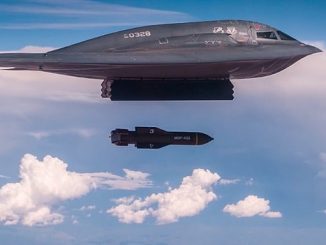
B2dropsbunkerbuster
Photo released by the U.S. Air Force shows a B-2 bomber dropping a GBU-57 Massive Ordnance Penetrator.

On June 21, President Donald Trump announced that U.S. forces had struck Iran’s three main nuclear sites — Natanz, Isfahan, and Fordow — claiming these facilities were “completely and totally obliterated.” Trump described the operation as a “spectacular military success.” 

However, a leaked Defense Intelligence Agency report the next day, cited by CNN, contradicted this claim, stating that the airstrikes only set back Iran’s nuclear program by several months, rather than destroying it entirely.

Reports from sources such as “Simplicius’s Garden of Knowledge” on Substack suggest that the Trump administration informed Iran of the strikes through Swiss diplomatic channels, indicating the attack would be a one-off event if Iran did not retaliate. This approach mirrors Trump’s 2017 Tomahawk missile strike on Syria, which was widely seen as more symbolic than destructive.

Vice President J.D. Vance and Defense Secretary Pete Hegseth emphasized that the operation was a single, limited action intended to disrupt Iran’s nuclear program, not to pursue regime change. 

Yet, Trump’s subsequent social media post hinted at the possibility of regime change in Iran, stating:

“It’s not politically correct to use the term, ‘Regime Change,’ but if the current Iranian Regime is unable to MAKE IRAN GREAT AGAIN, why wouldn’t there be a Regime change??? MIGA!!!”

The military-industrial complex’s false promises

Trump’s unprecedented peacetime defense budget — 75% of the Big Beautiful Bill funnels into the Pentagon, Homeland Security (including 10,000 more ICE agents), and Veterans Affairs — reveals the true priority: militarism over social needs. While Medicaid, Medicare, and Social Security face cuts, military R&D thrives, bankrolling everything from drone warfare to AI-driven combat systems.

This reflects a deeper capitalist delusion: that massive military spending can stave off economic crisis. Like a drug, it provides a temporary stimulant — absorbing industrial capacity and masking unemployment — but ultimately worsens the underlying sickness. As President Eisenhower warned in 1961, there is always a “recurring temptation to believe that some dramatic, costly action might magically resolve all current difficulties.”

Two tendencies in the military

The first tendency — the one that appeals to Trump — is the belief in quick, spectacular strikes as solutions. But there is a second, more dangerous tendency: the faceless generals and admirals who see every operation as a potential prelude to wider war. Their plans, though couched in technical jargon, are deeply political, often designed to escalate rather than resolve conflicts.

The strikes on Iran could still spiral into full-scale war. Trump’s rhetoric, combined with the military’s institutional drive for expansion, means “regime change” remains on the table.

The British parallel — and a key difference

The U.S. today mirrors Britain in the 1930s. Britain emerged from World War I with its empire intact but its economic foundations eroded. The costs of maintaining global dominance soon outweighed the benefits. U.S. finance capital displaced Britain in Latin America and Asia, and anti-colonial movements surged. Britain’s military might could not compensate for its economic decline.

Despite its formidable military and empire, Britain’s inability to compete economically with the U.S. led to a loss of global leadership. The U.S. now faces a similar contradiction: an expanding military presence amid a weakening economic foundation. Unlike Britain, which could rely on U.S. support as a fallback, the U.S. has no such safety net.

The U.S. share of global output has steadily decreased, from over 50% in the early 1950s to 26% today. At the same time, China has rapidly advanced, leading global research in critical technologies and maintaining its position as the world’s top manufacturer. The growing divergence between the U.S.’s shrinking economic base and its drive for military expansion is increasingly unsustainable.

No capitalist way out

Unlike Britain, the U.S. cannot offload its crises onto a stronger power. The coexistence of U.S. economic contraction and military expansion is fundamentally unsustainable. The only real solution lies in a socialist transformation — one that would resolve the acute contradictions of monopoly capitalism and redirect resources toward human needs, not endless war.

Strugglelalucha256


Iran resists

19 June marked the seventh day of Israeli strikes against Iran, with developments appearing to diverge from White House expectations.

Following targeted attacks on senior military commanders and nuclear scientists, along with strikes on nuclear and military facilities, Iran has regained operational control. The country launched its ‘True Promise 3’ operation without delay.

After initial disruption in the opening hours, Iran appointed replacement commanders and enhanced the effectiveness of its air defence systems. Iranian authorities also implemented security measures to identify suspected infiltrators who had allegedly used drones and other small aircraft to conduct covert operations within the country.

US and Israeli authorities likely did not anticipate an immediate collapse of the Iranian government through airstrikes alone. While both governments have made strategic miscalculations, it would be surprising if they genuinely believed a state could be toppled solely through aerial bombardment.

The apparent strategy seemed to rely on triggering civil unrest among opposition groups following the initial government disruption. This would have potentially created openings for trained mercenaries to initiate a secondary phase of operations. However, this scenario failed to materialise.

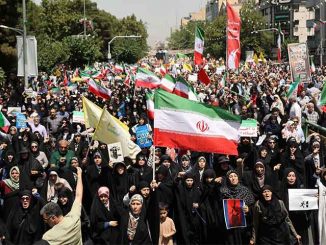
Instead, the majority of Iranians, particularly after reports emerged of civilian casualties from the attacks, responded with anger and solidarity. The civilian losses appear to have awakened a sense of national unity and patriotism among the population.

Trump’s contradictory statements can be understood within this context of strategic miscalculation, alongside pressure from the Zionist authorities, as evidenced in social media posts and public commentary.

Trump’s messaging has been inconsistent: one day stating he has no plans for US involvement in the conflict, the next threatening to consider declaring war against Iran unless it accepts ‘unconditional surrender’.

On the other side, the televised message from Iran’s Supreme Leader was clear and definitive: ‘We do not accept imposed “peace”, just as we did not accept imposed war, as we demonstrated during the Iraqi Ba’ath regime’s invasion of Iran’.

This stance is reflected in the Iranian armed forces’ retaliation and the positions taken by senior political officials.

Perhaps this explains why International Atomic Energy Agency Director General Rafael Grossi acknowledged that they have ‘no proof of Iran’s active plan to build nuclear weapons’.

Notably, Tulsi Gabbard, Director of National Intelligence, had previously made similar statements, though Trump recently indicated he dismisses them, saying he doesn’t care about ‘what she said’. This echoes the pretext used to invade Iraq: claims of ‘weapons of mass destruction’ that proved to be unfounded, similar to the discredited Nayirah testimony that became a scandal for the George W. Bush administration.

We could debate for hours about the reasons behind the current situation and the timing of direct attacks on Iran: external factors, internal catalysts, international dynamics, and more.

However, three points are clear:

First, Israel is not operating independently. The Israeli state functions as a settler colonial entity representing Western imperial interests in West Asia.

Second, the United States disregards international law, evidence, and public opinion when it calculates that the benefits of military action outweigh the costs.

Third, and most importantly in my view, this is not a religious or regional conflict between two competing powers. This represents a new phase of the ‘New Middle East’ plan, as reflected in the cover of a recent Time magazine issue. And the fragmentation of Iran is a main part of this plan. It builds upon earlier strategic frameworks, including the Yinon Plan (1980s) and ‘A Clean Break: A New Strategy for Securing the Realm’ (1990s), with backing from the Western bloc.

From this perspective, this constitutes a full-scale confrontation between the Global North and Global South, with Iran positioned on the front lines of Western imperialist aggression against national liberation movements throughout the Global South.

Based on this analysis, all revolutionary forces must unite behind this slogan: ‘Hands Off Iran!’

And a message to our friends around the world: Iran resists, to the last person, the last bullet, the last breath.

Ali Abutalebi has been the executive director of Mazmoon Books since 2005. He founded the Iranian Campaign for Solidarity with Cuba, has worked as publication director at House of Latin America (HOLA), and authored several articles for the Iranian press and political websites, mostly focused on Latin American progressive movements. Ali published a book on Cuba titled Rest in Peace Ernesto.

This article was produced by Globetrotter.

Strugglelalucha256


‘Hands off Iran!’ echoes off New York skyscrapers

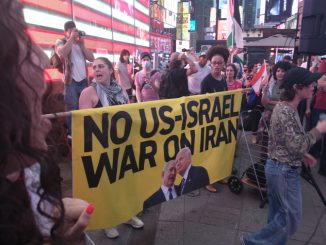
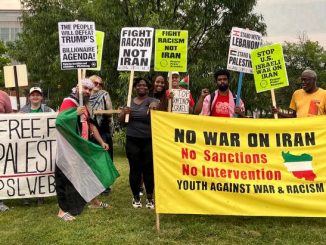
New York, June 18 — At least a thousand people came to the steps of the great reference library on Manhattan’s Fifth Avenue this evening to stop the war on Iran. The emergency mobilization was part of a national day of action that saw dozens of protests from coast to coast.

Speakers at the rally included members of the Iranian community; the Palestinian Youth Movement; Nodutdol for Korean Community Development; The People’s Forum; ANSWER Coalition; and the Party for Socialism and Liberation. They denounced the continuing genocide in Gaza and pointed out the lies being used by Trump and Netanyahu to justify their attacks on the 90 million people of Iran. 

The United States is the only country in history to use nuclear weapons. Hundreds of thousands of people were killed in Hiroshima and Nagasaki, including over 30,000 Korean slave laborers.

The Zionist apartheid regime occupying Palestine has already murdered hundreds of Iranians, including many children, by their unprovoked missile attacks. So-called Israel has an estimated arsenal of 80 nuclear weapons.

People marched through the posh East Midtown section of Manhattan carrying Palestinian and Iranian flags as well as signs and banners. Police barricaded Second Avenue to prevent marchers from confronting the Zionist mission to the United Nations. Friendly bystanders waved and took pictures of the protesters.

The demonstration ended up at Times Square, where a brief rally was held. Hands off Iran!

Strugglelalucha256


Jewish member of Iran’s parliament says country has right to self-defense

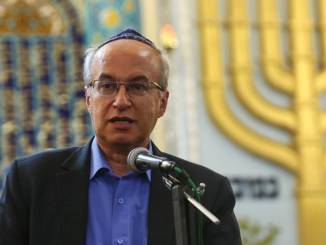
As the U.S. and Israel launched a violent campaign against Iran and its people, Homayoun Sameh, the Jewish member of Iran’s parliament, spoke out against the Zionist escalation. Sameh has consistently been a strong supporter of the Islamic Republic of Iran and the Palestinian resistance for his entire time in parliament. Iran is one of the few countries on the planet with a constitution that requires Jewish representation in its central legislative body. 

In his statement condemning Israel’s campaign against Iranian civilian, nuclear, and military infrastructure, Sameh spoke in support of Iran’s legitimate right to self-defense. An interview from 2023 demonstrates Sameh’s broader ant-zionist Judaism: 

“In various parts of the world, followers of different religions, each from a different race, coexist peacefully. In Palestine itself, Jews, Christians, and Muslims often lived peacefully together throughout history, but it seems like the excessive demands of Israel have disrupted this historical order. Yes, the Israeli regime has sabotaged that peaceful coexistence.

“Of course, the overextending of Zionists is not related to Judaism. They have incorrect understandings of the teachings of Judaism. We here in Iran live peacefully alongside followers of other religions. Imam Khomeini, the founder of Iran’s Islamic Revolution, and the Leader Ayatollah Khamenei have always stressed domestic unity. They do not only mean unity between Muslims or Shias in Iran. They mean unity among all Iranians, regardless of their religion or ethnicity.”

Sameh’s stance is an important reminder that not all Jewish people are defined by Zionism. Jews of conscience around the world will continue to stand up against the U.S. imperialist project known as Israel. We at Struggle-La Lucha stand in solidarity with MP Sameh and the Islamic Republic of Iran in its struggle against U.S. imperialist assault. 

Lev Koufax is an anti-Zionist Jewish activist.

Strugglelalucha256


Iran was supposed to fold — instead, it’s exposing U.S. & Israeli military limits

Nowaroniran

The U.S.-Israeli war on Iran is far from the decisive victory President Trump initially celebrated as “excellent.” The swift tactical strike has failed, with Israel now begging the U.S. to send in more bombers and missiles.

With the U.S. Marines, Air Forces and Navy deployed to surround Iran and to assist the Israeli military, the opening strikes were brutal and unexpected. They targeted Iranian commanders, as they slept in their homes, to decapitate Iran’s military leadership and paralyze its response. 

President Donald Trump told the Wall Street Journal that he had discussed the planned attack with Israeli Prime Minister Benjamin Netanyahu on June 9, five days before it was launched. Trump, knowing the attack was imminent, scheduled nuclear talks with Iran for June 15 in Oman, leaving Iran to believe that there would be no attack as long as the talks continued.

For a brief moment, it seemed that the gamble by the U.S. Central Command, which had spent the last eight months planning the attack with the Israeli armed forces and providing the “intelligence” on targets in Iran, had paid off. Trump, eager to bask in the glow of apparent victory, rushed to claim credit — even as his own administration was trying to downplay any U.S. involvement.

But the illusion of U.S.-Israeli dominance was shattered within hours. Iran rapidly restructured its command, activated its air defenses, and unleashed a series of missile barrages that penetrated Israel’s much-vaunted defenses, striking at the heart of Tel Aviv and even the Ministry of Defense. This swift and effective counterattack made clear that the initial success of the U.S.-armed Israeli military was fleeting and that the war would not be won with shock and awe. Tehran struck back hard and fast.

As the conflict has dragged on, U.S.-backed Israeli forces inflicted further devastation on Iran’s infrastructure, targeting oil refineries and civilian sites. Yet Iran’s retaliatory strikes only grew more effective, exposing the vulnerabilities of Israel’s air defense systems. Despite heavy bombardment, Israel failed to destroy Iran’s fortified nuclear facilities, limiting the impact on Tehran’s nuclear program.

U.S.-Israeli war plan unravels

Ali Salehian, a senior researcher at the Governance and Policy Think Tank affiliated with Sharif University of Technology in Tehran, wrote in The Cradle on “why the shock strategy failed against Iran.”

Tehran’s rapid retaliation and deep strategic reserves have exposed the limits of U.S.-Israeli power.

First, Iran’s military command is vast, experienced, and rapidly replaceable. “Brigadier General Abolfazl Shekarchi pointed to this capacity, dismissing assumptions that a few assassinations could cripple national defense.”

Second, geography matters. Iran’s sheer size allows the strategic dispersal of critical assets. U.S.-Israeli jets may have briefly penetrated key western nodes, but much of Iran’s infrastructure remains embedded in its eastern and central territories. The state’s military doctrine is built around such depth.

But perhaps the gravest misjudgment lay in the U.S.-Israeli reading of Iran’s internal cohesion. The U.S.-Israeli planners appeared to have assumed a sudden external strike would activate opposition forces within Iran.

Salehian writes:

“Iran’s political unity in the face of external threats has been repeatedly demonstrated. Even segments of society critical of the Islamic Republic have closed ranks when faced with foreign aggression. It is a nationalism forged not from state propaganda, but from the collective memory of wars, invasions, and isolation.”

Israel begs for U.S. military escalation

Meanwhile, the U.S. is moving more Naval combat power into position alongside the U.S. destroyers helping shield Israel from Iranian missiles, Business Insider reports.

“A U.S. official, speaking on the condition of anonymity to discuss military movements, said the destroyer USS Thomas Hudner is now in the Eastern Mediterranean Sea, joining destroyers USS Arleigh Burke and USS The Sullivans, and additional warships could be heading that way.

“The official said Arleigh Burke and The Sullivans have, in recent days, launched missile interceptors in defense of Israel amid Iranian retaliatory attacks. It’s unclear if there have been confirmed intercepts.

“The official said that in addition to sea-based air defense, the U.S. military also provided land-based support to Israel. This potentially involved the MIM-104 Patriot surface-to-air missile battery or the Terminal High Altitude Area Defense, or THAAD, system.”

So far, the U.S. military has not sent in its bunker-buster bombers, as the New York Times is encouraging. “On June 17, President Trump abruptly left the G-7 summit amid speculation that the U.S. would join Israel in attacking Iran’s nuclear program using bunker-buster bombs carried by B-2 bombers.

Recognizing that its military alone can’t secure a victory, Israel is now pressuring Washington to join the offensive and send in the B2 bombers. Israel’s message is clear: “We can’t win without more – a lot more — U.S. military intervention.”

Strugglelalucha256


End U.S.-Israeli war on Iran

STOP THE WAR @ HOME & ABROAD

Israel launched a massive wave of airstrikes against Iran on June 12. Israeli Prime Minister Benjamin Netanyahu declared the operation would continue for days.

The attacks have targeted nuclear facilities and military infrastructure. Iran has been developing nuclear power capabilities for electricity generation, medical isotopes, and research. Nuclear power will provide Iran with energy independence and boost its economic development.

Key developments

  • Explosions in Tehran: Smoke billowed over the city after strikes hit multiple targets, including high-rise housing complexes.
  • IRGC chief killed: Iranian state media confirmed the assassination of IRGC Chief-of-Staff Hossein Salami in an Israeli strike. Dozens of casualties were reported.
  • U.S.-Israel coordination: The attack followed a reported discussion of the strike plans between Netanyahu and U.S. President Donald Trump earlier this week, according to The Wall Street Journal. Trump said that Israel has lethal military equipment manufactured by the U.S. and that “they know how to use it.”

Background

The U.S. and Israel have long prepared for such an attack, which could ignite a regional war. Over the past 18 months, the United States has bolstered its presence in West Asia with additional troops, warships, and missile defense systems.

The New York Times reported on April 16 that Israel, working closely with the Pentagon, had developed a plan to attack Iran. The plans required U.S. help “not just to defend Israel from Iranian retaliation, but also to ensure that an Israeli attack was successful, making the United States a central part of the attack itself.” 

The Times reported that Gen. Michael E. Kurilla discussed how the United States would support an Israeli attack. General Kurilla, with the blessing of the White House, began moving military equipment to West Asia. A second aircraft carrier, Carl Vinson, is now in the Arabian Sea, joining the carrier Harry S. Truman in the Red Sea. The United States also moved two Patriot missile batteries and a Terminal High Altitude Area Defense system, known as a THAAD, to West Asia. Around a half-dozen B-2 bombers capable of carrying 30,000-pound bombs essential to destroying Iran’s underground nuclear program were dispatched to Diego Garcia, an island base in the Indian Ocean.

The Times report says that U.S. officials said privately that the weaponry was part of the planning for supporting Israel in a conflict with Iran. “Even if the United States decided not to authorize the aircraft to take part in a strike on Iran, Israel would know that the American fighters were available to defend against attacks by an Iranian ally. There were signs that Mr. Trump was open to U.S. support for Israeli military action against Iran.”

Broader context

The Israeli government’s claim that these attacks are acts of “self-defense” is a transparent lie. The real aim is to destroy any force in the region capable of resisting U.S. and Israeli domination, to secure the profits of the oil monopolies and arms manufacturers, and to crush the aspirations of the Palestinian, Iranian, and Arab masses for economic development, self-determination and social justice.

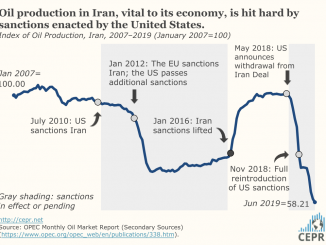
The attack comes as the U.S. continues to impose brutal economic sanctions on Iran, following Trump’s 2018 abandonment of the Iran nuclear deal. These sanctions are themselves acts of war, designed to starve the Iranian people into submission and pave the way for military intervention.

Meanwhile, the Trump administration has deployed thousands of combat troops domestically and is preparing a massive military parade in Washington, a clear signal of its willingness to use force both abroad and against the working class in this country.


Strugglelalucha256


U.S. revolutionary socialists mourn Iranian President Raeisi, demand end to U.S. sanctions

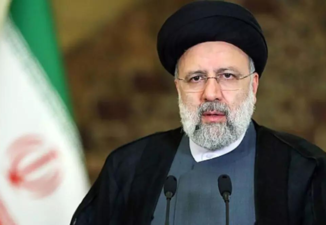
Struggle-La Lucha and the Socialist Unity Party send our deepest condolences to the Iranian government, the Iranian people, and their families and loved ones on the loss of the President of the Islamic Republic of Iran, H.E. Ayatollah Sayed Ebrahim Raeisi, and Minister of Foreign Affairs, H.E. Dr. Hossein Amirabdollahian, and their entire accompanying delegation.

We mourn with the Iranian people and stand in solidarity with Iran.

Our immediate duty as organizations functioning in the United States is to demand that U.S. imperialism respect the sovereign rights of Iran and cease any interference, overt or covert, in the affairs of Iran and its constitutional process.  

Again, we amplify our call for an end to the sanctions in the United States.

While an investigation of the helicopter crash by Iranian officials has yet to be completed, we take special note that the cruel sanctions imposed by the United States, which also block the sales of aviation parts to Iran, may have played a contributing role in this disaster.  

This horrific tragedy took the lives not only of President Raeisi and Minister of Foreign Affairs Amirabdollahian but also Malek Rahmati, Governor of East Azerbaijan, Ayatollah Mohammad Ali Ale-Hashem, the representative of the Leader of the Islamic Revolution to the East Azerbaijan province, as well as five crew members. East Azerbaijan Province’s Governor Malek Rahmati, and Mehdi Mousavi, the head of Raisi’s bodyguard team.

Echoing the sentiments of the Palestinian Resistance, we salute the contributions made by Iran’s president in support of the Palestinian and anti-imperialist cause and join the world community in mourning.

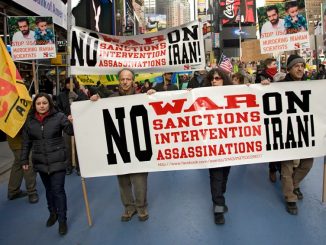
U.S. hands off Iran!  End the criminal sanctions now!

Strugglelalucha256


Biden bombs Iraq and Syria, continues 30-year war to control world’s oil

Blood and Oil and Trump and Biden, part 2

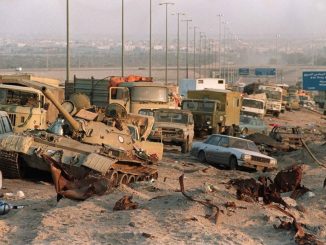
It was called the highway of death. 

On Feb. 26, 1991, U.S. military jets and helicopters rained napalm, cluster bombs and 30mm shells on convoys of Iraqi soldiers and civilian refugees leaving Kuwait. At least a thousand people were burned alive or shot to death while fleeing. 

U.S. pilots called it a “turkey shoot” and “shooting fish in a barrel.” It was the final act of the massive bombing campaign the first Bush administration named Operation Desert Storm. 

Between Jan. 27 and Feb. 28, 1991, U.S. planes dropped 88,500 tons of bombs on Iraq, killing 110,000 people. They destroyed the country’s oil refineries, power grid, water pumping stations, sewage treatment plants, food and pharmaceutical industry — and its only plant for baby formula. 

Among the targets was Public Shelter 25 in the Amiriyah neighborhood of Baghdad. On Feb. 13, the U.S. Air Force hit it with two laser-guided “smart bombs.” At least 409 civilians, many of them children, were burned to death. 

War never ended

The bombing never stopped. Between 2001 and 2019, the U.S. military launched 326,000 bombs and missiles at countries in the region. At least 152,000 fell on Iraq and Syria. 

In 2020, the Trump regime made the bombing figures secret. But the bombs kept falling. 

According to a Brown University study released in September 2020, U.S. military action has displaced 37 million people since 2001. 

Exactly three decades after the massacre on Iraq’s Highway 80, President Joe Biden ordered an airstrike on the Syria-Iraq border. On Feb. 26, 2021, two U.S. F-15 Eagles dropped seven 500-lb. laser-guided bombs on the town of Abu Kamal. According to Reuters news agency, 22 people were killed. The airstrike was illegal under U.S. and international law. 

The U.S. has now been at war in West Asia and North Africa for 30 years. No matter who is in the White House, the war machine rules.

Two days after the U.S. Air Force attacked Abu Kamal, Israel’s made-in-the-USA air force launched missiles at the Syrian capital of Damascus. The settler state bombs Syria regularly on behalf of its armorers in Washington. 

Sanctions and B-52 flights 

In its first days, the Biden White House stepped back from Donald Trump’s pursuit of all-out war with Iran. It pulled the USS Nimitz strike force out of the Arab-Persian Gulf. Biden said the U.S. would rejoin the Joint Comprehensive Plan of Action (JCPOA) “nuclear deal.”

However, on March 5, Biden renewed a “national emergency” against the Islamic Republic, extending the sanctions that are killing Iranian civilians. On March 4, he did the same thing to Venezuela. Iran has made clear there can be no talks with the U.S. unless the sanctions end. 

On March 8, two U.S. B-52 long-range bombers flew over the Arab-Persian Gulf, the sixth such mission since November. They were escorted by U.S.-made Israeli fighters as they flew over Palestine.

No pause in arms to Israel

Biden also said he wants to end the war in Yemen, which Washington’s Saudi clients are losing. He “paused” arms sales to the Saudi kingdom. 

There is no pause, however, in the flow of the most advanced arms in the U.S. arsenal to the racist state of Israel. Israel’s Prime Minister Benjamin Netanyahu and Defense Minister Benny Gantz openly threaten to use them to attack Iran.

Nor is there a pause in the U.S.-Israeli blockade of Gaza and the Israeli occupation regime’s daily terror against the people of Palestine, on whose stolen land the racist settler state was created. 

On March 7, an Israeli drone struck a fishing boat off Gaza, murdering three fishers.

Biden officials say the U.S. still supports the “Abraham Accords,” which the Trump regime brokered between Israel, Bahrain and the United Arab Emirates. That so-called “peace deal” involves massive arms sales. It is in reality a military alliance against Iran.

Iraqi resistance strikes back

On March 3, Iraqi Resistance forces retaliated against a U.S. base at Ayn Al Assad. The Pentagon says a U.S. “contractor” died of a heart attack after 10 Grad rockets hit the site. “Contractor” could mean a worker at the Pizza Hut or Burger King franchises on the base. Or it could mean a mercenary.

“The resistance sees confrontation as the only option that guarantees the freedom and dignity of this country after exhausting all the means that others have bet on with the occupation,” the coordinating body for the Iraqi resistance factions said in a statement on March 4. 

On March 10, improvised explosive devices hit four U.S. military convoys in northern Iraq.

Biden won’t stand up to Wall Street, but he’ll kill on its behalf

Joe Biden won’t stand up to corporate power. He’s not fighting the GOP to raise the minimum wage, even to $15 an hour in five years. He’s not canceling student debt or fighting for Medicare for all. 

But, like his predecessor, the new president has no problem denying medicine to people in Iran and Venezuela. He is willing to have U.S. troops fight the people of Iraq and Syria on their soil for control of their oil. 

He is continuing the war George H.W. Bush started three decades ago. 

30 years of war for plunder

To be clear, it’s all one long war — from bombing and invading Iraq to bombing Libya, from 10 years of destruction in Syria to mass murder in Yemen, from the 20-year occupation of Afghanistan to sanctions and covert attacks on Iran and Venezuela, from drone strikes in Somalia and Pakistan to the 1999 NATO bombing of Yugoslavia and the ongoing U.S. proxy war in Ukraine. The war has been raging since 1991. 

It is a desperate bid to seize back the stranglehold Wall Street corporations once had on the world’s energy supply. In 1960, seven monopolies, five of them U.S.-based, controlled 99% of the oil production in the capitalist world. More than half the overseas profits of U.S. corporations came from the ownership of oil. 

When the “Cold War” ended with the fall of the Soviet bloc, the U.S. capitalist ruling class thought they could get all that back. The Pentagon and CIA have taken millions of lives and spent trillions of dollars in a futile attempt to turn back time, even as the technology of energy marches forward.

Trump and Biden target people’s defenders

The Feb. 26 attack targeted members of Iraq’s People’s Mobilization Units (Hashd al-Sha’abi). The State Department and the lying corporate media call them “Iranian proxies.” They are in fact popular militias formed to defend the Iraqi people against ISIS. “Fighting ISIS” is Washington’s phony pretext for keeping U.S. troops in Iraq and Syria. 

Last Jan. 3, PMU commander Mahdi Abu Muhandas, Iran’s Gen. Qassem Soleimani and seven of their colleagues were murdered in an airstrike ordered by Donald Trump. The two had organized the military campaign that drove ISIS out of Iraq and Syria.

Soleimani and Muhandas were heroes in the region. Millions turned out for their funerals. On Jan. 10, 2020, Iraq’s parliament voted that U.S. troops should leave their country. The Trump regime refused.

On the campaign trail, Biden criticized the Soleimani-Muhandas assassination — not for the war crime it was, but for tactical reasons. He was speaking for those in the U.S. establishment who were leery of the Trump regime’s push for direct war with Iran. 

Operation Martyr Soleimani

On Jan. 8, 2020, the Iranian Revolutionary Guard Corps launched Operation Martyr Soleimani, a counterstrike on two U.S. bases in Iraq. In precision strikes, 16 1,000-lb. missiles destroyed buildings and injured 109 U.S. soldiers who were sheltering underground. 

In an interesting political move, the Pentagon declassified footage of the attacks this March 2. The strikes demonstrated Iran’s ability to strike U.S. occupation forces in the region. 

Right to resist U.S. occupation

The Pentagon claims it bombed Abu Kamal because of a Feb. 15 rocket attack on the U.S. base in Erbil, 300 miles away. The U.S. says a “military contractor” died and a U.S. soldier and other “contractors” were wounded. 

U.S. troops in Iraq and Syria are an occupying force. They are there against the wishes of those countries’ governments and people. They have no right to be there. Their presence is a crime under international law. And resistance to occupation is a right. 

On Jan. 20, Syria’s Deputy Minister of Foreign Affairs Bashar Al Jaafari told the UN Security Council: “The American occupation forces continue to plunder Syria’s wealth of oil, gas and agricultural crops, burning and destroying what it cannot steal.

“The new U.S. administration must stop acts of aggression and occupation, plundering the wealth of my country, withdraw its occupying forces from it, and stop supporting separatist militias, illegal entities and attempts to threaten Syria’s sovereignty, unity and territorial integrity,” he said.

Since October 2019, U.S. troops have occupied Syria’s oil fields, denying Syrians access to their own oil. U.S. troops in Syria also provide shelter and logistical support for terrorist groups that attack Syrian and Iraqi civilians. 

Mass murder in Yemen: Made in USA

On Feb. 4, Biden announced he was “ending all American support for [Saudi] offensive operations in Yemen, including relevant arms sales.” 

Biden has said, “The war must end.”

That six-year war has killed a quarter of a million people, many of them children. Many were murdered by U.S.-made bombs and missiles fired from U.S.-made Saudi aircraft flown by U.S.-trained Saudi pilots. Many more died of hunger and disease caused by the blockade of Yemen’s ports by Saudi Arabia’s U.S.-made Navy. 

The United Nations says 16 million Yemenis will go hungry this year. A Yemeni child dies every 10 minutes because of the war.

Biden qualified his statement, however. He said that the U.S. would still help the Saudi Kingdom “defend its sovereignty.” 

What sovereignty is that? 

Saudi Arabia is a U.S. colony

Since the end of World War II, the Saudi kingdom has been, in effect, a U.S. colony. So have the other five monarchies on the Arabian Peninsula. 

For 75 years, the House of Saud has forked over its oil revenue to U.S. banks, oil monopolies and arms contractors. It has funded CIA covert operations from Nicaragua to Afghanistan to Syria. It has used its oil wealth to prop up the dollar and its position as swing producer to manipulate world oil markets at Washington’s command. 

Those in the U.S. ruling class who have their hands on that cash cow are not about to let it go. It is too important to oil company profits, the military-industrial complex and the position of Wall Street and the dollar in the world economy. 

On Feb. 27, Biden’s Secretary of State Anthony Blinken said the U.S.-Saudi “relationship” was not “ruptured” but “recalibrated.” 

Iran’s ‘crime’

Before the 1979 revolution, the U.S. ruled Iran as well. The tyrant Shah owed his throne to a CIA-orchestrated coup in 1953. 

At Henry Kissinger’s orders, the Shah bailed out the U.S. arms industry after the Vietnam War. He put the country’s oil income at the disposal of U.S. bankers and arms firms. 

The Islamic Republic of Iran ended that colonial relationship. Iran has been in Washington’s crosshairs ever since. 

Since 2015, the Saudi kingdom has been the U.S. arms industry’s No. 1 overseas paying customer. The United Arab Emirates is No. 2. And 2015 was also the year those states launched their murderous war on Yemen. 

‘Game of Thrones’ in Riyadh and Washington

In his 2016 election campaign, Trump fulminated against Saudi Arabia. Trump was the candidate of the U.S. fracking industry. His billionaire backers were in a price war with the Big Oil “supermajors” that control Saudi oil production. 

But in May 2017, his fourth month in office, Trump went to Riyadh. He got his friends at Blackstone Group a cut of the Saudi petrodollar pie. And his tune changed.

Trump also made some big arms sales there. “Saudi Arabia’s Naval Capabilities Will Balloon Thanks To Huge U.S. Arms Deal,” Warzone reported on May 19, 2017. 

Trump’s visit to the kingdom was followed by a coup inside the Saudi royal family. King Salman ousted Crown Prince Mohamed Bin Nayef and replaced him with his own son Mohamed Bin Salman. Mass arrests and a few “accidental” deaths followed. The Salman faction forged an alliance with the Trump faction of the U.S. ruling class.

Fail to defeat Yemeni people

On Aug. 18, 2018, a U.S.-made missile hit a school bus in Yemen, killing 40 children. On Oct. 2, 2018, Saudi dissident Jamal Khashoggi, a U.S. resident, was hacked to death inside the Saudi consulate in Istanbul. The killers were a hit squad dispatched by Mohamed Bin Salman. 

In March 2019, the U.S. Congress passed a bill restricting military assistance to Saudi Arabia. Trump vetoed the measure. 

Despite the destructive power of its U.S.-made arsenal, the Saudis and their proxies are losing the war in Yemen. Yemen’s government and Popular Committee fighters are now on the verge of capturing Mar’ib, the last Yemeni city held by Saudi mercenaries. 

Yemeni forces have also struck heavy blows at the Saudi kingdom itself, launching missile strikes on military bases and oil facilities. A Yemeni attack on two Aramco refineries in 2019 almost sank the oil giant’s first public stock offering. 

On March 7, Yemeni forces struck the Saudi’s Abha International Airport and Aramco plants and tank farms in Jeddah, Dhahran and Ras Tanura.

Yemeni victories are the context for Biden’s stated change in U.S. policy.

Will Israel take over U.S. role in Yemen?

On Feb. 9, three days after Biden announced an end to “relevant arms sales,” Israel announced a $9.5 billion arms deal with the United States. According to Israel’s Channel 12, it includes the purchase of more F-35 and F-16 fighter jets, SH53K helicopters, refueling planes, advanced weaponry and the Eitan, a new-generation armored personnel carrier developed jointly by Israel and the U.S.

“Purchase” isn’t exactly the right word. Most of the money comes from a $38-billion U.S. aid package negotiated by the Obama administration, passed by Congress and signed into law by Trump. That package, the largest U.S. military aid package ever, also allows Israel access to arms from the U.S. military stores in Israeli-occupied Palestine. 

According to reports, Israel has set up a spy base on the Yemeni island of Socotra. UAE troops and U.S. Marines seized the island in March 2020. 

The content of the arms deal raises the prospect that Israel could take over the U.S. logistical role in the Yemen war, and give Washington “plausible deniability.”

Citi bankrolls arms deal

There was a hitch with the arms deal: The $38 billion Congress approved was supposed to last Israel 10 years. But Tel Aviv had already spent $31 billion. 

Citigroup, the fourth largest U.S. bank, solved the problem. It extended a $2.5-billion loan to tide Israel through until Washington sends more money. 

Citigroup is a mover in the U.S.-Israel-Saudi axis. In its own words, “Citi boasts the largest presence of any foreign financial institution in Israel, and offers corporate and investment banking services to leading Israeli corporations and institutions and global corporations operating in Israel.” 

According to a March 6 Fox News report, “Among all the major large banks [sic], Citigroup has some of the deepest business relationships with the [Saudi] kingdom and its massive business empire.” Saudi Prince Al Waleed Bin Talal is one of the bank’s top shareholders. 

Pivots and proxies

“Can Biden Finally Put the Middle East in Check and Pivot Already?” read a headline in Foreign Policy magazine March 2.

Many in the U.S. military-political establishment now see Washington’s long war in the “Middle East” as a quagmire. They want a “pivot to Asia” to threaten China. That view has been expressed by Secretary of State Blinken and Secretary of Defense Lloyd Austin. 

“China is the only country with the economic, diplomatic, military, and technological power to seriously challenge the stable and open international system – all the rules, values, and relationships that make the world work the way we want it to,” Blinken said in a March 4 address.

However, energy corporations retain great power in Washington. So do the bankers who hold their debt. They are not about to let the U.S. retreat from its war to control the world’s oil and gas. They are in a political alliance with Israel and the royal families of the Arabian Peninsula. 

On March 11, the Wall Street Journal reported that Israel had carried out 12 clandestine attacks on Iranian tankers in the last year.

When Israeli Prime Minister Netanyahu threatens to attack Iran if the U.S. eases sanctions, he speaks for the fossil-fuel faction of the U.S. ruling class.

Fight for Europe’s energy market

In the late 20th century, U.S. companies lost Western Europe’s energy market to Russia. They want it back. 

A weapon in their arsenal is the proposed East Mediterranean Pipeline Project, a $7-billion scheme to bring stolen natural gas from the waters of Israeli-occupied Palestine to Greece via Cyprus. 

The three countries agreed to build the pipeline at a March 2019 meeting in Jerusalem presided over by U.S. Secretary of State Mike Pompeo. In a December 2020 visit to Athens, Trump’s Energy Secretary Dan Brouillette proclaimed full U.S. support for the controversial project. 

U.S. oil giants loot Palestine

U.S. energy giant Chevron now operates and owns controlling stakes in the Tamar and Leviathan fields off the coast of Israeli-occupied Palestine. Chevron became the largest U.S. energy company in October 2020, when it acquired Trump-connected Noble Energy. 

Noble was the first U.S. company to drill in Palestinian waters. Chevron paid $4 billion and assumed Noble’s $8 billion debt. Chevron’s Israeli drilling partner, the Delek Group, is owned largely by U.S. investors, including Citigroup.

ExxonMobil has joined the hunt for gas in the Eastern Mediterranean. Chevron and Exxon discussed a merger last year.

Israel — an imperialist land bridge

Also in October, representatives of Israel’s Europe-Asia Pipeline Company agreed to transport oil from the UAE to Europe via occupied Palestine. Trump’s Secretary of Treasury Steven Mnuchin went to Dubai to see the agreement signed. The U.S. International Finance Development Corporation announced it would back the project. 

The EAPC pipeline runs from Eilat on the Gulf of Aqaba to the ancient port of Askalon just north of Gaza. It was built in 1968 to carry the Shah of Iran’s then U.S.-owned crude to the Mediterranean. The U.S. and Israel want to see a pipeline across Saudi Arabia from the UAE to occupied Palestine.

But will such massive capital investments be profitable? 

Fossil fuel industry in crisis

2020 was a disastrous year for energy prices. They have now rebounded — in part due to Saudi production cuts — but the fossil fuel industry’s long-term prospects are dim. 

Over the past four years, China has invested $360 billion in solar power, fuel cells and other fossil fuel alternatives, driving down the cost of renewable energy worldwide. The Chinese Academy of Sciences is pioneering research in thorium reactors. In January, China unveiled the prototype of a electric-powered Maglev (magnetic levitation) train that can travel 385 miles per hour. 

Europe is trying to cut its gas imports, which already exceed what the Paris climate agreement will permit. Germany now operates a hydrogen-powered train. Half of that country’s electricity is generated from non-carbon sources. 

Meanwhile, new oil and gas fields are being discovered around the world — including in Iran, which has the planet’s second-largest natural gas reserves. If Iran were to generate electricity with nuclear power, it could export a lot more gas. 

Ted Cruz wants to block Russian gas

Despite sanctions imposed by the Trump regime, it appears the Nord Stream 2 pipeline will bring more Russian gas to Europe by June. 

Texas Senator Ted Cruz has blocked the nomination of Ted Burns, Biden’s choice for CIA director, to force the White House to put even more sanctions on the pipeline. 

Cruz is speaking for Texas-based Cheniere Energy, which exports liquefied natural gas (LNG) to Europe. In 1998, Cheneire patented the technology the U.S. fracking industry uses today. It took the energy price bubble caused by the 2003 U.S. invasion of Iraq to make its use profitable.

No profits without war

Washington’s long war in the “Middle East” is not about getting oil and gas for its own use. The world is swimming in these resources. It’s about monopoly. It’s a desperate effort to control supply so that U.S. energy companies can regain market share and value and find profitable outlets for their surplus capital.

In July 2011, Iran, Iraq and Syria agreed to build a $10-billion gas pipeline from Iran to the Mediterranean. Its planned capacity is 40 billion cubic meters per year, four times that of the proposed East Med Pipeline. 

That very year, the U.S., Saudi Arabia and Israel began their murderous intervention in Syria. Sanctions, war and U.S. troops have prevented the pipeline’s construction.

The 2003 invasion of Iraq bailed the U.S. energy industry out of the price collapse that followed the fall of the USSR. It created an energy bubble that transfixed Wall Street for a decade. 

Sanctions and war unleashed the “shale revolution” that made the U.S. the world’s top oil and gas producer. War and sanctions made Keystone XL, the Dakota Access Pipeline, Line 3, Line 5 and the plunder of Canada’s tar sands seem profitable.

Back in 1968, Israel opened the Eilat-Ashkelon Pipeline a year after its U.S.-paid troops seized Egypt’s Sinai Peninsula and shut down the Suez Canal. 

‘The largest U.S. aircraft carrier’

In June 1967, when the U.S. military was mired in the war against Vietnam, Israel attacked Egypt and Syria. The war was launched with Washington’s blessing. Those countries were leading the opposition to U.S. control of the region’s oil resources. 

The 1967 war shifted the regional balance of power in favor of the U.S.-backed monarchs of the Arabian Peninsula and the Shah. For a while. 

In the next few years, Libya and Iraq nationalized their oil industries. In 1979, the Shah was gone. Twelve years later, the U.S. launched its war to recolonize the region. 

Ronald Reagan’s Secretary of State Alexander Haig called Israel “Israel is the largest, most battle-tested and cost-effective U.S. aircraft carrier that cannot be sunk.” 

Will its U.S. paymasters launch the Israeli war machine against Iran in another desperate attempt to repeat 1967? To what lengths will the Biden White House go to keep U.S. troops in Iraq and Syria?

From Eastern Mediterranean to Western Pacific, U.S. out!

How long will this war go on? How many more must die? How many more trillions of dollars will be spent so that U.S. energy companies can make money and Wall Street bankers can keep their hold on the world economy?

The $1.9-trillion COVID relief package pales beside the amount spent on war.

The millions in this country facing joblessness, homelessness, hunger and debt don’t need war or sanctions. We don’t need confrontation with Iran or a “pivot” to Asia. We don’t need troops in Iraq and Syria or bombs falling on the people of Yemen. 

We need a mass movement to shut down the war machine, end aid to the racist state of Israel and bring all the troops home now. 

Strugglelalucha256


Biden administration ‘walking a tightrope’ on Iran

A political analyst in the U.S. believes that the Biden administration is “walking a tightrope” on Iran between competing corporate interests.

Bill Dores, a writer for Struggle-La Lucha and longtime antiwar activist, made the comments in an interview with Press TV on Monday.

Leader of the Islamic Revolution Ayatollah Seyyed Ali Khamenei has said Iran will retrace its nuclear countermeasures once the United States lifts its sanctions in a manner that could be verifiable by Tehran.

“Iran will return to its JCOPA obligations once the U.S. fully lifts its sanctions in action and not in words or on paper, and once the sanction relief is verified by Iran,” Ayatollah Khamenei said, referring by abbreviation to the Joint Comprehensive Plan of Action, the official name of the landmark nuclear agreement that Iran signed with the P5+1 group of states — the U.S., the UK, France, Russia, and China plus Germany — in Vienna in 2015.

Ayatollah Khamenei made the remarks in Tehran on Sunday during a meeting with commanders, pilots, and staff members of the Islamic Republic of Iran Air Force (IRIAF).

The meeting was held on the anniversary of a historic development that came days before the 1979 victory of Iran’s Islamic Revolution that deposed the former U.S.-backed Pahlavi regime. The event saw Homafaran, Pahlavi’s air force officers, breaking away from the monarchical regime and pledging allegiance to the late founder of the Islamic Republic, Imam Khomeini.

Dores said the U.S. has been waging “hybrid warfare” against Iran since the Islamic Revolution of 1979.

“This week marks 42 years since Iran’s great Islamic Revolution shook the entire world. The U.S. military-financial state has been waging hybrid warfare against Iran ever since that day,” he stated.

“Before the tyrant Shah was overthrown, U.S. and British corporations looted Iran for decades. Iran’s oil wealth enriched Wall Street bankers and arms merchants. U.S.-armed soldiers and secret police gunned down thousands of people in the streets for protesting Shah’s rule,” he said.

“As soon as the Revolution took back Iran’s wealth for Iran, the United States provoked confrontation, seized Iran’s assets and imposed a blockade. For 42 years the U.S. has attacked Iran with proxy wars, vicious economic sanctions, covert operations, assassinations and open acts of war,” he noted.

“Washington has no right to impose any conditions on Iran. There are no Iranian warships off the coast of the United States, no Iranian military bases in North America. Iran has not assassinated U.S. generals or scientists or shot down U.S. civilian airliners. Iran is not trying to strangle the U.S. economy. Iran is not denying people in the United States access to medicine and health care in the midst of a pandemic. Rather the U.S. government itself is doing that to people here because its priority is waging endless wars around the world,” he said.

“Iran has a right to sell its oil and gas. Iran has a right to trade with other nations and to develop its economy. Iran also has a right to defend itself and to help its neighbors defend themselves against terrorist attacks and against the illegal attacks by the U.S.-armed Israeli state,” he said.

“The Biden administration is walking a tightrope between competing corporate interests. On one hand, there are U.S. companies, like Boeing, and West European allies that would like access to Iran’s market. On the other, there are U.S. energy interests that want to regain a stranglehold on the world’s oil and gas supply. And bankers who want to keep Wall Street and the dollar at the center of the world economy. And arms companies that profit off endless war. The U.S. war machine has murdered millions in pursuit of their twisted dreams,” he noted.

“So on one hand we see the new administration talk about de-escalating the monstrous war in Yemen and possibly rejoining the JCPOA. On the other, we see it demanding new conditions. We see it keeping troops in Iraq, Syria and Saudi Arabia. We see Israel bombing Syria and openly threatening to attack Iran. That would not be possible without the endless flow of U.S. arms and dollars to the racist settler state,” he said.

“It is time for all this to end. In his foreign policy talk last Thursday, Biden said “every action we take abroad, we must take with the interest of American working families in mind.” Well, you can’t do that and serve the war profiteers and oil companies too. If the new regime in Washington is serious in that goal, it needs to lift all sanctions against Iran and other oppressed countries without conditions, get all its troops, war fleets, war plans and spies out of the region, stop exporting weapons of war and stop arming and funding the racist state of Israel,” said the analyst.

“Sanctions are war. Sanctions are aggression. Sanctions are murder. Ayatollah Seyyid Ali is absolutely right to demand that the U.S. unconditionally end its siege on Iran and end this long and unjust war,” he concluded.

Source: Press TV

Strugglelalucha256


U.S. sanctions, threats against Iran are part of a long war

Source: Press TV

Bill Dores, a writer for Struggle-La Lucha and longtime antiwar activist, said in an interview with Press TV on Tuesday that “U.S. sanctions and war threats against Iran are part of a long war.”

A U.S. senator has vehemently denounced former U.S. president Donald Trump’s policy of “maximum pressure” against Tehran, warning that the Iran hawks, who used to champion the wrong approach, are now trying to prevent his successor Joe Biden from opting out of it.

“Trump’s “maximum pressure” campaign proved a catastrophic failure,” Senator Chris Murphy (D-Conn.) tweeted on Monday.

“It’s important to understand the actual motivation for Washington’s long hate campaign against Iran. It is not really about nuclear power or military capability,” Dores told Press TV.

“When the tyrant Shah ruled Iran — before the Islamic Revolution — the country was basically a U.S. colony. U.S. companies sold Shah massive quantities of weapons and even had contracts to build nuclear power plants there, just as they supply unending quantities of weapons to the racist state of Israel today. In return the Shah dutifully parked Iran’s oil revenues in U.S. banks,” he stated.

“U.S. sanctions and war threats against Iran are part of a long war the United States has been waging since the first Bush administration to restore the monopoly U.S. companies once had on the world’s oil reserves, energy reserves. That war cannot be won. This is not 1953,” the analyst noted.

“There is a struggle going on now in Washington over what course to pursue. Senator Murphy speaks for those who fear Europe and the rest of the world will go ahead and work with Iran on their own, and that U.S. companies will be shut out, will be the losers. But there are powerful forces who want to not only continue the sanctions, but escalate to war,” he said.

“Today is the world day of action against the war in Yemen, the U.S.-Saudi genocidal war in Yemen. President Biden promised he would put an end to that war or put an end to U.S. participation. So far, that hasn’t been done. He also promised he would send out, the day after taking office, stimulus checks that many desperate people need. That hasn’t happened yet,” he said.

“Right now, in my own state in New York, they have cut off vaccines. They say there are not enough vaccines in New York State. The rollout has been a disaster. Meanwhile, they have endless money for war fleets in the Persian Gulf, in the Mediterranean, to arm Israel and to keep U.S.  troops in Iraq and Syria,” he said.

“We need a mass movement here to tilt the scale,  to demand an end to sanctions against Iran, against Venezuela, against Cuba, Zimbabwe  and other countries. We need money for jobs and housing, for medical care, not for war,” he noted.

“We need to end the sanctions. We need to bring all those ships and troops and planes home. And that’s going to take a mass movement to achieve that. The interests of the majority of people of this country are the same as that of the people of Iran, for peace and working together, not endless war, either economic or military,” the analyst concluded.


Strugglelalucha256
https://www.struggle-la-lucha.org/iran/